
PVC Leather for Furniture, Automotive, Office Seating and Marine Upholstery
Sourcing PVC leather for production means confirming the full material structure -- surface system, foamed or compact layer, textile backing, embossing pattern and finishing treatment -- not just a colour that looks right on screen. Wandao Leather works with B2B buyers to match PVC leather material to the actual component, processing method, service condition and test requirement before sampling begins.
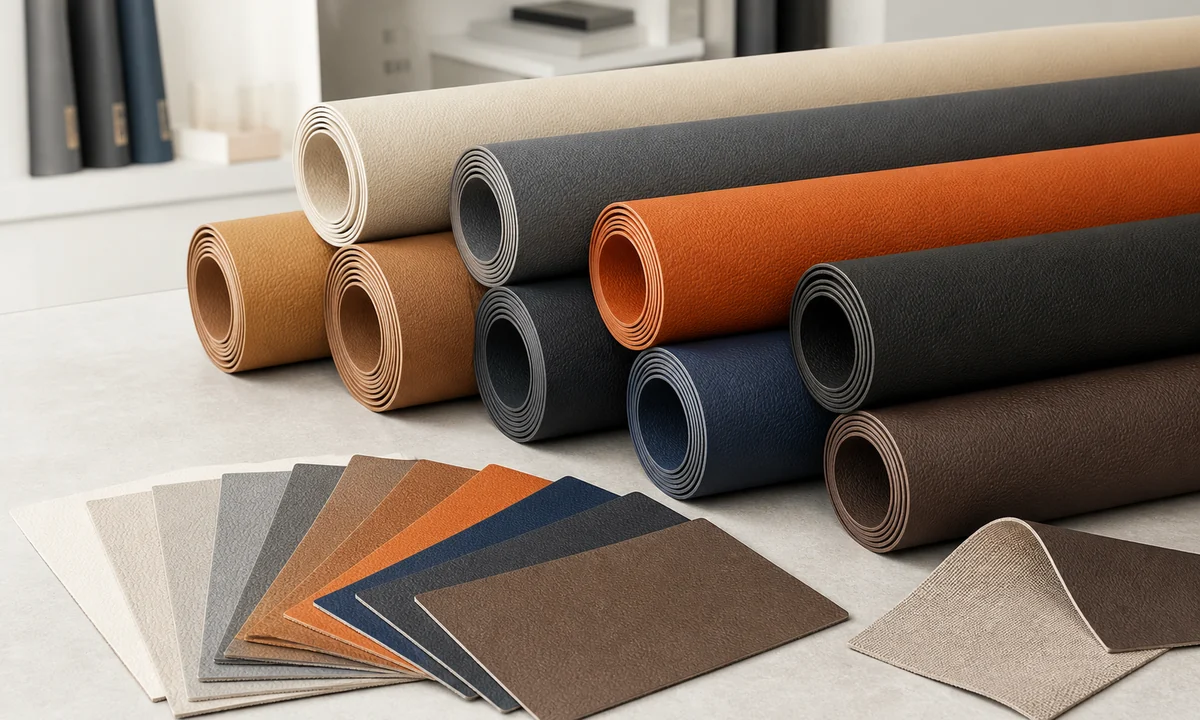
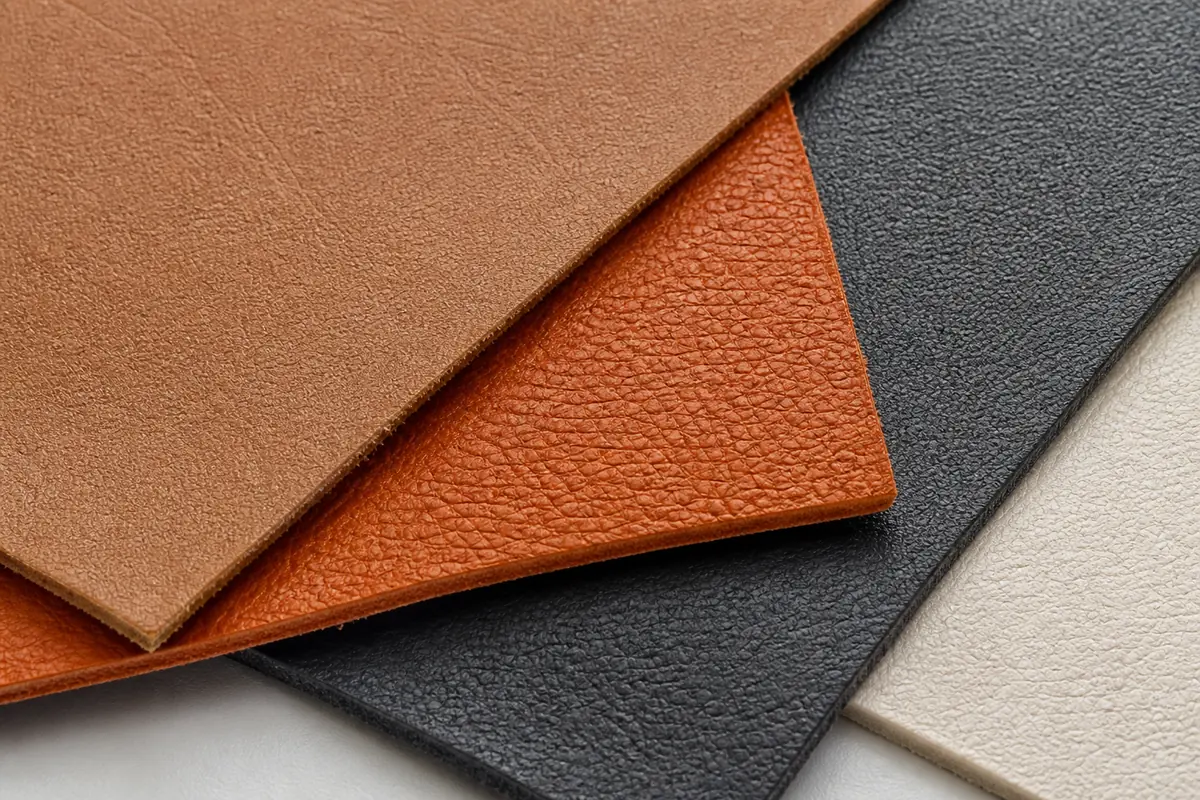
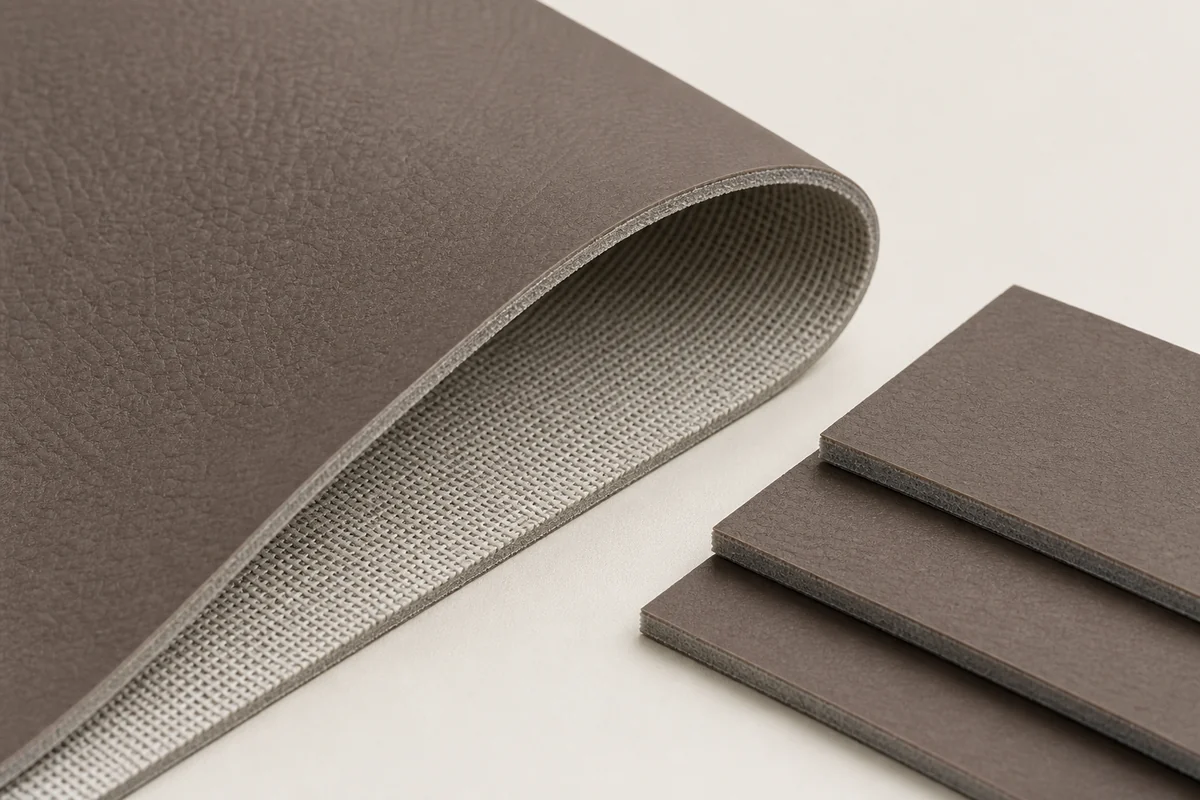
Why Colour and Grain Approval Alone Is Not Enough
Many problems with PVC upholstery leather only become visible after cutting and sewing begin, rather than during initial material inspection. Understanding what to confirm before approving a sample prevents the most common sourcing setbacks.
Furniture Upholstery
A PVC leather that looks correct as a flat swatch may pull unevenly over curved chair arms or resist folding cleanly at corner joints. Backing weight, stretch direction and surface flexibility all affect how the material wraps and holds tension across a sofa frame. Approving a sample by colour and embossing without confirming backing type and stretch behaviour can result in visible stress marks or delamination after assembly.
Automotive Interior Components
Door panels, headrests and centre consoles each have different forming and stitching requirements. A material that passes visual approval may be too stiff for vacuum forming or too soft to hold a clean stitch line. Automotive buyers also need to confirm that testing -- whether for abrasion, fogging or colour fastness -- is conducted using the specific method named by their OEM or quality team, not a generic standard assumed by the supplier.
Office Chair and Commercial Seating
Office seating leather faces repeated flexing, perspiration contact and cleaning with commercial-grade products. A material approved on appearance may show early surface cracking or colour transfer under conditions that were never part of the sample evaluation. Confirming the surface treatment type and its compatibility with the cleaning agents used in the target market reduces the risk of warranty claims after delivery.
Marine and Outdoor Upholstery
Marine applications expose materials to UV, salt air, humidity and temperature cycles simultaneously. Not all PVC artificial leather constructions are built for this environment, and performance in marine conditions depends on the specific formulation, surface coating and backing -- none of which are visible in a colour swatch. Buyers sourcing for marine upholstery need to specify the exposure conditions and request samples evaluated against named test methods before committing to bulk.
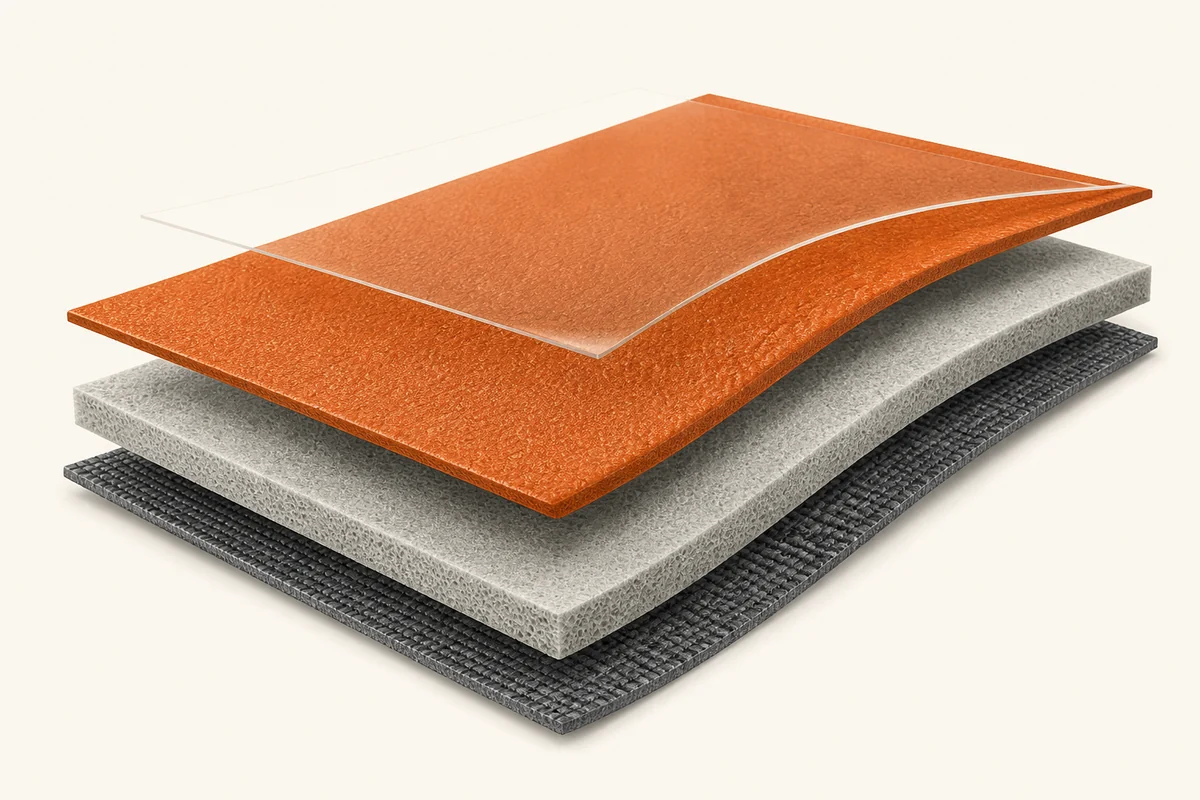
What Makes Up a PVC Leather Material
PVC leather fabric is a coated composite -- a layered system where each element affects how the finished material behaves in production and in use. Selecting by surface appearance alone leaves the most critical variables unconfirmed.
The topcoat determines gloss level, surface feel, scratch resistance and how the material responds to cleaning. A high-gloss finish that works for a dashboard trim panel may not be appropriate for a sofa seat that is touched constantly.
A compact PVC layer gives a firmer, thinner profile suited to structured components. A foamed layer adds cushion and a softer surface feel, which matters for seating applications where the material is the visible and tactile surface.
Grain depth and pattern scale are set during the embossing stage. The same base material can carry different surface textures depending on tooling. Confirming the embossing reference at sample stage prevents grain mismatch in bulk.
Backing type -- woven, knitted or non-woven -- affects stretch direction, tear strength and how the material feeds through a sewing machine or behaves during heat forming. The wrong backing for a wrapping or stitching process is one of the most common causes of production line problems.
What Leads Buyers to Evaluate PVC Leather
PVC leather fabric appears on sourcing shortlists for practical reasons. The following points reflect why buyers consider it -- not a guarantee that every construction delivers all of these characteristics. Final suitability depends on the specific material, application and confirmed sample evaluation.
Surface Variety and Embossing Options
PVC leather can be produced with a wide range of surface grains -- from fine pebble and cross-hatch patterns to deeper buffalo and crocodile textures. Buyers whose product lines require consistent surface appearance across multiple SKUs often find that PVC constructions offer more embossing flexibility than some alternative materials at comparable price points. Surface options should still be confirmed against a physical reference before bulk approval.
Backing and Thickness Flexibility
Different applications call for different backing weights and total thickness. PVC leather material is available across a range of backing constructions and thickness profiles, which allows buyers to specify a structure that suits their sewing, wrapping or bonding process rather than adapting the process to a fixed material. Thickness and backing should be confirmed by caliper measurement and sewing trial on the actual component.
Cleanability in Commercial Environments
For applications such as restaurant seating, commercial office chairs and public transport upholstery, the ability to wipe down a surface with standard cleaning products is a practical specification requirement. Some PVC leather surfaces are suited to this -- but compatibility with specific cleaning agents used in the destination market should be tested, not assumed. Buyers should confirm the surface treatment type and request cleaning compatibility information relevant to their market.
Cost Planning for Volume Projects
For large-volume upholstery projects where PU leather or microfiber leather would exceed the material budget, PVC leather is often evaluated as a cost-structured alternative. The comparison should account for the full material specification -- including backing, thickness and surface treatment -- rather than base price alone. A lower material cost that results in higher rejection rates or rework does not represent a saving.
What to Include When Requesting PVC Leather
A complete specification brief allows Wandao to identify a suitable material path, confirm whether available swatches match the requirement, and coordinate custom sampling where needed. Incomplete briefs result in additional back-and-forth and slower sample timelines.
If you have an existing material you want matched, sending a physical swatch is the most reliable starting point. Reverse-matching from a physical reference still requires new sample development and re-approval -- it does not guarantee an identical result from a different construction.
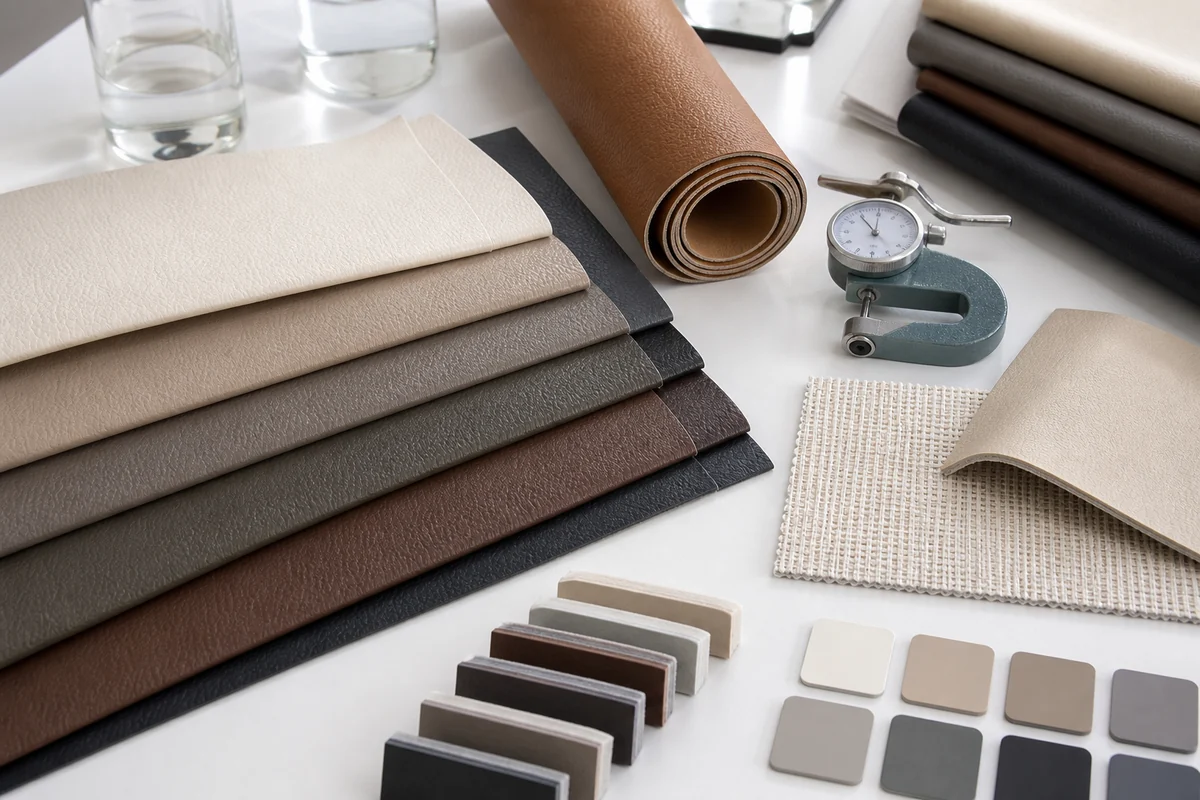
| Specification Item | Information to Provide | Why It Matters |
|---|---|---|
| Final Product / Component | Sofa seat, car door panel, office chair back, boat cushion, etc. | Determines which surface, backing and flexibility profile is appropriate |
| Backing and Stretch Direction | Woven / knitted / non-woven; two-way or four-way stretch requirement | Affects sewing, wrapping and corner-forming behaviour in production |
| Thickness and Hand Feel | Target thickness in mm; soft / medium / firm hand feel preference | Controls sewing margin, component fit and end-user tactile experience |
| Colour / Grain / Gloss Reference | Pantone or RAL reference, physical swatch, grain name or image | Prevents colour and surface mismatch between sample and bulk |
| Usable Width | Minimum usable width required for cutting layout (e.g. 137 cm, 54 in) | Affects material yield and cutting efficiency |
| Sample and Bulk Quantity | Number of sample metres or swatches needed; estimated bulk order volume | Determines feasibility of custom development vs. available stock |
| Destination Market | Country or region where finished goods will be sold or used | Informs regulatory and market-specific material considerations |
| Named Test Method and Target | Specific standard and pass value (e.g. Martindale 50,000 cycles, ASTM or EN reference) | Ensures sample evaluation uses the correct method, not a generic substitute |
PVC Leather by Application
Each application category has different material priorities. Select the area that matches your production context to see what to confirm when sourcing PVC leather for that use.
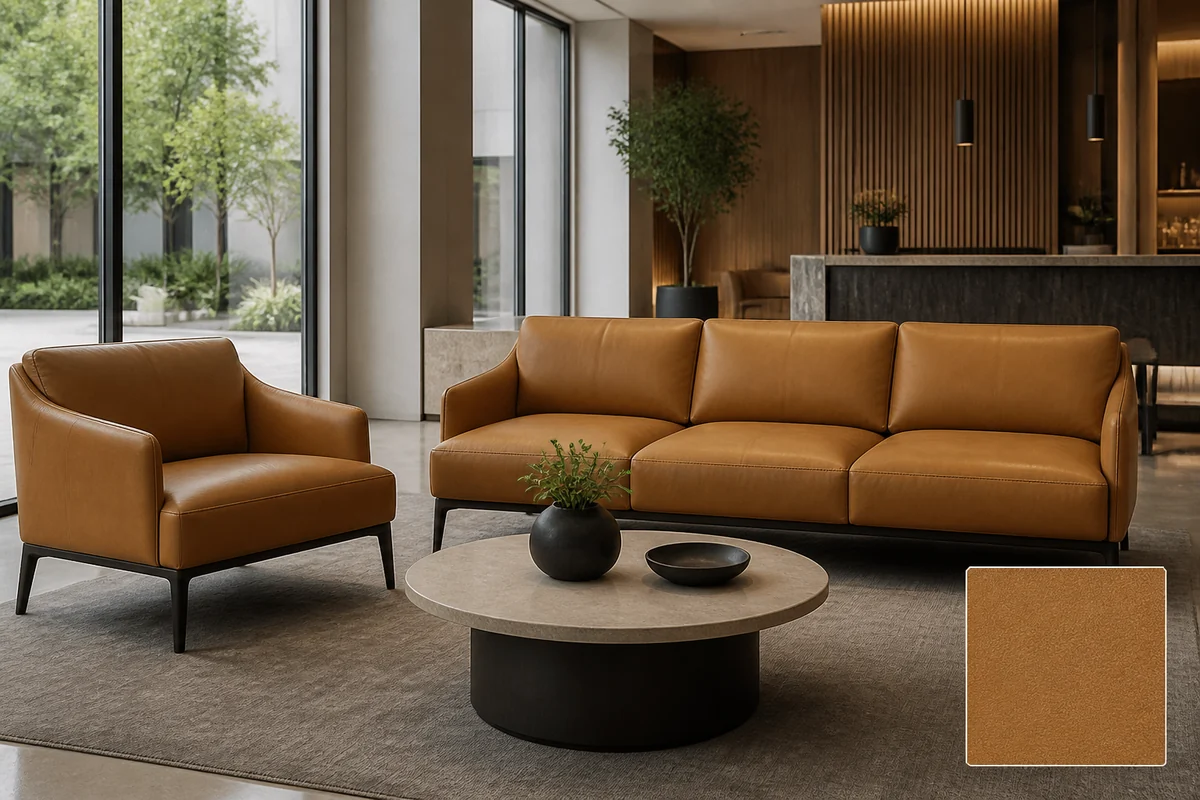
Furniture Upholstery
For sofa frames, dining chairs and upholstered panels, backing weight, corner flexibility and surface durability under daily contact are the primary material decisions. Colour consistency across panel cuts is also a key concern for furniture buyers.
See PVC leather for furniture upholstery →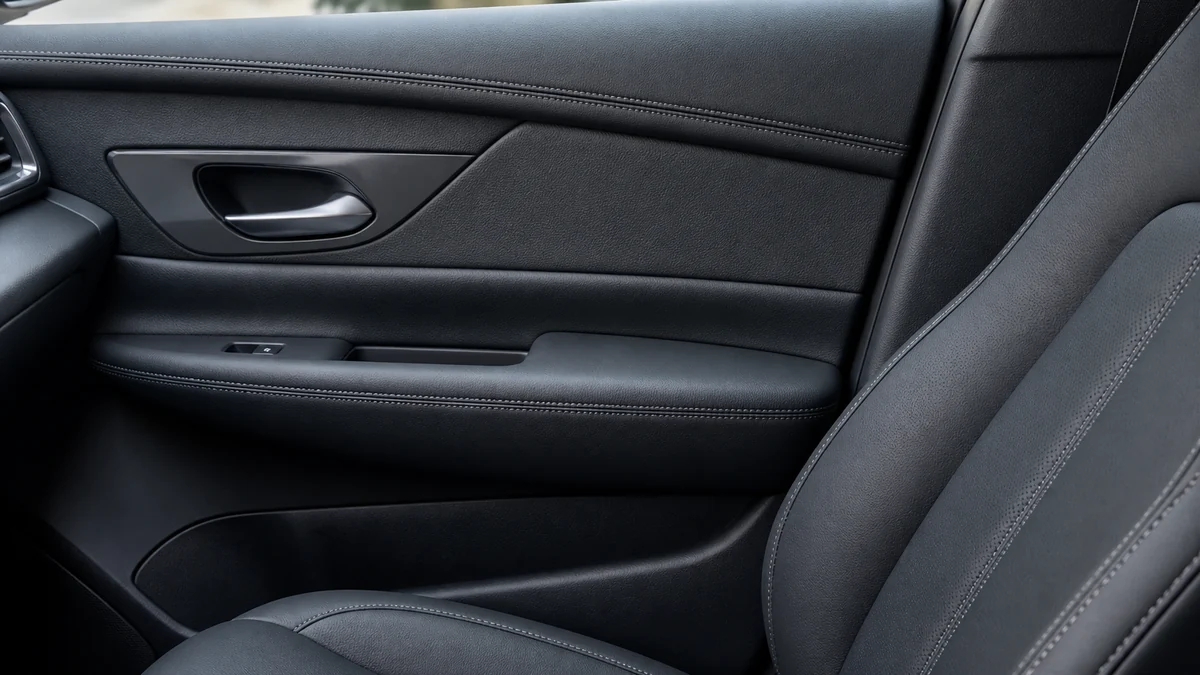
Automotive Interiors
Door panels, seat bolsters, headrests and console covers each have specific forming, stitching and test requirements. Automotive buyers must confirm that the material is evaluated using the OEM-specified or customer-named test method -- not a general standard.
See PVC leather for automotive interiors →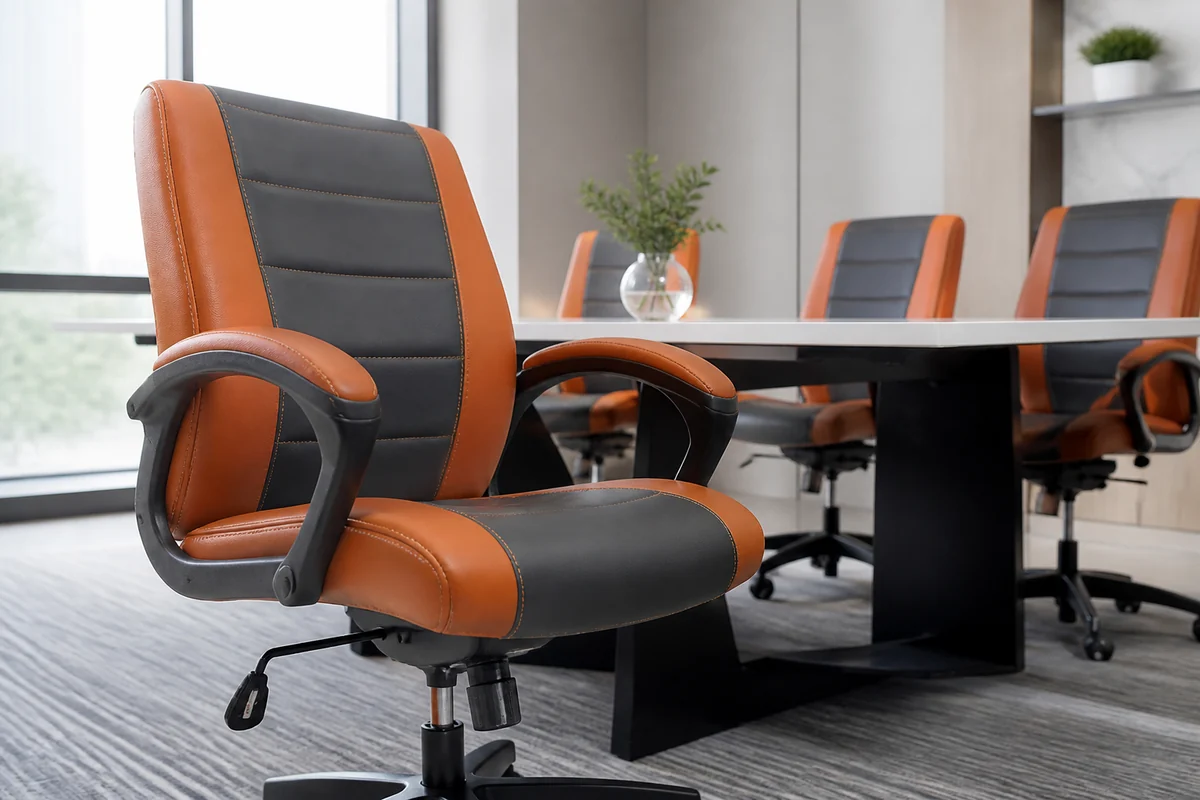
Office and Commercial Seating
High-cycle flexing, perspiration exposure and cleaning with commercial products are the defining conditions for office chair leather. Surface treatment type and its response to cleaning agents used in the target market should be confirmed before bulk approval.
See PVC leather for office and commercial seating →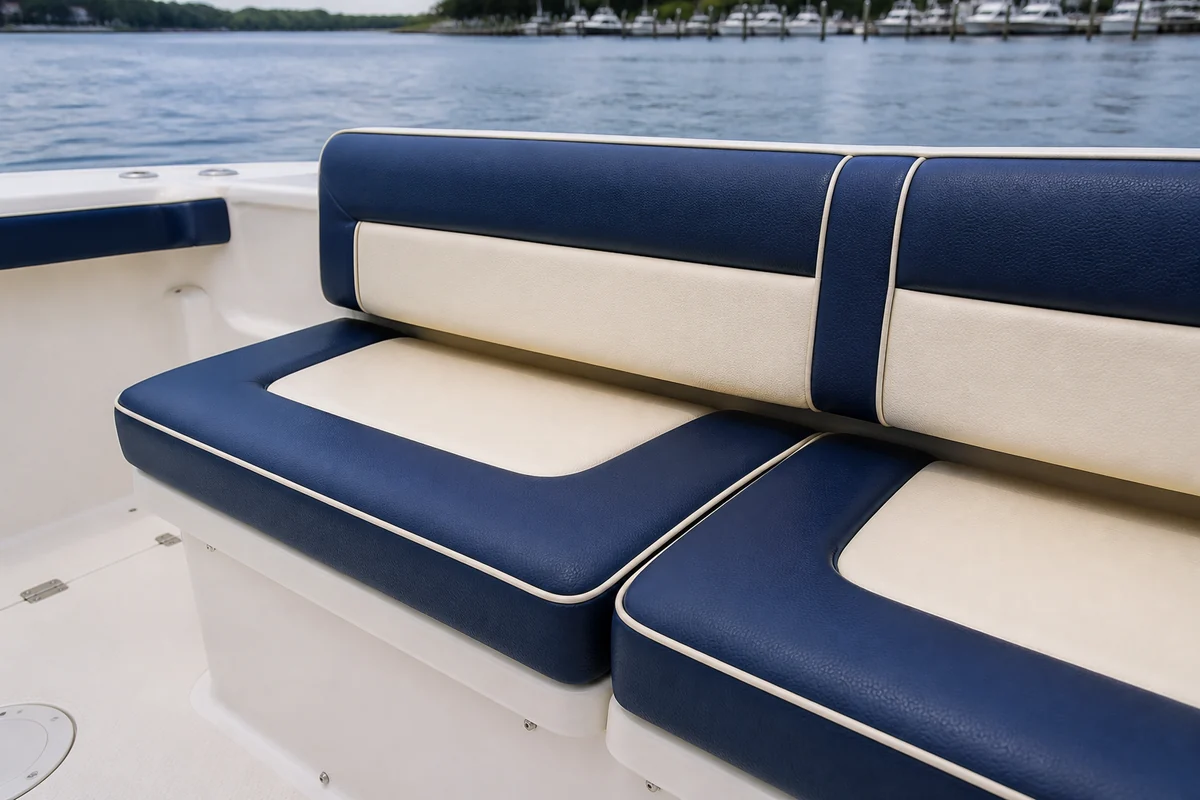
Marine and Outdoor Upholstery
Boat cushions, cockpit seating and outdoor furniture exposed to UV, salt air and moisture require a PVC construction specifically evaluated for those conditions. Buyers should specify the exposure environment and request samples tested against named marine or outdoor standards.
See marine vinyl fabric and outdoor upholstery leather →Custom PVC Leather Development
When available swatches do not match the project requirement, custom development allows buyers to specify the material structure around the finished component -- rather than adapting the component to an off-the-shelf material. Wandao coordinates custom development by first reviewing the project brief, identifying a feasible production route and then working with a suitable specialist production partner to arrange samples.
Not every custom request is achievable within a standard sample timeline or minimum quantity. Wandao will assess the brief and provide an honest view of what is feasible before development begins.
What Can Be Specified
- Colour -- matched to Pantone, RAL or a physical swatch reference
- Grain and embossing pattern -- selected from available tooling or discussed for custom tooling
- Backing type and weight -- woven, knitted or non-woven, matched to sewing or wrapping process
- Total thickness and hand feel -- compact or foamed layer, soft to firm profile
- Usable width -- to suit cutting layout and material yield requirements
- Surface treatment -- gloss level, matte finish, soft-touch coating or anti-scratch treatment
What Makes a Useful Development Brief
The most effective briefs describe the finished component and how it is made -- the application, the processing method (sewing, wrapping, heat forming), the reference material or colour, the estimated quantity and any named test method the material must be evaluated against. A brief that only states a colour code leaves most of the specification open and typically results in multiple rounds of sampling.
How Custom Development Works
-
1
Submit a complete project briefInclude application, component, processing method, colour and grain reference, thickness, backing preference, quantity and test requirement.
-
2
Wandao reviews feasibilityWe assess whether the specification can be met with available constructions or requires a custom production route, and advise on any constraints before development starts.
-
3
Sample coordinationWe coordinate with a specialist production partner to develop samples aligned to the confirmed brief. Samples are sent for buyer evaluation and feedback.
-
4
Reference approval before bulkOnce the buyer approves a sample, it is locked as the production reference. Bulk coordination proceeds against that confirmed standard.
"A clear brief -- covering application, processing, reference and test method -- gives us what we need to identify the right production route and avoid unnecessary sampling rounds."
Comparing PVC Leather with Other Synthetic Leather Materials
PVC leather is one of several synthetic leather options available for upholstery and manufacturing applications. The right material depends on the specific component, service condition, processing method and budget -- not on a general ranking. The following comparison is intended to help buyers identify which material category to investigate further.
| Comparison Point | PVC Leather | PU Leather | Microfiber Leather | Silicone Leather |
|---|---|---|---|---|
| Hand Feel and Drape | Firmer; varies by foam layer and thickness | Softer; closer drape to textile | Soft, supple; closest to natural leather feel | Silky, warm; distinctive tactile character |
| Base Construction | PVC compound on textile backing | Polyurethane coating on textile backing | Microfiber non-woven base with PU coating | Silicone coating on textile or knit base |
| Surface and Embossing | Wide range of grains and gloss levels | Good grain definition; softer surface | Fine surface; suede or smooth finishes | Smooth or lightly textured; limited embossing |
| Service Condition Suitability | Commercial interiors, high-traffic seating; confirm per application | Bags, footwear, mid-grade upholstery; confirm per application | Premium automotive, luxury furniture; confirm per application | Infant products, medical, food-contact adjacent; confirm per application |
| Relative Budget Position | Generally lower per metre for comparable volume | Mid range; varies by construction | Higher; premium positioning | Higher; specialist applications |
How Wandao Works with B2B Buyers
Wandao Leather is based in Dongguan, Guangdong, and operates as a synthetic leather supply and factory-matching partner for overseas B2B buyers. We do not represent a single production line covering all materials. Instead, we work with specialist production partners suited to the specific material, construction and application requirement -- and coordinate the process from specification review through to bulk communication.
Our role is to help buyers identify a viable material path, avoid specification gaps that cause sampling delays, and maintain a consistent reference from approved sample through to bulk delivery.
We review the buyer's project brief -- component, processing method, performance requirement and test method -- and identify any gaps before recommending a material direction.
Based on the confirmed specification, we identify a production partner with the appropriate process capability -- whether that is a specific backing type, surface treatment or custom embossing requirement.
We arrange available colour cards and swatches where they match the requirement, or coordinate custom sample development when the specification calls for it. Samples are sent for buyer evaluation with clear reference information.
Once a sample is approved, we lock the reference and coordinate bulk production communication -- including specification documentation, quality check points and shipment coordination -- with the production partner.
Continue Exploring
Whether you are ready to request samples or still narrowing down the specification, the following resources are organised by where you are in the sourcing process.
PVC Leather Products
Browse available PVC leather constructions, surface options and backing types across furniture, automotive and seating applications.
View PVC leather products →All Synthetic Leather Materials
If you are still comparing material categories -- PVC, PU, microfiber or silicone leather -- the full product range gives an overview of what is available by material type.
Explore all synthetic leather materials →Specification and Purchasing Guides
Practical articles on how to prepare a specification brief, what to confirm during sampling, and how to manage the sourcing process for synthetic leather materials.
Read sourcing and specification guides →Material Construction and Process Knowledge
Articles explaining how PVC, PU and other synthetic leather materials are constructed, what each layer does, and how production processes affect the finished material.
Read material construction articles →Frequently Asked Questions
Questions from purchasing managers, product development teams and importers evaluating PVC leather for manufacturing projects.
What manufacturing applications commonly use PVC leather? +
What should furniture buyers confirm when selecting PVC leather for upholstery? +
Can PVC leather be used for automotive interior components? +
What customisation options are available for PVC leather orders? +
How do I decide between PVC leather and PU leather for my project? +
I have an existing PVC leather sample I want matched. How does that work? +
How do I request a colour card, samples or a quotation for PVC leather? +
Ready to Discuss Your PVC Leather Requirement?
To help Wandao identify the right material path and arrange relevant samples or a colour card, share as much of the following as you have available:
- Application and finished component (e.g. sofa seat, car door panel, office chair back)
- Physical reference material or swatch, if available
- Target colour and grain reference (Pantone, RAL or image)
- Backing type preference and stretch direction requirement
- Target thickness and hand feel (soft, medium or firm)
- Minimum usable width required for your cutting layout
- Estimated sample quantity and bulk order volume
- Destination market or country
- Named test method and target value, if applicable
What Happens After You Send Your Inquiry
Wandao will review the information you have provided and identify any gaps that would prevent a useful material recommendation. If key details are missing -- such as backing type, thickness or test method -- we will ask for them before suggesting a direction.
Where the specification is sufficiently clear, we will suggest a material direction -- including available swatches or a custom development route -- and explain the reasoning. We will not recommend a material we do not believe is appropriate for the stated application.
Once the material direction is agreed, we coordinate available swatches or custom sample development. A reliable quotation is normally provided after the material direction and key specifications have been confirmed.
Sample timelines, bulk lead times and MOQ depend on the specific construction and production route. Wandao will provide realistic estimates once the material path is confirmed -- not at the inquiry stage before those details are known.
Wandao Leather is based in Dongguan, Guangdong, China. We serve purchasing managers, product development teams, importers and distributors across furniture, automotive, office seating and marine upholstery industries. Our role is to help you find the right material for your specific project -- not to sell you the nearest available option.
Related sourcing paths
Related material and application guides
PVC LEATHER FOR BAGS
Review application-specific construction, samples and specification requirements.
Review PVC leather for bag manufacturingAUTOMOTIVE LEATHER
Compare material routes for this manufacturing application.
Compare materials for automotive interiorsFURNITURE LEATHER
Compare material routes for this manufacturing application.
Explore furniture upholstery material optionsOFFICE CHAIR LEATHER
Compare material routes for this manufacturing application.
Review leather options for office seatingMARINE UPHOLSTERY LEATHER
Compare material routes for this manufacturing application.
Review marine upholstery material requirementsBAG LEATHER
Compare material routes for this manufacturing application.
Compare synthetic leather options for bags