What is the short answer?
Choose microfiber leather by application rather than by name alone. First define the furniture type, use intensity, cleaning chemicals, and desired appearance. Then confirm the microfiber structure, backing, thickness, texture, surface treatment, color, and test requirements. A soft residential sofa may need a more flexible construction, while an office, hospitality, or healthcare seat usually needs stronger dimensional stability, cleaning resistance, and documented performance.
Why are more furniture buyers choosing microfiber leather?
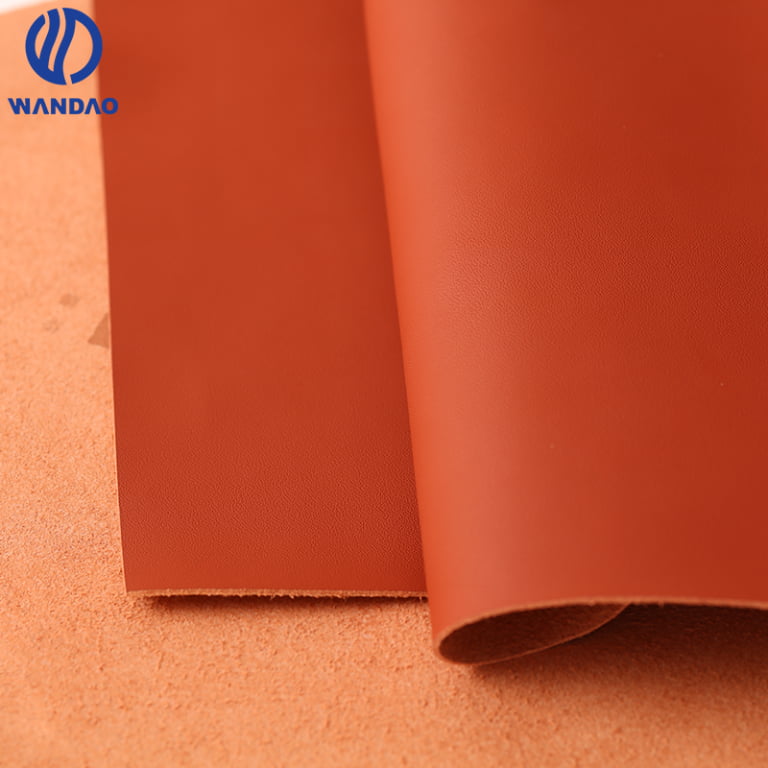
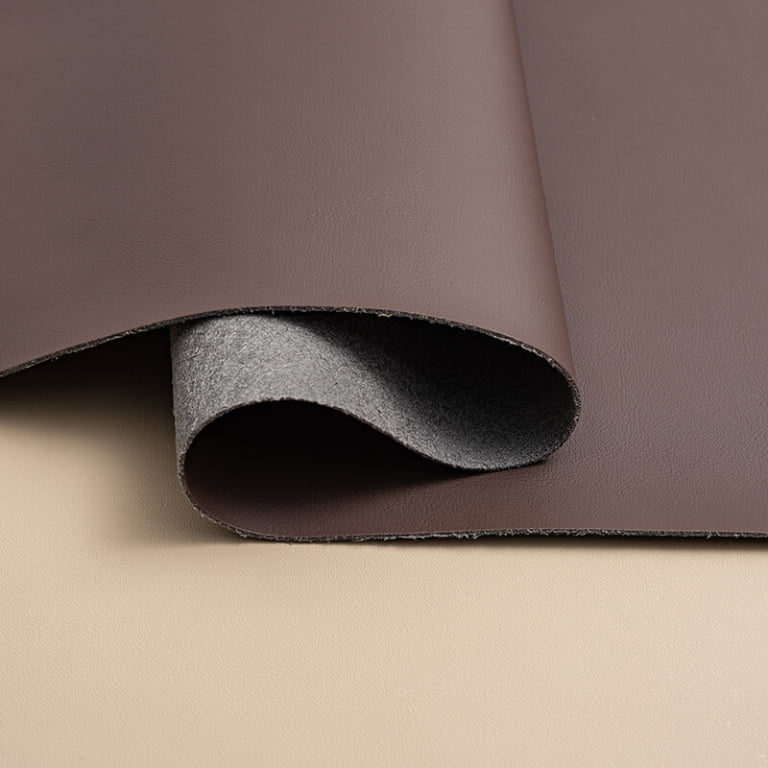
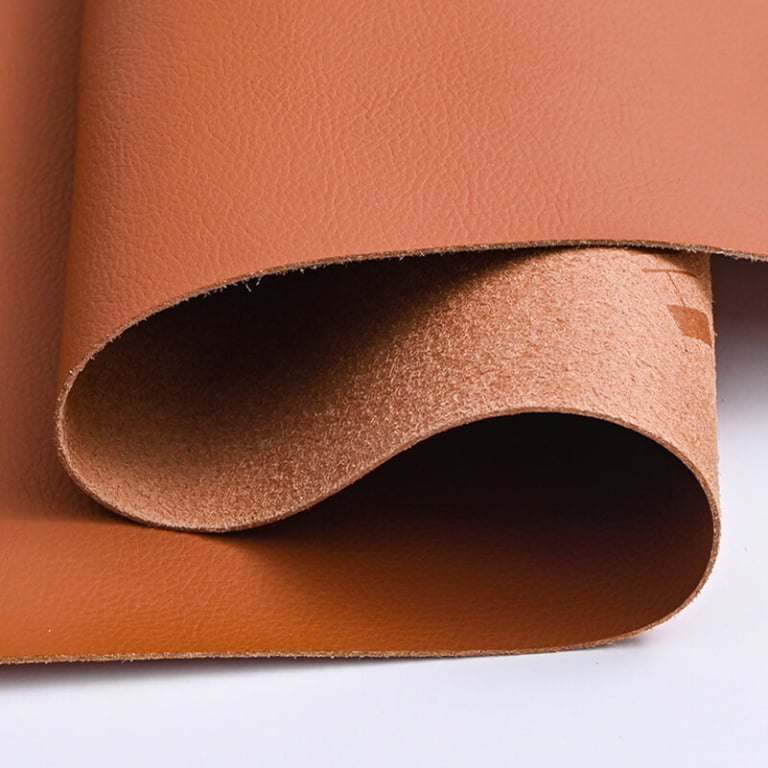
Microfiber leather is normally a three-dimensional ultrafine-fiber substrate combined with polyurethane and a leather-like surface finish. A peer-reviewed description of microfiber synthetic leather explains the distinction between this fibrous structure and an ordinary coated textile. That distinction matters because two materials can both be called “PU leather” while having different backing structures, hand feel, cutting behavior, and resistance to flexing.
There are several practical reasons why furniture buyers are considering it:
- It is a convincing alternative to genuine leather. A well-developed microfiber surface can offer a soft, smooth, or lightly grained hand that is close to the tactile direction many customers expect from leather.
- It does not use animal hide. This helps brands and projects that need a non-animal material policy or want to offer a vegan furniture option.
- It is supplied as roll goods. Compared with irregular hides, rolls can make color matching, nesting, repeat production, and replacement ordering more predictable.
- It can be soft without creating excessive surface wrinkling. The microfiber base and polyurethane system can be engineered for a balance of drape, recovery, and dimensional stability. The result still depends on the backing, foam, pattern, and upholstery tension.
- It provides broad design flexibility. Buyers can select smooth, Napa-style, pebble, fine grain, suede-like, matte, satin, printed, or custom embossed surfaces, together with many colors.
- It can support easier-care furniture. A suitable topcoat may improve resistance to water-based cleaning, staining, or selected cleaning agents. “Water-resistant” and “easy-clean” must still be verified for the exact product.
Genuine leather is generally more expensive than commodity PU and PVC, especially when the buyer selects premium hides. Microfiber leather is often positioned between commodity synthetic leather and genuine leather: it may cost more than basic PU or PVC, but it can provide a more leather-like hand and a more controlled production format. It should therefore be compared by usable area, cutting yield, processing, cleaning, and expected project requirements—not only by price per metre.
Need help matching a material to your furniture?
Explore microfiber leather for furniture and send Wandao Leather your furniture type, target hand feel, texture, thickness, color, and estimated quantity.
Start with the furniture application, not the material label
The same microfiber leather may feel excellent on a headboard but be unsuitable for a frequently cleaned restaurant seat. Before asking for a quotation, record the conditions that will determine the construction.
| Question to define | What to record | Why it changes the selection |
|---|---|---|
| Furniture type | Sofa, recliner, dining chair, office chair, hotel seating, healthcare seating, headboard, or wall panel | Each design creates different stress at corners, seams, cushion crowns, and large panels. |
| Use intensity | Residential, showroom, hospitality, office, public, or healthcare | Higher contact frequency normally requires stronger abrasion, flex, seam, and cleaning evidence. |
| Upholstery geometry | Loose cushion, tight cover, deep channel, sharp radius, piping, quilting, or perforation | Stretch, drape, thickness, and backing stability affect sewing and finished appearance. |
| Cleaning routine | Water and mild soap, detergent, disinfectant, alcohol, bleach, oil, or food cleaning products | The topcoat must be tested against the actual agents and exposure procedure. |
| Environment | Indoor, strong window light, humid, temperature-changing, or outdoor/semicovered | Lightfastness, humidity ageing, UV, and water exposure may become important. |
| Commercial target | Residential price point, premium collection, contract project, or custom brand program | Backing, surface treatment, color development, documentation, and order quantity influence cost. |
How should you choose the texture and grain?
Texture is one of the first things customers see and touch, but it should not be used as a shortcut for durability. A deeper emboss does not automatically mean better abrasion resistance. Surface peaks, coating thickness after embossing, topcoat adhesion, pigment, and the underlying microfiber structure all matter.
Fine grain or smooth grain
Fine grain and smooth surfaces suit modern sofas, dining chairs, office chairs, headboards, and furniture collections that need a clean, controlled appearance. They are often easier to coordinate across panels and colors. A low-relief surface can also be easier to wipe than a very deep pattern, especially where food, skin oil, cosmetics, or disinfectant are common.
Medium pebble and natural leather grain
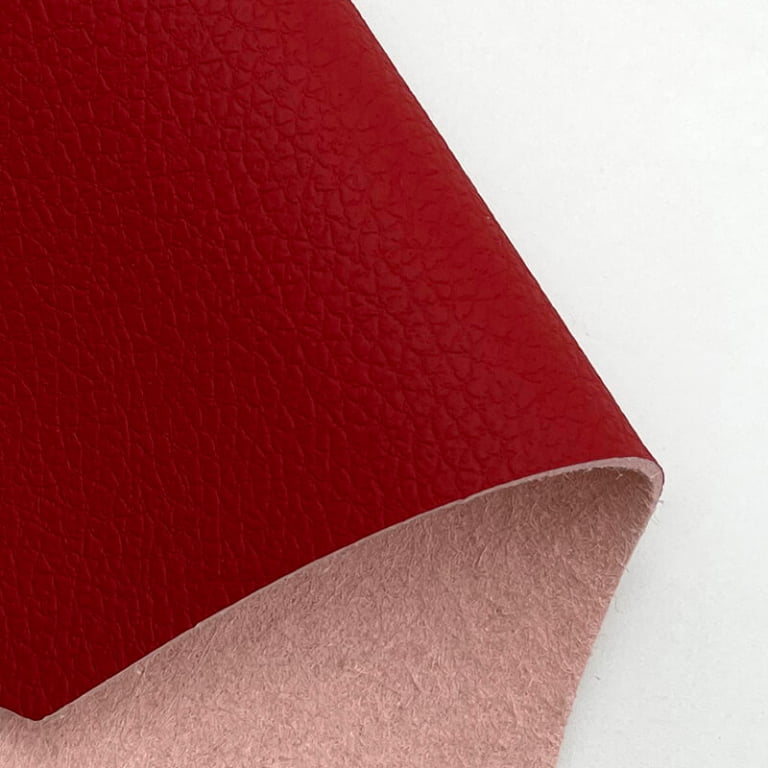
Medium pebble grain can hide small handling marks and gives a more visibly leather-like furniture appearance. It is useful for sofas, lounge chairs, hospitality seating, and collections that need a relaxed natural-leather impression. Confirm that the grain repeat, emboss depth, gloss, and color variation are acceptable across a full roll, not only on a small swatch.
Suede-like or brushed surfaces
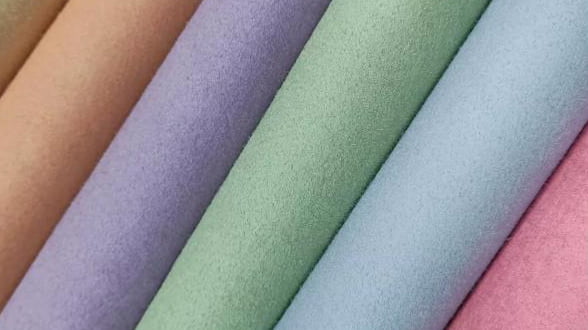
Suede-like microfiber can create a warm and soft visual direction for lounge furniture, cushions, panels, and accent pieces. It may show nap direction, pressure marks, dust, or shading more clearly than a smooth coated surface. The buyer should approve the appearance under different lighting and confirm the cleaning method before using it on high-contact seating.
Custom embossing and printed effects
Custom texture is valuable for a furniture collection, but it adds development decisions. Send a reference image or physical grain sample, state the desired gloss level, identify the repeat direction, and approve a signed master sample. If the material will be quilted, perforated, or deeply pulled over foam, evaluate the texture after the secondary process rather than approving only the flat material.
Supplier Insight: A furniture buyer who says “we need a leather texture” has not yet provided enough information for accurate sampling. The supplier should know whether the target is fine Napa, corrected grain, pebble, suede, matte, satin, or a custom pattern, and whether the finished furniture will be smooth, tufted, quilted, or tightly stretched.
How should you choose thickness and backing?
Thickness influences hand feel, body, folding, edge behavior, sewing, and cost, but thickness alone does not prove quality. A thick material with a weak surface or unstable backing can perform worse than a thinner, better-engineered construction. Ask for total thickness, tolerance, total weight, backing composition, and the layer structure.
The following ranges are practical development starting points, not universal microfiber leather standards. The final selection must be confirmed through a sample, upholstery mock-up, and product-specific test data.
| Application | Development starting point | What to prioritize |
|---|---|---|
| Residential sofas and lounge chairs | About 0.8–1.1 mm; approximately 450–650 gsm | Soft hand, drape, recovery, low noise, comfortable wrapping, and resistance to loose-surface wrinkles. |
| Dining and occasional chairs | About 0.9–1.2 mm; approximately 500–700 gsm | Stable backing, cleanable surface, resistance to seam stress, food and oil exposure, and consistent color. |
| Office and executive chairs | About 0.9–1.2 mm; approximately 550–750 gsm | Dimensional stability, flexing, abrasion, seam performance, body-oil cleaning, and controlled stretch. |
| Hotel, restaurant, and contract seating | About 1.0–1.3 mm; approximately 600–850 gsm | Repeated cleaning, abrasion, hydrolysis screening, stable grain, color continuity, and project documentation. |
| Healthcare or frequently disinfected seating | About 0.9–1.3 mm; approximately 600–850 gsm | Low-porosity surface, cleaner and disinfectant compatibility, adhesion, flex, seam integrity, and finished-assembly requirements. |
These ranges should be adjusted to the furniture design. A deep sofa cushion may need a softer, more flexible construction. A tight office-chair shell may need a stable backing that does not stretch or pucker. A thick material can also make corners, piping, needle penetration, and folded seams more difficult. Always test cutting and sewing on the actual construction.
Backing choices
-
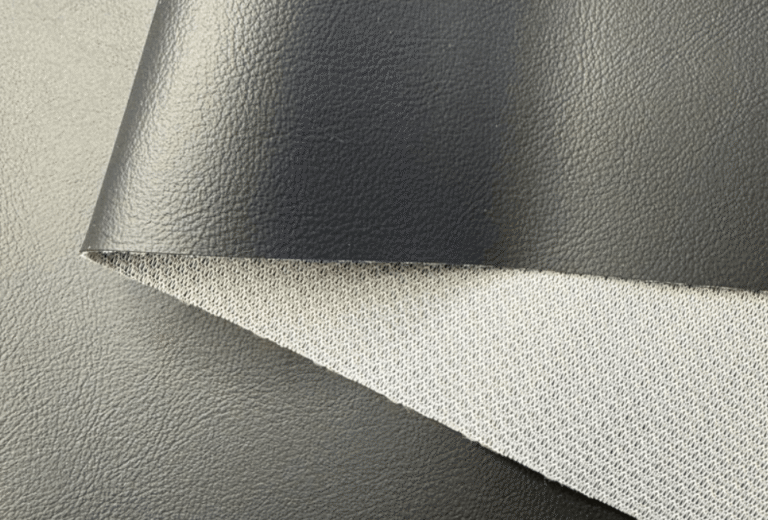
- Microfiber nonwoven backing: supports a premium leather-like construction and can provide a soft, substantial hand. Confirm tear, tensile, adhesion, and flex behavior.
- Knitted backing: can offer conformability and softness for curved upholstery. Confirm stretch recovery and seam stability where the cover is pulled tightly.
- Woven or reinforced backing: can provide better dimensional control for sharp tailoring, large panels, or high seam loads. It may feel firmer or drape differently.
- Laminated or foam-backed construction: can change cushioning, noise, bulk, and sewing behavior. Request the complete layer description rather than treating the face material as the whole product.
What surface treatment is needed for furniture?
Surface treatment should be selected according to the actual exposure. A matte topcoat may support a softer visual effect. A protective topcoat may improve stain release, water resistance, scratch resistance, or compatibility with routine cleaning. The correct finish can also improve color appearance and help preserve the grain.
However, a surface that repels a short spill is not necessarily waterproof. Water may enter through seams, needle holes, perforations, exposed edges, backing, foam, or damaged areas. If a project needs water resistance, define whether the requirement means:
- resistance to short-term surface spills;
- easy wiping after food or beverage contamination;
- resistance to a named cleaning agent;
- reduced liquid penetration through the finished upholstery;
- or true outdoor weather and rain exposure.
For contract or healthcare furniture, test the exact cleaner, dilution, contact time, number of cycles, and acceptance criteria. ASTM D543 chemical-resistance guidance is useful as a framework because appearance, color, weight, dimensions, and mechanical properties can all change after chemical exposure. A supplier’s phrase “bleach cleanable” should always identify the concentration and procedure.
How do color and color stability affect the decision?
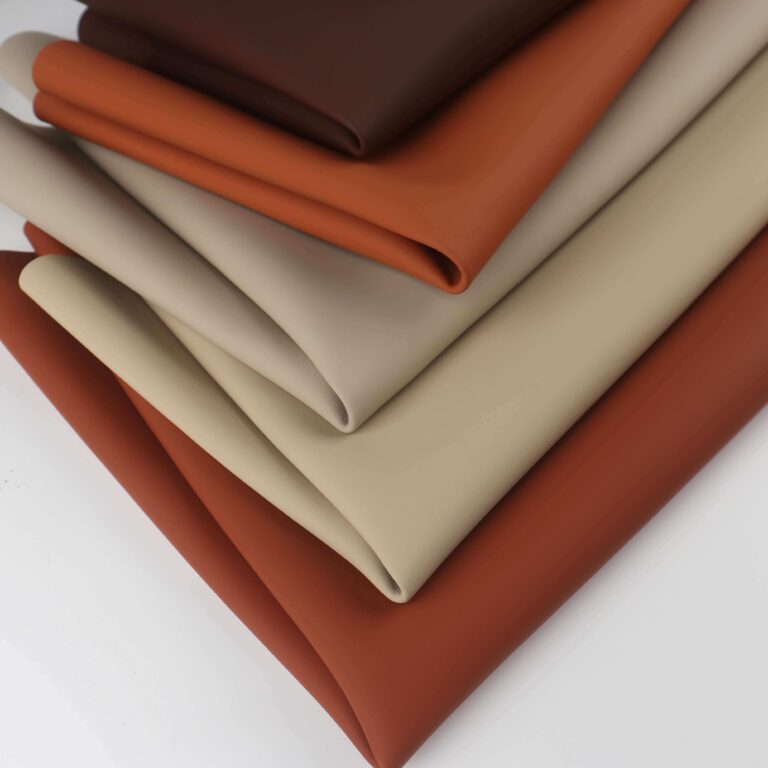
Microfiber leather can be produced in many colors, which gives furniture brands more freedom than a limited natural-hide palette. Color stability can also be more repeatable because the material is produced in controlled rolls. That does not mean every color will behave identically or that every batch will match automatically.
Before approval, confirm:
- the color reference, preferably with a physical standard or approved color code;
- the light source used for visual comparison;
- the gloss level and texture, because the same pigment can look different on matte and glossy surfaces;
- dry and wet crocking or rubbing performance where dark colors are used;
- lightfastness for furniture near windows or strong artificial lighting;
- lot identification, retained samples, and the acceptable shade range;
- the effect of cleaning, flexing, embossing, quilting, or heat on the approved color.
Always inspect a larger sample in both natural and interior light. A small swatch may hide grain direction, roll shading, or gloss differences that become visible on a large sofa or chair.
Which furniture applications are suitable?
Microfiber leather is often suitable for sofas, recliners, lounge chairs, dining chairs, office seating, hotel furniture, restaurant seating, headboards, and selected contract furniture. Suitability depends on the complete specification.
| Furniture use | Recommended selection direction | Do not overlook |
|---|---|---|
| Sofas and recliners | Soft, flexible material with a comfortable hand and a grain that recovers after bending. | Wrinkling, cushion drape, stretch, corner tension, seam appearance, and body-oil cleaning. |
| Dining chairs | Moderately stable backing, low-to-medium relief grain, and a finish that supports quick cleaning. | Food, oil, dye transfer, piping, staple areas, and repeated sitting at the front edge. |
| Office chairs | Stable, resilient construction with documented abrasion, flex, adhesion, and cleaning performance. | Daily ingress and egress, arm contact, chair mechanisms, high-tension panels, and disinfectant use. |
| Hotels and restaurants | Commercial construction with controlled grain, consistent color, and a cleaning protocol matched to the site. | Project fire requirements, repeated cleaning, replacement-color continuity, and delivery planning. |
| Healthcare seating | Low-porosity, easy-clean surface with exact disinfectant validation and a stable backing. | Fluid ingress at seams, cracking after chemicals, gloss change, tack, and assembly-level compliance. |
| Headboards and wall panels | Prioritize appearance, soft handling, clean edges, and the ability to wrap the substrate without surface distortion. | Light exposure, buttoning or quilting, adhesive compatibility, and visual uniformity across large panels. |
For automotive or outdoor use, do not assume that a furniture microfiber grade is suitable. Those applications may require different UV, temperature, chemical, fogging, hydrolysis, or assembly tests. Select the construction for the real environment.
Which performance tests should buyers request?
Testing should confirm the likely failure modes of the furniture. Do not collect a long list of numbers without checking the method, specimen, color, finish, backing, and test endpoint.
Abrasion
The Association for Contract Textiles uses 50,000 Wyzenbeek double rubs as a high-traffic/public-space reference for coated upholstery. This is a useful screening benchmark for commercial furniture, but it is not a universal requirement for every sofa and it is not a conversion into years of service. ACT’s abrasion guidance warns that abrasion results do not by themselves predict product lifespan. Ask for the method, abradant, load, direction, endpoint, and exact SKU tested.
Humidity ageing and hydrolysis
For PU-based microfiber leather, heat and humidity can contribute to cracking, peeling, loss of adhesion, or delamination. ACT identifies five weeks under ISO 1419 Method C as a useful minimum reference for PU-coated fabrics. It is an accelerated laboratory exposure, not five years of furniture life. Higher reported values can be helpful, but they must be evaluated with the complete report and post-ageing adhesion, flex, and appearance results.
Flex, adhesion, tear, and seams
Furniture covers bend around cushion crowns and corners, receive needle punctures, and transfer loads to seams and staples. Request coating adhesion or peel data, tensile and tear results, flex-crack results, and seam or tack-tear information where the design is highly tensioned. A material can have a high abrasion number but still fail at a corner, seam, or backing interface.
Fire and cleaning
For the United States, CPSC information on upholstered furniture explains the relevance of TB 117-2013 and the fact that upholstered components are evaluated for smolder resistance. For European projects, EN 1021 information from RISE describes testing with a smoldering cigarette and a match-flame-equivalent ignition source. Confirm whether the report covers the material alone or the final cover, foam, barrier, and furniture assembly.
For cleaning, approve a written procedure. Include the product name, dilution, dwell time, wiping method, rinse or drying requirement, cycle count, and acceptable changes in color, gloss, tack, cracking, peeling, bubbling, or grain.
Supplier Insight: In real furniture development, the most useful sample is not always the largest flat swatch. A small sewn mock-up over the intended foam can reveal puckering, grain whitening, seam slippage, edge cracking, and unexpected stiffness before those problems reach bulk production.
How does microfiber leather compare with genuine leather, PU, and PVC?
| Material | Strength in furniture sourcing | Trade-off to consider |
|---|---|---|
| Genuine leather | Natural grain variation, prestige, familiar aging, and a premium material story. | Usually higher material cost, irregular hide yield, natural defects, shade variation, and more complex panel matching. |
| Microfiber leather | Soft leather-like feel, no animal hide, consistent roll format, many colors, and engineered surface options. | Quality and price vary widely; most constructions are polymer composites and still need chemical, durability, and end-of-life review. |
| Conventional PU leather | Broad price range, many appearances, and good suitability for general furniture when correctly specified. | Performance differs greatly between grades; susceptible constructions may develop hydrolysis, cracking, or delamination. |
| PVC leather | Often cost-effective, wipeable, and water-resistant at the surface. | Hand feel, breathability, plasticizer, chemical, and environmental considerations vary by formulation and topcoat. |
Microfiber leather is therefore an excellent genuine-leather alternative for many furniture projects, but “microfiber” is not a quality guarantee. A low-cost microfiber product may not be suitable for a premium sofa, while a carefully engineered construction may be unnecessary for a low-use decorative panel. The right decision is the one that matches performance, appearance, compliance, and budget.
What does sustainability mean in this decision?
Microfiber leather has a clear animal-origin advantage because it does not use animal hide. This can help a buyer meet a vegan or animal-free material requirement. It may also reduce some of the variability and cutting waste associated with irregular hides, although the actual waste result depends on nesting and production practice.
At the same time, microfiber leather is usually a multilayer synthetic material made from fibers, polyurethane, pigments, finishes, and sometimes adhesives. “Vegan,” “PVC-free,” “water-based,” “DMF-free,” “bio-based,” and “recyclable” are different claims. None alone proves a complete environmental advantage.
For a meaningful sustainability review, ask for the product composition, restricted-substance information, emissions data where relevant, recycled-content evidence, product-specific LCA or EPD if available, durability evidence, and an end-of-life explanation. The most responsible choice is often a material that meets the application without premature replacement, while avoiding unsupported environmental promises.
How should buyers request samples and approve a supplier?
A clear sample request prevents the supplier from sending a material that only looks similar. Include:
-
- Furniture type and upholstered component.
- Indoor, humid, high-light, or other environment.
- Residential or commercial use intensity.
- Desired hand feel: soft, warm, dry, firm, quiet, or resilient.
- Texture reference, gloss level, and whether the surface is smooth, grained, suede-like, printed, quilted, or perforated.
- Target thickness, weight, usable width, and backing preference.
- Color reference, quantity, and whether future repeat orders are expected.
- Cleaning agents, fire requirements, abrasion method, hydrolysis requirements, and other project tests.
- Prototype or finished-panel dimensions for sewing and upholstery evaluation.
Compare samples under natural and indoor light. Bend and stretch them in the intended direction. Sew a representative seam, wrap a foam corner, check the front edge of a cushion, and clean the surface using the planned procedure. Record the lot number and retain an approved reference. Ask the supplier how stock, custom color, custom texture, MOQ, packaging, and repeat-order control will be handled; these commercial conditions can affect the final cost as much as the polymer itself.
Common mistakes to avoid
- Choosing the thickest option automatically: thickness must be balanced with flex, sewing, comfort, and surface performance.
- Assuming every microfiber leather is suitable for every furniture type: a sofa, office chair, healthcare seat, and wall panel have different risks.
- Using texture as proof of quality: grain depth and visual appeal do not replace test data.
- Calling a surface waterproof without defining the test: seams, backing, foam, and perforations can still allow water entry.
- Converting laboratory results into a promised service life: abrasion cycles and hydrolysis weeks are screening data, not a calendar.
- Approving color from a tiny swatch: large panels, lighting, gloss, and lot variation can change the appearance.
- Testing only the flat cover: final upholstery geometry, foam, thread, adhesive, and fire barrier can change the result.
Frequently Asked Questions
Yes, it can be an excellent choice for sofas, chairs, recliners, hospitality seating, and other furniture when the construction matches the application. Confirm the texture, thickness, backing, surface finish, color, cleaning requirements, and relevant tests before approval.
It is a strong substitute when the project needs a leather-like hand, stable roll goods, many colors, and no animal hide. Genuine leather may still be preferred when natural grain variation, patina, and a premium hide story are central to the product.
Many sofa development projects begin around 0.8–1.1 mm, but there is no universal best thickness. The correct value depends on the foam, pattern, sewing method, cushion shape, desired hand, and required durability. Test a sewn upholstery mock-up rather than choosing by thickness alone.
A suitable surface treatment can provide water resistance and easier cleaning, but “waterproof” must be defined and tested. Seams, needle holes, backing, foam, edges, and perforations may still allow water penetration. Confirm the exact exposure and test method with the supplier.
A well-matched microfiber construction can be soft and recover well, but wrinkles also depend on pattern allowance, foam density, upholstery tension, backing stretch, cushion design, and use. A physical mock-up is the best way to assess the finished appearance.
Send the furniture type, upholstered part, use environment, target hand feel, texture, gloss, thickness, backing, color, estimated quantity, cleaning routine, testing requirements, and a photo or physical reference. This allows the supplier to propose a more relevant sample instead of a generic swatch.
Final recommendation
Microfiber leather is popular because it gives furniture buyers a practical middle path: a soft, leather-like, animal-free material with controlled color, flexible design options, and a roll format that can be easier to produce with than natural hides. It can be a particularly good alternative when genuine leather is too expensive or when a project needs a non-animal material.
The important point is that not every microfiber leather is suitable for every furniture project. Confirm the texture and thickness according to the furniture geometry. Match the backing to cutting, sewing, and stretch requirements. Select a surface finish for the actual cleaning and water exposure. Approve color under realistic lighting. Then validate the complete upholstered construction with a physical sample and relevant test reports.
For material selection support, Contact Wandao Leather with your furniture application, target thickness, texture, color, estimated quantity, and performance requirements. The more specific the project information, the easier it is to match a microfiber leather grade that fits the furniture rather than simply choosing the most attractive sample.