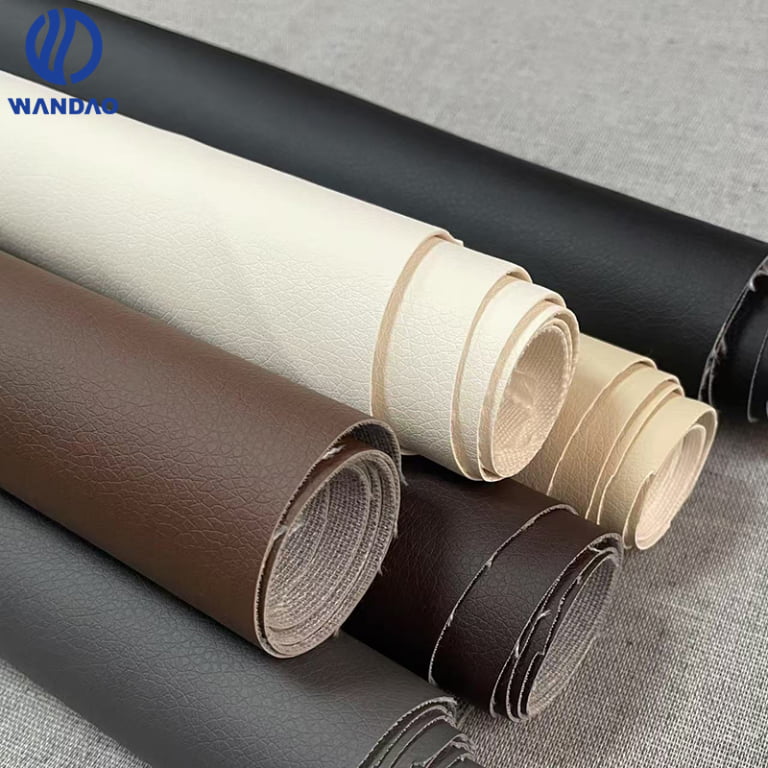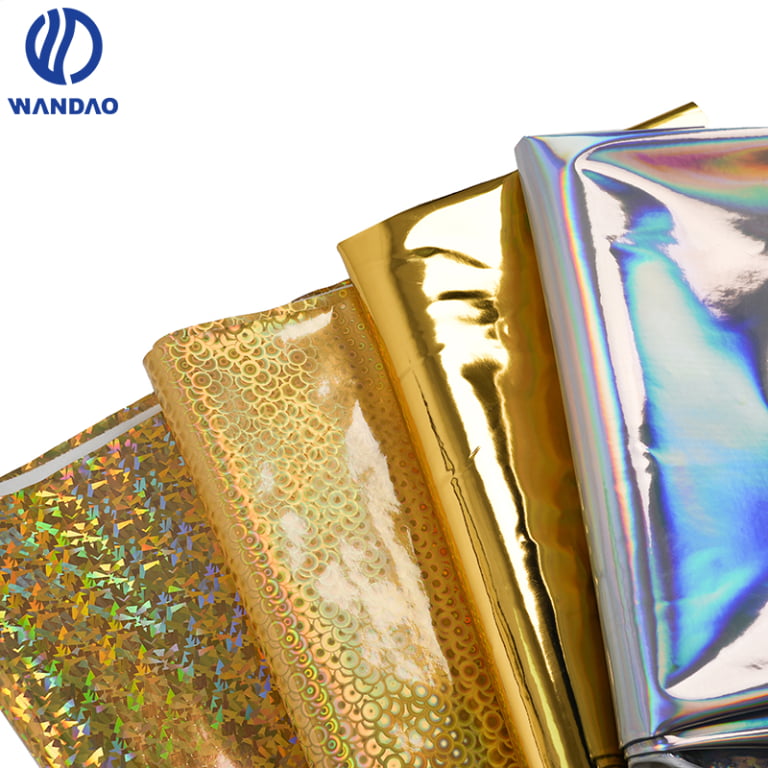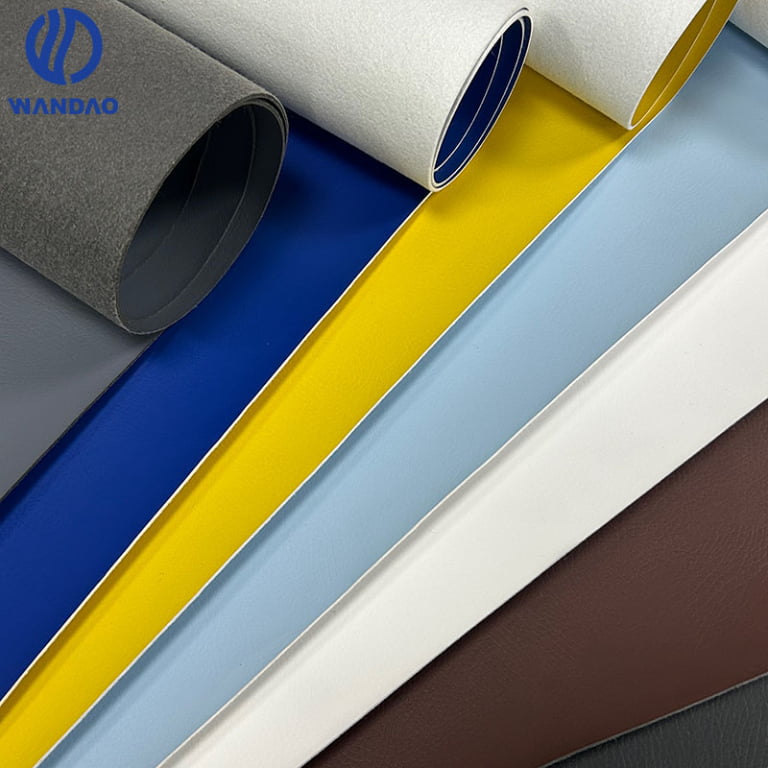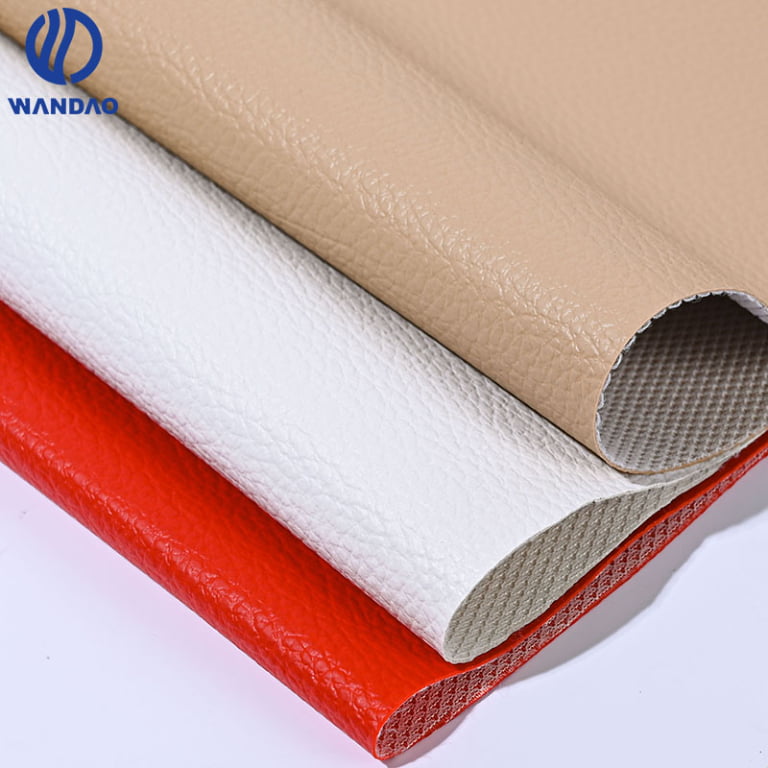
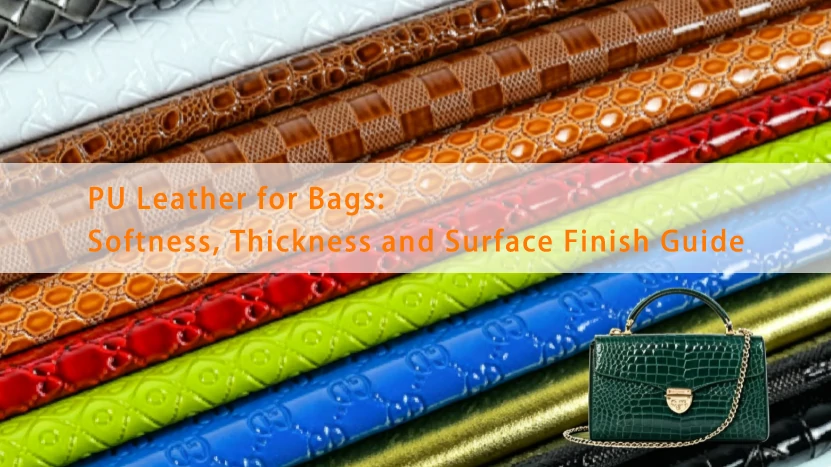
PU leather is one of the most popular materials for handbags because it offers an excellent balance of appearance, flexibility, customization, and cost. By selecting the right thickness, texture, backing, and color, buyers can develop durable bags that match different markets and price levels.
As a synthetic leather supplier, I have worked with buyers developing handbags, wallets, cosmetic bags, backpacks, gift packaging, and many other leather goods. One lesson I have learned is that there is no single PU leather suitable for every project. Every product requires different material properties. A wallet requires flexibility, while a structured handbag requires body support. A cosmetic bag needs better stain resistance, while a premium handbag usually requires a softer touch and a luxury appearance.
In this guide, I will explain how to choose PU leather for bags from a practical manufacturing perspective. Instead of discussing only the material itself, I will focus on how softness, thickness, surface finish, backing fabric, logo compatibility, quality control, and production planning influence the final product.
What Is PU Leather?
Many beautiful bags fail because the material is selected incorrectly rather than manufactured poorly.
PU leather for bags is a synthetic leather made by coating polyurethane onto a fabric backing. It offers a leather-like appearance while providing excellent color consistency, embossing options, lower cost, and flexible customization for handbag manufacturing.
Why PU leather has become the standard choice
Today, PU leather is widely used throughout the handbag industry. Fashion brands, OEM manufacturers, wholesalers, and private label companies choose PU leather because it delivers a premium appearance without the high cost or supply limitations of genuine leather.
Unlike natural leather, PU leather is manufactured under controlled production conditions. This allows better consistency in thickness, color, grain pattern, and surface quality. Buyers can easily match previous production lots and maintain stable quality throughout large orders.
Another major advantage is design flexibility. PU leather is available in hundreds of embossed textures, gloss levels, colors, and backing materials. Buyers can even develop custom embossing patterns from their own samples, design files, or product photos when ordering large quantities.
| Feature | PU Leather |
|---|---|
| Appearance | Leather-like with various finishes |
| Surface Options | Matte, glossy, embossed, smooth |
| Color Choices | Hundreds of standard and custom colors |
| MOQ | From 1 meter for stock items |
| Applications | Handbags, wallets, cosmetic bags, backpacks, gift boxes |
Why Buyers Choose PU Leather for Bags?
Many materials look attractive before production, but not all of them perform well after sewing and daily use.
Buyers choose PU leather because it combines attractive appearance, good durability, flexible customization, and competitive pricing, making it suitable for both fashion brands and private label projects.
Main advantages for bag manufacturers
From my experience working with international buyers, cost is rarely the only reason companies select PU leather. Most buyers also care about design flexibility, production efficiency, and stable quality.
Compared with many alternative materials, PU leather provides more options for logo application, edge folding, stitching, embossing, and color matching. This allows brands to develop collections with consistent appearance while maintaining production efficiency.
Another important advantage is inventory flexibility. For buyers testing a new collection, selecting existing colors and textures usually reduces both development cost and lead time. For stock materials, we can even supply from only one meter, allowing customers to evaluate the material before placing larger production orders.
| Buyer Requirement | Why PU Leather Works Well |
|---|---|
| Luxury appearance | Wide range of textures and finishes |
| Brand customization | Supports embossing, foil stamping and logo applications |
| Stable quality | Consistent thickness and color |
| Cost control | Lower than genuine leather |
| Small trial orders | Stock materials available from 1 meter |
| Sample evaluation | Free material samples available (freight collected) |
Main Types of PU Leather Used for Bags
Using the wrong PU leather type can completely change the feel and quality of a finished handbag.
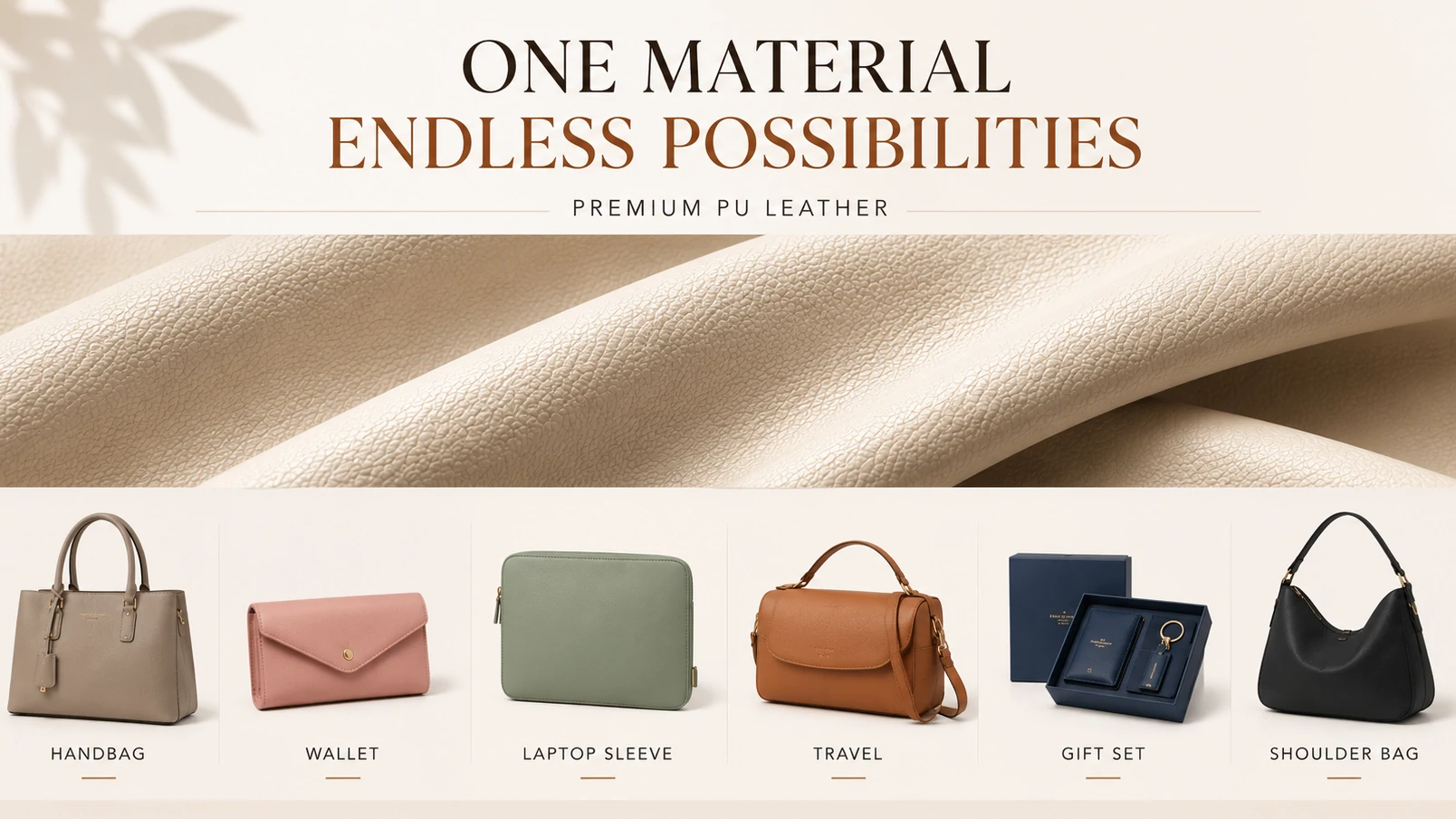
Different PU leathers are designed for different products. Soft PU works well for fashion bags, while thicker and reinforced constructions are better for structured handbags, backpacks, and protective products.
Choosing the right PU leather construction
Many buyers think PU leather is a single material. In reality, PU leather includes many constructions with different surface coatings, backing fabrics, softness levels, and physical performance.
Smooth PU leather creates a clean and modern appearance but shows scratches more easily. Embossed leather, such as Litchi or Saffiano grain, hides wear better and gives the product a more natural leather look. High-gloss finishes attract attention but require stricter quality control because surface defects become more visible.
The backing fabric also influences product performance. Knitted fabric provides flexibility for wallets and cosmetic bags. Twill fabric gives better structural support for handbags. Foam laminated backing improves protection for laptop sleeves, while non-woven backing is commonly used for rigid gift packaging.
PU Leather vs. Genuine Leather in the Bag Industry
Many buyers automatically assume genuine leather is always the better choice. In reality, the best material depends on your target market, selling price, brand positioning, and production requirements.
PU leather offers better cost control, color consistency, and customization, while genuine leather provides a more natural texture and premium image. Neither material is universally better for every handbag project.
Which material should buyers choose?
For fashion brands launching seasonal collections, PU leather is often the more practical solution. It supports stable colors, consistent embossing, and faster production. Every production lot looks almost identical, which helps maintain brand consistency.
Genuine leather offers unique natural grain and a luxury image, but every hide is different. Color variation, natural scars, and higher material costs make production more difficult, especially for large-volume projects.
Many private label brands also prefer PU leather because it supports custom colors, modern textures, and various logo techniques while keeping development costs under control.
| Feature | PU Leather | Genuine Leather |
|---|---|---|
| Cost | Lower | Higher |
| Color Consistency | Excellent | Natural variation |
| Customization | Very flexible | Limited |
| Luxury Feel | Good | Excellent |
| MOQ Flexibility | Higher flexibility | Usually higher cost |
| Production Stability | Excellent | Depends on hides |
PU Leather vs. Microfiber leather
Some buyers struggle to decide between PU leather and microfiber leather because both look similar at first glance.
PU leather is the best balance of quality and cost for most handbags, while microfiber leather is recommended for premium collections that require higher durability and a feel closer to genuine leather.
When should you upgrade to microfiber leather?
For most fashion handbags, PU leather already provides excellent performance. It is soft, attractive, easy to process, and supports many embossing patterns.
Microfiber leather has a denser fiber structure, making it stronger and more resistant to folding, stretching, and long-term wear. It also feels closer to genuine leather, which makes it popular for premium handbags and luxury accessories.
However, microfiber leather costs more. If your target customers are looking for affordable fashion bags, standard PU leather usually delivers better value.
| Feature | PU Leather | Microfiber Leather |
|---|---|---|
| Cost | Medium | Higher |
| Softness | Soft | Very Soft |
| Durability | High | Very High |
| Luxury Feel | Good | Excellent |
| Recommended Use | Fashion bags | Premium handbags |
The Impact of PU Leather on Custom Logo Designs
A beautiful logo can increase the value of a handbag, but the wrong material may reduce its quality during production.
PU leather supports many logo techniques, but the surface texture, coating, and thickness should match the selected branding method to achieve the best results.
Choose the logo method together with the material
Many buyers finalize the handbag design before considering the logo process. I recommend selecting both at the same time because different PU surfaces react differently during embossing, hot stamping, and printing.
Smooth PU leather creates sharp embossed logos and clean foil stamping. Litchi and textured PU leather give a premium appearance, but very deep textures may reduce the clarity of small logos. Matte finishes usually create an elegant brand image, while glossy surfaces produce stronger visual contrast.
Besides embossed logos, PU leather also works well with metal nameplates, woven labels, PU patches, zipper pullers, hang tags, and printed packaging. During sample development, testing every logo method before mass production helps reduce quality risks.
| Logo Method | Suitable for PU Leather |
|---|---|
| Debossing | ★★★★★ |
| Foil Stamping | ★★★★★ |
| Metal Plate | ★★★★★ |
| PU Patch | ★★★★★ |
| Woven Label | ★★★★☆ |
| Screen Printing | ★★★★☆ |
PU Leather Thickness and Lining
Even high-quality PU leather may perform poorly if the thickness or backing fabric does not match the product structure.
For most handbags, PU leather between 0.9 mm and 1.2 mm offers the best balance of softness, durability, and sewing performance. The backing fabric is equally important because it determines flexibility and structural support.
Recommended thickness for different products
I always recommend choosing thickness according to the product rather than using one specification for every design. Thin materials improve flexibility, while thicker materials provide better shape retention and durability.
| Product | Recommended Thickness | Common Backing |
|---|---|---|
| Handbags | 0.9–1.3 mm | Knitted / Twill |
| Wallets | 0.7–1.0 mm | Knitted |
| Card Holders | 0.6–0.8 mm | Thin Knitted |
| Cosmetic Bags | 0.7–1.0 mm | Knitted |
| Tote Bags | 0.9–1.2 mm | Twill / Knitted |
| Crossbody Bags | 0.9–1.2 mm | Twill |
| Fashion Backpacks | 1.0–1.4 mm | Twill |
| Laptop Sleeves | 1.0–1.5 mm | Foam Laminated |
| Gift Boxes | 0.8–1.2 mm | Non-woven / Paper |
| Small Leather Goods | 0.7–1.0 mm | Knitted |
Quick Material Selection Guide
| Thickness | Typical Applications |
|---|---|
| 0.6–0.8 mm | Card holders, passport covers, wallets |
| 0.8–1.0 mm | Cosmetic bags, gift boxes, lightweight handbags |
| 0.9–1.2 mm | Most handbags, shoulder bags, tote bags |
| 1.0–1.4 mm | Premium handbags and backpacks |
| 1.2–1.5 mm | Luxury structured bags and laptop sleeves |
PU Leather Color and Texture Selection
The right color and texture can make an ordinary handbag look premium. The wrong combination may reduce its perceived value, even when the workmanship is excellent.
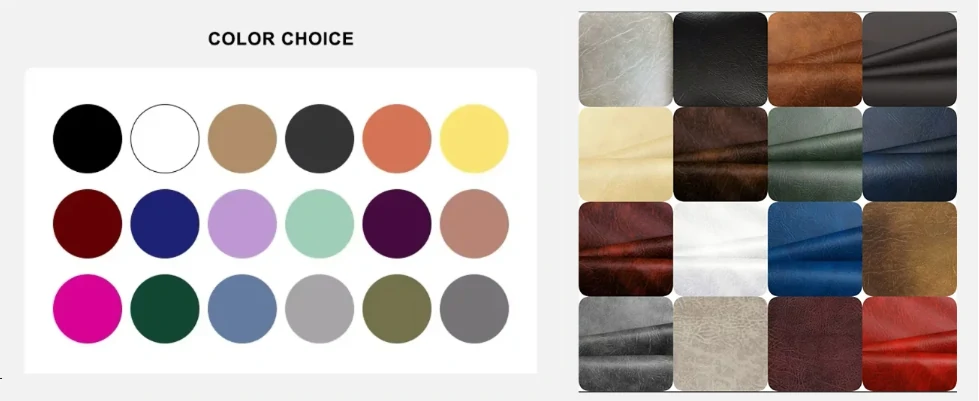
PU leather offers outstanding flexibility in color and texture. Buyers can choose from hundreds of standard colors and embossed patterns, or develop custom colors and textures for large-volume projects.
How to choose the right color
One of the biggest advantages of PU leather is its design flexibility. Unlike many natural materials, PU leather can be produced in consistent colors across different production batches. This is important for brands that need stable quality for long-term collections.
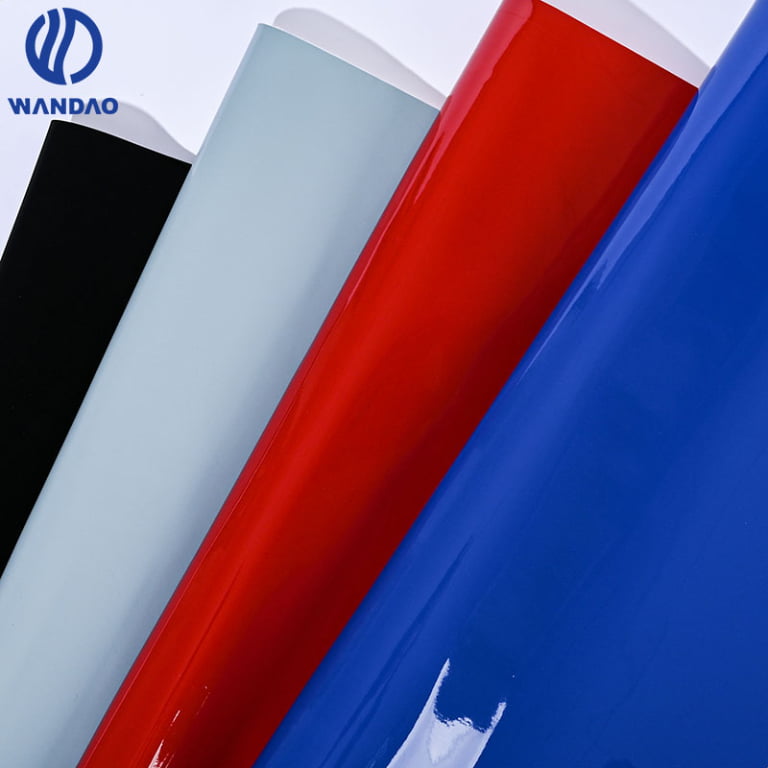
Classic colors such as black, brown, beige, navy, white, gray, and tan remain popular because they are suitable for business bags, handbags, wallets, and gift products. Fashion brands also introduce seasonal colors such as sage green, burgundy, blush pink, metallic silver, and light blue to refresh new collections.
For first orders or small production runs, I usually recommend selecting existing colors. This reduces development cost and shortens production time. Custom colors normally require higher minimum order quantities because the factory needs to prepare dedicated color formulations.
Which texture should you choose?
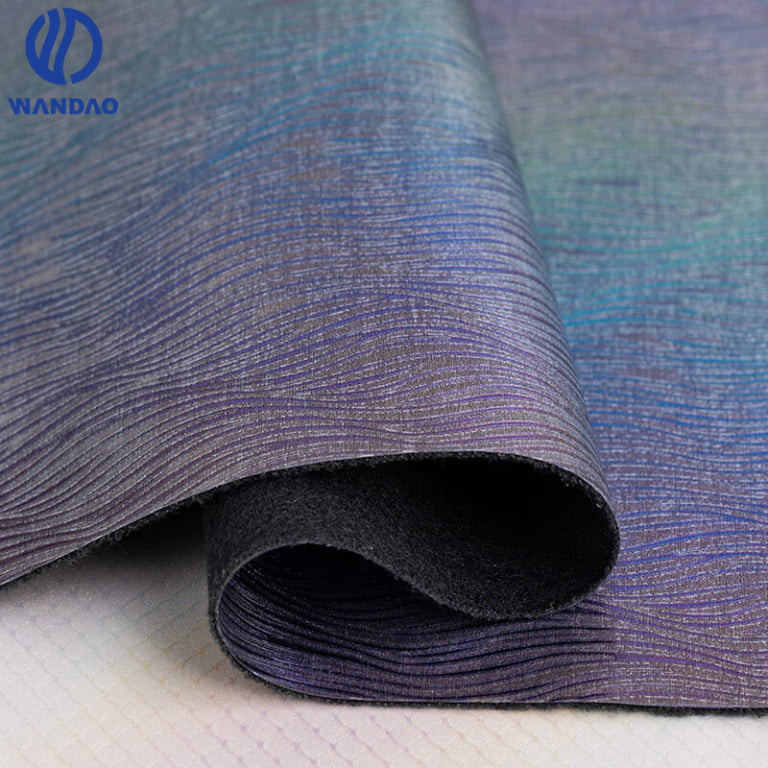
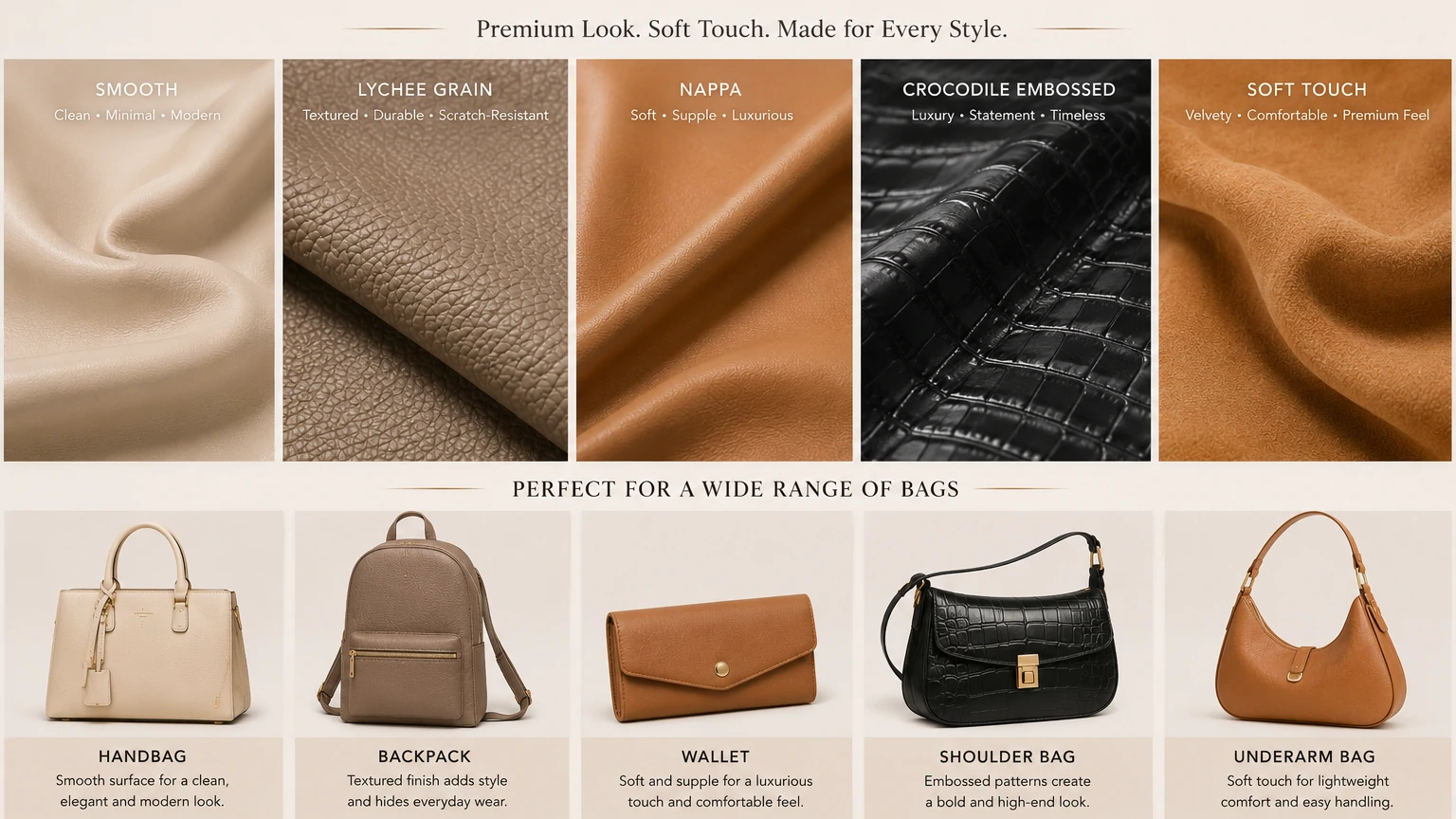
Texture affects both appearance and daily performance. Embossed PU leather looks closer to genuine leather and hides scratches better than smooth surfaces. Smooth PU leather creates a clean and modern look, but fingerprints and scratches are usually easier to notice.
Glossy finishes attract attention and work well for fashion collections. Matte finishes create a more premium appearance and are easier to maintain during daily use.
| Texture | Recommended Applications | Characteristics |
|---|---|---|
| Litchi | Handbags, tote bags | Most popular, natural leather appearance |
| Nappa | Luxury handbags | Soft touch and elegant finish |
| Saffiano | Wallets, business bags | Excellent scratch resistance |
| Smooth | Fashion collections | Modern appearance with clean surface |
| Glossy | Seasonal fashion bags | Eye-catching but requires stricter QC |
PU Leather MOQ, Cost, and Delivery Time
Many buyers assume every PU leather project requires a large order. That is not always true.
Stock PU leather is available from only 1 meter, making it easy to develop samples or test new collections. Custom colors and textures usually require larger quantities and longer lead times.
Planning your order efficiently
During product development, I normally recommend using existing colors and embossing patterns whenever possible. Buyers can quickly evaluate texture, softness, sewing performance, and logo compatibility before investing in customized materials.
Once the design is finalized, custom development becomes much easier. Depending on the project, buyers may request custom colors, embossed patterns, backing fabrics, packaging, or private label solutions.
We also provide free material samples. Buyers only need to arrange the courier cost. Sample evaluation helps verify thickness, hand feel, color consistency, and compatibility with production before placing bulk orders.
| Item | Standard Service |
|---|---|
| MOQ for Stock Materials | From 1 meter |
| Sample Support | Free samples (freight collected) |
| Custom Colors | Available for bulk orders |
| Custom Embossing | Available |
| Roll Width | 137–152 cm (54–60 inches) |
| Roll Length | 30–50 meters |
PU Leather Quality Control
Even attractive PU leather can become a production problem if quality control is ignored.
Professional quality control should evaluate appearance, thickness, softness, peel strength, folding performance, color consistency, odor, and overall production stability before mass production begins.
Key quality checkpoints
I always encourage buyers to inspect more than the surface appearance. A material that looks perfect in photos may perform poorly during sewing or long-term use.
Thickness consistency directly affects cutting accuracy and sewing quality. Peel strength determines whether the coating remains firmly bonded to the backing fabric. Folding performance helps prevent cracking after repeated use, while scratch resistance influences customer satisfaction after the bags reach the market.
For glossy materials, surface inspection becomes even more important because tiny defects are easier to notice under strong lighting.
| Inspection Item | Why It Matters |
|---|---|
| Thickness | Consistent cutting and sewing |
| Softness | Improves hand feel |
| Peel Strength | Prevents coating separation |
| Scratch Resistance | Improves product durability |
| Fold Resistance | Reduces cracking risk |
| Color Consistency | Maintains brand image |
| Odor | Improves customer experience |
Common Mistakes When Choosing PU Leather for Bags
Many production problems begin before manufacturing starts. Most of them can be avoided during material selection.
Buyers should evaluate the complete material system instead of comparing only prices. Thickness, backing fabric, texture, logo compatibility, and product structure are equally important.
Common purchasing mistakes
- Choosing material based only on price.
- Ignoring backing fabric selection.
- Selecting thickness without considering bag structure.
- Skipping sample evaluation before bulk production.
- Using glossy finishes without stricter quality inspection.
- Choosing textures that do not match the logo process.
- Ignoring scratch resistance and folding performance.
- Ordering custom colors before confirming the final design.
From my experience, sample development is one of the most valuable investments. Testing several textures, thicknesses, and logo methods before production usually prevents much larger losses later.
How Wandao Helps Buyers Find PU Leather for Bags
Selecting the right PU leather is only one part of a successful project. Material recommendations, sample development, and production support are equally important.
At Wandao, we help buyers choose suitable PU leather based on their products, target markets, and budgets while providing complete support from sampling to bulk production.
Our support includes
- PU material selection based on product application.
- Texture and color comparison.
- Material sample evaluation.
- Sample development support.
- Handbag and wallet structure recommendations.
- Material matching for cosmetic bags and gift packaging.
- Private label packaging solutions.
- Small order planning.
- Bulk production management.
- Strict quality control inspection.
- Export packaging and shipping coordination.
Today, more than 60% of our production is exported worldwide, and we have served customers in over 30 countries. We understand international quality requirements, export packaging, and logistics planning. Whether you are developing a new handbag collection or expanding an existing product line, we aim to make the material selection process simpler and more reliable.
FAQ
1. What is PU leather for bags?
PU leather for bags is a synthetic leather made by applying a polyurethane coating to a fabric backing. It offers a leather-like appearance while providing better color consistency, flexible customization, competitive pricing, and a wide selection of textures and finishes. It is widely used for handbags, wallets, cosmetic bags, backpacks, and many other fashion accessories.
2. Is PU leather durable enough for handbags?
Yes,High-quality PU leather can last 4–8 years under normal use. Its durability depends on the coating quality, backing fabric, usage environment, and maintenance.
3. What bags can be made from PU leather?
PU leather is suitable for a wide range of bag products. It is commonly used for handbags, wallets, card holders, cosmetic bags, toiletry bags, crossbody bags, shoulder bags, tote bags, fashion backpacks, laptop sleeves, passport holders, gift boxes, and many other small leather goods because it combines attractive appearance with practical cost.
4. Is PU leather better than genuine leather for handbags?
Neither material is always better because each has different advantages. PU leather offers lower cost, stable quality, consistent colors, and easier customization. Genuine leather provides a more natural texture and luxury image. The right choice depends on your target customers, product positioning, and budget.
5. Can you emboss or print logos on PU leather?
Yes. PU leather supports many custom logo techniques. Buyers can use debossing, foil stamping, metal nameplates, PU patches, woven labels, printed logos, zipper accessories, hang tags, and customized packaging. Testing logo compatibility during sample development helps ensure the best production results.
6. How do I know if PU leather is good quality?
Buyers should inspect much more than the appearance. Important factors include thickness, backing fabric, softness, hardness, peel strength, scratch resistance, fold resistance, odor, color consistency, logo compatibility, and whether the material matches the bag structure and intended application.
Conclusion
Choosing the right PU leather is not simply about selecting a beautiful surface. Thickness, softness, backing fabric, texture, logo compatibility, and quality control all influence the final performance of a handbag. By evaluating these factors before production, buyers can reduce development risks, improve product quality, and build collections that better match their target markets.
If you are looking for artificial leather for bags, shoes, wallets, or accessories, you are welcome to send us your product photo, required thickness, backing fabric, preferred color, and target price. We can recommend the most suitable PU leather, PVC leather, or microfiber leather for your project, provide free material samples for evaluation, and support you from product development to bulk production.