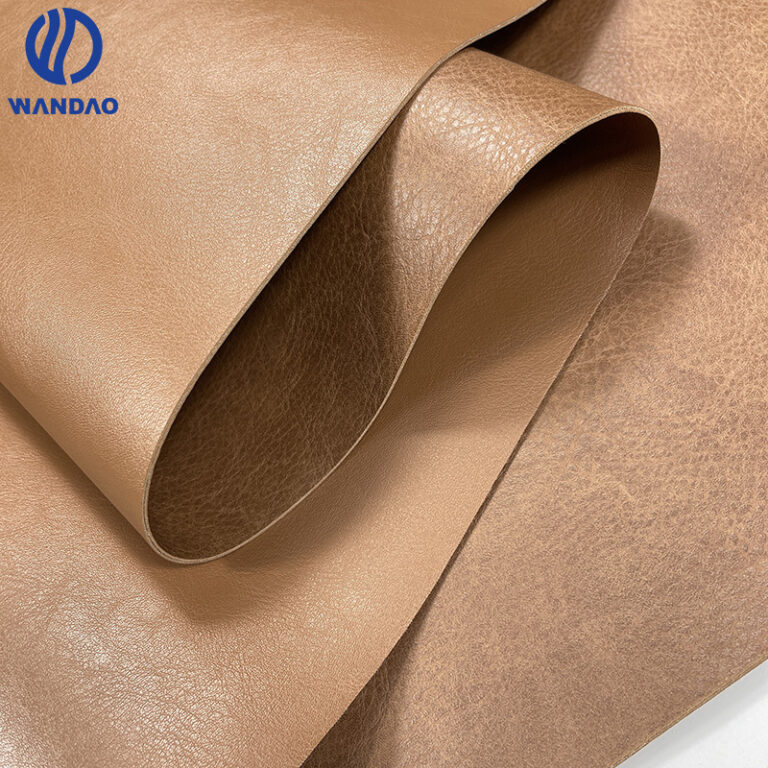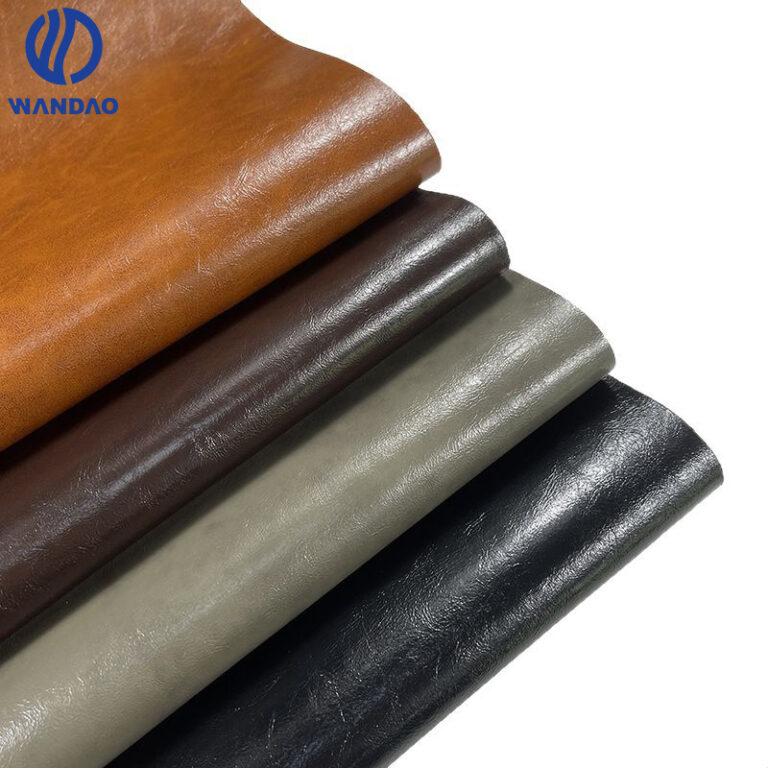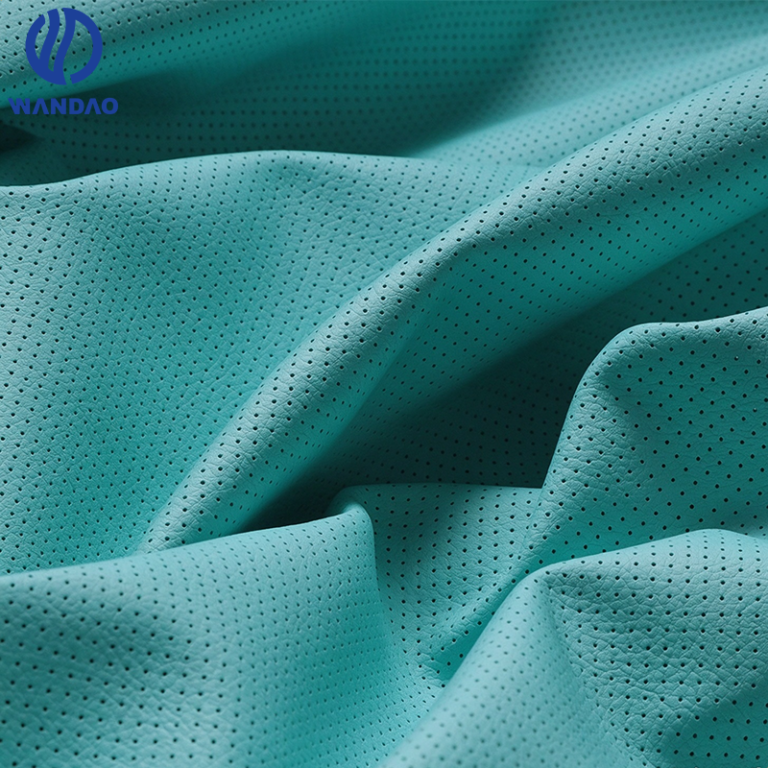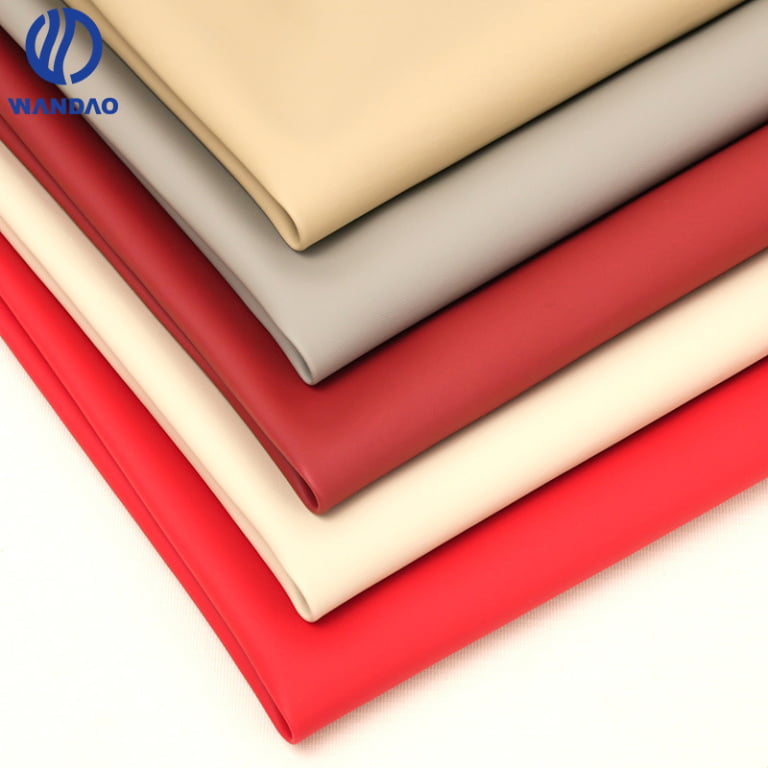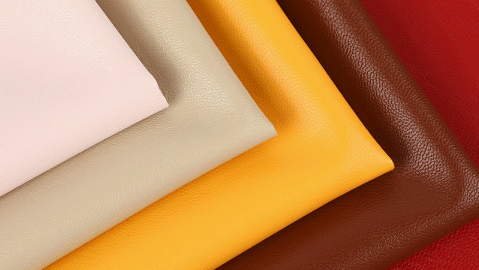
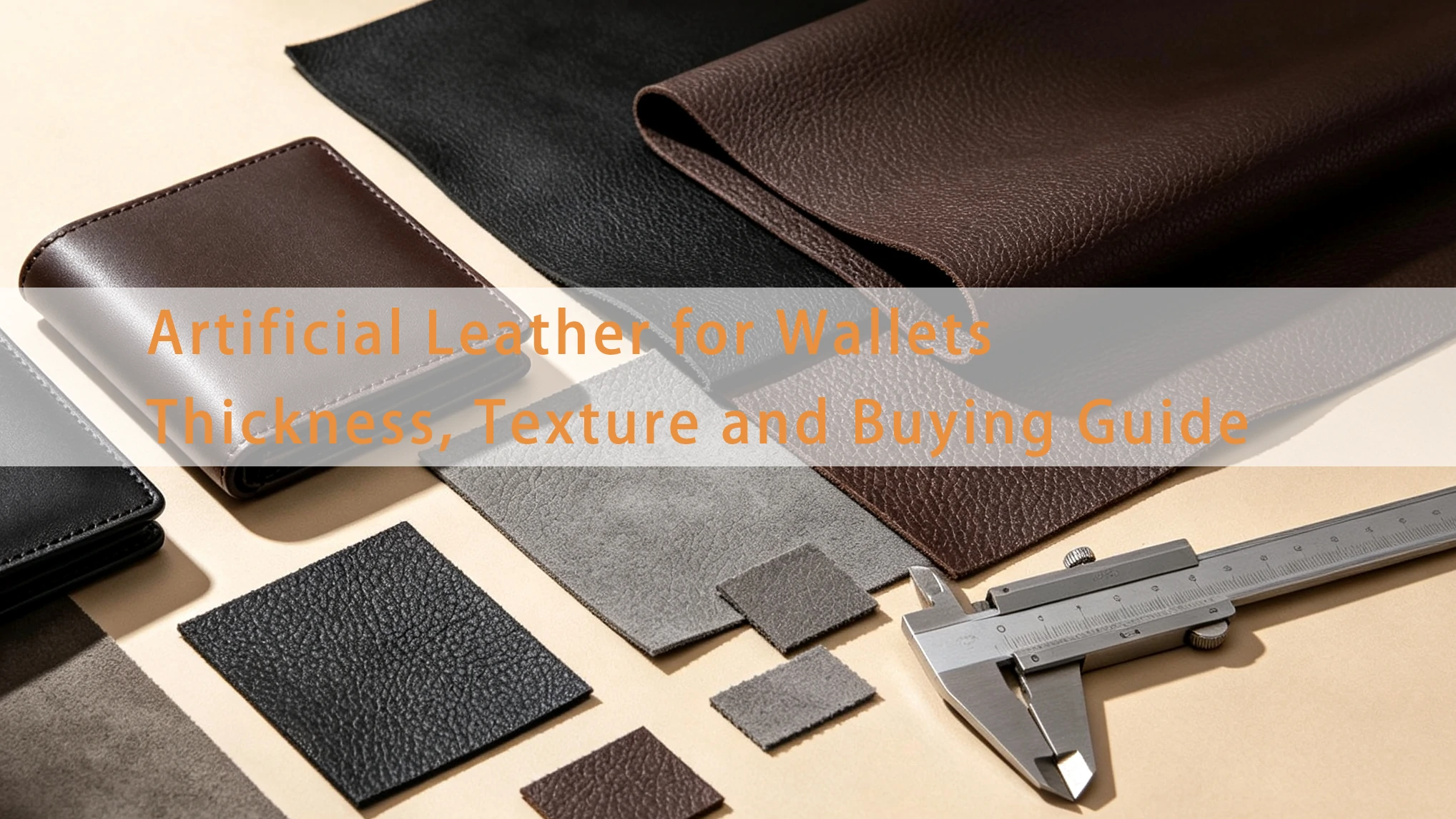
Artificial leather for wallets must balance flexibility, thickness, surface texture, backing structure and production stability. This practical buying guide compares PU leather, PVC leather and microfiber leather for wallet manufacturing, helping brands, manufacturers and sourcing teams choose the right material for exterior panels, card slots and different wallet price levels.
Which Artificial Leather Is Best for Wallets?
For most mid-range wallet projects, PU leather is the most balanced choice because it combines good flexibility, a leather-like hand feel, stable color and a wide range of grains and finishes. It is commonly used for bifold wallets, card holders, travel wallets and branded small leather goods.
PVC leather is more suitable for price-sensitive, promotional or high-volume projects where cost control, easy cleaning and a firm surface are more important than softness. Microfiber leather is normally selected for premium wallets that require higher tear strength, better aging performance and a structure closer to genuine leather.
Practical Decision Rule
- Choose PU leather for balanced cost, flexibility and appearance.
- Choose PVC leather for lower-cost promotional or mass-market wallets.
- Choose microfiber leather for premium durability and a more leather-like structure.
What Wallet Leather Must Do
Wallets are small products, but the material is exposed to repeated folding, pocket pressure, friction, sweat, hand oils and contact with cards, coins and metal accessories. Material selection should therefore be based on both appearance and manufacturing performance.
Fold Performance
The surface and backing must tolerate repeated opening and closing without cracking, whitening, delamination or permanent creasing at the wallet spine.
Surface Durability
The coating should resist abrasion, light scratching, color transfer and surface polishing caused by daily pocket use.
Manufacturing Stability
The leather should cut cleanly, hold stitching, bond with the selected adhesive and maintain consistent thickness across the roll.
Batch Consistency
Repeat orders should remain close to the approved color, grain, gloss, hand feel and thickness standard.
PU Leather vs PVC Leather vs Microfiber Leather
These three materials are commonly used in synthetic wallet production, but they do not offer the same balance of flexibility, surface hardness, aging performance and cost.
PU Leather
PU leather is made by applying a polyurethane surface layer to a woven, knitted or non-woven backing. It is normally softer and more flexible than PVC leather at a similar thickness and can be produced with smooth, litchi, cross-grain or custom embossed surfaces.
- Flexibility: Good for wallets with frequent folding.
- Hand feel: Soft to medium-firm depending on coating and backing.
- Surface options: Wide range of grains, colors and gloss levels.
- Typical use: Mid-range wallets, card holders and fashion accessories.
- Main limitation: Aging performance depends heavily on resin quality and hydrolysis resistance.
PVC Leather
PVC leather uses a polyvinyl chloride coating applied to a textile backing. It normally has a firmer hand, high surface uniformity and good resistance to water and routine cleaning. It is often selected when cost and volume are the main priorities.
- Flexibility: Moderate and dependent on plasticizer formulation.
- Hand feel: Firmer and less natural than many PU options.
- Surface options: Stable embossing and consistent appearance.
- Typical use: Promotional wallets and cost-sensitive private-label products.
- Main limitation: Unsuitable formulations may harden or crack at repeated fold points.
Microfiber Leather
Microfiber leather uses a dense non-woven microfiber base impregnated with PU resin and finished with a PU surface layer. Its internal structure provides better tear strength, dimensional stability and aging performance than many standard PU constructions.
- Flexibility: Very good with strong structural support.
- Hand feel: Premium and closer to genuine leather.
- Surface options: Fine grain, smooth nappa and custom finishes.
- Typical use: Premium wallets and branded accessories.
- Main limitation: Higher material cost than standard PU or PVC leather.
| Property | PU Leather | PVC Leather | Microfiber Leather |
|---|---|---|---|
| Flexibility | Good | Moderate | Very good |
| Hand Feel | Soft to medium | Firm | Premium |
| Fold Suitability | Good | Depends on formulation | Very good |
| Aging Performance | Varies by grade | Moderate | Generally better |
| Relative Cost | Medium | Lower | Higher |
| Typical Positioning | Mid-range | Budget | Premium |
Recommended Artificial Leather Thickness for Wallets
Wallet thickness should be specified by component rather than using one material thickness for the entire product. The final choice also depends on the backing, reinforcement board, lining construction and edge-folding method.
Exterior Panels
0.8–1.2 mm
This range provides shape and surface presence while allowing the wallet to fold. Slim card holders normally use the lower end, while structured zip wallets may require the upper end.
Card Slots and Interior Panels
0.6–0.8 mm
Thinner interior material reduces accumulated bulk when several layers are stitched together and when cards are inserted.
Important Thickness Notes
- Specify both the target thickness and acceptable tolerance.
- Measure the complete construction, not only the surface coating.
- A soft 1.0 mm PU leather may fold differently from a firm 1.0 mm PVC leather.
- Evaluate thickness together with backing type and hand feel.
- Test the finished wallet structure before approving bulk production.
Best Surface Grains and Finishes for Wallets
Surface grain affects appearance, scratch visibility, grip and consistency between cut panels. A deeper grain often conceals daily wear better, while a smooth surface creates a cleaner premium appearance but may show marks more easily.
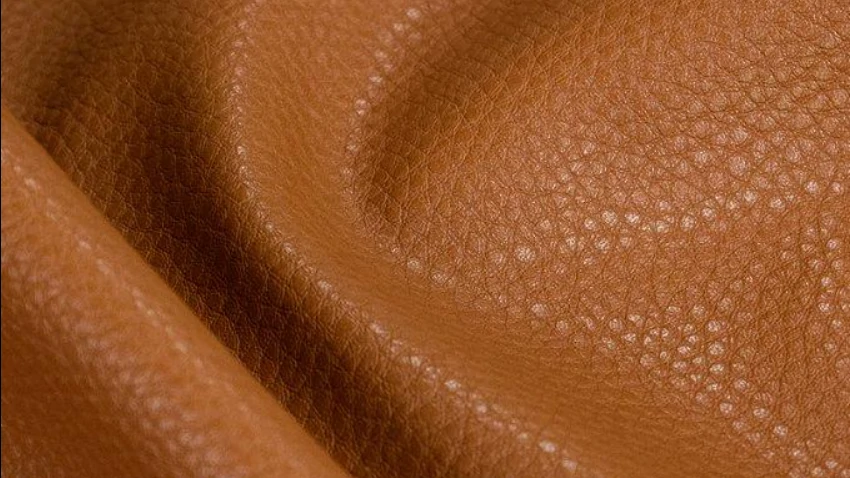
Litchi Grain
A pebbled leather pattern widely used for wallets and bags. Its irregular texture helps conceal light scratches and daily wear.
Best for: Everyday wallets, card holders and branded accessories.
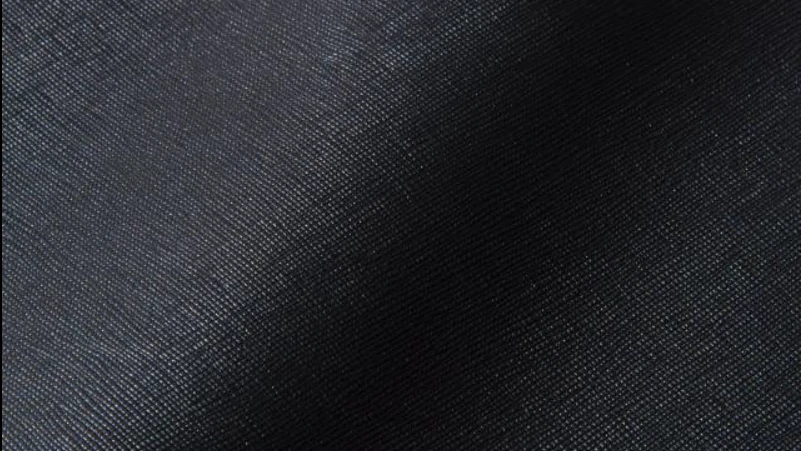
Cross Grain
A regular geometric grain that gives the wallet a structured appearance and hides fingerprints and minor surface abrasion.
Best for: Business wallets, travel wallets and structured designs.
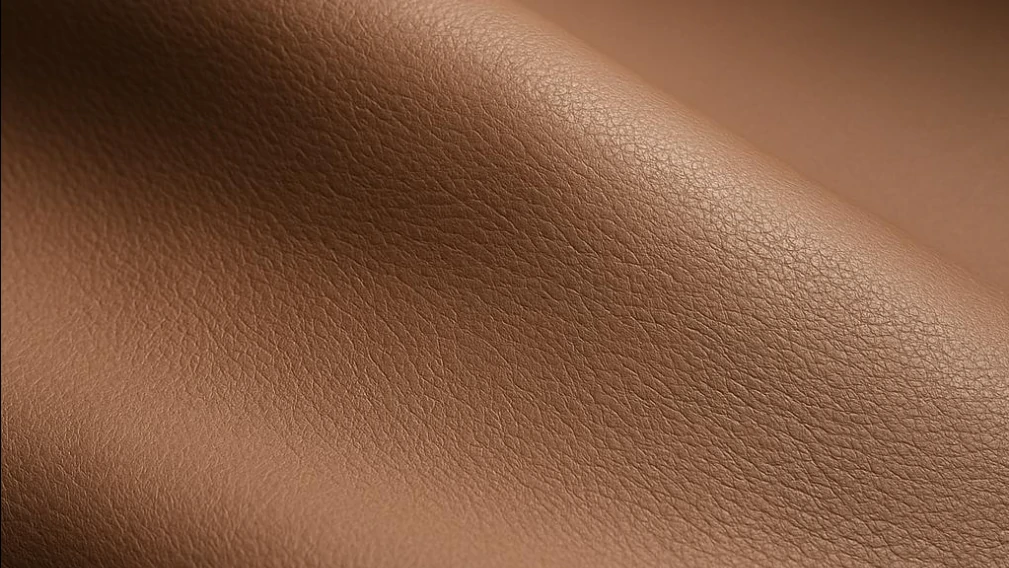
Smooth Nappa
A smooth surface with a soft hand and clean visual appearance. It can look more premium but makes scratches and scuffs easier to see.
Best for: Premium wallets with suitable protective top coating.
How Backing Material Affects Wallet Production
Buyers often focus only on the visible surface, but the backing determines much of the material’s stretch, tear resistance, cutting behavior and adhesive compatibility.
Knitted Backing
Offers flexibility and some stretch. It may be useful for soft wallet constructions but should be checked for dimensional movement during cutting and stitching.
Woven Backing
Provides better dimensional stability and may suit wallet panels that require consistent shape and controlled stretch.
Non-Woven Microfiber Base
Provides a dense, leather-like structure with good tear strength and cutting stability. It is commonly used in premium microfiber leather.
Buyer note: Ask the supplier to identify the backing composition and weight. Two materials with the same surface grain and thickness can behave differently if the backing structures are different.
Recommended Material by Wallet Product Tier
Budget and Promotional Wallets
PVC Leather
- Exterior: PVC leather with litchi or cross grain.
- Typical thickness: Approximately 0.8–1.0 mm.
- Priority: Cost control, surface uniformity and volume production.
- Suitable products: Promotional wallets and gift-with-purchase items.
Mid-Range Branded Wallets
PU Leather
- Exterior: PU leather with litchi, cross grain or smooth finish.
- Typical thickness: Approximately 0.8–1.0 mm.
- Priority: Balanced hand feel, appearance, flexibility and cost.
- Suitable products: Retail wallets, card holders and fashion accessories.
Premium Wallets
Microfiber Leather
- Exterior: Fine-grain or smooth microfiber leather.
- Typical thickness: Approximately 0.7–1.0 mm.
- Priority: Tear strength, aging performance and premium hand feel.
- Suitable products: Designer alternatives and higher-value branded wallets.
How to Evaluate Wallet Leather Samples
A sample should be evaluated in the actual wallet construction rather than approved only as a loose sheet. Folding, stitching, edge finishing and adhesive application may reveal problems that are not visible during a simple visual inspection.
Visual and Tactile Inspection
- Compare color under consistent lighting.
- Check gloss and grain depth.
- Feel the surface and backing separately.
- Inspect for pinholes, coating marks and uneven embossing.
Production Trial
- Die-cut several panels.
- Test stitching near the edge.
- Test the selected adhesive.
- Fold the wallet repeatedly at the spine.
Finished Product Check
- Insert the expected number of cards.
- Check whether the wallet becomes too bulky.
- Inspect the fold for whitening or cracking.
- Check whether the card slots stretch excessively.
Documentation Check
- Confirm the exact material code.
- Record approved color and grain.
- Confirm thickness tolerance.
- Request applicable test reports when required.
Wallet Leather Buying Specification Checklist
A clear specification allows the supplier to recommend a suitable construction instead of sending a visually similar but technically unsuitable sample.
- Final application: Bifold wallet, card holder, zip wallet or travel wallet.
- Material type: PU, PVC or microfiber leather.
- Exterior thickness: Target and tolerance.
- Interior thickness: Target and tolerance.
- Surface grain: Litchi, cross grain, smooth or custom.
- Surface gloss: Matte, semi-gloss or high-gloss.
- Backing type: Knitted, woven or non-woven.
- Color reference: Pantone number or physical swatch.
- Roll width: Confirm usable width.
- Required testing: Specify the exact standard.
- Order quantity: State trial and projected bulk volume.
- Delivery market: Identify destination and compliance needs.
Do not request vague items such as “high-quality PU leather for wallets.” Send the wallet style, target thickness, grain, color, hand feel, backing, required tests and expected quantity.
Common Mistakes When Sourcing Artificial Leather for Wallets
Using One Thickness for Every Wallet Component
Thick material in every card slot creates unnecessary bulk. Specify exterior and interior thickness separately.
Selecting Material Only by Appearance
Two materials may look similar but have different backing, fold performance and aging behavior.
Approving Only a Digital Photo
Screen colors do not accurately represent the actual color, gloss, grain depth or hand feel.
Ignoring the Backing Structure
Backing affects stretch, cutting, stitching and adhesion. It should be part of the approved specification.
Treating All PU Leather as the Same
PU performance varies with resin, coating thickness, backing and finishing process. The material category alone does not prove durability.
Assuming Compliance Without Reports
Request reports for the exact product code and color when your market or customer requires specific testing.
How to Evaluate a Wallet Leather Supplier
The supplier should be able to match the material to the final wallet design, not simply offer the closest available color or grain.
Application Knowledge
Ask whether the supplier understands wallet folding, card-slot thickness, edge folding and stitching requirements.
Sample Matching
The supplier should be able to match an approved swatch, product sample, Pantone color or requested grain.
Specification Control
Confirm how thickness, color, grain, roll width and surface finish are checked before shipment.
Testing Support
The supplier should distinguish between existing reports and new testing required for a specific product.
Reorder Consistency
Ask how approved colors and material codes are retained for repeat orders.
Export Communication
Clear confirmation of samples, specifications, packaging and delivery documents reduces sourcing errors.
Frequently Asked Questions
PU leather is usually the most balanced option for mid-range wallet manufacturing. PVC leather is more suitable for lower-cost promotional projects, while microfiber leather is commonly used for premium wallets requiring better structural strength and aging performance.
A practical starting range is approximately 0.8–1.2 mm. The final choice depends on wallet style, backing, reinforcement and required hand feel.
Card slots and interior panels commonly use approximately 0.6–0.8 mm material to reduce bulk. The material must still have sufficient tear resistance around the stitching line.
It can be suitable when the PVC formulation has adequate flexibility and the finished wallet passes repeated fold testing. Standard firm PVC should not be selected only on price without testing the fold area.
Litchi grain and cross grain generally conceal light scratches and daily wear better than smooth nappa surfaces.
Color, grain, gloss, thickness, backing and hand feel may be customized, subject to material type, production method, MOQ and sample-development requirements.
Yes, when specific performance or chemical requirements apply. The buyer should identify the exact standard and verify that the report covers the selected product code and, where relevant, the selected color.
Conclusion
The best artificial leather for a wallet depends on the product tier, folding structure, target thickness, grain, backing and required durability. PU leather provides a balanced option for most mid-range products, PVC leather supports cost-sensitive production, and microfiber leather is better suited to premium positioning.
Buyers should specify exterior and interior thickness separately, evaluate the backing structure, approve a physical sample and test the material in the actual finished wallet construction.
Wandao Leather supports overseas wallet manufacturers, brands and sourcing teams with PU leather, PVC leather and microfiber leather material matching, color development, grain selection, sample coordination and export communication.