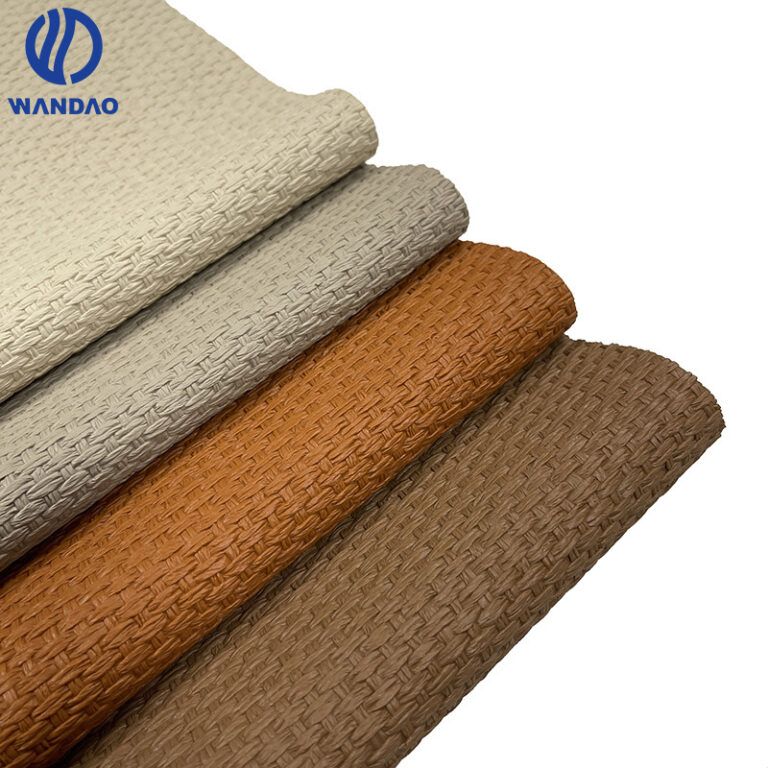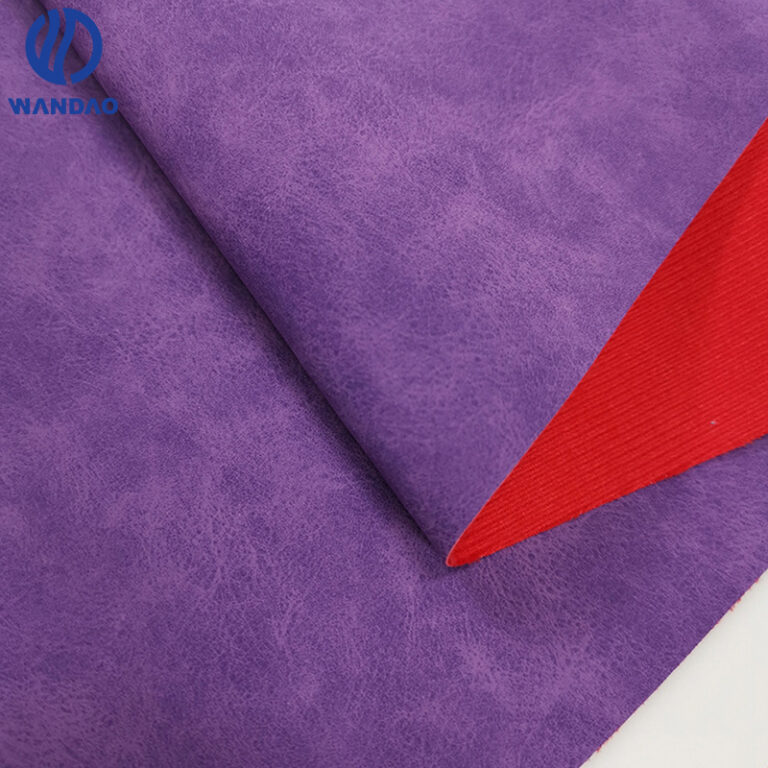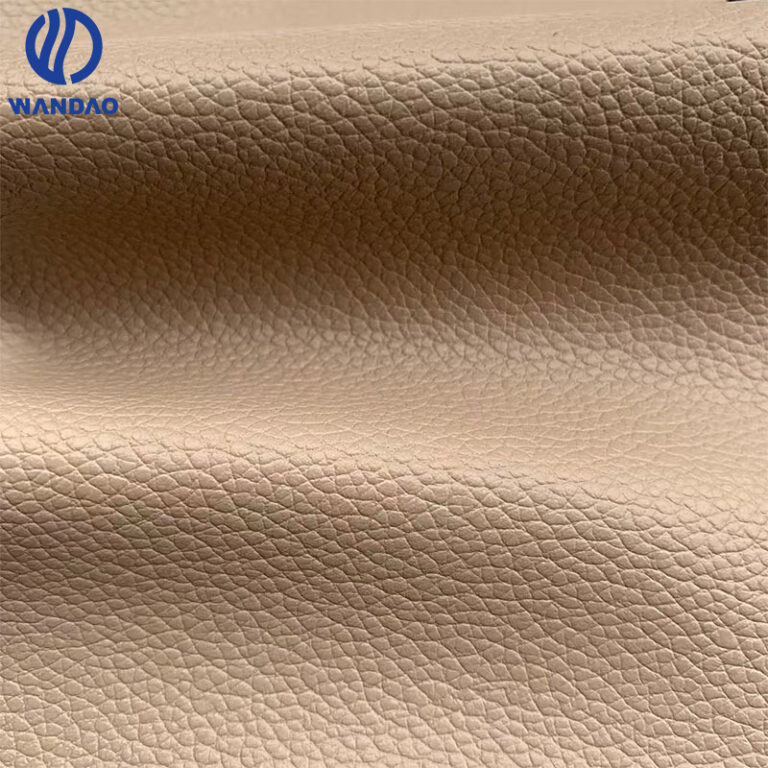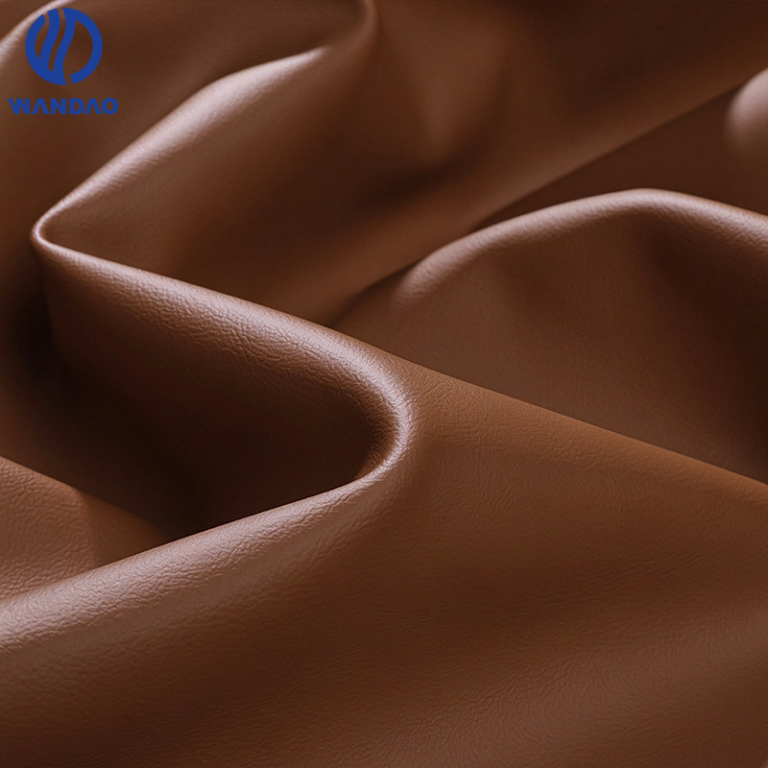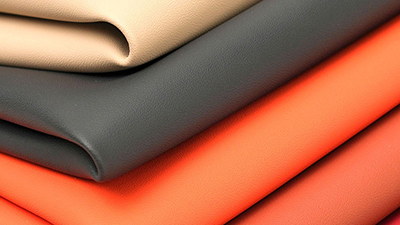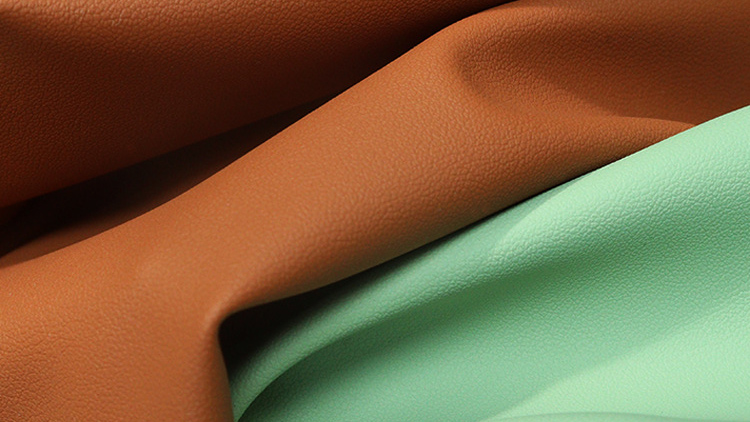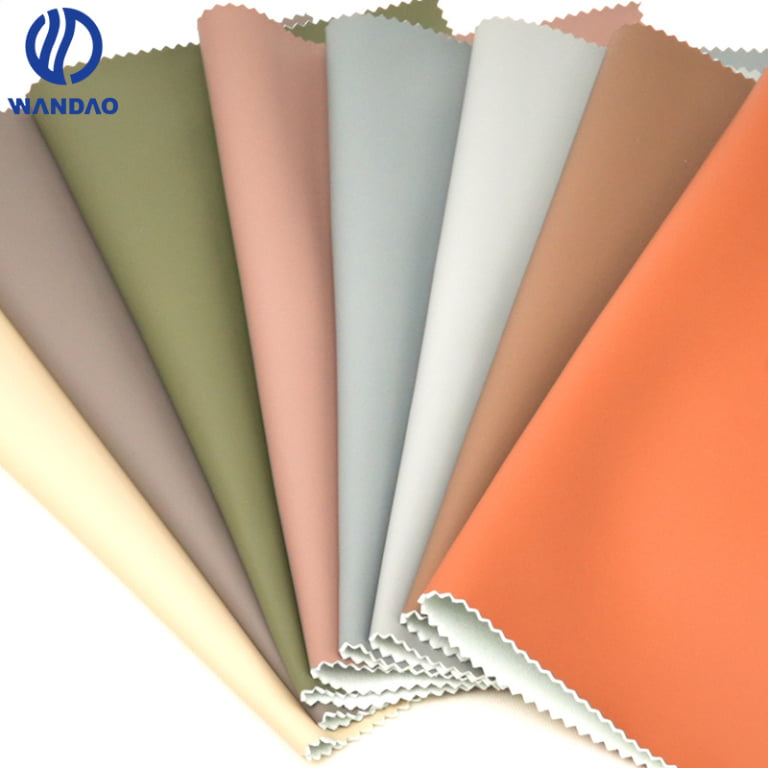
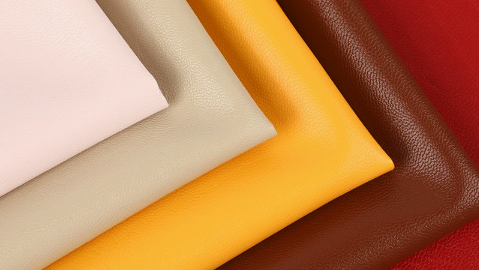
Is PU leather soft? It can be, but the name does not specify a particular hand-feel. A PU-coated textile may feel smooth at the surface while resisting a fold, or bend easily without feeling cushioned. Buyers should therefore define the kind of softness they need and approve it against an identified physical reference. The useful purchasing question is not which sample feels softest for a moment, but which construction reproduces the required touch and handling in the intended product.
Is PU Leather Soft in the Way Your Product Needs?
Before requesting a softer version, ask the person rejecting the sample to describe the action that feels wrong. Are they rubbing the face, bending the sheet, squeezing a padded assembly or pulling an edge? Those actions do not ask the same question. An instruction such as “make it softer” can send development in the wrong direction if the supplier changes bending behaviour when the buyer actually dislikes surface drag.
Textile hand is not one isolated sensation. NC State’s subjective fabric-hand guidance uses separate descriptors for sensations such as hardness, flexibility, roughness and thickness. This supports a more precise vocabulary; it does not establish a universal softness grade for PU leather.
| What the buyer means | Question to record | Do not substitute |
|---|---|---|
| Surface touch | Does the face feel appropriately smooth, dry or grippy? | A thickness measurement |
| Easy bending | Does the sheet resist the intended fold? | A surface-touch description |
| Cushioned feel | How does the specified assembly respond to pressure? | The loose cover alone |
| Desired drape | Does a representative panel hang as intended? | A tiny swatch comparison |
| Stretch and recovery | What happens during and after controlled extension? | A claim that the material is supple |
For a garment project, use the PU leather for clothing discussion to identify the application, then specify the hand-feel separately. This guide focuses on that approval task, not on choosing between hide leather and synthetic material or qualifying a complete jacket.
Inspect the Complete Construction Before Changing It
PU describes polyurethane, not every layer of the supplied material. The Association for Contract Textiles describes coated fabrics as a substrate carrying one or more polymer layers on the wear surface. That structural description is useful here; ACT’s contract-textile guidance is not a garment approval standard.
For development, request the surface system, backing type, total thickness and any supplied laminate. Ask which of these can change and which must remain fixed. A knitted backing and a woven backing should not be treated as interchangeable merely because both have the same colour. Equally, the backing name alone is not enough to predict the finished hand.
As an engineering approach, treat the coating, support and bonding arrangement as variables to investigate rather than guessing that the resin is responsible for every tactile difference. If a revised sample changes several layers at once, it may meet the brief, but it will not show which change produced the improvement. Ask the supplier to identify the revision clearly.
Keep any proposed thinner construction conditional. Reducing thickness is not a complete softness specification, and the revised article must still satisfy the other requirements of the product. Do not accept an undocumented construction change simply because a fresh swatch feels pleasant.
Create a Physical Reference That Both Sides Can Use
The following is a suggested buyer workflow, not a reproduction of a laboratory standard. Its purpose is to make an approval understandable to the designer, supplier and incoming-inspection team.
Separate the appearance master from the hand-feel master
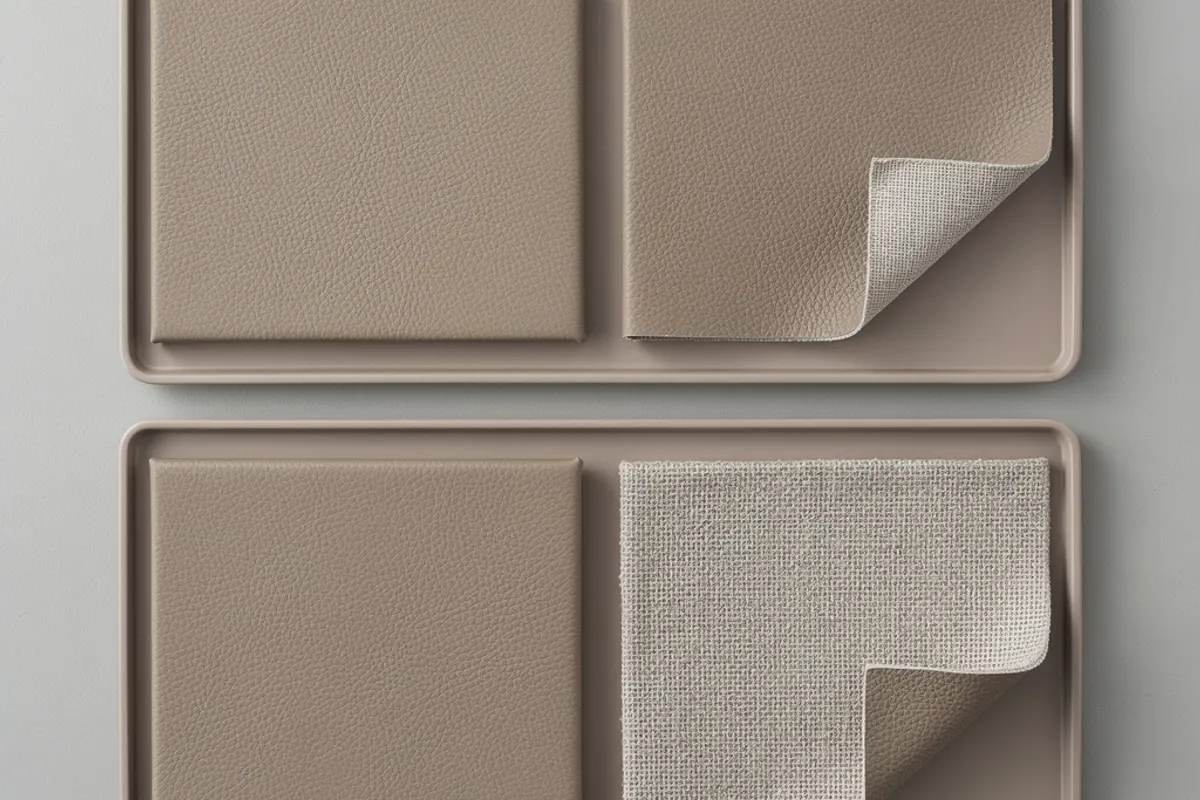
A colour card or photograph may explain the visual target but cannot communicate bending resistance by itself. Retain an actual material reference and state whether it controls appearance, hand-feel or both. If the preferred touch comes from another product, describe that sample as a development reference rather than assuming its construction is suitable for yours.
Compare like-sized, identified pieces
Agree the sample size, orientation, presentation and conditioning with the supplier or laboratory. Keep the coated face and material direction identifiable. Avoid comparing a tightly curled shipping offcut with a large relaxed panel and attributing the entire difference to formulation. Record how samples were stored and prepared before the review.
Record observations before discussing price
Use sample codes where practical so that supplier names and quoted prices do not dominate the initial review. Ask evaluators to record individual observations first, then resolve disagreements against the intended product brief. A simple “too firm in the folded edge, acceptable surface touch” is more actionable than a combined score with no explanation.
AATCC EP5-2025 provides guidelines for presenting and handling fabrics when evaluating constituent elements of hand. Its public scope supports consistent evaluation conditions. If the purchase contract specifies this procedure, have a qualified party apply the actual procedure; an informal supplier comparison should not be labelled an EP5 test.
Choose Measurements That Answer the Disagreement
Testing becomes useful when it resolves a defined question. Ordering a generic “softness test” without naming the property, method and specimen can produce a number that neither side knows how to use.
When the concern is bending
ISO 5979:1982, confirmed in 2024, characterizes coated-fabric flexibility using a flat-loop method. Its scope excludes specimens that roll or spiral when cut small, and materials too rigid to form the loop. Ask the laboratory whether the proposed construction is suitable before naming the method in an order.
ASTM D1388-23 measures bending length and calculates flexural rigidity, using cantilever or heart-loop procedures. Its scope includes coated fabrics, while its guidance notes that the procedures are generally better suited to woven than knitted fabrics. Curling can affect results. These are reasons to agree the procedure and specimen details, not to compare every reported stiffness value directly.
When several sensations are involved
NC State’s Kawabata Evaluation System overview separates low-force tensile, shear, bending, compression and surface measurements. It illustrates why one mechanical result cannot describe the entire tactile experience. A specialist should select applicable measurements for the submitted material; the system name is not a pass certificate.
Request the method and edition, specimen construction, material direction, conditioning, units and results. Set an acceptance range using representative approved samples and the product requirement, with laboratory input where needed. Do not copy an unrelated supplier’s numerical limit. If the laboratories disagree, investigate specimen identity and method differences before declaring a production failure.
Keep Softness Approval Separate from Product Performance
A favourable touch review answers a sensory question. It does not establish abrasion resistance, hydrolysis resistance, seam strength, moisture comfort or suitability for a cleaning process. Maintain separate approval entries for the properties the product actually needs.
Our guide to evaluating PU leather durability addresses those performance questions in more detail. Avoid turning this sensory approval into a claim that a material will last a particular number of years. Similarly, do not describe a soft sample as breathable without relevant evidence.
Before freezing the reference, inspect a representative assembled detail. For clothing, this might be the actual folded edge or reinforced panel that prompted the concern. Compare the same construction on each candidate. The aim is to check whether the chosen hand remains appropriate after assembly, not to rank unrelated products by softness.
If one reviewer prefers a softer panel and another needs more shape retention, treat that as a design decision. Agree which requirement takes priority at the specific location. There is no benefit in making every component as soft as possible when the design calls for a controlled shape.
Handle a Bulk Shipment That Feels Different
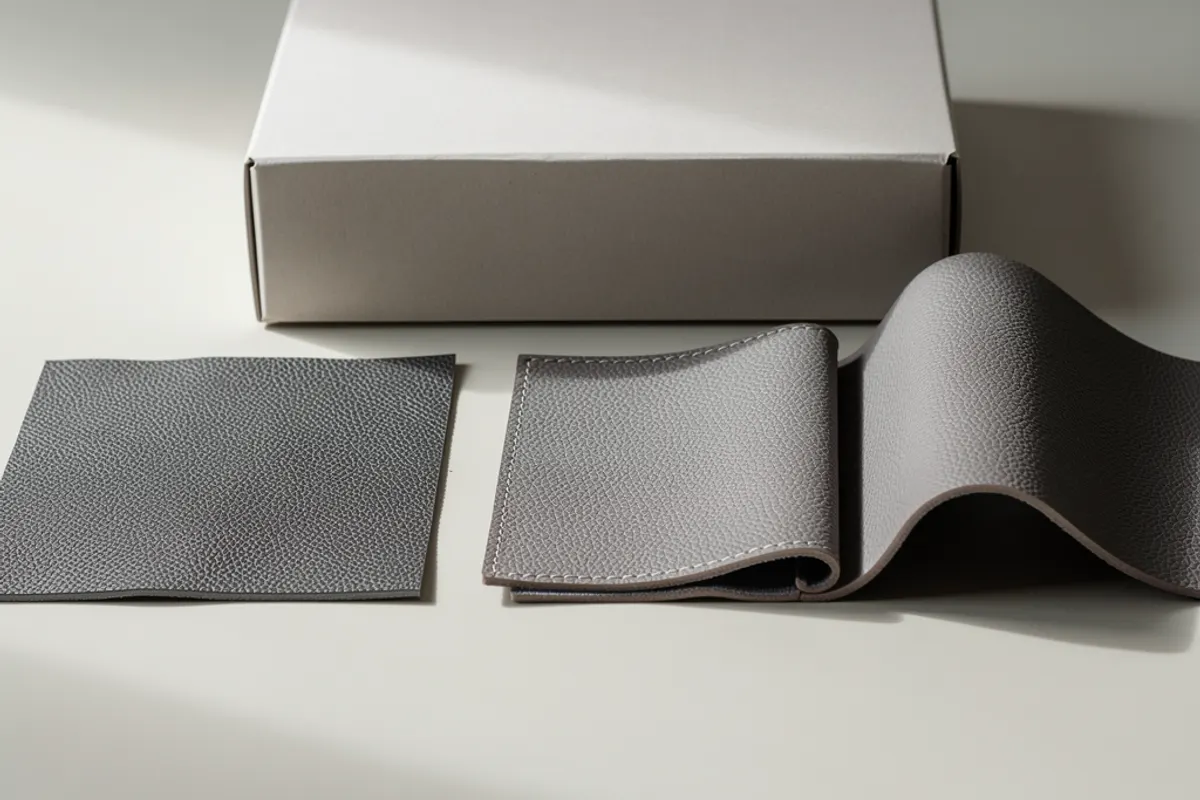
First identify the delivered article, lot and revision. Compare retained and incoming samples using the agreed preparation and handling conditions. ASTM D1388 notes that stiffness may change during storage, so an old reference should not automatically be treated as an unchanging benchmark.
Our recommended sequence is to describe the discrepancy, check the construction record, repeat the agreed comparison and escalate the relevant measurement if disagreement remains. Do not apply heat, oil or conditioner to force a match before the supplier has investigated. Such treatment changes the material being assessed and can obscure the original complaint.
Keep the disputed material identifiable while the decision is pending. If a revised material is accepted, update the approval record rather than silently replacing the master. Record what changed, who authorized it and whether any related performance checks must be repeated. Acceptance of one revised sample should not automatically release every colour or future lot.
Frequently Asked Questions
Is all PU leather soft?
No. PU leather is not a single hand-feel grade. Identify whether the requirement concerns surface touch, bending, compression or drape, then evaluate the complete construction against an approved reference.
Does thinner PU leather always feel softer?
Do not use thickness alone as the acceptance rule. Keep thickness and hand-feel as separate specification items, and assess the revised coating-and-backing construction rather than assuming that thinner means suitable.
Is soft PU leather necessarily stretchy?
No. Ease of bending and extension are different evaluation questions. If stretching matters, specify an appropriate extension-and-recovery assessment instead of relying on how supple the sample feels.
Which test can measure PU leather softness?
Choose the method for the property in question. ISO 5979 addresses coated-fabric flexibility within its limits; ASTM D1388 addresses fabric stiffness; AATCC EP5 supports subjective hand evaluation. Ask the laboratory which approach fits the submitted construction.
Does a soft touch prove that PU leather is durable?
No. Sensory approval is not durability evidence. Evaluate the relevant wear, flexing, ageing and assembly requirements separately, using reports tied to the actual material and defined test conditions.
What should a hand-feel approval record contain?
Include the material and revision, retained reference, attributes being judged, sample preparation and orientation, evaluation method, acceptance decision and approver. Keep any required instrumental results and assembled-detail review linked to the same material.
Request a Defined Hand, Not Simply the Softest Grade
A useful brief names the product, identifies the surface effect and explains what the material must do when handled. Include a physical reference, the construction constraints and the acceptance route. The broader PU leather material overview can help frame those construction questions.
To begin a focused sample discussion, send Wandaoleather your hand-feel reference and application brief. Explain which sensation needs improvement and which dimensions, backing or performance requirements cannot change. That gives the sampling team a clearer target than “soft premium PU” alone.