Why Buyers Keep Asking About Automotive Interior PVC Leather
The question of what automotive interior PVC leather is, how it performs and when to specify it refers to the practical need of purchasing managers, material engineers, OEMs and aftermarket suppliers to separate marketing claims from measurable results under real cabin conditions.
Most buyers encounter conflicting statements: some sources treat PVC as an outdated low-cost option, others position it as still dominant in volume programs. Public market figures rarely isolate pure PVC from combined PVC/PU data, and OEM specifications vary by region and part location. The result is repeated clarification requests about performance limits, application fit and supplier evaluation criteria.
China remains the main production base for automotive-grade PVC synthetic leather, while North American and European demand is shaped by VOC, odor, Prop 65 and flammability rules. Seats typically account for the largest share of use, followed by door panels and instrument-panel surfaces. Business Research Insights Spherical Insights
The opportunity is clear for cost-sensitive high-volume and commercial platforms. The risk is equally clear for programs that prioritize lowest emissions or premium soft-touch. Buyers need a structured view that starts with definition, moves through types and applications, and ends with explicit limits.
Action
Before opening any new RFQ, write down the exact vehicle class, climate range and part location. Use that single page as the filter for every subsequent data request.
What Automotive Interior PVC Leather Actually Is
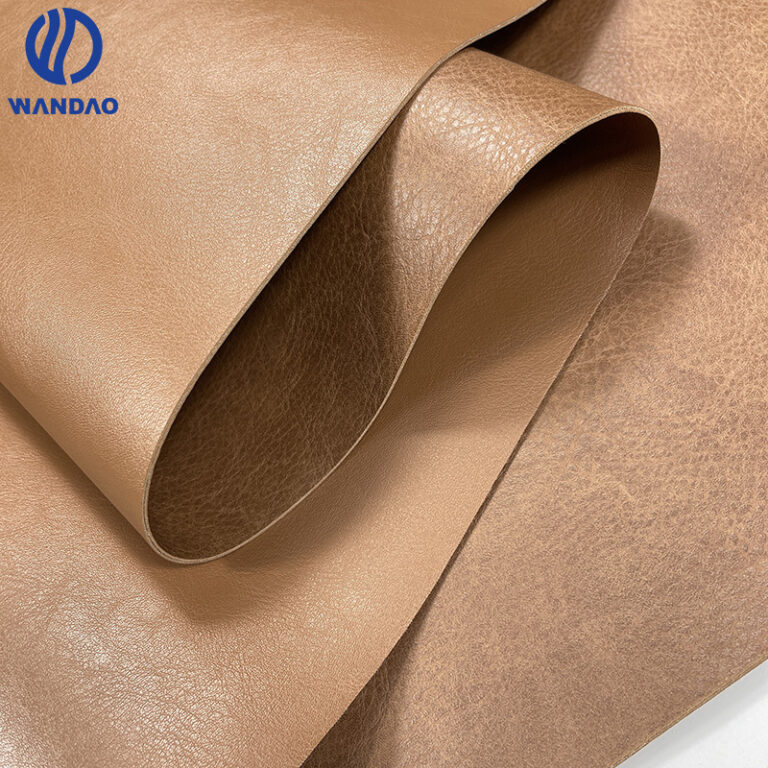
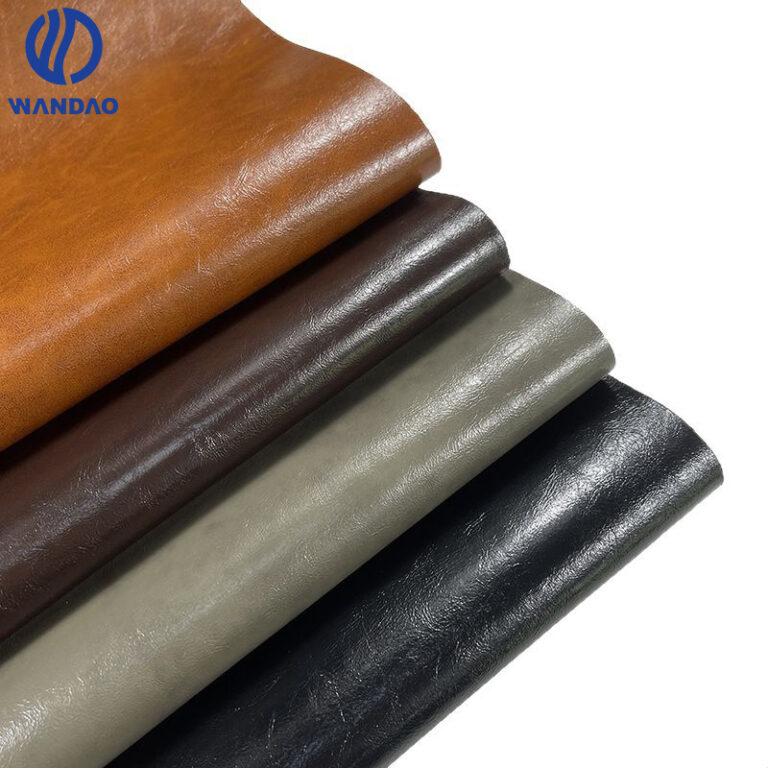
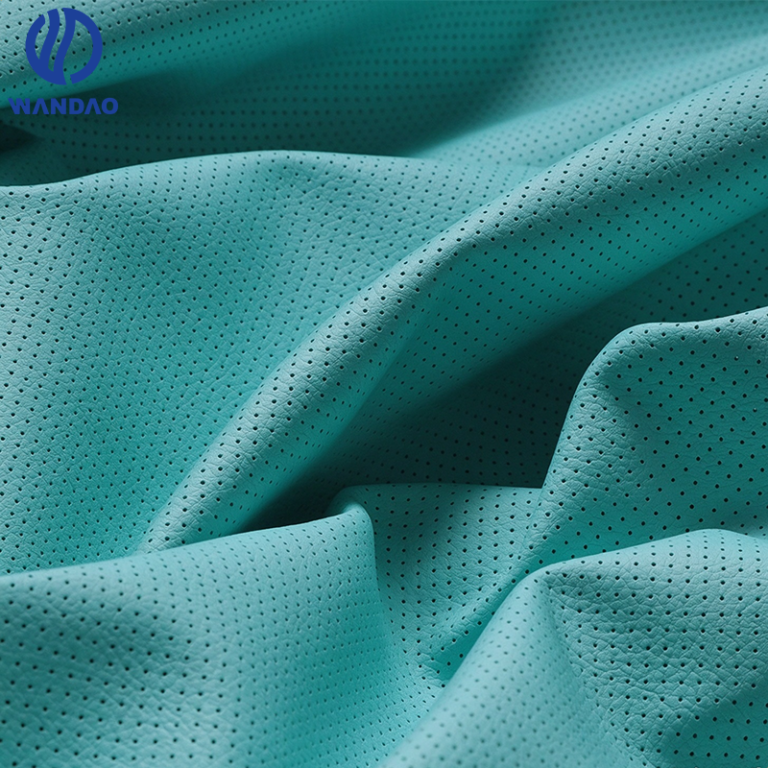
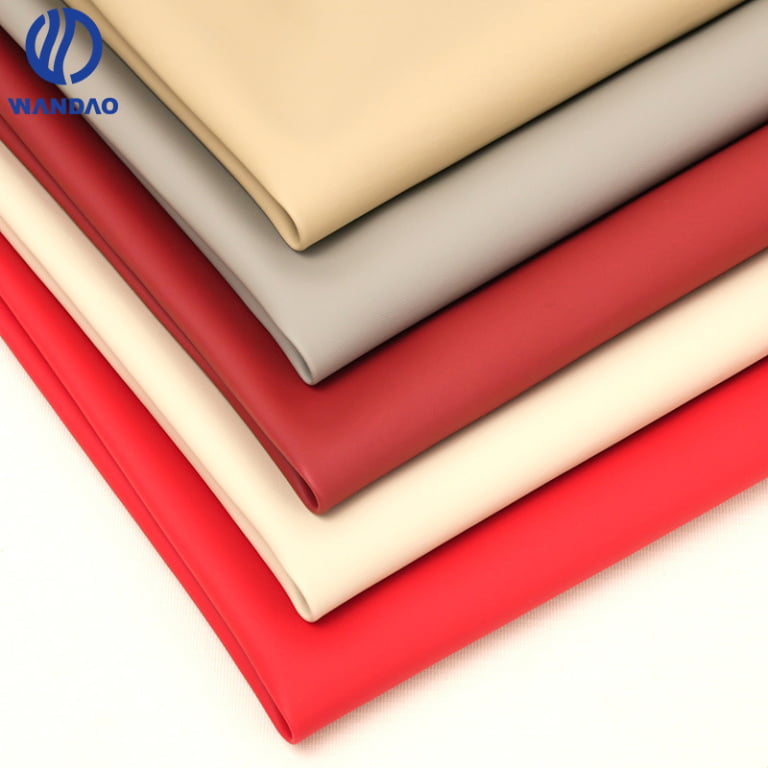
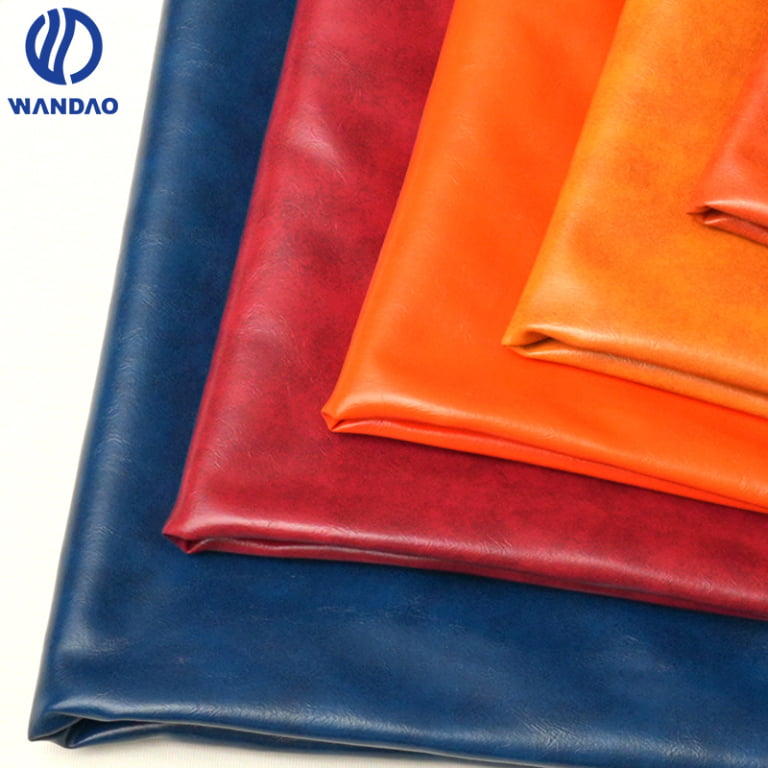
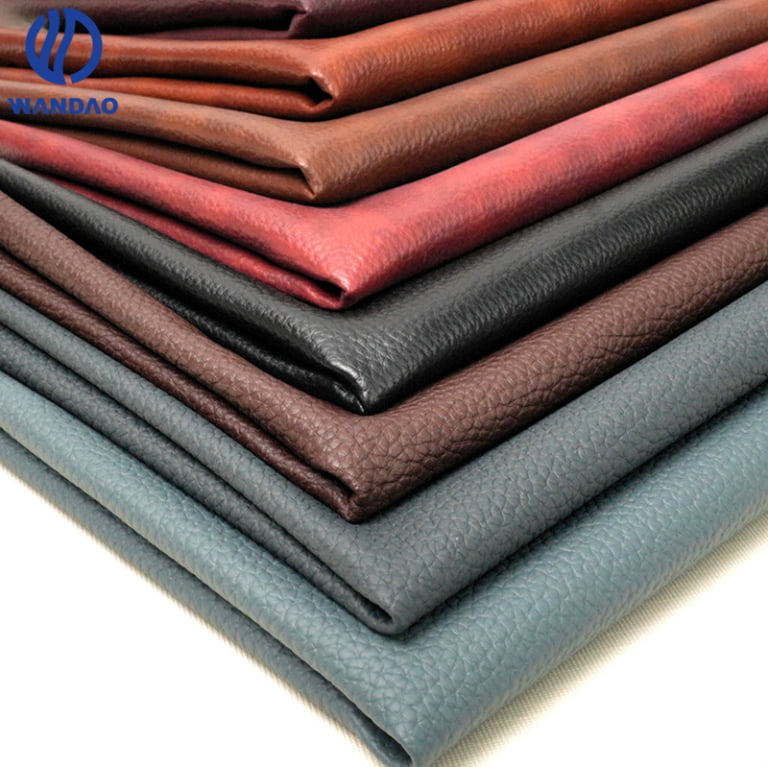
Automotive interior PVC leather refers to a multilayer coated or laminated material consisting of a plasticized polyvinyl-chloride skin, often with a foam layer, bonded to a textile backing and finished with embossing and protective topcoats.
PVC resin itself is rigid. Flexibility, hand-feel and low-temperature performance come from plasticizers. One published formulation example uses 30–50 parts plasticizer per hundred resin. Google Patents PVC accounts for roughly 90 % of global plasticizer consumption. MDPI The finished construction is therefore a system, not a single polymer.
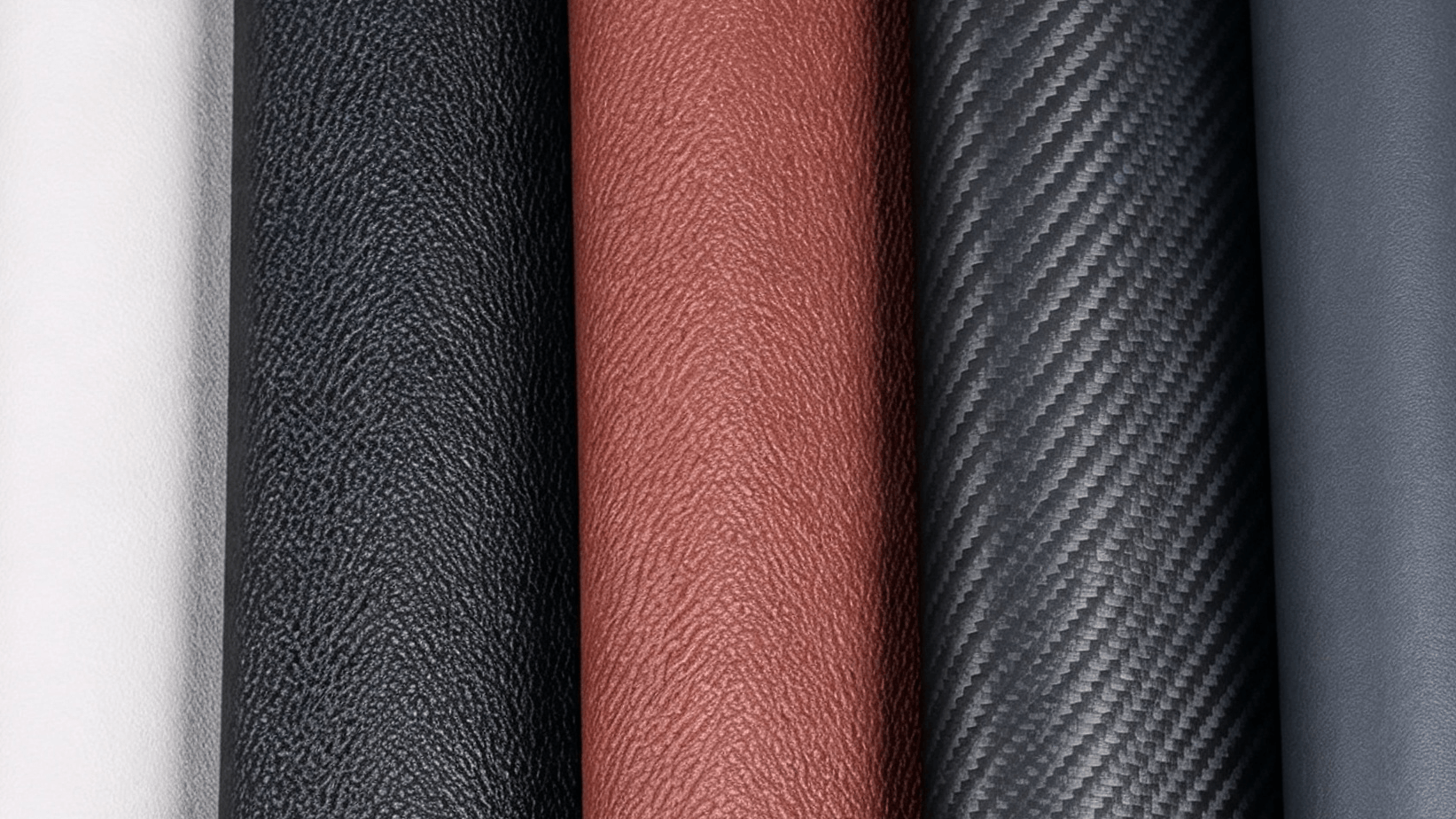
Typical layers include a dense PVC skin, an optional foamed PVC intermediate layer, a fabric or knit backing, and a surface topcoat that controls gloss, abrasion and stain resistance. Embossing creates the grain. The same base chemistry can be tuned for softness, hardness, color depth and chemical resistance by changing plasticizer type, stabilizer package and coating cross-link density.
This architecture explains both the strengths and the failure modes. High-volume calendering and coating lines keep cost low and supply scalable. At the same time, plasticizer migration, heat aging and VOC emissions remain formulation-dependent rather than inherent to every PVC grade.
Action
Ask every supplier for a layer stack diagram and the exact plasticizer family used. Reject any quotation that only states “PVC leather” without construction detail.
Main Types Used in Vehicle Interiors
The main types of automotive interior PVC leather refer to the construction and performance variants differentiated by foam content, backing style, surface finish and regulatory package rather than by marketing names.
Common practical categories are:
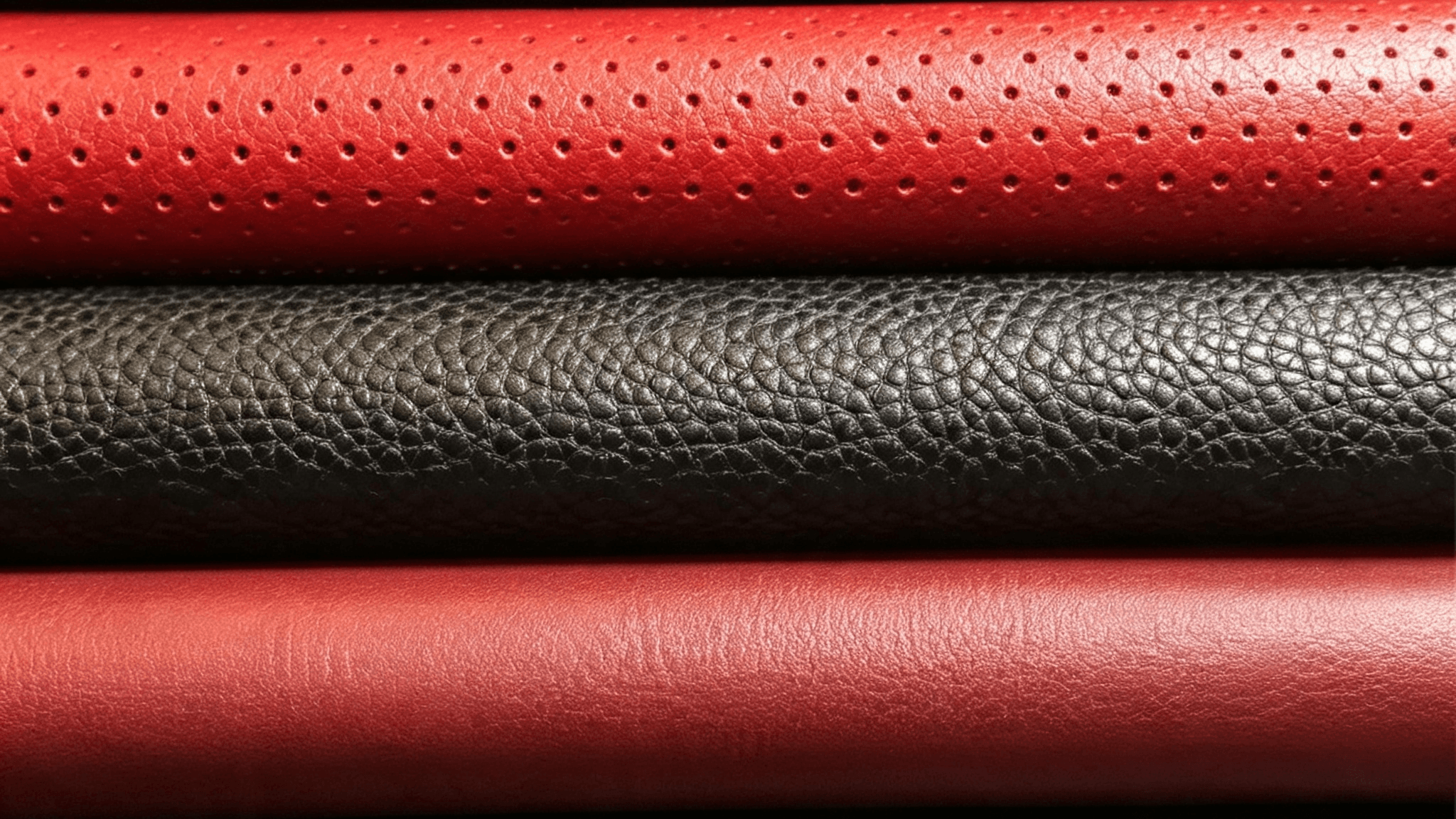
- Solid (non-foam) PVC leather – denser, higher abrasion potential, used where weight and dimensional stability matter.
- Foam-backed or expanded PVC leather – softer hand-feel, better cushion appearance, widely used on seats and door inserts.
- Embossed versus printed grain – embossed grain retains depth longer under wear; printed grain is lower cost but less durable.
- Standard versus low-VOC / non-phthalate formulations – the latter address cabin-air and regulatory requirements in Europe, China and North America.
- Calendered versus transfer-coated constructions – process route affects thickness control, surface uniformity and cost.
Public market reports group most of these under the broader “automotive PVC and PU leather” or “artificial PVC leather” headings. One estimate places the global automotive PVC and PU leather market at about USD 1.27 billion in 2026. Business Research Insights Another places pure automotive artificial PVC leather at USD 1.25 billion in 2021 with Asia-Pacific at roughly 37 % of revenue. Spherical Insights These figures are research estimates, not official production statistics.
The practical distinction for buyers is not the label but the test evidence: abrasion method and cycles, cold-crack temperature, VOC/odor results, and flame performance under FMVSS 302 or ISO 3795 (burn rate ≤ 100 mm/min). NHTSA
Action
Require the supplier to map the offered type against your part’s abrasion, flex and emissions targets before any sample is cut.
Common Applications in Seats, Door Panels and Beyond
Common applications of automotive interior PVC leather refer to the specific vehicle parts where its cost-to-performance balance, processability and appearance consistency still match OEM and commercial-vehicle requirements.
Seats (facings and bolsters) remain the largest volume use because they demand abrasion resistance, flex durability, stain cleanability and controlled cost at high piece counts. Door panels and armrests follow, prioritizing scratch resistance, dimensional stability and wrapability over complex contours. Instrument panels and center consoles use PVC where low gloss, heat aging and fogging control are required, although TPO alternatives have gained ground in some programs for high-temperature stability. Headrests, commercial-vehicle interiors and certain headliner/trim pieces also appear frequently in supplier application lists. Spherical Insights
SAE literature notes that PVC has been used in instrument-panel skins for decades while documenting the exact limitations (plasticizer fogging, high-temperature stability, grain retention) that later motivated TPO development. SAE The material therefore survives where the program values uniform appearance, wipe-clean surfaces and landed cost more than premium soft-touch or mono-material recyclability.
Climate and vehicle class further refine the fit. Hot climates raise the priority of VOC, fogging and migration control. Cold climates raise the priority of low-temperature flexibility. Fleet and commercial vehicles emphasize durability and cleanability. Premium passenger cars often shift toward PU, microfiber or natural leather for visible soft-touch surfaces.
Action
List the three highest-volume parts in your current programs and score PVC leather against the actual OEM or internal specification for each. Keep the material only where the score is clearly positive.
Key Specifications Buyers Must Define
Key specifications for automotive interior PVC leather refer to the measurable construction and commercial parameters—thickness, width, backing type, surface texture/grain, color tolerance, MOQ and lead time—that determine both process fit and supply reliability.
Thickness is program-specific and must be stated with tolerance; it is not a durability proxy. Backing type (woven, knit, non-woven) controls elongation, sewability and thermal shrink behavior. Width is constrained by the coating or calendering line and by the cutting yield required for the part. Grain and gloss must be locked with master samples and controlled by ΔE and gloss-unit limits across lots. MOQ and lead time are commercial variables that must match inventory strategy and launch timing.
Public sources do not publish universal “typical” thickness or width ranges that apply to every automotive program. Acceptance criteria for mechanical and emissions properties are likewise OEM-specific. The CFFA coated-fabric guidance and ACT-style benchmarks (for example 50 000 Wyzenbeek cycles, 50 × 50 lb/in tensile, 3 lb/in adhesion) provide useful reference points for coated materials but are not automotive OEM limits. CFFA
Therefore the only reliable approach is to define the numbers that matter to the part, then require the supplier to confirm capability against those numbers with test reports and production data.
Action
Create a one-page specification sheet that lists thickness range, backing style, grain code, color standard, minimum abrasion cycles, cold-crack temperature, VOC/odor method and commercial MOQ/lead-time limits. Use it as the only acceptance document.
Supplier and Factory Insight from Direct Material Work
Supplier and factory insight for automotive PVC leather refers to the practical observations that emerge only when constructions are compared under the same test conditions and process constraints rather than from datasheet claims alone.
In one series of heat-aging and cold-flex trials I conducted on production-intent PVC, PU and microfiber constructions intended for the same seat-bolster geometry, the PVC lots that used a higher-molecular-weight plasticizer package and a matched knit backing retained flexibility after –30 °C conditioning markedly better than lower-cost PVC lots still relying on traditional lower-molecular-weight systems. Crack initiation and hand-feel recovery after cold soak tracked the plasticizer choice more closely than thickness or emboss depth. The same trials showed that adhesion between the PVC skin and backing became the limiting factor once plasticizer migration began under elevated temperature. Those results reinforced that formulation and interlayer compatibility decide field life more than the generic material family.
Factory capability further separates reliable sources from the rest. IATF 16949 scope that actually covers the coating or laminating process, batch-to-batch SPC on thickness and color, retained-sample policy, and the ability to submit IMDS data for the exact grade are non-negotiable. REACH, SVHC and Proposition 65 declarations must be tied to the current formulation, not to a generic statement. Third-party or accredited laboratory reports must reference the identical construction and the exact test method required by the program. NHTSA EUR-Lex
Capacity, MOQ flexibility and change-control discipline matter equally. A supplier that can demonstrate stable monthly output, documented contingency for raw-material disruption, and formal notification of any formulation change reduces launch and warranty risk more effectively than a lower unit price.

Action
Require a side-by-side test report on your own part geometry using the supplier’s proposed construction and at least one alternative. Let the data, not the brochure, decide.
When Not to Specify Automotive PVC Leather
Situations in which automotive PVC leather should not be specified refer to program requirements that systematically exceed the material’s practical performance envelope or conflict with regulatory and sustainability targets.
Do not specify classic PVC constructions when the program demands the lowest possible VOC and odor levels under the strictest OEM cabin-air protocols and the supplier cannot demonstrate a validated low-emission, non-phthalate package. Do not specify it when mono-material or high recycled-content targets are contractual and the multi-layer PVC structure cannot meet the recovery or content thresholds. Do not specify it for premium soft-touch surfaces where hand-feel and long-term appearance retention are brand-critical and the cost of PU or microfiber is already accepted. Do not specify it for parts that see extreme continuous heat (certain instrument-panel locations) if high-temperature stability and fogging data fall short of the OEM limit; TPO or other alternatives may be required. SAE
Passing FMVSS 302 alone never makes a material suitable for every vehicle model or market. Flammability is only one gate; emissions, abrasion after aging, chemical resistance and appearance retention remain separate requirements. NHTSA Likewise, higher price does not guarantee longer life, and greater thickness does not automatically improve durability. Both must be proven by the relevant test methods under the actual service conditions.
The correct decision is therefore negative when two or more of the following are true: strictest cabin-air limits, formal circularity targets, premium tactile branding, or continuous high-heat exposure beyond validated PVC data.
Action
For every program, run a simple three-question filter: Does the part need lowest-in-class emissions? Does the platform require measurable recycled content or mono-material recovery? Is premium soft-touch a brand requirement? If two answers are yes, move PVC leather off the shortlist and document the reason.
Frequently Asked Questions
Q: What are the cons of PVC leather?
A: The principal limitations are plasticizer migration and potential surface tackiness under heat, higher VOC/fogging risk if the formulation is not optimized, reduced high-temperature stability compared with some TPO systems, and lower perceived soft-touch relative to well-made PU or microfiber. These are formulation-dependent rather than absolute; low-migration, non-phthalate packages mitigate several of them.
Q: What is the best leather for car interior?
A: There is no single best material. Natural leather leads on prestige and hand-feel for premium programs. Microfiber and high-end PU lead on durability and soft-touch for mid-to-high trim. PVC leather remains the practical choice for high-volume and commercial applications where cost, processability, flame resistance and consistent appearance dominate. Selection must follow the specific part, climate and OEM specification.
Q: Is PVC leather a real leather?
A: No. PVC leather is a synthetic (artificial) material. It contains no animal hide. The term “leather” in this context is industry shorthand for a leather-like surface appearance and grain, not a claim of genuine leather origin.
Q: Which is better, PVC or synthetic leather?
A: PVC leather is one type of synthetic leather. “Synthetic leather” is the broader category that also includes PU leather, microfiber leather and other polymer-based constructions. Which is better depends entirely on the required balance of cost, hand-feel, abrasion, emissions and process fit for the specific part. PVC is typically lower cost and highly processable; PU and microfiber often provide better soft-touch and, in some formulations, better emissions profiles.
Q: Does thicker PVC leather last longer?
A: Not reliably. Service life is driven by plasticizer stability, topcoat integrity, UV protection, interlayer adhesion and flex fatigue resistance. A thinner, well-stabilized construction can outlast a thicker, poorly formulated one. Always require the relevant abrasion, flex and aging data rather than relying on thickness alone.