Matching PVC Leather to Sofa Usage Scenarios
Matching PVC leather to sofa usage scenarios refers to selecting abrasion, stain, flame, and wet-aging requirements according to the dominant failure modes of the end seating—not according to a generic “commercial grade” label.
Residential sofas mainly fail on aesthetic aging, plasticizer migration, topcoat scuffing, denim transfer, and ordinary household stains. Contract and public seating fail first at high-contact zones (front rail, seat crown, arm caps) under repeated sliding, cleaning chemicals, and higher occupancy. Cinema seating adds severe fire-code pressure and highly visible scuff/gloss change on dark colors.
Verified performance anchors include:
- ASTM D3690 identifies no appreciable color change at 200 surface-abrasion cycles and no cracking or delamination at 25,000 cycles after the hydrolytic-stability conditioning for indoor vinyl- and urethane-coated upholstery fabrics. ASTM
- The Association for Contract Textiles states that 50,000 Wyzenbeek double rubs is suitable for commercial high-traffic/public spaces, while explicitly warning that higher counts are not life predictions. ACT
- For China-market upholstered furniture, GB 17927:2024 is the applicable flame-resistance technical specification for the finished product or upholstered parts (issued 23 August 2024, implemented 1 September 2025). Chinese Standard
- European projects commonly require the cover–filling combination to be tested to EN 1021-1 (smouldering cigarette) and EN 1021-2 (match-flame equivalent). RI
Industry starting targets (not universal life guarantees) are ≥15,000–30,000 Wyzenbeek double rubs for residential, ≥30,000–50,000 for hotel guest-room and general office, and ≥50,000 for lobby, reception, and cinema seating when the method, abradant, load, and endpoint are fully stated. These figures remain procurement baselines; they must be confirmed against the actual test construction and local law
Flame performance must always be evaluated at assembly level. A cover that “passes FR” on its own can still fail once combined with the production foam, barrier, adhesive, and geometry. The same principle applies to stain resistance: separate initial stain release, repeated-cleaner resistance, disinfectant compatibility (with named chemistry and concentration), and post-cleaning flex/adhesion retention.
Action
Issue one performance schedule per seating scenario that names the abrasion method and endpoint, the exact cleaner/disinfectant protocol, the jurisdictional fire test on the complete build-up, and the post-aging adhesion/flex criteria before any bulk PO is released.
Quantifying Hand Feel for Sofa PVC Leather
Quantifying hand feel for sofa PVC leather refers to converting the subjective descriptors “soft,” “full,” and “leather-like” into a calibrated combination of surface hardness, compression–recovery curves, bending stiffness, thickness under pressure, friction, gloss, and trained sensory scoring against retained reference standards.
ISO 7617-1:2024 is the current international specification for PVC-coated knitted fabrics used in interior upholstered furniture. It covers both solid-PVC and expanded-PVC constructions and requires thickness measurement according to ISO 2286-3 under 2 kPa, while leaving colour, embossing, and finish acceptability to buyer–supplier agreement against a reference sample. ISO 7617-1:2024
Useful instrumental methods include:
- ISO 48-4 Shore indentation hardness for surface compliance.
- ISO 2439 indentation hardness and hysteresis methods for open-cell expanded PVC (40 %/30 s and 25 %/20 s procedures). ISO 2439
- ASTM D1388 cantilever or heart-loop bending length and flexural rigidity in machine and cross directions. ASTM D1388
- ISO 2286-3 thickness at 2 kPa plus multi-load compression curves to separate first-touch plushness from mid-range fullness and recovery.
Earlier editions of ISO 7617-1 listed nominal total coated-fabric thicknesses of 0.75–1.00 mm (solid), 0.85–1.15 mm (slightly expanded), and 1.10–1.40 mm (expanded), with corresponding minimum coating masses. These remain useful external guardrails, not automatic “premium soft” guarantees. ISO 7617-1:2001
Plasticizer content should be expressed in phr (parts per hundred resin). A 2024 automotive-oriented laboratory study on PVC foam formulations containing 60–80 phr DPHP found 65 phr gave the best reported foaming effect and a foam thickness up to 3.63 mm under the specific resin, blowing-agent, and process conditions of that experiment. That result is formulation-specific research data, not a transferable sofa target. PMC
In practice I ran a side-by-side panel on three expanded-PVC constructions that all measured 1.2 mm total thickness. After identical conditioning I recorded Shore A, 25 % and 40 % indentation force, hysteresis loss, and a five-rater sensory score for palm fullness and spring-back. The highest-expansion sample scored softest on first touch yet showed the largest residual set and the lowest seam-stability rating once stapled over production foam. The mid-expansion sample delivered the best balance of initial compliance and recovery. That single trial reinforced that millimetres alone never predict production hand feel.
Action
Lock a hand-feel protocol that combines total thickness (ISO 2286-3), compression curve with hysteresis, bending rigidity (ASTM D1388), surface hardness, and a scored sensory panel against the approved Golden Sample before any colour or emboss is released for bulk.
Specifying Construction Parameters: Thickness, Backing, Texture and Color
Specifying construction parameters for sofa PVC leather refers to freezing nominal total thickness and tolerance, mass per unit area, usable width, backing type and mass, emboss geometry, gloss, and colour difference under defined measurement conditions rather than relying on a single “1.0 mm soft PVC” description.
ISO 2286-2 provides the method for total mass per unit area and, where required, separate coating and substrate masses. ISO 2286-1 covers roll length, width, and net mass. Neither standard dictates commercial tolerances; those must be contractual. ISO 2286-2 ISO 2286-1
A practical thickness call-out states nominal value, individual-reading range, number and location of readings (excluding edge zones), gauge foot and pressure, and conditioning. A ±0.05 mm individual-reading window is an engineering inference suitable only for tightly controlled upholstery grades once supplier process capability is confirmed; it is not a universal ISO limit.
Backing must be specified beyond the word “fabric”: knit versus woven or nonwoven, fibre composition, GSM, stretch in both directions, surface condition (brushed or not), and lamination method. Coating-to-backing adhesion is measured by ISO 2411; the standard supplies the method but not a universal minimum value. The purchase order must therefore state specimen width, reported unit, dry/wet/aged condition, and acceptable failure mode. ISO 2411
Colour difference is calculated according to ISO 105-J03. Writing simply “ΔE < 1.0” is incomplete until the formula (CIELAB or CMC), illuminant, observer, instrument geometry, and aperture are fixed. Visual approval under agreed lighting remains decisive for grain depth, gloss uniformity, and hand. ISO 105-J03
Embossing depth and grain pitch have no universal ISO/ASTM pass/fail numbers for “soft” or “natural.” They are controlled by optical profilometry or confocal measurement against the Golden Sample and by conversion trials that check wrinkle recovery and print-through under production tension.
Action
Issue a controlled construction sheet for every SKU that lists total thickness and measurement protocol, total and component GSM, usable width, backing construction and mass, emboss reference, gloss target, colour coordinates plus ΔE formula, and ISO 2411 adhesion minimum with failure-mode language.
Setting Performance and Compliance Requirements
Setting performance and compliance requirements for sofa PVC leather refers to defining complete test methods, endpoints, and market-specific chemical obligations instead of accepting isolated marketing claims such as “high abrasion,” “phthalate-free,” or “REACH compliant.”
Abrasion must name the method (ASTM D4157 Wyzenbeek-type, ASTM D3690 performance specification, Martindale ISO 12947 series, or Taber), abradant, load, dry/wet condition, specimen orientation, cycle count, and visual/mechanical endpoint. A cycle number alone is not transferable across methods. ASTM D3690 ACT
Flex resistance is covered by ISO 7854 (De Mattia, Schildknecht, crumple/flex) and ISO 32100 (folded-condition flex). Cycle counts are engineering inferences until tied to a named method and the seating geometry. ISO 7854 ISO 32100
On the chemical side, the European Commission states that revised REACH Annex XVII Entry 51 restricts placing articles on the market when DEHP, BBP, DBP, and DIBP are present at or above 0.1 % by weight, individually or in combination, in plasticized material. SVHC communication duties under REACH Article 33 apply when Candidate List substances exceed 0.1 % w/w in the article. European Commission EUR-Lex
RoHS concentration limits in homogeneous materials (0.1 % for lead, mercury, hexavalent chromium, PBB, PBDE, DEHP, BBP, DBP, DIBP; 0.01 % for cadmium) apply only when the upholstered product falls within an electrical/electronic equipment supply chain or a customer program that mandates them; they are not automatic furniture requirements. JRC
California TB 117-2013 governs smolder resistance of materials used in upholstered furniture sold in that state and underscores that fire performance is an assembly-level obligation. CPSC / GovInfo
Action
Write every mechanical claim with the full method and endpoint, every chemical claim with the exact substance list, threshold, test method, and report age, and every fire claim against the production cover–foam–barrier construction for the target jurisdiction.
Finalizing Golden Samples, Inspection and Supplier Controls
Finalizing Golden Samples, inspection and supplier controls refers to freezing a physically retained, signed reference set that governs construction, appearance, hand, conversion behaviour, and the minimum laboratory performance envelope before any mass-production purchase order is released.
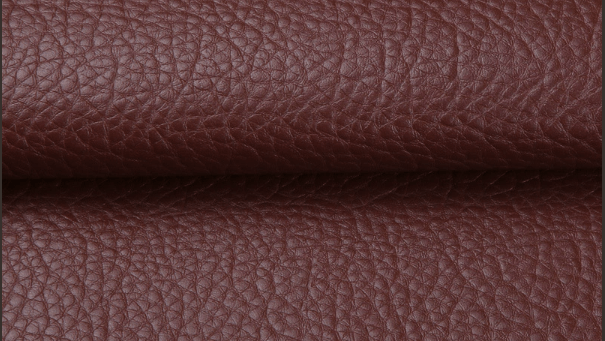
The Golden Sample dossier must contain at least one signed face-material cutting from a bulk-representative lot, a purchaser-controlled master, a supplier production-line reference, a backing-side reference, an approved upholstery trial panel, and a defect atlas. Each item carries material codes, lot number, approval signatures, revision, storage conditions, and an explicit statement that it is the appearance and construction reference, not a substitute for numerical limits.
Lot-by-lot attribute inspection is commonly performed under GB/T 2828.1 or the international equivalent ISO 2859-1, indexed by AQL. Critical defects (wrong construction, chemical non-compliance, severe delamination, incorrect colour/emboss) are controlled at AQL 0 / Ac 0 as a buyer risk policy. Major defects typically start at AQL 1.5 or 2.5 and minor defects at AQL 4.0; these starting values are industry estimates that must be adjusted to appearance criticality and cutting yield. ISO 2859-1
Variables such as thickness, GSM, width, peel strength, and colour coordinates are verified by defined sample counts and acceptance limits rather than by AQL tables alone. Change control must prohibit any alteration to PVC formulation, plasticizer, topcoat, pigment, emboss roll, backing mill, foam density, adhesive, plant, or packaging without prior written approval and, where necessary, re-validation.
Common purchasing mistakes that still appear in real programs include treating a single abrasion number as service-life insurance, approving colour without conversion trials, accepting “REACH compliant” without an SVHC and Annex XVII scope statement, and assuming the cover alone satisfies furniture fire codes. Each of these errors is avoidable once the specification freezes method, endpoint, assembly, and change-control language.
Action
Do not release the first bulk PO until the controlled Golden Sample dossier, the full numerical specification, the first-article laboratory matrix, and the upholstery conversion trial have all been signed off by purchasing, product engineering, and supplier QA.
FAQ
A: “Faux leather” is a marketing umbrella that includes PVC, PU, microfiber, and silicone constructions. PVC is one specific chemistry. The better choice is the construction whose thickness, backing, abrasion method and endpoint, flex, cleanability, and assembly-level fire performance match the seating scenario and the buyer’s controlled specification—not a generic material family label.
A: No. PVC leather is a synthetic coated fabric. Real leather is an animal-hide product. In B2B upholstery procurement the distinction is technical, not semantic: specify the exact PVC construction, backing, and performance envelope required for the sofa program.
A: There is no single best type. Residential sofas often prioritise hand feel, stain release, and moderate abrasion; contract, hotel, and cinema seating prioritise higher abrasion endpoints, repeated-cleaning resistance, and assembly-level flame performance. The correct choice is the construction that satisfies the written performance schedule for the actual end use.
A: “Grade” language is marketing shorthand. Replace it with measurable parameters: total thickness and tolerance, backing type and mass, named abrasion method and endpoint, flex method and cycle count, colour ΔE formula and limit, coating adhesion (ISO 2411), and the applicable fire and chemical requirements for the destination market.
A: It is the primary control against sample-to-bulk drift. A properly retained and signed Golden Sample set freezes construction, appearance, hand, emboss, and conversion behaviour. Without it, laboratory certificates alone cannot prevent shade bands, grain changes, or adhesion failures once production volumes begin.
A: No. ACT explicitly states that results above its guidelines are not indicators of product lifespan. Durability also depends on flex, adhesion, seam design, foam interaction, cleaning chemistry, and real use intensity. Always specify the full method and endpoint and treat the cycle number as one screening criterion among several. ACT