Why Microfiber Leather Is Widely Used for Steering Wheels
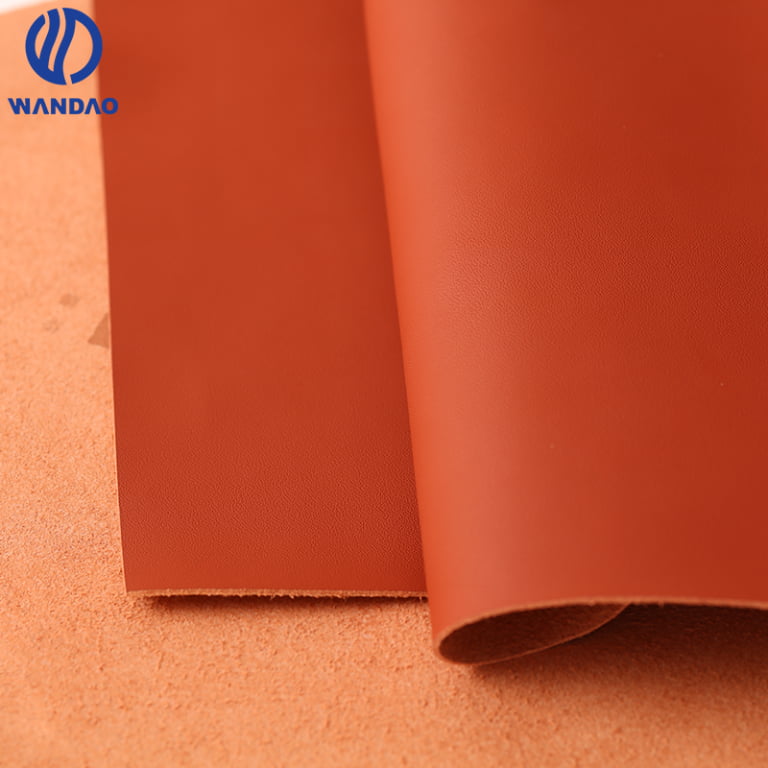
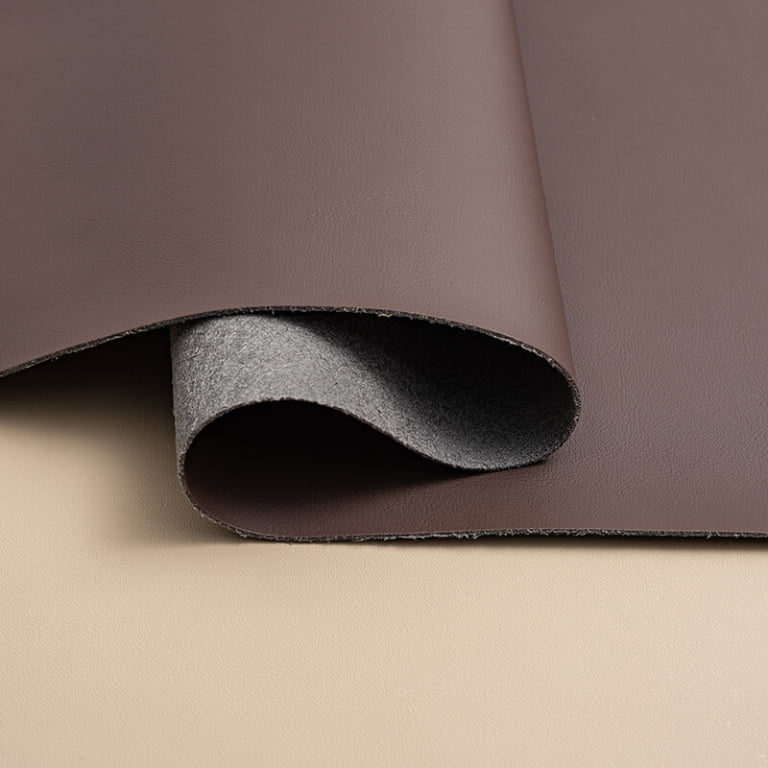
Microfiber leather for steering wheels refers to a microfiber-based synthetic leather construction developed for wrapping, sewing, bonding, or finishing a steering-wheel surface. In most projects, the material combines a microfiber base with a PU surface or impregnation system, plus a top finish that controls touch, friction, gloss, color, and stain response.
Its use is not limited to one type of vehicle. We see this material discussed for passenger-car steering wheels, performance and sport packages, electric-vehicle interiors, luxury upgrades, commercial-vehicle driver areas, steering-wheel replacement work, and custom aftermarket covers. The exact material grade changes by project, but the reason for considering microfiber is usually similar: the buyer wants a more distinctive tactile and visual result than a standard smooth synthetic leather can provide.
A steering wheel has a different role from a seat or door panel. The driver holds it directly, often at the same grip positions, so small differences in friction, softness, nap direction, gloss, or color become easy to notice. A surface that looks attractive on a flat swatch may look different once stretched over a curved rim. Grain direction can change around the spokes, and the area under the hands can become more polished than the less-used parts of the wheel. For that reason, buyers should evaluate microfiber leather on a wrapped sample rather than judging only from a catalog photograph.
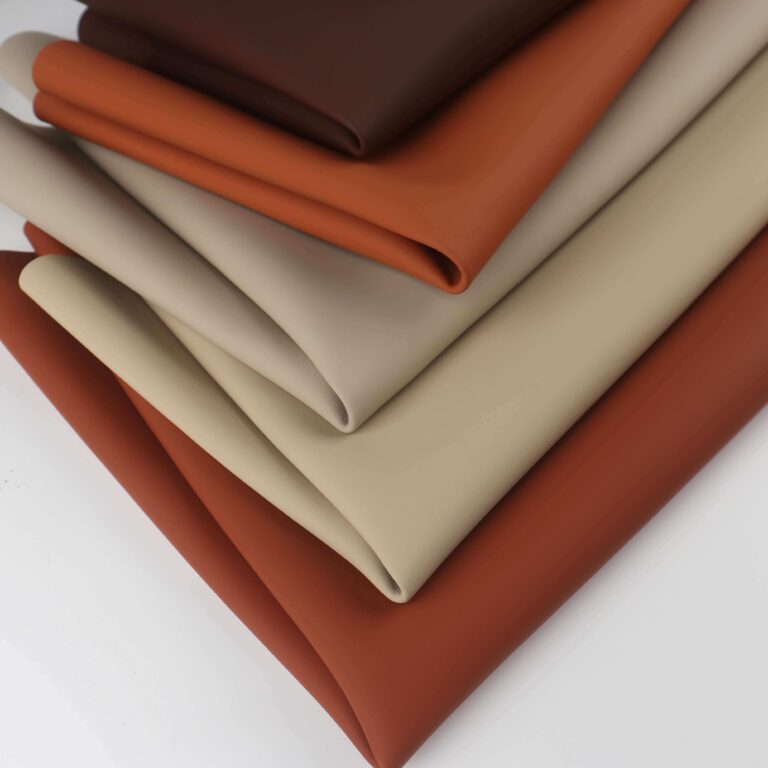
Microfiber leather is also popular because it gives designers more control over the finished appearance. A manufactured base can be specified with a selected color, grain, brushed or suede-like surface, perforation, matte finish, carbon-fiber visual effect, or two-tone combination. These options make it easier to coordinate the steering wheel with seats, door panels, dashboards, headliners, and other interior trim. Buyers comparing material families can also review our automotive leather materials page, as well as the related automotive PU leather page and automotive PVC leather page.
“Widely used” should not be confused with a single public market-share number. OEMs, steering-wheel Tier 1 suppliers, and aftermarket brands generally do not publish their material BOMs by microfiber, ordinary PU, and genuine leather. The practical observation is more useful: microfiber appears repeatedly in projects that want a premium hand, a sporty visual language, a suede-like surface, or a controlled synthetic alternative. Ordinary PU remains important where price and broad availability dominate, while genuine leather remains strong where traditional luxury positioning is the priority.
In our own sample discussions, the same pattern appears repeatedly: buyers often begin with a visual request—“suede,” “carbon fiber,” “sport steering wheel,” or “perforated microfiber”—and then ask for thickness, backing, hand feel, width, color matching, and processing information. That sequence is realistic. The style attracts the buyer first, but the construction determines whether the material can actually be used.
| Project type | Why buyers consider microfiber leather | What must be confirmed |
|---|---|---|
| Sport or performance steering wheel | Suede-like touch, strong visual identity, and a performance-oriented appearance | Grip after sweat, nap direction, polishing, cleaning, and wrapping around spokes |
| Premium or electric-vehicle interior | Consistent color and texture with a modern synthetic material story | Hand feel, odor, appearance matching, emissions documentation, and lot consistency |
| Aftermarket cover or re-trim | Many colors, patterns, perforation options, and a high-end visual upgrade | Vehicle fit, stitchability, installation boundaries, and whether the product affects safety components |
| Commercial or fleet driver area | Potentially controlled appearance with a synthetic alternative to natural hide | Cleaners, sweat, oil, abrasion, repairability, and total supply cost |
Actionable recommendation
Describe the material request by application and style, not only by the word “microfiber.” State whether the wheel is sporty, premium, perforated, carbon-look, suede-like, smooth, or patterned, then add the required hand feel, construction, processing method, and destination market.
Four Microfiber Leather Styles Steering-Wheel Buyers Commonly Prefer
Steering-wheel microfiber leather styles refer to the surface and appearance treatments buyers select for the finished wheel, including suede-like, carbon-fiber-look, patterned, and perforated constructions. These styles are not interchangeable: each creates a different tactile impression and requires different production controls.
Suede microfiber leather
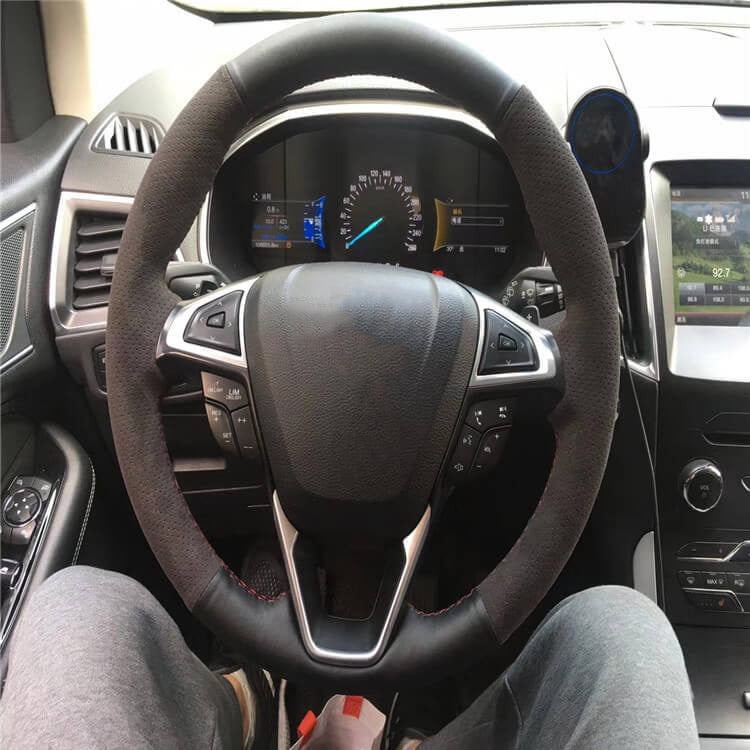
Suede microfiber is one of the most recognizable choices for sporty and premium steering wheels. Its brushed or nap-like surface gives the wheel a softer, less plastic visual appearance and a distinctive hand feel. Buyers often associate this style with performance interiors, racing-inspired designs, and high-trim cabins. It can be used across the full rim or selectively at the most visible grip zones, sometimes combined with smooth microfiber, genuine leather, or perforated panels.
The important purchasing issue is not simply whether the surface looks like suede. Ask about nap direction, color variation between panels, surface polishing after rubbing, cleaning instructions, moisture response, and whether the surface can be sewn without losing its appearance at the seam. A suede-like surface may need more careful handling than a smooth grain, especially when the project involves frequent contact, oily hands, or repeated cleaning.
Carbon-fiber microfiber leather
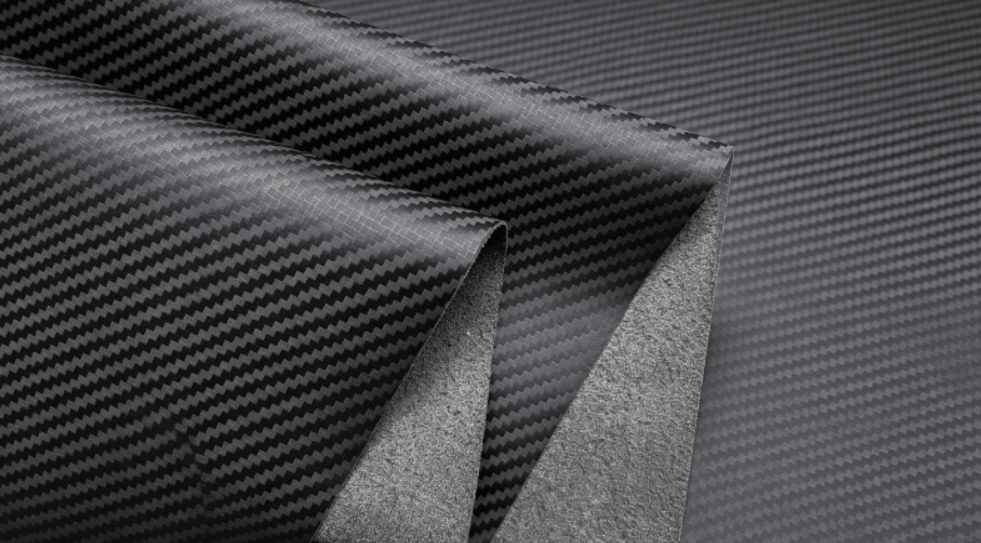
Carbon-fiber-look microfiber is popular when the buyer wants a technical, sporty, or motorsport-inspired appearance. The effect may be created by embossing, printing, lamination, weaving, or a combination of surface processes. It can be supplied in black, black-and-gray, or other coordinated colorways, and it is often combined with smooth or suede panels.
Buyers should confirm whether “carbon fiber” means a genuine carbon-fiber visual effect, a carbon-pattern emboss, a printed surface, or a microfiber construction with a carbon-style finish. These are not the same material. The request should identify the pattern reference, repeat, direction, gloss level, coating, and whether the effect must continue across seams and curved spoke areas. A pattern that looks correct on a flat panel may distort when stretched over the rim.
Patterned or dedicated steering-wheel microfiber
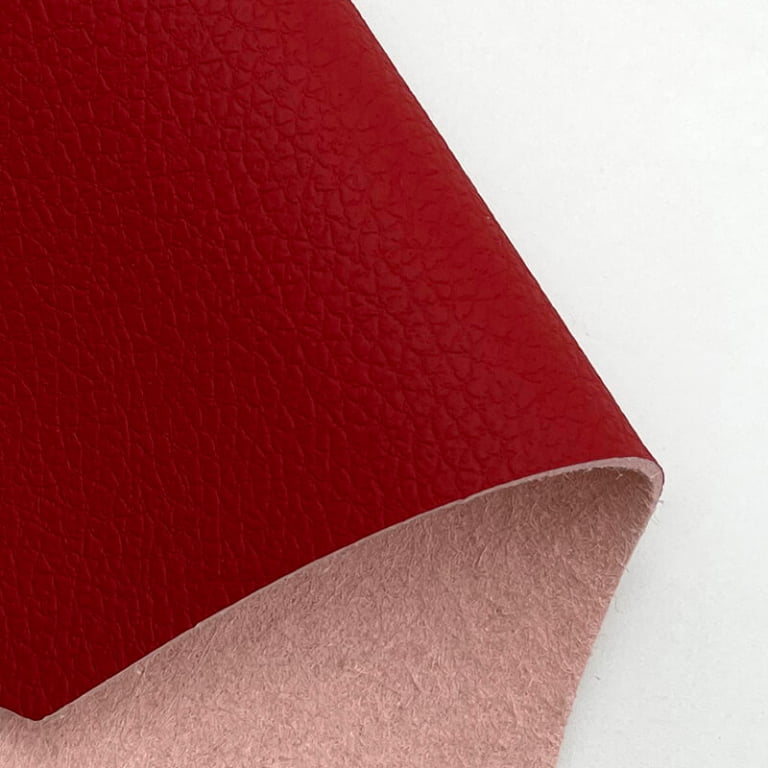
Another popular choice is a dedicated steering-wheel microfiber with its own grain, fine texture, or embossed pattern. This style is often selected by buyers who want something more refined than ordinary smooth PU but do not want a raised suede nap. The surface may be fine-grain, cross-grain, small pebble, technical texture, or another pattern designed specifically for a hand-contact application.
Dedicated steering-wheel material should be evaluated for grip, friction, gloss change, and cleaning rather than appearance alone. The best pattern is usually the one that gives the desired hand feel while remaining easy to control in color, thickness, embossing, and lot consistency. When requesting samples, ask for a real texture master and a direction mark. Do not approve a style from a name such as “sport grain” or “premium grain” without a physical reference.
Perforated microfiber leather
Perforated microfiber is widely requested for steering wheels because it creates a sportier appearance, breaks up a large surface, and can be combined with smooth or suede panels. It is especially common in two-tone designs and in layouts where the buyer wants a clear visual difference between the main grip zone and the spoke or inner sections.
In our experience, many buyer sample briefs use a 5 × 5 mm perforation format as a starting reference. The important clarification is that “5 × 5 mm” needs to be defined. It may describe a square opening, a hole-and-pitch layout, or the center-to-center spacing of a perforation pattern. It is not enough to write “hole diameter 5 × 5 mm,” because diameter normally describes a circular opening with one dimension. Ask the supplier to confirm hole shape, opening size, pitch, open area, direction, and whether the perforation is surface-only or passes through the full material stack.
| Style | Why buyers like it | Important approval points |
|---|---|---|
| Suede microfiber | Soft visual effect, sporty hand feel, premium appearance | Nap direction, polishing, sweat, cleaning, seam appearance, color consistency |
| Carbon-fiber-look microfiber | Technical and performance styling, strong visual differentiation | Pattern definition, repeat, direction, stretch distortion, gloss and coating |
| Patterned steering-wheel microfiber | Controlled grip and refined texture without a full suede nap | Grain master, friction, gloss, thickness, embossing consistency and cleanability |
| Perforated microfiber | Sport styling, two-tone layouts and visual ventilation effect | Clarify 5 × 5 meaning, hole shape, pitch, edge strength, backing and cleaning |
Actionable recommendation
When requesting a popular style, send a physical reference or clear macro image and identify the exact surface treatment. For perforated material, write the opening, pitch, hole shape, direction, and through-layer requirement instead of relying on “5 × 5 perforation” alone.
Why Microfiber Leather Gives a Steering Wheel a High-End Appearance
The high-end advantage of microfiber leather refers to the combination of tactile quality, controlled visual design, surface consistency, and material flexibility that can make a steering wheel feel more premium. It does not mean every microfiber product is automatically high grade; the final effect depends on the selected construction and workmanship.
The steering wheel is a high-touch interface, so buyers notice its material quickly. A well-selected microfiber can feel dry, soft, controlled, and comfortable in the hand. A suede-like surface gives a different grip sensation from smooth PU or coated PVC. A fine patterned surface can look more sophisticated without being as visually strong as a full suede finish. A perforated or two-tone design can make the steering wheel look more engineered and less like a standard commodity component.
Microfiber also gives buyers greater control over appearance than natural hide. Natural leather can have visible grain differences, scars, stretch marks, and selection variation. Microfiber is manufactured to a defined construction, so the supplier can work toward a repeatable color, texture, thickness, and width. This does not remove the need for quality control, but it can make the appearance easier to organize into a master sample and production standard.
Another advantage is design flexibility. A project can combine smooth and suede microfiber, carbon-fiber-look panels, contrasting colors, perforated grip zones, colored stitching, or different textures on the rim and spokes. The surface can be coordinated with a microfiber automotive interior program or compared with other materials through the site’s automotive leather materials section. These internal pages are useful when a buyer is deciding whether the steering wheel should match the seats, door panels, or other interior areas.
For many buyers, “high-end” is not only visual. It includes the first touch, the way the surface holds the hand, the absence of a cheap plastic sensation, the consistency between left and right grip zones, and the way the material looks after the vehicle has been used. A material that feels premium on day one but becomes shiny or tacky quickly will not support a high-end impression. That is why the sample needs to be reviewed after realistic rubbing, handling, and cleaning—not only when it is new.
Microfiber can also be an attractive non-animal alternative for brands that want a high-grade synthetic interior. That claim should be made carefully. “Non-animal” describes the material route; it does not automatically prove low environmental impact, low emissions, or superior durability. Buyers should still request the relevant chemical, emissions, and performance information for the exact material.
The practical comparison is not simply “microfiber is better than PU” or “microfiber is better than genuine leather.” A better comparison asks which material delivers the target appearance, hand feel, grip, processing efficiency, quality consistency, and cost at the required production volume. High-quality PU may be the right solution for a price-sensitive program. Genuine leather may remain appropriate for a traditional luxury design. Microfiber is strongest when its tactile and visual benefits are important enough to justify the additional sampling and approval work.
| High-end attribute | What the buyer sees or feels | How to confirm it |
|---|---|---|
| Hand feel | Dry, soft, controlled, refined, or suede-like contact | Compare a wrapped sample at the actual grip zones with an approved reference |
| Visual consistency | Even color, grain, nap direction, gloss and panel matching | Use a physical master, lighting protocol, lot samples and direction marks |
| Design flexibility | Perforation, carbon effect, two-tone, mixed texture or contrast stitching | Review a curved sample with the complete design, not separate flat swatches only |
| Long-term impression | Controlled polish, staining, grip and surface appearance after use | Run hand-contact, cleaner, sweat, abrasion and aging checks on the finish |
Actionable recommendation
Position microfiber leather as a high-grade steering-wheel option because of its controlled hand feel, design flexibility, and refined appearance—but support that positioning with wrapped-sample reviews and construction-specific evidence rather than a generic premium claim.
Specify the Details That Make the Popular Styles Work
Steering-wheel microfiber specifications refer to the measurable and visual details that allow a buyer and supplier to reproduce the approved style on the finished wheel. The specification should connect the surface style with thickness, backing, width, perforation, color, processing, and quality control.
For a smooth or patterned steering-wheel microfiber, specify the total thickness and tolerance, backing type, width, color, grain, gloss, hand feel, and intended sewing or adhesive process. If the supplier is recommending the construction, ask for the proposed layer structure and explain which properties are fixed and which can be adjusted. A catalog thickness is not enough because two materials with the same nominal thickness may have different surface layers, backing, compression, stretch, and wrapping behavior.
For suede microfiber, specify nap direction and the acceptable appearance after handling. Ask whether the material is brushed, sanded, embossed, or finished with another surface treatment. Confirm how the color is controlled across the nap and how the supplier will pack and label the rolls so the direction is not lost during cutting. A suede-like surface may look different when the nap runs in opposite directions, especially under strong light.
For carbon-fiber-look microfiber, specify whether the pattern is printed, embossed, laminated, woven, or only a visual reference. Give the repeat direction, panel layout, and whether the pattern must align across seams or spokes. If the buyer wants an actual carbon-fiber layer rather than a carbon-style pattern, that must be written separately because it changes construction, cost, processing, and supply expectations.
For perforated microfiber, write a complete perforation line in the RFQ. A practical format is: “Perforation: square or round opening; opening size: ___ mm; pitch: ___ mm; direction: ___; surface-only or full-through: ___; acceptable edge tearing: ___; backing: ___.” In our buyer discussions, 5 × 5 mm is often used as a starting pattern, but the supplier must confirm whether it means a square hole, a hole pitch, or center-to-center spacing. The buyer should not assume that every factory interprets 5 × 5 in the same way.
Also specify whether the perforation is decorative or functional. A perforated cover does not automatically create effective ventilation if the foam, backing, adhesive, or steering-wheel core blocks the air path. Perforation can also reduce edge strength and affect cutting, sewing, cleaning, and surface appearance. The correct approach is to approve the actual construction after it has been cut, sewn, wrapped, and handled.
| Specification item | Example request | Why it matters |
|---|---|---|
| Material style | Suede, carbon-fiber-look, fine grain, smooth, or perforated microfiber | Prevents the supplier from substituting a visually different construction |
| Thickness and backing | Total thickness, tolerance, backing type, width and direction | Controls wrapping, sewing, compression and dimensional stability |
| Perforation | Opening, pitch, shape, direction, through-layer requirement and 5 × 5 clarification | Controls appearance, cutting, edge strength and process interpretation |
| Appearance | Color master, grain/nap, gloss, hand feel, stitching and panel layout | Turns a subjective style request into an approval reference |
| Roll quality | Usable width, length, splice, defect policy, batch and retained sample | Supports repeat orders and incoming inspection |
Actionable recommendation
Write style, construction, perforation, and quality requirements in the same specification sheet. For 5 × 5 perforation, define the hole and pitch clearly and approve a real wrapped sample before confirming bulk production.
How to Buy and Approve Microfiber Leather for a Steering Wheel
Steering-wheel microfiber leather approval refers to confirming that the selected style, construction, sample, processing method, and supply controls match the buyer’s finished-wheel requirements. It should be a staged decision rather than a simple color-card approval.
Start with the style direction. Ask for a small selection of suede, carbon-fiber-look, patterned, smooth, and perforated options when the design is still open. Compare the samples under the intended lighting and against adjacent materials. If the project has a physical reference, send it to the supplier. If the project is only at concept stage, mark the sample as directional so that neither party mistakes it for a final production standard.
Next, request the technical construction. Ask for total thickness, backing, width, surface finish, perforation details, and recommended processing. If the material will be sewn, request a sample large enough to test stitch holes, seam appearance, stretch, and edge behavior. If it will be bonded, confirm adhesive compatibility and whether the surface finish must be prepared. If it will be used on a heated steering wheel, include the heating condition in the validation plan.
Then make a curved or wrapped sample. This is where many unrealistic approvals fail. A flat piece cannot show how the grain or carbon pattern distorts around a spoke, how the suede direction changes over a curve, whether a 5 × 5 perforation remains visually even, or whether the backing recovers after stretching. Inspect the most frequently held areas and the transitions near seams, spokes, buttons, and perforations.
After appearance and processing, compare the sample with the required evidence. A test report should identify the exact material, color, thickness, backing, batch, method, conditioning, laboratory, result, and acceptance criterion. If a report represents another construction, use it only as reference information. Do not describe a sample as OEM approved, airbag safe, or FMVSS certified without specific documentation for the applicable product and responsibility.
For aftermarket sales, keep material rolls, pre-cut covers, and complete steering-wheel modifications in separate product categories. A roll of microfiber leather can be sold with material and processing information. A vehicle-specific cover needs version-controlled fitment data, model year, steering-wheel shape, seam layout, heating and control compatibility, and clear installation boundaries. A complete steering wheel or any product that interferes with an airbag requires a separate safety and legal review. NHTSA interpretations discuss steering-control-system requirements and the consequences of making required safety devices inoperative [NHTSA steering-control interpretation].
For regular supply, freeze the approved construction and style. Retain the golden sample, record the color and grain direction, define thickness and width tolerances, maintain batch traceability, and require notice before changes to the microfiber substrate, PU coating, topcoat, pigment, backing, embossing, process, factory, or sub-supplier. This is especially important when popular styles are customized for a particular steering-wheel project.
Microfiber leather is good for a steering wheel when it achieves three things together: it gives the desired high-grade touch and appearance, it survives the actual contact and processing conditions, and it can be reproduced consistently at the required volume. Suede microfiber, carbon-fiber-look microfiber, patterned steering-wheel microfiber, and perforated microfiber—including buyer-requested 5 × 5 mm formats—can all be attractive options. The correct choice depends on the finished design and the quality of the specific construction, not on the style name alone.
| Approval stage | Buyer checks | Release decision |
|---|---|---|
| Style selection | Suede, carbon effect, grain, smooth, perforated, color and hand feel | Choose the visual and tactile direction |
| Construction review | Thickness, backing, width, finish, perforation and process recommendations | Confirm the proposed material can be converted |
| Wrapped sample | Curve, spoke, seam, grip zones, nap/pattern direction and 5 × 5 interpretation | Confirm appearance and workmanship on the real geometry |
| Technical review | Relevant test reports, chemical documents, batch and method information | Identify evidence gaps before bulk ordering |
| Serial control | Golden sample, tolerances, COA, retained samples and change notification | Approve repeat production by controlled construction |
Final recommendation: choose microfiber leather when the project needs a premium steering-wheel appearance and tactile experience, but purchase it as a controlled material system. Use the popular style families as a starting point, define the perforation correctly, test a wrapped sample, and confirm that the supplier can repeat the approved result.
Frequently Asked Questions
A: It is widely considered in premium, sport, electric-vehicle, performance, and aftermarket steering-wheel projects. It is especially attractive when the buyer wants a suede-like hand, a technical pattern, a controlled high-grade appearance, or a non-animal synthetic material. Exact adoption varies by vehicle, customer, and material construction, so a universal market-share figure should not be assumed.
A: Common buyer preferences include suede or brushed microfiber, carbon-fiber-look microfiber, dedicated patterned steering-wheel microfiber, smooth microfiber, and perforated microfiber. The final choice depends on hand feel, grip, vehicle styling, cleaning, processing, and budget.
A: In buyer sample requests, 5 × 5 mm is often used as a starting perforation format. It must be clarified because it may mean a square opening, a hole pitch, or center-to-center spacing. Do not describe it only as a 5 × 5 mm hole diameter. Confirm the opening shape, size, pitch, direction, and whether the holes pass through the full material.
A: A well-made microfiber construction can provide a refined hand feel, controlled color and texture, suede-like or technical styling, and design flexibility for perforation and mixed-material layouts. The high-grade result comes from the complete construction and workmanship, not from the word microfiber alone.
A: Neither is universally better. Perforated microfiber can create a sportier appearance and a clear design contrast, while smooth microfiber can provide a cleaner visual field and simpler processing. Select based on grip, appearance, cleaning, edge strength, backing, processing, and the finished wheel design.
A: Request a physical style sample, construction details, thickness and backing, width, color and grain reference, perforation drawing if applicable, processing recommendation, wrapped or curved trial, relevant durability and chemical evidence, batch traceability, and change-control terms. Confirm whether the material is a development sample or approved production construction.