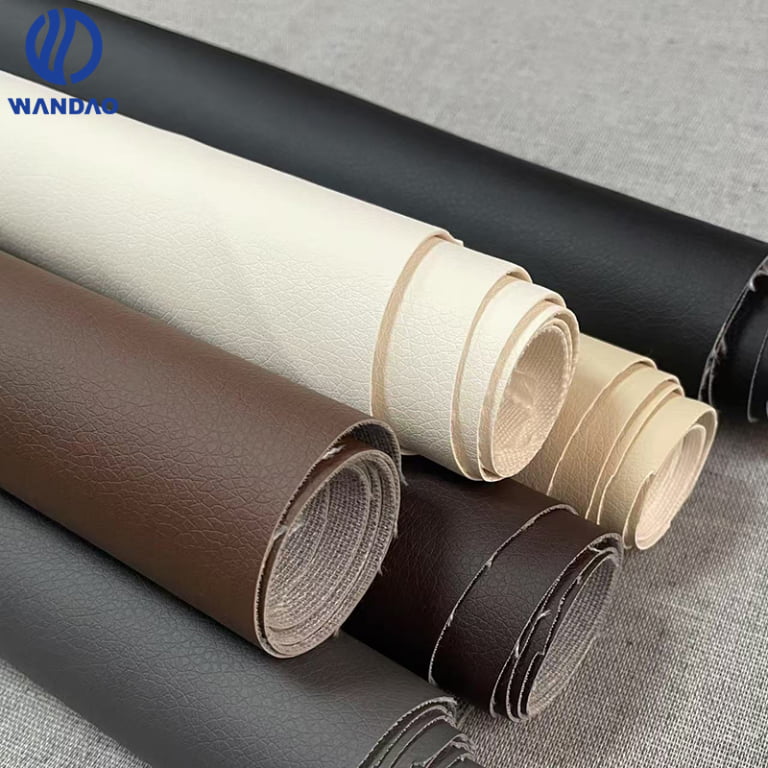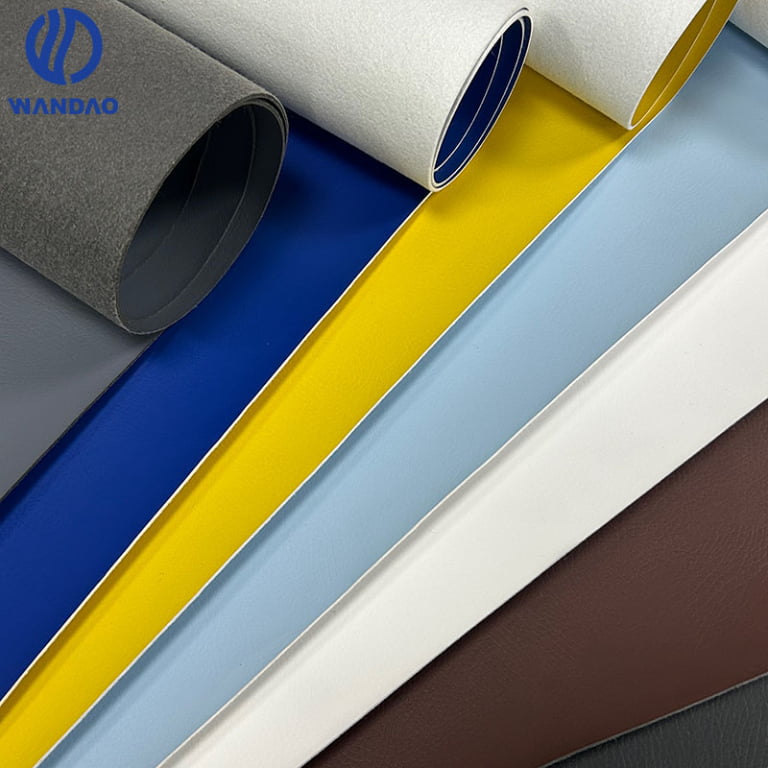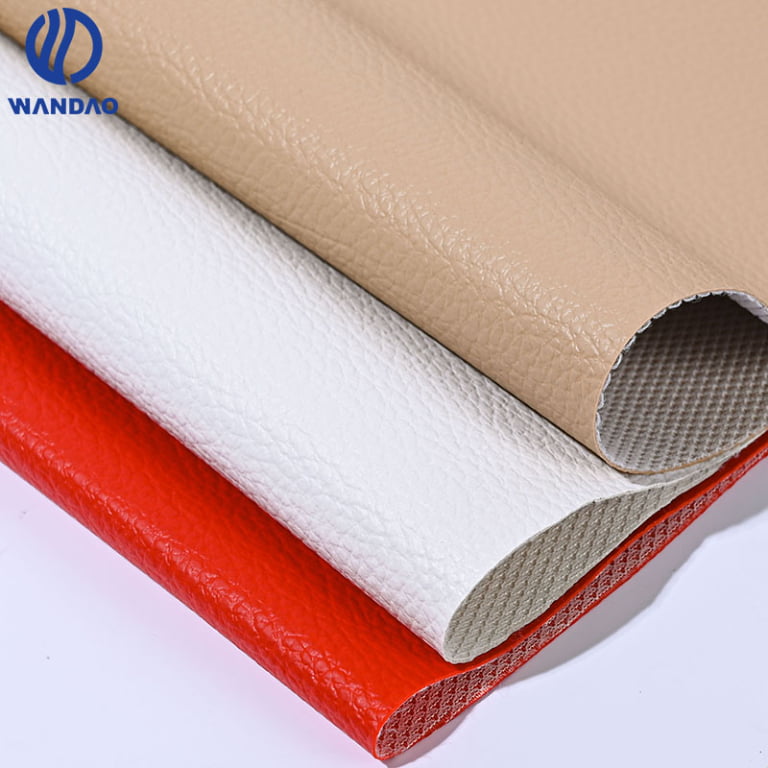
What Solvent-Free Leather Means in the Sofa Market
Solvent-free leather for sofas refers to a synthetic leather construction made with a PU coating, adhesive, or laminating system that is formulated to work without the conventional organic-solvent evaporation step. It is a process description, not a universal quality grade or a guarantee of zero emissions from the finished sofa.
Traditional dry-process PU may use a solvent to adjust viscosity and help apply the resin to release paper or another carrier. The coated layer is then dried, laminated, and transferred. Water-based PU replaces much of the organic-solvent function with water, but the line still has to remove water and allow the polymer particles to form a continuous film. A solvent-free PU route generally uses a high-solids or reactive system. Components are metered, mixed, coated or laminated, and cured through a chemical reaction rather than relying on a large solvent-evaporation stage.
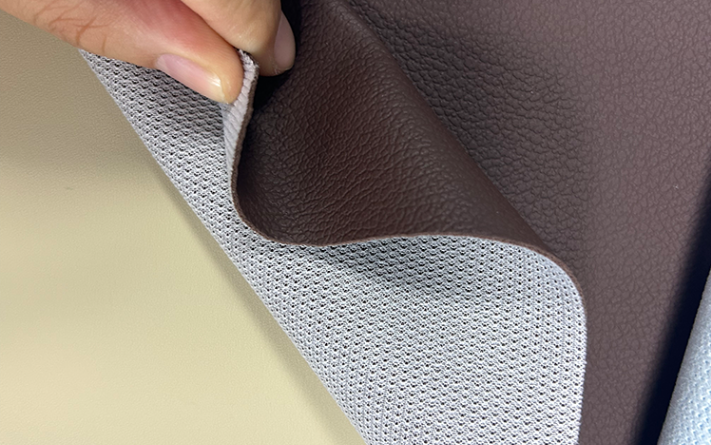
That difference matters to sofa buyers because the sofa cover is a multi-layer product. A typical construction may include a surface finish, a PU skin or color layer, a foam or cushioning layer, an adhesive or tie layer, and a knitted, woven, brushed, or nonwoven backing. A solvent-free system can be used in more than one part of that construction. It may form the surface coating, bond a face layer to a textile, or provide a reactive adhesive. Therefore, a supplier should explain exactly which layer is solvent-free instead of simply labeling the entire roll “solvent-free leather.”
The market is also more practical than the label suggests. Sofa buyers usually adopt a new process for one of four reasons: a customer asks for lower solvent exposure, the factory wants to simplify solvent-emission management, the product requires a particular hand feel or surface, or the supplier has a stable production route that fits the buyer’s price and volume. The route is more likely to be relevant in contract furniture, hospitality, office seating, healthcare seating, premium upholstery, and export projects with tighter chemical or indoor-air expectations. It is not automatically necessary for every sofa.
Publicly available market reports generally group synthetic leather by broad categories such as PU, PVC, artificial leather, or upholstery material. They rarely separate solvent-free PU into a reliable global sofa-leather market share. That is why a supplier should not present a precise “solvent-free leather market percentage” unless the source defines the material route, application, region, year, and statistical method. In purchasing terms, the more useful question is how many suitable suppliers can make the required construction consistently, not how large an imprecise category appears in a market report.
| Material route | Basic process idea | What sofa buyers should ask |
|---|---|---|
| Solvent-based PU | PU resin is applied with an organic solvent, then dried and transferred or coated | Which solvents, residual-solvent controls, drying conditions, and customer restrictions apply? |
| Water-based PU | PU dispersion is applied, water is removed, and particles fuse and/or crosslink | What are the solids, drying requirements, water resistance, adhesion, and actual line energy? |
| Solvent-free PU | High-solids or reactive components are metered, mixed, applied, and cured | What is the A/B ratio, pot life, cure window, moisture control, and cleaning procedure? |
| PVC leather | PVC is plasticized and formed by calendering, plastisol coating, foaming, embossing, or lamination | What are the plasticizer, backing, thickness, migration, cleaning, and surface-aging controls? |
Solvent-free should therefore be treated as one decision variable. It does not replace the need to specify thickness, width, backing, texture, color, gloss, hand feel, abrasion, flex, cleanability, odor, and chemical requirements.
Actionable recommendation
When a supplier offers solvent-free sofa leather, ask them to identify the solvent-free layer, the curing mechanism, the backing and foam structure, and the tests performed on the complete upholstery construction. Do not approve the material from the label alone.
How Solvent-Free Sofa Leather Is Structured and Made
Solvent-free sofa leather structure refers to the surface, reactive PU layer, tie or adhesive layer, backing, and optional foam or cushioning system that are combined into a finished upholstery roll. The chemistry and the layer sequence determine the final softness, stretch, appearance, adhesion, and processing behavior.
A common construction begins with a textile backing. It may be knitted polyester, woven fabric, brushed tricot, microfiber, nonwoven material, or another carrier selected for the sofa process. On top of this backing, the manufacturer may apply a reactive PU layer or bonding system. The material can then receive a color layer, grain or emboss, protective topcoat, matte finish, printed effect, or foam-backed structure. The exact sequence varies by factory and product family.
In a reactive solvent-free route, two or more components are metered at a controlled ratio. They are mixed and delivered to a coating head, roller, laminator, or other application unit. The mixed material has a limited working time, often called pot life. It must remain fluid long enough to spread evenly but react quickly enough to build strength and avoid blocking or contamination. Temperature affects viscosity and reaction speed; moisture can affect some isocyanate-containing systems; and an incorrect mixing ratio can change softness, tack, adhesion, and odor.
This is why solvent-free production is not simply a cheaper coating line with the solvent tank removed. It can require precision pumps, heated lines, controlled mixing, stable substrate temperature, moisture control, online monitoring, and a defined shutdown and cleaning procedure. If the line stops after the reaction has started, material can cure inside the mixer, hose, or coating head. The resulting loss may be more expensive than ordinary wet coating waste.
Surface appearance is another challenge. A sofa buyer may request a fine grain, Nappa effect, pebble texture, matte surface, smooth face, printed pattern, or soft-touch finish. The coating must level sufficiently to reproduce the surface without creating pinholes, streaks, bubbles, orange peel, gloss variation, or uneven embossing. Higher viscosity can help build a thicker layer but can make flow and fine texture replication more difficult. Faster reaction can improve line stability in one part of the process but reduce the time available for leveling in another.
The backing is equally important. A soft sofa cover may need enough stretch to follow curves and cushions, while a structured contract-furniture panel may need dimensional stability. The same solvent-free coating can feel different on a knit backing, a woven backing, a brushed backing, or a foam-laminated structure. For this reason, the material should be approved as a complete construction rather than as a resin sample.
In my own material-matching work, I have seen a sample that looked excellent on the surface but behaved differently after it was sewn around a curved upholstery section. The surface remained attractive, but the hand feel became firmer near the seam and the backing recovered differently after stretching. That observation was not a laboratory result, but it is a realistic reason to request a process trial. Sofa buyers are purchasing a material that must be cut, sewn, wrapped, and used—not merely a flat coating.
| Layer or process variable | What it influences | Buyer confirmation |
|---|---|---|
| Surface and topcoat | Color, texture, gloss, stain response, hand feel, abrasion and cleanability | Physical master, gloss/appearance target, cleaner list and post-aging review |
| Reactive PU layer | Flexibility, strength, cure, adhesion, odor and final softness | System description, mixing ratio, cure conditions, pot life and test evidence |
| Backing fabric | Stretch, sewing, tear, shape retention, drape and dimensional stability | Fiber type, weight, thickness, direction, stretch and process trial |
| Foam or laminate | Fullness, cushioning, compression, thermal feel and total thickness | Complete stack-up, adhesive compatibility and finished-part validation |
A supplier may also describe a water-based or solvent-free route as lower-VOC or lower-emission. This should be treated as a process or manufacturer claim until it is supported by a defined test on the actual finished material. Lower solvent use does not automatically mean zero VOC, zero odor, lower total energy, or a better lifecycle result.
Actionable recommendation
Request a cross-section or layer-stack description, the backing specification, and a sample made with the same surface and backing intended for bulk. Then test cutting, sewing, stretching, wrapping, and seam appearance before approving the material.
Is Solvent-Free Leather Worth the Higher Sofa Price?
Solvent-free sofa leather value refers to the balance between material price, manufacturing cost, compliance effort, appearance, processing yield, and customer benefit. A solvent-free route may cost more per square meter than a standard stock PU, but the correct comparison is the total qualified cost of the finished sofa program.
There is no single public price that represents solvent-free leather worldwide. A quote depends on the polymer system, backing, thickness, width, texture, color, topcoat, order size, development work, testing package, delivery term, and factory utilization. A solvent-free sofa material made for a small custom project should not be compared with a high-volume standard PU roll using only the headline price per meter.
In practical purchasing, cost can be divided into six parts:
- Material price: the quoted price per square meter or linear meter.
- Conversion yield: cutting waste, edge defects, grain direction, sewing waste, and rejected panels.
- Process cost: cutting, sewing, wrapping, adhesive, foam lamination, and operator time.
- Quality cost: incoming inspection, sorting, rework, rejected rolls, shade variation, and customer claims.
- Compliance and development cost: laboratory testing, documentation, custom color, custom texture, and process trials.
- Lifecycle cost: cleaning, repair, replacement, downtime, warranty, and disposal.
Solvent-free leather can be worth a premium when the buyer has a real reason to pay for the process route. Examples include a customer’s lower-solvent requirement, a factory that wants to reduce solvent-emission management, a sofa program that requires a defined low-odor route, or a premium material where consistent hand feel and surface quality justify development. The premium is harder to justify when the sofa is a price-sensitive product, the customer has no solvent-related requirement, and a conventional PU or PVC construction already meets the required quality level.
Some public manufacturer information supports the existence of commercial lower-solvent or solvent-free synthetic-leather routes, but it does not provide a universal sofa price. BASF describes Haptex as a PU solution for synthetic leather and automotive interiors and presents performance and process benefits for its own product route [BASF Haptex product information]. BASF has also published a manufacturer account of a specific synthetic-leather process claiming more than 20% lower energy consumption than conventional processes per kilogram of chemicals [BASF process claim]. This is a manufacturer claim for a specific system and boundary. It should not be converted into a general statement that every solvent-free sofa leather is cheaper or uses 20% less energy.
For comparison, water-based PU may reduce the use of conventional organic solvents but can require more drying capacity because water still has to be removed. A low-solids water-based system may create a longer drying load than a high-solids reactive system. Solvent-free PU may reduce evaporation but require expensive metering and cleaning controls. PVC may have a lower purchase price in some furniture constructions but still require careful management of plasticizers, topcoats, environmental claims, and end-of-life materials. The cheapest process on paper is not necessarily the lowest-cost production route.
For a sofa factory, the right calculation is:
Qualified sofa-cover cost = material consumed after cutting waste + sewing and lamination + adhesive and energy + inspection and rework + testing and documentation + expected claim or replacement cost.
This is a working procurement model, not a universal industry formula. It becomes useful when the buyer replaces assumptions with actual supplier quotes, marker layouts, pilot yield, production records, and customer-return data.
| Buying situation | When solvent-free may be worth considering | When a conventional route may be more practical |
|---|---|---|
| Premium sofa or contract seating | Lower-solvent positioning, material transparency, refined hand feel, and a customer willing to pay for the specification | When the program has no environmental or emissions requirement and a standard material already meets performance needs |
| High-volume factory | Potential process and emissions benefits can be spread over volume after stable line conditions are proven | When the line lacks metering, temperature, maintenance, or quality-control capability |
| Small custom order | Only if the supplier can make a stable small run and the customer accepts development cost | When MOQ, setup loss, and testing make the custom route uneconomic |
| Cost-sensitive sofa | Only if the total converted cost is competitive and no extra process burden is passed to production | When stock PU or PVC provides the required appearance, cleaning and durability at lower risk |
Actionable recommendation
Ask for two comparable quotations: solvent-free and conventional. Require the same width, thickness, backing, texture, color, packaging, Incoterm, MOQ, testing scope, and delivery point. Compare accepted sofa panels and total converted cost—not only the roll price.
What Performance Can Solvent-Free Leather Offer on a Sofa?
Solvent-free sofa performance refers to how the finished material behaves during upholstery, everyday contact, cleaning, aging, and repeated flexing after the reactive coating or adhesive has cured. The solvent-free process may help with emissions management, but the finished sofa still depends on the complete layer system.
A sofa buyer should evaluate the same practical properties used for other upholstery materials: hand feel, flex, seam behavior, abrasion, scratch resistance, stain release, cleaning-chemical resistance, color transfer, coating adhesion, heat aging, humidity exposure, light stability, odor, and dimensional behavior. Solvent-free does not automatically create a softer, stronger, more waterproof, or more stain-resistant surface. Those properties are designed through the polymer, topcoat, backing, foam, pigment, texture, and cure.
For furniture, the most visible failure modes are often surface and interface failures. A sofa can show gloss change on the seating area, grain polishing on the front edge, cracking around a seam, delamination near a stretched corner, or color transfer from clothing. A material can pass an initial abrasion test and still fail after cleaner exposure or heat aging. A material can also have low solvent content but an unacceptable odor from other additives, adhesive, residual monomer, catalyst, or packaging.
Where water-based or solvent-free systems are used, the buyer should request data on the exact cured construction. Covestro describes INSQIN as a water-based PU technology for coated textiles and discusses options for colors, patterns, hand feel, elasticity, durability, and lower VOC or emissions [Covestro INSQIN technology information]. This is manufacturer information and should be interpreted as a route capability, not as a guarantee for every sofa material made with a water-based system.
For solvent-free systems, the buyer should specifically inspect cure and reaction consistency. If the A/B ratio is not controlled, the material may vary in hardness, tack, adhesion, or flexibility. If the cure is incomplete, the finished roll may change during storage. If the cure is too fast, the coating may not level before it sets. If moisture interacts with the system, bubbles or pinholes may appear. These issues are not visible from the phrase “solvent-free.”
Sofa construction also changes the result. A loose sofa cover, a tight upholstered panel, a foam-wrapped armrest, and a deeply stretched corner do not apply the same strain. Test the actual application: seating center, front edge, armrest, corner, seam, piping, and backside. If the sofa will be used in hotels, restaurants, healthcare, or public spaces, include repeated cleaning and disinfectant exposure. If it will be sold in a hot and humid market, include heat and humidity aging and inspect adhesion and flex afterward.
Use cautious language when discussing environmental benefit. Solvent-free may reduce conventional organic-solvent use in a defined production step. It does not automatically prove lower lifecycle impact because energy, raw materials, equipment, scrap, cleaning, transport, durability, and end-of-life still matter. A credible environmental claim needs a defined boundary and evidence. For a buyer, the minimum practical package is a material declaration, process description, VOC/odor method if relevant, restricted-substance information, and clear identification of which layer is solvent-free.
| Performance area | What to inspect on the sofa | Evidence or trial |
|---|---|---|
| Hand feel and appearance | Softness, grain, gloss, surface uniformity, visual harmony | Approved master sample and finished-part review under agreed lighting |
| Upholstery processing | Cutting, sewing, seam, piping, stretch, corners, foam and adhesive | Production-representative trial with actual tools and settings |
| Surface durability | Abrasion, scratch, stain, cleaner, color transfer and grain retention | Method-specific tests before and after relevant chemical or aging exposure |
| Layer integrity | Peeling, bubbling, delamination, edge lift and backing separation | Complete laminate adhesion and flex testing after aging |
| Environmental claims | Solvent route, VOC, odor, additives, production energy and waste | Defined claim boundary, supplier declaration, and suitable test or LCA evidence |
Actionable recommendation
Approve solvent-free leather through a finished-sofa or representative upholstery trial. Check the seat center, front edge, armrest, corner, seam, and foam interface after cleaning, flexing, and relevant aging instead of relying on a flat material test.
When Is Solvent-Free Leather Worth Choosing for a Sofa?
Solvent-free sofa leather selection refers to deciding whether the process and construction create enough technical, commercial, or customer value to justify changing from a conventional material route. It is worth choosing in some programs, but not because “solvent-free” is automatically a premium or environmentally superior label.
Solvent-free leather is more likely to be worth considering when the sofa project has one or more of these characteristics:
- The customer requests a lower-solvent or lower-emission production route.
- The sofa is part of a contract, hospitality, healthcare, office, or export program with defined indoor-air or chemical requirements.
- The buyer wants a refined PU hand feel, a controlled surface, or a particular low-gloss and texture design.
- The annual volume is large enough to justify dedicated development, equipment control, testing, and process learning.
- The supplier can provide a stable backing, color, texture, thickness, and production route rather than only a development sample.
- The factory can control metering, component temperature, moisture, pot life, mixing, cleaning, and shutdown waste.
It is less likely to be worth choosing when the project is a small custom order with a low target price, the factory has no suitable reactive-coating equipment, the customer does not value the process route, or a stock PU or PVC material already meets the required appearance, durability, cleaning, and compliance needs. A solvent-free construction can carry a development fee or a higher MOQ because setup, mixing, trial loss, and testing may not be reusable for another buyer.
Use a simple decision matrix before ordering:
| Question | If the answer is yes | If the answer is no |
|---|---|---|
| Does the customer have a defined lower-solvent, VOC, odor, or chemical requirement? | Obtain a solvent-free or water-based feasibility proposal with the customer’s test method | Do not pay for the process route unless it produces another measurable benefit |
| Can the factory control the reactive system and production line? | Run a pilot with metering, pot life, temperature, moisture and shutdown records | Use a proven conventional route or select a supplier with the required equipment |
| Is the sofa volume sufficient to spread development cost? | Negotiate a custom construction, testing plan and stable supply agreement | Compare stock or modified-stock PU, PVC, microfiber, or silicone options |
| Does the finished material pass the actual sofa process? | Continue to cleaning, aging, appearance, and bulk-lot approval | Do not approve from a swatch; change the construction or process |
| Is the environmental claim documented? | State the precise process and evidence boundary in product documents | Avoid “eco-friendly,” “non-toxic,” or “zero-emission” language |
When comparing a solvent-free option with conventional PU, PVC, or another material, ask for the following before purchasing:
- Which layer is solvent-free?
- What are the components, mixing ratio, pot life, cure conditions, and storage requirements?
- What backing, foam, adhesive, topcoat, texture, width, and thickness are included?
- Which tests were performed on the same color and construction that will be supplied?
- What are the MOQ, sample time, bulk lead time, development cost, and price per square meter or linear meter?
- How are color, texture, thickness, adhesion, odor, and batch consistency controlled?
- What changes require advance notice or requalification?
For sofa manufacturers looking beyond PU, our furniture leather materials page, silicone leather for furniture page, and quality-control page can help organize the comparison by application and approval requirements. These links are reference points for material selection; the final construction still needs project-specific sampling and validation.
Final answer: solvent-free leather can be worth it for a sofa when the buyer needs a defined low-solvent process, premium PU construction, documented emissions or chemical performance, and enough volume to justify process control. It is not automatically worth the premium when the only reason is a marketing label. A well-specified conventional PU, PVC, microfiber, or silicone construction may be the better commercial choice if it delivers the required sofa performance with lower development and supply risk.
Frequently Asked Questions
A: Solvent-free leather for sofas is usually a synthetic PU leather made with a high-solids or reactive coating, adhesive, or laminating system that does not rely on conventional organic-solvent evaporation for the relevant layer. It may still contain other additives, and the phrase does not automatically mean zero VOC or zero environmental impact.
A: It may reduce the use of conventional organic solvents in a defined production step, but the complete environmental result depends on raw materials, energy, equipment, scrap, cleaning, durability, transport, and end-of-life. Ask for the claim boundary and supporting evidence rather than accepting a general eco-friendly statement.
A: It can be more expensive than standard stock PU because reactive metering equipment, process control, development, testing, MOQ, and production learning may be included. The correct comparison is the total qualified cost after cutting, sewing, inspection, rework, compliance, and potential claims—not only the quoted price per square meter.
A: Not automatically. Durability depends on the PU chemistry, topcoat, backing, adhesive, thickness, cure, and sofa process. Some solvent-free systems may offer strong adhesion or surface performance, but the buyer must verify abrasion, flex, cleaning, stain, heat, humidity, color, odor, and delamination behavior on the actual construction.
A: It can be suitable when the construction delivers the desired hand feel, low-gloss appearance, texture, color consistency, and process stability. High-end positioning should be supported by a physical master sample, finished-sofa evaluation, reliable batch control, and documented performance. The production route alone does not create a luxury material.
A: Ask which layer is solvent-free, the chemistry and cure system, A/B ratio, pot life, backing, thickness, width, texture, MOQ, sample and bulk lead time, price basis, test reports, VOC and odor method, cleaning compatibility, adhesion data, batch controls, and change-notification procedure. Request a production-representative upholstery trial before bulk approval.