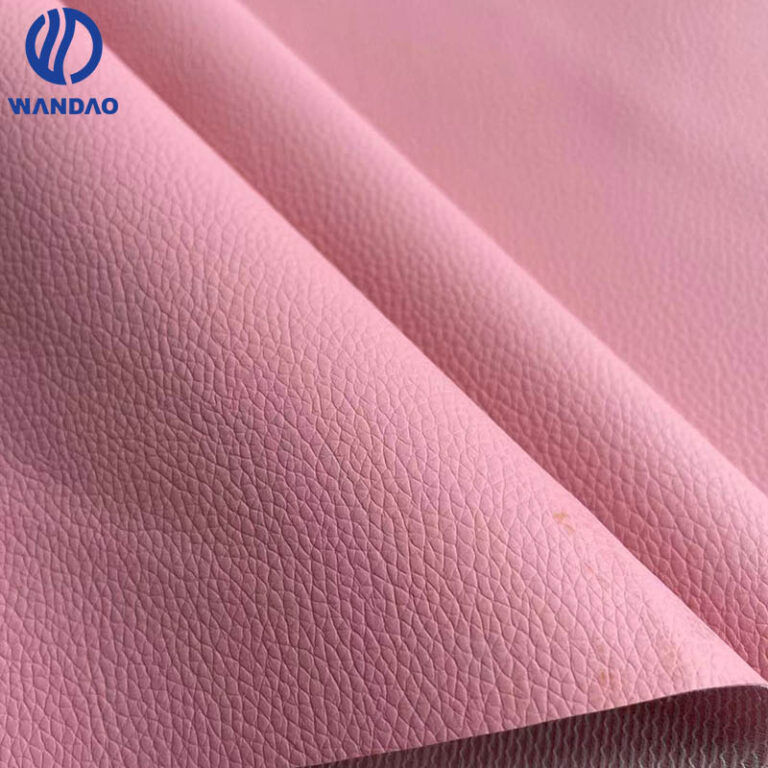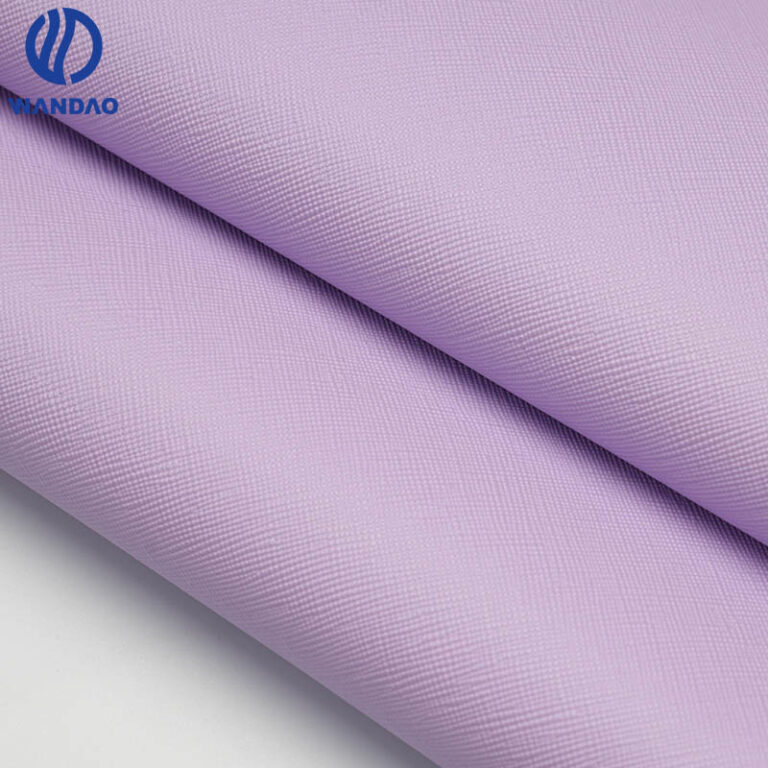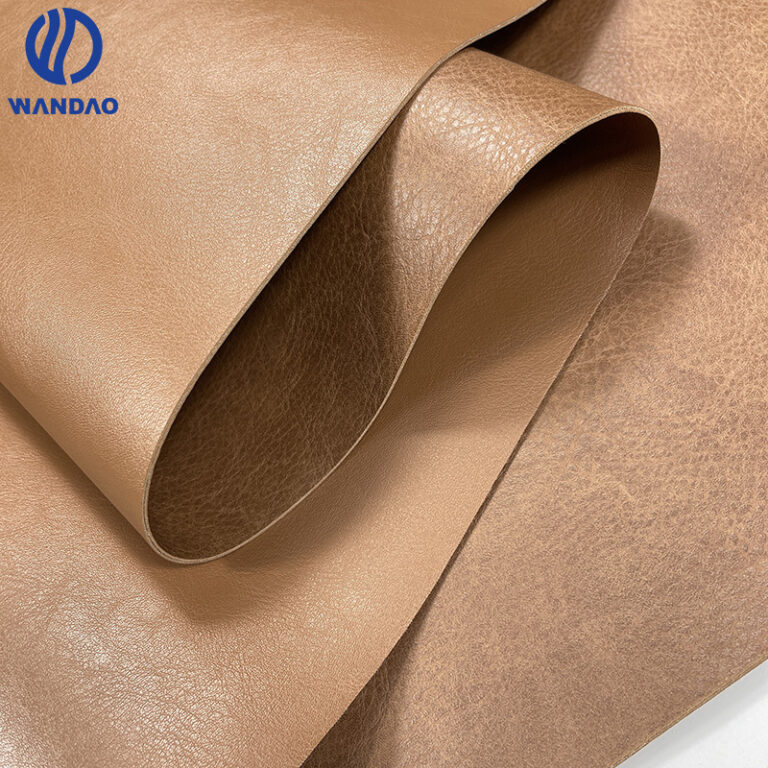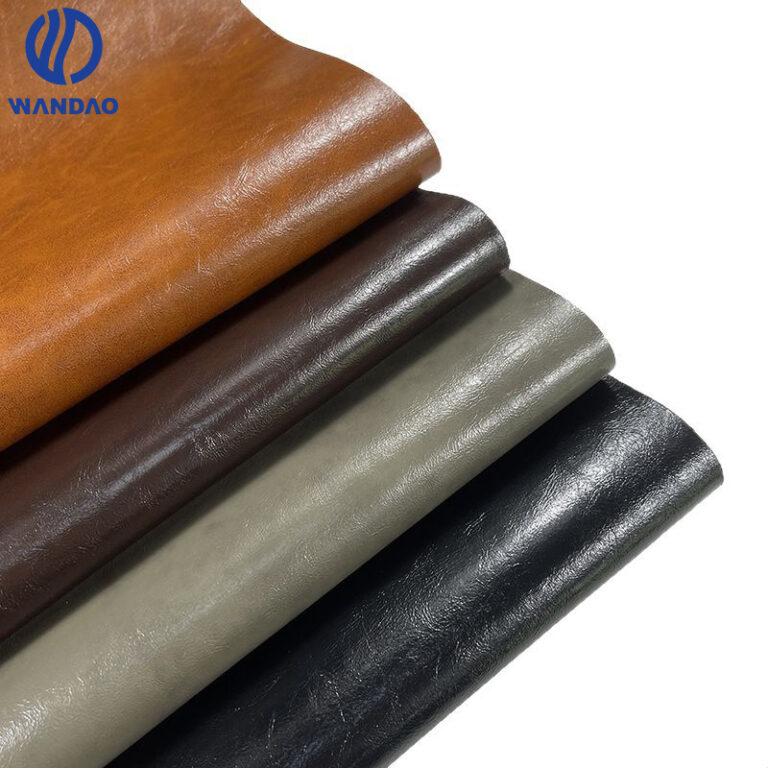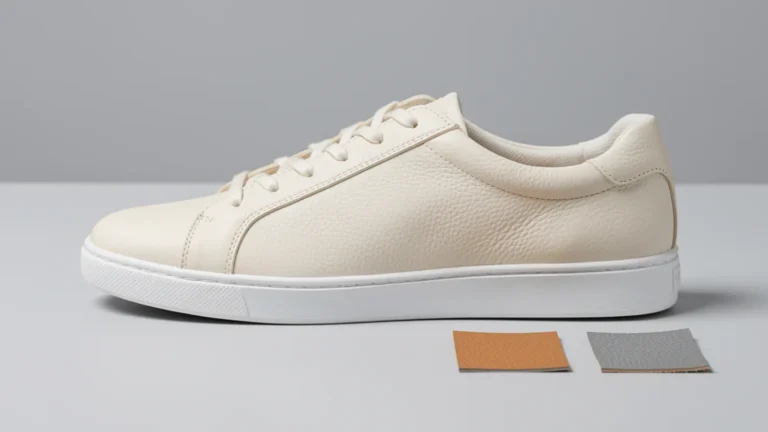
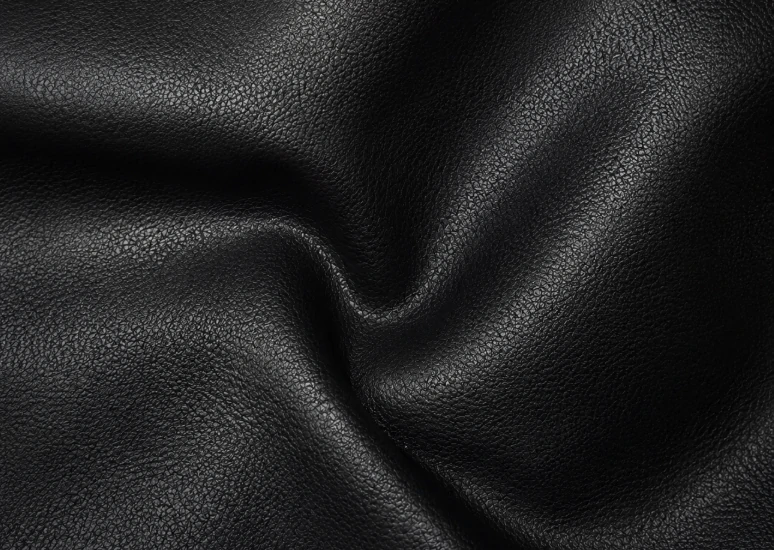
Car seating materials play a critical role in determining the comfort, durability, appearance, and overall user experience of a vehicle interior. Whether in passenger cars, commercial trucks, buses, or aftermarket seat covers, the upholstery material must withstand years of daily use while maintaining its appearance and performance.utomotive seating materials play a critical role in determining the comfort, durability, appearance, and overall user experience of a vehicle interior. Whether in passenger cars, commercial trucks, buses, or aftermarket seat covers, the upholstery material must withstand years of daily use while maintaining its appearance and performance.
Among the various upholstery materials available today, PVC leather remains one of the most widely used solutions for automotive seating applications. Thanks to its durability, cost-effectiveness, water resistance, and design flexibility, automotive-grade PVC leather continues to be specified by vehicle manufacturers, seat producers, and aftermarket suppliers worldwide.
However, not all PVC leather products are created equal. Material performance can vary significantly depending on thickness, backing construction, abrasion resistance, UV stability, cold crack performance, and manufacturing quality.
For buyers, wholesalers, automotive seat manufacturers, and vehicle interior suppliers, understanding these factors is essential when selecting the right material.
This guide provides a comprehensive overview of automotive PVC leather, including its structure, manufacturing process, specifications, applications,features.
What is the structural composition of PVC leather?
PVC leather, also known as polyvinyl chloride synthetic leather, is an engineered upholstery material designed to mimic the appearance of genuine leather while providing greater consistency and affordability.
Unlike natural leather, which can vary in grain, thickness, and surface quality, PVC leather is manufactured through controlled industrial processes. This allows manufacturers to achieve consistent color, texture, and performance across large production volumes.
Automotive PVC leather typically consists of three primary layers:
Surface Layer
The top layer provides the visible appearance of the material and serves as the first line of defense against abrasion, stains, moisture, and UV exposure.
Manufacturers can emboss this layer with a wide range of textures, including:
- Natural leather grain
- Smooth finishes
- Carbon fiber patterns
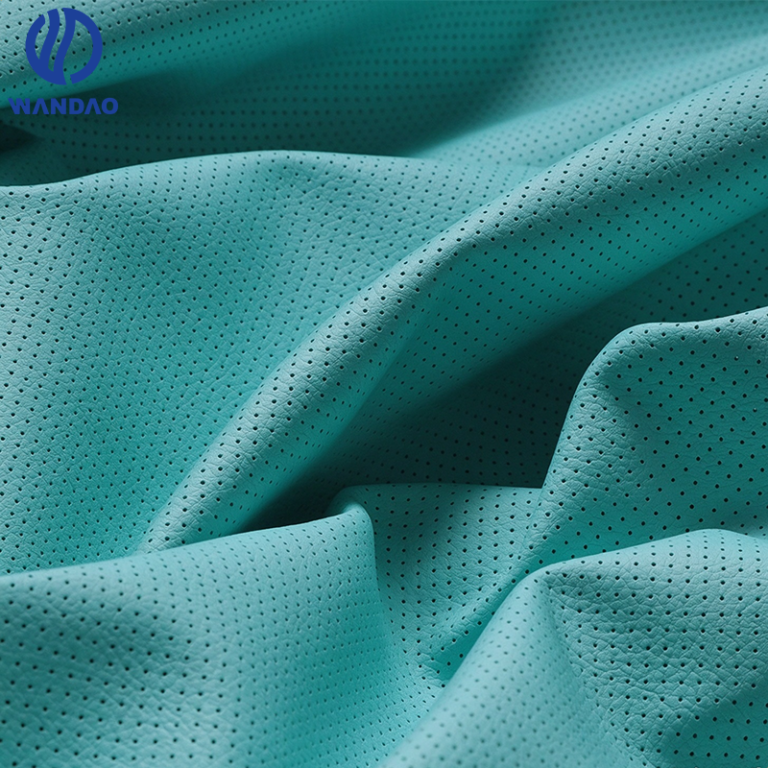
- Perforated designs
- Custom decorative textures
Foam Layer
Many automotive PVC leather constructions include a foam layer that enhances comfort and creates a softer seating experience.
The foam layer can also improve the visual richness of the upholstery while helping absorb minor surface impacts.
Backing Fabric
The backing layer provides structural strength and dimensional stability.
Depending on the application, manufacturers may use:
- Polyester fabric
- Knitted fabric
- Nonwoven backing
- Reinforced textile constructions
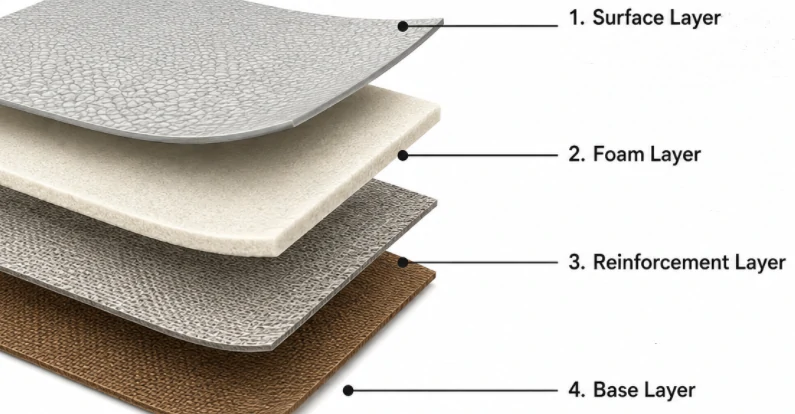
The quality of the backing fabric directly affects tear strength, sewing performance, and long-term durability. We commonly use knitted fabric, mesh fabric, and fish scale fabric for car seat backings. Of course, we can also provide custom-made backings if needed.
What is the production process of PVC leather?
There are generally two methods used to manufacture PVC leather. Understanding the manufacturing process can help buyers better evaluate product quality and supplier capabilities. Starting from formulating PVC resin, plasticizers, stabilizers, pigments and functional additives whose specific ratios define the material’s softness, durability, UV resistance and environmental compliance, the whole production flow of PVC artificial leather includes precision coating the mixed PVC compound onto release paper or base material with strictly controlled coating thickness for uniform quality, adding a foamed PVC layer for softer cushioning and lighter weight when comfort is prioritized, embossing decorative textures mimicking genuine leather or high-end surfaces via embossing rollers to shape its final look, and finally laminating all PVC layers onto designated base fabric to form a sturdy composite suitable for automotive applications. We will implement strict quality control throughout the entire production process to ensure the highest quality standards. 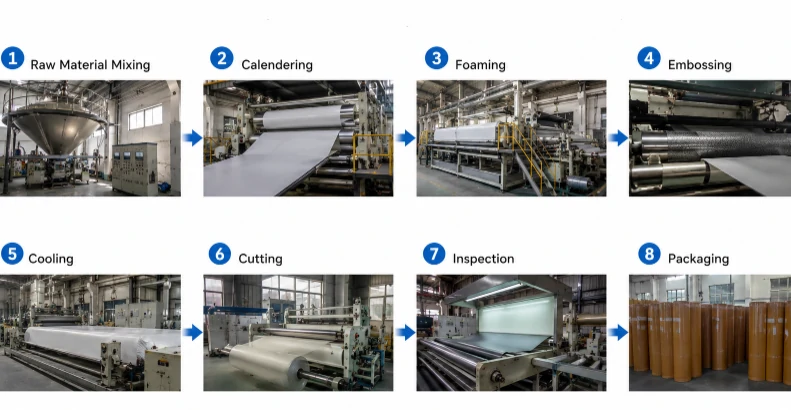
Benefits of PVC Leather for Car Seats
Excellent Durability
Automotive seats are exposed to continuous wear and tear throughout their service life, which makes durability and abrasion resistance essential. Our automotive materials feature excellent durability, with a Martindale abrasion resistance exceeding 100,000 cycles. For detailed testing standards, please click this link.
https://www.iso.org/standard/61058.html?utm_source=chatgpt.com
Every entry and exit creates friction that gradually degrades upholstery materials. Automotive PVC leather is engineered to resist this wear and maintain its appearance under demanding conditions.
Higher abrasion resistance helps prevent:
- Surface wear
- Texture loss
- Premature aging

This durability makes it particularly suitable for:
- Commercial vehicles
- Taxi fleets
- Public transportation
- High-mileage vehicles
Water and Stain Resistance
Unlike many natural materials, PVC leather features a non-porous surface that prevents liquids from penetrating the material. So the PVC leather equipment has good waterproof and abrasion resistant ability.
Coffee spills, food residue, dirt, and mud can typically be removed using simple cleaning procedures. This characteristic helps reduce maintenance costs and extends the visual lifespan of vehicle interiors.
Cost-Effective Solution
PVC leather provides a favorable balance between performance and affordability.
Compared with genuine leather and certain premium synthetic materials, PVC leather allows manufacturers to achieve attractive interior designs while maintaining competitive production costs.
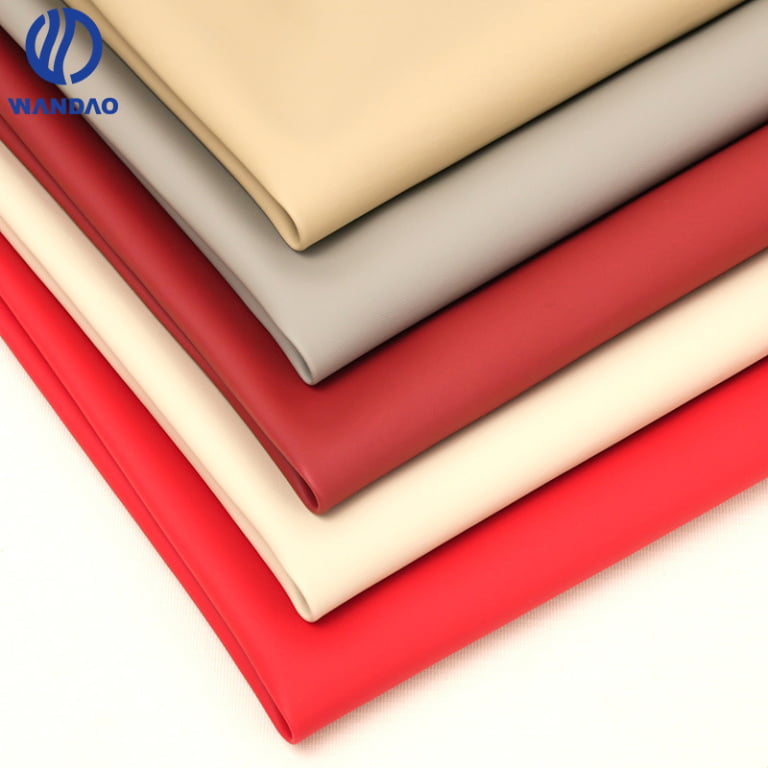
Modern manufacturing technologies enable PVC leather to be produced in virtually unlimited colors, textures, and surface patterns.
This flexibility allows vehicle manufacturers to create customized interior aesthetics without sacrificing durability. We support buyers from all over the world in making customized purchases.
Key Factors When Choosing PVC Leather for Car Seats
When choosing PVC material for car seats, you need to pay attention to factors such as its thickness, abrasion resistance, UV resistance, flame retardancy, and environmental friendliness, as different physical properties will result in different effects. Many automotive projects require compliance with flammability standards such as FMVSS 302. For details, please visit this website. Flame-retardant formulations help improve passenger safety and regulatory compliance. At the same time, automotive manufacturers require low-VOC materials that comply with REACH, RoHS, and other environmental regulations. Please click these links for relevant testing standards:
https://eur-lex.europa.eu/eli/reg/2006/1907/oj?utm_source=chatgpt.com
The following are the parameters of PVC materials commonly used in car seats:
| Property | Recommended Range |
| Thickness | 1.0–1.2 mm |
| Abrasion Resistance | 50,000–100,000 cycles |
| Cold Crack Resistance | -25°C or lower |
| UV Resistance | Automotive grade |
| Tear Strength | High |
| Flame Retardancy | FMVSS 302 |
| VOC Performance | Low VOC |
For commercial transportation projects, higher abrasion resistance and thicker constructions are often recommended.
Of course, we’ve encountered some buyers who, when purchasing car seat materials, often ask whether to choose PVC or PU. Ultimately, the most fundamental selection criterion is your needs and budget. PVC leather is often preferred when durability and cost efficiency are priorities, while PU leather is commonly selected for premium vehicle interiors emphasizing softness and comfort. If you’d like to learn more about the differences between PVC and PU leather, you can check out this blog post. After reading it, you’ll have a clearer understanding of them.
https://wandaoleather.com/blog/what-is-the-difference-between-pu-leather-and-silicone-leather/
Common Applications of Automotive PVC Leather
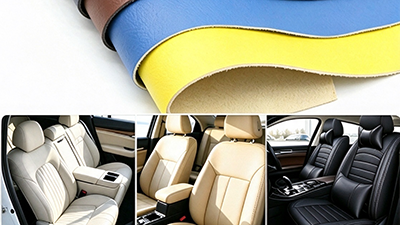
Automotive PVC leather is widely used in:
Passenger Cars
Economy and mid-range vehicles frequently utilize PVC leather due to its durability and affordability.
Commercial Trucks
Heavy-duty usage conditions make PVC leather a practical solution for truck interiors.
Buses and Public Transportation
High passenger turnover requires materials capable of resisting wear and frequent cleaning.
Taxi Fleets
Fleet operators value PVC leather’s long service life and ease of maintenance.
Aftermarket Seat Covers
PVC leather remains one of the most popular materials for aftermarket automotive upholstery products.
Meanwhile, proper maintenance can significantly extend the lifespan of PVC leather upholstery.
Recommended cleaning practices include:
- Wipe surfaces regularly using a soft microfiber cloth.
- Remove spills promptly.
- Use mild soap solutions when necessary.
- Avoid harsh solvents and abrasive cleaners.
- Minimize prolonged exposure to direct sunlight whenever possible.
Routine maintenance helps preserve appearance and prevent premature aging.
Frequently Asked Questions
Q1;Is PVC leather good for car seats?
Yes. Automotive-grade PVC leather offers durability, easy maintenance, water resistance, and competitive cost performance.
Q2:What is the difference between synthetic leather and PVC leather?
When choosing between PVC and synthetic leather (typically Polyurethane or PU), PVC excels in durability and water resistance, making it ideal for outdoors. Pu offers superior softness, breathability, and a realistic leather feel, making it ideal for clothing and wearable accessories. Both are popular, affordable alternatives to genuine leather.
Q3:Is PVC leather waterproof?
PVC leather is highly water resistant and prevents liquid penetration under normal use conditions.
Q4:Does PVC leather crack?
Quality automotive PVC leather formulated with proper stabilizers is designed to resist cracking caused by temperature fluctuations and aging.
Q5:What thickness is best for automotive seats?
Most passenger vehicle applications use materials ranging from 1.0 mm to 1.2 mm.
Q6:Is PVC leather better than PU leather?
Neither material is universally better. The best choice depends on project requirements, target market, and budget.
Q7:Does PVC leather fade in sunlight?
Automotive-grade materials with UV stabilizers are specifically engineered to resist fading and degradation caused by sunlight exposure.
Q8:Can PVC leather be customized?
Yes. Manufacturers can produce custom colors, embossing patterns, textures, and performance specifications.
Conclusion
PVC leather continues to be one of the most practical and widely used upholstery materials in the automotive industry. Its combination of durability, water resistance, design flexibility, and cost efficiency makes it suitable for a broad range of vehicle seating applications.
When selecting PVC leather for car seats, buyers should carefully evaluate performance requirements such as thickness, abrasion resistance, UV stability, cold crack resistance, flame retardancy, and environmental compliance. Working with an experienced manufacturer can help ensure consistent quality and long-term product performance.
By understanding these factors, automotive manufacturers, seat producers, distributors, and sourcing professionals can make informed material selection decisions that balance performance, aesthetics, and cost-effectiveness.