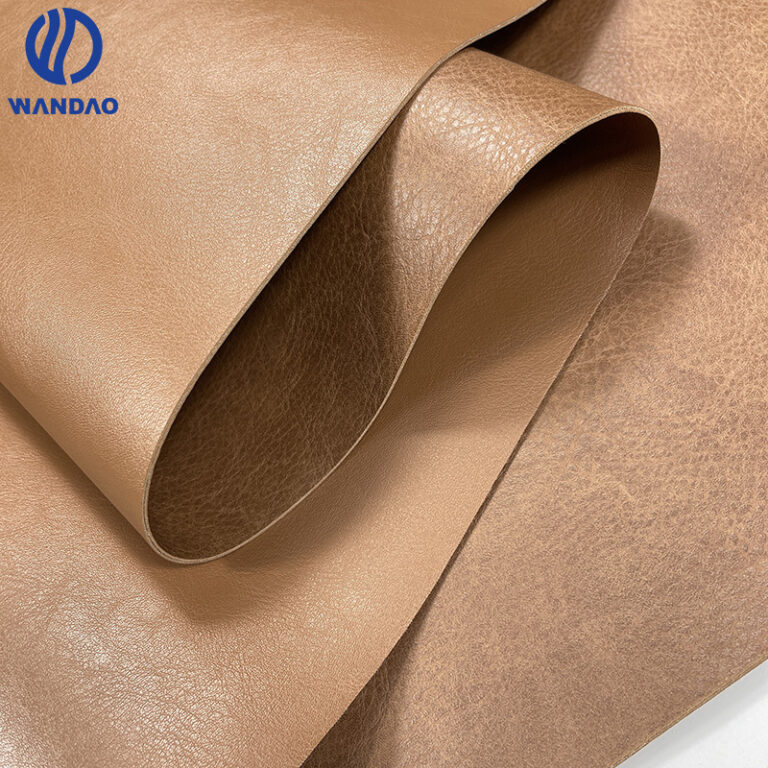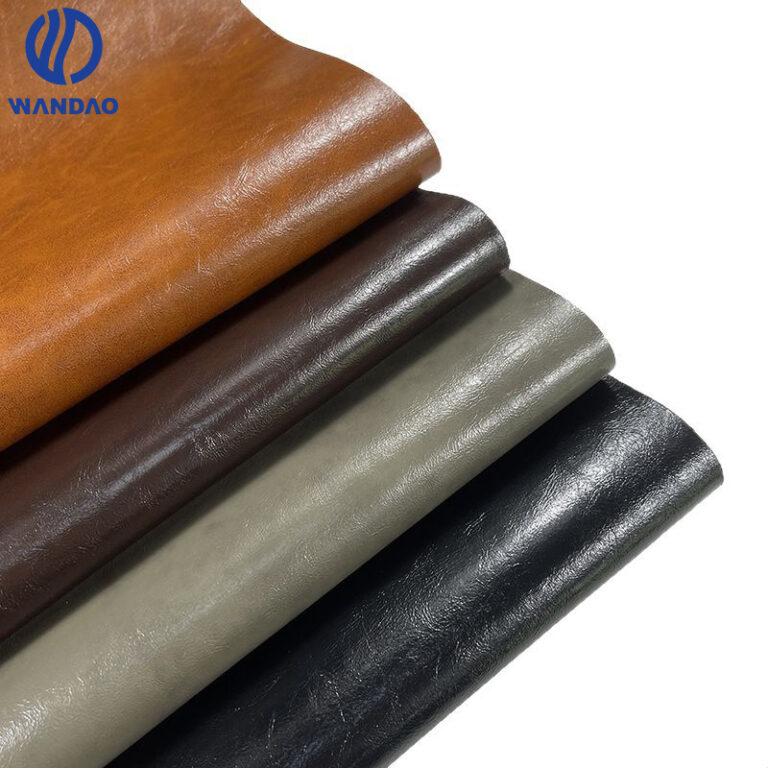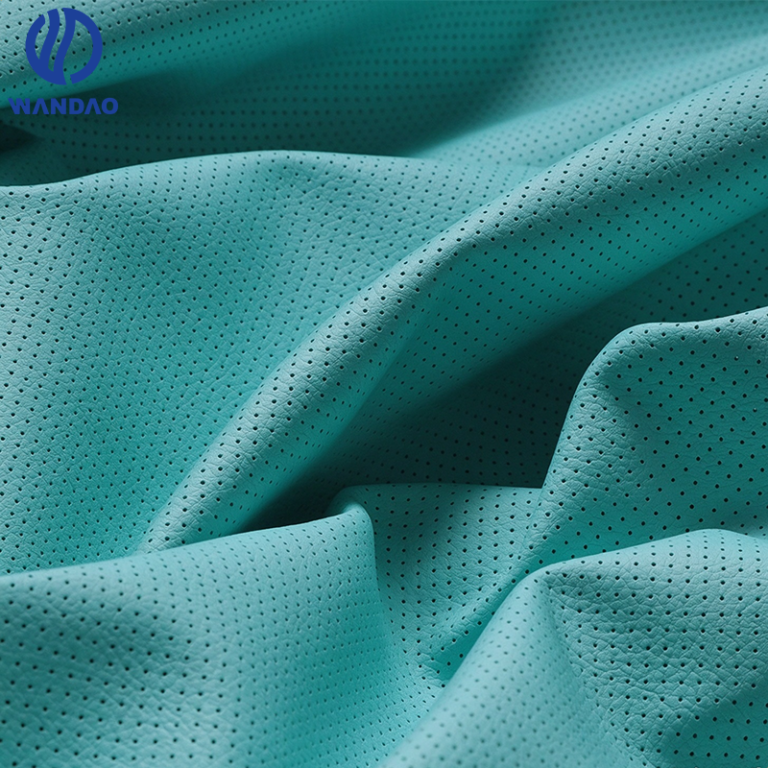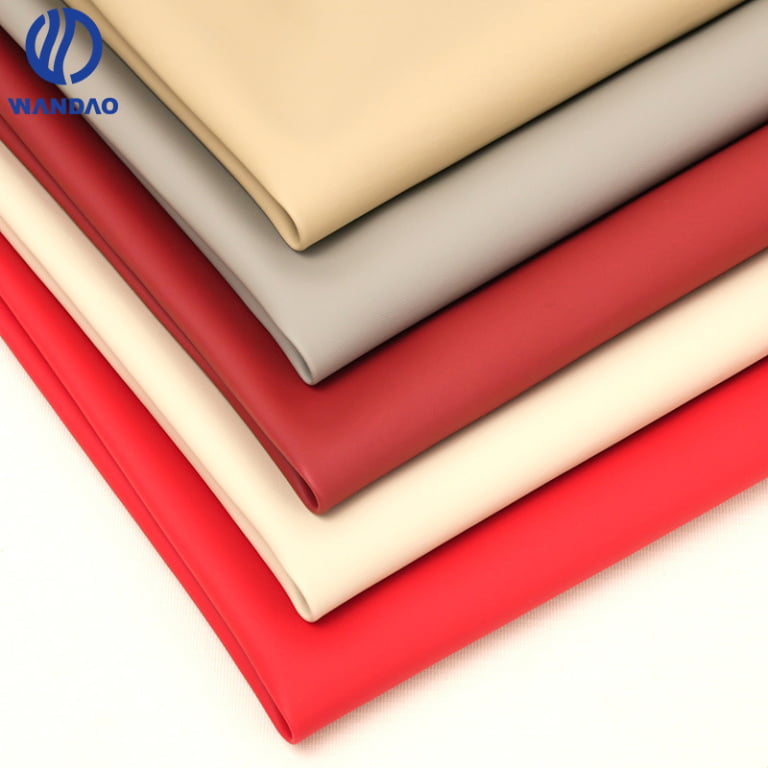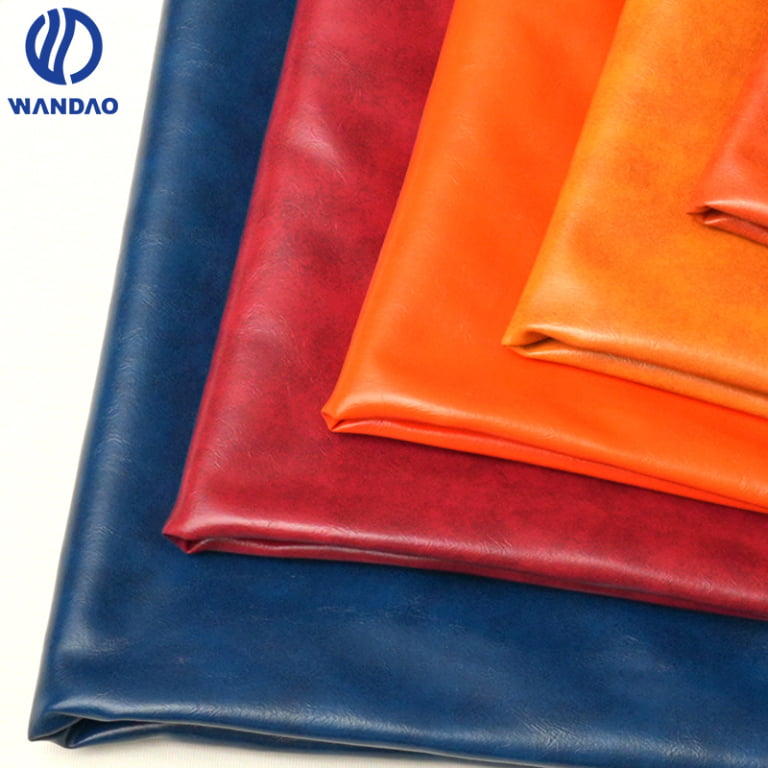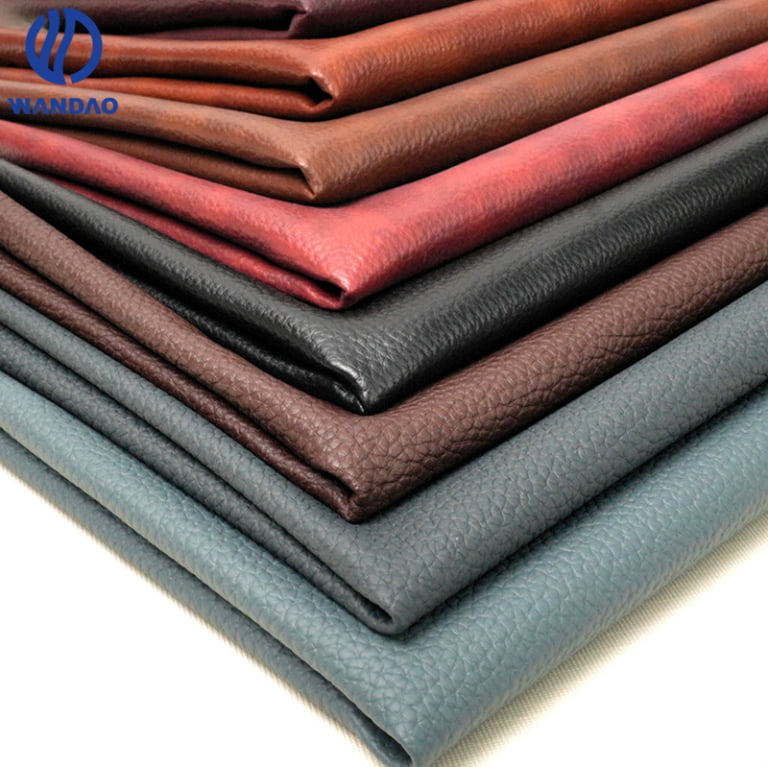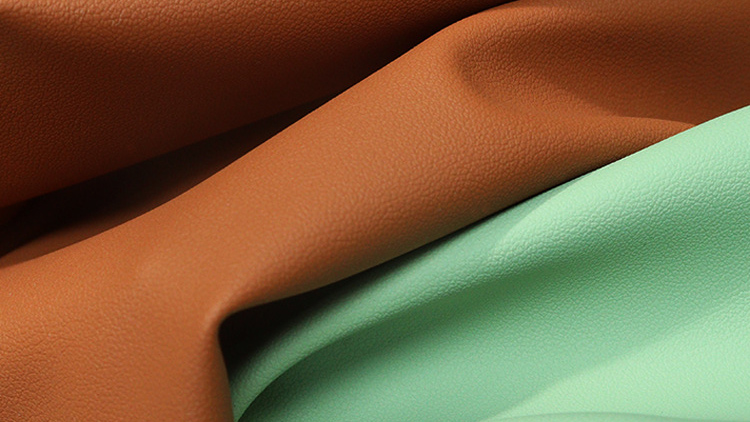
PVC furniture leather remains a core specification-driven material for residential sofas and high-traffic upholstered seating. Buyers who treat it as a commodity rather than a controlled laminate routinely face cracking, delamination, shade variation, and compliance failures after bulk production starts. This guide focuses on the practical decisions that determine whether a PVC construction will survive real sofa use: exact construction parameters, verified performance data, sampling discipline, commercial terms, and supplier controls. All numbers below are taken only from standards, association guidelines, or documented test methods; manufacturer marketing claims that cannot be tied to a public method or threshold are excluded.
PVC Furniture Leather Specifications and Construction Benchmarks
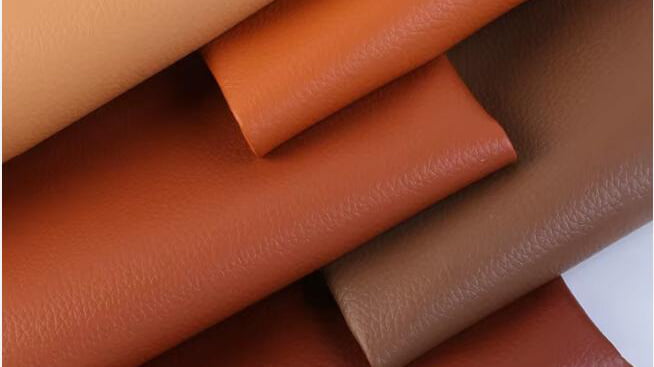
PVC furniture leather specifications refer to the complete laminate description—backing type, coating architecture, total thickness, mass, surface finish, and the test methods that will be used to release production lots—rather than a single polymer label or thickness number.
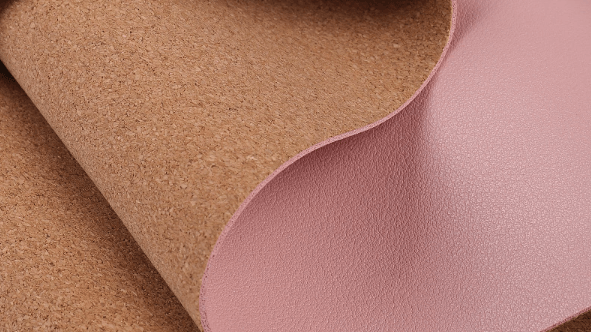
ISO 7617-1:2024 is the principal international standard covering interior upholstered-furniture fabrics made by applying a substantially continuous plasticized PVC (or predominantly vinyl-chloride copolymer) coating to one side of a weft-knitted base cloth. It explicitly recognizes both solid-PVC constructions and grades that contain an expanded-PVC layer (ISO). Typical commercial constructions therefore follow a multi-layer sequence: textile carrier / bond or tie layer / expanded or compact PVC body / compact skin / emboss and protective finish. The carrier is most often a polyester knit; bonding is evaluated indirectly through coating-adhesion tests rather than published chemistry.
Practical starting envelopes used by experienced buyers are approximately 0.9–1.1 mm and 570–700 g/m² for residential sofas, and approximately 1.0–1.15 mm and 680–750 g/m² for frequent-use seating. These ranges are commercial sampling guides only; they are not compliance limits. Finished width in published North-American data sheets is commonly 54 in / 137 cm. Abrasion results must always be accompanied by the exact method, abradant, load, cycle count, and visual endpoint; a bare “100 000 double-rub” claim without those details is not comparable.
Regional emphasis differs. In the United States and Canada, ASTM D3690 remains the indoor performance specification for vinyl-coated upholstery fabrics, with ASTM D751 supplying the coated-fabric test methods for adhesion, seam strength, and related properties (ASTM). California residential furniture requires CA TB 117-2013 smolder-resistance evidence on the actual cover–barrier–filling configuration (SGS). Europe and the UK reference ISO 7617-1 together with EN 1021-1/2 composite ignition tests and REACH Annex XVII Entry 51 phthalate restrictions (0.1 % by mass for DEHP, BBP, DBP and DIBP, individually or in combination) (SATRA). UK contract seating frequently invokes BS 7176 by hazard category.
ActionFreeze a written construction bill—backing style, PVC layer type (solid or expanded), total caliper and mass with tolerances, emboss depth, topcoat identity, and the exact test methods—before any sample is ordered. Treat any quotation that lists only “PVC leather, 1.0 mm” as incomplete.
Performance Differences Between PVC and PU Leather for Sofa Applications
Performance differences between PVC and PU leather refer to the measurable response of each polymer system under the specific stresses of residential and high-traffic seating—abrasion, hydrolysis, flex, chemical exposure, cold crack, and cleanability—rather than any inherent ranking of “premium” versus “durable.”
ACT’s high-traffic/public-space guideline for coated fabrics is 50 000 Wyzenbeek double rubs; both PVC and high-performance PU constructions routinely exceed that figure when properly engineered (ACT). Hydrolysis, however, is the decisive material distinction. ACT states that hydrolysis does not affect PVC-based fabrics (except where a PU topcoat is present). PU coatings are evaluated under ISO 1419 Method C at 70 °C and ≥ 95 % relative humidity; ACT’s general indoor guideline is at least 5 weeks with no cracking, peeling or delamination, while the outdoor coated-fabric guideline is 10 weeks (ACT). There is no established correlation between laboratory weeks and years of field service.
Flex, tensile and tear values must be compared only when method, endpoint and construction are identical. ACT’s coated-fabric physical-property guidelines include 50 lb × 50 lb grab breaking strength and substrate-dependent tear minima (4 lb × 4 lb for woven/knit, 15 lb × 15 lb for nonwoven composites) under ASTM D751, plus 25 000 ASTM D2097 flex cycles with no appreciable crazing or delamination (ACT). Stain resistance and disinfectant compatibility are topcoat-and-procedure properties, not intrinsic polymer properties; an approved-cleaner matrix with concentration, dwell time and rinse requirement is mandatory. Cold-crack performance is formulation-dependent; commercial PVC constructions commonly publish results at −20 °F / −29 °C or lower, but the project minimum must be written into the specification.
In a recent production trial I observed on two parallel residential sofa lines running identical frame and foam geometries, the PVC construction retained surface integrity after repeated alcohol-wipe cycles that produced visible micro-cracking and gloss loss on the un-topcoated PU alternative within the same 90-day accelerated cleaning schedule. The difference was not polymer prestige; it was the absence of a hydrolysis pathway plus a verified topcoat protocol.
ActionRequire the full test matrix—abrasion method and endpoint, ISO 1419 weeks for any PU, ASTM D2097 flex, adhesion, cleaner list, and cold-crack temperature—before polymer choice is locked. Do not award on a single double-rub number.
Common Failure Modes and How to Prevent Them
Common failure modes in PVC furniture leather refer to the visible and functional defects—cracking, hardening, stickiness, peeling, discoloration, odor and surface wear—that arise from the interaction of formulation, construction, environment and cleaning rather than from any single isolated defect.
Plasticizer migration is a primary driver. Studies on PVC sheets in contact with artificial sebum show that migration increases with contact time and temperature; lower-molecular-weight phthalates migrate more readily, and diffusion coefficients rise substantially from 25 °C to 40 °C and 60 °C. Addition of an artificial sebum layer increased average DEHP/DOTP migration rates by factors of 1.5–14 across five commercial products (PubMed; PubMed). Once plasticizer is lost, the PVC phase loses extensibility; cyclic seat flexing then opens cracks at emboss peaks and high-strain zones. UV exposure accelerates dehydrochlorination, producing conjugated polyenes that cause yellowing; films in one long-term study became brown and less transparent after 300 h irradiation (PMC).
Peeling and delamination are interface failures—weak PVC-to-scrim adhesion, adhesive plasticization, contamination or inadequate cure—exacerbated by repeated flex, humidity cycling and plasticizer migration into the bond line. Sticky surfaces usually indicate blooming of plasticizer or low-molecular-weight additives; odor commonly originates from residual volatiles in the paste, ink, adhesive or topcoat. Abrasion that removes the protective topcoat leaves the PVC body exposed to soil, oils and further crack initiation.
Thickness alone does not prevent these modes. ISO 7617-1 treats coating mass, tensile/bursting strength, tear resistance, abrasion and flex as separate requirements; a thicker layer with poor plasticizer retention or weak adhesion will still fail (ISO). The correct control is a combination of formulation retention after heat/sebum/flex aging, verified adhesion, controlled topcoat chemistry, and full-composite fire and cleaner testing.
ActionSpecify post-aging adhesion, flex and plasticizer-migration checks on the actual production construction, not only initial hand-feel or thickness. Reject any claim that equates higher gauge with automatic durability.
Sampling, MOQ and Lead-Time Discipline for B2B Procurement
Sampling, MOQ and lead-time discipline refer to the commercial and technical controls that convert a laboratory-approved construction into a repeatable production material without uncontrolled variation or schedule risk.
A defensible sampling sequence begins with a controlled laboratory swatch that carries the exact backing, thickness, emboss, color and topcoat intended for bulk. Only after that swatch passes the agreed physical and chemical matrix should a pre-production roll (typically 50–100 linear meters) be cut and sewn into actual sofa panels for mock-up evaluation of seam behavior, stretch recovery, grain whitening and cleaner response. Bulk release requires lot-specific or construction-specific reports from an ISO/IEC 17025-accredited laboratory whose scope covers the claimed methods (ISO).
MOQ is a commercial reality of coating-line economics, not a quality attribute. Typical industrial MOQs for custom color or emboss programs fall in the 500–2 000 linear-meter range depending on width, construction complexity and pigment inventory; standard colors can be lower. Lead times for sampling are commonly 7–14 days for existing constructions and 3–6 weeks for new emboss or color development; bulk production after approval is usually 3–5 weeks, subject to capacity and raw-material availability. These figures are industry norms, not guarantees; they must be written into the purchase order together with retention-sample and change-notification clauses.
Change control is non-negotiable. Any alteration to resin, plasticizer, stabilizer, pigment, topcoat, backing, line or process window requires written buyer approval and requalification. Without that gate, a price-competitive supplier can silently substitute materials that pass an initial test but fail after six months of body-oil and cleaner exposure.
ActionNever release a bulk order until a production-lot sample has been cut, sewn and cleaned under the exact conditions of the target sofa. Embed MOQ, sample lead time, bulk lead time, retention-sample obligation and formal change-control language in the purchase contract.
Quality Checks and Supplier Evaluation Criteria
Quality checks and supplier evaluation criteria refer to the gated, evidence-based process that eliminates factories unable to demonstrate process control, traceability and consistent production of the approved construction before price is even compared.
A practical scorecard weights factory capability and governance, coating-line suitability, formulation and process control, raw-material traceability, quality-management system effectiveness, test-laboratory competence, product-performance validation, restricted-substance compliance, change control, capacity and delivery stability, field-quality history, and commercial terms. Gate failures—absence of lot genealogy, inability to trace a finished roll to chemical batches, or a “REACH compliant” statement without a current full-material declaration and analytical report—disqualify the supplier regardless of weighted score. ISO 9001 certification alone is insufficient; external-provider controls must include approved-provider records, defined selection criteria, performance monitoring and statutory requirements in purchasing information (ISO).
On-site audit questions that expose risk include: show a randomly selected finished roll and trace it to coating batch, raw-material lots, line settings and retained sample; demonstrate that the approved formula cannot be shifted to another line without notification; produce calibration status and raw data for thickness, mass, color, adhesion and abrasion; list every chemical substitution made in the past twelve months. Red flags are certificates whose scope does not cover the site or method, reluctance to disclose CAS numbers under NDA, QC data recorded only as pass/fail, and warranty language that excludes the most common PVC failure modes.
Dual sourcing of high-volume constructions is recommended, but only after both sources have demonstrated construction equivalence—hand, gauge profile, sewability, color/grain continuity, cleanability and sofa-system fire behavior—not merely the same polymer name.
ActionScore every potential supplier against the weighted matrix and enforce the five gates (compliance, traceability, process, validation, business continuity) before any volume is awarded. Maintain a live second source for critical constructions and re-score after every material or capacity event.
FAQ
A: No. ISO 7617-1 treats coating mass, tensile strength, tear resistance, abrasion and flex as separate requirements. A thicker layer with poor plasticizer retention or weak adhesion will still crack or delaminate. Specify total gauge together with face construction, adhesion, flex and post-aging performance.
A: No. ACT states that abrasion results exceeding its guidelines are not an indicator of product lifespan. Abrasion measures only one wear mechanism. Pair it with flex, adhesion, cleaner resistance and seam trials on the actual sofa geometry.
A: No. Resistance to water penetration says nothing about staining, disinfectant residue or gloss loss. Demand a written approved-cleaner list with concentration, dwell time, number of exposures and post-test rating for the exact construction.
A: No. ISO 7617-1 requires only a “suitably plasticized” vinyl-chloride polymer. Plasticizer chemistry affects migration, aging and compliance. Require a restricted-substance declaration and, where relevant, an ISO 14389 GC–MS report tied to the production lot.
A: No. “Premium” is a commercial position, not a standardized property. PVC avoids the hydrolysis pathway that can affect PU; high-spec PU can offer better hand when its hydrolysis, flex and cleaner data are verified. Select by documented failure-mode resistance for the actual use environment.
A: Buy a controlled, traceable construction with formal change-notification obligations, not a nominal description or a one-time test report. Enforce lot genealogy, production-lot validation and dual-source equivalence before volume is placed.