What Must Be Confirmed Before Bulk PVC Furniture Leather Production?
Pre-production confirmation refers to freezing the destination-market requirements, approved material construction, acceptance criteria, and inspection responsibilities before the supplier starts a bulk order.
The first step is to understand the law and fire requirements in the country where the finished furniture will be sold or installed. Do this before selecting the material, not after production. In the United States, upholstered furniture within the applicable federal scope is covered by 16 CFR Part 1640, which incorporates the California TB 117-2013 approach. [16 CFR Part 1640] The U.S. Consumer Product Safety Commission explains that this is a smolder-resistance requirement for relevant upholstered-furniture components; it is not a general open-flame rating for every PVC cover. [U.S. CPSC upholstered-furniture guidance]
For a hotel, healthcare, education, transport, or public project, the buyer may also face a client specification or local fire code. European or UK projects may ask for EN 1021-1, EN 1021-2, BS 5852, or another assembly-level requirement. These tests are not interchangeable with TB 117-2013. The quotation should therefore state the destination, occupancy, fire test, ignition source, foam or barrier construction, and whether the evidence must cover the finished furniture assembly.
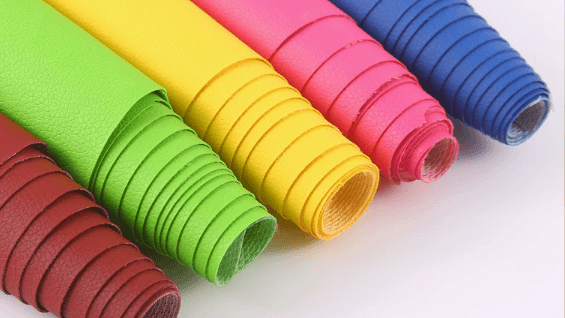
Next, freeze the approved construction. Record the PVC face or coating system, solid or expanded layer, backing, topcoat, print or emboss, nominal total thickness, mass, usable width, roll length, colour, gloss, grain, and permitted tolerances. The current [ISO 7617-1] specification addresses PVC-coated knitted fabrics for interior upholstered furniture and requires key visual and construction characteristics to be agreed between purchaser and supplier. It is a useful reference for a controlled approval file, but it does not eliminate the need for project-specific requirements.
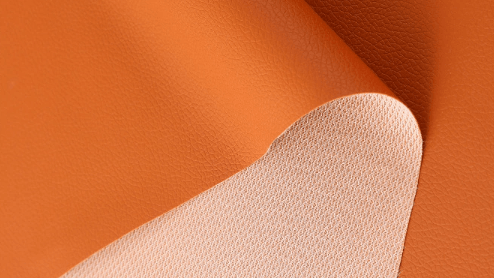
For woven or nonwoven constructions, state the structure separately. “PVC leather” and “100% polyester backing” do not identify the whole material. Ask whether the backing is knit, woven, nonwoven, scrim-reinforced, foam-laminated, or multilayer. If the supplier changes resin, plasticizer, pigment, backing, adhesive, topcoat, embossing, or production site, require written approval and requalification before shipment.
| Pre-production item | What to freeze | What happens if it is omitted |
|---|---|---|
| Destination and regulation | Country, occupancy, fire standard, chemical restrictions, emissions requirement, and client specification | The material may pass a supplier test but fail the finished-product or local project requirement. |
| Approved construction | PVC system, backing, topcoat, thickness, mass, width, roll length, grain, colour, and gloss | Substitutions become difficult to detect and difficult to allocate contractually. |
| Quality standard | Visual defects, odor, dimensions, tests, packaging, core, splice, and label requirements | Buyer and supplier may use different definitions of “acceptable.” |
| Inspection responsibility | Who samples, who measures, who pays for retesting, and what happens after a failure | A defect may be discovered only after cutting or shipment to the customer. |
Action recommendation: Do not release a bulk purchase order until the destination-market fire path, approved master sample, construction bill of materials, inspection plan, and change-control rule are written into the order documents.
How Should Incoming Rolls Be Inspected?
Incoming-roll inspection refers to checking each received roll or defined lot for identity, appearance, odor, dimensions, packaging integrity, and visible defects before the material enters cutting or production.
Start with identity and packaging. Match the purchase order, packing list, roll number, lot number, colour, style, width, and declared length. Inspect the outer wrapping, end protection, pallet or carton condition, moisture exposure, compression, and signs of heat damage. The paper tube should be hard enough to maintain a straight roll during storage and unwinding. It should have no sharp edge, crushed section, exposed staple, broken end, or contamination that can mark the PVC face. This core check is a practical packaging-control requirement, not a universal paper-tube strength standard.
Unroll enough material to inspect the beginning, middle, and end of every roll, and inspect both edges and the full usable field. Use controlled lighting for colour and gloss, raking light for wrinkles and emboss distortion, and backlighting where it helps reveal pinholes or voids. [ISO 7617-1] provides a relevant visual-screening framework: it calls for examination under 6× magnification, using 10 distributed areas of 2 cm × 2 cm for pinhole assessment, with mean pinhole density no more than 10 per dm² for non-microperforated material. Treat this as a standard-specific criterion, not as permission to ignore larger visible flaws elsewhere on the roll.
Appearance and surface checks
- Compare colour with the signed master sample and adjacent rolls under the agreed light source.
- Check shade bands, streaks, gloss variation, print registration, grain repeat, emboss crush, surface dents, bubbles, fish-eyes, exposed backing, and contamination.
- Check whether the surface is clean, dry, non-oily, and free from objectionable tackiness or dust pickup.
- Make a face-out 180° bend observation where the agreed specification calls for it, and look for whitening, cracking, incomplete fusion, or delamination.
- Map every defect by roll position and width coordinate instead of relying on memory or a verbal description.
Odor checks
Odor deserves a separate release decision because furniture may be installed in bedrooms, offices, hotels, clinics, or other enclosed spaces. A high-quality PVC furniture leather should have a neutral or no objectionable odor under the buyer’s agreed inspection conditions. That sentence is a project acceptance preference, not a universal numeric legal limit. The inspection plan should define when the roll is opened, how long it is conditioned, who evaluates it, and what wording means “acceptable.” For higher-risk projects, request a finished-laminate VOC/SVOC and sensory-odor assessment rather than relying only on a warehouse sniff test. [SGS interior-material air-quality testing] describes VOC, SVOC, formaldehyde, fogging, and trained-panel odor testing capabilities.
Roll length, label, and width
Measure the actual length with a calibrated length counter or a controlled unwind. Compare the result with the roll label and packing documents. [ISO 2286-1] provides the framework for measuring roll length, width, and net mass of rubber- or plastics-coated fabrics. The label should match the measured length within the tolerance written in the purchase order. If the label says an approximate length but the order has no lower limit, the buyer has little protection against short rolls and end-of-roll remnants.
Measure usable width, not only edge-to-edge nominal width. Record left-edge and right-edge deductions caused by curl, coating voids, slitting damage, or other unusable zones. Width that exists physically but cannot be used in a cutting marker should not be counted as productive width.
In my own bulk-order inspection workflow, I do not treat the supplier’s dispatch notice as the end of procurement. I open the first roll, compare its face with the approved sample, turn it over to inspect the backing and paper tube, check the label against the actual unwind, and record the result before the cutting team uses the material. This observation is why roll identity and packaging checks belong in the same file as colour and laboratory data.
Action recommendation: Quarantine received rolls until identity, colour, odor, surface, core, label, length, usable width, and defect mapping are recorded. Do not let production consume uninspected rolls simply because the outside packaging looks intact.
Which Tests Should Be Included in the PVC Furniture Leather Quality Inspection Checklist?
Performance testing refers to verifying the physical, chemical, aging, and upholstery properties that correspond to the finished furniture’s actual failure risks.
Testing should be performed on the finished PVC composite, not only on the backing or face film. The test report must identify the exact style, colour, backing, thickness, lot, laboratory, conditioning, specimen direction, method edition, result, and failure criterion.
| Property to inspect | Useful method or evidence | What the buyer should record |
|---|---|---|
| Thickness | [ISO 7617-1] references coated-fabric thickness measurement under 2 kPa; ISO 2286-3 is the relevant coated-fabric framework. | Measurement pressure, positions across width and roll length, mean, range, and approved tolerance. |
| Mass | [ISO 2286-2] distinguishes total, coating, and substrate mass per unit area. | Finished mass, PVC/coating mass where available, backing mass, unit basis, and lot variation. |
| Usable width and length | [ISO 2286-1] for roll characteristics. | Declared versus measured length, nominal versus usable width, edge deductions, and short-roll policy. |
| Tensile strength and elasticity | [ISO 1421] or an agreed coated-fabric method such as ASTM D751. | Force and elongation in both principal directions; state whether elongation is at break or at a defined load. |
| Tear resistance | [ASTM D751] and an appropriate tongue- or trap-tear method. | Direction, specimen type, force, and whether the failure is PVC crack, backing tear, or delamination. |
| Seam or stitch tear | ASTM D751 tack-tear and a production seam trial with actual needle, thread, stitch, and foam. | Peak force plus failure mode: thread break, needle-hole tear, yarn displacement, coating split, or adhesive failure. |
| Abrasion | ASTM D4157/Wyzenbeek, ASTM D3389, or another project-approved method with abradant and endpoint stated. | Method, abradant, load, cycles, direction, and whether the endpoint is noticeable wear, coating breakthrough, colour change, or exposed backing. |
| Flex and cracking | ASTM D2097 or another agreed coated-fabric flex method. | Cycle count, temperature, and observations for crazing, cracking, whitening, and delamination. |
| Coating adhesion | ASTM D751 peel adhesion or ISO 2411. | Initial and aged peel, force, direction, and interface at failure. |
| Surface chemical response | [ASTM D1308] or the owner’s defined cleaning/disinfectant protocol. | Chemical, concentration, dwell time, wipe cycles, rinse rule, colour/gloss change, tack, softening, cracking, peeling, and adhesion retention. |
The Association for Contract Textiles provides useful voluntary screening benchmarks for coated upholstery. Its indoor coated-fabric guidance lists minimum coating adhesion of 3 lbf/in, breaking strength of 50 lbf in each direction, and substrate-specific tack-tear values of 25 × 25 lbf for woven, 30 × 25 lbf for knit, and 35 × 35 lbf for nonwoven or nonwoven-composite substrates. It also lists 25,000 ASTM D2097 flex cycles without appreciable crazing, cracking, whitening, or delamination. [ACT coated-fabric physical-properties guideline] Use these values only when the project adopts the guideline and the material construction fits its scope.
For abrasion, ACT identifies 50,000 Wyzenbeek double rubs with the specified abradant as a high-traffic coated-fabric screening reference. It also warns that high abrasion results do not reliably predict increased fabric lifespan. [ACT abrasion guidance] Do not use a high rub count as a substitute for tear, seam, flex, adhesion, odor, cleaning, or colour inspection.
For external laboratory work, ask whether the laboratory is accredited for the relevant method and matrix. [ISO/IEC 17025] addresses laboratory competence, impartiality, and consistent operation. Accreditation improves confidence in the testing process, but the buyer must still select a method that matches the coated material and finished furniture risk.
Action recommendation: Tie every test result to the exact bulk colour, finish, backing, lot, and construction. If the project requires tear, scratch, abrasion, elasticity, or adhesion performance, define the method and acceptance criterion before the supplier starts production.
How Should Sampling, Defect Classification, and Lot Release Work?
Lot-release control refers to the process of defining a production lot, selecting representative rolls, classifying defects, and deciding whether the material can enter cutting and furniture production.
There is no reliable public five-year database that gives a universal defect rate or return rate specifically for PVC furniture leather. Do not fill that gap with an invented percentage. Instead, define the lot and use an acceptance-sampling system for attributes, supported by variable measurements and application trials. [ISO 2859-1] is an AQL-indexed lot-by-lot acceptance-sampling framework. An AQL is an inspection parameter; it is not proof that the shipment’s actual defect rate equals the AQL number.
Recommended release sequence
- Define the lot: identify recipe, PVC and additive lots, backing lot, colour batch, topcoat, emboss, production date, line, shift, and roll numbers.
- Select representative rolls: include rolls from different production times and positions, not only the easiest outer roll.
- Run the visual screen: inspect colour, gloss, grain, pinholes, bubbles, creases, exposed backing, contamination, edge condition, odor, core, label, and packaging.
- Measure variables: record thickness, mass, length, usable width, and any agreed colour or gloss readings at defined locations.
- Run critical tests: use destructive specimens from separate roll positions for tensile, elasticity, tear, seam/stitch tear, adhesion, flex, abrasion, and chemical exposure as required.
- Complete the furniture trial: cut, sew, staple, wrap, and clean representative panels using production foam, thread, needle, seam allowance, and upholstery tension.
- Release or contain: approve the lot only when visual, dimensional, physical, chemical, packaging, and traceability records meet the written requirement.
Classify defects by consequence
Critical defects should trigger automatic containment or rejection: widespread delamination, strong non-approved odor, severe shade mismatch, recurrent pinholes, exposed backing in the usable field, visible cracking, widespread tackiness or oily exudation, or a damaged core that can harm the material.
Major defects can reduce cutting yield, sewing quality, or finished appearance: persistent creases, shade bands, grain distortion, thickness outside tolerance, edge curl, adhesive contamination, poor splices, inaccurate roll labels, and defects that enter the planned cutting marker.
Minor defects should be defined only after confirming that they cannot appear on the finished furniture and can be cut around without unacceptable yield loss. A small mark at an unusable edge is not equivalent to the same mark in the center of a sofa seat panel.
Maintain a golden-sample file containing the signed physical sample, colour and gloss record, approved construction, test reports, packaging standard, inspection photos, defect map, and release decision. Keep swatches from the first, middle, and last production rolls when the project is high risk. If a complaint occurs later, compare the affected roll with the retained bulk swatch and the original approval sample.
Action recommendation: Use ISO 2859-1 to structure attribute sampling, but add 100% or defined full-roll visual checks where a visible defect can cause expensive cutting loss. Release the lot only after the records are complete and signed by the responsible buyer or quality team.
What Common Inspection Mistakes Should Buyers Avoid?
Inspection mistakes refer to treating one attractive sample, one laboratory value, or one packaging assumption as proof that the entire bulk shipment is ready for furniture production.
| Common mistake | Why it fails | Correct control |
|---|---|---|
| Checking the law after production | The material may not satisfy the destination fire, chemical, or client assembly requirement. | Freeze the country, occupancy, fire path, foam/barrier construction, and compliance evidence before ordering. |
| Approving one small sample for every bulk roll | Bulk lots can vary in colour, topcoat, thickness, backing, odor, adhesion, or process condition. | Sample across the defined lot and retain first/middle/last roll swatches. |
| Using colour photos instead of physical comparison | Photos cannot show odor, gloss, thickness, backing, grain depth, tack, or unwinding behavior. | Compare a physical master under controlled light and inspect the reverse side. |
| Assuming higher weight or thickness is automatically better | Mass can come from foam, filler, backing, or coating; thickness does not prove seam, flex, adhesion, or cleaning performance. | Measure construction and test each required failure mode separately. |
| Treating AQL as the shipment defect rate | AQL structures acceptance sampling; it is not a measured percentage of all defects. | Define lot, sample, defect class, acceptance number, and separate variable-property tests. |
| Ignoring odor because physical tests passed | Residual volatiles, plasticizers, inks, adhesives, or packaging can trigger indoor furniture rejection. | Use a written odor protocol and chamber testing where the project requires it. |
| Counting nominal width as usable width | Edge curl, voids, slitting damage, or defects can remove width from the cutting field. | Measure minimum usable width and calculate yield from the defect-free field. |
| Checking the label but not the unwind | A printed label can be inaccurate or can describe nominal rather than delivered length. | Measure actual length and reconcile it with the label and invoice. |
| Forgetting the paper tube and roll ends | Core collapse, sharp edges, staples, or compression can damage the face during storage and unwinding. | Inspect core rigidity, end protection, winding, edges, and the first and last metres. |
| Releasing a shipment after only a flat material test | Furniture seams, corners, staples, foam, tension, and cleaning can create failures not seen in a flat specimen. | Complete a production cut-and-upholster trial before bulk release. |
The strongest inspection process is therefore a closed loop: confirm the law, freeze the construction, approve a physical master, inspect representative rolls, test the exact lot, run the production trial, retain evidence, and control changes. This approach is more defensible than promising that every PVC leather shipment has a particular defect rate or that one abrasion number predicts years of service.
For destinations or projects requiring chemical and indoor-air documentation, ask for product-specific restricted-substance and emissions evidence. [UL GREENGUARD] explains that GREENGUARD Gold uses chamber-emission criteria and CDPH-related requirements. A general “low VOC” statement, a management-system certificate, or a supplier brochure does not automatically qualify the exact PVC colour, topcoat, backing, adhesive, foam, and finished furniture assembly.
Action recommendation: Make the final release decision a documented quality gate. If colour, odor, dimensions, surface, tests, packaging, core, label, or traceability fails, contain the affected rolls and resolve the deviation before cutting—not after finished furniture has been shipped.
Frequently Asked Questions
A: Inspect it before bulk production requirements are frozen, during incoming roll receipt, and before the material enters cutting. For a first-time supplier, also complete a production cut-and-upholster trial and retain samples from the released lot.
A: For indoor furniture, set neutral or no objectionable odor as the project acceptance preference and define the conditioning and evaluation procedure. There is no universal odor number in the cited furniture standards, so higher-risk projects should use chamber and sensory testing.
A: Compare the label and packing list with a calibrated length-counter or controlled-unwind measurement. Use ISO 2286-1 as the roll-characteristic measurement framework and include a contractual lower length tolerance.
A: Check both, but calculate cutting yield from usable width. Deduct unusable edges, coating voids, curl, slitting damage, and mapped defects. A roll can meet nominal width while failing the required cutting width.
A: No. Abrasion evaluates a defined rubbing condition. Bulk release should also consider colour, odor, thickness, width, tensile and tear, elasticity, seam or stitch tear, adhesion, flex, chemical exposure, packaging, and a representative upholstery trial.
A: A weak, crushed, sharp, or contaminated core can deform the roll, damage the face, complicate unwinding, and create handling defects. Check core rigidity, ends, edges, winding, compression, and any staples or exposed materials before storage or cutting.