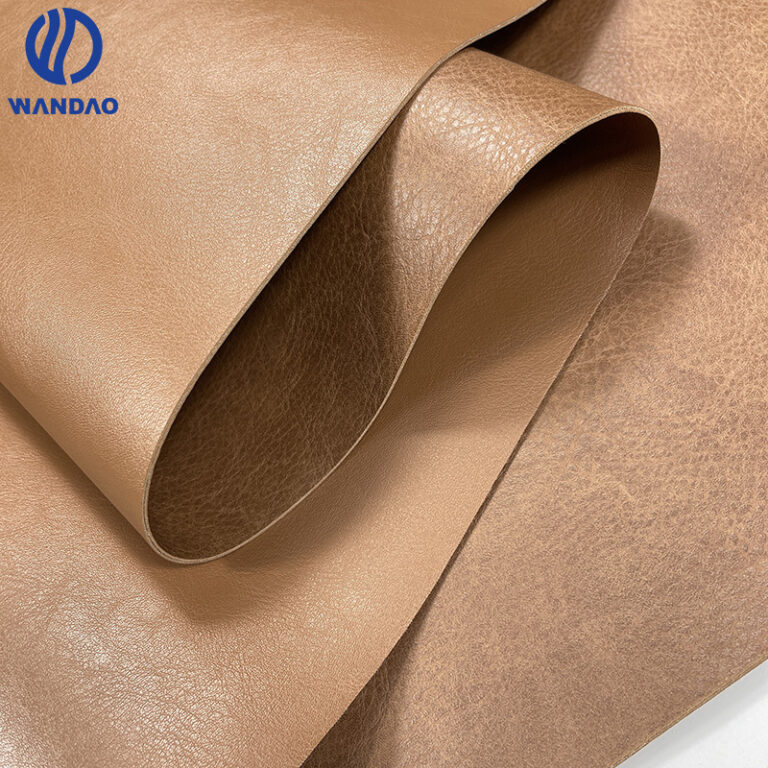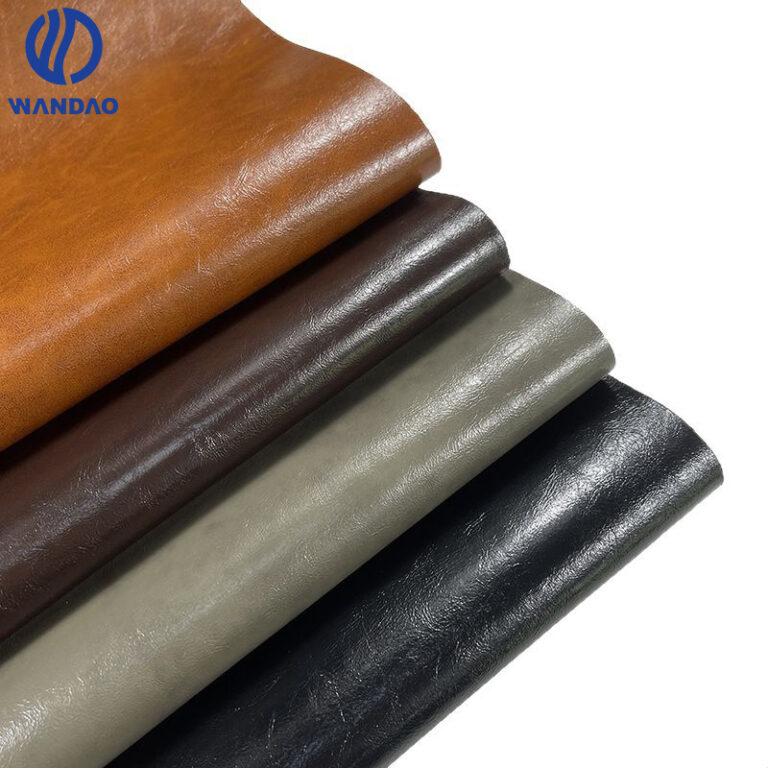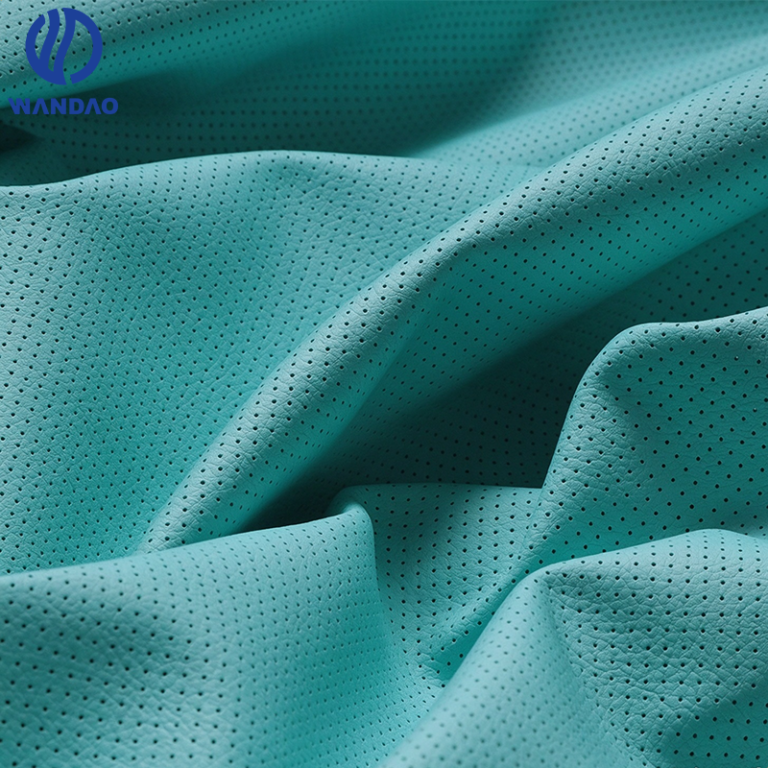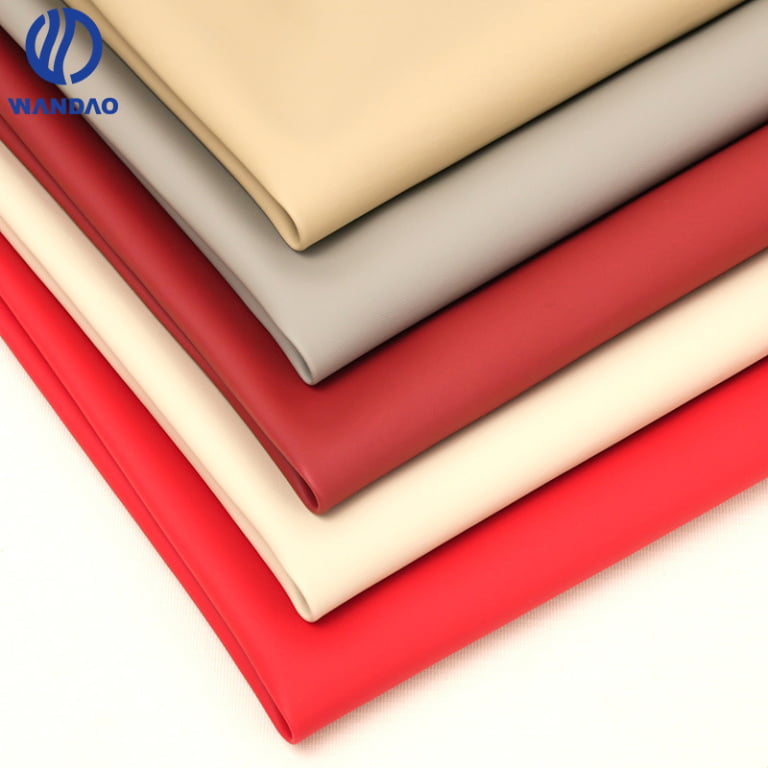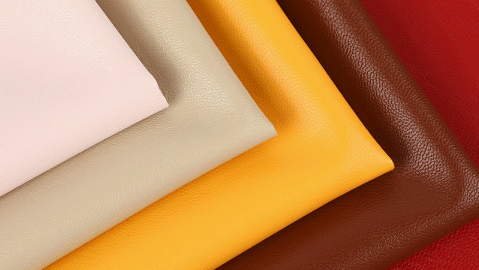
When buying PVC leather for automotive seats, most buyers focus on the surface: color, grain, thickness, softness, and price per meter.
But there is another part that is easy to overlook: the backing.
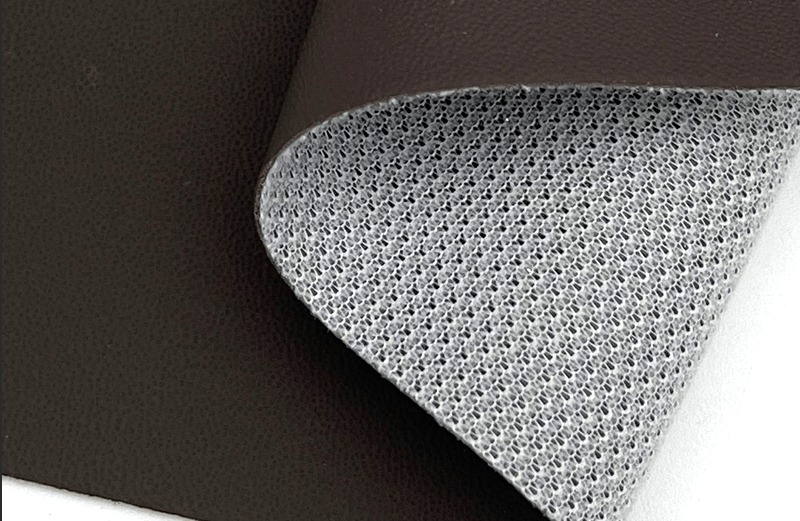
The backing is the fabric or textile layer on the back of the PVC leather. It may look simple, but it can have a major effect on how the material behaves during sewing, stretching, forming, lamination, and long-term use.
For example, two PVC leather products may have almost the same surface appearance, but one may be easier to sew, more stable during forming, or more resistant to tearing because the backing is different.
At the same time, a heavier or more expensive backing is not automatically better.
For most buyers, the real question is:
Which backing is suitable for my car seat, and how much performance do I actually need to pay for?
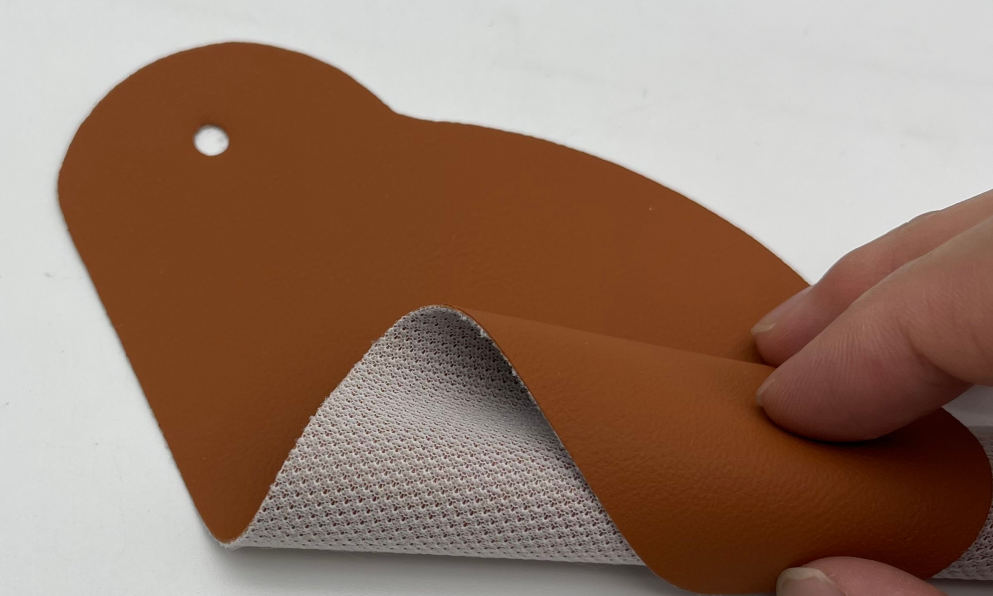
This article explains the main backing options for automotive PVC leather in simple terms, including what each backing affects, where it is normally used, and how backing selection can change the final material cost.
What PVC Leather Backing Means for Automotive Seats
Mainstream Backing Types and Typical Parameters
Mainstream backing types for automotive seat PVC leather refer to the polyester knit, woven, non-woven and composite structures that currently appear in OEM and aftermarket programmes, each with distinct mass, elongation and application windows.
Polyester warp-knit (tricot, jersey or terry-loop) is the most common flexible carrier for sewn seat covers. Patent literature for automotive PVC leather cites polyester warp-knit base fabrics of 200–350 g/m² with thickness not greater than 1.0 mm; one embodiment uses 300 g/m² at 0.6 mm (CN115613362A). A second patent focused on high-density warp-knit for perforated seats specifies 280–400 g/m², bidirectional breaking strength ≥900 N/5 cm and elongation ≥120 % (CN110373912A). These are verified patent embodiments, not industry averages.
Woven polyester (plain, twill or oxford-type) is chosen when lower elongation and higher directional stability are required—seat skirts, back-panel covers or commercial-vehicle applications. Non-woven spunbond or needle-punched constructions appear mainly on non-visible surfaces, lower-cost programmes or local reinforcement zones. Brushed or napped knits improve adhesion to foamed PVC layers but are less frequently presented as primary seat A-surface solutions in recent technical literature.
Secondary PU foam or spacer fabric is often laminated behind the textile. One major surface-material supplier lists total composite thicknesses of 0.9–4.3 mm when foam or spacer options are included, and separately cites foam-laminated structures of 1.4–3.8 mm (Continental Industry). The foam is a comfort and forming layer; it is not a substitute for the structural textile.
Public data on exact global share by backing type do not exist in the open literature for 2020–2025. Association and OEM documents regulate the finished composite (burn, VOC, abrasion, fogging) rather than publishing backing market percentages. Therefore any claim of “X % knit / Y % non-woven” remains an engineering inference, not a verified fact.
Actionable recommendation: Ask every supplier for the naked-backing areal density and thickness in addition to the finished PVC leather data. Total grammage alone conceals whether the mass sits in the PVC layer or in the structural carrier.
What Backing Materials Are Commonly Used for Car Seat PVC Leather?
For automotive PVC leather, the main backing constructions include:
- Polyester knitted backing
- Polyester woven backing
- Non-woven backing
- Knitted backing with foam lamination
- Spacer or other composite structures for specific applications
For most buyers, polyester knitted backing is the easiest place to start.
Let’s look at the differences.
1. Polyester Knitted Backing — A Common Choice for Car Seats
Polyester knit is one of the most practical backing choices for automotive seat PVC leather.
It can provide a combination of:
- Good flexibility
- Good stretch
- Good sewing performance
- Good forming ability
- Reasonable strength
- Good dimensional stability
Because car-seat upholstery is not completely flat, the material needs to follow curves around cushions, bolsters, corners, and other shaped areas.
A knitted backing can therefore be useful when the material needs a certain amount of flexibility and elongation.
Patent literature related to automotive PVC leather describes polyester warp-knitted backing fabrics in ranges such as approximately 200–350 g/m², with some examples around 300 g/m² and 0.6 mm thickness.CN115613362A patent reference
Another patent for high-density warp-knit material for perforated automotive seats describes approximately 280–400 g/m², with bidirectional breaking strength of at least 900 N/5 cm and elongation of at least 120%.
These numbers should not be understood as a universal automotive requirement. They are examples from specific technical designs.
When should you consider polyester knit?
It is a good starting option when you need PVC leather for:
- Passenger car seats
- Seat cushions
- Seat bolsters
- Backrests
- Upholstery that needs some stretch
- Sewn seat covers
- Shaped seat surfaces
2. Polyester Woven Backing — More Stable, Less Stretch
A woven backing is made by crossing yarns in a more fixed structure.
Compared with knitted fabric, woven polyester generally provides:
- Higher dimensional stability
- Lower stretch
- Good directional strength
- Good resistance to deformation
This can be useful when you do not want the material to stretch too much.
For example, woven backing may be considered for:
- Seat skirts
- Rear panels
- Back panels
- Commercial vehicles
- Areas where dimensional stability is more important than flexibility
However, if the material needs to stretch significantly around a complicated seat shape, a very rigid woven backing may not be the best choice.
Simple comparison
| Backing | Stretch | Stability | Flexibility | Typical use |
|---|---|---|---|---|
| Polyester knit | Higher | Good | Good | Seat cushions, bolsters, shaped surfaces |
| Polyester woven | Lower | Higher | Moderate | Panels, skirts, areas needing dimensional stability |
| Non-woven | Low to moderate | Moderate | Moderate | Cost-sensitive or hidden areas |
The exact performance depends on the fabric construction, weight, yarn and lamination process.
3. Non-Woven Backing — Usually More Cost-Oriented
Non-woven backing is another option.
Compared with knitted and woven fabrics, non-woven structures can be simpler and more economical for certain applications.
They may be used for:
- Non-visible areas
- Rear panels
- Lower-cost programmes
- Reinforcement areas
- Certain industrial or commercial applications
However, non-woven backing should not simply be chosen because it is cheaper.
The important question is:
Does the backing provide enough strength, stretch and stability for the actual seat application?
A cheaper backing can become more expensive if it causes problems during sewing, cutting, lamination or final assembly.
4. Foam-Laminated PVC Leather — When Comfort Matters
Sometimes the textile backing is not the final layer.
A foam layer may be laminated behind the backing to improve:
- Softness
- Cushioning
- Hand feel
- Resilience
- Forming
- Acoustic performance
For example, automotive surface-material suppliers offer composite structures with total thicknesses ranging from approximately 0.9–4.3 mm, depending on the construction and foam/spacer options.Continental automotive surface solutions
It is important to understand the difference:
The textile backing provides structural support. Foam mainly changes comfort, softness and the behavior of the composite.
Therefore, adding foam does not mean that you can simply use a weak backing.
Matching Backing to Vehicle Type and Seat Position
Matching backing to vehicle type and seat position refers to the practice of selecting fibre, construction, mass and strength according to the actual loads, abrasion exposure and environmental stresses of each location rather than applying a single “seat-grade” specification across the entire programme.
For ordinary passenger-car A-surfaces a mid-weight 100 % PET knit in the approximate window 120–180 g/m² and 0.55–0.85 mm is a common engineering starting point. High-contact, perforated or heated/ventilated seats benefit from the higher-density patent window of 280–400 g/m² with bidirectional strength ≥900 N/5 cm (CN110373912A). Perforation reduces effective load-bearing area; the extra strength provides crack-propagation resistance at the hole edges.
Commercial vehicles (trucks, construction, logistics) and high-turnover bus seats push the same high-density range further. Frequent entry/exit abrasion, higher static loads and longer service intervals favour 220–400 g/m² PET or PET/PA reinforced knits with elevated tear and seam strength. Recreational vehicles sit between the two extremes; a 135–220 g/m² PET or PET/cotton knit is often sufficient for ordinary seating, while wet-area or high-contact zones move toward 100 % PET at 180–300 g/m² to limit moisture absorption and dimensional change.
Within a single seat the positions diverge:
– Cushion centre: cyclic compression and possible perforation → higher mass and balanced elongation.
– Bolster / side wing: entry/exit abrasion and high local strain → elevated weft strength and tear resistance.
– Backrest centre: lower peak compression but larger area and possible solar exposure → uniform bidirectional elongation and heat-ageing retention.
– Headrest face: low load, complex forming → lighter 100–180 g/m² fine-denier knit.
– Skirt and rear panel: lower visibility → cost-optimised constructions that still meet whole-seat burn and VOC limits.
Environmental logic follows the same principle. High-temperature or heated-seat programmes prefer 100 % PET for dimensional stability after thermal cycling. Cold-climate programmes retain enough elongation to avoid low-temperature cracking at bolsters and perforation edges. High-humidity or frequent-cleaning programmes again favour 100 % PET or PET/PA over high-cotton blends to limit moisture swell and interface degradation.
A published study on foamed PVC synthetic leather for automotive use reported finished composite targets of 800 ± 80 g/m², tensile strength >35 MPa, elongation 180–215 % and tear >10 kN/m (PMC / NCBI). These figures describe the complete PVC composite, not the naked backing, and serve as one verified reference window rather than a universal OEM requirement.
Actionable recommendation: Build a simple load-and-environment matrix for each seat position before RFQ. Do not issue a single backing specification for the entire seat cover.
Which Backing Should You Choose for Different Car Seats?
The best backing for automotive PVC leather depends on where the material will be used on the seat. The cushion, bolster, backrest, headrest, and rear panel do not experience exactly the same pressure, stretching, abrasion, or forming requirements. Therefore, using the same backing for every part of the seat is not always necessary.
Passenger Car Seats
For ordinary passenger-car seats, a polyester knitted backing is a practical starting point because it provides a good balance of flexibility, strength, stretch, and dimensional stability. For many standard seat applications, a medium-weight backing can provide enough support without adding unnecessary material cost. The exact weight should be selected according to the seat design, sewing process, and required durability rather than simply choosing the heaviest backing available.
Seat Cushions
The seat cushion is exposed to repeated compression because passengers sit on it continuously. The backing therefore needs to provide good strength and dimensional stability while still allowing the PVC leather to follow the shape of the cushion. A medium-weight or higher-strength polyester knit is often suitable. If the cushion is perforated, the backing may need additional strength because the perforation holes reduce the effective material area and can make the material more vulnerable to tearing.
Seat Bolsters
The side bolster is one of the areas that deserves particular attention. When passengers get into or out of a vehicle, their clothing and body weight can repeatedly rub and pull against the bolster. This creates higher local abrasion, stretching, and seam stress than in some other parts of the seat. For this reason, a stronger polyester knitted backing may be a better choice for high-use bolsters, especially when the seat has perforations or a complicated shape.
Seat Backrests
The backrest generally has a larger surface area and different loading conditions from the cushion. The backing should provide enough stability to maintain the shape of the seat cover while still allowing the material to be formed and sewn correctly. A medium-weight polyester knit can be suitable for many passenger-car backrests, while applications exposed to higher temperatures, strong sunlight, or repeated use may require a backing with better dimensional and heat-aging stability.
Headrests
The headrest usually has a smaller surface area but often requires the material to follow a relatively complicated shape. In this application, excessive backing weight may not provide much additional benefit. A lighter polyester knitted backing can be considered when flexibility, formability, and easy sewing are more important than very high structural strength. The original source gives approximately 100–180 g/m² as an engineering starting range for fine-denier knitted structures, but the actual requirement should be confirmed through the customer’s seat design and testing requirements.
Seat Skirts and Rear Panels
The seat skirt and rear panel are usually less exposed to direct contact than the main seating surface. Because of this, they may not require the same high-performance backing as the cushion or bolster. A more economical woven or non-woven backing may be suitable when the area has lower mechanical requirements and is not highly visible. This can be a useful way to control material cost without unnecessarily increasing the specification for the entire seat.
Perforated Car Seats
Perforated seats require additional attention when selecting the backing. The holes reduce the amount of material available to carry the load, so the surrounding material needs sufficient strength to resist tearing and deformation. For demanding perforated-seat applications, higher-density knitted structures can be considered. One automotive PVC leather patent describes a 280–400 g/m² high-density warp-knit backing with bidirectional breaking strength of at least 900 N/5 cm and elongation of at least 120%. These figures come from a specific technical design and should not be treated as a universal requirement for every perforated seat.
Trucks, Buses, and Other High-Use Vehicles
For trucks, buses, and other commercial vehicles, the seat may experience much more frequent entry and exit, higher daily use, and greater long-term abrasion. In these applications, buyers may consider higher-strength polyester or PET/PA reinforced knitted backings. The original source gives approximately 220–400 g/m² as an engineering starting range for demanding commercial applications. The purpose is not simply to make the material heavier, but to provide enough strength and durability for the actual working conditions.
RV Seats
RV seating normally falls somewhere between ordinary passenger-car seats and commercial-vehicle applications. For standard RV seating, a medium-weight PET or PET/cotton knitted backing may be sufficient when the material is used under normal conditions. For high-contact areas, wet areas, or applications where dimensional stability is particularly important, a higher-weight polyester construction can be considered.
The Key Point: Choose According to the Seat Position
The most important thing is not to ask, “Which backing is the strongest?” Instead, ask, “What level of backing performance does this particular part of the seat actually need?”
A heavy backing may be useful for a high-load or perforated seat cushion, but it may be unnecessary for a headrest or rear panel. Choosing the right backing for each application can help you balance strength, flexibility, sewing performance, durability, and material cost.
For buyers, this is also a practical way to control the final price of PVC leather. Instead of using the most expensive backing throughout the entire seat, you can select a higher-performance backing only where it is actually needed and use a more economical construction in lower-load areas.
Why the Cheapest Backing May Not Be the Cheapest Choice
Let’s say Supplier A offers a material at $3.00/m.
Supplier B offers $3.30/m.
At first glance, Supplier A looks cheaper.
But imagine Supplier A’s material has:
- More cutting waste
- More stretching during sewing
- More seam problems
- Poorer dimensional stability
- Lower lamination performance
Supplier B’s material costs $0.30/m more but gives better production efficiency.
The final cost of the finished seat cover could therefore be lower with Supplier B.
This is why the original article correctly emphasizes total cost of ownership, rather than only roll price.
Public data on exact cutting yield and warranty rates by backing type are limited, so buyers should use their own production data when making a final calculation.
Common Selection Mistakes and How to Avoid Them
Frequently Asked Questions
Q: What is the most common backing for passenger-car seat PVC leather?
A: Polyester warp-knit (tricot or jersey) in the approximate 100–250 g/m² range, with higher-density constructions (280–400 g/m²) used for perforated or high-load positions. Exact figures come from patent embodiments and engineering practice, not from global market statistics.
Q: Can I use the same backing specification for cushion, bolster and headrest?
A: Not recommended. Cushion and bolster see higher cyclic and abrasion loads; headrests prioritise formability and lower mass. A position-specific matrix reduces both over-engineering and field risk.
Q: Does higher backing mass always give higher strength?
A: Only inside the same fibre, construction and bonding system. Across different structures, yarn orientation and interlocking dominate. Always report tensile and tear with direction and method.
Q: Is recycled PET unsuitable for seat backings?
A: No. Comparative studies show rPET constructions can match or exceed virgin PET in selected directions when fibre formulation and fabric architecture are controlled. Batch consistency remains the critical variable.
Q: Which standards should appear on the drawing for seat PVC leather?
A: At minimum the applicable burn method (FMVSS 302 or GB 8410), a tensile method (ISO 1421 or customer equivalent), peel (ISO 2411), and the VOC/fogging method required by the OEM. Always test the finished laminate, not the naked backing alone.
Q: What single change most improves backing selection quality?
A: Lock the naked-backing areal density, construction and minimum MD/CD strength into the drawing before sampling, and require peel and seam data after the programme heat/humidity ageing cycle.