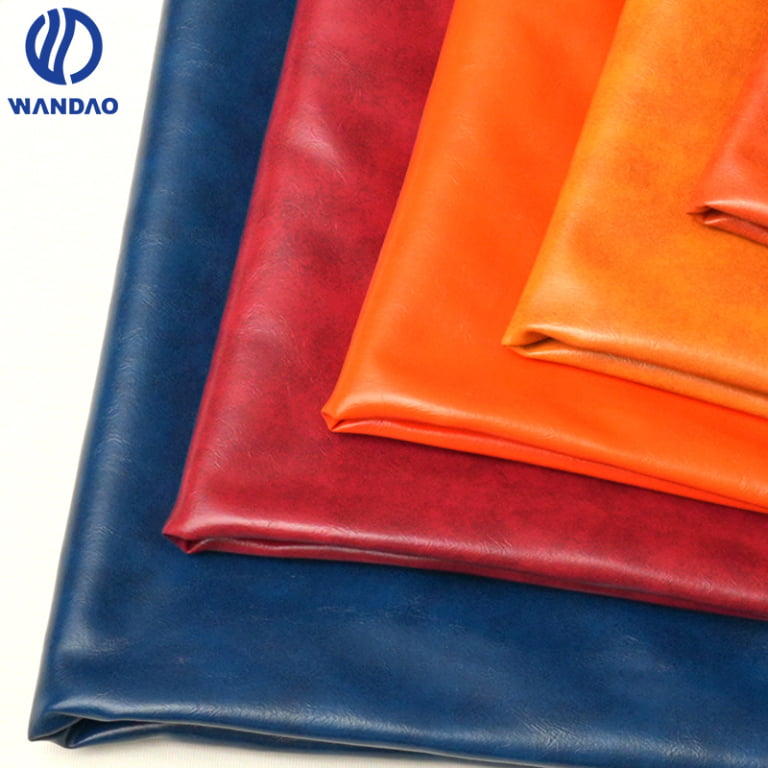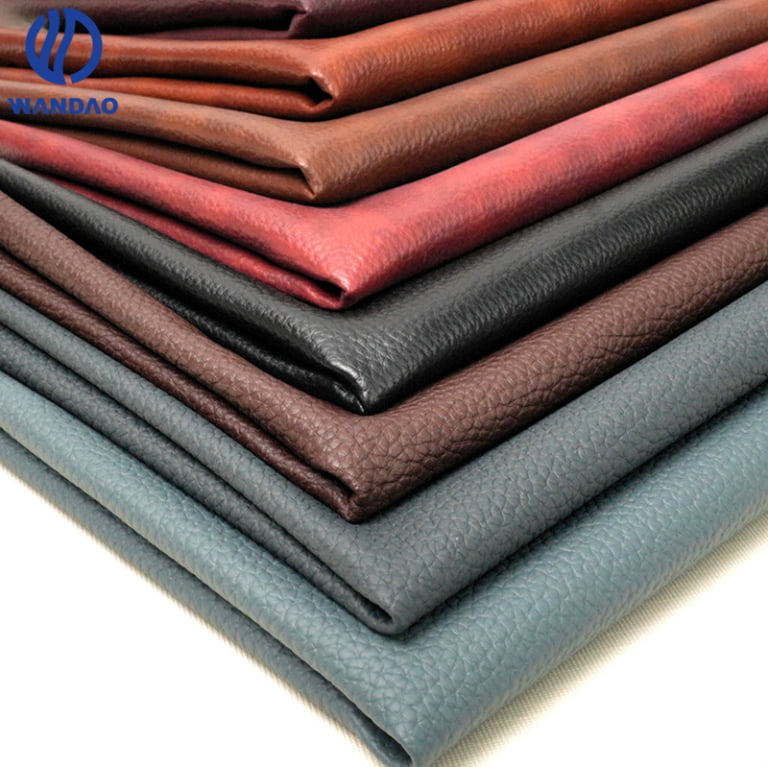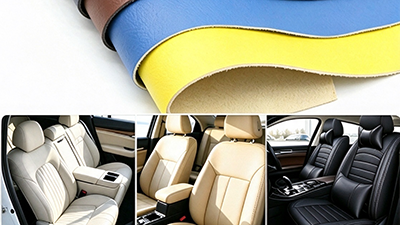
Typical Thickness Structure and Its Performance Trade-offs
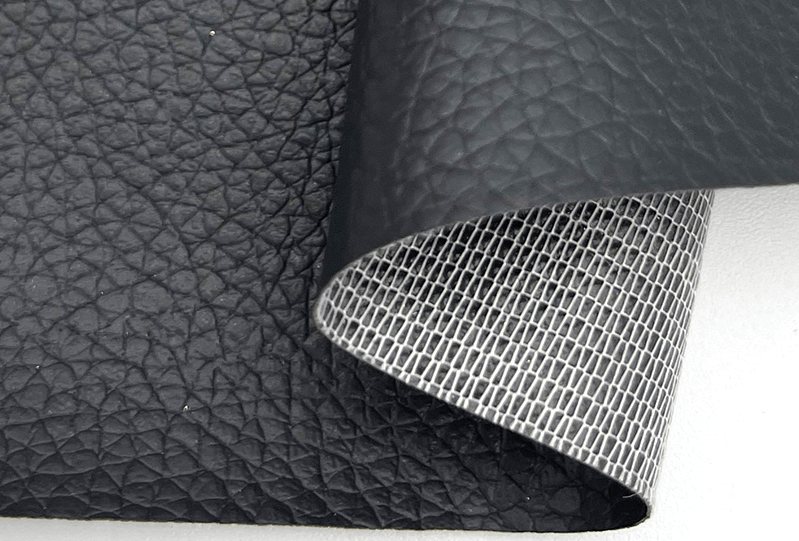
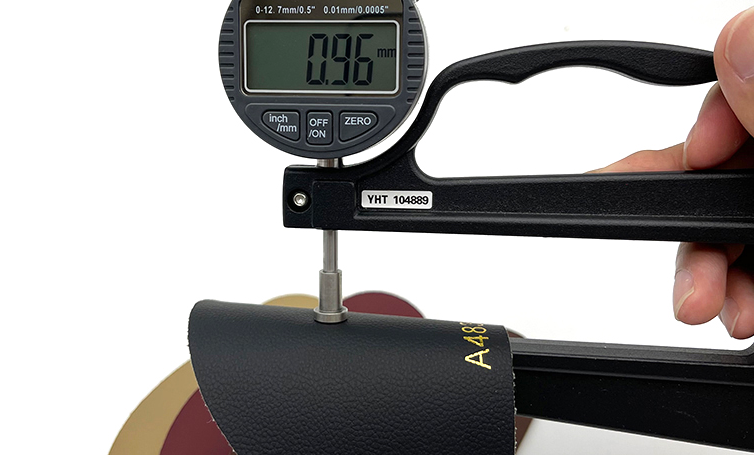
Thickness of automotive seat PVC leather refers to the total measured build of a composite consisting of a wear surface coat, dense PVC skin, foamed PVC layer, adhesive, and textile backing, evaluated under controlled pressure according to methods such as ISO 2286-3.
Total thickness alone does not determine abrasion life, tensile strength, or service durability. Production programs typically target a balanced window of 0.9–1.2 mm for general seating surfaces. Higher-wear or plush-feel zones may run 1.2–1.4 mm, but only when dense-skin formulation, foam density, backing strength, flex resistance, and VOC limits are controlled simultaneously. Public OEM material specification excerpts show total thickness windows such as 0.85–1.30 mm, 1.00–1.30 mm, or 1.10–1.40 mm, with areal densities commonly falling between 400–660 g/m² depending on construction. Scribd / Tesla TM-6001
| Item | Common range | 1.0–1.2 mm seat-grade target | Notes / measurement |
|---|---|---|---|
| Total thickness | 0.8–1.4 mm | 1.0–1.2 mm | ISO 2286-3 under defined pressure; pressure foot load must be stated |
| Wear coat / clear PU topcoat | 0.005–0.025 mm | 0.010–0.020 mm | Primary driver of initial scratch and stain resistance |
| Dense PVC skin (including grain) | 0.15–0.35 mm | 0.20–0.30 mm | Controls wear-through margin and grain retention; patent example 215–255 g/m² |
| PVC foam layer | 0.25–0.65 mm | 0.35–0.50 mm | Dominates softness and substrate print-through isolation; patent example 215–255 g/m² |
| Adhesive layer | 0.03–0.10 mm | 0.05–0.08 mm | Linked to peel strength and heat-age delamination; example 65–95 g/m² |
| Backing fabric | 0.20–0.45 mm | 0.25–0.35 mm | Knitted, warp-knit or woven polyester/cotton; controls tensile, tear and seam strength |
| Total areal density | 500–800 g/m² | 600–750 g/m² | Research samples reported 765–773 g/m² against an 800 ± 80 g/m² automotive target |
When only foam or dense skin is increased while formulation, grain and backing remain fixed, the following directional effects appear. Absolute values must still be confirmed on the same batch of samples.
| Total thickness | Example layer split (dense / foam / rest) | Areal density target | Abrasion & life | Tensile, tear & sewing | Hand, flex & cost |
|---|---|---|---|---|---|
| 0.8 mm | 0.18–0.22 / 0.20–0.30 / ~0.30 mm | 480–580 g/m² | Lower wear-through margin; better for side panels or low-load seats if topcoat is upgraded | Easy cutting and folding; seam tear risk rises with thin or open-knit backings | Closer-to-substrate feel, lower plushness; material mass typically 10–20 % below a 1.0 mm build |
| 1.0 mm | 0.20–0.28 / 0.30–0.40 / ~0.32 mm | 550–700 g/m² | Common balanced grade | Standard industrial sewing; sufficient thickness to hide backing print | Most balanced hand, cost and formability |
| 1.2 mm | 0.24–0.32 / 0.40–0.55 / ~0.33 mm | 650–780 g/m² | Extra margin for cushion and grain retention on high-contact zones | Tear/seam benefit only if dense skin or stronger backing is added; pure low-density foam adds little tensile gain | Fuller, softer feel; material cost often rises 10–25 % versus 1.0 mm on a mass basis |
| 1.4 mm | 0.28–0.38 / 0.55–0.70 / ~0.35 mm | 750–900 g/m² | Not automatically more abrasion-resistant; only denser skin or upgraded topcoat improves wear life | Higher cutting and needle resistance; complex contours become harder to form | Maximum plushness and cost; thick soft foam can increase crease whitening or cracking risk under repeated flex |
Abrasion is governed far more by surface formulation than by total thickness. In one comparative study using Taber CS-10 wheels at 1 000 g load, fine-grain PVC lost 40.3 mg after 2 000 cycles while coarse-grain lost 43.4 mg. Changing plasticizer reduced mass loss from 20.9 mg to 16.6 mg; raising abrasion additive from 0 % to ~7 % cut loss from 30.9 mg to 16.6 mg, while 11.1 % produced a rebound to 17.5 mg because interlayer adhesion suffered. Testex Textile Tensile and tear data from another peer-reviewed automotive PVC foam composite study illustrate the same principle: baseline values of 32.6 MPa tensile, 214 % elongation and 11.4 kN/m tear rose to 48.9 MPa, 185 % and 14.7 kN/m after short carbon-fiber reinforcement of the foam, showing that strength gains can trade off against flexibility. PMC / NCBI
In one of our internal evaluations for a mid-volume compact SUV program, we ran identical dense-skin formulations at 1.0 mm and 1.2 mm total thickness against the same knitted polyester backing. After 20 000 Martindale cycles and a subsequent 1 000-cycle cold flex at –20 °C, the 1.2 mm build retained grain definition longer, yet the 1.0 mm version with a slightly higher topcoat solids content showed lower mass loss and no whitening at the fold. The extra 0.2 mm of foam improved initial hand but contributed almost nothing once the surface coat was exhausted.
Backing Fabrics and Site-Specific Selection
Backing of automotive seat PVC leather refers to the textile substrate—knitted, woven, non-woven or polyester/cotton blend—that carries tensile load, controls seam strength, dimensional stability and peel resistance after the PVC layers are applied.
No universal “best” backing exists. Choice is driven by the seat location and the dominant failure mode expected at that location. Knitted and warp-knit polyester constructions dominate high-elongation areas because they accommodate forming and repeated flex without excessive residual stress. Woven fabrics supply higher modulus and better seam stability on side bolsters and head restraints where shear and needle damage are higher. Non-wovens appear mainly in lower-cost or secondary surfaces where tear and sewability requirements are modest.
Typical engineering windows observed across automotive programs include:
- Knitted polyester: areal density commonly 80–180 g/m², elongation in the machine direction often >30–50 %, good conformity to complex contours but lower resistance to needle-hole tear if gauge is light.
- Woven polyester or polyester/cotton: higher tensile and tear values, lower elongation, preferred where seam slip and long-term dimensional stability are critical.
- Peel strength between PVC composite and backing is routinely specified after heat aging; values below the OEM threshold lead to edge delamination under cyclic loading.
Failure risks map directly to location. Seat cushions and center bolsters experience high cyclic compression and sliding abrasion; a stable knitted backing with adequate loop density reduces print-through and helps maintain foam isolation. Side wings see repeated ingress/egress shear and higher local pressure; woven or heavier knitted constructions reduce seam elongation and tear propagation. Head restraints combine forming strain with lower abrasion, so lighter knits with controlled residual shrinkage after heat exposure are often sufficient. Dimensional stability after 95 °C heat aging and after humidity cycling must be verified because residual shrinkage in the backing can telegraph as surface waviness or seam puckering once the cover is installed.
Opportunity exists when the same PVC formulation is paired with two backings: a high-elongation knit for the center panel and a higher-modulus weave for the bolster. This hybrid approach keeps material cost controlled while matching local mechanical demands, provided the supplier can manage two constructions under one color and grain approval.
Texture Design Effects on Appearance, Friction and Cleanability
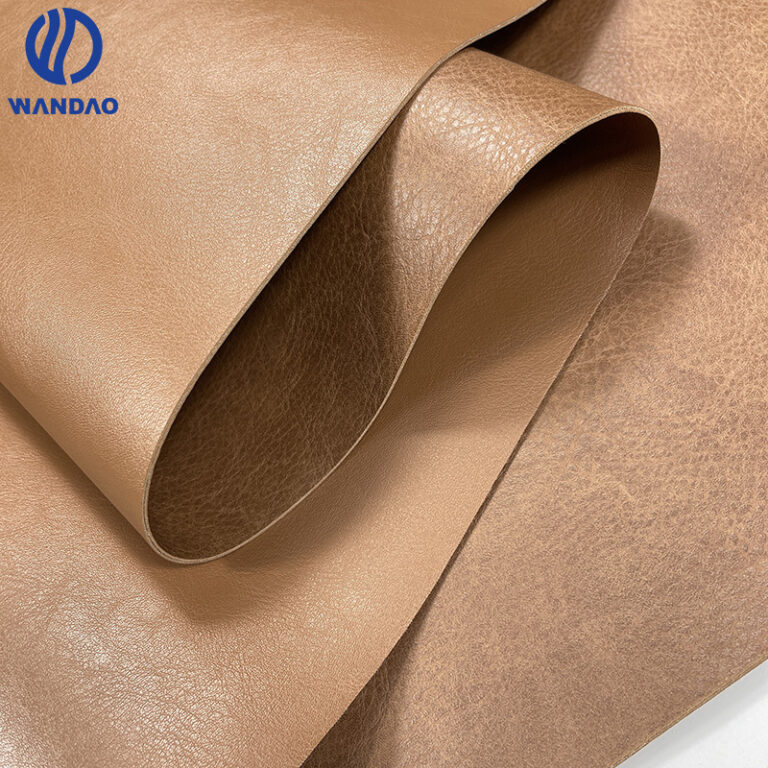
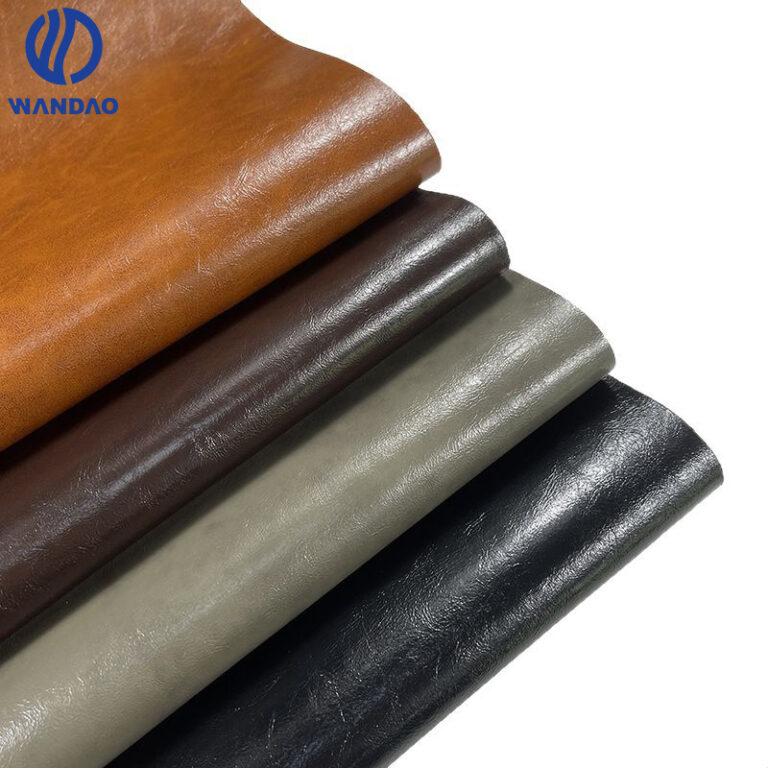
Texture of automotive seat PVC leather refers to the engineered surface topography—grain depth, peak geometry, gloss and optional perforation—that simultaneously governs visual grain, tactile friction, soil retention and abrasion contact area.
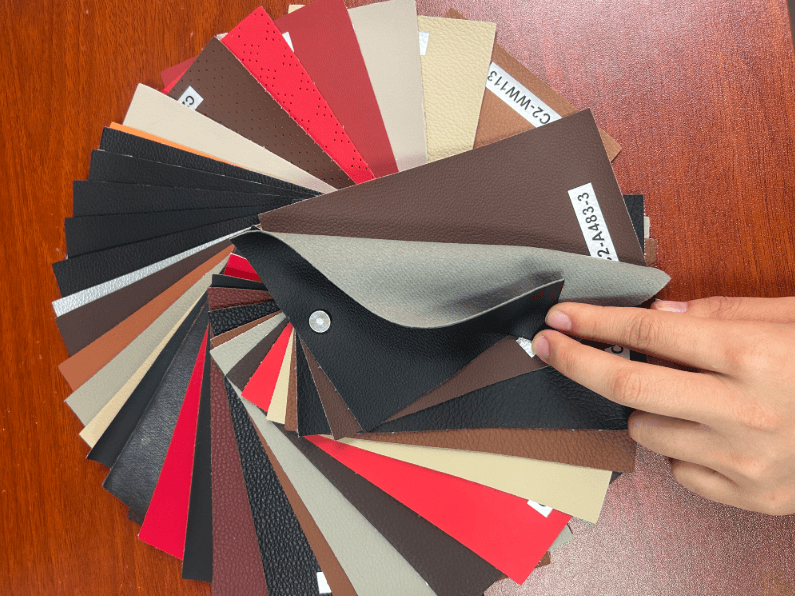
Grain is not a cosmetic afterthought. It changes specular reflection, real contact area under load, and the pathways for dirt and cleaning agents. Selecting by marketing names such as “lychee,” “nappa” or “fine pebble” without freezing depth, gloss and topcoat chemistry leads to inconsistent field performance.
| Texture / surface | Appearance & hand | Friction & abrasion | Cleanability, breathability & color uniformity | Typical seat use |
|---|---|---|---|---|
| Lychee / medium pebble | Visible random grain, hides minor substrate defects | Higher initial grip; peaks are first wear points | Grooves trap dust and residual cleaner; masks small color variation | SUV bolsters, door panels, commercial seats |
| Fine / micro grain | More uniform, refined, less “plastic” feel | In matched formulations, fine grain often shows lower mass loss than coarse grain | Easier to wipe; amplifies substrate flatness and gloss variation | Center cushions and backrests on volume passenger cars |
| “Nappa-style” soft grain | Low visual noise, soft rounded peaks | Comfort-oriented; soft foam or high plasticizer can reduce indentation resistance | Good cleanability; dark low-gloss versions show wipe marks more readily | Higher-trim center panels, headrests, armrests |
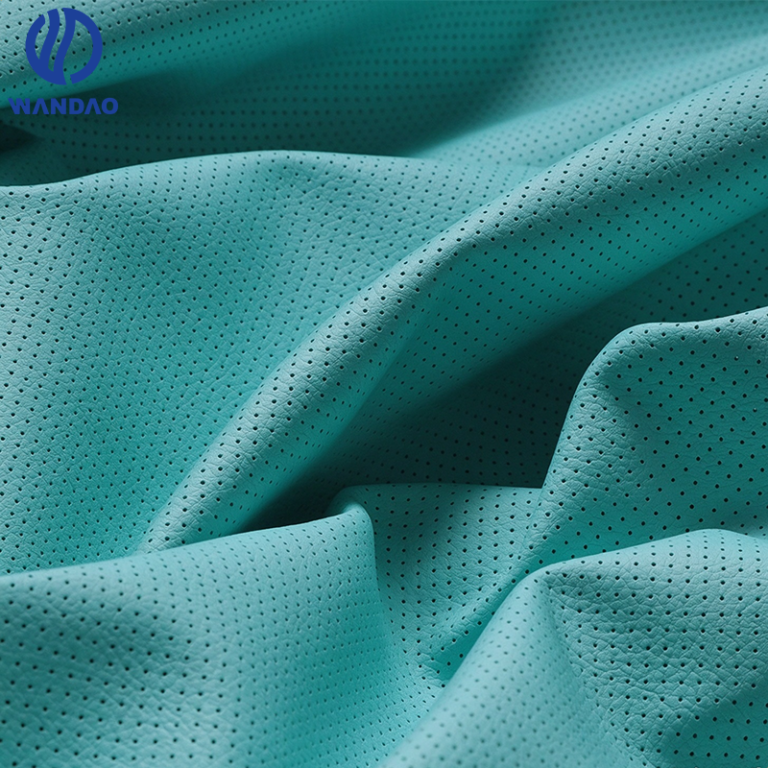
| Perforated | Technical appearance, pairs with ventilation | Reduced contact area; hole edges create stress concentrations | Actual airflow depends on through-hole continuity and foam/backing openness; holes collect dust | Ventilated center zones only; avoid dense perforation on high-stress bolsters |
| Matte / low-gloss | Soft reflection, reduced glare | Can hide fine scratches yet makes post-wear gloss rise highly visible | Masks minor color difference and fingerprints; rougher matte systems may retain soil | Modern minimal interiors, dark color packages |
Quantitative starting windows used in development (not universal OEM mandates) include:
- Fine-grain emboss depth approximately 30–80 μm; medium/lychee approximately 80–150 μm; deep decorative grains 150–250 μm. Yuanfang texture reference
- 60° gloss: deep matte 2–8 GU, matte 8–15 GU, semi-matte/satin 15–30 GU. Low-gloss surfaces benefit from supplementary 85° measurement. Qualitest
- Perforation: hole diameter commonly 0.6–1.2 mm, center-to-center spacing 2.0–4.0 mm, open area roughly 5–18 %. Comfort gain comes from the air channels, not from the PVC itself being breathable. IPS Perforating
Continental’s Acella automotive cover materials are publicly stated in the 0.8–1.4 mm thickness band and are used for seat covers, headrests, door panels and center consoles, confirming that grain-bearing PVC constructions remain standard across multiple interior surfaces. Continental Industry Coefficient of friction cannot be stated as a single universal value for PVC seat leather; it depends on grain scale, topcoat, residual cleaner, humidity and the counter-surface. ISO 8295 or ASTM D1894 provide the test logic, but OEM-specific fixtures and dry/wet conditions are required for 0.8–1.4 mm composites. Intertek
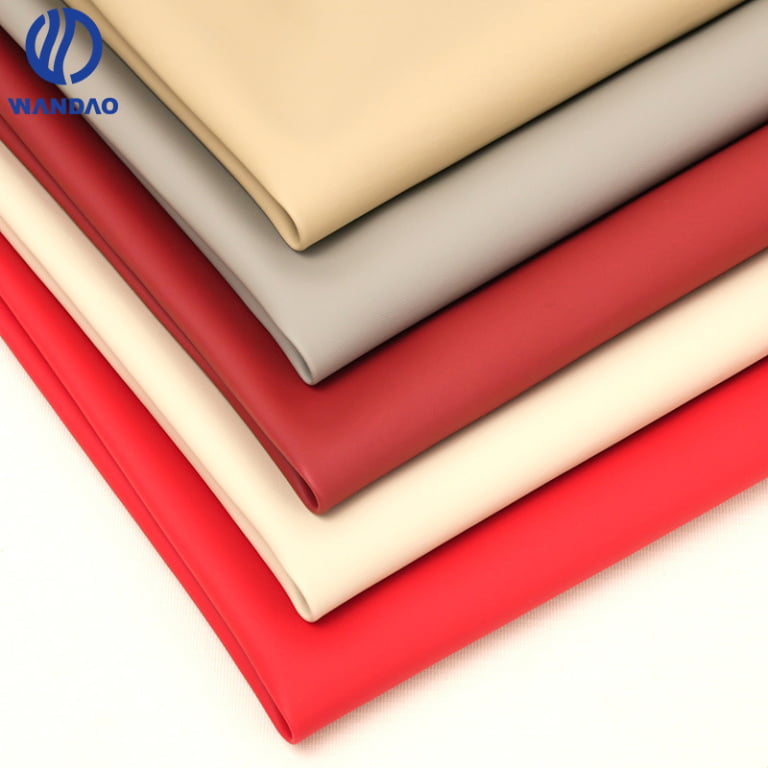
Color consistency should be controlled by ΔE₀₀, 60° gloss difference, grain direction and batch-to-batch cloudiness under both D65 and a secondary source. Fine or flat grains magnify dispersion and gloss variation; deeper grains can hide small differences yet create shadow contrast under glancing light.
Durability Limits and Failure Mechanisms in Service
Service durability of automotive seat PVC leather refers to the retention of appearance, flexibility, adhesion and surface integrity after combined exposure to mechanical cycling, heat, ultraviolet radiation, humidity, body fluids and cleaning chemicals, measured by standardized methods rather than by calendar years alone.
No SAE, ISO or ASTM standard converts a laboratory cycle count into a guaranteed number of years or passenger entries. Engineering experience for OEM-grade material indicates that ordinary passenger-car use can maintain basic appearance and function for roughly 5–10 years; high-insolation climates, frequent ingress/egress, commercial fleets or aggressive cleaners can produce glossing, wear-through, tackiness, hardening or cracking in 3–5 years on door-side bolsters. These ranges are experience bands, not warranty statements.
| Load / environment | Typical test & metric | What it indicates | What it does not indicate |
|---|---|---|---|
| Clothing abrasion / entry-exit | Martindale or Taber (cycles, mass loss, appearance) | Surface wear, color loss, exposure of foam | Exact number of real passenger cycles |
| Repeated folding of bolster | ISO 7854 or ASTM D2097 (cycles to crack) | Coating and interface flex life | Static compression set |
| Sunlight + heat + humidity | SAE J2412 (irradiance, ΔE, cracking) | Photo-oxidation, color and embrittlement risk | Fixed “hours = years” conversion |
| Heat / humidity cycling | OEM interior cycles, hot-air ovens | Adhesive and multi-layer integrity | Standalone abrasion life |
| Sweat, sebum, cleaners | Chemical contact followed by appearance, tack, hardness, peel | Extraction, softening or hardening | Combined UV + mechanical life |
SAE J2412 (2024 conditions) cycles 1 h dark at 38 °C / 95 % RH with 3 h 48 min light at 0.55 W/(m²·nm) at 340 nm, black-panel 89 °C, chamber 62 °C, 50 % RH. It is the most representative xenon method for interior plastics and coated textiles. Q-Lab A 2026 peer-reviewed PVC film study using ASTM G154-23 (UVA-340, 0.89 W/(m²·nm), 8 h UV at 60 °C + 4 h condensation at 50 °C) showed that short-chain phthalates can enrich at the surface within 7 days in some formulations while higher-molecular-weight DINP/DIDP remain stable longer, demonstrating that aging response is highly formulation-dependent. PMC / NCBI
Primary damage pathways are clear:
- Heat accelerates oxidation, dehydrochlorination and plasticizer diffusion, producing hardening, shrinkage, cracking and fogging.
- UV drives chain scission and conjugated polyene formation, leading to yellowing, chalking, gloss loss and embrittlement.
- Humidity and condensation concentrate at interfaces, promoting delamination and stress cracking under subsequent mechanical load.
- Sweat (water, salt, lactic acid) and sebum or sunscreen esters can swell the surface or alter plasticizer compatibility, producing tack, staining or accelerated abrasion.
- Aggressive cleaners extract plasticizer or attack the topcoat, leaving a surface that is simultaneously sticky and later brittle once the plasticizer is gone.
Tack and hardening are not contradictory. Early surface enrichment of plasticizer or low-molecular-weight species creates a sticky film; continued loss or migration leaves the bulk under-plasticized and brittle. The practical consequence is that abrasion and flex testing performed only on new material systematically overestimates field life. The more representative sequence is accelerated weathering or heat aging first, followed by wet/dry abrasion, flex and chemical contact, then measurement of residual peel, hardness and appearance.
Market Scale, Regional Demand and Material Substitution Pressures
The global automotive PVC artificial leather market refers to the commercial volume of PVC-based coated textiles used across seating, door panels, instrument panels, headliners and related interior surfaces, measured in value and tracked by specialized market research firms.
Public free sources rarely isolate “seat-only PVC” value or penetration. Research and Markets places the broader automotive PVC artificial leather market at USD 13.2 billion in 2024 and USD 13.7 billion in 2025, projecting USD 16.4 billion by 2030 at a CAGR of 3.67 % for 2025–2030. Research and Markets Grand View Research reports the wider automotive interior leather market (genuine plus synthetic, all interior positions) at USD 369.5 billion in 2024 and USD 390.6 billion in 2025, with synthetic leather growing faster than the overall category. Grand View Research
Passenger cars account for the majority of interior leather revenue; seats and center-stack surfaces form the largest single application cluster. Asia-Pacific held approximately 42.3 % of automotive interior leather revenue in 2024, with India projected at a 9.2 % CAGR through 2033. China, India, Japan, Korea, the United States, Mexico and the major ASEAN production bases therefore remain the priority demand and supply nodes. OICA 2024 production figures underline the scale: China 27.5 million vehicles, Japan 7.1 million, India 5.0 million, Germany 4.1 million. OICA
Substitution pressure is real but uneven. In higher-trim passenger cars, soft-hand PU, microfiber and emerging bio-based or recycled surfaces compete on feel, odor and sustainability messaging. BMW’s 5 Series has used full vegan interior surfaces as standard since 2023; FORVIA’s Ecorium has entered series production on Renault models with renewable and recycled content. BMW Group FORVIA At the same time, cost-sensitive passenger cars, commercial vehicles, ride-hailing fleets and two-wheeler seats continue to favor PVC for its abrasion, cleanability and price stability. The commercial opportunity therefore lies less in defending commodity PVC and more in supplying low-VOC, non-phthalate, higher-recycle-content or improved-grain PVC constructions that still meet the mechanical and chemical requirements of the target vehicle segment.
FAQ
A: Start with 1.10 ± 0.10 mm total thickness and an areal density around 650 ± 70 g/m², then freeze independent minimums for dense skin and topcoat. Thicker foam alone does not guarantee longer wear life.
A: No. Deeper peaks can increase initial grip and hide defects, but they also concentrate wear at the high points. Fine-grain constructions frequently show lower mass loss under identical Taber or Martindale conditions when the topcoat chemistry is held constant.
A: No. Cycle counts are comparative tools under defined media, load and termination criteria. Real life is governed by the combination of UV dose, heat, humidity, body fluids and cleaner chemistry; only aged-then-abraded results approach field relevance.
A: Higher-modulus woven or heavy knitted constructions generally serve bolsters better because of seam stability and shear resistance. High-elongation knits suit center panels that must form and flex repeatedly. Always verify residual shrinkage and peel after heat aging for each construction.
A: Control hole diameter (commonly 0.6–1.2 mm), pitch and open area (often 5–18 %), but also require airflow measurement on the finished laminated construction. Perforation improves local ventilation only when the holes remain open through the foam and backing stack.
A: The broader automotive PVC artificial leather market is projected to grow at roughly 3.7 % CAGR through 2030, with Asia-Pacific remaining the largest demand region. Focus development effort on low-VOC, non-phthalate and higher-recycle formulations that can still meet the mechanical specifications of the target vehicle segment rather than on commodity thickness alone.