Market Context and Material Positioning
Market context refers to the available demand backdrop, competitive material categories, and the practical role of PVC leather within commercial and contract seating rather than a precise share or growth rate for the material itself.
Public data do not support a verified global market size, volume, or CAGR series for PVC vinyl used exclusively in commercial furniture and contract seating for 2020–2025. Most published figures either aggregate applications (automotive, footwear, furnishing) or keep material-by-end-use cross-tabs behind paywalls. The strongest accessible association data come from BIFMA’s North American business/institutional furniture estimates, developed with S&P Global Market Intelligence. In 2020 the U.S. market stood at USD 13.35 billion and the Canadian market at USD 3.03 billion; in 2021 the figures were USD 12.61 billion (U.S.) and USD 3.74 billion (Canada). These numbers describe the broader furniture demand environment, not upholstery-material splits. [BIFMA]
At the contract-textile level, one industry estimate places the Europe contract textiles market at USD 3.62 billion in 2022 with a 3.1 % CAGR projected for 2023–2030. Global seating furniture is estimated at USD 194.07 billion in 2024 and USD 205.58 billion in 2025, with a 5.65 % CAGR to 2030, yet these totals include residential and non-upholstery seating and cannot be used to calculate PVC penetration. [Grand View Research] [Research and Markets]
A 2025 global upholstery-materials study maps fabric, genuine leather, faux leather, and vinyl alongside commercial end uses (education, healthcare, hospitality, office). The public table of contents confirms the analytical structure exists, but the numerical PVC-versus-PU-versus-fabric cross-tab for commercial seating is not disclosed in accessible summaries. Consequently, statements such as “PVC holds X % of contract seating” or “PU is growing Y % faster than fabric” remain unsupported. [Research and Markets]
Analysis shows PVC leather occupies a performance niche rather than a universal category. Its value appears strongest where non-porous cleanability, moisture resistance, and disinfection protocols matter—healthcare waiting areas, behavioral-health settings, education, food-service, and certain hospitality applications. PU competes where softer hand and leather-like aesthetics are prioritized, while fabric remains the broadest specification baseline. Buyers should treat market statistics as directional context only and avoid converting aggregate furniture or textile values into material-share claims.
Actionable recommendation: In RFQs and internal briefs, describe PVC as a performance-coated upholstery option for cleanability- and moisture-led applications, cite only the verified furniture-market or contract-textile figures above, and require suppliers to supply construction-specific technical data rather than market-share assertions.
Key Performance Specifications to Verify
Key performance specifications refer to the measurable physical and fire-related properties of the PVC-coated fabric itself—abrasion, tear, cold-crack, adhesion, and smolder resistance—that must be confirmed by test method, endpoint, and laboratory report rather than by a generic “BIFMA compliant” claim.
ANSI/BIFMA X5.4 evaluates finished public and lounge seating for structural safety, strength, and durability; it does not set material-level minimums for PVC abrasion, tear, cold crack, or hydrostatic resistance. Therefore a chair-level X5.4 report cannot substitute for a substrate-, color-, and finish-specific PVC technical package. [BIFMA]
ASTM D3690 remains the most directly relevant indoor coated-upholstery performance specification for vinyl- and urethane-coated fabrics. Its verified requirements include:
- No appreciable color change after 200 cycles of ASTM D4157 surface abrasion.
- Tongue-tear minima by grade: Grade A 6 lbf (27 N) length / 5 lbf (22 N) width; Grade B 4/3 lbf; Grade C 3/2 lbf.
- Tack-tear minima: Grade A 30 lbf both directions; Grade B 25/20 lbf; Grade C 15 lbf both directions.
- Coating-to-substrate adhesion minimum 3.0 lbf/in (525 N/m) for all grades.
- No cracking at –10 ± 1 °F (–23 ± 1 °C) by ASTM D2136.
- Maximum plasticizer loss of 10 %.
These values are verified source data from the standard. [ASTM D3690]
ACT voluntary guidelines for high-traffic/public-space coated upholstery recommend 50,000 Wyzenbeek double rubs (ASTM D4157, ACT-approved No. 10 cotton duck or wire screen) measured to noticeable wear. ACT associates 30,000 double-rub materials with single-shift offices, hotel rooms, conference rooms, and dining, while flagging 24-hour terminals, emergency rooms, casinos, stadiums, and lecture halls as environments that may require higher thresholds. ACT explicitly states that results above 100,000 double rubs have not been shown to be reliable indicators of longer fabric life. [ACT]
For fire performance, TB 117-2013 (incorporated into 16 CFR Part 1640) is a smoldering-cigarette test, not an open-flame rating. Cover-fabric pass criteria are: no continuing smolder after 45 minutes, vertical char ≤ 45 mm (1.8 in), no transition to open flaming, and all three initial (or three additional) specimens passing. The federal rule applies to covered upholstered furniture manufactured, imported, or reupholstered on or after 25 June 2021, with certification-label requirements from 25 June 2022. [16 CFR Part 1640] [TB 117-2013]
Hydrostatic resistance is not required by BIFMA X5.4, ASTM D3690 indoor upholstery, TB 117-2013, or NFPA 260. It should be specified only when a genuine liquid-barrier use case exists and must be paired with seam and chemical-exposure testing.
Analysis confirms that laboratory numbers describe pass/fail under defined conditions. They do not predict years of service, nor do they guarantee performance once the material is cut, sewn, tensioned over foam, and exposed to real cleaners. Seam geometry, foam hardness, edge radii, and cleaning chemistry can produce field failure even when the roll meets ASTM or ACT thresholds.
Actionable recommendation: For indoor commercial public seating, require ASTM D3690 Grade A tongue tear (6 lbf MD / 5 lbf CD), no cold crack at –10 °F, ACT’s 50,000 double-rub benchmark with abradant and endpoint stated, and a TB 117-2013 cover-fabric report for the exact construction; treat hydrostatic head as optional and application-specific only.
Common Failure Modes in High-Traffic Settings
Common failure modes refer to the recurring physical and chemical degradation mechanisms observed in PVC-coated upholstery under commercial traffic, cleaning, and environmental stress, ranked by mechanistic evidence rather than by unpublished claim frequencies.
Publicly accessible defect-report datasets from furniture OEMs and commercial testing laboratories that quantify the percentage of warranty claims attributable to cracking, plasticizer migration, delamination, or fading were not located. The evidence therefore supports a clear hierarchy of mechanisms, not statistical prevalence rankings.
Surface abrasion and topcoat wear appear as loss of grain definition, gloss change, scuffing, and eventual backing exposure. ASTM D3690 requires no appreciable color change at 200 abrasion cycles and resistance to surface abrasion without cracking or delamination through the applicable flex and abrasion sections. ACT high-traffic guidance starts at 30,000–50,000 double rubs. [ASTM] [ACT / Intertek]
Flex-fatigue cracking concentrates at seat fronts, cushion crowns, seams, piping, and arms. ASTM D3690 requires no cracking or delamination after 15,000 flex cycles and no low-temperature cracking at –23 ± 1 °C. Plasticizer migration manifests as surface tackiness, dust attraction, adjacent-material staining, and later embrittlement; the standard limits plasticizer loss to 10 %. Peer-reviewed literature identifies volatilization, exudation, and extraction as the three principal migration pathways. [ASTM] [Springer]
Delamination—separation of the PVC coating from the knit, nonwoven, or scrim backing—appears as bubbles, peeling, or lifting at seams and edges. ASTM D3690 treats cracking and delamination as explicit failure outcomes after the prescribed flex cycles. Color fading, crocking, and transfer are controlled by dry/wet crocking minima of Grade 4 and xenon lightfastness of Step 4 after 120 AATCC fading units under ASTM D3690. [ASTM]
Pilling is rarely a true PVC-face failure; it more often indicates exposed or damaged textile backing. In healthcare, hospitality, corporate, and education environments, accelerated wear is most probable where repeated ingress/egress, tight-radius edges, aggressive disinfectant exposure, heat, and body-oil contamination coincide. This remains an engineering inference grounded in the mechanisms above, not a published frequency ranking.
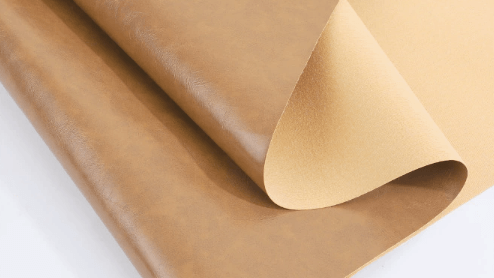
In a recent on-site review of a multi-year healthcare waiting-area installation, I examined several lounge chairs that had been cleaned daily with quaternary-ammonium disinfectants. The PVC covers still retained acceptable color in low-contact zones, yet the seat fronts and arm contact points showed fine flex cracks and localized topcoat gloss loss precisely where occupant weight and repeated wiping concentrated. The observation reinforced that laboratory abrasion and flex numbers alone do not capture the combined effect of mechanical strain plus chemical exposure under real traffic patterns.
Actionable recommendation: Require both the ASTM D3690 flex and adhesion package and a project-specific chemical-exposure matrix (named cleaners, concentration, dwell, and post-exposure visual/adhesion assessment) before approving any high-cleaning or high-flex application; never convert double-rub or flex-cycle counts into estimated years of service.
Standards, Testing Protocols, and Documentation
Standards and testing protocols refer to the authoritative methods, voluntary guidelines, and mandatory rules that define how PVC leather durability, fire safety, and chemical resistance are measured and documented for contract furniture.
ASTM International supplies the core consensus methods: ASTM D3690 for indoor vinyl- and urethane-coated upholstery performance, ASTM D751 for coated-fabric tensile, tear, peel adhesion, and tack-tear properties, and ASTM D4157 for Wyzenbeek abrasion. These are test methods and performance specifications, not product certifications. [ASTM] [ASTM D751]
ACT (Association for Contract Textiles) provides voluntary performance guidelines that translate methods into contract thresholds. For high-traffic coated upholstery the abrasion guideline is 50,000 Wyzenbeek double rubs; ACT TM 1-2020 addresses relative compatibility with liquid cleaners, sanitizers, and disinfectants. ACT is a commercial specification benchmark, not a legal certification body. [ACT] [ACT Healthcare]
U.S. federal regulation 16 CFR Part 1640 incorporates California TB 117-2013 as the mandatory smolder-resistance method for covered upholstered furniture. Cover-fabric pass criteria remain no smoldering beyond 45 minutes, vertical char ≤ 45 mm, and no open flaming. NFPA 260 and NFPA 261 supply cigarette-ignition classification and mock-up assembly methods; they do not replace full-scale open-flame requirements when a jurisdiction or owner specification demands them. California TB 133 was repealed effective 22 January 2019 and should not be cited as a current statewide mandate. [CPSC] [NFPA 260] [SGS]
Independent laboratories (SGS, Intertek, TÜV Rheinland and others) issue third-party reports when their ISO/IEC 17025 scope covers the stated method. A supplier claim of “ASTM certified” is incomplete unless it identifies the exact method, revision, result, sample construction, laboratory, report number, and date.
Analysis shows that the most defensible qualification package is lot-specific and construction-specific: ASTM D3690 / D751 mechanical data, ACT abrasion and chemical-compatibility guidance, TB 117-2013 / 16 CFR Part 1640 documentation coordinated with the finished seating assembly, and change-notification language for any material reformulation. BIFMA remains relevant at the finished-product level for structural performance and, where required, low-emitting furniture programs, but it is not the primary PVC-cover durability authority.
Actionable recommendation: Before purchase-order release, require an ISO/IEC 17025 laboratory report package that lists ASTM D3690 grade or property-by-property results, ASTM D4157 abrasion with abradant and endpoint, TB 117-2013 Section 1 for the exact PVC construction, and ACT TM 1-2020 or project-named chemical results; reject any documentation that omits construction identity or report date.
Procurement Checklist and Specification Language
Procurement checklist refers to the structured sequence of use-case definition, product-identity confirmation, test-evidence verification, final-chair validation, and warranty-scope review that converts laboratory data into a releasable purchase specification.
Define the use case first: seating type (guest, lounge, dining, task, bariatric, behavioral-health, etc.), traffic intensity, wet or humid exposure, sunlight, body oils, and the exact disinfectant chemistry and frequency. Freeze foam density/ILD, edge radius, seam locations, stitch density, and thread before material approval. Obtain the current technical data sheet for the exact SKU, confirming face polymer, backing type, thickness, mass, width, emboss, color, and lot-control process. Retain a production-intent physical sample.
Verify laboratory reports for ASTM D4157 abrasion, ASTM D2097 or equivalent flex, ASTM D751 peel adhesion (minimum 3 lbf/in under ACT indoor coated guidance), backing-appropriate tear and tack-tear values, AATCC 8 dry/wet crocking (Grade 4 minimum), and lightfastness where daylight exposure exists. For printed constructions, ACT references a modified ASTM D3389 Taber method with a minimum rating of 3 after 250 cycles (H-18 wheel, 250 g). [ACT] [ACT Physical Properties]
Build and inspect a sewn trial panel or first-article chair using the approved material, actual foam, pattern, needle, and thread. Examine high-stress locations and conduct spot cleaning with the operator’s named agents. Confirm written compatibility from the furniture manufacturer for the selected construction and warranty.
Warranty language must state coverage, exclusions (stains, dye transfer, improper cleaning, moisture, UV, etc.), remedy (yardage only versus labor and freight), claim documentation requirements, and whether the warranty runs to the end user. Duration alone is not evidence of durability.
A concise specification clause that stays within verified thresholds can read:
PVC-coated upholstery fabric shall be designated for indoor contract seating and supported by current test reports for the exact offered construction. Minimum performance shall include ASTM D4157 abrasion of 50,000 double rubs using the stated ACT protocol; ASTM D2097 or equivalent flex resistance of 25,000 cycles with no appreciable crazing, cracking, whitening, or delamination; ASTM D751 peel adhesion of at least 3 lbf/in; ASTM D751 grab breaking strength of at least 50 lb in both directions; backing-appropriate tear and tack-tear values; and AATCC 8 dry and wet crocking of Grade 4 minimum. Materials used in upholstered furniture shall be documented as compliant with the project’s applicable flammability requirements for the final furniture assembly. Supplier shall provide written cleaning/disinfectant compatibility, lot traceability, and the complete warranty including exclusions and remedy.
All numeric thresholds in the example are verified source data from ACT voluntary indoor coated-fabric guidance and are specification baselines, not service-life guarantees. [ACT] [ACT]
Actionable recommendation: Adopt the five-step sequence—use-case definition, product-identity evidence, laboratory verification, final-chair mock-up, and warranty-scope confirmation—as a mandatory release gate; never issue a purchase order on a performance icon or marketing claim alone.
Frequently Asked Questions
Q: What is the best grade of leather for furniture?
A: For commercial furniture and contract seating, “best grade” is defined by performance rather than traditional full-grain or top-grain labels used for genuine leather. Specify ASTM D3690 Grade A (or project-equivalent) tongue-tear values, ACT high-traffic abrasion of 50,000 Wyzenbeek double rubs, coating adhesion of at least 3 lbf/in, and TB 117-2013 smolder compliance for the exact construction. The optimal choice depends on traffic level, cleaning chemistry, and edge geometry—not a single universal grade.
Q: Which is better, PVC leather or PU leather?
A: Neither is universally superior. PVC leather typically offers stronger cleanability, moisture resistance, and cost efficiency in high-disinfection or wet-exposure settings such as healthcare waiting areas and education. PU leather often provides a softer hand and more leather-like drape where aesthetics and tactility are prioritized. Selection should be driven by the specific application, required test results, and chemical-exposure matrix rather than a general preference.
Q: Which is better, PVC or faux leather?
A: PVC is one type of synthetic (faux) leather; the broader “faux leather” category commonly includes both PVC and PU constructions. Comparing “PVC versus faux” is therefore not precise. Evaluate the actual face polymer, backing, topcoat, thickness, and verified test data for the intended use. Public market reports frequently group PU under “faux leather” while treating vinyl/PVC separately, so request construction-specific documentation instead of relying on the umbrella term.
Q: Is PVC leather considered real leather?
A: No. PVC leather is a synthetic coated material made from polyvinyl chloride applied to a textile backing. It is not animal hide and is not classified as genuine or real leather. In commercial specifications it is correctly described as vinyl-coated upholstery or PVC synthetic leather and must be evaluated under coated-fabric standards such as ASTM D3690 rather than natural-leather grading systems.
Q: Can laboratory flex or abrasion cycles be converted into years of service?
A: No. ASTM and ACT explicitly treat these numbers as pass/fail laboratory criteria under defined conditions. They do not equate to field service life. Real-world durability also depends on foam, edge geometry, cleaning chemistry, and traffic pattern.
Q: What documentation package should a contract-furniture manufacturer require from a PVC supplier in 2025?
A: At minimum: current TDS for the exact SKU; ISO/IEC 17025 laboratory reports covering ASTM D3690 (or equivalent property set), ASTM D4157 abrasion with abradant and endpoint, ASTM D751 adhesion and mechanical data, TB 117-2013 Section 1 for the construction, and chemical-compatibility results for the named cleaners; lot traceability; and written change-notification language.