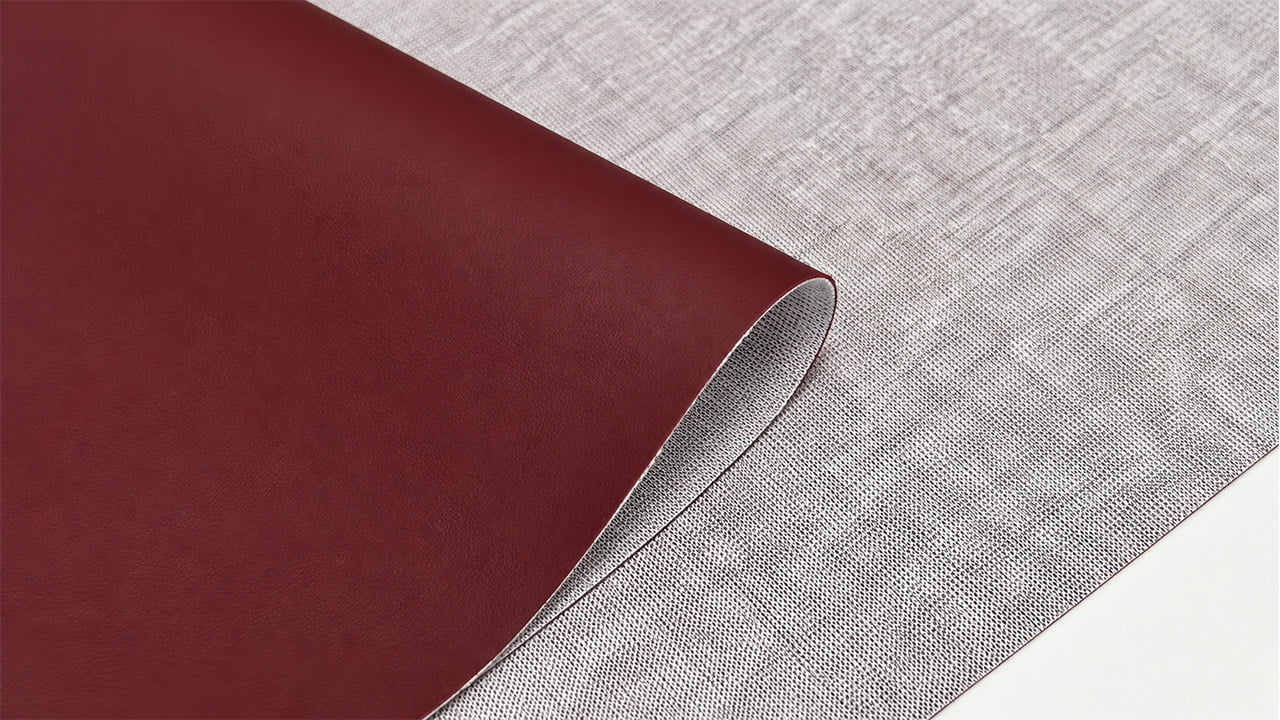
Match PVC Leather to the Commercial Vehicle and Seat Duty Cycle
Commercial vehicle seat duty cycle refers to the pattern of occupant contact, loading, movement, contamination, cleaning, climate exposure, and maintenance that a seat experiences during operation. A truck driver’s seat and a city-bus passenger seat are both commercial applications, but they do not impose the same stresses on PVC leather.
A long-haul truck seat is usually dominated by one primary driver who may remain seated for long periods. A seat-design study used approximately 50 driving hours per week and an approximately eight-hour sitting period as part of its truck-driver design context [Truck-seat design study]. These figures describe the cited study context, not a universal schedule for every driver. They nevertheless show why truck-seat selection must consider continuous compression, body heat, perspiration, friction during posture changes, and repeated ingress and egress.
Bus seats face a different exposure profile. Many different passengers use the same seat, and operators must restore visible cleanliness within a scheduled service window. A Loudoun County transit procurement document reported 947,193 annual non-linked passenger trips for one commuter-bus operation, with 64 buses and 55 seats per bus; the same document reported 40,959 revenue-service hours and 31,587 deadhead hours for that operation [Loudoun County transit procurement document]. These are system-level operating figures, not measured occupancy counts for each seat. They demonstrate the scale and repetition of public-transit exposure rather than proving a particular material share.
Cleaning is also part of the duty cycle. The same transit document required at least daily interior cleaning and monthly deep cleaning that included seats [Loudoun County transit procurement document]. A separate King County/Sound Transit cleaning matrix described general interior cleaning on each operating day, spot treatment of seats as needed, and periodic detailed cleaning that included inspection and cleaning of all seats [King County/Sound Transit cleaning matrix]. For a PVC specification, “easy to clean” is therefore incomplete. The buyer must define the approved chemicals, concentration, contact time, wipe material, repetition, rinsing, and drying procedure.
| Application | Dominant exposure | PVC leather selection emphasis |
|---|---|---|
| Long-haul truck driver seat | Long continuous sitting, sweat, body oil, posture movement, ingress and egress, sunlight near windows | Flex resistance, microclimate, low-temperature flexibility, oil and sweat resistance, seam and bolster durability |
| Work truck or municipal vehicle | Dirty clothing, tools, grease, mud, frequent entry and exit, variable maintenance quality | Scuff resistance, cleanability, chemical compatibility, reinforced high-contact zones, repairability |
| City bus passenger seat | Many users, high contamination variety, daily cleaning, vandalism and repeated sliding contact | Wet-cleaning durability, stain release, abrasion, disinfectant compatibility, flame performance, replaceable covers |
| Long-distance coach seat | Long trips, passenger comfort, visible appearance, planned cleaning, luggage and clothing contact | Hand feel, thermal comfort, appearance retention, abrasion, low odor, maintenance and premium visual consistency |
Material choice should also be zoned within a seat. The front edge and outside bolster experience more sliding and edge stress than a protected rear panel. A driver’s central contact area may require different comfort and moisture behavior from the side bolster. A bus seat may need a harder-wearing outer edge than an inner back panel. One construction can be used across zones only if its process, appearance, comfort, and durability requirements are genuinely compatible.
Actionable recommendation
Create a duty-cycle brief before sampling. Record driver or passenger hours, ingress and egress frequency, seat zones, contaminants, cleaning schedule, climate, sunlight exposure, and whether covers must be repaired or replaced in service.
Specify the Complete PVC Construction, Backing, and Comfort System
Commercial vehicle PVC leather construction refers to the complete surface, PVC layer, foam or expanded layer, adhesive, backing fabric, topcoat, and finishing system delivered to the seat manufacturer. Total thickness or surface appearance alone cannot describe how the material will perform in a truck or bus seat.
A useful specification identifies the PVC formulation or controlled material version, topcoat, grain, gloss, print or emboss, dense and foamed layers, adhesive or anchor coat, backing structure, thickness by measurement method, mass per area, usable width, color reference, and production direction. The buyer should also state whether the material will be sewn, wrapped, laminated, bonded, perforated, heat formed, or combined with another textile. Backing fabric is particularly important because it influences stretch, tear propagation, seam behavior, lamination, and dimensional stability.
Published research shows why numerical claims must remain tied to their source construction. One automotive PVC and carbon-fiber-modified PVC foam-leather study reported surface densities of 765 g/m² for its PVC sample and 773 g/m² for its modified sample. It reported tensile strengths of 32.6 MPa and 48.9 MPa, elongations at break of 214% and 185%, and tear strengths of 11.4 kN/m and 14.7 kN/m for the compared constructions [Published PVC/CF-PVC foam-leather study]. Those results are verified data for the reported formulations and test conditions. They are not universal minimums for every commercial vehicle seat.
The same study reported 3.63 mm as the foam thickness associated with a favorable foaming result in its experimental system [Published PVC/CF-PVC foam-leather study]. A buyer should not transfer that number directly into a truck or bus specification. Foam thickness, cell structure, density, surface thickness, backing, adhesive, and seat geometry must be considered together. A thicker construction may provide fullness in one seat but create excess stiffness, compression loss, or bonding difficulty in another.
Comfort also needs a broader definition. PVC surfaces can be smooth, textured, perforated, foamed, or combined with other layers. A technical study comparing two foam seat cushions reported higher measured surface-side humidity for the PVC-covered cushion than for the PU-covered artificial-leather cushion. Its moisture-vapor-transmission results were 60 g/m²/24 h for PU and 25 g/m²/24 h for PVC under ASTM E96 Method B, and 110 g/m²/24 h for PU and 33 g/m²/24 h for PVC under ASTM E96 Method BW [PVC and PU seating microclimate study]. The source identifies a medical-seat comparison, not a truck or bus validation. The figures should therefore be used to frame a moisture-management question, not to predict passenger comfort or service life.
| Specification block | Minimum information | Why it matters in commercial seating |
|---|---|---|
| Surface | Color, grain, gloss, topcoat, print, perforation, defect limit | Controls appearance, scuff visibility, cleaning response, and touch points |
| Layer system | Dense PVC, foam, adhesive, anchor coat, scrim, backing, total thickness | Controls cushioning, flex, tear, adhesion, emissions, and weight |
| Backing | Knit, woven, tricot, nonwoven, or other structure; machine and cross direction | Controls stretch, sewing, wrapping, seam stability, and dimensional behavior |
| Comfort | Perforation, air path, foam interface, touch target, thermal and moisture requirements | Prevents a visually attractive surface from creating an uncomfortable seat |
| Process | Cutting, sewing, welding, lamination, bonding, forming, and installation route | Ensures the roll can be converted without whitening, distortion, or delamination |
Perforation is not automatically a comfort solution. A perforated surface can improve the air path only when the holes, foam, backing, and seat structure remain open enough to support the intended function. Hole size and spacing should be treated as design variables that require finished-seat validation, not as universal comfort values.
Actionable recommendation
Require a construction drawing or controlled layer-stack sheet, including backing and foam details. Approve comfort through a seat-level trial that evaluates touch, pressure, heat and moisture behavior, perforation effectiveness, sewing, and dimensional stability.
Validate Wear, Flexing, Heat, Chemicals, and Moisture Separately
Commercial vehicle PVC leather durability refers to retention of surface appearance, flexibility, adhesion, strength, and cleanability after the combined stresses expected in fleet service. No single abrasion number or thickness value proves this complete performance.
Truck-seat wear commonly concentrates at the front edge, outer bolster, door-side area, and seam. Drivers slide into the seat, move their weight during long trips, and may contact the cover with work clothing, belts, tools, or contaminated gloves. Bus seats add passenger turnover, shoe contact, bags, food, drinks, body oils, graffiti, and repeated wiping. These exposures can produce different failure modes: grain polishing, gloss change, color transfer, scuffing, whitening, cracking, stickiness, exposed backing, and layer separation.
Heat and ultraviolet exposure can change flexible PVC. A peer-reviewed study of three commercial flexible PVC films used ASTM G154-23 cycles consisting of eight hours of UVA-340 exposure at 60°C followed by four hours of condensation at 50°C. The study reported cumulative doses of approximately 359 kJ/m² after seven days and 718 kJ/m² after 14 days [Flexible PVC UV-aging study]. It also found formulation-dependent plasticizer migration and linked observed yellowing, surface chemical changes, embrittlement, and mechanical-property loss to degradation mechanisms [Flexible PVC UV-aging study]. The tested films were only 0.15–0.25 mm thick and were not complete automotive seat laminates. The exposure period must not be converted into vehicle years.
Cleaning chemicals create a repeated chemical-mechanical cycle. A transportation seating cleaning guide states that its vinyl materials can be treated with soap and water, alcohol-based disinfectants, bleach solutions, and antibacterial sprays or wipes under the guide’s stated conditions [Transportation seating vinyl cleaning guide]. The same document reports testing with 75% alcohol solution, gives bleach dilution examples, and warns that cleaning frequency can affect colorfastness, flame performance, and material strength [Transportation seating vinyl cleaning guide]. It also warns against steam cleaning vinyl and notes that its described steam conditions can reach 356°F, approximately 180°C, and 150 psi [Transportation seating vinyl cleaning guide]. These are manufacturer-document statements, not universal cleaning rules. The exact vinyl construction and chemical instructions must control.
Moisture and mold risk should be assessed at the seat system, not the PVC face alone. A review of mold growth conditions reports that fungi are more likely to grow in warm, poorly ventilated environments at relative humidity from 65% to 100%, and that maintaining relative humidity below 60% with adequate ventilation can reduce risk [Mold-growth review]. PVC itself is not automatically a nutrient source for mold, but seams, textile backing, foam, dust, food residue, and trapped moisture can create a favorable local environment. A technical bulletin describing ASTM G21 testing uses 30°C for 28 days and a 0-to-4 growth scale for PVC-coated fabrics [PVC-coated-fabric fungus-resistance bulletin]. This method is a test framework, not proof that every PVC seat will remain mold-free in service.
| Risk | What to test | What not to conclude |
|---|---|---|
| Abrasion and scuffing | Defined method, abrasive, load, cycles, endpoint, edge and seam zones | Do not convert a cycle count into years of fleet life |
| Flex and cold behavior | Repeated bending before and after thermal, humidity, and low-temperature conditioning | Do not assume a high elongation value guarantees cold-flex performance |
| Adhesion and delamination | Complete laminate adhesion before and after aging, cleaner exposure, and flexing | Do not infer layer integrity from a strong textile backing |
| Cleaning and chemicals | Actual disinfectants, oils, sweat simulants, stains, contact times, and repeated wipes | Do not treat waterproofing as universal chemical resistance |
| Moisture and mold | Seat assembly, seams, backing, foam interface, humidity, ventilation, and drying conditions | Do not treat a PVC face test as a complete seat hygiene assessment |
In an observation I conducted during a PVC artificial-leather sample review, the color and grain appeared acceptable when the swatch was flat, but repeated bending produced slight whitening along the fold. I then compared the surface and backing behavior during the process discussion rather than judging the swatch only by appearance. This was a practical observation, not a universal test result, but it reinforced an important procurement lesson: the most useful sample is the one that represents the real seat process and stress location.
Actionable recommendation
Use a multi-test matrix and inspect the finished cover. Include abrasion, scuffing, flex, low temperature, heat and humidity aging, UV exposure, adhesion, sweat and oil, approved cleaners, disinfectants, stains, and mold-risk conditions where the fleet environment requires them.
Separate Flammability, VOC, Fogging, and Chemical Compliance
Commercial vehicle seat compliance refers to documented conformity of the applicable material or seat construction with the relevant market regulation, customer requirement, and vehicle approval route. A material report is evidence for the tested specimen and method; it is not automatically a certificate for the completed seat or vehicle.
For U.S. vehicles within the applicable scope, FMVSS No. 302 limits the burning rate of specified occupant-compartment materials to no more than 102 mm/min under the prescribed procedure [49 CFR §571.302]. The standard covers relevant components such as seat cushions and seat backs. It addresses burning behavior, not abrasion, comfort, odor, VOC, fogging, chemical restrictions, or service life. The [NHTSA FMVSS No. 302 test procedure] helps identify specimen preparation and reporting expectations. A report for a bare PVC film may not represent the PVC, foam, backing, adhesive, thread, piping, and other layers in the finished seat.
For international or European projects, ISO 3795 provides a horizontal-burning method for road-vehicle materials within its scope [ISO 3795]. UNECE Regulation No. 118 is a broader interior-material fire-resistance framework whose applicable series and annexes must be confirmed for the vehicle category and installation location [UNECE Regulation No. 118 directory]. A buyer should not assume that a GB 8410, FMVSS 302, or ISO 3795 report automatically substitutes for every R118 requirement, because the test scope, specimen, and modules can differ.
China’s GB 8410-2006 is the current standard record for the burning characteristics of automotive interior materials; the official Chinese standards platform records publication on January 18, 2006 and implementation on July 1, 2006 [Chinese official GB 8410 record]. The commonly cited acceptance value is no more than 100 mm/min under the standard’s defined conditions. This is a verified standard-related value, not evidence that the material also satisfies a European or North American approval route.
VOC, odor, and fogging are separate subjects. ISO 12219-4 describes a small-chamber method for evaluating emissions from vehicle-interior materials or components [ISO 12219-4]. ISO 6452 addresses fogging characteristics of rubber- or plastic-coated trim materials used in automobile interiors [ISO 6452]. These standards provide methods; they do not create one universal acceptance limit for every truck, bus, color, backing, or OEM program. The buyer must obtain the customer’s limit and test configuration.
Chemical compliance also requires a layer-level view. EU vehicle-material rules specify maximum concentrations in homogeneous material of 0.1% by weight for lead, mercury, and hexavalent chromium and 0.01% by weight for cadmium, subject to applicable exemptions [EU vehicle-material restrictions]. REACH duties can require supply-chain communication when Candidate List substances exceed 0.1% w/w in an article in the relevant legal context [ECHA SVHC information]. The exact legal duty depends on the substance, product boundary, market, and current list. A “phthalate-free” or “REACH tested” letter should not replace a controlled material declaration.
| Compliance area | Evidence to request | Important boundary |
|---|---|---|
| Flammability | Applicable regulation, method, specimen stack-up, conditioning, result, limit, laboratory, date | Tested material or composite must represent the seat construction being released |
| VOC and odor | Method, sample preparation, color/formulation, analytes, conditioning, customer limit | There is no universal automotive VOC limit created by a method standard alone |
| Fogging | Applicable method, specimen, result, glass-deposit or condensation criterion | Low VOC does not automatically mean low fogging |
| Restricted substances | Layer-level declaration, CAS numbers, current list date, tests, exemptions, change control | Whole-seat dilution can obscure substances in individual homogeneous materials |
Certification responsibility also matters. In the United States, FMVSS compliance uses a manufacturer self-certification system; NHTSA does not issue a general “FMVSS 302 certificate” for each upholstery roll [NHTSA self-certification interpretation]. In an EU type-approval route, the vehicle manufacturer or approval applicant and the relevant technical-service and approval authorities control the vehicle approval process [EU Regulation 2018/858]. Material suppliers support the file with representative reports, declarations, traceability, and change control, but should avoid claiming that a laboratory report alone is government approval.
Actionable recommendation
Build separate gates for fire, emissions, fogging, chemicals, and material safety. Record the exact tested construction, market, method, acceptance limit, laboratory, lot, and responsible approval party before using a compliance claim in an RFQ or product document.
Compare PVC With PU, Fabric, and Genuine Leather Through the Real Procurement Cost
Commercial vehicle seat material selection refers to comparing complete material systems against the vehicle’s cost, comfort, maintenance, compliance, and replacement objectives. PVC may offer a strong cost and cleaning case, but no material should be ranked from unit price alone.
For truck seats, high-performance fabric can compete with PVC when long-duration breathability and driver comfort are prioritized and contamination is manageable. PVC becomes more attractive when the seat faces oil, mud, food, wet clothing, or a cleaning routine that favors quick wiping. PU or microfiber-based materials can support a softer touch and premium appearance, but the buyer must verify their actual hydrolysis, chemical, odor, and cleaning performance rather than relying on the word “automotive.” Genuine leather generally carries higher material, selection, cutting, care, and repair costs; it may still be commercially justified in a premium coach or luxury truck, but that requires a separate brand or revenue case.
For city buses, cleaning and service recovery can dominate total cost. A 2023 Dallas Area Rapid Transit project replaced nearly 34,000 fabric seat cushions and backs with vinyl; the operator stated that vinyl was easier to clean and disinfect and expected a material life of more than 10 years [DART vinyl-seat replacement project]. The project size is reported project data; the 10-plus-year expectation is an operator/manufacturer-related claim, not a universal service-life test. It is useful as a real procurement signal, not as a guarantee for every climate, cleaning regime, or PVC construction.
For long-distance coaches, the decision may sit between a low-cost PVC baseline and a comfort-led fabric or PU upgrade. The buyer should separately quantify passenger comfort, cleaning hours, planned re-covering, appearance complaints, vehicle downtime, warranty claims, and any fare or brand benefit. If those benefits are not measured, it is safer to describe PU, fabric, or genuine leather as a design choice rather than a lower-cost choice.
Disposal fees are usually less important than labor and downtime. The National Academies reported a U.S. 2023 average landfill tipping fee of approximately $58 per short ton, with regional averages of approximately $43–$83 per short ton [National Academies waste-cost data]. Even if a discarded seat cover weighs a few kilograms, the direct tipping fee is generally small compared with removal labor, replacement labor, logistics, and vehicle downtime. Recycling complexity still matters, especially for PVC, foam, adhesive, textile backing, and mixed seat assemblies, but a positive recycling value should not be assumed without a documented route.
| Material | Truck seat position | City bus | Long-distance coach |
|---|---|---|---|
| PVC leather/vinyl | Strong candidate for dirty, wet, or easy-clean fleets; validate comfort and long-term flex | Often attractive where sanitation, fast wiping, and replacement control dominate | Cost-oriented baseline; choose texture and construction carefully for comfort and appearance |
| PU or microfiber PU | Useful for softer touch or premium interior goals; verify aging and chemicals | Possible where comfort and appearance justify additional cost and maintenance | Potential experience upgrade when supported by verified performance and budget |
| High-performance fabric | Strong option for breathability and long sitting when contamination is controlled | Can perform well with appropriate stain, abrasion, and replaceable-cover design | Often attractive for thermal comfort, pattern control, and passenger experience |
| Genuine leather | Premium or special configuration; usually not the lowest material-system cost | Generally difficult to justify in high-contamination public service on pure TCO | May support luxury positioning, but brand benefits must be quantified separately |
A practical TCO model should include initial material and cutting, sewing or wrapping, cleaning, local repair, replacement, downtime, and disposal. Replace assumptions with fleet records whenever possible. For each material and seat zone, track the annual number of repairs or replacements, failure mode, service age, batch, cleaning history, labor time, and whether work was scheduled or caused an additional vehicle outage. This approach is more reliable than converting a laboratory cycle count into a promised number of years.
Before bulk approval, request a controlled technical and commercial package: construction sheet, thickness and width tolerances, color and grain master, representative flammability and durability reports, chemical declaration, cleaner compatibility, sample revision, lot traceability, warranty exclusions, MOQ, lead time, and change-notification rules. If the proposed material is a standard furniture construction, treat it as a candidate for adaptation and requalification rather than as an approved commercial-vehicle material.
Actionable recommendation
Compare PVC, PU, fabric, and genuine leather using fleet-specific cost records. For trucks, run an application trial that balances comfort, sweat, oil, ingress wear, and cleaning. For buses, measure cleaning labor, contamination recovery, replacement time, and service disruption before finalizing the cover material.
Frequently Asked Questions
A: PVC leather is commonly considered when the seat needs a wipeable surface, resistance to surface contamination, controlled appearance, and practical cost. Its suitability still depends on the complete construction, seat process, climate, cleaning chemicals, comfort target, durability evidence, and applicable regulations.
A: Not universally. PVC can be advantageous when oil, mud, wet clothing, or rapid cleaning is important. High-performance fabric may be preferable when long-duration breathability and comfort are more important and contamination can be controlled. Compare the actual seat zone, duty cycle, cleaning program, and fleet repair history.
A: Test abrasion, scuffing, stains, dry and wet rubbing, approved disinfectants, cleaning repetition, color and gloss retention, flexing, adhesion, flame performance, odor or emissions where required, and mold-risk conditions where the operating environment warrants them. Test the complete seat cover or representative seat assembly, not only a PVC film.
A: No. FMVSS 302 addresses the prescribed burning behavior of applicable occupant-compartment materials within its scope. It does not by itself prove abrasion resistance, comfort, VOC, odor, fogging, chemical compliance, or long-term durability. The report must represent the relevant material or composite construction.
A: Specify the measurement basis, tolerance, total thickness, layer distribution, mass per area, backing, foam or adhesive system, and intended process. Then validate hand feel, sewing, wrapping, flexing, tear, adhesion, abrasion, aging, and finished-seat appearance. A single thickness number is not a durability specification.
A: There is no universal service-life number for all trucks, buses, climates, seat designs, formulations, and cleaning regimes. Published operator claims or warranties must remain labeled as claims and should not be converted into a general lifespan. Use fleet repair and replacement records, representative aging tests, and finished-seat validation to establish a project-specific expectation.