furniture upholstery
when the project needs consistent roll goods, repeatable colour,
a leather-like appearance, and routine wipe cleaning.
Why Is PVC Leather Used for Hotel and Hospitality Furniture?
PVC leather for hotel furniture refers to a PVC-coated or PVC-laminated textile used on guest-room seating, lobby furniture, restaurant booths, banquet chairs, headboards, ottomans, and other hospitality upholstery.
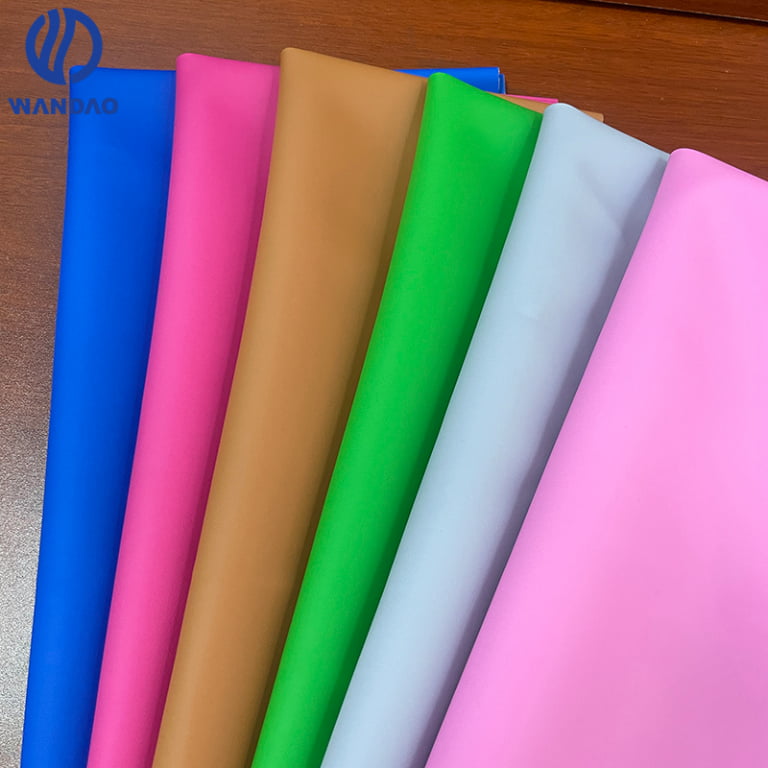
One reason buyers consider PVC is cost control. Genuine leather can provide a natural grain and repairable finish, but it usually involves hide variation, grading, cutting loss, and a higher initial material cost. Premium microfiber, silicone, and high-performance PU can provide excellent hand feel or cleaning performance, but they may also carry a higher purchase price or require more specialized qualification. PVC can be a practical middle route when the project needs consistent roll goods, repeatable colour, a leather-like appearance, and routine wipe cleaning.
Water resistance is another reason PVC is considered. A continuous face can resist an incidental beverage spill or damp wipe better than many exposed textile surfaces. This is useful in hotel lobbies, restaurants, and healthcare waiting areas where water, coffee, food residue, or cleaning solutions may contact the chair. However, a finished chair is not only a face film. Seams, piping, needle holes, staples, zippers, exposed edges, foam, and backing can create paths for liquid. If the project needs liquid containment or hydrostatic resistance, specify and test the complete construction.
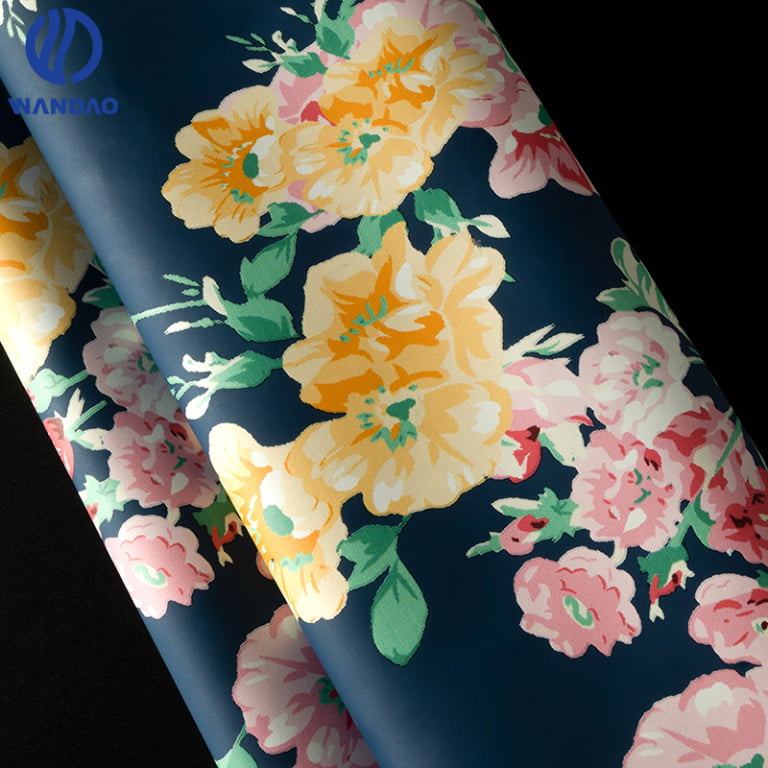
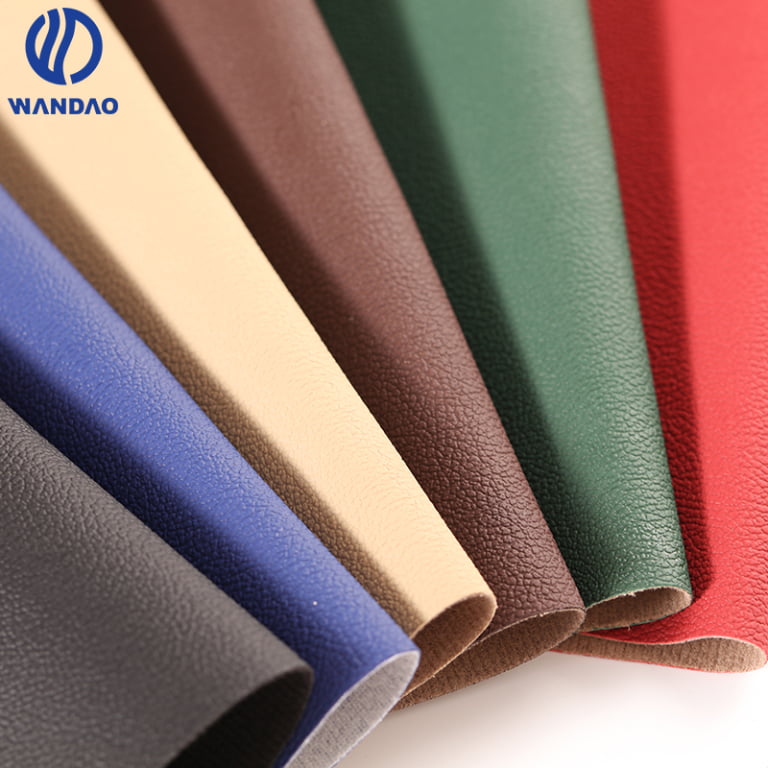
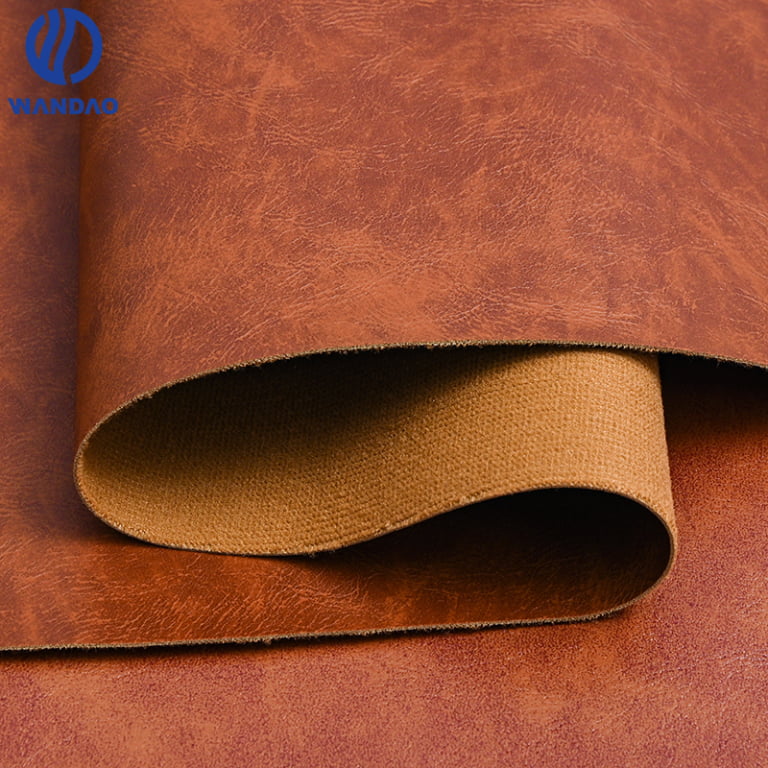
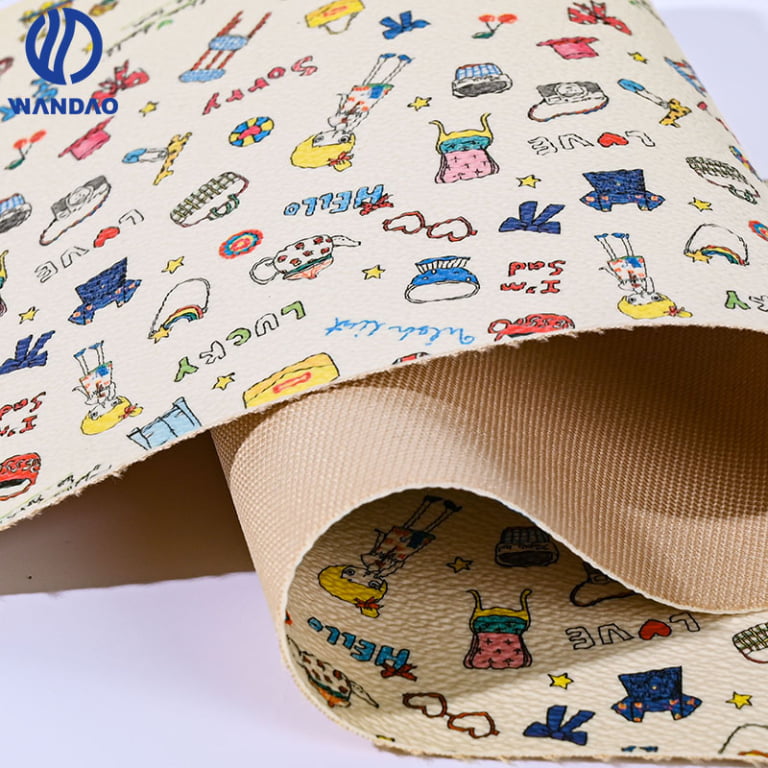
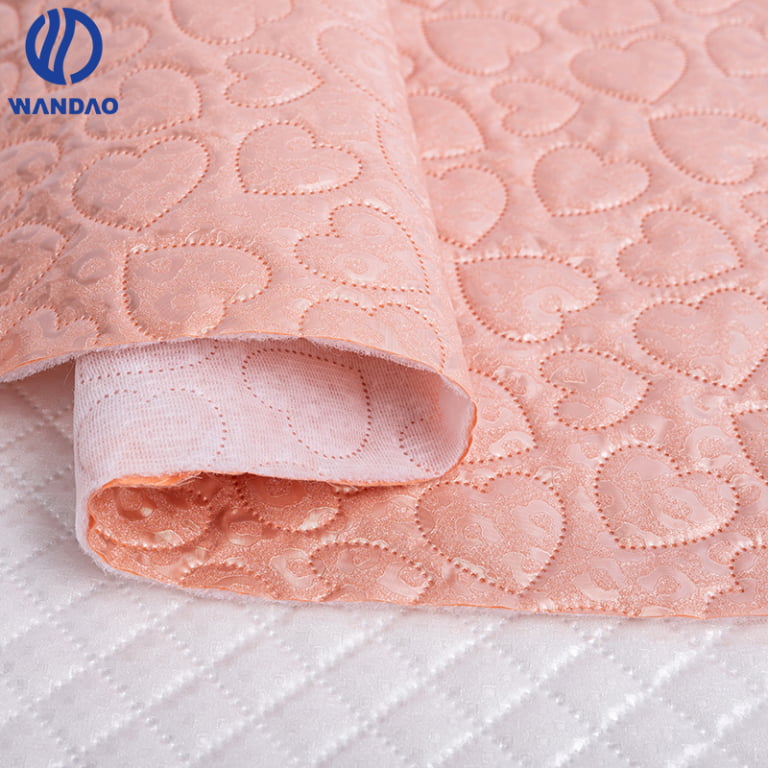
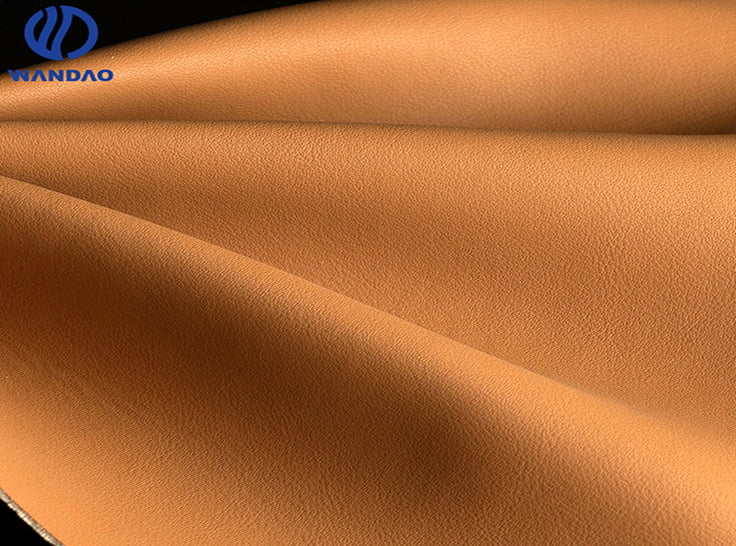
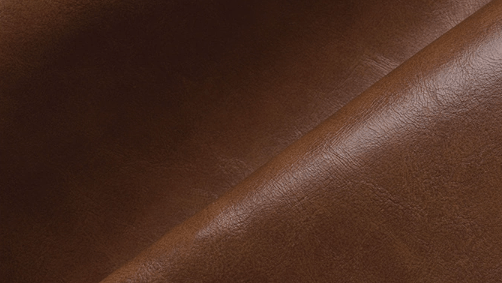
PVC can also reproduce many visual effects. Fine leather grain, litchi or pebble grain, Nappa-style grain, fabric-look embossing, micro-wrinkle, matte, satin, high-gloss, and two-tone finishes can support different hotel design languages. Texture helps a standard chair look more refined without requiring genuine leather. It should still be chosen with maintenance in mind: deep texture can retain residue, while high gloss can reveal fingerprints and scratches more clearly under lobby lighting.
| Hospitality priority | Why PVC may fit | What must be verified |
|---|---|---|
| High guest turnover | Consistent roll material and a coated face support repeatable production and routine wiping. | Abrasion, flex, seam, adhesion, cleaner, colourfastness, and replacement-lot consistency. |
| Restaurant spills | Surface food and beverage residue can often be removed more simply than from open textile upholstery. | Oil, sauce, coffee, degreaser, disinfectant, seam, and edge performance. |
| Hospital or care seating | A smooth or low-relief coated surface can support frequent cleaning when the exact chemistry is compatible. | Named disinfectants, dwell time, wipe cycles, tack, cracking, peeling, and barrier/seam design. |
| Budget-led renovation | Leather-like appearance and multiple grain options can be achieved without a genuine-leather material route. | Total installed cost, cutting yield, quality consistency, fire path, and maintenance requirements. |
Action recommendation: Decide first whether the dominant requirement is guest-room appearance, public-area wear, restaurant cleaning, healthcare disinfection, or cost-controlled replacement. Then select a PVC construction that solves that requirement rather than using one “hotel grade” material everywhere.
How Should Thickness and Backing Change by Use Scenario?
Thickness and backing selection refers to matching the PVC composite to the furniture shape, upholstery tension, loading, and expected cleaning or environmental exposure.
There is no single hotel-furniture thickness. A guest-room headboard has different loads from a lobby sofa. A restaurant booth may need strong seam and edge performance, while a healthcare chair may need a continuous, cleanable surface and chemical compatibility. As a development starting point, many hospitality PVC inquiries fall around 0.8–1.3 mm total thickness, with heavier constructions considered for high-use public seating. These are planning ranges, not universal standards or guarantees.
For hotel guest-room chairs and headboards, a lighter construction may be useful when hand feel, easy wrapping, and visual refinement matter more than severe abrasion. Lobby, reception, restaurant, and high-turnover seating may justify a more stable backing and a stronger face/topcoat package. Healthcare and elderly-care furniture may require a smooth or shallow grain, a backing that does not compromise the barrier at seams, and a cleaning protocol based on the facility’s actual chemicals.
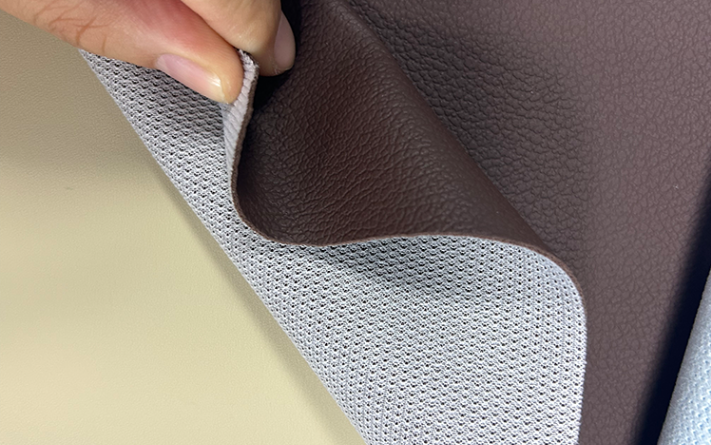
Backing type is as important as weight. A knitted backing can conform to rounded arms, curved shells, deep cushions, and upholstered headboards. A woven backing can support flatter, tauter, or more tailored panels. A nonwoven or composite backing can be appropriate for selected constructions, but its tear, compression, bonding, and needle behavior must be demonstrated. “Polyester backing” alone does not identify whether the structure is knit, woven, or nonwoven.
| Use zone | Starting construction direction | Key approval checks |
|---|---|---|
| Guest-room chair | Approximately 0.8–1.2 mm planning range; fine grain; knit or light woven depending on geometry | Hand feel, stain response, colour/light stability, seam behavior, cleaning, and guest-room fire requirements. |
| Lobby sofa or public lounge | Approximately 1.0–1.3 mm planning range; stable woven or engineered knit; low-to-medium relief | High-traffic abrasion screen, flex, adhesion, tear, seam strength, cleaner compatibility, and colour consistency. |
| Restaurant booth or banquette | Approximately 0.9–1.3 mm planning range; reinforced backing and a cleanable low-relief grain | Food/oil staining, repeated wiping, degreaser, disinfectant, edge wear, tack tear, and production seam trial. |
| Hotel headboard | Approximately 0.7–1.1 mm planning range; soft knit or stable panel backing according to tufting and geometry | Wrapping, button or channel pulls, light exposure, cosmetic transfer, odour, and fire assembly. |
| Healthcare or senior-care chair | Approximately 1.0–1.3 mm planning range; stable backing and smooth/shallow grain | Exact disinfectants, fluid paths, seams, barrier strategy, adhesion after cleaning, and regulatory evidence. |
| Covered outdoor hospitality seating | Outdoor-rated backing and weathering-qualified PVC; indoor thickness assumptions do not qualify it | UV, mildew, heat, humidity, cold flex, drainage, seams, and cleaning after outdoor exposure. |
[ISO 7617-1] is a relevant reference for PVC-coated knitted fabrics for interior upholstered furniture. It addresses agreed visual and construction requirements and refers to coated-fabric methods for thickness, mass, adhesion, strength, abrasion, ageing, rubbing, and blocking. For coated-fabric physical properties, [ASTM D751] provides methods for thickness, mass, breaking and tear strength, coating adhesion, seam-related properties, heat ageing, blocking, and low-temperature cracking.
Action recommendation: Do not specify only “hotel PVC, 1.0 mm.” State total thickness, face construction, backing structure and weight, usable width, grain, gloss, topcoat, and the upholstery geometry used for approval.
Contact us
to discuss your requirements, request samples, or get a quotation.
What Cleaning, Disinfectant, and Fire Requirements Apply?
Hospitality cleaning and compliance requirements refer to the chemical, fire, indoor-air, and maintenance conditions that the finished furniture must withstand in its destination market.
For routine hotel furniture, mild soap and water may be a suitable starting cleaning routine for some PVC products, especially when the supplier approves it and the surface is wiped promptly. This does not mean that every PVC finish tolerates every detergent, degreaser, alcohol, bleach solution, peroxide, quaternary ammonium compound, or solvent. A topcoat can haze, soften, become tacky, lose gloss, crack, peel, or lose adhesion after repeated exposure. The facility should give the supplier its actual chemical list before final material approval.
Healthcare and senior-care furniture require more discipline. The Association for Contract Textiles recommends confirming compatibility with the exact cleaners, sanitizers, and disinfectants used by the facility. [ACT healthcare coated-fabric guidance] A material may be easy to wipe but still fail after repeated alcohol, bleach, peroxide, or quat exposure. Test the nominated colour and topcoat, not only a generic colour card.
| Requirement | What to specify | Common mistake |
|---|---|---|
| Routine cleaning | Soap or neutral detergent, dilution, dwell time, wipe method, rinse and drying requirements | Assuming any household cleaner is safe because the face looks non-porous. |
| Healthcare disinfection | Exact product, active chemistry, concentration, contact time, cycles, visual and physical pass criteria | Accepting “bleach-cleanable” or “antibacterial” without the facility’s actual protocol. |
| Fire | Destination, occupancy, standard, ignition source, foam/barrier, and finished assembly | Treating a cover-only TB 117 or “FR vinyl” statement as universal fire compliance. |
| Indoor air | Finished chair or representative cover/foam/adhesive chamber test where required | Assuming a water-based topcoat or “low VOC” phrase proves low emissions for the whole chair. |
| Outdoor-covered use | UV, mildew, heat, humidity, cold flex, drainage, seam, and cleaning evidence | Using an indoor hospitality result as outdoor qualification. |
For U.S. upholstered furniture within the applicable scope, [16 CFR Part 1640] incorporates the TB 117-2013 approach. [NFPA 260] is a defined cigarette-ignition classification framework for upholstered-furniture components in a specified composite. Neither source means that every PVC face is inherently flame-retardant or that a hotel chair passes every regional fire requirement.
For UK or EU projects, the contract may require BS 5852, BS 7176, EN 1021-1, EN 1021-2, or another local requirement. The fire report should identify the cover, foam, barrier, decking, adhesive, and construction tested. For hotel or healthcare procurement, compliance should be confirmed before the material is cut into production furniture.
Action recommendation: Ask the hotel, hospital, or facility manager for the exact cleaning and disinfectant programme. Send that list to the supplier and require a written compatibility result for the nominated PVC construction before bulk approval.
How Should Buyers Select PVC for Different Hospitality Furniture Zones?
Hospitality application selection refers to matching PVC texture, thickness, backing, cleanability, and testing to the traffic, lighting, cleaning, and geometry of each furniture zone.
One hotel may need several material profiles. Guest-room furniture usually has moderate traffic and strong appearance expectations. Lobby seating receives more turnover, luggage contact, and daylight. Restaurant booths face food, oil, and repeated wiping. Banquet chairs may be stacked, moved, and cleaned between events. Healthcare and senior-living seating adds frequent disinfection and a higher consequence if surface integrity is lost.
| Furniture zone | Texture and finish direction | Backing and thickness direction | Primary approval focus |
|---|---|---|---|
| Hotel guest-room chairs | Fine grain, Nappa-style, micro-wrinkle; matte or satin | Light knit or stable woven; approximately 0.8–1.2 mm planning range | Appearance, housekeeping compatibility, stain response, lightfastness, hand feel, and fire path. |
| Lobby and reception seating | Fine-to-medium grain, subdued litchi, or fabric-look; low to semi-matte | Stable woven or engineered knit; approximately 1.0–1.3 mm planning range | High-traffic abrasion screen, flex, seam, adhesion, luggage scuffing, cleaning, and colour consistency. |
| Restaurant booths and banquettes | Low-to-medium litchi or fine grain; matte/satin | Reinforced backing and durable topcoat; approximately 0.9–1.3 mm planning range | Food/oil staining, degreaser, disinfectant, seam and edge stress, and rapid wipe cleaning. |
| Bar stools and counter seating | Smooth to medium pebble; avoid difficult-to-clean deep valleys | Controlled stretch for the seat wrap; verify edge and staple-zone tear | Drink spills, frequent wipe-down, abrasion, flex, and colour transfer from clothing. |
| Banquet and conference chairs | Fine grain or restrained texture; matte/satin | Light-to-medium stable backing for repeatable panel fit and handling | Stacking scuffing, moving/handling, fire requirements, colour repeat, and quick cleaning. |
| Healthcare and senior-living seating | Smooth or shallow grain; non-tacky matte/satin | Stable backing, continuous cleanable surface, and seam/barrier review | Actual disinfectants, fluid paths, cracking, peeling, adhesion, odor, and complete-assembly fire evidence. |
| Covered outdoor hotel seating | Low-relief, non-glossy, weathering-qualified texture | Outdoor-rated backing; indoor specifications do not automatically qualify outdoor use | UV, mildew, heat, humidity, cold flex, drainage, seams, and cleaning after exposure. |
For healthcare or other high-cleaning environments, a smooth or shallow texture is often easier to inspect and wipe than a deep decorative emboss. For lobbies and public spaces, a textured surface may help manage the visual appearance of minor scuffs, but that visual benefit does not replace abrasion, flex, cleaning, or seam testing.
For hotels and hospitals, PVC may offer a lower initial material cost than genuine leather while still providing a similar visual direction. The buyer should compare total cost of ownership rather than purchase price alone: cleaning labour, replacement panels, spare-yardage, cutting yield, warranty, fire testing, and the cost of a failed room or seating installation all matter.
Action recommendation: Create a separate PVC approval profile for each hotel or healthcare zone. Do not use the guest-room material automatically in a restaurant booth, lobby sofa, or patient waiting chair without checking traffic, cleaning, and fire requirements.
What Documents Should Be Requested Before Approving Hospitality PVC?
A hospitality PVC document package refers to the technical, regulatory, cleaning, and traceability records needed to approve the exact material for the exact furniture project.
- Construction data sheet: face polymer, total and coating thickness, backing structure and weight, topcoat, grain, gloss, colour, usable width, roll length, and tolerance.
- Physical test reports: abrasion with method and endpoint, tensile, tear, coating adhesion, flex, seam/tack tear, blocking, and cold-crack where relevant.
- Cleaning matrix: named soap/detergent, food and oil stains, alcohol, bleach, peroxide, quats, degreaser, dwell time, wipe cycles, rinse, and pass/fail appearance criteria.
- Fire documentation: exact standard, laboratory, test date, cover/foam/barrier/decking construction, report scope, and destination-market applicability.
- Chemical and emissions documentation: restricted-substance declaration, REACH/SVHC or Prop 65 review where applicable, and chamber-emissions evidence for low-emission projects.
- Production-control records: colour master, retained swatches, batch number, roll labels, change-control procedure, packaging standard, and complaint/CAPA process.
- Furniture trial: signed approval of the actual chair, sofa, booth, headboard, or patient seat using production foam, seam, thread, and upholstery method.
Request reports from a competent laboratory and check the scope of any certificate. [ISO/IEC 17025] addresses laboratory competence, impartiality, and consistent operation. A supplier certificate may be useful, but it should not be treated as independent proof if it lacks laboratory identity, method, specimen, lot, and result details.
For hotel or hospital purchasing, retain the approved physical sample with the project file. Mark the colour, grain, topcoat, backing, thickness, and date. A later replenishment should be compared with that sample under the same light and, when possible, on the same furniture construction. This is particularly important when several rooms, buildings, or project phases are supplied over time.
Action recommendation: Do not approve a hospitality PVC leather from a catalogue page alone. Require a physical sample, a production trial, method-specific test reports, cleaning compatibility, fire evidence, and lot traceability before release.
Related PVC Leather Products
Frequently Asked Questions
PVC can offer a cost-conscious alternative to genuine leather while providing a consistent roll material, leather-like appearance, texture options, and a wipe-clean coated face. The exact topcoat, backing, seams, cleaning protocol, and fire requirements still need qualification.
Some PVC products can be routinely cleaned with neutral soap or detergent and water when the supplier approves that procedure. Confirm the exact dilution, dwell time, rinse, drying, and prohibited chemicals for the nominated finish. Soap-and-water compatibility does not prove alcohol, bleach, peroxide, quat, or degreaser resistance.
It can be suitable when the exact PVC finish, backing, seams, and assembly have been tested against the facility’s actual alcohol, disinfectant, detergent, and water exposure. Do not rely on a generic “hospital grade” or “disinfectant resistant” claim.
A project may begin around 1.0–1.3 mm total thickness for high-use lobby seating, but this is a planning range rather than a universal standard. Confirm the face construction, backing, foam, seam, hand feel, abrasion, flex, adhesion, cleaning, and fire requirements together.
Not automatically. A deeper grain can add visual character or help make minor scuffs less obvious, but its valleys may retain soil and cleaning residue. Select texture according to cleaning access, lighting, appearance, and the tested topcoat rather than using depth as a durability shortcut.
It depends on the destination, occupancy, client, and furniture assembly. U.S. projects may involve 16 CFR Part 1640/TB 117-2013; UK or EU projects may require BS 5852, BS 7176, or EN 1021; other projects may specify NFPA 260 or a local code. Confirm the cover, foam, barrier, decking, and assembly tested.