What Should Buyers Confirm Before Sampling Outdoor PVC Leather?
Pre-sampling confirmation refers to defining the outdoor environment, furniture construction, surface requirements, and evidence needed before a supplier recommends or prepares PVC upholstery material.
Start with the environment. “Outdoor furniture” can mean a covered patio chair, a fully exposed cushion, a resort poolside chaise, a marine cockpit seat, a coastal restaurant terrace, or a sheltered public waiting area. These applications do not create the same risk. A covered chair may receive intermittent UV and rain, while a poolside seat may receive direct sunlight, chlorine splash, sunscreen, standing moisture, and daily cleaning. A boat seat adds salt spray, wet/dry cycling, mildew risk, and cold flex.
Tell the supplier where the furniture will be used and how it will be stored. Include country or region, latitude or general climate, direct versus filtered sunlight, exposure to rain or salt, expected temperature range, proximity to a pool or kitchen, cleaning chemicals, and whether cushions are removed under a cover. This information helps determine whether the correct comparison is indoor PVC, exterior PVC, or marine vinyl.
State the material brief
| Information to provide | Examples | Why it matters |
|---|---|---|
| Furniture type | Patio chair, sofa, chaise, cushion, daybed, booth, marine seat | Identifies likely flex, seam, foam, and attachment stresses. |
| Exposure | Covered, partly exposed, fully exposed, poolside, coastal, marine | Determines UV, water, salt, chlorine, mildew, and weathering requirements. |
| Cleaning | Soap/water, hose rinse, disinfectant, degreaser, sunscreen removal, salt rinse | Topcoats respond differently to chemicals and repeated wiping. |
| Construction | Thickness, backing, foam, sewing, piping, staples, zippers, drainage | The face material cannot solve a water-trap or seam problem by itself. |
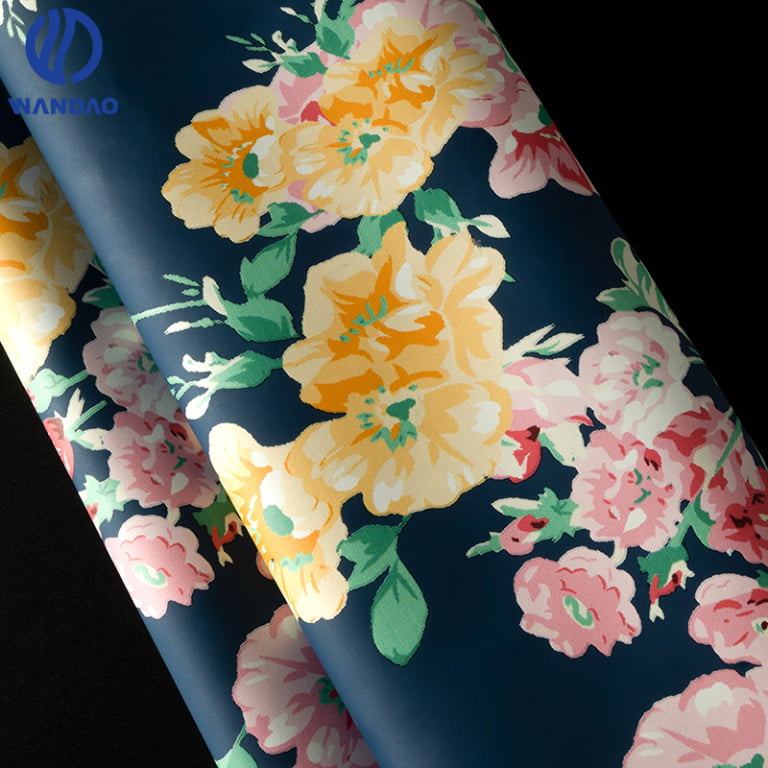
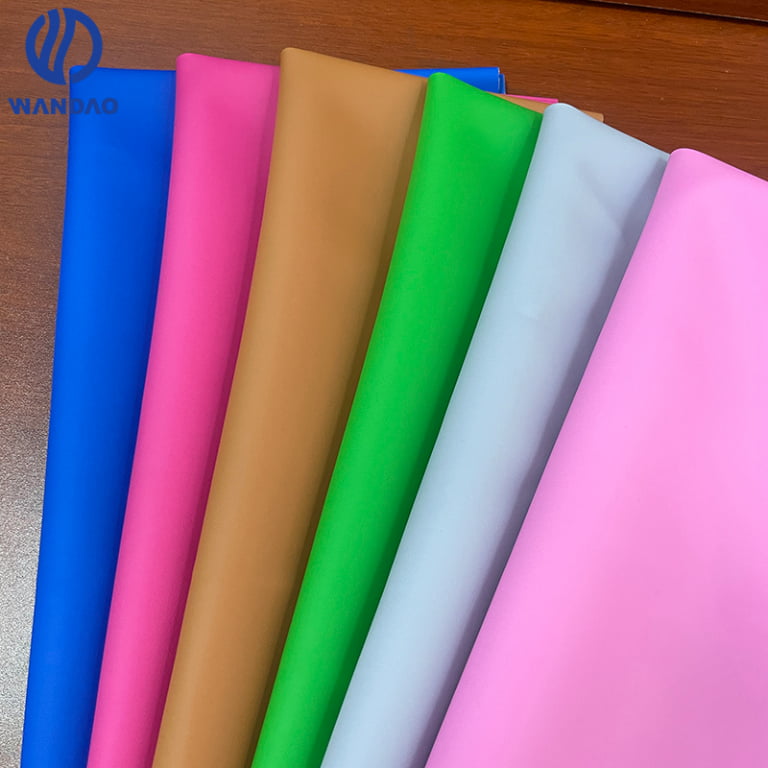
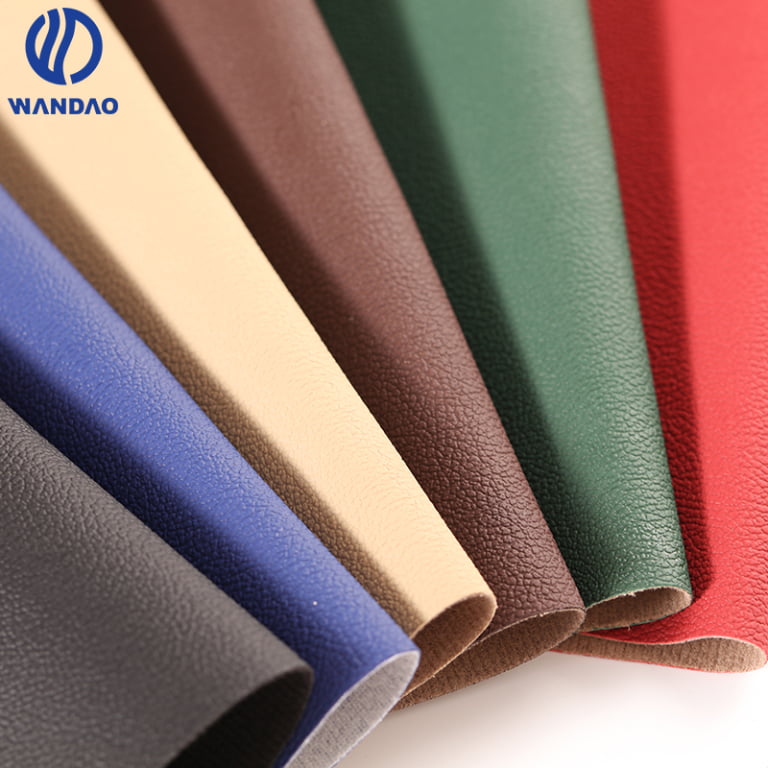
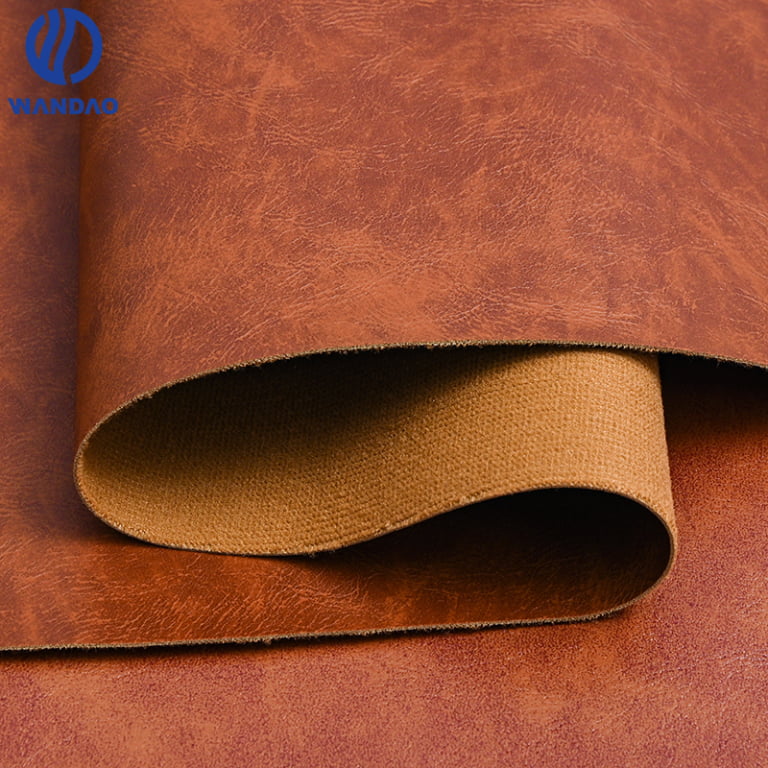
| Appearance | Colour, grain, gloss, matte, litchi, Nappa-style, smooth, printed effect | Controls the sample and makes later substitutions easier to detect. |
| Quantity | Trial, one project, repeat programme, bulk requirement | Helps decide whether stock, quality sample, or custom development is practical. |
Also state whether the material must be matched to an existing product. If you have a chair, cushion, or material sample, send a clear photograph and, when possible, the physical reference. A supplier can compare colour, grain, gloss, hand feel, backing, thickness, and construction more reliably from a physical sample than from a screen image. If no sample exists, use online reference images to communicate the desired appearance, then ask the supplier to recommend available outdoor-suitable options.
Related PVC Leather Products
PVC Leather for Furniture
Automotive PVC Leather
Office Chair PVC Leather
Action recommendation: Put the application, exposure, location, cleaning method, construction, thickness, colour, grain, backing, and quantity in the first inquiry. Do not ask only for “waterproof outdoor PVC leather.”
How Do UV, Water, Humidity, and Temperature Affect Outdoor PVC?
Outdoor PVC weatherability refers to the ability of the complete coated-fabric and furniture system to retain colour, flexibility, surface integrity, adhesion, and useful appearance under defined environmental exposure.
Sun protection is one of the two most important outdoor controls, together with water management. UV and heat can contribute to fading, gloss change, chalking, surface crazing, embrittlement, and plasticizer-related changes. PVC itself is not automatically UV-stable; the pigment, stabilizer package, topcoat, coating thickness, backing, and exposure geometry matter. Dark colours can also absorb more heat, so a colour approval should consider the actual outdoor location rather than indoor lighting alone.
Water resistance must be separated into face resistance, hydrostatic resistance, seam resistance, and whole-cushion drainage. A PVC face may resist rain or a damp cloth while water enters through stitching, zippers, piping, staples, cut edges, or damaged coating. Once water is trapped in foam or backing, mildew and odor risks can remain even if the face dries quickly.
Humidity and heat can accelerate failure in different layers. PVC does not undergo the same ester-hydrolysis mechanism as many polyester-based PU coatings, but the backing, adhesive, foam, topcoat, and plasticizer system can still age. If the material contains a PU topcoat or hybrid layer, request a relevant humidity/heat qualification. Do not use “PVC is hydrolysis resistant” as a reason to skip adhesion, flex, heat-aging, or cleaning tests.
| Exposure | Possible outdoor effect | Evidence to request |
|---|---|---|
| Direct UV and sunlight | Fading, gloss loss, chalking, surface crazing, embrittlement | ASTM G154, ASTM D4329, ISO 4892, or AATCC/ISO lightfastness report with lamp, cycle, duration, and endpoint. |
| Rain and standing moisture | Water entry at seams, wicking, backing/foam wetting, mildew, delamination | Hydrostatic or water-penetration method, seam test, drainage design, and whole-cushion trial. |
| Heat and humidity | Plasticizer migration, tack, softening, adhesive failure, PU hydrolysis, odor | Heat/humidity exposure, post-aging adhesion and flex, chemical compatibility, and material-layer disclosure. |
| Cold storage or winter use | Stiffening, cracking during unrolling, corner damage, brittle seams | Low-temperature bend or cold-crack method, target temperature, conditioning time, and failure criterion. |
| Salt or chlorine | Deposits, colour change, surface attack, cleaner interaction, hardware corrosion around the assembly | Salt-water colourfastness, chlorine/cleaner exposure, rinse instructions, and actual seam/cushion review. |
[Intertek accelerated-weathering guidance] states that accelerated-weathering duration cannot be directly correlated with actual outdoor exposure duration. Therefore, a statement such as “1,000 hours equals ten years outdoors” is not justified without location-specific correlation data.
For a product-specific reference, a marine PVC data sheet reports 650 QUV hours, ASTM G21 fungal-resistance pass, and cold-crack performance at −20 °F/−29 °C. [Published marine-vinyl technical data] These values are manufacturer claims for that named construction, not universal outdoor PVC requirements.
Action recommendation: Require a weathering report that names the lamp, irradiance, wet cycle, temperature, duration, specimen orientation, colour metric, cracking criterion, and adhesion or strength retention. Never approve outdoor PVC from a UV-hours number alone.
What Texture, Backing, and Cleaning Method Suit Outdoor Furniture?
Outdoor surface selection refers to choosing grain relief, topcoat, backing, and cleaning method together so that the material remains attractive and manageable under outdoor soil and moisture exposure.
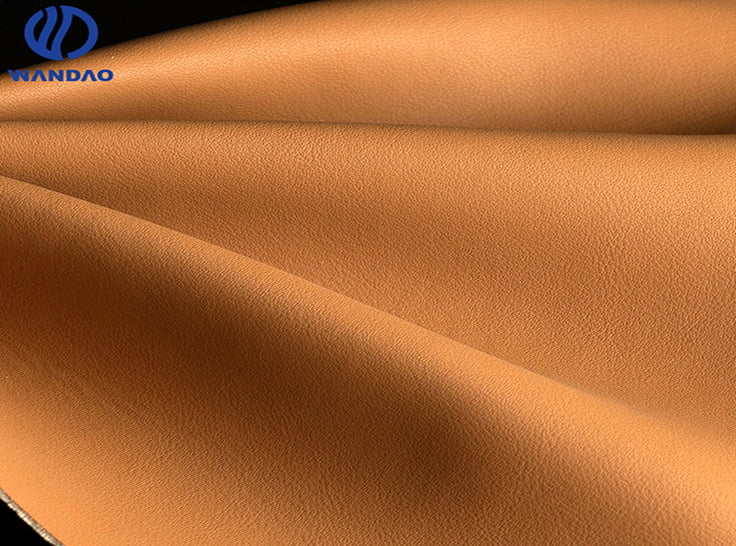
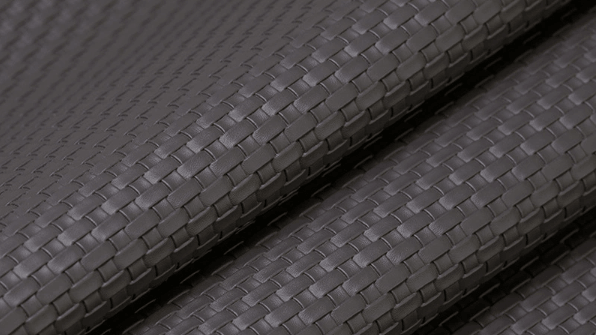
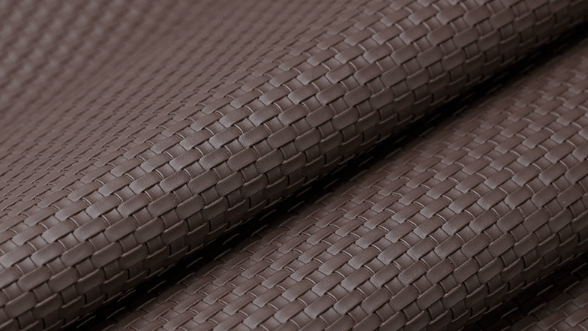
For outdoor furniture that must be cleaned regularly, a smooth or low-relief grain is often easier to wipe and rinse than a deep emboss. Litchi or pebble grain can provide a stronger leather appearance, but its valleys may retain dirt, sunscreen, food residue, salt, or cleaning liquid. Fine grain can offer a quieter appearance and easier inspection of surface condition. The correct texture is a balance between design and maintenance, not simply the deepest or most natural-looking grain.
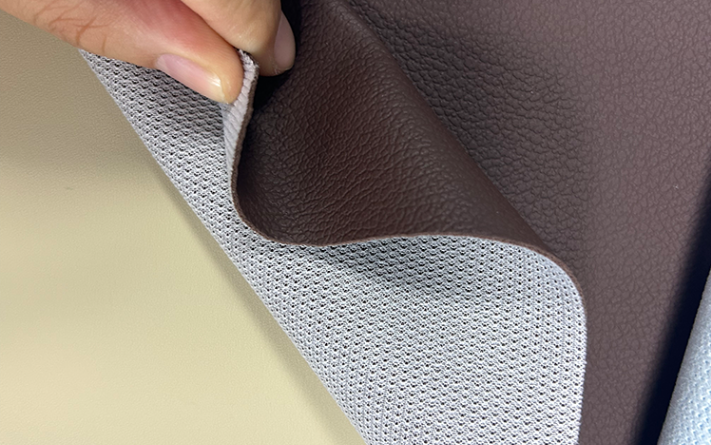
Backing selection depends on furniture shape and water management. A polyester knit can help wrap rounded cushions and curved frames, while a stable woven or reinforced backing can support taut panels and attachment zones. Nonwoven or foam-backed constructions should be used outdoors only when the supplier has qualified the complete assembly, because water retention, drying time, edge stability, and delamination may be different.
Cleaning should begin with the least aggressive approved method. A marine-vinyl guide may specify mild soap, water, rinsing, and restrictions on solvents or abrasive products. [Marine-vinyl cleaning guidance] Another product may permit a defined bleach solution. These are product-specific instructions, not a universal rule for every PVC finish. Obtain the supplier’s care sheet for the exact colour, topcoat, grain, and backing.
| Outdoor furniture condition | Surface direction | Backing direction | Cleaning control |
|---|---|---|---|
| Covered patio chair | Fine or light grain; matte or satin | Knit or light woven matched to chair curve | Soap/water, rinse, drying, and occasional stain test. |
| Fully exposed terrace seating | Low-relief protective finish | Stable knit or woven with controlled seams and drainage | Weathering, food/oil, sunscreen, cleaner, UV, and mildew validation. |
| Poolside or resort furniture | Smooth or shallow grain; low-tack topcoat | Outdoor or marine-grade backing | Chlorine, sunscreen, disinfectant, rinse, and repeated-wipe compatibility. |
| Coastal or marine seating | Marine-grade surface with documented weathering | Filament knit or reinforced construction as appropriate | Salt-water, mildew, UV, cold crack, cleaning, seam, and drainage tests. |
| Outdoor healthcare or public seating | Smooth, low-porosity, easy-to-inspect surface | Stable construction that preserves seam and barrier integrity | Exact disinfectant list, concentration, dwell, cycles, and post-exposure adhesion. |
For surface testing, ask whether the supplier can provide chemical resistance, stain, coating adhesion, flex, and abrasion data on the finished material. [ASTM D751] includes coated-fabric methods for mass, thickness, strength, tear, adhesion, low-temperature cracking, heat aging, blocking, and related properties. A weathering report should be combined with these tests when outdoor use is intended.
Action recommendation: Select the surface grain only after a cleaning trial. Use the actual outdoor soil and chemicals, and inspect the grain valleys, seams, piping, underside, and backing—not just the clean centre of a flat swatch.
How Should Large-Quantity Buyers Handle Samples and MOQ?
Outdoor PVC sampling refers to confirming an existing quality construction or a production-representative sample before ordering material in the quantity needed for the furniture programme.
Large PVC production may not accept a customer’s complete custom sample in the same way as a small sewn product. PVC coating and embossing lines use large equipment, dedicated rollers, release carriers, ovens, finishing stations, and production quantities. Making a one-off custom piece can require setting up the same process used for bulk production, which may not be practical for a small sample request.
This does not mean the buyer must order blindly. Ask the supplier for an existing quality sample, A4 swatch, colour card, cutting sample, roll sample, or a production-representative sample from the closest available construction. Request the technical data sheet and care guide at the same time. If the project needs an exact custom colour, grain, backing, or finish, confirm the development route, tooling, MOQ, sample charge, and approval stages before production.
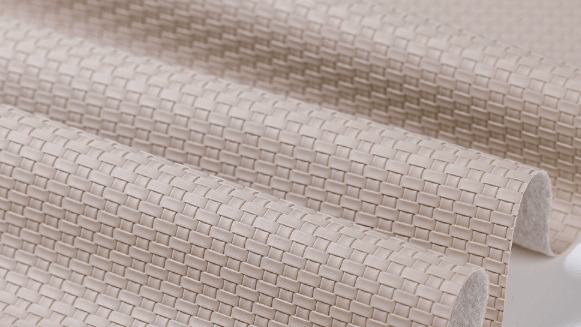
For the project procurement model described here, PVC custom orders commonly use a MOQ of about 1,000 metres. This is a supplier/project planning condition, not a universal PVC industry standard. The actual minimum can vary with colour, emboss, surface finish, backing, production schedule, and whether an existing stock construction can be used. If a special style can be produced from around 500 metres, record that exception in the quotation rather than assuming it applies to every design.
Recommended sampling sequence
- Describe the application: state patio, outdoor dining, resort, marine, poolside, healthcare, or contract use.
- Provide references: send a product photograph, online style image, physical sample, colour target, grain reference, or written brief.
- Review the quality sample: check colour, grain, gloss, hand, thickness, backing, surface cleanliness, and obvious defects.
- Request evidence: ask for UV/weathering, mildew, cold-flex, adhesion, abrasion, chemical, and cleaning data matched to the proposed construction.
- Run an application trial: sew or upholster a representative cushion or panel using the actual foam, thread, piping, seam, zipper, staple, and drainage design.
- Approve the control: retain the signed sample and write the exact material, colour, grain, backing, finish, thickness, width, and lot requirements into the purchase order.
When reviewing a supplier, an independent website or marketplace account can help you assess product communication and application range. It does not replace a physical sample, test report, production information, or traceability. A supplier that can explain why an existing quality sample is appropriate—and clearly states what still needs testing—offers a more useful basis for an outdoor project than one that promises “all-weather” without conditions.
Action recommendation: For a large order, approve the closest quality sample first, then request a production-representative roll or development sample only when the project requires a new construction. Confirm the approximately 1,000-metre PVC MOQ and any 500-metre special-style exception in writing before committing.
What Should Be Written in an Outdoor PVC Leather Purchase Specification?
An outdoor PVC purchase specification refers to the written construction, performance, sample, cleaning, packaging, and warranty requirements that make the supplier’s proposal auditable.
| Specification field | What to write | Why it matters |
|---|---|---|
| Application and exposure | Covered or fully exposed, climate, UV, rain, salt, chlorine, temperature, storage, and cleaning | Defines the environmental test package. |
| Material construction | PVC face, solid/expanded layers, topcoat, backing, adhesive, foam, total thickness, mass, usable width | Prevents substitutions that look similar but weather differently. |
| Appearance | Physical colour master, grain/emboss code, gloss target, repeat direction, and acceptable variation | Controls appearance under outdoor light and between lots. |
| Weathering | ASTM G154/G4329, ISO 4892, ISO 105, or another named method with lamp, cycle, duration, and endpoints | UV hours without conditions cannot be compared. |
| Water and biological performance | Hydrostatic/water test, seam or cushion trial, ASTM G21 fungal test where relevant | Connects face resistance to actual drainage and mildew risk. |
| Mechanical performance | Tensile, tear, coating adhesion, seam/tack tear, flex, blocking, and cold crack | Targets failures at edges, corners, stitches, and interfaces. |
| Cleaning | Named soap, detergent, bleach/chlorine, alcohol, disinfectant, degreaser, concentration, dwell, rinse, and cycles | Prevents generic “cleanable” claims from hiding chemical incompatibility. |
| Commercial terms | Stock versus custom, MOQ, price unit, tooling, sample, lead time, packaging, warranty, and replenishment | Clarifies the real project cost and supply risk. |
A current marine-vinyl product example reports 650 QUV hours, ASTM G21 fungal-resistance pass, and −20 °F/−29 °C cold crack for its named construction. [Marine-vinyl product data sheet] Use such data as a benchmark for the type of evidence a supplier should provide, not as a guarantee for a different PVC face, backing, colour, or topcoat.
For outdoor upholstery, warranty language is also important. Ask whether the warranty covers loss of colour, cracking, delamination, strength, mildew, topcoat failure, and cleaning damage, and whether it applies to fully exposed use or only protected conditions. A warranty is product-specific evidence and should not be converted into a universal service-life prediction.
Action recommendation: Make outdoor approval conditional on a named weathering method, water-management review, mildew/cold/adhesion evidence, exact cleaning protocol, physical control sample, and written warranty scope. If the supplier cannot provide those items, treat the material as an indoor sample—not an approved outdoor construction.
Frequently Asked Questions
UV and water-management performance are two of the most important requirements. Specify weathering, colour retention, cracking, adhesion, water penetration, seams, backing, drainage, and cleaning rather than relying on the word “outdoor.”
Not automatically. Ordinary indoor PVC may not have the UV, mildew, cold-flex, salt, chlorine, or heat-aging evidence needed outdoors. Ask for an exterior or marine qualification on the exact face, backing, topcoat, colour, and construction.
Tell the supplier the furniture type, country or climate, covered or exposed location, sunlight, rain, salt or chlorine exposure, cleaning chemicals, thickness, colour, grain, backing, quantity, and whether you have a product photograph or physical reference.
PVC coating, printing, embossing, and finishing use large, process-dependent equipment, so a one-off custom sample may not be practical for a small request. Ask for an existing quality sample, swatch, or production-representative sample, and confirm the custom-development route before bulk production.
For the procurement model described here, ordinary PVC custom orders commonly start around 1,000 metres, while some special styles may be available from around 500 metres. These are supplier- and project-specific conditions, not universal industry standards. Confirm them in writing by colour, grain, backing, and finish.
Begin with the supplier-approved mild soap or neutral cleaner, rinse when instructed, and dry the assembly. Do not assume bleach, alcohol, degreasers, solvents, abrasive pads, or pressure washing are safe. Request a product-specific care guide and test the actual cleaning routine before approval.