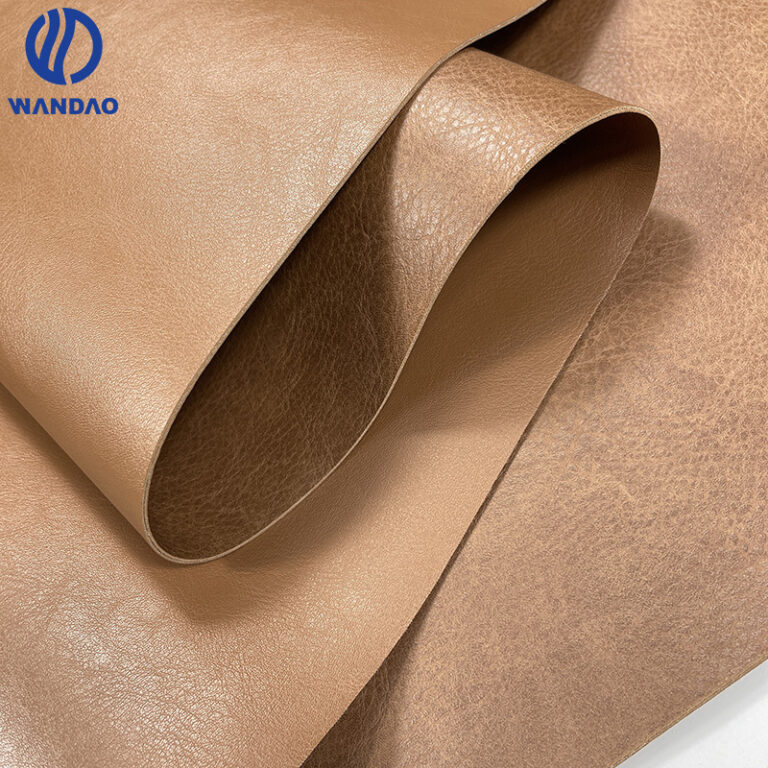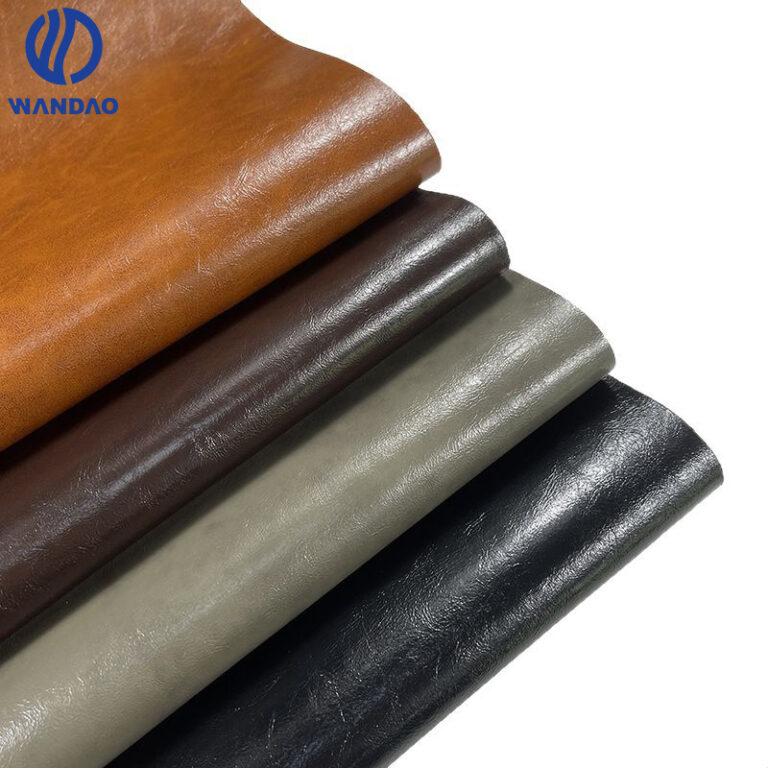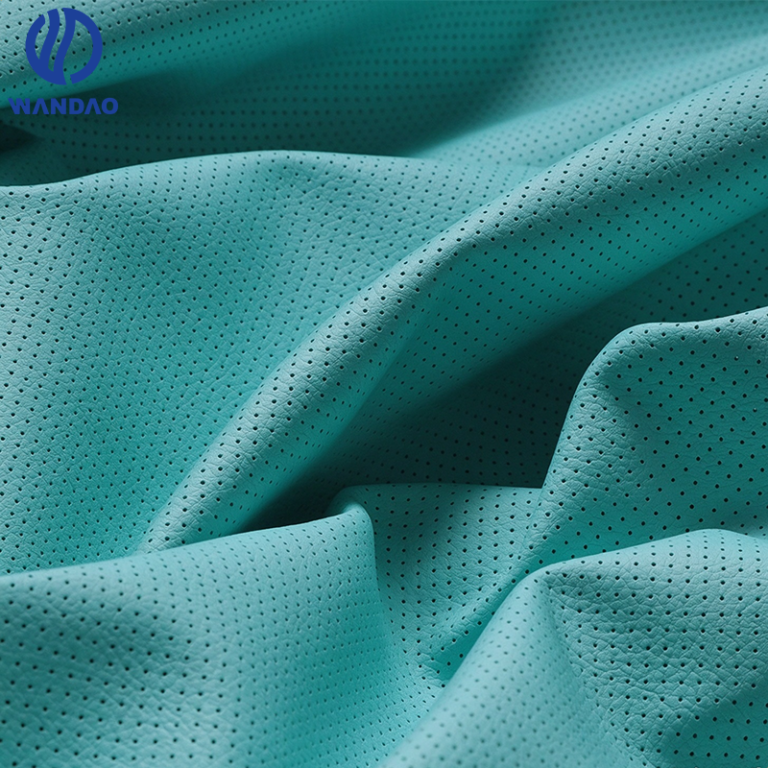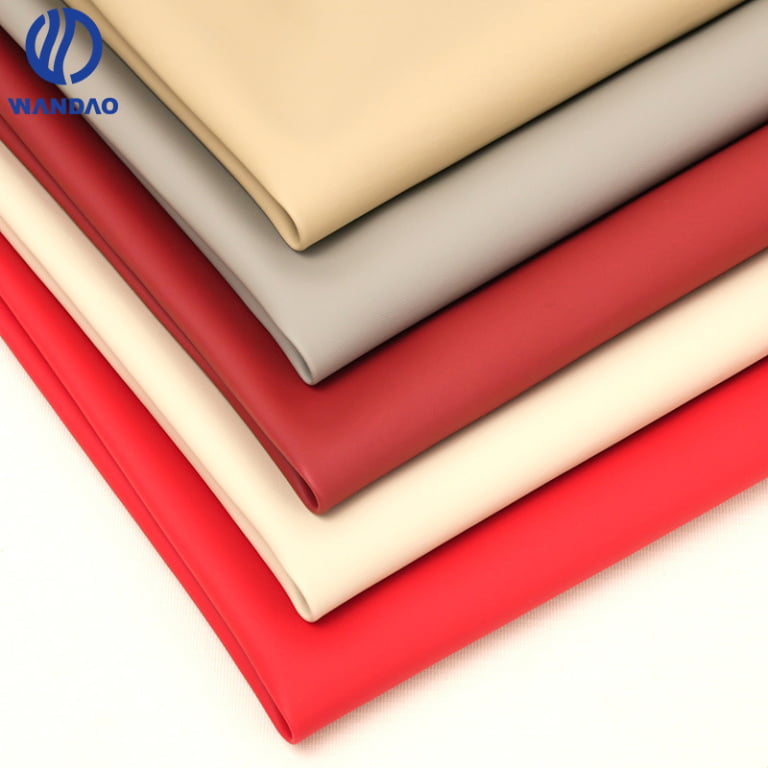
PVC Leather for High-Use Sofas
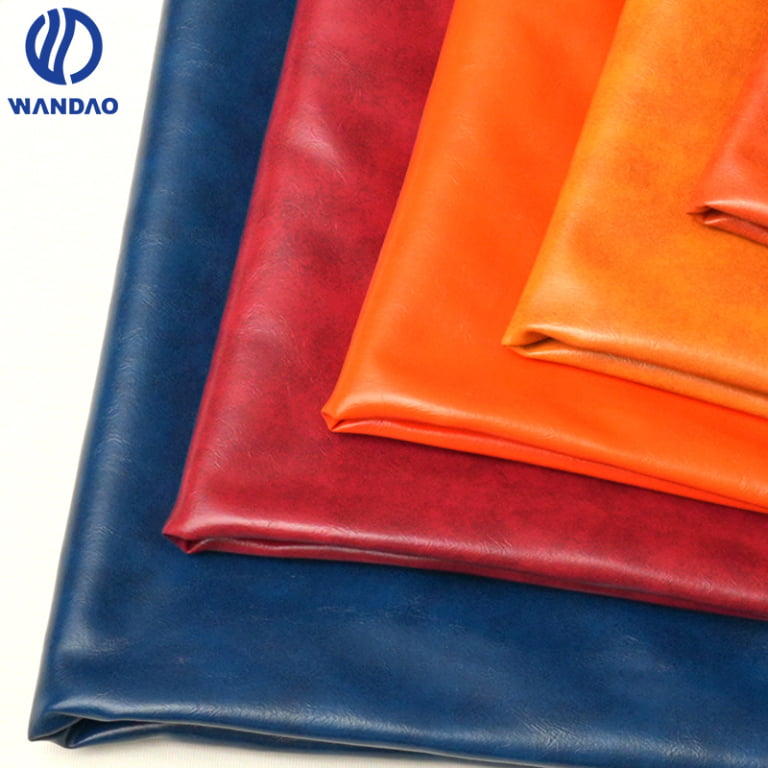
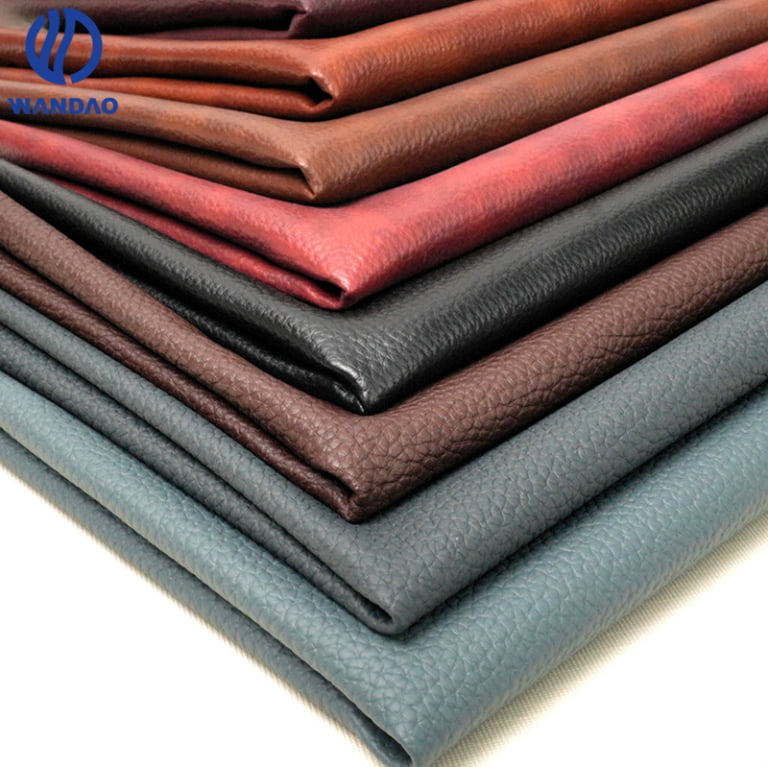
PVC leather for high-use sofas refers to a multilayer coated upholstery material designed to combine a protective surface, a flexible PVC body, and a textile backing for repeated seating and cleaning.
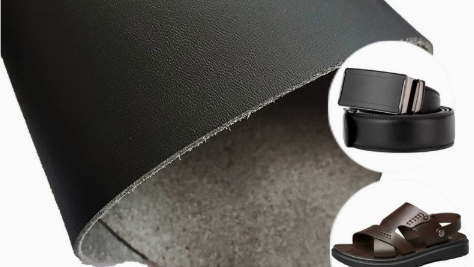
A typical PVC upholstery construction includes a surface-effect or protective topcoat, a compact PVC skin, a foamed PVC intermediate layer, an adhesive or tie layer, and a woven, knitted, or nonwoven backing. Each layer performs a different function. The surface layer influences stain release, gloss, scratch appearance, and chemical resistance. The compact skin protects the backing from direct rubbing and liquid penetration. The foam layer affects softness and bulk, while the backing carries much of the tensile and tear load. This multilayer structure is also described in peer-reviewed research on PVC artificial leather. [Peer-reviewed PVC leather study]
This structure explains why PVC is commonly considered for restaurants, hotels, waiting areas, healthcare furniture, office lounges, cinemas, and rental properties. These applications do not only create abrasion. They also create contamination and maintenance pressure. A sofa in a waiting room may be wiped several times a day. A restaurant booth may be exposed to oil, sauces, alcohol-based cleaners, and repeated friction at the seat edge. A rental sofa may need to look acceptable after multiple occupants without a high maintenance budget.
The continuous PVC surface is generally less porous than textile upholstery and can prevent many liquids and soils from reaching the textile backing. This makes routine wiping easier. It also reduces the risk that stains will become embedded in the base fabric. However, easy cleaning does not mean that every cleaner is safe. Strong solvents, concentrated oxidizers, prolonged alcohol exposure, and aggressive disinfectants can still change gloss, extract plasticizer, soften the surface, or damage the topcoat.
PVC also has an important distinction compared with conventional polyurethane coatings. The PVC body is not normally affected by the same hydrolysis mechanism that can break down some polyurethane coatings. The Association for Contract Textiles states that hydrolysis does not affect PVC-based fabrics, although a polyurethane topcoat applied over PVC may still be vulnerable. [Association for Contract Textiles]
This does not make PVC immune to aging. PVC upholstery can still experience plasticizer migration, loss of flexibility, heat aging, UV-related embrittlement, cold cracking, adhesive failure, and surface discoloration. In other words, PVC removes one major failure mechanism, but it does not remove the need for formulation control and aging validation.
Action recommendation
Define the sofa’s cleaning frequency, climate, user contact, and expected traffic level before selecting PVC. Do not approve a material based only on the words “PVC leather” or on a single abrasion number.
The Performance Benefits of PVC
The performance benefits of PVC leather refer to its ability to provide a wipe-clean surface, resistance to liquid penetration, chemical tolerance, and stable performance in applications where hydrolysis is a major concern.
For high-use sofas, the first benefit is cleanability. A compact PVC surface can limit the penetration of water, food residue, grease, and body oils. This is especially useful for restaurant seating, healthcare waiting areas, hotel furniture, and public seating. The surface may be cleaned with a soft cloth and a compatible mild detergent without requiring the conditioning routines associated with some porous materials.
The second benefit is resistance to moisture-related damage. PU leather can be highly durable, but polyester-based PU systems may be vulnerable to hydrolysis under heat and humidity. PVC itself does not normally fail through that specific mechanism. This is why PVC is often considered for tropical climates, humid interiors, and furniture that must be disinfected regularly. The Association for Contract Textiles recommends ISO 1419 Method C for hydrolysis evaluation of PU-coated upholstery. Its guidance describes exposure at 70°C and at least 95% relative humidity, with weekly visual checks for cracking, flaking, and delamination. [Association for Contract Textiles]
The same source also emphasizes that an accelerated hydrolysis result cannot be converted directly into a number of years in field service. A five-week laboratory result is not automatically equal to five years of sofa use. That limitation is important when buyers compare PVC and PU materials.
The third benefit is chemical resistance. PVC can tolerate many water-based contaminants, mild detergents, and selected commercial cleaning products. In contrast, repeated alcohol or bleach exposure can be more aggressive toward some PU topcoats. The actual outcome still depends on the formulation and the cleaner. A supplier’s chemical-resistance chart is not enough if it does not represent the exact product, color, topcoat, and production batch.
The fourth benefit is cost control. Research materials in the supplied study indicate that PU leather may carry a price premium over PVC, but the exact difference depends on thickness, backing, surface treatment, order volume, and market conditions. A low-cost PVC may not be cheaper over the life of a sofa if it cracks, becomes tacky, or fails through poor adhesion. Conversely, a high-specification PVC can be economically attractive when the project values cleanability, stable supply, and lower initial material cost.
For abrasion, buyers should be careful with headline figures. The Association for Contract Textiles provides a voluntary guideline of 50,000 Wyzenbeek double rubs for high-traffic or public-space coated fabrics. [Association for Contract Textiles] ASTM D4966 covers Martindale abrasion testing and warns that abradant, pressure, tension, specimen deformation, and laboratory variation affect the result. Abrasion cycles should not be treated as a direct prediction of field life. [ASTM International]
My own observation is consistent with this limitation. In a small comparative upholstery trial, I wiped PVC and PU samples with a mild detergent solution, rinsed them, and allowed them to dry between cycles. The PVC sample recovered its original surface appearance more easily after oil and food-contact contamination, while the PU sample felt more sensitive to repeated rubbing and showed a greater change in surface feel after aggressive cleaning. This was a practical observation, not a controlled laboratory test, so I would not use it to assign a service-life value or replace formal chemical-resistance testing.
Action recommendation
Use PVC when moisture, cleaning, and chemical exposure are more important than maximum breathability. Validate the actual cleaning agents and do not convert abrasion or hydrolysis results directly into years of service.
PVC Compared With PU Leather
The PVC-versus-PU decision refers to matching the polymer system to the sofa’s balance of durability, comfort, appearance, cleaning requirements, and regulatory performance.
PVC is usually stronger as a practical choice when the sofa faces repeated spills, frequent wiping, high humidity, and aggressive use. PU is often more attractive when buyers prioritize a softer hand, better drape, lower surface heat, and a more leather-like tactile experience. Neither material should be selected from the polymer name alone.
| Selection factor | PVC leather | PU leather | Procurement interpretation |
|---|---|---|---|
| Cleanability | Generally strong because of the continuous, relatively nonporous surface. | Good, but performance depends strongly on the topcoat and surface texture. | Choose based on the actual stain and cleaning protocol. |
| Hydrolysis | The PVC body is not normally affected by PU-type hydrolysis. | Polyester-based PU can be vulnerable under heat and humidity. | Request ISO 1419 data when PU is used. |
| Hand feel | Can feel firmer, warmer, or more synthetic during extended contact. | Often softer and more leather-like. | Evaluate after sewing and foam assembly, not only as a flat swatch. |
| Breathability | Continuous films generally provide lower air and moisture permeability. | Microporous or specially engineered constructions can provide better breathability. | Use PU where long-duration body contact is a major comfort factor. |
| Low-temperature behavior | Depends on plasticizer selection and coating formulation; poor formulations may stiffen or crack. | Depends on resin chemistry and construction. | Require cold-flex or cold-crack testing for cold climates. |
| Chemical exposure | Often more tolerant of routine cleaning, but strong chemicals can still damage it. | More sensitive to repeated alcohol, bleach, and aggressive disinfectant exposure in some systems. | Test the exact chemical, concentration, contact time, and number of cycles. |
| Environmental profile | Phthalate-free and compliant formulations are available, but PVC remains a chlorine-based polymer. | May use water-based systems, but PU is still dependent on petrochemical feedstocks and may involve solvent-related concerns. | Compare the complete formulation and life-cycle evidence, not marketing claims. |
Higher abrasion resistance does not automatically mean longer service life. Abrasion tests measure rubbing under controlled laboratory conditions. They do not fully simulate hydrolysis, UV exposure, plasticizer migration, cold cracking, repeated flexing, seam stress, foam compression, or chemical cleaning. The Association for Contract Textiles explicitly warns that accelerated test results do not provide a direct field-life correlation. [Association for Contract Textiles]
The same caution applies to test methods. Martindale, Wyzenbeek, Taber, tensile, tear, seam, and peel tests measure different failure mechanisms. ASTM D4966 and ASTM D4157 should not be treated as interchangeable abrasion methods. A high Martindale result cannot be converted into a precise Wyzenbeek result without validated correlation data.
Construction quality can also outweigh the material category. A PVC leather with excessive foaming, weak interlayer adhesion, pinholes, poor fusion, or unstable plasticizer performance may fail before a properly engineered PU material. Similarly, a premium PU may outperform a low-grade PVC in flex resistance, appearance retention, and tactile comfort.
Action recommendation
Compare PVC and PU using the same test method, same backing type, same thickness range, same conditioning, and the same cleaning protocol. Never compare isolated supplier numbers as if they were equivalent.
PVC Specification for Sofa Production
A PVC sofa specification refers to a complete material and performance document that defines construction, dimensions, physical properties, chemical resistance, appearance, and compliance requirements.
Thickness should be specified as total thickness and, where relevant, compact-skin thickness. Increasing compact-skin thickness may improve wear-through resistance because more material must be removed before the backing becomes exposed. However, excessive thickness can reduce softness, drape, weldability, and flex performance. Thickness should therefore be selected together with foam structure, backing strength, and the sofa’s design radius.
Backing fabric is equally important. A stable woven or knitted backing can improve dimensional control and help carry tensile and tear loads. This is an engineering interpretation of composite load transfer, not a universal pass/fail rule. The backing should be checked for tensile strength, tear strength, seam performance, elongation, and adhesion to the PVC coating.
For commercial upholstery, the buyer should define an abrasion method and endpoint rather than writing only “high abrasion.” The specification should state whether testing uses Martindale, Wyzenbeek, Taber, or another agreed method. ASTM International notes that test conditions strongly influence abrasion results. [ASTM International]
For cleaning performance, the specification should include the actual chemicals used by the customer. A useful test plan may include mild detergent, quaternary ammonium cleaner, alcohol-based cleaner, diluted bleach where relevant, and hydrogen-peroxide-based products. The acceptance criteria should define maximum color change, gloss change, tackiness, softening, cracking, crazing, bubbling, and delamination.
For flame performance, specify the destination market and finished furniture construction. California TB117-2013 is a smolder-resistance requirement for upholstered furniture components and assemblies. The test involves the cover, filling, barrier, and construction rather than the leather material alone. [U.S. Consumer Product Safety Commission]
For European projects, buyers may use EN 1021-1 and EN 1021-2 as part of the furniture safety evaluation. For UK domestic furniture, the applicable furniture fire-safety requirements should be reviewed separately because the cover, filling, composite, and labeling requirements are not identical to those in the United States.
Chemical documentation should include restricted-substance declarations and test reports for phthalates, heavy metals, relevant flame retardants, VOCs, odor, and other customer-specific substances. RoHS should not be applied automatically to ordinary sofa upholstery because it is primarily an electrical and electronic equipment restriction. It may become relevant when the furniture includes integrated electrical components.
A practical incoming-inspection plan should check roll width, thickness, weight, surface appearance, color consistency, backing defects, odor, coating adhesion, and packaging. Retain production swatches by lot and compare new deliveries against an approved master sample under controlled lighting. Visual approval alone is not sufficient for color-sensitive programs.
Action recommendation
Write the RFQ around measurable properties: thickness tolerance, effective width, backing construction, abrasion method, peel strength, tear strength, cleaning chemicals, flame standard, restricted substances, color tolerance, and lot-traceability requirements.
When PVC Is the Right Choice
PVC is the right choice when a sofa requires a practical balance of cleanability, moisture resistance, chemical tolerance, production cost, and repeatable performance under frequent use.
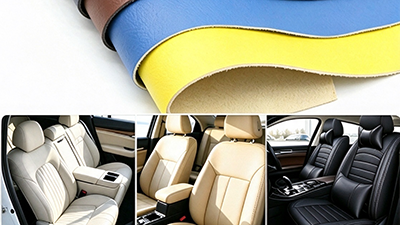
PVC is usually a strong candidate for restaurant booths, hotel lobby sofas, rental apartments, office reception areas, cinemas, healthcare waiting rooms, elderly-care furniture, and other seating exposed to regular contamination or cleaning. In these applications, a slightly less breathable surface may be acceptable because the primary risks are staining, disinfectant exposure, vandalism, and high replacement cost.
PVC is also useful when the product line needs stable visual consistency across large production volumes. Continuous roll goods can support repeatable cutting and pattern direction. However, this advantage depends on supplier process control. Color, embossing, gloss, hand feel, width, and coating weight can still vary between batches.
PVC is not automatically the best choice for residential sofas. If the sofa is used for long periods in a hot climate, comfort and breathability may be more important than chemical resistance. PU, microfiber, or other engineered materials may provide a softer hand and better extended-contact comfort. PVC may also be unsuitable when a project has strict sustainability requirements that reject chlorine-based materials or when the buyer requires a specific environmental certification not available for the selected PVC grade.
PVC may also be the wrong material when the design includes tight curves, extreme stretching, frequent folding, or very low-temperature use without adequate formulation validation. A material that performs well on a flat seat panel may crack or whiten when wrapped around a sharp radius. Sample approval must therefore include sewing, stretching, foam assembly, edge wrapping, and repeated flexing.
For children’s furniture, the decision should be based on the required chemical and safety profile rather than a general preference for PVC or PU. The buyer should specify phthalate restrictions, heavy-metal limits, odor, emissions, flammability, and any required certification. A material’s polymer category does not prove that it is suitable for children’s products.
The best selection process is application-specific:
| Application | Preferred direction | Main reason |
|---|---|---|
| Restaurant and food-service seating | PVC | Stain release, wipe cleaning, and chemical-resistance potential. |
| Hotel lobby and public waiting areas | PVC or high-performance PU | Choose based on cleaning frequency, comfort expectations, and flame requirements. |
| Residential living-room sofa | PU, microfiber, or PVC depending on use | Comfort and appearance may outweigh maximum chemical resistance. |
| Healthcare waiting furniture | Healthcare-grade PVC or validated alternative | Disinfectant compatibility and impervious cleanability are central requirements. |
| Long-duration office seating | PU or breathable construction | Heat, softness, and moisture comfort may be more important than maximum wipe resistance. |
| Humid rental housing | PVC or hydrolysis-resistant PU | Moisture exposure, cleaning, and replacement cost should drive the decision. |
The practical conclusion is simple: PVC leather is a strong material choice for high-use sofas when the operating environment rewards cleanability, moisture resistance, chemical tolerance, and cost control. It becomes a weak choice when comfort, breathability, low-temperature flexibility, or a specific sustainability requirement dominates the project.
Action recommendation
Choose PVC for high-use furniture only after validating the complete finished sofa: upholstery construction, foam, seams, cleaning chemicals, flame performance, color stability, and aging behavior.
FAQ
Q: Is PVC leather durable enough for a high-use sofa?
A: It can be, provided the construction has adequate coating thickness, stable plasticizer performance, strong backing, reliable interlayer adhesion, and application-specific abrasion and flex results. PVC should not be approved from the polymer name alone.
Q: Is PVC leather better than PU leather for sofas?
A: PVC is generally more suitable when cleaning, moisture, chemical exposure, and cost control are the main priorities. PU may be preferable when softness, breathability, drape, and extended-contact comfort are more important.
Q: Does PVC leather crack over time?
A: PVC can crack if plasticizer migrates, the material is exposed to heat or UV, the formulation is poorly balanced, or the surface is repeatedly damaged by unsuitable chemicals. Cracking is formulation- and environment-dependent, not an unavoidable result of using PVC.
Q: Can PVC leather be disinfected regularly?
A: Many PVC upholstery materials are suitable for routine cleaning and selected disinfectants, but the exact chemical, concentration, contact time, and cleaning frequency must be validated. Repeated exposure to strong alcohol, bleach, solvents, or oxidizers can still cause discoloration, tackiness, softening, or coating damage.
Q: Does a high abrasion rating prove that a PVC sofa will last longer?
A: No. Abrasion resistance measures one type of mechanical wear. It does not predict the effects of UV exposure, plasticizer migration, hydrolysis of a PU topcoat, chemical cleaning, cold cracking, seam stress, or foam compression.
Q: What should buyers request before approving PVC sofa upholstery?
A: Request the complete construction specification, thickness and width tolerances, backing details, abrasion method, peel and tear results, flex and aging data, cleaning-chemical compatibility, flame test reports, restricted-substance documentation, color-control records, lot traceability, and a sewn-sofa sample.