
Why Is PVC Leather Used for Office Chairs?
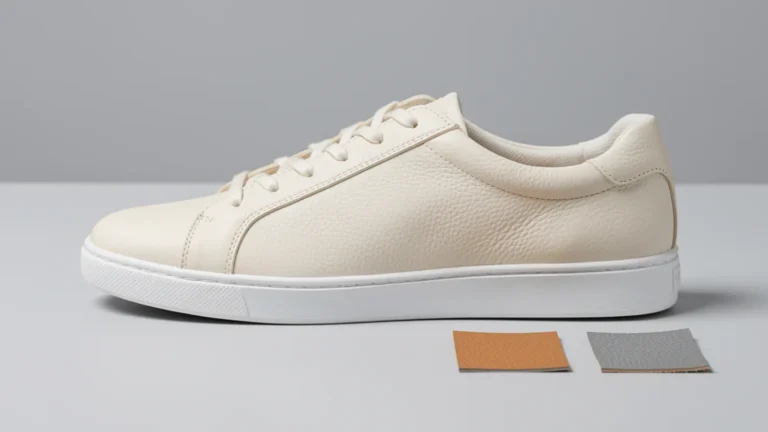
PVC leather for office chairs refers to a PVC-coated or PVC-laminated textile construction selected for the cover of task chairs, conference chairs, executive chairs, visitor seating, or meeting-room furniture.
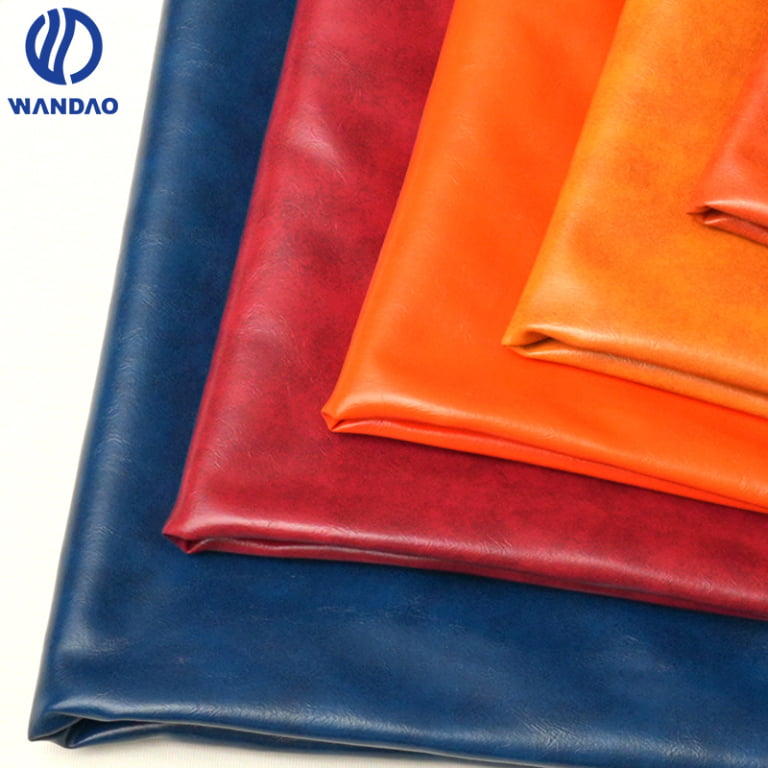
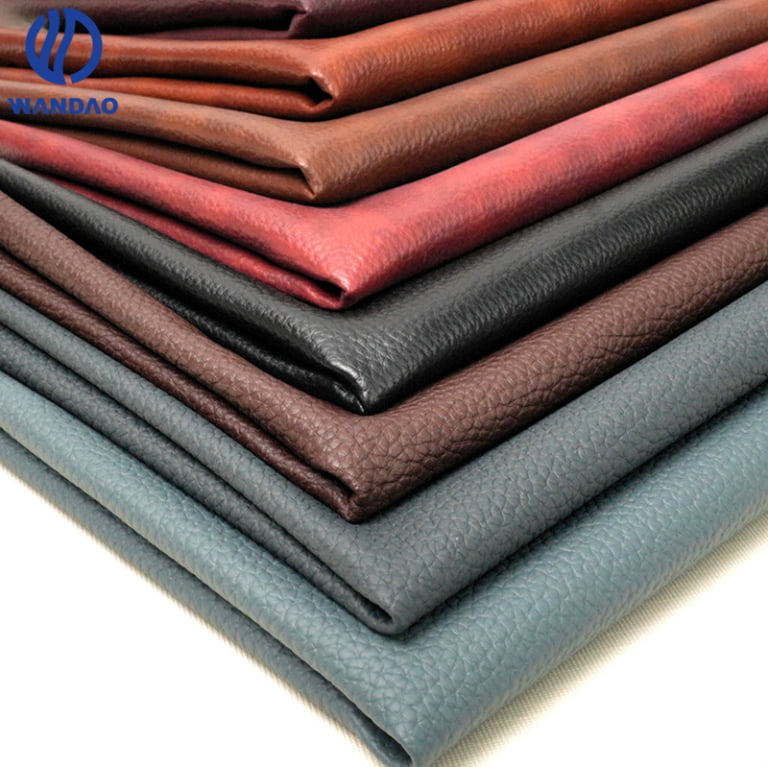
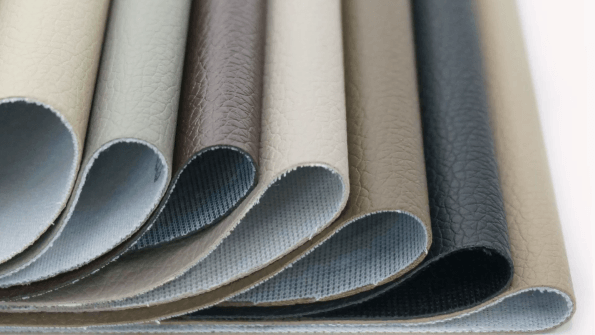
The commercial attraction is straightforward. PVC can provide a relatively consistent roll material, a broad colour and texture range, and a non-porous face that is convenient for routine wiping. This can be useful when a company wants to refresh a meeting room without choosing a higher-cost upholstery construction. A litchi, fine leather, Nappa-style, fabric-look, or subtle embossed surface can change the appearance of a chair collection without changing the chair frame.
“Water-resistant” should be used carefully. A continuous PVC face can resist an incidental surface spill, but a finished chair also has seams, needle holes, piping, staples, zippers, edges, foam, and backing. Liquid can enter through those points even when the face is easy to wipe. If a project needs resistance to liquid penetration, hydrostatic pressure, seam leakage, or disinfectant cleaning, name the exact property and test method instead of relying on the word “waterproof.” [ASTM D751] treats hydrostatic resistance, wicking, coating adhesion, strength, and other coated-fabric properties as separate test areas.
PVC also should not be described as automatically superior to microfiber, PU, silicone, or woven fabric. Premium alternatives may offer a different hand feel, breathability, or environmental profile, while PVC may be more practical where cost, consistent roll supply, and wipe cleaning are the main priorities. The comparison must use the same finished-chair requirements, not only the polymer name.
| Office-chair requirement | Why PVC may be considered | What still needs verification |
|---|---|---|
| Budget-sensitive meeting-room renovation | Roll material and decorative textures can support a refined appearance without requiring a premium upholstery route. | Colour, grain, gloss, total cost, cleaning response, and production yield. |
| Routine coffee and food exposure | A continuous face is convenient for prompt wiping of many everyday surface spills. | Cleaner compatibility, seam protection, liquid path through needle holes, and stain recovery. |
| High-frequency task seating | Commercial PVC constructions can be specified with defined abrasion, flex, adhesion, and seam requirements. | Exact test method, backing, edge loading, flex cracking, and chair mock-up. |
| Decorative office collection | Embossed grain, matte, satin, high-gloss, printed, and two-tone effects are available design directions. | Pattern repeat, gloss variation, print retention, scratch visibility, and lot consistency. |
The Association for Contract Textiles (ACT) identifies 50,000 Wyzenbeek double rubs with a specified abradant as a high-traffic coated-upholstery screening reference. [ACT high-traffic coated-fabric guidance] This is a voluntary selection benchmark, not a statement that every PVC office chair will last a particular number of years.
Action recommendation: Start the inquiry with the chair’s use: task, conference, executive, visitor, meeting-room, or public-facing seating. Then ask for PVC construction and test evidence that matches that use instead of requesting “office-chair PVC” as an undefined category.
What Thickness, Backing, and Weight Should Buyers Specify?
Office-chair PVC thickness and backing specifications refer to the total coated-fabric construction, not only the visible PVC skin.
For an initial office-chair RFQ, a buyer may state a project planning range of 0.8–1.5 mm total thickness when that range reflects the chair geometry, foam, seam, and desired hand. This is a buyer planning range, not a universal ASTM or ISO limit. A thinner construction may be easier to bend and sew, while a thicker construction may provide more body, but neither conclusion proves better durability without testing the exact laminate.
Ask the supplier to distinguish the compact wear skin, any expanded or foam layer, the backing, and the topcoat. A nominal 1.0 mm value can describe very different constructions if one product has a dense face and another obtains much of its caliper from foam. [ISO 7617-1] is a current international reference for PVC-coated knitted fabrics for interior upholstered furniture and references thickness measurement under 2 kPa through the coated-fabric measurement framework. The measurement pressure and method should appear in the technical submittal.
Backing deserves equal attention. A knitted backing can help a cover follow a curved back shell, waterfall seat edge, or sculpted arm pad. A woven backing can provide more controlled dimensional behavior on flat seat panels, straight side bands, or tightly tailored upholstery. Nonwoven and composite constructions may be useful, but their bonding, tear, compression, and seam behavior must be checked separately. “100% polyester backing” is not enough information because polyester can be used in knit, woven, or nonwoven structures.
Backing weight should be reported separately from finished mass. [ISO 2286-2] distinguishes total mass per unit area, coating mass, and substrate-cloth mass. This helps the buyer understand whether a heavy construction is heavy because of the textile, PVC, foam, filler, or adhesive. Total weight alone cannot tell you whether the chair will sew well or retain its shape.
| Specification | What to ask for | Why it matters on an office chair |
|---|---|---|
| Total thickness | Nominal total thickness, test method, pressure, measurement positions, and tolerance | Controls hand, bending, edge build-up, seam handling, and foam read-through. |
| Face construction | Compact skin, expanded PVC, foam layer, topcoat, and coating sequence | Prevents a thick foam layer from being mistaken for a thick wear surface. |
| Backing type | Knitted, woven, nonwoven, scrim, or multilayer; fibre content and construction | Influences stretch, recovery, cutting, needle response, tear, and seam stability. |
| Backing weight | Backing-only GSM plus finished composite GSM | Allows a meaningful comparison of structural support and logistics cost. |
| Usable width | Gross width, minimum usable width, edge loss, roll length, and roll direction | Supports nesting, cutting yield, and consistent chair-panel placement. |
A strong office-chair specification should also state machine and cross-machine directions. A cover can appear visually non-directional while the backing stretches differently in its two principal directions. That difference may affect the fit of left and right back shells, the straightness of a waterfall seam, and the recovery of a seat-front edge.
Action recommendation: Do not approve a thickness or GSM figure in isolation. Require a cross-section description, backing identity, direction-specific data, and a physical sample upholstered over the production foam and chair geometry.
Which Performance Tests Should Office-Chair PVC Meet?
Office-chair PVC performance testing refers to qualifying the cover for the separate failure modes created by sitting, flexing, sewing, cleaning, temperature, and repeated contact.
Thickness is not a durability test. A professional specification should include at least tensile or breaking strength, tear, coating adhesion, tack-tear or seam behavior, abrasion, flex, colourfastness, and cleaning compatibility. Where chairs may be transported or stored in cold conditions, add low-temperature cracking. Where the chair contains a PU layer or PU topcoat that the supplier identifies as humidity-sensitive, request the relevant aging evidence; do not apply a generic “hydrolysis years” claim to all PVC constructions.
| Property | Useful reference | Office-chair purchasing instruction |
|---|---|---|
| Breaking strength | ASTM D751 coated-fabric methods; ASTM D3690 Grade A reference: 244 N in both length and width directions | Report both directions, specimen conditioning, method, and failure mode. A stronger grab result does not automatically mean a stronger seam. |
| Tear strength | ASTM D751 or the agreed tongue/trapezoid method; ASTM D3690 Grade A reference: 27 N length and 22 N width | State the tear geometry. Tongue, trapezoid, and grab results must not be substituted without approval. |
| Coating adhesion | ASTM D751 peel adhesion; ACT and ASTM D3690 reference: 3 lbf/in minimum | Request initial and conditioned adhesion, with the interface identified if failure occurs. |
| Seam or tack tear | ACT coated-fabric guidance: 25 × 25 lbf woven, 30 × 25 lbf knit, 35 × 35 lbf nonwoven/composite | Use the criterion appropriate to the backing and run a production seam with the actual thread, needle, stitch, and foam. |
| Abrasion | ASTM D4157/Wyzenbeek with abradant identified; ACT high-traffic coated-fabric screen: 50,000 double rubs | Record abradant, load, direction, endpoint, and whether the result means noticeable wear, colour change, or coating breakthrough. |
| Flex resistance | ASTM D2097; ACT coated-fabric benchmark: 25,000 cycles without appreciable crazing, cracking, whitening, or delamination | Inspect seat fronts, corners, waterfall edges, and sewn areas; abrasion alone cannot replace flex testing. |
| Cold cracking | ASTM D751 low-temperature procedure or an agreed equivalent | State the actual transport/storage temperature, conditioning time, fold method, and pass criterion. |
| Rubbing colourfastness | ASTM D3690 and AATCC TM8 or ISO 105-X12 as specified | Request dry and wet crocking results, especially for dark colours and frequent-contact chairs. |
| Cleaning and chemicals | ASTM D543, ASTM D1308, ACT TM 1-2020, or an agreed repeated-wipe protocol | Name coffee, food oils, ink, hand sanitizer, detergent, disinfectant, concentration, dwell time, wipe cycles, and visual pass criteria. |
ACT’s coated-fabric guidance is valuable because it separates properties that buyers often combine into “durability.” Its abrasion guidance also warns that values above 100,000 double rubs have not been shown to be a reliable indicator of increased fabric lifespan, and that different abrasion methods can produce substantially different results. [ACT abrasion disclaimer] Therefore, a supplier’s very high rub count should not override a failed seam, flex, adhesion, cleaner, or cold-crack result.
For cleaning, “easy clean” is not a complete test description. A chair in a shared office may receive coffee, food residue, hand lotion, marker ink, denim transfer, and sanitizer. A healthcare or public project may use a stronger chemical routine. The exact product finish, colour, and topcoat must be exposed to the actual chemical programme, then inspected for tack, gloss change, colour change, softening, cracking, peeling, and adhesion loss.
Action recommendation: Put the test method, result, abradant or chemical, conditioning, direction, and failure endpoint into the purchase order. Never accept “commercial grade,” “high abrasion,” or “cleanable” without the underlying method and construction identity.
How Should PVC Be Selected for Different Office-Chair Designs?
Application matching refers to choosing PVC leather according to the chair zone’s geometry, loading, upholstery tension, cleaning exposure, and appearance requirement.
Not every office chair needs the same backing or surface. A flat conference-chair panel can prioritize dimensional stability and clean tailoring. A curved task-chair back may need controlled stretch and recovery. A waterfall seat edge changes direction quickly and can concentrate flex and seam stress. Arm pads may combine tight radii with repeated local contact. The supplier should see the chair drawing, prototype, or product photograph whenever possible.
| Chair application or zone | Practical PVC direction | Priority checks |
|---|---|---|
| Flat conference or visitor chair | Stable woven or restrained knit with fine-to-medium grain and matte or satin finish | Panel geometry, cutting stability, colour matching, seam position, staple-zone tear, and cleaner response. |
| Curved task-chair back | Controlled-stretch polyester knit or engineered low-stretch knit | Directional elongation, recovery, seam extension, grain distortion, and post-upholstery relaxation. |
| Waterfall seat edge | Controlled-stretch knit or a woven construction with appropriate relief and radius | Flex cracking, whitening, needle-hole tear, edge fit, and foam interaction. |
| Sculpted arm pad | Supple knit-backed PVC where the cover must follow compound curves | Corner wrapping, local compression, seam or staple pull, surface tack, and recovery. |
| Executive chair | Fine leather, cowhide, litchi, or Nappa-style grain with a finish selected for the design language | Hand feel, low-glare appearance, scratch visibility, colour consistency, and cleaning compatibility. |
| High-use shared office or reception chair | Stable backing, low-relief grain, protective topcoat, and the project’s high-traffic performance package | 50,000-double-rub screening where ACT is adopted, plus flex, adhesion, seam, stain, disinfectant, and fire evidence. |
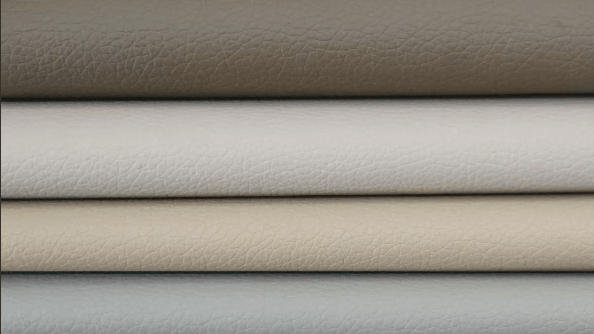
Texture can make a modestly priced meeting-room chair look more considered. Litchi or pebble grain can provide a stronger leather visual, while fine grain and Nappa-style surfaces can create a quieter contemporary appearance. Matte or satin finishes usually reduce glare in offices with overhead lighting and large windows. High-gloss effects can be useful for accents, but they may make fingerprints, scratches, and loss of gloss more visible.
Decorative selection should not be separated from maintenance. Deep grain valleys may retain dust, food residue, or cleaning liquid. Printed or two-tone surfaces need print-retention and cleaner testing. A surface that looks excellent in a design presentation may require more cleaning time or show more damage in daily office use.
For U.S. upholstered furniture within the applicable scope, [16 CFR Part 1640] incorporates the TB 117-2013 approach. This is a requirement for relevant upholstered-furniture components and configurations, not a claim that every PVC face is automatically fire compliant. For an office project outside the United States, identify the destination’s fire and contract requirements before approving the material.
Action recommendation: Map the chair by zones—seat deck, waterfall edge, back shell, arm pad, side band, and headrest. Approve PVC texture, backing, and construction separately for any zone where geometry or loading changes materially.
What Should Buyers Confirm Before Bulk Ordering Office-Chair PVC?
Bulk-order confirmation refers to freezing the approved sample, testing the production-representative material, and verifying that the supplier can reproduce the same PVC construction at scale.
Before bulk production, retain a physical master showing colour, grain, gloss, hand feel, thickness, backing, and finish. Ask the supplier to identify the exact product code, formulation family, backing lot, topcoat, emboss, and production site. If a material is changed after approval, the supplier should notify the buyer and explain whether new sampling or requalification is required.
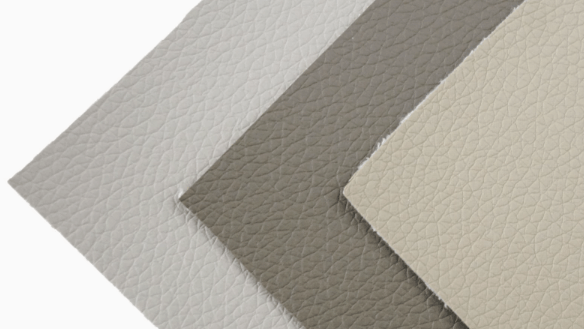
For a first order, request samples from normal production equipment rather than approving only a showroom cutting. Then complete a cut-and-upholster trial using the actual chair foam, thread, needle, stitch density, seam allowance, piping, stapling, and pull sequence. Inspect the seat edge, back shell, corners, arm pads, and any decorative seams. Leave the trial long enough to observe relaxation and check whether the grain or panel alignment changes.
Use a practical commercial checklist:
- Application: state task, conference, executive, visitor, reception, or meeting-room use.
- Construction: record total thickness, face layers, backing type and weight, topcoat, texture, usable width, roll length, and direction.
- Performance: request method-specific tensile, tear, adhesion, seam, abrasion, flex, cold, colourfastness, and cleaning data.
- Production: confirm colour lot, formulation, emboss, backing, line, shift, roll numbers, and change-control procedure.
- Packaging: inspect roll winding, edge protection, paper-core rigidity, end caps, moisture protection, and labels.
- Quantity: confirm whether the quotation is per metre, roll, square metre, or another unit, and whether usable width and cutting loss are included.
- Release: approve a production-representative roll or lot before releasing the full order.
Do not confuse a supplier’s capacity statement with guaranteed availability. Ask how many rolls are available, whether the colour is stock or made to order, whether the backing and finish are fixed, and how replenishment will be matched to the approved sample. Stable supply matters because a chair programme may require additional material months after the first delivery.
Where external testing is required, request the laboratory identity and scope. [ISO/IEC 17025] addresses the competence and consistent operation of testing and calibration laboratories. A laboratory report still needs to match the exact chair material; a report for another colour, backing, finish, or production lot may not be sufficient.
For low-emission projects, ask whether the evidence covers the PVC roll, the cover/foam assembly, or the complete chair. [UL GREENGUARD] describes chamber-emission certification and GREENGUARD Gold requirements. “Low VOC” in a product description is not equivalent to a current certificate for the exact chair configuration.
Action recommendation: Release bulk material only after the physical master, production trial, test reports, roll labels, packaging standard, and change-control terms are all documented. This is particularly important when the supplier is new or the office-chair programme uses multiple colours and textures.
Related Leather Products
Frequently Asked Questions
PVC is often considered when a buyer wants a cost-conscious roll material with a consistent appearance, broad texture options, and a wipe-clean surface. It can suit meeting rooms and shared seating, but the exact finish, backing, seams, and cleaning protocol still need approval.
A project may begin with a 0.8–1.5 mm total-thickness inquiry range, but this is not a universal standard. Specify total thickness and measurement method, then match the result to the chair foam, seam, radius, hand feel, backing, and required performance tests.
Not automatically. A continuous PVC face can resist an incidental surface spill, but seams, needle holes, staples, edges, foam, and backing may allow liquid entry. Specify the required liquid or hydrostatic property and test the finished chair construction when it matters.
No. Thickness can affect hand feel, body, and fit, but it does not replace tear, tensile, seam, coating-adhesion, flex, abrasion, cleaner, or cold-crack testing. A thick foam layer is not the same as a thick, durable wear skin.
Knitted backing is often useful for curved backs, waterfall edges, and sculpted arm pads because it can provide controlled conformability. Woven backing is often useful for flat, taut, or tailored panels because it can provide dimensional control. The final choice depends on the chair geometry and production trial.
They can be a high-traffic screening reference when the project adopts ACT’s coated-fabric guidance, but they are not a complete approval or service-life prediction. Also review backing, seam or tack tear, flex, coating adhesion, cleaning, colourfastness, fire requirements, and the actual chair mock-up.