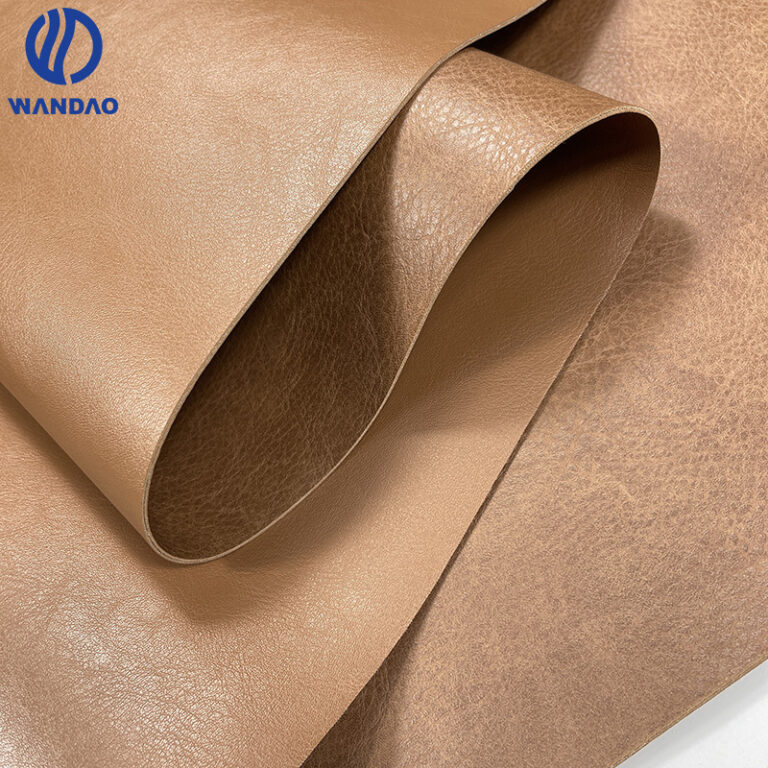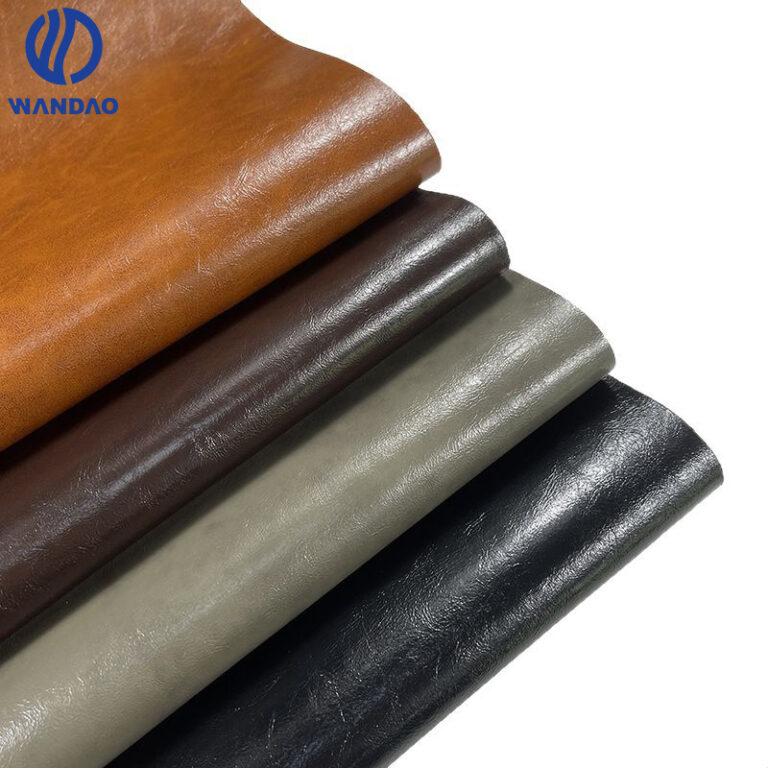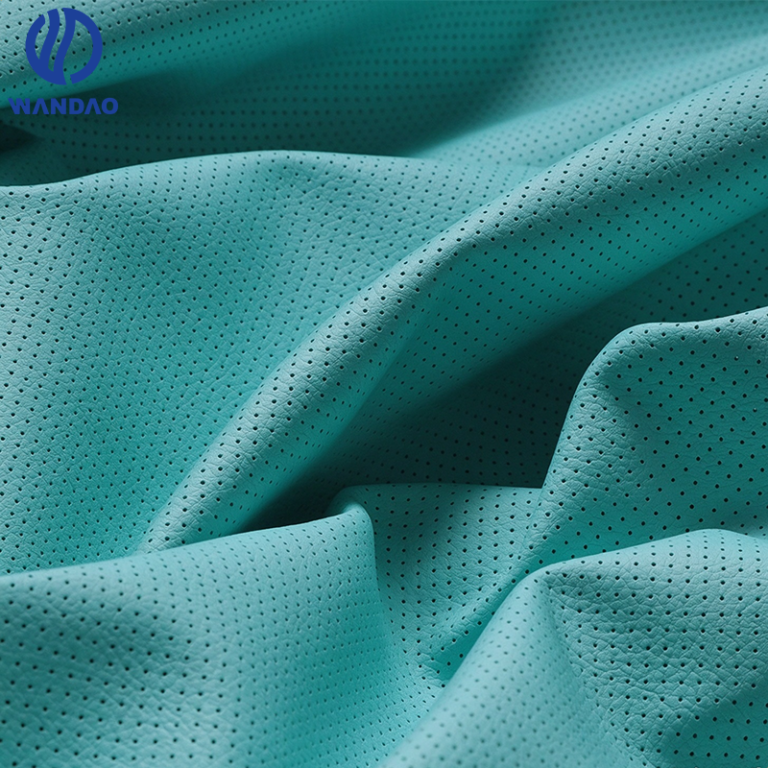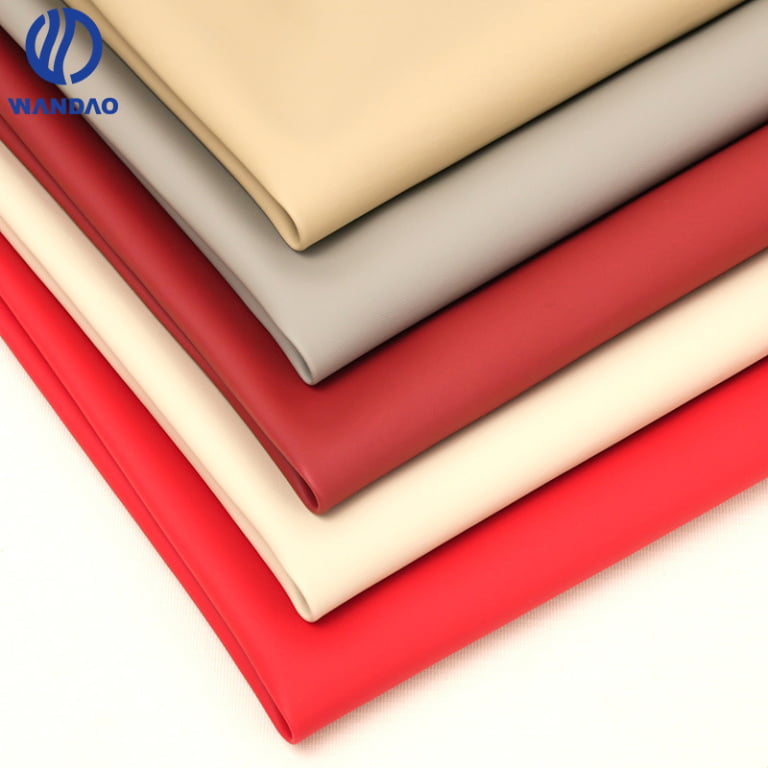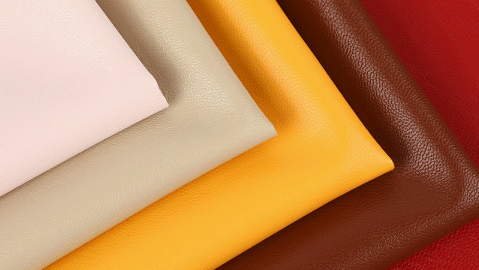
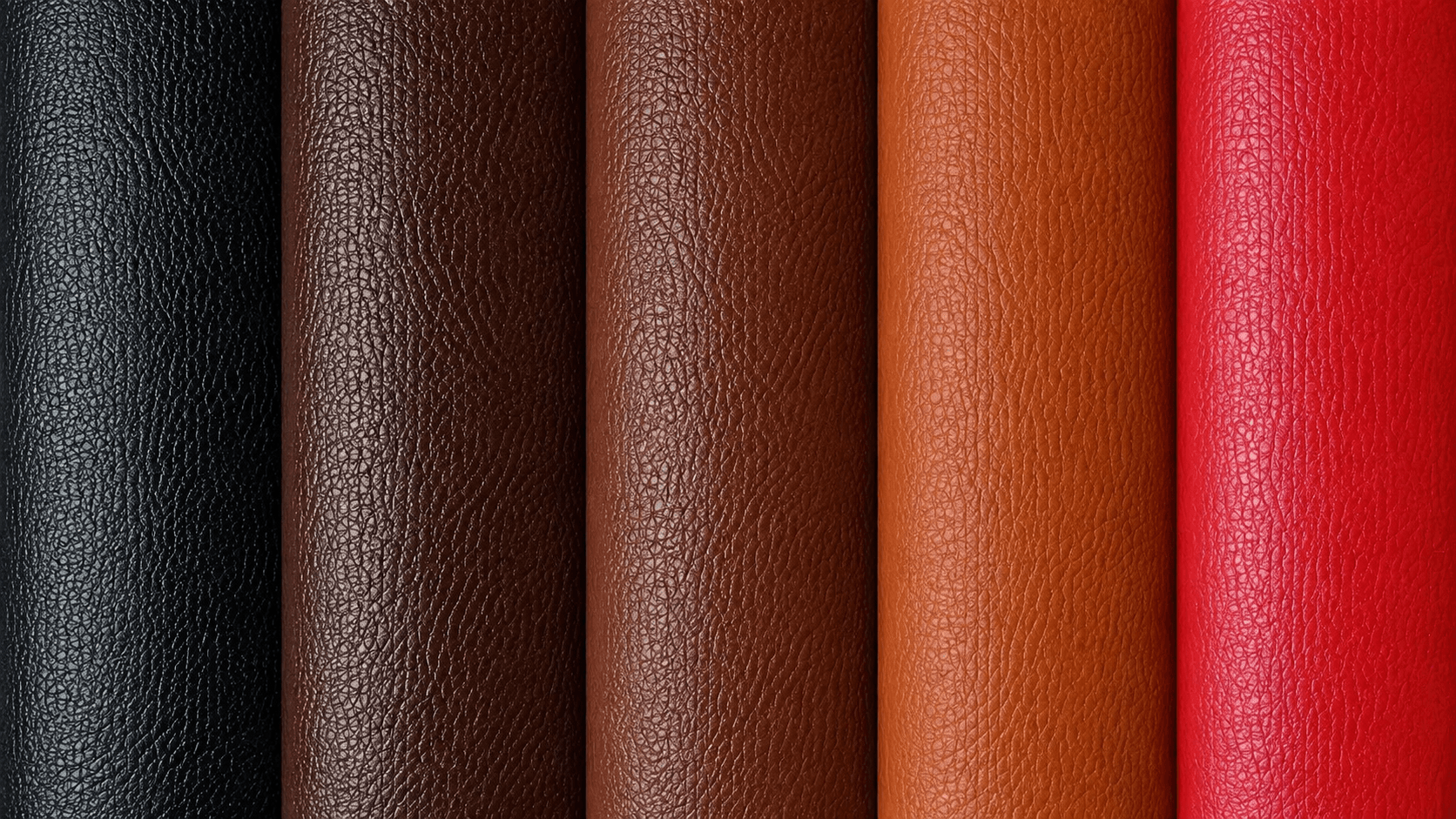
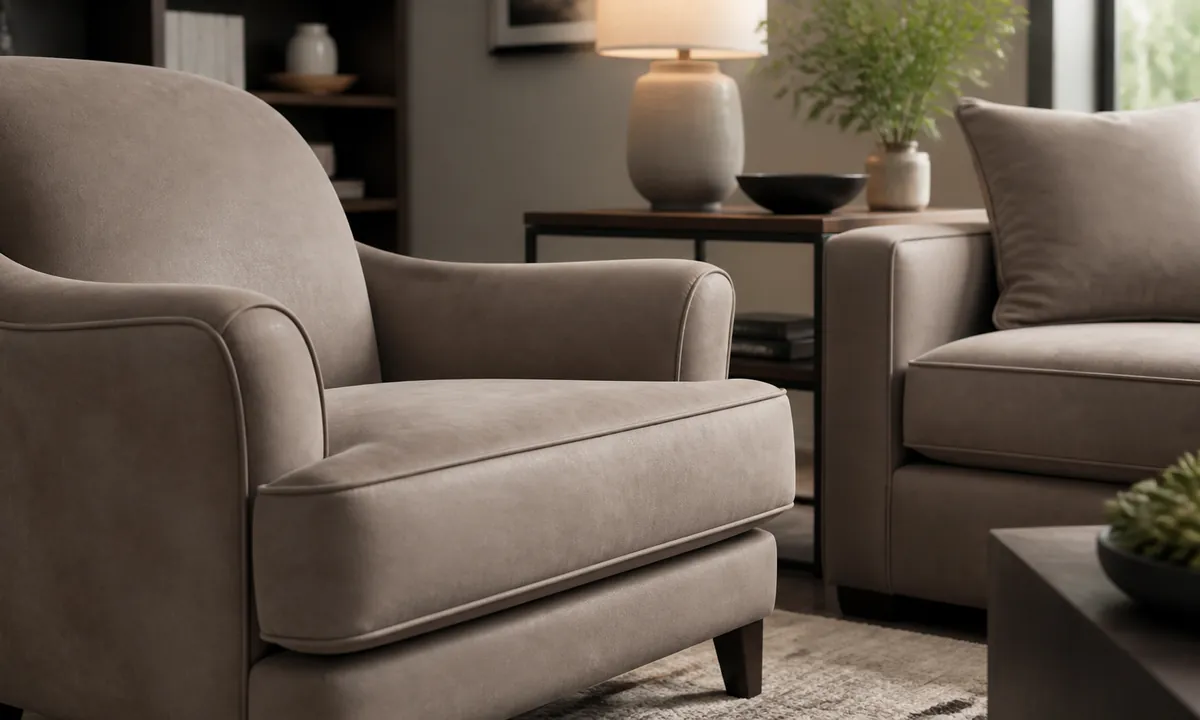
Furniture PVC Leather Thickness: Define the Construction Before the Number
Furniture PVC leather thickness refers to the measured thickness of the complete coated-fabric construction, including the PVC skin, surface finish, possible foam or expanded layer, adhesive or anchor coat, and textile backing.
Two materials with the same nominal thickness can behave differently: one may use a soft foam layer and light carrier, while another uses denser PVC and stable woven backing. Their compression, stretch, sewing, tear, feel, and peel performance will not be identical, so “1 mm PVC leather” is incomplete.
Thickness helps control hand feel, edge appearance, cutting, yield, and upholstery behavior, but it is not a universal durability rating. The research cautions that it does not establish adhesion, tear, flex, heat aging, seam durability, or surface chemistry. A thicker construction can peel if interlayer adhesion is weak, while a thinner, better-engineered construction may suit the process better.
For a meaningful thickness requirement, record at least four layers of information:
- Measurement basis: total thickness, layer thickness where available, measurement instrument, compression condition, and number of readings.
- Construction: PVC face, topcoat, foam or expanded layer, adhesive, scrim, and backing type.
- Process: flat upholstery, sewing, deep wrapping, vacuum lamination, foam lamination, or another route.
- Acceptance: nominal value, tolerance, visual feel, edge appearance, and post-process condition.
For coated fabrics, [ISO coated-fabric standards catalogue] provides the relevant standards family for roll characteristics and coated-fabric properties. The test method must still be chosen for the actual construction, especially where foam makes the material compressible. A thickness figure without the measurement method is difficult to compare across suppliers.
Thickness should also be paired with independent mechanical checks. [ISO 1421] is used for tensile strength and elongation of coated fabrics, [ISO 4674-1] addresses tear resistance, and [ISO 2411] addresses coating adhesion. These methods measure different failure modes; none should be replaced by a thickness reading.
| Furniture requirement | What thickness affects | What it does not prove |
|---|---|---|
| Soft sofa or chair upholstery | Hand feel, edge build-up, foam-cover interaction, and sewing comfort | Long-term flex life, stain resistance, or peel adhesion |
| Contract seating | Construction consistency and process repeatability | That the material will meet a customer’s abrasion or cleaning requirement |
| Wrapped panels | Stretch demand, corner coverage, and visible grain after wrapping | Dimensional stability or forming success without a trial |
| Foam-laminated furniture parts | Cushioning, surface build, and concealment of substrate irregularities | Foam adhesion, compression recovery, or chemical compatibility |
Buyer action
Write thickness as a construction requirement: identify the layers, measurement method, tolerance, intended process, and the tensile, tear, peel, flex, and appearance checks that must accompany approval.
PVC Leather Width for Upholstery: Specify Usable Width and Cutting Yield
PVC leather width for upholstery refers to the usable material width available for nesting, cutting, wrapping, and joining after edge trim, defects, selvage, and directional texture have been considered.
Nominal roll width is not always the same as usable width. A roll can lose working area through uneven edges, coating defects, registration variation, or a grain direction that requires a particular cutting orientation. For furniture manufacturers, usable width affects nesting efficiency, the number of seams, labor, waste, and whether a cushion or panel can be cut from one piece. A width specification should therefore describe the repeatable cutting area rather than only the widest point of the roll.
Width also interacts with product design. Sofa seats, office-chair covers, booths, and wall panels have different layouts. A roll wide enough for one component may be inefficient for another if texture runs across the roll, backing stretches directionally, or a center defect must be avoided. Provide a pattern, cutting diagram, or largest panel dimensions and seam plan during sampling.
Texture direction matters even when a roll appears uniform. Brushed or tricot backing can also change sewing, wrapping, or reflected light. State whether parts must run parallel to the roll, whether rotation is allowed, and how much directional variation is acceptable.
Roll information should be recorded together with mass and thickness. [ISO 2286 coated-fabric methods] are relevant to roll characteristics and mass-per-unit-area control, but the furniture buyer still needs a project-specific definition of usable width and defect limits. A standard method does not decide the cutting yield that a particular sofa factory will achieve.
In my own material reviews, a swatch made width seem simple, but the production question was whether the approved surface, backing direction, and defect policy held across the full roll. I now treat a roll sample and cutting trial as more informative than a width statement alone. This is a practical observation, not a universal test result.
| Width field | How to define it | Why it matters to furniture production |
|---|---|---|
| Nominal width | Supplier’s stated roll width | Useful for comparing offers, but not enough for costing |
| Usable width | Width remaining after agreed edge and defect exclusions | Supports realistic nesting and material-yield calculations |
| Directional allowance | Whether patterns may rotate and how grain direction is controlled | Determines cutting flexibility and appearance consistency |
| Roll condition | Edge condition, splice policy, roll length, packaging, and identification | Reduces surprises during incoming inspection and cutting |
For textured furniture leather, inspect several positions across a roll, not just the first visible section. Record surface shade, gloss, grain depth, backing feel, thickness, and edge condition. If the buyer’s design depends on a single wide panel, request a full-width sample or a production-intent trial. This is a better control than assuming that a nominal width automatically guarantees a continuous defect-free cutting zone.
Buyer action
Put nominal width, usable width, edge tolerance, grain direction, defect policy, roll identification, and cutting orientation into the same approval document. Then verify the fields with a roll or layout trial.
PVC Leather Backing Types: Match Stretch, Stability, and Fabrication
PVC leather backing refers to the textile, nonwoven, or foam-supported layer that anchors the PVC surface and influences stretch, tear propagation, peel strength, dimensional stability, sewing, and wrapping.
Backing is hidden after assembly, so buyers often overlook it. Yet it can decide whether a material follows a curved cushion, holds a seam, survives a fastener opening, bonds to foam, or keeps its shape after heat and humidity. “Polyester backing” is incomplete because knit, woven, tricot, and nonwoven structures can behave differently.
| Backing structure | Useful furniture behavior | Risks to verify | Potential fit |
|---|---|---|---|
| Knitted polyester | Conformability, stretch, and tolerance around curves and sewn seams | Direction-dependent extension, relaxation, and shape loss if not controlled | Seat covers, curved upholstery, soft armrests, and wrapped inserts |
| Woven fabric | In-plane stability, edge control, and shape retention | Stiffness, limited drape, and higher forming stress on deep curves | Flat panels, structured upholstery, and visible surfaces needing dimensional control |
| Nonwoven | Soft hand, easy lamination, and potential cost efficiency | Needle-hole propagation, local tear weakness, compression, and heat distortion | Light-duty panels, hidden layers, and applications validated by full testing |
| Brushed or tricot backing | Soft feel, smooth lamination face, sewing response, and wrap conformity | Pile direction, anchor-coat wetting, compression, and peel variation | Premium seating, armrests, decorative inserts, and soft-touch upholstery |
| Foam-laminated construction | Cushioning, comfort, substrate masking, and a fuller surface appearance | Skin-to-foam adhesion, compression set, shrinkage, odor, fogging, and delamination | Padded seating, armrests, wall panels, and cushioned furniture components |
Knitted loops can follow compound curves, but machine and cross directions may extend differently; require separate data. Woven structures offer shape control, yet may resist deep curves and create wrinkles or bridging. Nonwoven structures can suit cost-sensitive or low-load areas, but their behavior around needles, edges, and fasteners needs direct verification.
Tricot and brushed structures require attention to the bonding interface. The research materials note that [ISO 2411] addresses coating adhesion in longitudinal and transverse directions and includes considerations for piled substrates. This is useful because a soft or brushed face can look excellent while still requiring careful control of penetration, anchor chemistry, pile direction, and cohesive failure.
Foam is a system layer rather than a simple reinforcement. It changes compression response, touch, conformability, and surface build, but it may also add adhesion and emissions risks. Test the complete laminate, not only the PVC skin. For mechanical characterization, [ISO 1421] supports tensile and elongation testing, [ISO 4674-1] supports coated-fabric tear testing, and [ASTM D751] includes coated-fabric mechanical and adhesion procedures. The methods are complementary, not interchangeable.
Backing selection should follow the furniture process. A sewn sofa cover needs stretch, seam behavior, and tear control. A flat wall panel needs dimensional stability and clean bonding. A wrapped armrest needs conformability plus resistance to repeated contact. A foam-laminated seat needs peel, flex, compression, and chemical checks on the full stack. The correct question is not “Which backing is highest quality?” but “Which backing provides the required behavior for this component and process?”
Buyer action
Approve backing only after a process trial. Record machine and cross direction, tensile and elongation, tear, peel, seam response, wrapping behavior, and aged adhesion for the complete PVC leather construction.
PVC Leather Texture for Furniture: Control Grain, Gloss, and Touch Together
PVC leather texture for furniture refers to the combined surface geometry, grain pattern, finish, gloss level, and tactile response that determine how the material looks, feels, cleans, and hides everyday marks.
Embossed grain is commonly selected when a furniture maker wants a leather-like appearance and better visual masking of small scuffs. Fine grain can support a more controlled, contemporary look, while deeper grain may add tactile character but can retain soil in its recesses. Smooth surfaces are easy to wipe and can look clean in modern furniture, yet scratches, fingerprints, rub-polishing, and color variation are more visible. The choice should follow the contact level, cleaning routine, lighting, and design language of the finished product.
Gloss is a measurable part of the texture brief, not only a subjective adjective. The research materials cite conventional gloss terminology in which less than 10 GU at 60 degrees is treated as low gloss, 10–70 GU as medium gloss, and more than 70 GU as high gloss; measurement geometry matters, with 85 degrees used more discriminatingly for low-gloss surfaces and 20 degrees for high-gloss surfaces. These conventions are supported by [Rhopoint gloss guidance] and the [ASTM D523 standards information]. They are measurement conventions, not universal furniture acceptance limits.
| Surface option | Furniture advantage | Typical concern | Specification focus |
|---|---|---|---|
| Embossed grain | Leather-like appearance and visual masking | Soil retention or grain polishing after rubbing | Grain master, depth/appearance, gloss, cleanability, and abrasion endpoint |
| Fine smooth | Contemporary appearance and easy wipe-down | Scratches, fingerprints, and glare are easier to see | Topcoat, scratch/scuff method, gloss, and color consistency |
| Matte or low gloss | Lower glare and restrained visual appearance | Very textured finishes may be harder to clean | Actual gloss geometry, grain uniformity, and touch after aging |
| Semi-gloss | Balance between color depth, cleanability, and reflection | More visible marks than a low-gloss finish | Gloss tolerance, rubbing, stain release, and lighting review |
| High gloss | Decorative contrast and strong visual reflection | Fingerprints, swirl marks, glare, and scratch visibility | Use zone, hardcoat, scratch method, and visual approval under actual light |
| Soft touch or anti-scuff | Warmer hand and lower perceived plasticity | Blocking, staining, polish change, or chemical sensitivity | Chemical exposure, abrasion, rub, aging, tack, and adhesion together |
Do not define texture with a pattern name alone. “Nappa,” “pebble,” “grain,” or “smooth” can represent different tools, depths, coatings, and visual results. An approval set should include a grain master, color standard, gloss geometry, viewing conditions, defect limits, and a statement on whether the surface may rotate during cutting.
Surface roughness can support process control, but it should not replace a grain master. Report the roughness direction, cut-off, instrument, sampling area, and number of readings because an embossed surface can produce different values depending on scan direction. For abrasion of a coated surface, [ISO 5470-2] provides a coated-surface method. For color transfer under rubbing, [ISO 105-X12] describes dry and wet rubbing procedures. Neither test by itself proves that a texture will remain attractive throughout furniture service.
For seating and armrests, include the actual cleaning chemistry, body-contact contaminants, and repeated rubbing expected in the project. For decorative panels, prioritize visual harmony, gloss, grain registration, and resistance to handling marks. A high-gloss decorative insert may be appropriate in a protected area but unsuitable for a frequently touched armrest. These are engineering selections, so the final decision should be validated on the finished furniture part rather than inferred from a catalog photograph.
Buyer action
Approve texture through a grain master plus measured gloss, surface appearance, cleaning, rubbing, abrasion, and scratch/scuff review. Treat matte, soft-touch, and anti-scratch as performance requirements that must be tested together.
Build One Furniture PVC Leather Specification Sheet and Approval Process
A furniture PVC leather specification sheet refers to the single controlled document that connects the material construction, usable roll format, surface appearance, furniture application, fabrication process, tests, and bulk-approval rules.
The most reliable buying process starts with the finished product rather than a supplier’s product name. Describe the furniture type, contact zones, substrate, foam, sewing or wrapping method, cleaning routine, target market, expected quantity, and appearance reference. Then separate fixed requirements from adjustable preferences. A fixed requirement might be the grain family or a required backing direction; an adjustable preference might be the exact hand feel within an agreed range.
| Specification block | Minimum information to record | Approval evidence |
|---|---|---|
| Material construction | PVC layer, topcoat, foam/expanded layer, adhesive, backing, and total thickness | Construction statement and retained reference sample |
| Roll format | Nominal width, usable width, edge policy, roll identification, and directional rules | Roll inspection and cutting or nesting trial |
| Surface | Color, grain, gloss, hand feel, defect limits, and viewing conditions | Master panel, measurement record, and visual approval |
| Mechanical behavior | Tensile, elongation, tear, peel, seam, flex, and wrapping requirements | Method-specific reports and production-intent trial |
| Durability | Abrasion, rubbing, cleaning, stain, scratch/scuff, heat, humidity, and light-aging needs | Defined test method, conditioning, endpoint, and acceptance criterion |
| Change control | Approved supplier, construction version, lot record, and requalification triggers | Signed approval and documented change notification |
Testing should match the expected failure mode. If the concern is coating wear, define the abrasion apparatus, abrasive, load, conditioning, cycle endpoint, and visual or instrumental result; do not compare cycle counts from unrelated methods. If the concern is seam or cut-edge failure, test the sewn construction and tear direction. If the concern is delamination, use a peel method before and after relevant aging. A method name without a specimen description and acceptance rule is not a complete requirement.
For friction or slip-related furniture questions, define the real interface: upholstery against clothing, hand against armrest, or material against a mating component. The research materials note that [ASTM D1894] and [ISO 8295] measure friction for plastic films or sheeting through different procedures, so their values should not be transferred to thick, textured, compliant upholstery without a justified validation method.
Finally, compare suppliers on specification control rather than on price or a headline performance number. Ask whether the offered material is stock or custom, which construction details can be held constant, how samples are identified, what happens when a pigment, backing, coating, or production source changes, and which records accompany bulk delivery. The right supplier conversation is a technical exchange about the furniture part and its approval route.
Use the following six questions as a final pre-order check.
A: There is no universal furniture thickness that guarantees durability. Choose a thickness as part of a defined PVC, topcoat, foam, adhesive, and backing construction, then verify hand feel, sewing or wrapping behavior, tensile, tear, peel, flex, cleaning, and appearance on the intended furniture part.
A: Specify both nominal and usable width, together with edge exclusions, defect policy, grain direction, rotation rules, roll identification, and the cutting layout. A roll or nesting trial is more reliable than approving width from a small swatch or a catalog statement.
A: The best backing depends on the process. Knit or tricot can suit curved sewn upholstery, woven backing can support dimensional stability, nonwoven can fit selected light-duty constructions, and foam lamination can add cushion. Approve the choice through tensile, tear, peel, seam, wrapping, and aging trials.
A: Neither is universally better. Embossed grain can provide a leather-like appearance and mask minor marks, while smooth PVC can be easier to wipe but may show scratches and fingerprints. Select the surface according to contact level, cleaning routine, lighting, design, and the required appearance after rubbing and aging.
A: Use low gloss for glare-sensitive or frequently handled surfaces, semi-gloss when a balance of cleanability and color depth is needed, and high gloss only where reflections and marks are acceptable. Record the measurement geometry and actual GU result; gloss terms alone are not sufficient for approval.
A: Send the furniture type, component, substrate and foam information, fabrication process, target thickness, usable width, backing preference, color and grain reference, cleaning expectations, estimated quantity, destination market, and required tests. Include a physical reference or clear photos when appearance is important.
Buyer action
Approve one documented construction and one production-representative sample before bulk ordering. Keep the master, test conditions, lot information, and change-control rules together so thickness, width, backing, and texture remain the same material specification.