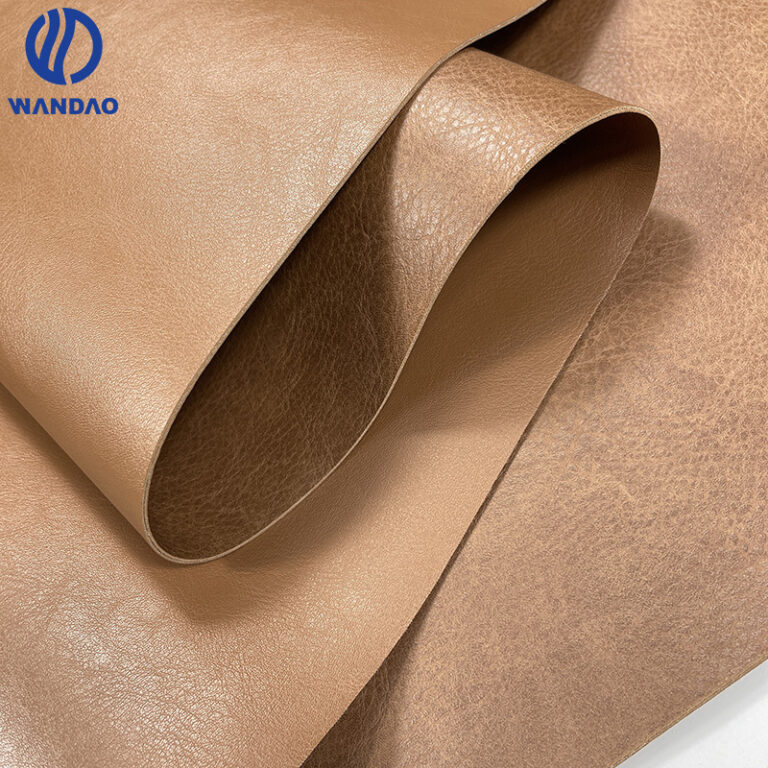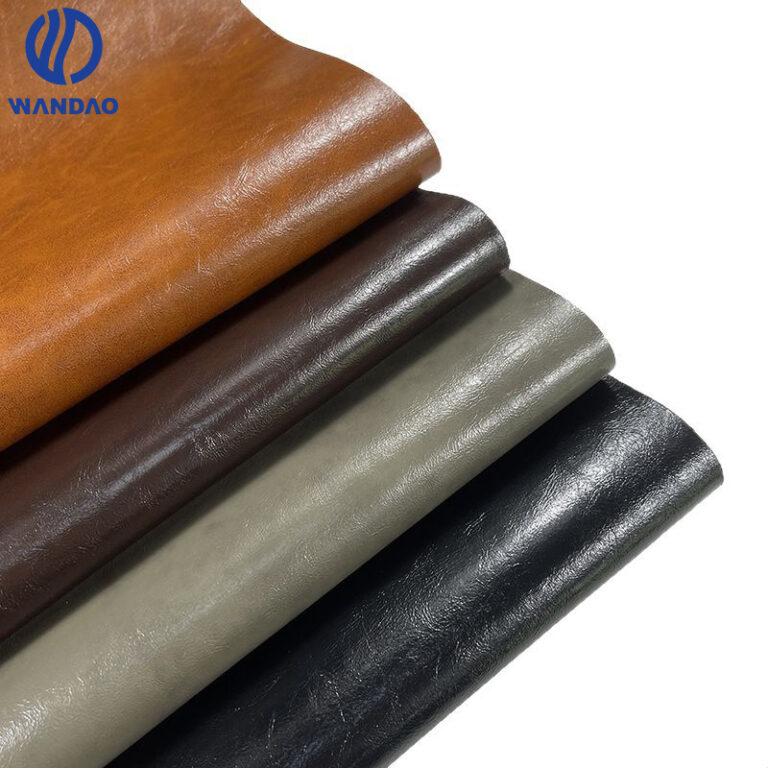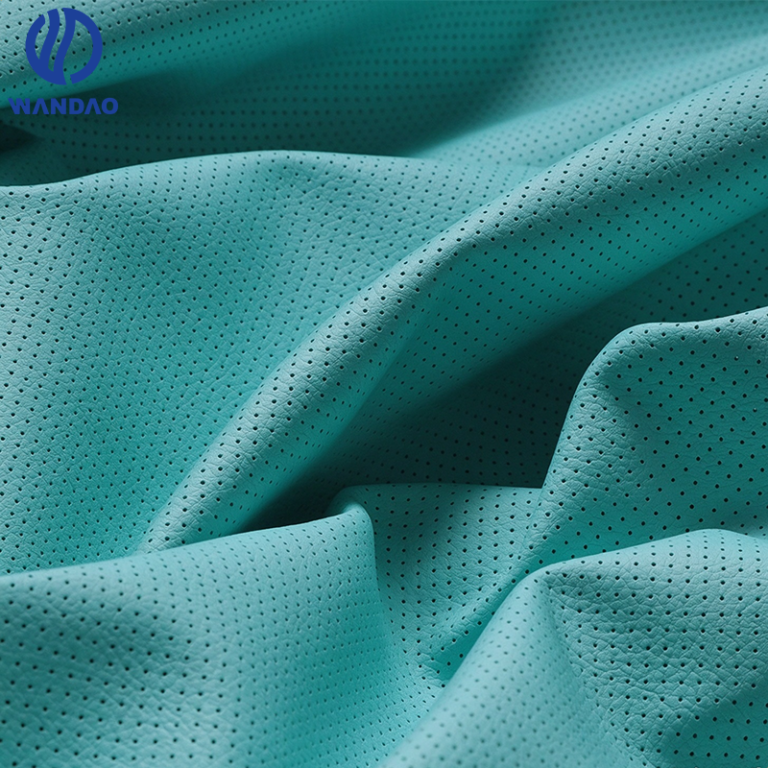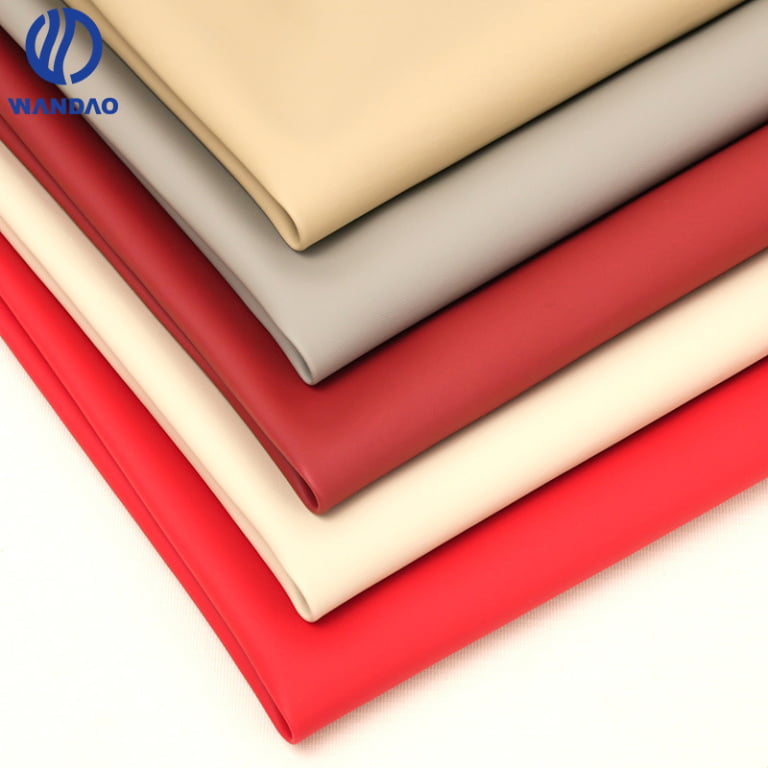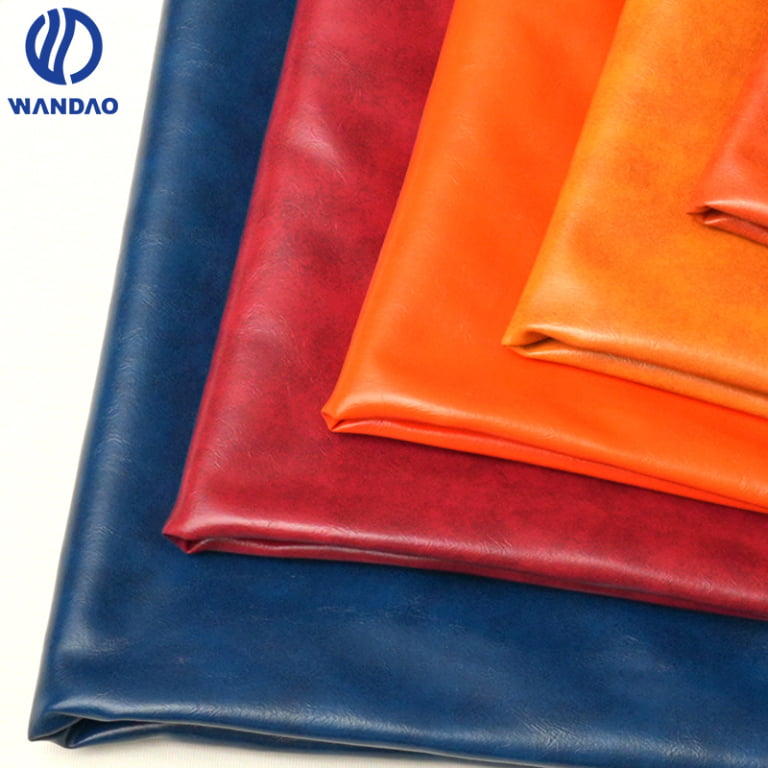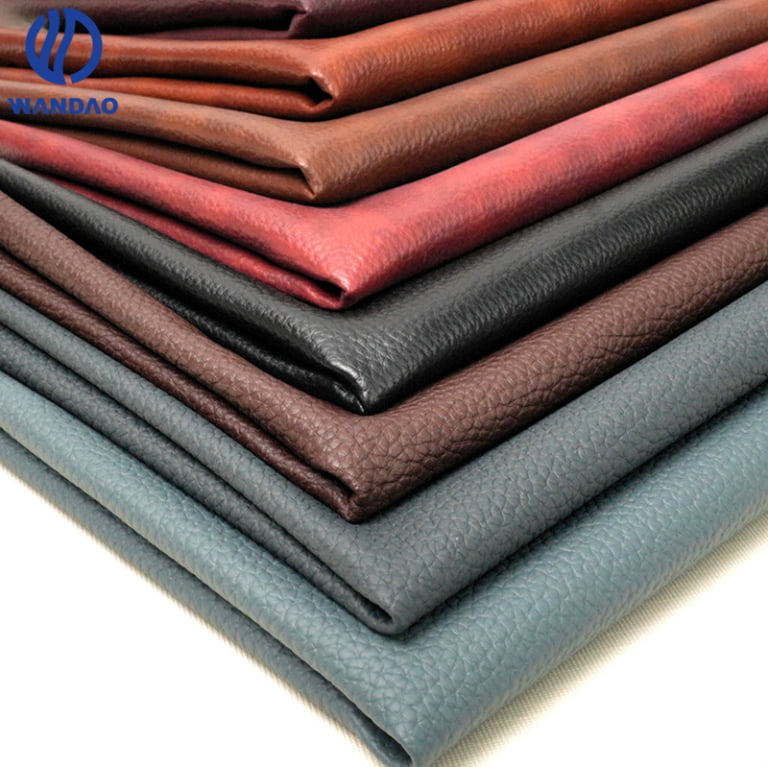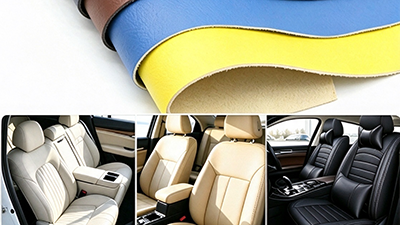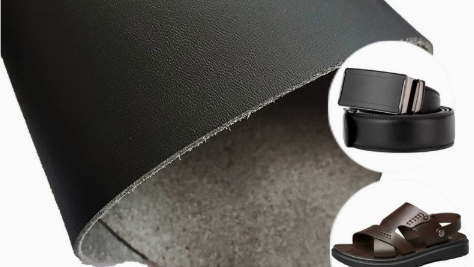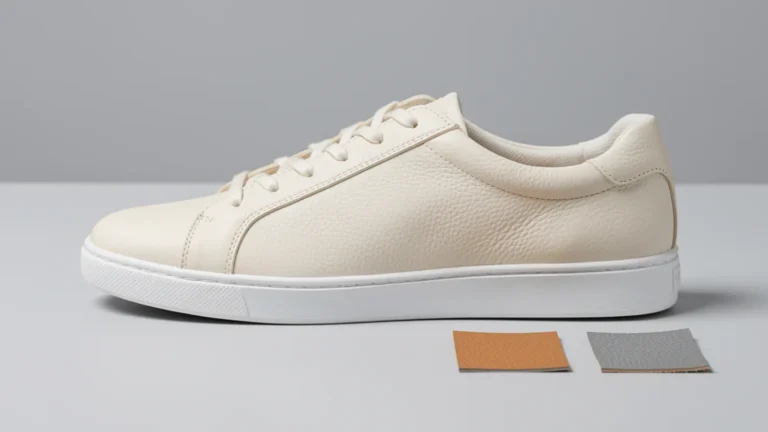
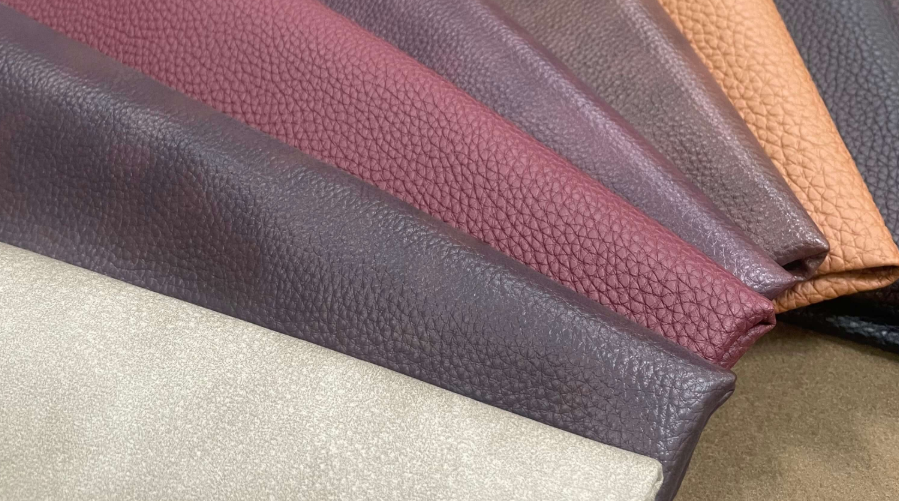
This complete furniture leather buying guide is written for furniture manufacturers and importers who need practical answers about furniture grade PVC leather. It explains what PVC leather actually is, how the layers work, why two rolls that look identical can differ sharply in price and lifespan, and how to write a usable upholstery material specification. You will also find clear criteria for selecting PVC coated upholstery fabric and commercial upholstery vinyl for sofas, dining chairs, office seating, hotel furniture, medical, and outdoor applications.
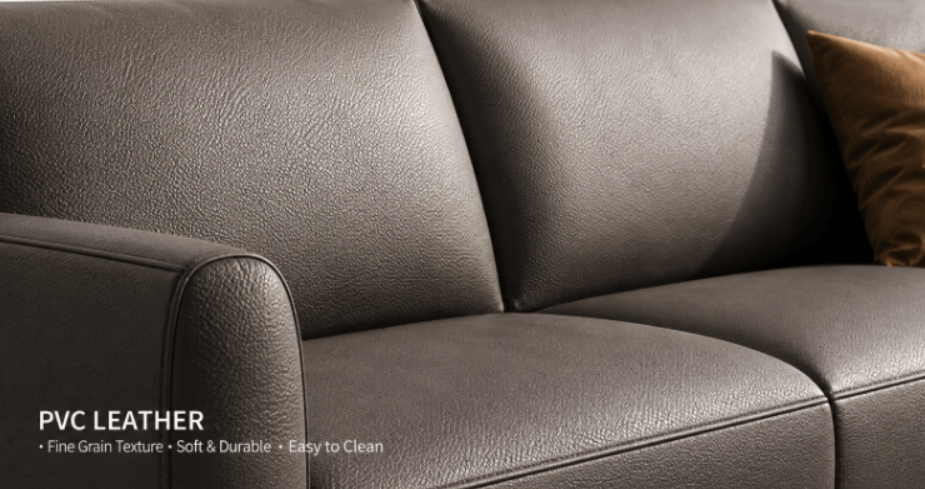
What PVC Leather for Furniture Actually Is
In this furniture leather buying guide, we start by clarifying exactly what furniture grade PVC leather is from a manufacturing and procurement perspective.
PVC leather for furniture refers to a multilayer coated textile composite made by applying one or more polyvinyl chloride functional layers onto a textile base fabric, then finishing the surface with embossing, topcoating, or other treatments to deliver the required look, hand-feel, and performance.
In a typical cross-section the structure runs from the outside in as surface/dense layer, foam layer, adhesive layer, and base fabric. The dense layer supplies the visible grain, color, abrasion resistance, and surface feel. The foam layer adds bulk, softness, and cushioning while reducing density. The adhesive layer bonds the PVC stack to the textile substrate. The base fabric carries tensile load, improves tear resistance, and stabilizes dimensions during cutting and sewing. One technical description of this five-layer stack reports PVC coating thicknesses in the range of 0.05–0.75 mm by calendering, with surface lacquer layers as thin as 3–20 µm. Danish Environmental Protection Agency technical survey
Common additives include plasticizers (DEHP, DINP, DIDP and alternatives such as adipates, citrates, or epoxidized soybean oil), stabilizers (calcium-zinc systems and co-stabilizers), pigments (up to 10 parts per hundred resin), flame retardants (antimony trioxide, phosphate esters), and surface-treatment agents (polyacrylate or water-based polyurethane topcoats). Plasticizer content can reach 70 % of the PVC compound. Filler loadings of 20–60 phr and flame-retardant additions up to 10 % appear in the same technical literature. Danish Environmental Protection Agency technical survey
Three main coating routes are used. Calendering forms a film on heated rolls and laminates it to fabric; it offers good thickness control for thicker constructions. Knife (scraping) coating meters paste directly onto fabric or release paper and is flexible for weight control. Release-paper transfer coating builds the PVC layers on paper first, transfers them to fabric, then removes the paper; it excels at pattern transfer and multi-layer build-up. A Chinese patent describing a high-density warp-knitted polyester base fabric of 280–400 g/m² with bidirectional breaking strength ≥900 N/5 cm illustrates one commercial construction target. CN110373912A
In a production-line observation I conducted on a calendering line running furniture-grade PVC, two rolls of identical nominal thickness (1.0 mm) and the same emboss pattern showed measurable differences in cold-crack resistance after only a 5 °C drop in line temperature. The lower-temperature run left incomplete gelation in the foam layer; when the finished panels were flexed at –10 °C, micro-cracks appeared at the emboss peaks while the properly gelled roll remained intact. The difference was invisible on the sample card but became obvious under a simple cold-flex test.
Market Size, Growth, and Regional Demand
The global market for PVC and broader synthetic leather used in furniture refers to the commercial volume of PVC-coated and related coated fabrics purchased for upholstery of sofas, chairs, hospitality seating, and outdoor furniture, tracked by research firms that segment by chemistry and end-use.
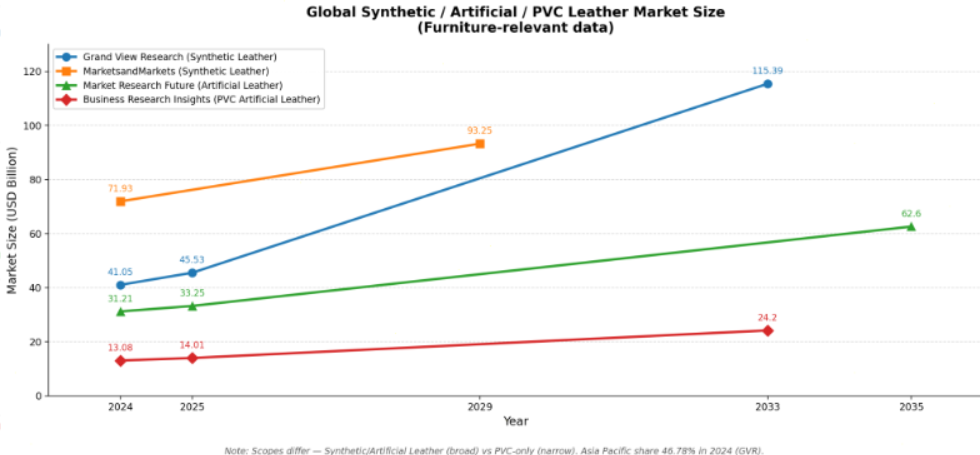
Grand View Research places the overall synthetic leather market at USD 41.05 billion in 2024 and USD 45.53 billion in 2025, with a 2033 forecast of USD 115.39 billion; Asia Pacific accounted for 46.78 % of global revenue in 2024. Grand View Research MarketsandMarkets reports a larger synthetic-leather figure of USD 71.93 billion in 2024 and projects USD 93.25 billion by 2029. MarketsandMarkets Market Research Future sizes the artificial leather market at USD 31.21 billion in 2023–2024 and USD 33.25 billion in 2025, with a 2035 forecast of USD 62.6 billion. Market Research Future A PVC-specific estimate from Business Research Insights puts the PVC artificial leather market at USD 13.08 billion in 2024, USD 14.01 billion in 2025, and USD 24.2 billion by 2033. Business Research Insights
These numbers are not interchangeable: the broader synthetic-leather totals include PU, TPO, and bio-based materials and multiple end-uses, while the PVC-only figure is narrower. Public reports consistently identify Asia Pacific as the largest production and demand region, with China and India as major manufacturing hubs and Vietnam and Southeast Asia gaining share in furniture manufacturing. North America and Europe remain important consumption markets, but the strongest growth signals appear in Asia Pacific. Furnishing and upholstery form one of the principal demand pools, yet the sources do not publish a clean global percentage split among sofas, dining chairs, office chairs, hotel furniture, and outdoor furniture.
Within furniture, sofas and residential upholstered seating constitute the highest-volume, price-sensitive segment. Dining and office chairs form steady commercial demand driven by abrasion resistance and wipe-clean surfaces. Hotel and hospitality seating favor cleanability and uniform appearance. Outdoor furniture is smaller in volume but benefits from water resistance. Exact share figures by sub-application are not disclosed in the cited reports.
Action
Treat any single “market-size” number as scope-dependent. When you model your own demand, separate PVC-only furniture upholstery from the broader synthetic-leather total and verify the year and geographic coverage of each source.
Surface Textures, Gloss Levels, and Backing Fabrics
Surface texture and backing selection for furniture-grade PVC leather refers to the combination of embossed or printed grain, gloss finish, and textile substrate that together determine appearance, hand-feel, drape, sewability, and long-term dimensional stability.
Common grains include litchi (small rounded pebble), cowhide (irregular natural-leather look), Nappa-style (fine, smooth, low grain), tumbled or distressed (softened aged appearance), crazy-horse (waxed, color-variation effect), geometric patterns, and fabric-like or woven-look surfaces. Embossing itself is the industrial method that creates most of these raised or debossed patterns under heat and pressure. Perforation is added when breathability or a technical look is required.
Gloss is controlled independently of grain. Matte finishes reduce glare and appear more natural; semi-matte or satin balances reflection; high-gloss produces a decorative, more vinyl-like surface. Coated-fabric standards evaluate gloss change under cleaning, aging, and UV exposure as part of performance testing. CFFA Healthcare Standard
Backing fabrics fall into three construction families—knitted, woven, and non-woven—each with different stretch, stability, and cost profiles. Knitted backings offer high elasticity and excellent wrap around complex contours but lower dimensional stability. Woven backings provide high tensile strength, puncture resistance, and shape retention, making them preferred for precise tailoring. Non-woven backings can deliver a soft, leather-like body at lower cost but vary widely in strength by construction. Fiber choice is typically polyester (good durability and dimensional stability), cotton, or polyester/cotton blends. CFFA Healthcare Standard PMC textile review
Matching logic is application-driven. Sofas usually favor matte or satin finishes with litchi, cowhide, or Nappa grains on woven or stable knit backings. Office chairs need good flex and abrasion performance, often with fabric-like or fine-grain surfaces. Dining chairs benefit from cleanable, stable constructions. Headboards prioritize appearance and wrap over extreme abrasion. Automotive-style seating may add perforation and controlled-stretch knits. Standards bodies such as CFFA and ACT emphasize that substrate choice must be validated by adhesion, tear, tensile, flex, and abrasion tests rather than by fiber name alone. ACT Coated Fabric Testing Guide
Action
Specify both the emboss name and the backing construction (knit / woven / non-woven + fiber) on the purchase order. Request the supplier’s adhesion and tear data for the exact combination you intend to use.
Why Visually Identical PVC Leather Differs in Price and Service Life
Price and service-life differences among PVC leather products of similar appearance and identical nominal thickness refer to the cumulative effect of resin grade, plasticizer type and dosage, foam structure, surface topcoat, stabilizer package, flame-retardant system, backing strength, coating uniformity, process speed, and scrap/regrind ratios—none of which are visible on a sample card.
Industry literature states that PVC performance “depends entirely on the additives,” which can account for more than half the formulation mass. Plasticizer migration, volatility, and extraction are recognized mechanisms of long-term property loss. PMC review on plasticizer migration A study of 151 commercial PVC flooring samples found phthalates in 55 samples at concentrations of 0.01–47 wt %; 31 samples contained restricted phthalates and 24 exceeded the 0.1 wt % threshold. The same study linked uncontrolled recycled content to elevated levels of substances of concern. ACS Environmental Science & Technology
Foam-layer structure affects apparent softness and compression set. Expanded vinyl constructions consist of fabric, foam, and dense PVC film; larger or uneven cells can collapse under repeated loading or heat cycling. Surface PU topcoats improve abrasion, stain, and chemical resistance when properly formulated and cured, but thin or poorly adhered topcoats merely alter appearance. Hydrolysis resistance is critical for any PU-containing layer: polycarbonate PU can survive 7+ weeks in accelerated tests, polyether 3–5 weeks, and polyester 1–2 weeks (these figures are laboratory rankings, not service-life predictions). CFFA FOCUS on PVC/PU
UV stabilizers, flame-retardant dispersion, and backing tensile strength further separate durable grades from short-life grades. Woven backings contribute higher tensile strength, puncture resistance, and dimensional stability; weak or low-density backings allow stretch, wrinkling, and seam failure. Coating uniformity determines whether the thinnest local section becomes the failure point long before average thickness is reached. High line speeds that outrun fusion and cooling windows leave residual stress and incomplete gelation, which later appear as whitening, delamination, or early cracking. Uncontrolled regrind increases batch-to-batch variation in color, odor, and aging behavior. OMNOVA coated-fabrics white paper
Common field failures of low-cost material include progressive hardening and embrittlement, surface tack or oil exudation, yellowing and chalking, abrasion through to the foam, interlayer delamination, edge cracking, seam tearing, and gloss loss or cracking after exposure to cleaning agents.
Advantages and Limitations of PVC Leather for Furniture:
Advantages- PVC leather delivers a combination of performance attributes that few other upholstery materials match at its price point. It is fully waterproof and highly stain-resistant, allowing rapid wipe-clean maintenance—critical for hospitality, healthcare, family homes with children or pets, and outdoor furniture. The material offers excellent abrasion resistance when properly formulated, consistent color and grain across large production runs, and good dimensional stability when paired with woven or stable-knit backings. It is animal-free (vegan), available in a wide range of emboss patterns, gloss levels, and colors, and can be engineered with flame-retardant, UV-stabilized, or antimicrobial packages. Material cost is typically substantially lower than genuine leather and often lower than comparable PU grades, improving margin predictability for manufacturers.
Limitations- The same non-porous structure that provides waterproofing reduces breathability; users may notice greater warmth during extended contact. Long-term performance depends heavily on plasticizer retention—lower-quality compounds can harden, become tacky, or crack after years of use or exposure to heat/UV. Environmental concerns remain around chlorine chemistry, potential dioxin formation in improper disposal, and historical use of restricted phthalates (modern suppliers can supply phthalate-free alternatives with documentation). Cold-flex performance varies; some grades stiffen or micro-crack at low temperatures if gelation or plasticizer selection is inadequate. Finally, while recyclable in theory, practical recycling infrastructure for coated fabrics is still limited in many markets.
Action: Present both lists to clients. Emphasize that limitations are largely controllable through formulation, process control, and correct specification rather than inherent material failure.
How to Write Procurement Specifications and Quality-Control Plans
A clear upholstery material specification is the core of any professional furniture leather buying guide. The procurement specification and quality-control plan for PVC leather refers to the documented set of construction parameters…
Anchor the material description to ISO standards for PVC-coated upholstery fabrics and to the relevant furniture flammability and emissions standards. Tensile strength is measured by ISO 3376, tear by ISO 3377-1, flex by ISO 5402-1, and abrasion for coated fabrics by methods such as ISO 5470 (ISO 12947-2 is explicitly not applicable to coated surfaces). Flammability is typically specified by EN 1021-1/2, BS 5852, or BS 7176 hazard levels according to market. Office-seating emissions programs reference ANSI/BIFMA X7.1 and M7.1. ISO SATRA Intertek furniture VOC program
Recommended thickness and mass ranges (practical procurement targets, not universal pass/fail limits) are approximately 0.9–1.2 mm / 450–650 g/m² for residential sofas, 1.0–1.4 mm / 500–750 g/m² for hotel furniture, 0.8–1.1 mm / 400–600 g/m² for office chairs, 0.9–1.2 mm / 450–650 g/m² for dining seating, 1.0–1.4 mm / 500–700 g/m² for medical furniture, and 1.1–1.5 mm / 550–800 g/m² for outdoor seating. Abrasion and flex cycle targets rise with expected traffic intensity; peel strength of ≥2.0–2.5 N/cm is a common practical minimum. Color-fastness, cold-crack, yellowing, and hydrolysis requirements should be stated for the actual climate and cleaning regime. Restricted-substance controls follow REACH SVHC, phthalate limits, heavy metals, azo dyes, PAHs, and formaldehyde, plus any buyer-specific RSL. ISO 3376 ISO 3377-1
Sample approval proceeds in stages: technical sample (structure and key tests), sealed master (color and emboss), and pre-production sample (actual mass-production settings). Color control uses a spectrophotometer against the master under agreed illuminant, monitoring lot-to-lot and roll-to-roll variation. Incoming inspection follows ISO 2859 acceptance sampling with defect classes (critical / major / minor) and practical AQLs such as 0 / 1.0–2.5 / 4.0. Laboratory tests cover thickness, mass, tensile, tear, flex, abrasion, peel, color fastness, flammability, VOC, and restricted substances. Every lot must retain a production sample linked to batch code, roll number, resin and additive lot numbers, and inspection records. ISO 2859 guidance
A concise purchase-order clause lists material type, construction (backing + emboss + gloss), physical properties, appearance tolerances, performance requirements, compliance statements, and the inspection plan. Traceability must allow any field complaint to be traced to the exact production lot.
How to Care for and Maintain PVC Leather Furniture
Proper maintenance extends service life and preserves appearance. Daily care requires only a soft, damp cloth to remove dust and light soiling. For stains, use mild soap (pH-neutral) diluted in water; apply with a soft cloth, rinse with clean water, and dry thoroughly. Avoid abrasive pads, solvents (acetone, strong alcohols, petroleum distillates), bleach, or silicone-based polishes that can damage the topcoat or accelerate plasticizer migration.
Keep furniture away from direct, prolonged sunlight and heat sources (radiators, fireplaces) to minimize UV degradation and embrittlement. In cold climates or during shipping/storage, avoid folding or creasing rolls at temperatures below the material’s cold-crack rating. For commercial or healthcare settings, confirm the topcoat is compatible with the facility’s disinfection chemicals before specifying.
How to Identify Quality PVC Leather and Perform Simple Sample Tests
Buyers can perform several practical checks before committing to bulk orders. Visual and tactile inspection: high-quality PVC shows uniform emboss depth without thin spots, consistent color, and a backing that feels substantial rather than flimsy. The surface should recover reasonably from finger pressure without permanent indentation or whitening.
Simple tests:
- Water-drop test: a bead of water should sit on the surface without rapid absorption (confirms intact topcoat and density).
- Cold-flex test: fold a sample tightly and leave at –10 °C to –15 °C for several hours, then examine emboss peaks for micro-cracks.
- Odor assessment: strong residual solvent or plasticizer smell after 48 hours of airing indicates incomplete processing or high-volatility plasticizers.
- Burn test (small sample only, in controlled conditions): PVC typically produces a greenish flame and acidic smoke; pure PU behaves differently. Use only as a rough indicator and never as the sole identification method.
- Sewing trial: run the actual production needle and thread; observe seam slippage, needle holes, and recovery.
FAQ
Q: How long does furniture-grade PVC leather typically last?
A: With proper formulation, process control, and normal indoor use, quality PVC leather commonly delivers 5–10 years of service life; high-specification commercial or outdoor grades can exceed this under correct conditions. Low-cost material with inadequate plasticizer retention, weak topcoats, or poor gelation may show hardening, cracking, or delamination in 2–5 years. Actual lifespan depends more on additive package, coating uniformity, and end-use environment than on nominal thickness.
Q: Does new PVC leather have a strong plastic odor, and how long does it last?
A: Residual odor from plasticizers or processing aids is common in freshly produced material. In well-ventilated conditions it typically diminishes significantly within days to a few weeks. Persistent strong odor after prolonged airing can indicate high-volatility plasticizers or incomplete curing; request low-odor or phthalate-free formulations and ventilation data when odor sensitivity is a concern (hotels, medical, residential).
Q: Are phthalate-free or low-toxicity PVC leather options available?
A: Yes. Many suppliers now offer formulations using alternative plasticizers such as DOTP, DINCH, or citrate esters that meet REACH and other restricted-substance lists. Require third-party GC-MS reports confirming compliance with the applicable phthalate limits and any buyer-specific RSL. Do not accept verbal assurances alone.
Q: Is PVC leather suitable for homes with pets or children?
A: High-quality PVC is often preferred precisely because of its waterproof, stain-resistant, and wipe-clean surface. It resists many common pet-related soiling agents and is less likely to absorb liquids than genuine leather or open PU. Scratch resistance varies with topcoat hardness; request abrasion and scratch data and consider emboss patterns that hide minor marks. Confirm any antimicrobial claims with supporting test reports if hygiene is critical.
Q: Can PVC leather be recycled?
A: Technical recyclability exists, but practical collection and processing infrastructure for PVC-coated fabrics remains limited in most markets. Some manufacturers accept clean production scrap for reprocessing. End-of-life disposal should follow local regulations for chlorinated plastics. For projects with strong sustainability requirements, evaluate the full life-cycle data and any available take-back programs rather than assuming easy recyclability.
Q: What is the typical thickness range for furniture PVC leather?
A: Practical procurement targets fall between roughly 0.8 mm and 1.5 mm depending on application, with residential sofas commonly specified at 0.9–1.2 mm and outdoor or high-wear hotel seating at the upper end of the range. Thickness alone does not determine durability; layer structure and formulation matter more.
Q: Why can two PVC leathers of the same thickness and grain differ so much in price?
A: Differences arise from resin grade, plasticizer type and content, foam-cell structure, topcoat quality, stabilizer and flame-retardant packages, backing strength, coating uniformity, process control, and the proportion of recycled material. These factors are invisible on a sample card but control long-term performance.
Q: Which abrasion and flex tests should appear on a furniture PVC leather datasheet?
A: Use coated-fabric abrasion methods (ISO 5470 or equivalent) rather than ISO 12947-2, which is not applicable to coated surfaces. Flex resistance is commonly evaluated by ISO 5402-1. Always request the actual test method, cycles completed, and laboratory identification.