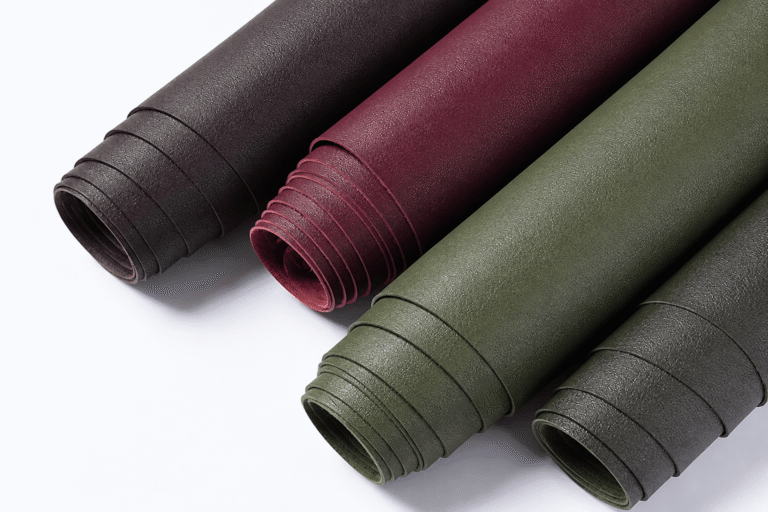
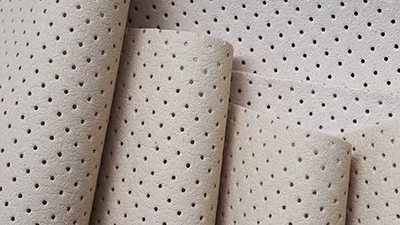
Car seat upholstery heat shrinkage should be evaluated on clearly identified specimens: the supplied face material, the converted laminate and the sewn panel are not interchangeable test articles. Measure marked reference distances before exposure and after the specified cooling and conditioning sequence, then assess the intended cover fit. Keep dry-heat dimensional change separate from UV fading, humid-heat deterioration and other performance questions. An accelerated-ageing report alone does not define an acceptable shrinkage percentage for every seat.
Define the dimensional problem before choosing an exposure
A reported problem may be a shorter cut panel, a shifted seam, edge curl or an installed cover that no longer matches its reference. Record which feature changed and how it was measured. Do not use “shrunk” as a substitute for a measurement when the actual observation is a wrinkle or local distortion.
Identify the material construction and manufacturing history. A face material that was subsequently laminated or sewn has passed through additional processes. If the complaint concerns that converted component, retain the conversion and pattern records rather than asking the roll supplier to explain a finished-cover photograph without context.
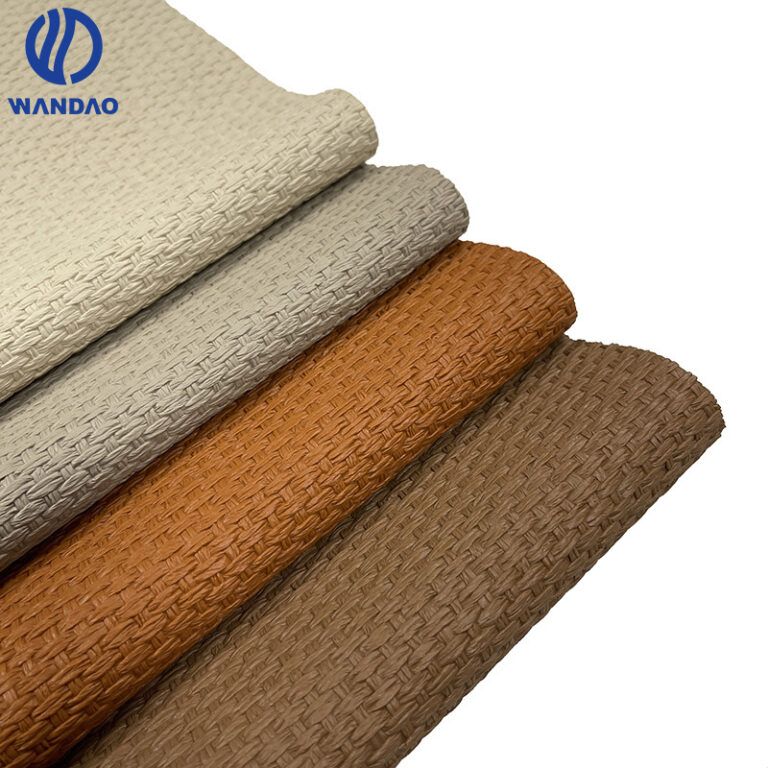
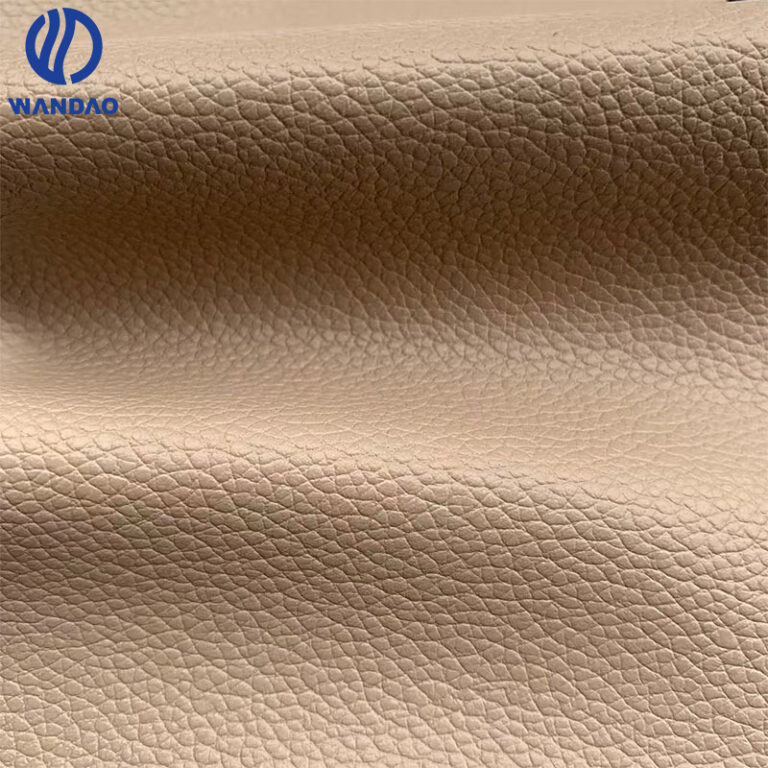
For a PU automotive upholstery candidate, provide the intended panel and thermal-exposure requirement with the sample request. Approval should describe the actual construction and process stage under review, not every product sold under the PU name.
Separate three car seat upholstery heat shrinkage specimens
| Specimen | Question it helps answer | What it does not establish alone |
|---|---|---|
| Supplied face material | How do its marked dimensions change? | Behaviour of every added laminate layer |
| Production-intent laminate | How does the converted stack respond? | Fit of the complete sewn cover |
| Sewn panel or cover | Do critical features retain the required relationship? | Cause within one particular layer |
| Approved assembled seat | Does the configuration meet the programme? | Automatic approval of other seat variants |
Use comparable material identities across the development stages where the objective is to understand conversion effects. If the free sample and laminate came from different constructions, their difference cannot isolate lamination. Record that limitation or arrange a better-controlled comparison.
Also state whether a specimen is unrestrained or held in a defined fixture. Those are different test arrangements. A free specimen’s change and a fitted cover’s appearance can both be useful, but they should not be combined into a single number without identifying the conditions.
Use ageing standards as methods, not universal seat limits
ISO 1419:2019 describes methods for assessing deterioration of coated fabrics by accelerated ageing. Its public scope is broader than a particular automotive dimensional-stability requirement. Select the applicable method and follow-up measurements with the laboratory and programme owner.
Write the exposure, duration, specimen arrangement, initial conditioning and post-exposure sequence into the test plan. Do not accept an undated statement such as “heat tested” as sufficient detail. The required dimensional limit must come from the customer-approved specification or a validated development decision, not from an invented industry-wide percentage.
Keep the dry-heat question distinct from humid heat, light exposure, fogging and flammability. A result in one programme does not silently provide evidence for all the others. If multiple properties are assessed on conditioned material, identify each method and its result separately.
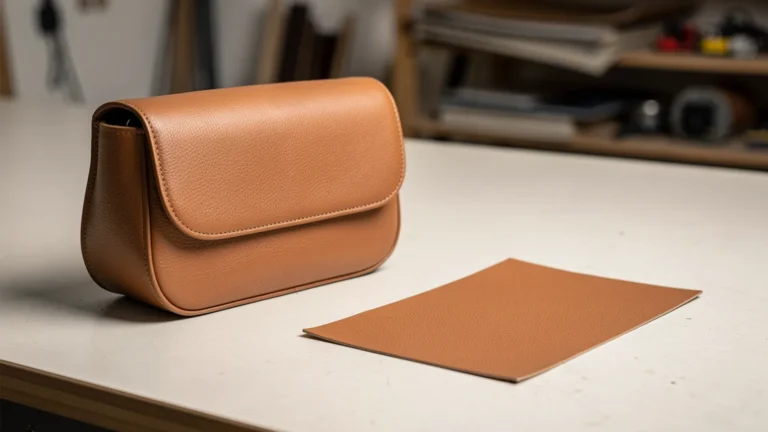
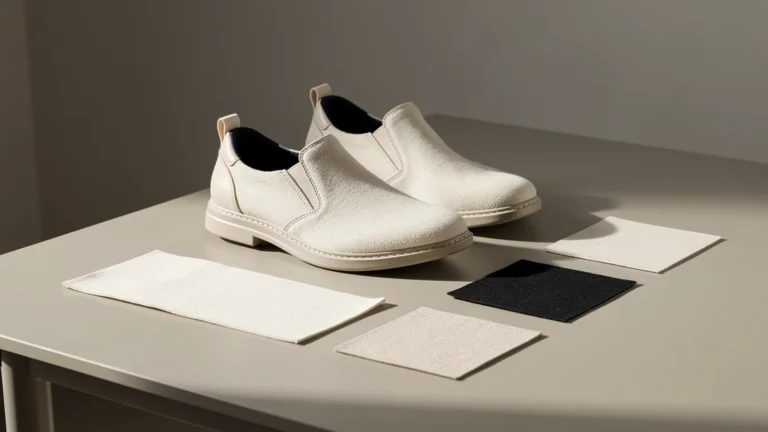
Image placeholder: Matched marked specimens of supplied face material, converted laminate and sewn seat panel, each with its own identity and measurement datums. No invented oven settings or pass limits.
Make the measurement repeatable
Mark reference distances in the agreed principal directions and identify critical panel datums. Record the starting measurements under the specified condition. Use a marking and measuring procedure suitable for the surface so that the marks remain identifiable without altering the intended test.
For a shaped panel, agree whether dimensions are measured flat, on a fixture or in another defined state. A curved path measured on a seat is not automatically equivalent to a straight distance on a table. Keep the method attached to each dimension so another inspector can repeat the observation.
Use the same measurement convention throughout. One useful signed calculation is: dimensional change (%) = (after distance − initial distance) ÷ initial distance × 100. Under that convention, a negative result indicates contraction and a positive result indicates extension. State the convention rather than assuming every report uses the same sign.
As a hypothetical arithmetic example, a 400 mm reference distance measuring 396 mm after the specified conditioning has changed by −1%. The absolute change is 4 mm. Neither figure is an acceptance recommendation. Whether it matters depends on the actual panel feature and the programme’s requirement.
Distinguish the observation stages
Record the baseline, any specified intermediate measurement and the final measurement after the agreed cooling and conditioning. Do not compare a hot or newly removed specimen with a conditioned reference as though both were in the same state. Laboratory procedures should govern safe handling and measurement.
Use “residual change after the stated interval” when that is what the test demonstrates. A finite observation period does not establish that a change is permanent under every later condition. Conversely, partial recovery should not be described as a pass if the remaining change exceeds the agreed requirement.
Record visible curl, seam displacement or other specified observations separately from the marked-distance result. A specimen can retain one measured span while developing a local appearance concern. The inspection plan should identify the critical features rather than assuming one length captures every relevant outcome.
Use the pattern of results to guide the next comparison
If the free material changes and the same trend appears in the converted forms, investigate the material and its processing history with the supplier. If the free specimen remains within the agreed criterion but the laminate changes, examine the converted stack and process. These are directions for investigation, not automatic root-cause conclusions.
If the concern appears only after sewing or fitting, review the pattern, orientation, seam arrangement and restraint conditions with the seat-cover team. Do not immediately enlarge every pattern to hide the result. A compensation change can affect initial fit and other features and therefore needs its own controlled validation.
Keep one-variable comparisons where practical. When several inputs change together, report the outcome as a new combination rather than evidence that one particular layer caused or solved the original issue. Preserve the original specimens and measurements so the reasoning remains auditable.
Check fit without altering controlled seat interfaces
Have the responsible manufacturer evaluate the accepted panel on the intended approved assembly. Compare critical seam and attachment relationships with the reference. Do not force an out-of-specification cover into place or alter a controlled opening to make a trial appear successful.
The wider automotive upholstery specification should identify the actual seat zone and design authority. Dimensional testing does not authorise changes to airbag-related seams, sensing features or other safety-relevant interfaces. Those remain subject to the programme’s engineering and validation controls.
A successful fit check is also not a service-life prediction. Keep the accelerated exposure and assembly observations tied to their stated conditions. Do not convert test hours into years of vehicle use without relevant, validated correlation evidence.

Release a specification that identifies what was tested
Include the face-material code, laminate stack, pattern revision, direction, test method, exposure, conditioning sequence and acceptance limits. Attach raw dimensional results and relevant photographs, not only a pass statement. Identify which seat configurations the approval covers.
Require review of relevant changes to the material, backing, conversion, sewing or panel design. A visually similar replacement can still need a new dimensional assessment. The programme should decide the extent of testing from the changed inputs rather than automatically reusing an old report.
To prepare a sample comparison, send Wandaoleather the seat-panel construction and heat-dimensional-stability brief. Include the measurement stages and critical datums so the material discussion addresses a defined fit requirement rather than a generic “heat-resistant” label.
Frequently Asked Questions
Does a flat material heat test approve a sewn seat cover?
No. The converted stack and sewn panel introduce additional construction and restraint conditions. Evaluate the relevant stages and the intended cover fit separately.
Is there a universal acceptable shrinkage percentage?
No percentage is established here. Use the programme’s approved dimensional limits with the specified method, exposure and measurement conditions.
Should a negative dimensional-change value mean shrinkage?
It does under the stated after-minus-initial convention. Confirm the sign convention in each report, because some reports express shrinkage as a positive quantity instead.
Does dry-heat testing also prove hydrolysis or UV resistance?
No. Those are different exposure questions. Keep the applicable methods and evidence separate rather than extending one result to unrelated properties.
Can the cover pattern simply be enlarged to compensate?
Only through controlled development and approval. A pattern change affects the complete fit and must be validated rather than used to conceal an unresolved material or process issue.
Can accelerated heat hours be converted directly into vehicle years?
No general conversion is supported here. Report the actual test conditions and results without claiming a service-life equivalence that has not been validated for the application.