Faux Leather vs Real Leather: Start with the Bag, Not the Swatch
A soft shoulder bag and a structured work tote ask different things of their materials. Before requesting alternatives, agree the silhouette, intended contents, carrying arrangement, visible surfaces and expected care. Decide which requirements are fixed and which can change during development.
A brand may require animal-hide leather, or it may require an animal-free construction. Resolve that sourcing decision first. If both families are acceptable, give suppliers the same drawing and component brief. Otherwise, one quotation may describe a reinforced bag while another covers only a decorative outer sheet.
Our synthetic materials for bags page is the main starting point for discussing the faux-leather side of the comparison. This guide concerns development choices between a specified coated material and a specified hide leather, rather than ranking all synthetic materials against one another.
Keep the bag’s outer material separate from its lining, reinforcement, edge finish and hardware. These items belong in the comparison even if they come from different suppliers. Approving an attractive outer panel should not silently approve the rest of the construction.
Identify Exactly What Each Supplier Is Offering
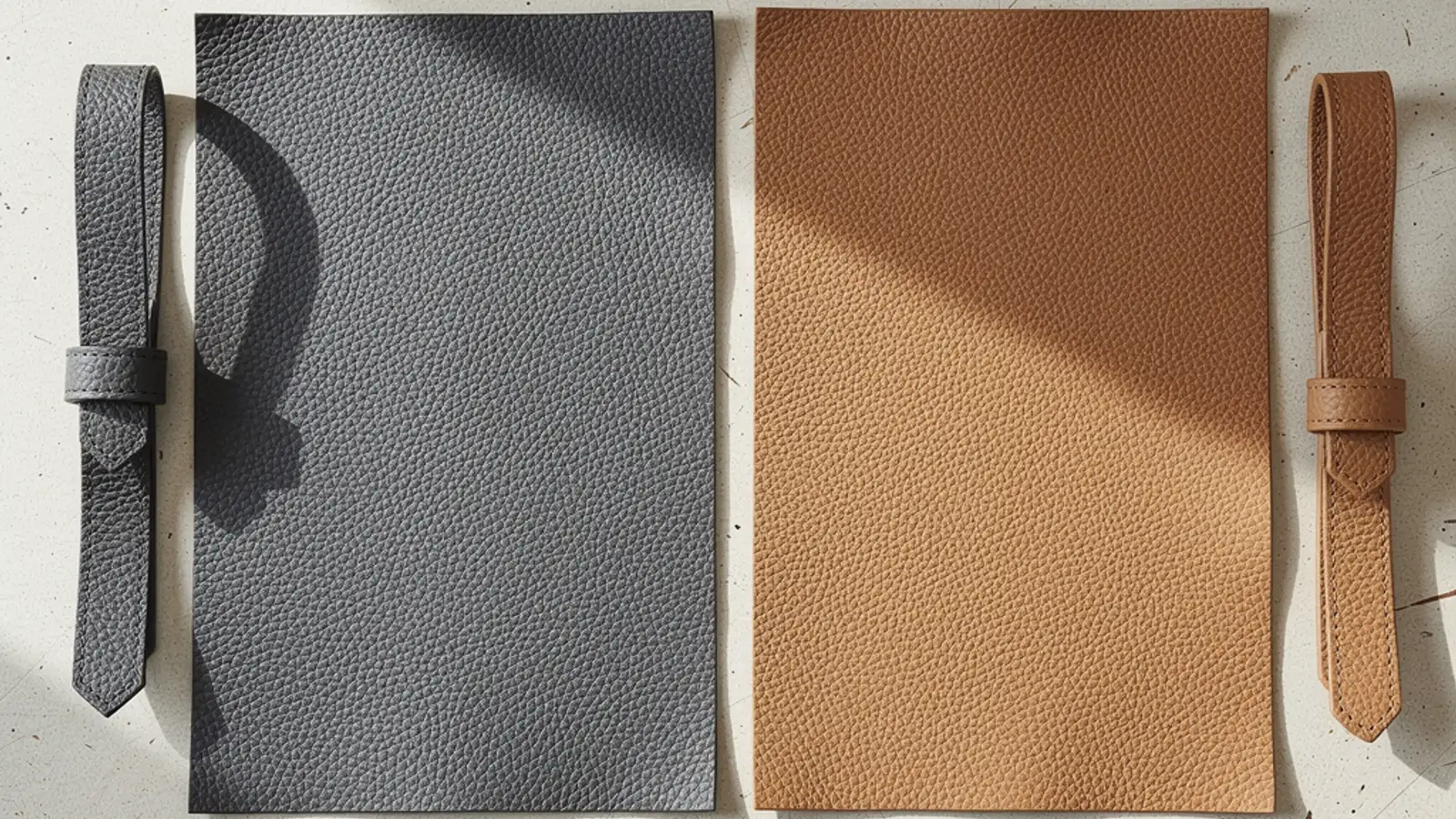
For the hide-leather candidate, ask for its material description, thickness range, grain treatment and finish. Leather Working Group’s terminology guide distinguishes full-grain, corrected-grain, split and finished leather descriptions. “Real leather” alone does not tell the sample room which construction has been proposed.
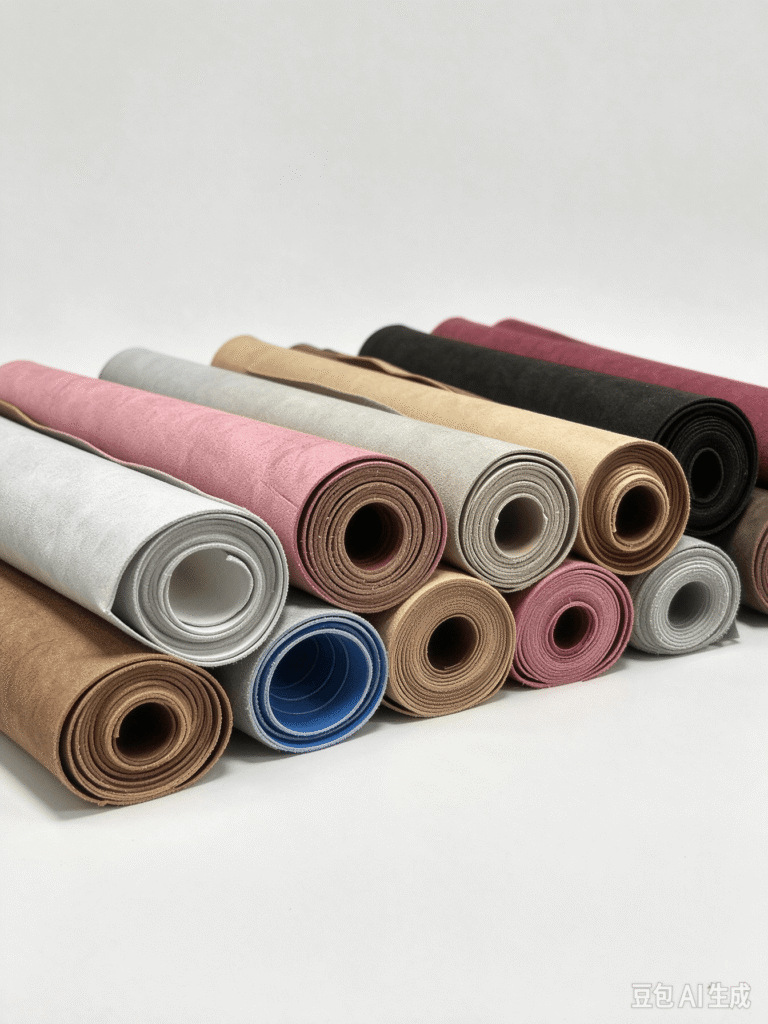
For the faux-leather candidate, request the surface system, backing, intermediate layers and total thickness. The ACT description of coated fabrics identifies a substrate carrying one or more polymer wear layers. That construction description is useful here; ACT’s upholstery performance guidelines should not be represented as handbag approval criteria.
Record a product code and finish reference for each candidate. If the supplier changes the backing or surface treatment during sampling, ask whether the existing evidence still applies. Keep a retained sample so that the next meeting concerns the same material, not a similar-looking replacement.
| Decision | Hide-leather candidate | Coated faux-leather candidate |
|---|---|---|
| Material identity | Leather description, grain and finish | Surface system, support and additional layers |
| Panel approval | Agree usable areas and appearance limits | Agree usable width, direction and appearance limits |
| Edge design | Trial the proposed finished edge | Trial the proposed finished edge, including exposed support |
| Carry performance | Check the assembled attachment construction | Check the assembled attachment construction |
| Price comparison | Cost the accepted pattern set | Cost the accepted pattern set |
Develop Panels, Straps and Edges as Separate Decisions
Start with the largest visible panel. Review its shape on the proposed reinforcement and lining, not only while holding a loose swatch. A material that looks suitable when flat may need a different supporting construction to achieve the intended silhouette. Treat that as a design decision to demonstrate, not a reason to declare the whole material family unsuitable.
Next, build the handle or strap attachment. Record the outer material, folded layers, reinforcement, thread and attachment arrangement. Ask the developer to show how the proposed construction transfers the carrying load. The front panel and the handle attachment do not have the same job, even when they share a colour.
Approve the edge on both a straight section and the actual corner shape. If the design uses paint, binding or a turned edge, include that operation in the prototype and quotation. On a coated material, check whether the cut exposes a backing that the design needs to conceal. On hide leather, review the proposed edge preparation rather than assuming any hide can take any edge finish.
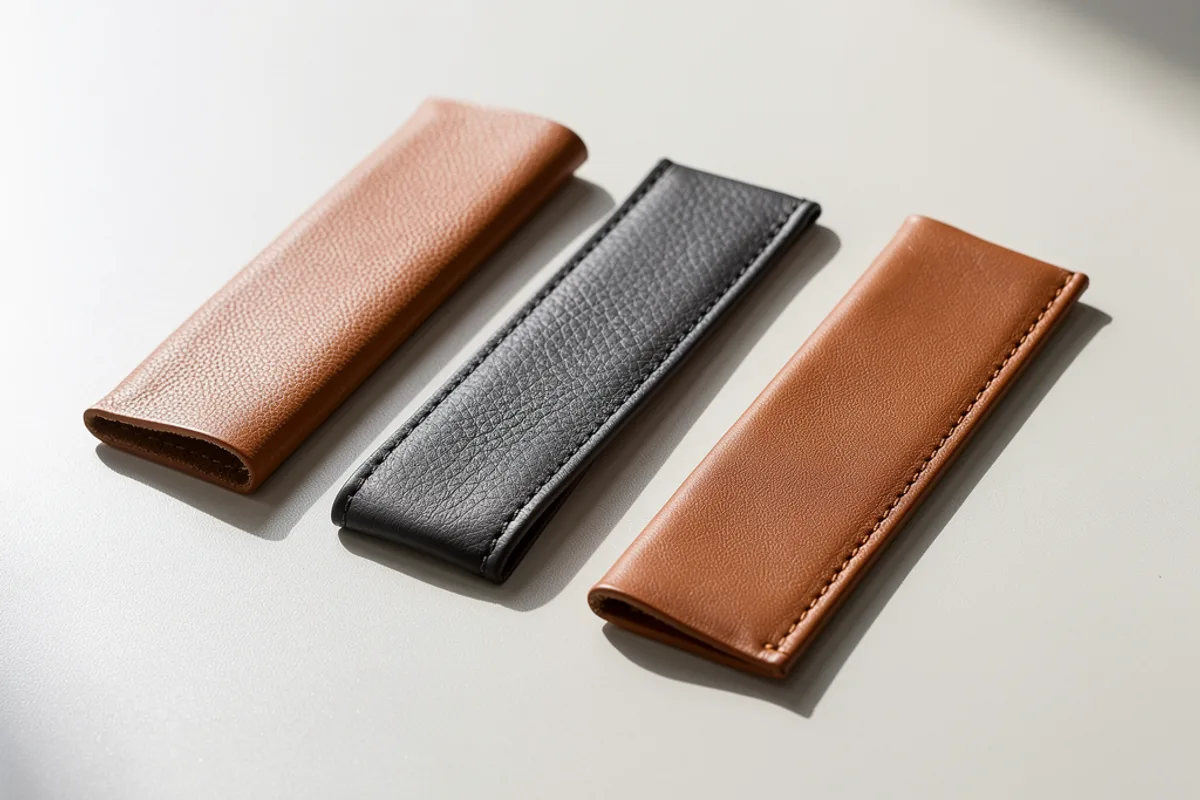
These are practical development recommendations, not universal sewing settings. Let the sample room select suitable settings for each material, then record them. Forcing both candidates through an unsuitable identical process can produce a misleading comparison. Conversely, hiding extra reinforcement or processing makes a favourable sample look cheaper than it really is.
Compare Cutting Cost Using the Approved Pattern Set
Do not compare a price per hide or area directly with a price per linear metre. Ask each supplier to state the selling unit and usable dimensions, then have the maker estimate consumption for the same approved bag. Keep the estimate separate from consumption measured during a trial run.
For hide leather, request a layout that respects the agreed appearance limits and available cutting areas. For roll material, record usable width, pattern direction, any emboss repeat and excluded defects. Neither layout should assume that every purchased area becomes an acceptable visible panel.
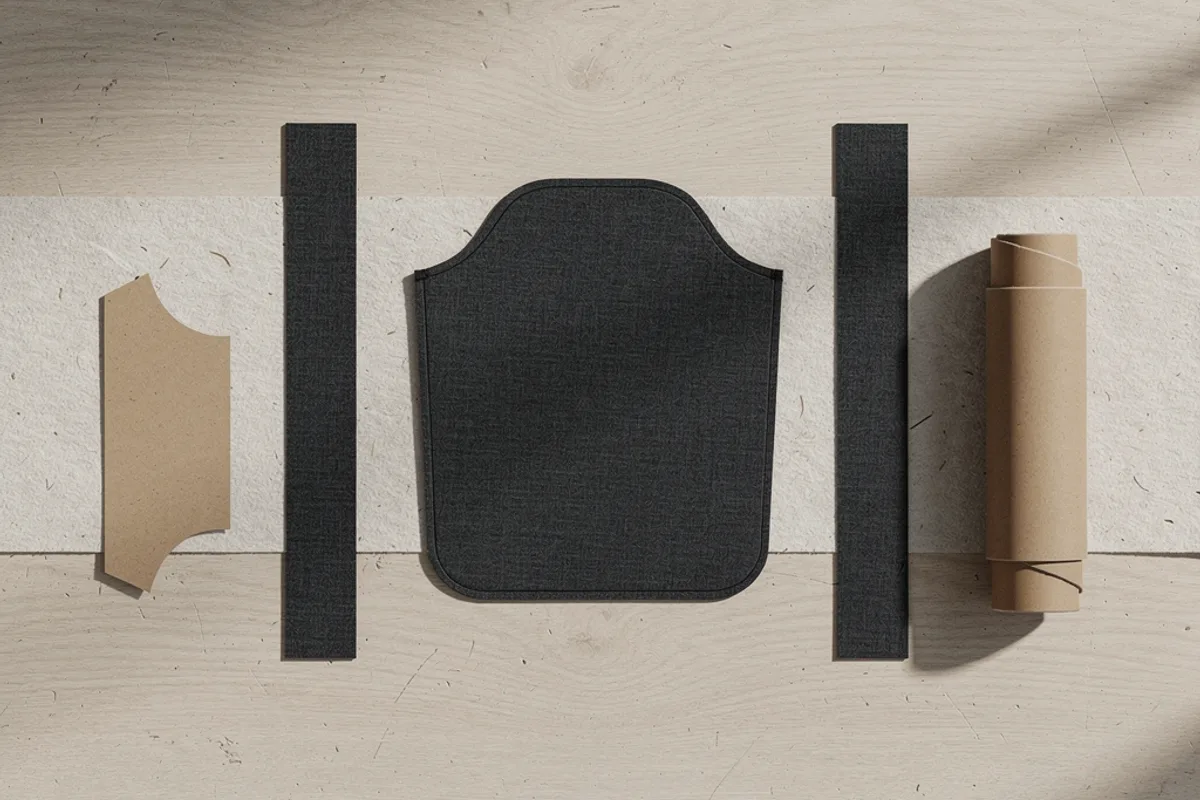
A useful comparison includes the complete pattern set: main panels, gussets, pockets, tabs and straps. Record which pieces may use offcuts and which need uninterrupted appearance. A yield claim based only on small rectangles may say little about a bag with a large curved front.
Add the processing introduced during development, including reinforcement, lamination or edge finishing. The result is a project-specific cost comparison. It is not evidence that faux leather always saves a fixed percentage, or that a more expensive hide produces a better bag.
Test Colour Transfer Where the Bag Contacts Clothing
Colour transfer deserves its own review. SATRA’s guidance on handbags identifies straps, handles and edge colouring as relevant contact areas, and discusses rubbing, water and perspiration assessments. It also notes that trims can contribute to staining. A clean-looking main panel does not resolve every contact point.
Ask the laboratory to select appropriate methods for the actual materials and intended contact. Identify the colour, finish and component being tested, along with the conditions and acceptance criteria. Keep transfer onto another material separate from visible damage to the bag’s own surface.
Use the finished edge or strap construction when that is the uncertainty. A report for the unpainted outer sheet does not answer whether a later edge coating will mark clothing. Similarly, review the lining if the project includes pale contents that might contact it.
Avoid making the comparison into “natural materials bleed” or “synthetics never bleed.” The useful result is attached to an identified specimen and method. If a new colour or finish is proposed, ask what existing evidence covers it and what additional review is needed.
Separate Surface Tests from Finished-Bag Strength
Choose tests to answer specific failure concerns. For a coated textile, ISO 2411:2024 addresses coating adhesion. For eligible finished leathers, ISO 11644:2022 addresses adhesion of the finish or adjacent finish layers. The two references do not justify treating every reported adhesion value as directly interchangeable.
Ask the laboratory to confirm applicability, preparation and the failure being measured. Record whether separation occurred within a layer or at an interface if the report provides that information. A method name and a single number are not enough to explain an unfamiliar result.
Move from material evidence to the assembled product. SATRA TM243, for example, addresses the response of luggage handles and their attachments to a defined snatch-loading test and includes bags within its scope. It illustrates why a handle construction needs evidence beyond a flat swatch. Have the testing specialist choose the relevant programme rather than borrowing a loading requirement from an unrelated product.
Keep observations specific. If a prototype fails at a strap tab, record the tab, reinforcement and stitching before blaming the outer material. If the surface changes at a fold, identify the location and conditions. Neither failure should be hidden by an unrelated favourable abrasion result.
Make the Final Choice with an Approval Record
Choose the candidate that satisfies the fixed sourcing requirements, intended appearance, component trials and agreed evidence review. If both pass, compare the documented finished-bag cost and the care requirements you can support. If either has missing evidence, mark that gap rather than awarding an assumed pass.
Keep the approved bag, material codes, colour references, construction notes and reports linked together. Define who reviews substitutions before production. A later change to the backing, reinforcement or edge system should not disappear behind an unchanged collection name.
If a PU-coated candidate remains under consideration, see our PU materials for bag development. The next enquiry should carry the approved component requirements rather than restart with a generic request for soft faux leather.
Frequently Asked Questions
Is faux leather or real leather better for handbags?
Neither label settles the choice. Compare identified materials in the intended bag construction, including appearance, seams, edges, carrying attachments, relevant tests and finished-bag cost. Apply any animal-origin requirement before comparing performance.
Does real leather always make a stronger bag?
No material label proves finished-bag strength. Review the actual handle, strap, seam and reinforcement arrangement. Material test results and assembled-product results answer different questions.
Is faux leather always cheaper after production?
Do not assume that from the selling price. Compare consumption for the same approved pattern set and include reinforcement, lamination, edge finishing and rejected pieces. Use measured trial information where available.
Should bag straps and edge paint be checked for colour transfer?
Yes. Include relevant contact components in the test plan rather than relying only on the main panel. Ask the laboratory to select suitable methods and conditions for the finished strap or edge construction.
Can a coating-adhesion report approve the whole handbag?
No. It addresses the identified specimen under the stated method. The bag’s carrying attachments, seams, closures and other relevant construction details need their own review.
What should a comparative sample request include?
Send the bag drawing, intended use, fixed sourcing requirements, appearance target and component construction questions. Ask for traceable material codes, relevant reports and quotations based on the same pattern set.
Request Materials for a Defined Bag Project
To discuss the synthetic candidate, send Wandaoleather your bag development brief. Include the main panel, handle or strap, edge design and intended appearance. Those details make a sample comparison more useful than a broad request to choose between faux leather and real leather.