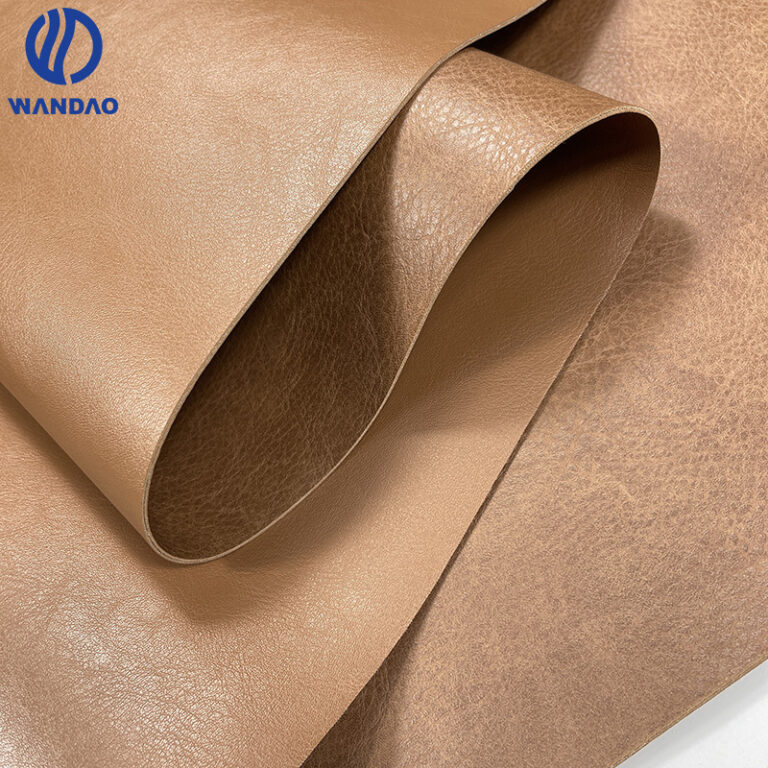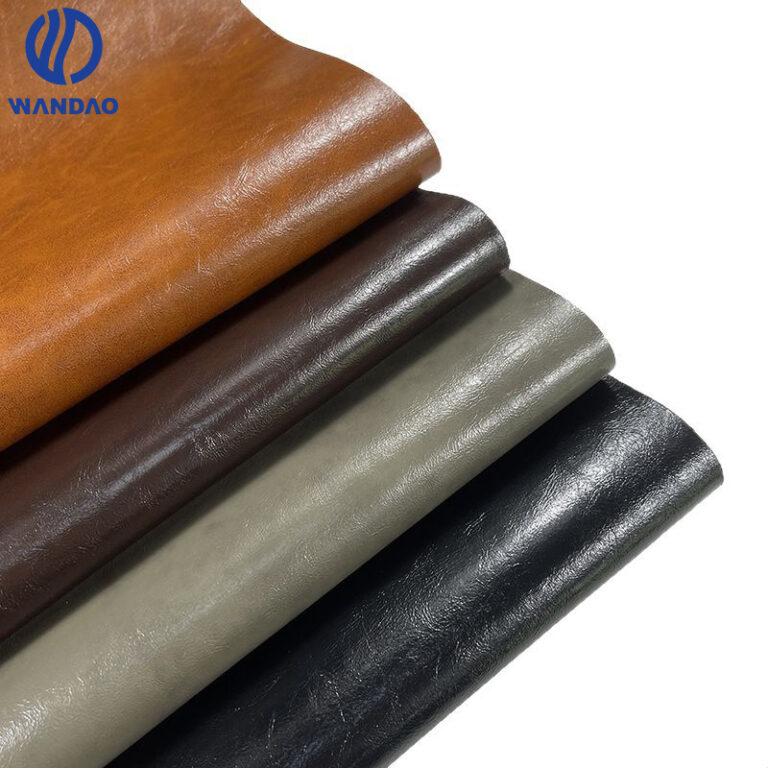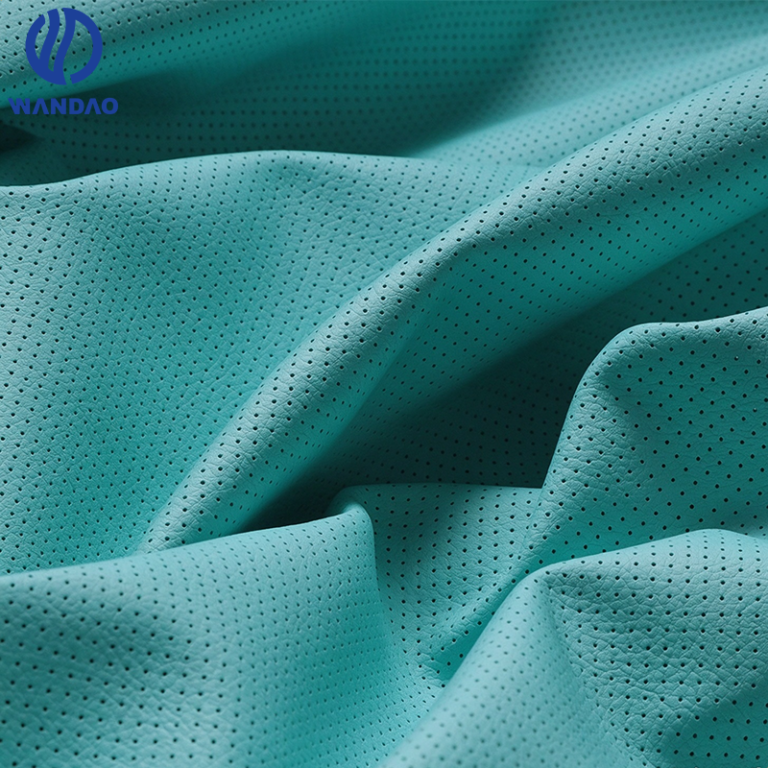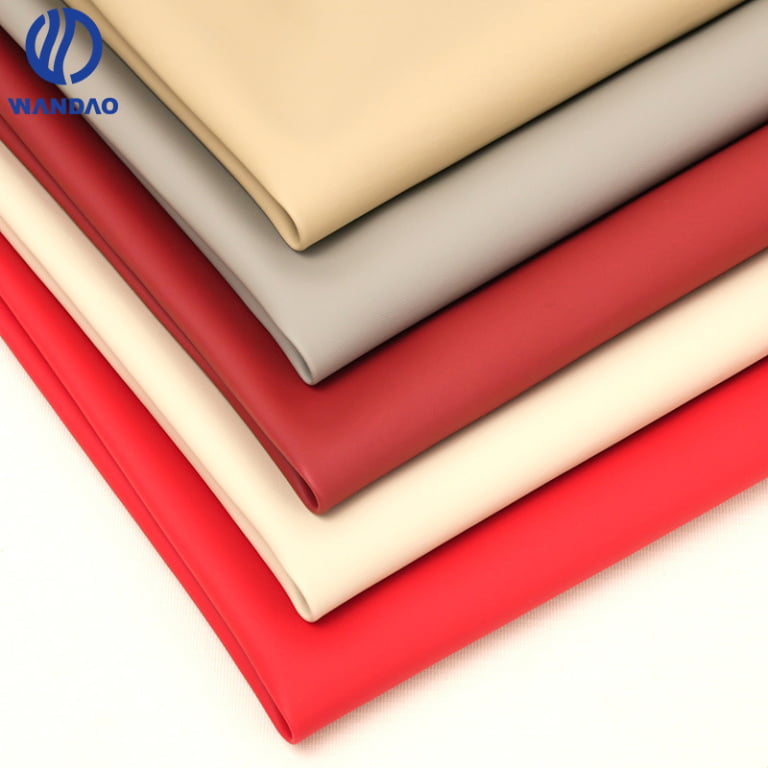
What “Lifespan” Actually Means for PVC Furniture Leather
Lifespan, in this context, refers to the length of time a PVC-coated upholstery material stays functionally and visually acceptable — no cracking, peeling, stiffening, or major discoloration — under a defined use pattern.
For household seating, the working range reported across furniture-industry sources is 2–5 years, with exposure to sunlight, heat, or frequent flexing pulling that down toward the low end. A broader estimate puts general faux-leather furniture at 2–10 years, though that range folds in higher-end synthetic constructions that go well beyond basic PVC. Commercial seating tends to run longer because the material is usually spec’d heavier and maintained more consistently — a common estimate is 3–7 years, with better-quality commercial PVC upholstery cited at 5–8 years before cracking becomes visible. If you need one planning number, about 4 years is a reasonable average for everyday PVC sofas, with shorter life in hot or sun-exposed settings and longer life for commercial-grade product.
It’s worth being direct about a limitation here: ASTM and ISO standards don’t actually define a universal “lifespan in years” for PVC faux leather. What they define are durability tests — abrasion, flexing, aging — that predict how a material will behave relative to another material, not a guaranteed calendar figure. That’s the opportunity as much as the limitation: a buyer who understands this can stop chasing a mythical “X-year warranty number” and instead build a spec around the tests that actually correlate with field performance.
There’s a dialectical point worth sitting with here. The problem side is obvious: a wide lifespan range makes it hard to compare quotes on paper, and it’s easy for a weak product to hide behind a vague “durable” claim. The opportunity side is that lifespan variance is mostly explainable — it isn’t random. A 2-year sofa and an 8-year sofa are usually separated by identifiable, checkable differences in formulation and construction (covered in the sections below), not by luck. That means a buyer who knows what to ask for can push toward the long end of the range instead of accepting the average.
Action:
Don’t ask a supplier “how many years will this last” — ask for the test data behind the claim, and set your own replacement-cycle expectation based on end use (residential vs. contract) rather than a marketing figure.
How Do You Know When PVC Leather Has Reached the End of Its Lifespan?
Many buyers ask how many years PVC furniture leather will last, but the more useful question is how to recognize when the material has actually reached the end of its service life.
PVC leather doesn’t suddenly fail because it reaches a certain age. Instead, it gradually loses the performance required for everyday use. In most cases, replacement becomes necessary when one or more of the following signs appear:
- Surface peeling that exposes the backing fabric.
- Visible cracks that continue to spread during normal use.
- The PVC coating becomes stiff and brittle instead of remaining flexible.
- Deep discoloration or yellowing that cannot be cleaned.
- Coating separation around seams or high-stress areas.
- The upholstery no longer provides adequate appearance or protection.
For furniture buyers, lifespan should be evaluated by functional performance rather than calendar age. A well-manufactured PVC leather may still perform well after several years, while a lower-grade product may require replacement much sooner under the same conditions.
Abrasion Resistance: The Number That Predicts Wear Before It Happens
Abrasion resistance testing refers to the standardized lab methods that rub a material under controlled pressure and motion until visible wear, coating failure, or yarn breakage occurs, producing a cycle count that predicts wear behavior.
Two methods dominate this space. Martindale, the more common international method, rubs the specimen in a multi-directional motion and is standardized under ISO 5470-1 and ASTM D4966 [ANSI/ASTM]. Wyzenbeek, the standard North American method, rubs the specimen back and forth in a straight line and reports results in double rubs; SATRA TM31 is also widely used for coated fabrics and leathers [SATRA]. Critically, Martindale cycles and Wyzenbeek double rubs are not numerically interchangeable — the wear pattern and motion differ, so a “30,000” from one method doesn’t mean the same as “30,000” from the other [ANSI/ASTM].
For practical benchmarking: residential furniture commonly targets 15,000–25,000 double rubs (Wyzenbeek) or roughly 20,000–40,000 cycles (Martindale). Commercial furniture typically wants 30,000+ double rubs or roughly 50,000+ Martindale cycles, with heavy-duty contract seating specified even higher. One important caveat for PVC specifically: because it’s evaluated as a coated fabric, the abrasion number depends heavily on coating thickness, backing cloth, plasticizer package, and topcoat chemistry — not on “PVC” as a generic label. A well-made PVC product can comfortably clear residential thresholds but still fall short of contract-grade numbers if the coating is thin or the backing is weak [SATRA].
There’s a real opportunity in how narrow this test category is. Unlike lifespan-in-years, which is inherently fuzzy, an abrasion cycle count is a repeatable, comparable lab number — which means it’s one of the few places in this whole evaluation where you can put two suppliers’ data side by side and get an actual apples-to-apples answer, provided the test method matches. The problem is that buyers frequently skip that verification step and take the headline number at face value, which is exactly where mismatched Martindale-versus-Wyzenbeek comparisons quietly distort a sourcing decision.
Action:
When you receive a rub-count number from a supplier, confirm which test method produced it (Martindale or Wyzenbeek) before comparing it against another quote — treating the two as equivalent is one of the most common sourcing mistakes in this category.
The Real Reasons PVC Leather Cracks, Peels, and Fades
Aging, in PVC furniture leather, refers to the gradual breakdown of the polymer surface driven by UV exposure, plasticizer loss, heat, and repeated mechanical flexing, rather than any single failure cause acting alone.
UV exposure breaks down the PVC coating through a process technically linked to UV-driven dehydrochlorination, producing yellowing, brittleness, and eventual surface cracking [PVC Stabilizer]. Running alongside that, plasticizers — the additives that keep PVC soft and flexible — migrate out of the matrix over time, especially under heat, which raises stiffness and glass-transition behavior and makes the material more prone to cracking [PMC/NCBI]. Add in mechanical fatigue from repeated sitting and flexing, which opens microcracks that later become visible splits, plus moisture and thermal cycling, which accelerate embrittlement and coating separation especially in lower-quality constructions — and you get the typical PVC failure pattern: fine surface cracking that widens into peeling.
The accelerated-aging tests used to predict this include xenon arc weathering (ISO 4892-2, ASTM G155, and EN 513 for PVC-based materials specifically) and QUV fluorescent UV aging (ASTM G154, ISO 4892-3), both of which simulate sunlight and moisture stress over compressed timeframes [EN 513 standard]. Neither test converts directly into a guaranteed number of service years — the conversion depends on formulation, thickness, backing, pigments, and stabilizers — but the comparative value is real: a material that survives more exposure hours with less color shift or cracking is expected to perform better in the field [EN 513 standard]. In ordinary household use, visible aging tends to show up on a 2–5 year timescale if the piece sees regular sun or flexing; in harsher commercial or sun-exposed settings, lower-cost material can fail in 1–3 years while better commercial-grade product holds up 3–7 years.
I ran a small, informal version of this test myself out of curiosity: three PVC leather swatches from different suppliers, taped to a south-facing window sill for about six months. The cheapest sample started showing hairline surface cracking and a visible color shift around the four-month mark; the mid-tier sample held its color but got noticeably stiffer to the touch; the sample with a documented UV-stabilized topcoat showed almost no change. It wasn’t a lab test, but it lined up with exactly what the aging-mechanism data above predicts — UV and heat expose formulation differences faster than anything else, and you can see the gap in a single windowsill before you ever see it in a customer’s living room.
Action:
For any PVC leather going into sunny or high-traffic seating, require documented xenon-arc or QUV results alongside flex and adhesion test data — cracking is almost always the product of multiple stressors compounding, not one cause you can screen for in isolation.
Expected Lifespan for Different Furniture Applications
Although suppliers often quote a general lifespan, the actual service life depends heavily on where the furniture is used. Commercial seating experiences much higher daily stress than residential furniture, while environmental conditions also play an important role.
| Furniture Application | Typical Lifespan |
|---|---|
| Residential sofas | 5–8 years |
| Dining chairs | 4–7 years |
| Office seating | 3–6 years |
| Restaurant booths | 2–4 years |
| Hotel lobby furniture | 3–5 years |
| Hospital waiting chairs | 4–7 years |
These figures assume normal maintenance and average indoor conditions. Continuous UV exposure, heavy commercial traffic, or poor-quality materials can significantly shorten service life.
The Manufacturing Variables That Separate a 2-Year Product From an 8-Year Product
Manufacturing quality, in the context of PVC furniture leather, refers to the combination of raw material grade, plasticizer system, backing fabric, and coating construction that determines how well a given piece resists the aging and abrasion mechanisms described above.
Raw material grade starts with the stabilizer system: PVC can dehydrochlorinate during processing and again during aging, causing discoloration and strength loss, and modern formulations increasingly rely on calcium-zinc (Ca-Zn) stabilizers to suppress this [PVC Stabilizer]. Plasticizer type matters just as much — lower-quality or highly migratory plasticizers leach out over time, raising hardness and cracking risk, which is why newer formulations are trending toward lower-migration and lower-VOC plasticizer packages [Eureka Patsnap]. Backing fabric controls tear resistance and dimensional stability; a stronger woven or knitted backing reduces stress concentration in the PVC layer, while a weak or loosely bonded backing makes delamination and peeling more likely. Coating thickness is the fourth variable — too thin and the surface wears through and cracks early; too thick without good formulation and adhesion, and it becomes rigid and prone to surface checking [Eureka Patsnap].
Ranked by practical impact, the order generally runs: plasticizer/stabilizer chemistry first, backing fabric quality second, coating thickness and adhesion third, and surface finishing and pigments last [Eureka Patsnap]. That ordering makes sense once you separate the two failure modes: chemistry governs embrittlement and migration over time, while backing and coating structure govern whether the material survives repeated physical flexing without peeling. A supplier can nail one and still fail on the other — which is exactly why a single “quality grade” claim from a factory isn’t enough to predict field performance.
A practical specifier’s checklist follows directly from this ranking: look for a low-migration plasticizer formulation, a Ca-Zn or similarly modern stabilizer system, a tight and uniformly bonded coating, a backing fabric with documented tear strength and dimensional stability, and — ideally — supplier-provided abrasion, flex, and weathering results rather than a single “passed testing” statement [PVC Stabilizer]. The concise version of this whole section is that chemistry prevents aging, while backing and coating architecture prevent mechanical failure [Eureka Patsnap]. Those are two different engineering problems, and a supplier who’s only solved one of them will still produce a product that fails — just from a different cause than the one you were watching for.
Action:
Build your spec sheet request around these four variables specifically — ask for the stabilizer type, plasticizer migration data, backing fabric tear strength, and coating thickness/adhesion figures, not just a general “high quality PVC” claim.
Which Parts of PVC Furniture Wear Out First?
PVC furniture rarely wears out evenly. Certain areas experience much higher stress and usually show signs of aging long before the rest of the upholstery.
- Seat cushions – Constant compression and flexing make this the first area to develop wrinkles or cracks.
- Front seat edges – Frequent contact when sitting down causes coating wear.
- Armrests – Skin oils, friction, and repeated pressure gradually wear away the protective topcoat.
- Seam areas – Stretching around stitched joints may eventually lead to coating separation.
- Corners and folded edges – High flexing increases the likelihood of surface cracking.
Understanding these high-wear zones helps buyers evaluate furniture more accurately during inspections and predict future maintenance requirements.
Reading the Standards and Certifications That Actually Matter
Certification, for furniture-grade PVC leather, refers to documented compliance with recognized flammability, chemical-safety, and construction standards — evaluated separately from any lifespan or durability claim, and not a substitute for it.
The clearest product-construction standard in this space is ISO 7617-2, which specifies PVC-coated woven fabrics for upholstered furniture and distinguishes coated-fabric grades [ISO]. Flammability is generally covered by BS 5852 in the UK market and CA TB 117 / CA117 in the US, with some technical sheets also referencing EN 1021, BS 5867, NFPA 701, or EN 13501-1 depending on target market [JCJoel datasheet]. Chemical safety runs through REACH in the EU, which restricts substances like certain phthalates and heavy metals, and the OEKO-TEX Leather Standard, a certification scheme with its own harmful-substance limits for leather-like materials [OEKO-TEX]. Abrasion, as covered earlier, is generally reported as a separate test result rather than folded into a single certification [ISO].
Sourcing context matters here too. China holds an estimated 68% of the global PVC artificial leather market share, with production concentrated in industrial clusters like Guangdong (Pearl River Delta, including Guangzhou and Dongguan), Zhejiang, and increasingly Jiangsu. That scale is a genuine opportunity for buyers — broader factory choice, faster sample turnaround, and shorter lead times driven by localized supply chains — but it comes with a real caveat: certification depth varies significantly by factory, and “ISO 9001” or “REACH compliant” on a product sheet doesn’t confirm anything until it’s checked against the actual certificate number and lab report. Sourcing guides consistently recommend verifying factory legitimacy (business license, real production floor, ideally a third-party audit), confirming certificates against the issuing body rather than a logo, and requesting test reports for the exact SKU you intend to buy — abrasion, flammability, colorfastness, and flex-crack resistance specifically — rather than a similar product line.
This is where the problem and the opportunity sit closest together. The problem: “compliant” can mean a product passed a flammability test, a chemical-restriction audit, or a durability test — three completely different things — and a generic compliance claim doesn’t tell you which one. The opportunity: because the standards are well-documented and the certificate numbers are checkable, this is one of the few parts of the sourcing process where a buyer can fully close the information gap with a few extra emails and a bit of persistence, rather than having to just trust the factory’s word.
Action:
Treat certification claims as a starting point for verification, not proof — request the actual test report numbers matched to your specific product code before placing a bulk order, and match samples against your own acceptance spec rather than the supplier’s marketing samples.
Buyer Checklist Before Ordering PVC Furniture Leather
Before placing a bulk order, ask your supplier for more than just a lifespan estimate. The following checklist provides a practical way to compare different PVC leather products.
- ✔ Abrasion resistance (Martindale or Wyzenbeek test report)
- ✔ UV aging or weathering test results
- ✔ Plasticizer and stabilizer system information
- ✔ Coating thickness specification
- ✔ Backing fabric construction
- ✔ Adhesion strength data
- ✔ REACH or applicable chemical compliance reports
- ✔ Flammability certification required for your market
- ✔ Color fastness test results
- ✔ Warranty terms and recommended applications
A supplier who can provide objective testing data usually gives buyers much greater confidence than one who simply claims their PVC leather is “high quality.”
FAQ
Q: What’s a realistic average lifespan to plan around for PVC furniture leather?
A: About 4 years is a reasonable planning figure for everyday household use, with a typical range of 2–5 years at home and 3–7 years in commercial settings; better-made commercial-grade product can reach 5–8 years.
Q: Should I ask for Martindale or Wyzenbeek results?
A: It depends on your target market — Martindale (ISO 5470-1 / ASTM D4966) is more common internationally, Wyzenbeek (ASTM D4157) is more common in North America. The two numbers aren’t directly convertible, so confirm which method any rub-count figure came from before comparing suppliers [ANSI/ASTM].
Q: Does a higher abrasion rub count guarantee a longer real-world lifespan?
A: No. Abrasion resistance predicts wear-through performance, but plasticizer migration, UV exposure, and coating adhesion drive cracking and peeling independently — a high rub count with a poor stabilizer package can still fail early from aging rather than wear [PMC/NCBI] [Eureka Patsnap].
Q: What actually causes PVC leather to crack and peel?
A: A combination of UV-driven degradation, plasticizer loss under heat, repeated mechanical flexing, and moisture/thermal cycling — usually acting together rather than any single cause [PVC Stabilizer].
Q: Is PVC leather always less durable than PU leather?
A: No — this is a common misconception. PVC often performs better on abrasion resistance and moisture resistance, while PU typically wins on softness and a more natural hand feel. Quality varies more by formulation and construction within each material than between the two categories.
Q: What should I request from a Chinese PVC leather supplier before ordering?
A: At minimum, the actual test report numbers for abrasion, flammability, and chemical safety on the exact product code, certificate numbers you can verify with the issuing body, and physical samples matched against your own acceptance spec rather than the supplier’s showroom sample.
Q: Can PVC leather last longer than 10 years?
Q: Why does PVC leather sometimes peel after only two years?
Q: Does thicker PVC leather always last longer?
Q: Is warranty the same as expected lifespan?