Is car leather synthetic? Sometimes: a leather-looking car interior may use animal-hide leather, synthetic upholstery, textile inserts or a combination. The answer depends on the vehicle, trim package and individual panel, not simply the appearance of the seat. For replacement-trim and material buyers, the safest starting point is the exact vehicle specification followed by a panel-by-panel construction record. Treat an attractive grain, a familiar smell or the phrase “leather seats” as insufficient evidence of what every part contains.
Is Car Leather Synthetic Across the Whole Seat?
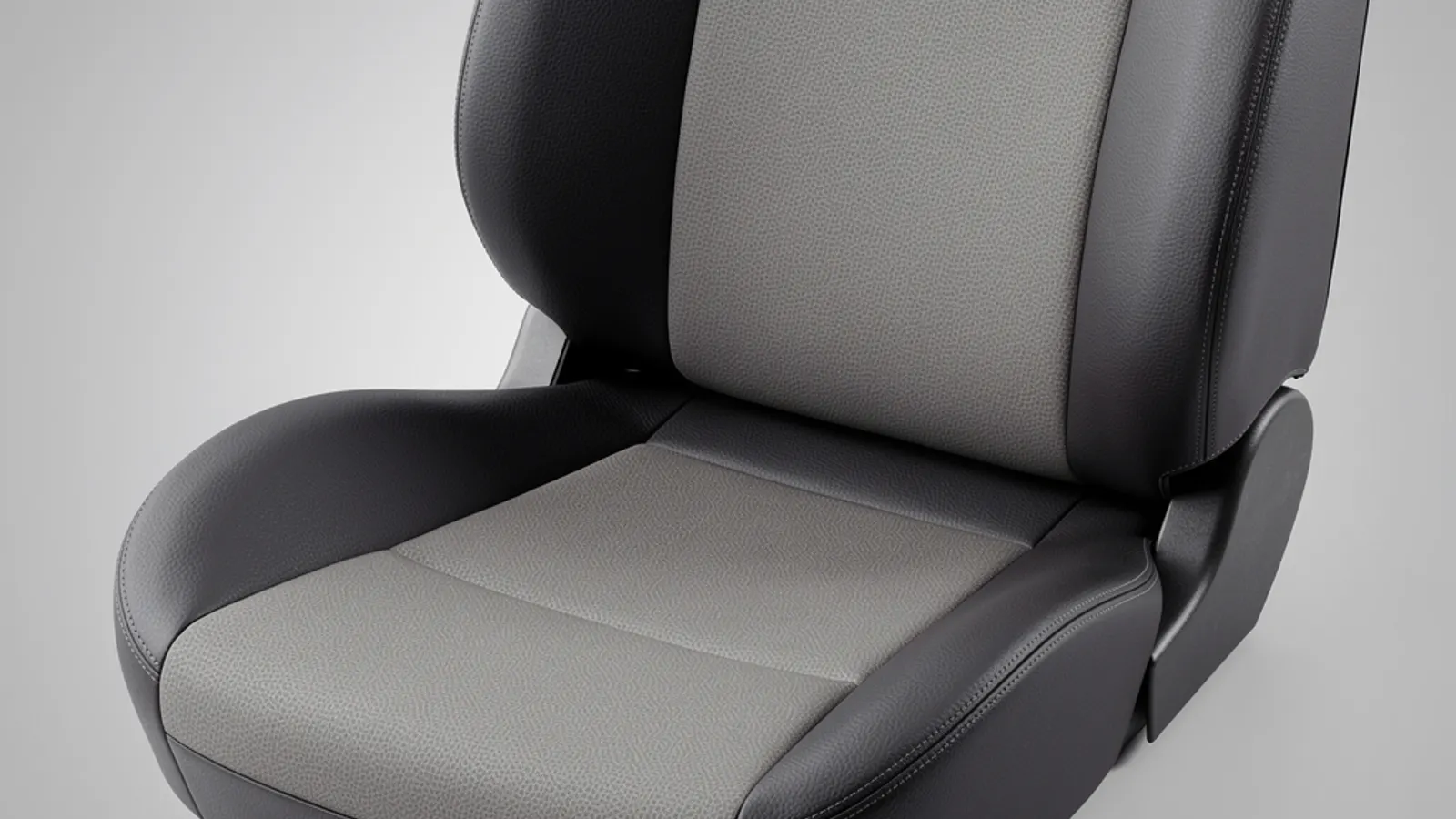
Do not assume that a single material description covers the seat cushion, backrest insert, bolsters, side panels, rear cover and headrest. Record each relevant location separately, including the seat row. A description limited to one surface cannot establish the composition of the rest of the assembly.
Manufacturer information illustrates why this matters. Toyota’s U.S. 2026 GR86 interior tour describes the Premium interior using Ultrasuede and leather-trimmed side bolsters. That is a location-specific description, not a statement that every visible seat panel is the same material. It should not be extended to another model year, market or trim.
Likewise, Toyota Australia’s May 2026 RAV4 specification table lists synthetic seat covering and leather-accented interior as different grade-dependent entries. This demonstrates the need to check the exact specification; it does not provide a universal composition rule for RAV4 interiors worldwide.
Our automotive upholstery material overview is a starting point for discussing replacement candidates. It does not identify the factory upholstery in a particular vehicle. Establish that identity before asking a supplier for an equivalent material.
Separate the Material Base from Its Surface Finish
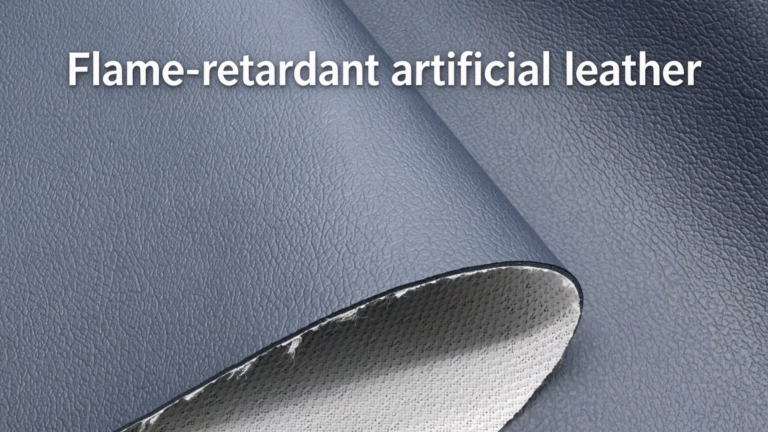
The first distinction is between animal-hide material and a manufactured textile-based alternative. The Leather Working Group glossary defines leather through its animal origin and retained fibrous structure. In contrast, the Association for Contract Textiles describes coated fabrics as substrates with polymer layers on the wear surface. These structural descriptions do not, by themselves, approve either material for a vehicle.
A polyurethane finish is not proof that the underlying material is synthetic textile. The leather-finishing overview hosted by Leather Working Group explains that polyurethane and other polymer binders can be used in leather finishes. The practical implication is to ask what lies beneath the finish, rather than classifying a panel from its top layer alone.
| Description received | Question still open | Useful clarification |
|---|---|---|
| Leather-trimmed or leather seating surfaces | Which exact panels and rows does the statement cover? | Vehicle-specific trim description and panel map |
| PU-coated material | What substrate is beneath the PU? | Construction sheet identifying the base and finish |
| Synthetic leather or leatherette | Which polymer, support and laminate are supplied? | Material code and layer description |
| Matching replacement upholstery | Does “matching” mean appearance only? | Separate identity, appearance and performance approvals |
Use this table as an inquiry framework, not a legal interpretation of marketing terms. If a seller’s wording is ambiguous, ask for a written explanation tied to the vehicle or supplied component. Do not fill in missing panel information from another manufacturer’s terminology.
Start with Records, Not a Home Identification Test
For an installed seat, begin with the vehicle identification, model year, destination market and trim or upholstery code. Ask the dealer or manufacturer for the relevant build information and replacement-cover part reference. Record the actual wording rather than shortening every description to “leather.”
Then ask whether the seat is still in its factory configuration. Previous repairs, retrimming or accessory covers create a second identity question: the original specification may no longer describe the installed panel. Keep any replacement invoice, part number or repair record alongside the original vehicle information. Where the history is unknown, mark it unknown.
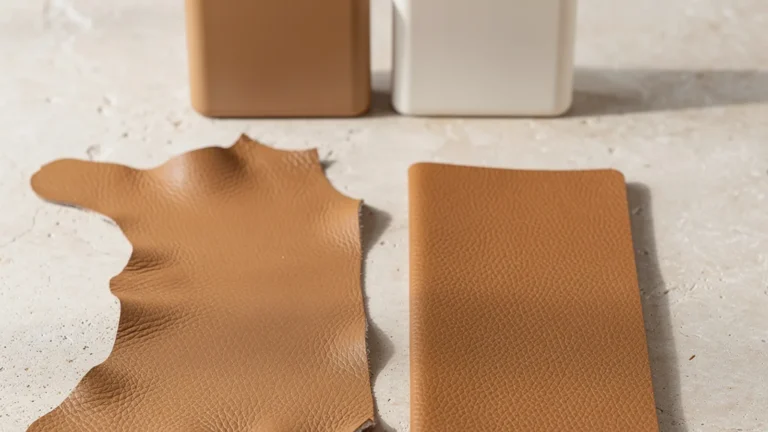
Photographs help locate the panel and communicate colour or grain, but use them as supporting records rather than a definitive composition test. Avoid a purchasing decision based solely on the claim that regular grain means synthetic, or that irregular grain means hide. The required evidence concerns the actual construction, not a visual shortcut.
Do not burn, scratch, soak or apply solvent to an installed seat to identify its material. Do not dismantle a seat or open safety-related seams for this purpose. If a loose sample is needed, obtain a traceable offcut or arrange appropriate handling through a qualified trim professional.
Build a Panel Map Before Requesting Replacement Material
A panel map need not be elaborate. Use a seat photograph or drawing, give each relevant piece an identifier and link it to the best available evidence. The example below is a blank procurement framework, not a statement about a particular vehicle’s material allocation.
| Seat location | Identity to confirm | Record to retain |
|---|---|---|
| Cushion centre and backrest insert | Declared material for each insert | Trim code, panel reference and source document |
| Bolsters and side panels | Same construction as insert, or a different one? | Separate material or component identifier |
| Rear cover and headrest | Coverage not resolved by the front-seat description | Part reference or written clarification |
| Previously repaired area | Factory material or later replacement? | Repair history and replacement specification |
Add an evidence status to every entry: documented, awaiting clarification or requiring investigation. This is more useful than forcing every panel into a confident classification. Where one document covers several panels, link those entries to the document but retain any stated limitations.
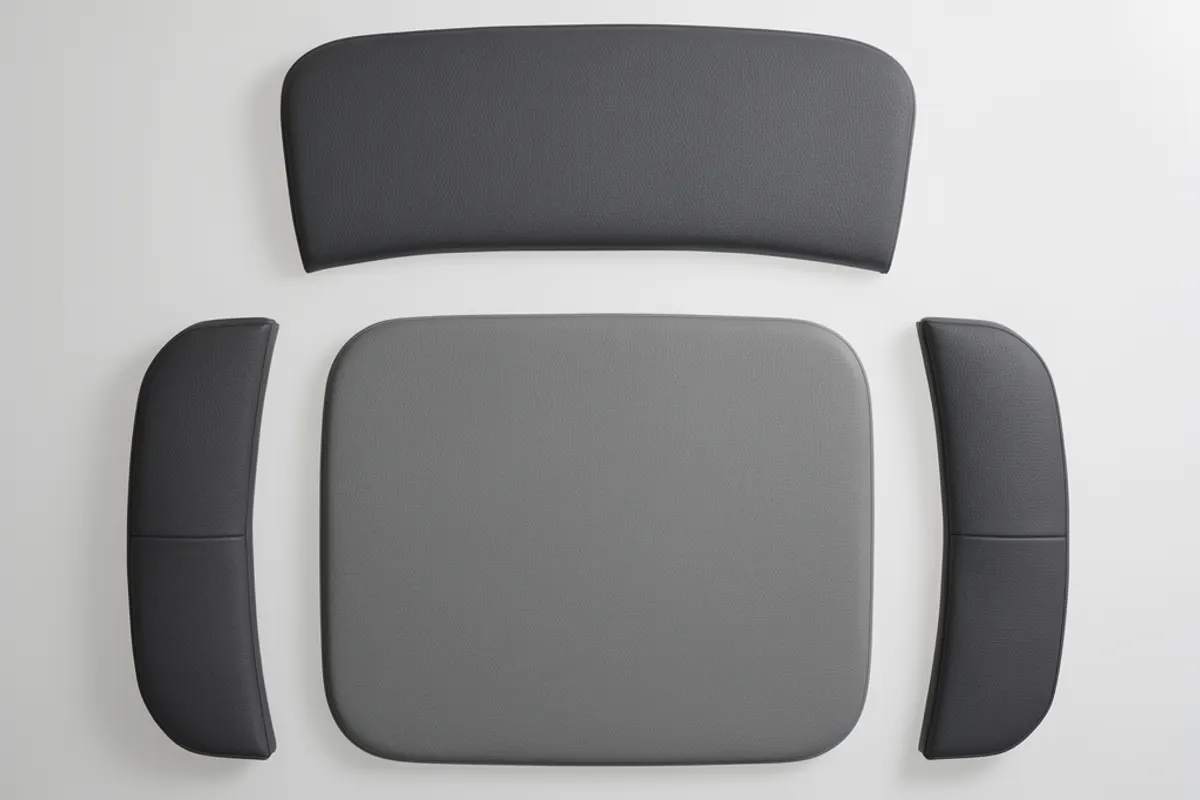
For a quotation, distinguish an appearance-matching project from a composition-matching project. A customer might accept a declared synthetic alternative for an aftermarket retrim, but that should be an explicit decision. Do not let the phrase “same as original” conceal a substitution that nobody approved.
Also state whether you are buying roll material, cut panels or a finished cover. The supplier’s responsibility and the evidence needed are not identical. A roll-material identity statement cannot resolve every component in a completed replacement seat cover.
Use Laboratory Identification When the Records Do Not Agree
If the unresolved question is leather versus another material, ISO 17131:2020 provides a microscopy method for identifying leather and distinguishing it from other materials. Its scope explicitly does not identify specific leather types such as sheep leather. Do not turn a result under this method into a species claim.
Tell the laboratory exactly what decision the report must support. Is the question about the base material, the surface polymer, an added backing or a broader composition claim? Ask which examination is appropriate and whether sample preparation consumes or alters the specimen. Do not promise that every identification method is non-destructive.
Traceability matters as much as the test name. Label the submitted piece with its panel location, part or material number, source and relevant revision. A result for an untraceable swatch cannot reliably answer what is installed in another seat. Keep an image of the sampling location or a supplier link to the production article where appropriate.
If the laboratory reports a limitation, retain it in the purchasing record. Identifying one submitted piece does not automatically identify every panel, colour or later shipment. Where documents and observations conflict, ask the responsible supplier to reconcile them instead of selecting whichever result supports the preferred answer.
Material Identity Is Not Replacement Approval
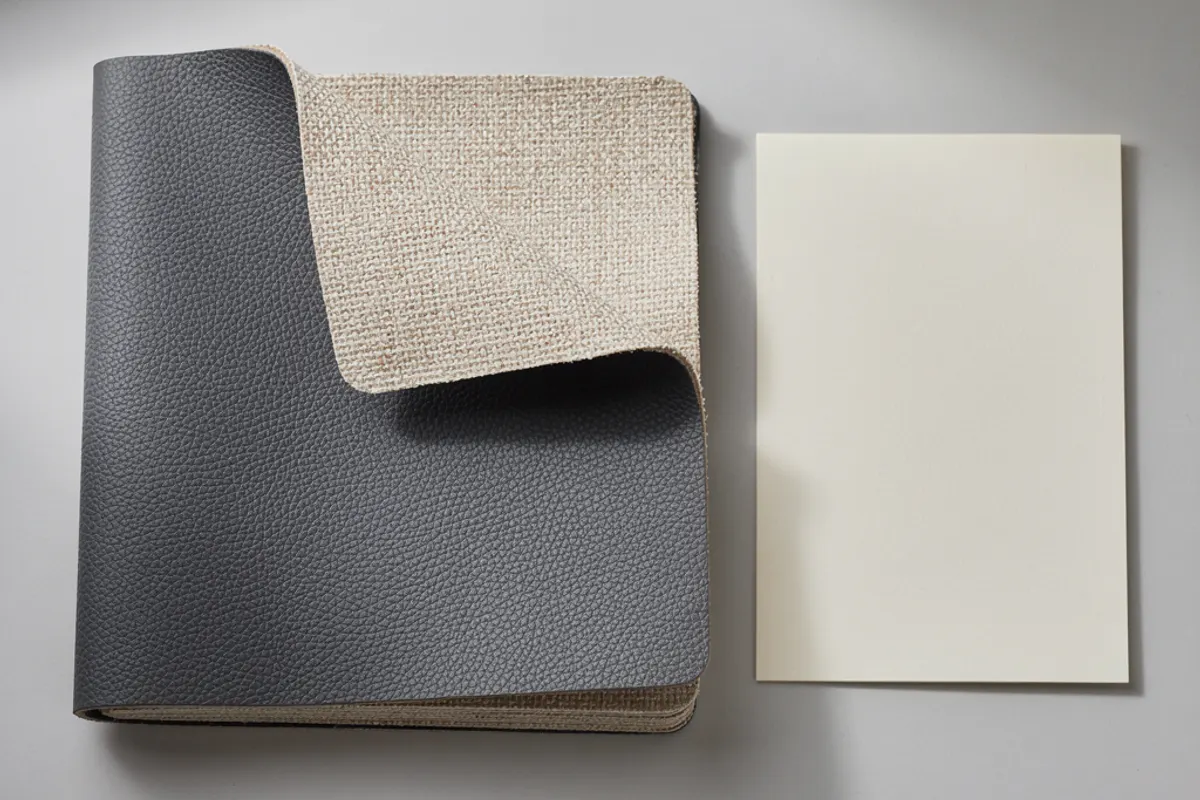
Once the composition is understood, the replacement still needs its own approval. A declaration that two materials are both PU-coated textiles does not establish that their backing, thickness, stretch, surface finish or fabrication behaviour match. Equally, identifying both as hide leather does not establish interchangeability.
Our recommendation is to keep three decisions separate: what the material is, whether its appearance is acceptable, and whether the proposed construction works in the intended component. Record who approves each decision. If one remains unresolved, do not present the package as fully approved.
For a proposed PU alternative, the PU material page for automotive components can help organize the sample discussion. For performance comparison after identity is established, use our automotive PVC and PU comparison. Neither replaces the vehicle programme’s or replacement-cover maker’s requirements.
Have the responsible specialist define the necessary component, processing and safety checks. Do not infer compatibility with seat-mounted airbags, occupant sensors, heating or ventilation from a matching colour or a generic automotive label. This article is an identification guide, not installation guidance or a declaration of vehicle approval.
Keep broader composition claims equally precise. A statement about one synthetic panel is not evidence about the whole interior. If the purchasing brief prohibits animal-derived materials, ask for evidence covering the stated scope rather than using a leather-look surface or a single polymer name as a complete answer.
Frequently Asked Questions
Are all leather-looking car seats synthetic?
No. Vehicle interiors can use hide leather, synthetic upholstery, textiles or combinations. Check the exact model, market, trim and panel location rather than assigning one material to the whole seat from its appearance.
Does leather-trimmed mean the entire seat is leather?
Do not assume full coverage from that phrase alone. Obtain the manufacturer or supplier’s description for the specific trim and confirm the material at each relevant seat location, including side and rear panels.
Does a polyurethane coating prove a car-seat panel is synthetic?
No. Polyurethane can also be used in finishes on hide leather. Confirm the underlying material and complete construction; the surface polymer alone does not distinguish coated hide from a coated textile.
Can a photograph prove whether car upholstery is leather?
Use photographs to identify location and appearance, not as definitive composition evidence. Start with traceable vehicle and material records, then seek specialist identification if the remaining uncertainty affects the purchase.
What does ISO 17131 identify?
ISO 17131:2020 uses microscopy to identify leather and distinguish it from other materials. It does not identify specific leather types such as sheep leather, and a result applies to the submitted specimen rather than automatically to an entire interior.
Can matching synthetic upholstery replace the original material directly?
Not on appearance alone. Confirm the proposed construction, component fit, processing and applicable approval requirements separately. Safety-related seat functions must be handled by the responsible qualified specialist, not inferred from a colour match.
Turn the Identity Check into a Clear Supplier Brief
Send the vehicle and trim identification, panel map, known material records, appearance reference and unresolved questions together. State whether the goal is to reproduce the original composition or evaluate a declared alternative. Keep the proposed candidate distinct from the original until the responsible parties approve it.
When you are ready to discuss a synthetic candidate, send Wandaoleather your component and material brief. Include the specific seat zone, supplied form, desired surface and approval requirements. A panel-level request gives a much clearer starting point than asking for “car leather” without defining what the term must mean for your project.