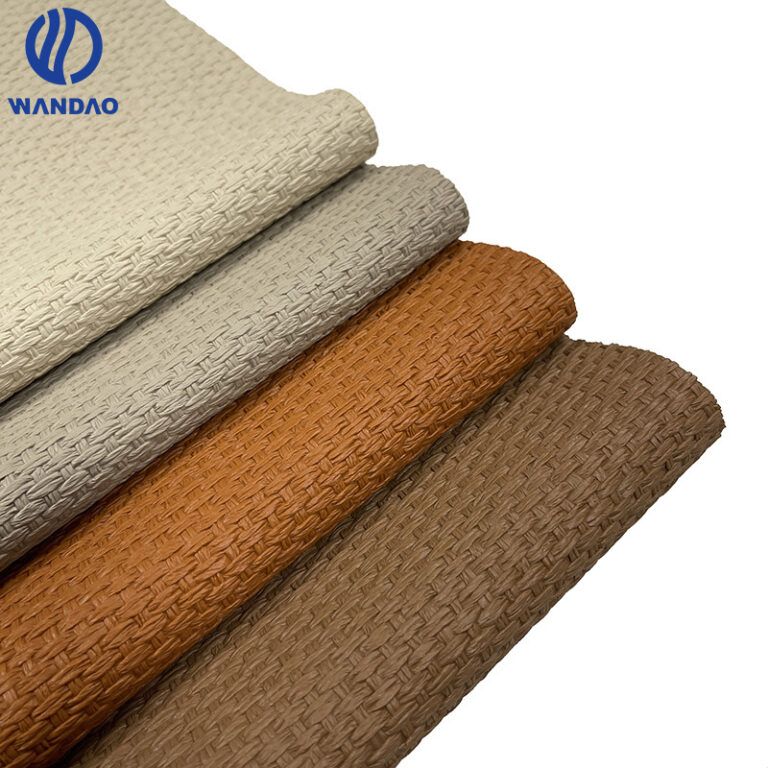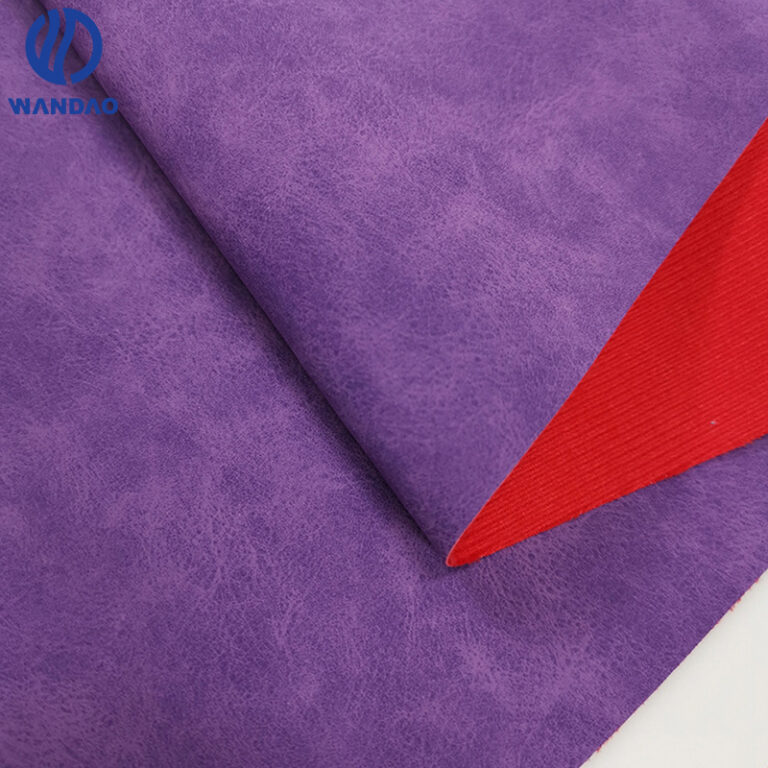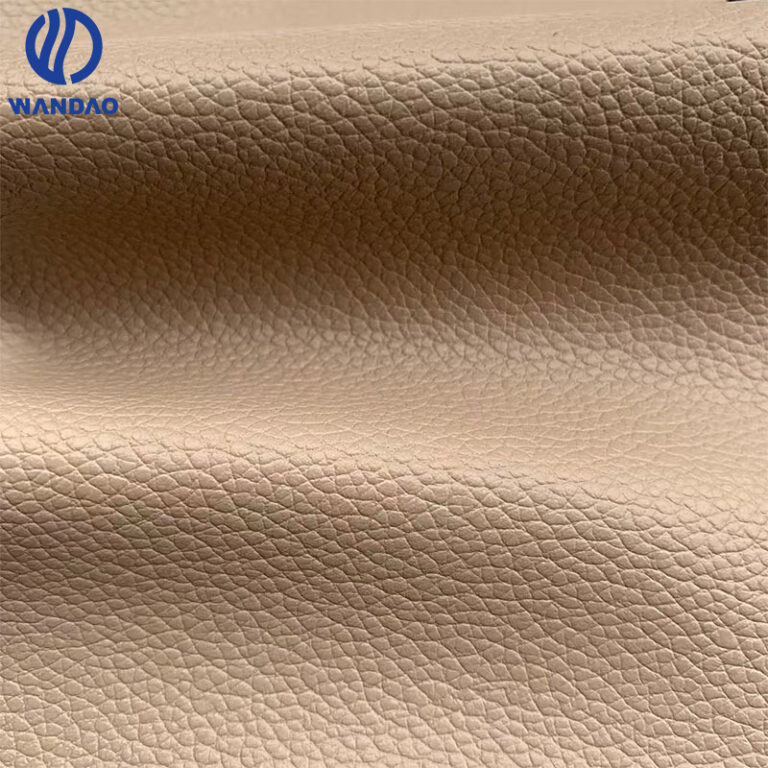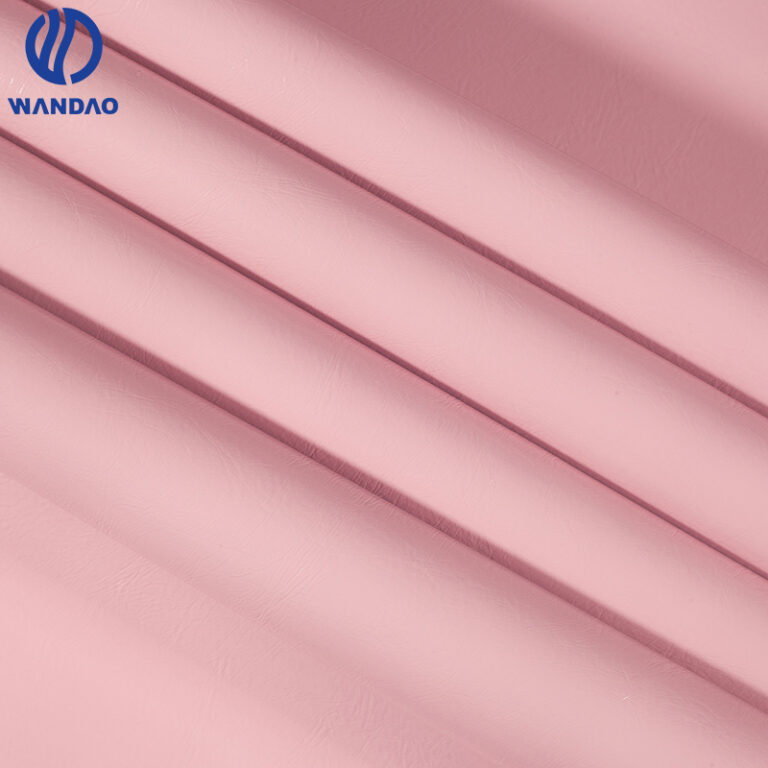
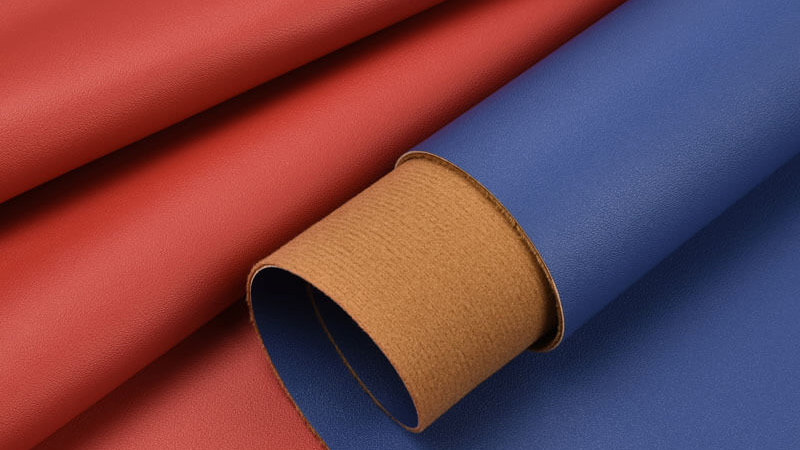
What is 100 PU leather? It is a description that needs clarification before it becomes a purchasing specification. PU means polyurethane, but “100” does not tell you whether the claim concerns the surface resin, a coating layer or the complete material. A PU-coated textile can include a separate backing. Ask the supplier to identify the claimed component and percentage basis; do not assume the entire sheet is pure polyurethane or that the phrase proves performance.
When reviewing PU synthetic leather materials, separate the product name from the composition statement. The name helps identify a material family. A usable composition statement explains what is present, where it is present and what the stated percentages actually measure.
What is 100 PU leather describing: a face, a layer or a sheet?
Start with one question: “One hundred percent of what?” If the answer is only “the material is PU leather,” the percentage has not been explained. Request a written clarification tied to the quoted material code rather than interpreting the number yourself.
The Association for Contract Textiles describes coated fabrics as a substrate carrying one or more polymer layers on the wear surface. That construction explains why a coating description and a complete-sheet description are different. It does not establish the recipe of any particular sample.
| Possible scope of the wording | What needs clarification | What remains unproven |
|---|---|---|
| Surface resin family | Which polymer system is being identified? | The full coating formulation and backing composition. |
| One finished coating layer | Does the percentage include colourants and other constituents? | The composition of other layers. |
| Backing fibre content | Which fibres and calculation basis are covered? | The coating and total laminate composition. |
| Whole finished sheet | Are all permanent layers included on one stated basis? | Any separate finished-product components or performance claims. |
These are questions to resolve, not interchangeable definitions of “100 PU.” Do not choose the most convenient interpretation for a catalogue, bill of materials or purchase order without confirmation.
Describe the construction before calculating percentages
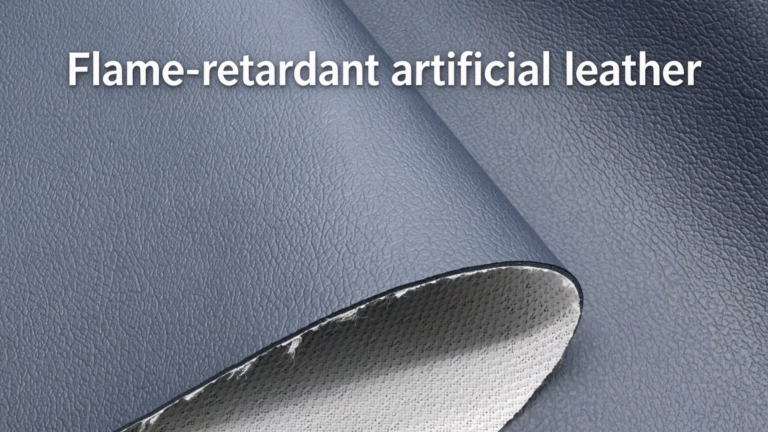
Ask for a simple layer description from the exposed face to the reverse. It should distinguish the surface finish, principal coating, any separately identified bonding or intermediate layer, and the substrate. Some constructions combine functions in one layer; do not force every supplier into an invented universal layer stack.
For the backing, request fibre composition and construction separately. “Polyester” identifies a fibre family. “Woven,” “knitted” and “nonwoven” describe how a textile structure is formed. “Microfiber” by itself does not provide a complete fibre-percentage declaration. A useful description needs enough detail to identify the approved substrate.
For the coated portion, ask whether a statement identifies the polymer binder or accounts for the whole finished layer. Where colourants or other constituents are present, their treatment in the percentage calculation must be clear. A resin-family description should not quietly become an all-ingredient purity claim.
Keep manufacturing aids separate from constituents that remain in the supplied sheet. For example, a removable process carrier should not be listed as a permanent backing merely because it was used in production. Conversely, a permanently bonded layer should not disappear from the specification because it is not visible from the face.
The appropriate level of detail depends on the purpose. Routine material selection may need a construction declaration and performance reports. A specific content claim may need a more detailed breakdown and independent verification. Ask for evidence proportionate to the claim rather than assuming every buyer needs the supplier’s confidential recipe.
A percentage is incomplete without its calculation basis
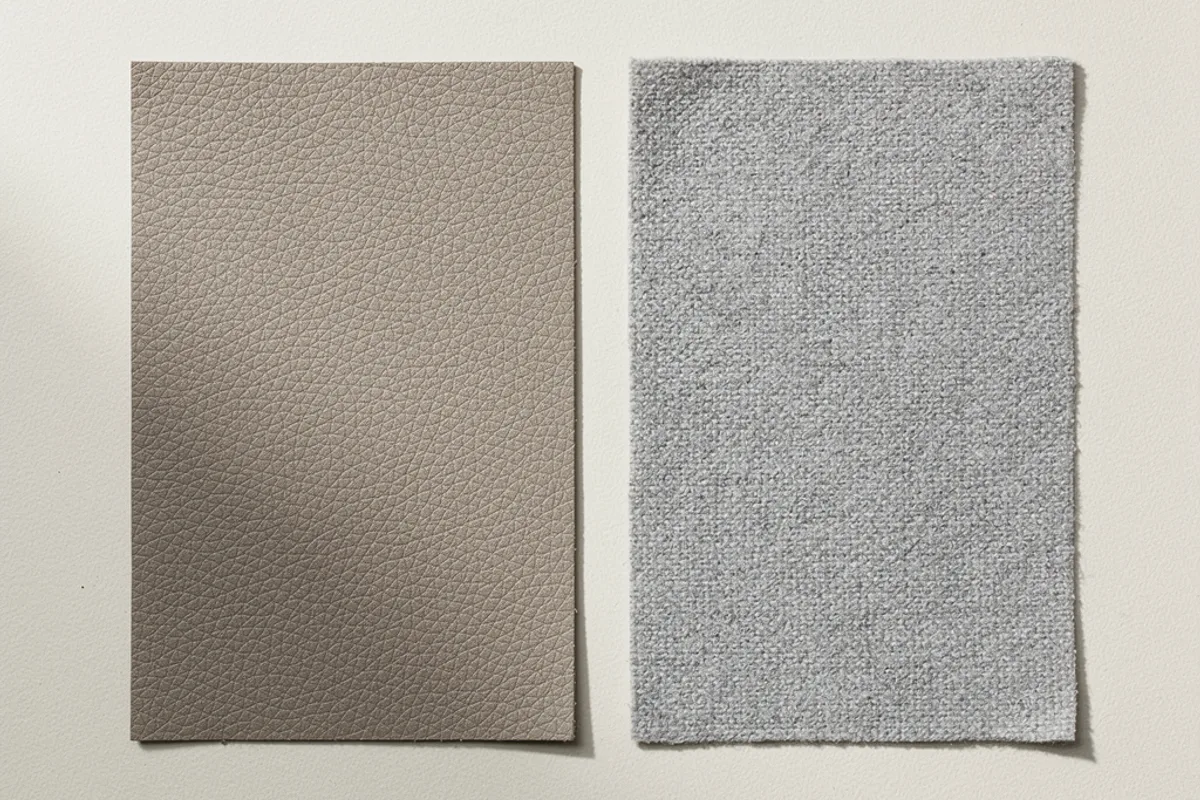
Write down the numerator and denominator. Is the reported value a proportion of the whole dry sheet, the separated coating, the backing fibres or a defined resin fraction? Also record whether the number is a measured result, a formulation calculation, a nominal value or an allowed range.
Consider a hypothetical accounting example, not a Wandao specification. A coated sheet has a total mass of 500 g/m². Of that, 300 g/m² is assigned to the coated portion and 200 g/m² to the substrate under the agreed measurement procedure. The coated portion is therefore 60% of the total mass. This arithmetic does not say that the sheet contains 60% polyurethane: the coated portion still needs its own composition evidence.
Similarly, “100% polyester backing fibres” would describe the fibres within the backing. It would not mean that the coated sheet is 100% polyester. Percentages referring to different denominators cannot simply be added together or copied into one overall composition line.
ISO 2286-2:2016 provides methods for determining the total mass per unit area and the corresponding coating and substrate masses of coated fabrics. Its scope is useful for a mass breakdown. It is not, by itself, a chemical identification of everything assigned to the coating.
Ask the laboratory to confirm whether its preparation and separation procedure suits the construction. If a requested fraction cannot be isolated reliably, report that limitation instead of presenting an estimated number as a directly measured percentage.
Match each document to the question it can answer
A technical data sheet, a supplier declaration and a laboratory report have different roles. A data sheet identifies the offered material and its stated properties. A declaration records what the supplier asserts. A report records what was examined under a defined method. None should be made to answer a question outside its scope.
| Buyer question | Useful evidence | Boundary to retain |
|---|---|---|
| What construction is supplied? | Material code, layer description and backing specification. | A description is not independent verification. |
| What is the coating-to-substrate mass split? | A suitable mass-per-area measurement and preparation record. | Coating mass is not automatically PU resin mass. |
| What chemistry supports the percentage claim? | A claim-specific analytical plan and documented calculation. | A method must be suitable for the actual components and claim. |
| Will the coating stay attached? | A relevant coating-adhesion report. | Adhesion is a property, not a purity measurement. |
For example, ISO 2411:2024 concerns coating adhesion on rubber- or plastics-coated fabrics. A strong adhesion result does not validate a “100% PU” declaration. Keep composition review and application performance review as separate approval tracks.
Check the report’s specimen description, material code, date and connection to the supplied lot or approved construction. If it covers an earlier construction, ask what changed. A matching trade name alone is not enough to establish that a new backing or finish is covered.
Do not turn a coating name into an animal-origin claim
Polyurethane chemistry does not identify the substrate beneath it. The Leather Working Group’s finishing overview discusses polyurethane binders in leather finishing. Therefore, finding PU at a surface does not by itself establish that the underlying material is textile rather than animal leather.
If that distinction is disputed, use a suitable identification process. ISO 17131:2020 provides a microscopy method for identifying leather and distinguishing it from other materials. It does not replace a full declaration covering every ingredient or component of a finished item.
For an animal-origin restriction, specify the scope explicitly: the supplied sheet, its permanent layers, and any other components the order includes. Do not extend a sheet-level declaration to a whole bag, chair or garment without reviewing the other components. This is a documentation boundary, not an allegation about any particular material.

Use a clarification request that can become an order record
A concise request can read: “Please clarify the phrase 100 PU leather for material code X. Identify the component covered, the percentage calculation basis, the backing composition and all permanent layers. State whether the claim is calculated or tested, and provide the supporting document references and revision.” Replace the placeholder with the actual quoted code.
Then connect the answer to the application. For furniture PU materials, the composition record does not replace the upholstery performance brief. For bag-development PU materials, it does not approve folding, stitching or the completed component. Keep those requirements visible alongside the clarified material identity.
If a reply remains ambiguous, return it for revision before approving the claim. Avoid improving unclear supplier wording in a way that makes it more absolute. “PU-coated textile with a declared polyester backing” is a different statement from “100% polyurethane throughout”; only use wording supported by the actual evidence.
Store the agreed description with the approved sample, specification revision and order reference. Define which changes require renewed review, including backing substitution, coating changes or additional permanent layers. This creates a usable material record instead of a percentage that loses its meaning when the construction changes.
Finally, keep identity separate from promises about water resistance, durability, recyclability or chemical compliance. Each additional claim needs its own scope and support. A composition line cannot substitute for the evidence required by the intended application and market.
Frequently Asked Questions
Does 100 PU leather mean the whole sheet is polyurethane?
Not necessarily. The wording does not identify its scope or calculation basis. Ask whether it refers to a resin system, a coating layer or the entire finished sheet, and request a separate description of the backing and other permanent layers.
Can PU leather have a polyester backing?
Yes, a PU-coated textile can have a polyester backing. The coating description and backing fibre description refer to different parts of the construction. Confirm the specific sample’s backing rather than assuming that all materials sold as PU leather use the same substrate.
Is coating weight the same as polyurethane content?
No. Coating weight measures the mass assigned to the coated portion under a stated procedure. It does not independently establish how much of that portion is polyurethane resin. A chemical-content percentage needs a defined basis and appropriate supporting evidence.
Does 100 PU prove that a material contains no animal ingredients?
No. A surface description does not establish the substrate or every other constituent. Polyurethane is also used in leather finishing. Request a declaration with the required animal-origin scope, and assess additional finished-product components separately where relevant.
Does 100 PU mean the material is more durable?
No. The wording is not a durability grade. Evaluate the exact construction using relevant performance reports and application trials. Composition, coating adhesion, flexing, cleaning compatibility and finished-component behaviour answer different questions.
What is the first question to ask a supplier about 100 PU?
Ask “100% of which component, calculated on what basis?” Then request the material code, layer description, backing composition and supporting document references. Keep the clarified wording with the approved sample and specification revision.
Clarify the material before approving the claim
Share your PU material specification with Wandao, including the application, quoted composition wording and evidence requirements. Ask for a construction-specific clarification and samples before adopting percentage claims in an order or product description.