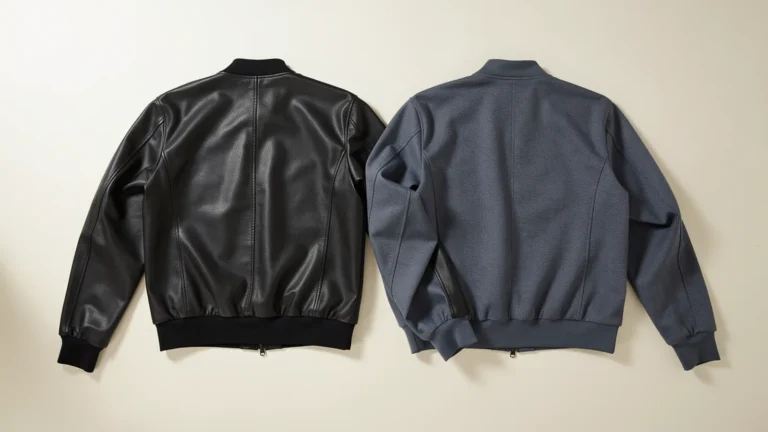
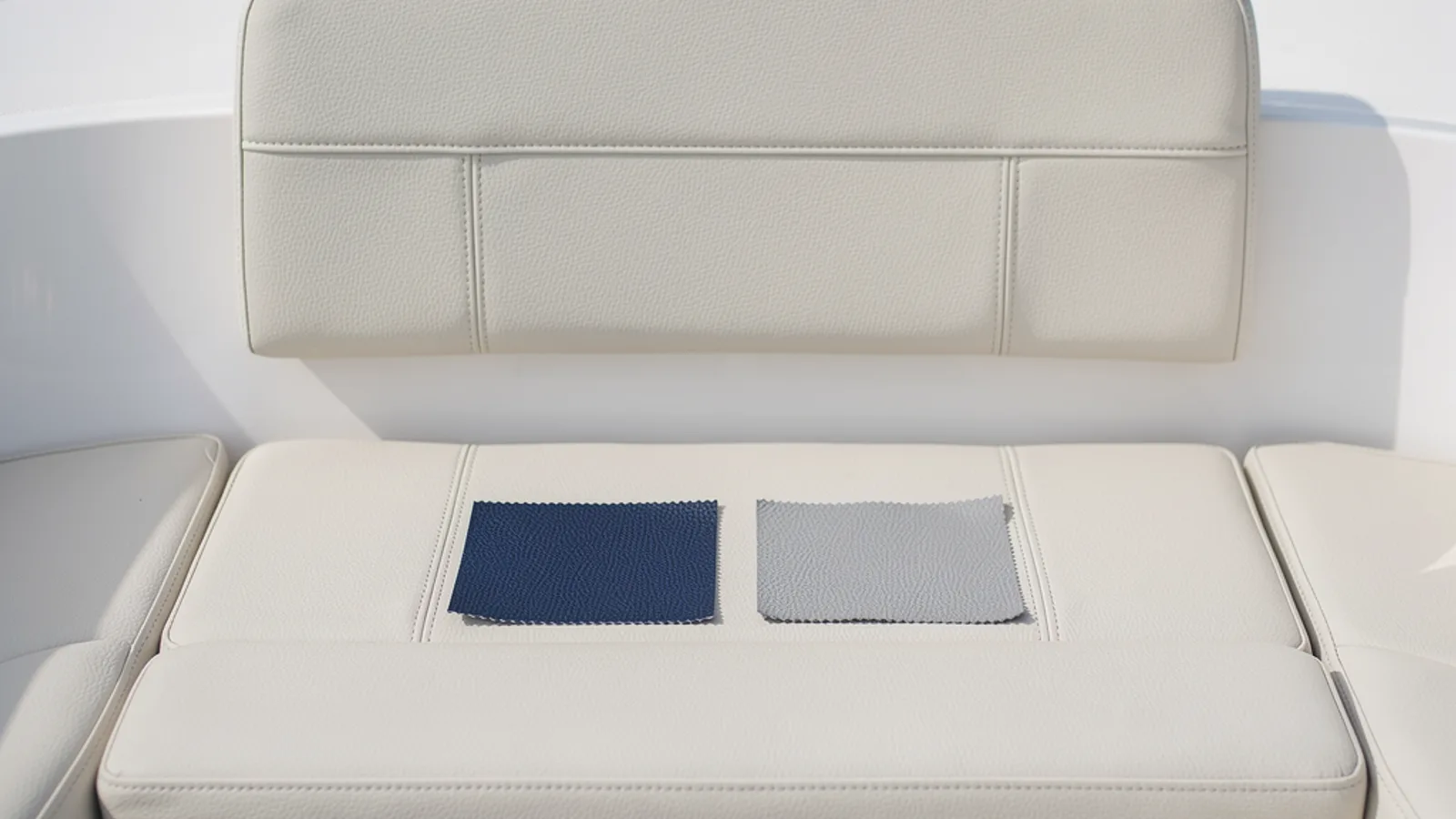
Marine Vinyl vs Faux Leather: Separate the Names from the Specification
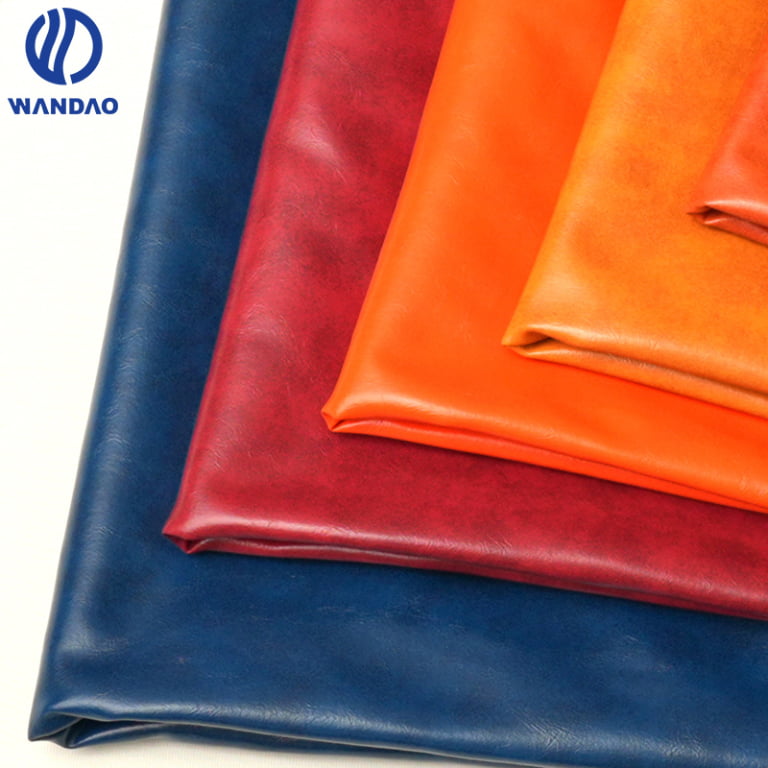
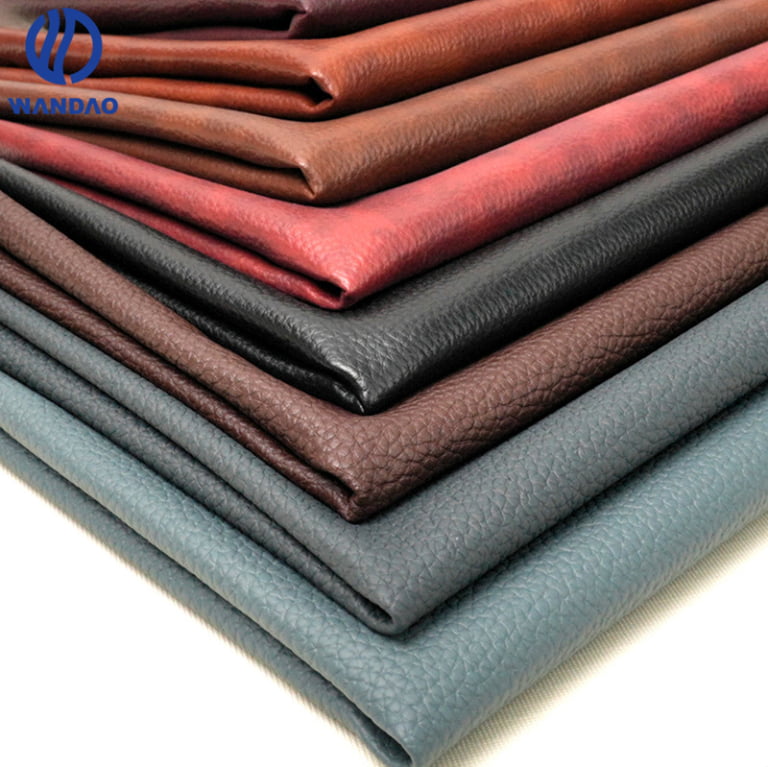
For this comparison, marine vinyl means vinyl-coated upholstery offered for marine use. Faux leather is the broader leather-look description. It can refer to vinyl-coated fabric, PU-coated fabric or another construction. Before comparing quotations, ask what the supplier is actually offering. Otherwise, the two columns in a purchasing spreadsheet may describe the same material family at different levels of detail.
The Association for Contract Textiles describes coated fabrics as a textile or similar support carrying polymer layers such as vinyl or polyurethane on the wear surface. Its guidelines distinguish construction, application and indoor or outdoor use. That is a useful starting point: identify the full construction and proposed application, not just the face appearance.
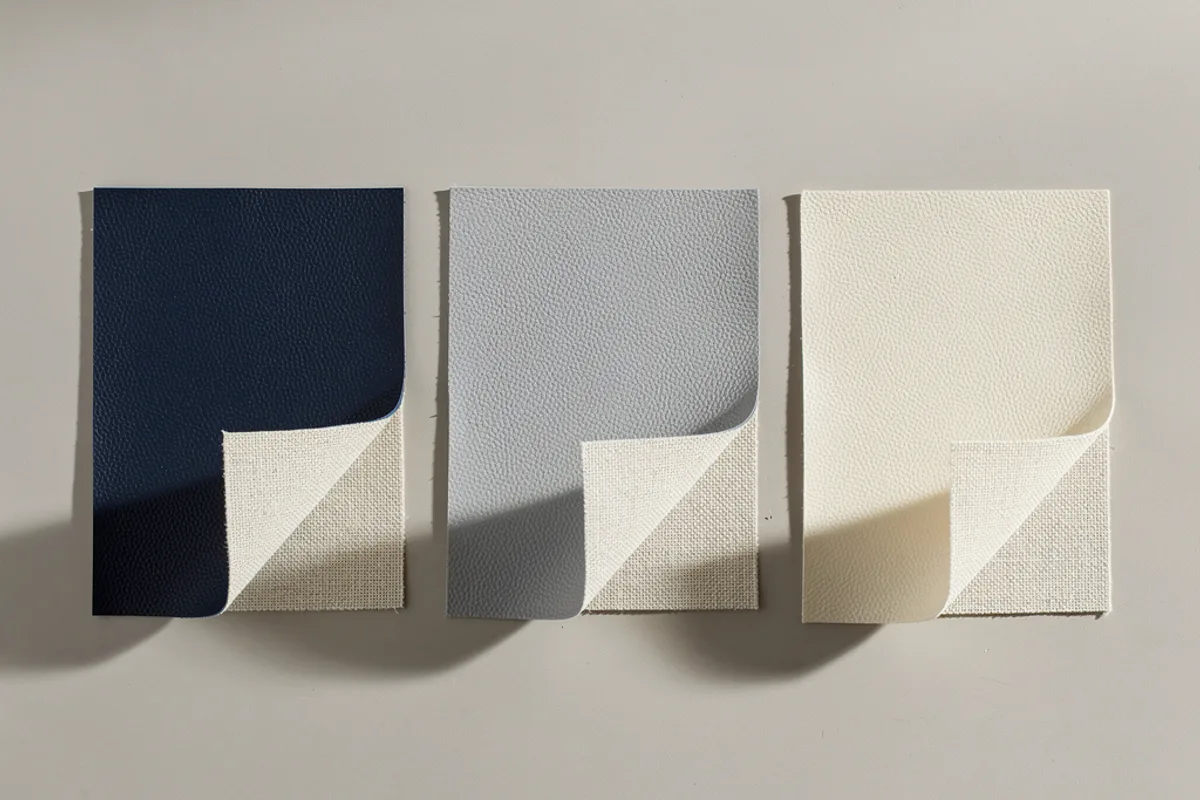
Ask for the product code, face-coating system, backing type, total thickness, weight, finish and intended exposure. Record any additional laminate or treatment the supplier identifies. Do not assume that a textile visible on the underside describes everything between the face and backing.
This guide concerns comparing candidate covers for boat seating. It does not rank every synthetic leather, diagnose an existing failed seat or establish vessel-specific compliance. For a commercial starting point, see our marine vinyl fabric page, then request evidence for the particular candidate being quoted.
Put Both Candidates Through the Same Evidence Review
A useful comparison table exposes missing information. It should not award a better score simply because one sample is labelled marine and another is labelled faux leather. Use the table below to prepare questions for the supplier and testing laboratory.
| Decision area | Marine vinyl candidate | Other faux-leather candidate |
|---|---|---|
| Material identity | Confirm vinyl construction, backing and finish | Identify the polymer and complete construction first |
| Exposure claim | Request evidence for the specified boat location | Confirm whether outdoor marine use is actually supported |
| Weathering | Obtain method, cycle, duration and evaluated changes | Request comparable conditions and evaluated changes |
| Moisture-related behaviour | Review relevant fungal-resistance and assembly evidence | Review those items and, for PU, hydrolytic-stability evidence |
| Fabrication | Trial the proposed seams, corners and attachments | Trial the same design with suitable documented settings |
| Cleaning and appearance | Confirm the exact colour, finish and care instructions | Confirm the exact colour, finish and care instructions |
| Cost | Compare usable quantity and approved construction | Include any construction changes needed for approval |
If a report is missing, record it as missing. Do not convert an unsupported claim into a pass, or interpret the absence of a report as proof that the material must fail. The practical outcome may be a request for further evidence rather than an immediate purchase decision.
Use Marine Guidance That Matches the Construction
CFFA publishes CFFA-MARINE/VINYL-201E, August 2025, for vinyl and other coated marine upholstery on knit or non-woven supports. The document covers a group of properties, including abrasion, light aging, adhesion, flexing and seam strength. Its scope is not an approval for ordinary indoor upholstery, and one favourable result does not establish conformity to the whole document.
There is also a separate CFFA-MARINE/PU-101D, August 2025, for polyurethane marine upholstery on specified substrate types. It includes hydrolytic stability: resistance to deterioration under warm, wet exposure. This is a reason to ask a PU supplier for relevant evidence, not a reason to reject every PU construction automatically.
Have the laboratory confirm which document and test methods apply to each candidate. Different constructions need not have identical recipes or backings to serve the same seat brief. What needs to be comparable is the intended use, the evidence being evaluated and the agreed acceptance decision.
Keep the standard designation and edition in the approval record. If a supplier says a product meets marine requirements, ask which requirements, which tested construction and which report support the statement. Resolve any uncertainty in the method or acceptance criteria before ordering a compliance test.
Read Weathering Reports Beyond the Number of Hours
A report headed “UV tested” leaves several questions unanswered. ASTM G154-23 describes operation of fluorescent-UV and moisture-exposure equipment. It does not, by itself, supply an application-specific performance result. The exposure conditions and the method used to evaluate changes matter. Its stated scope also does not reproduce biological attack or saltwater exposure.
For each candidate, obtain the lamp or light source, exposure cycle, temperatures, moisture conditions, duration and specimen identification. Then check what was assessed: colour, cracking, adhesion or another property. A report about colour change is not automatically evidence about seam strength or fungal resistance.
Do not turn accelerated exposure hours into a fixed number of boating seasons. Q-Lab explains the limits of hours-to-years conversions: a generally applicable conversion is not available, and meaningful correlations require appropriate empirical comparisons. Outdoor location and exposure conditions affect that relationship.
Our suggested review method is to place the two reports side by side and mark every difference before comparing the results. Where conditions differ, ask the laboratory whether a defensible comparison is possible. Do not silently treat two different test programmes as the same test.
Separate Surface Resistance from the Wet Cushion
The cover is only one component of a seat. CFFA’s marine-upholstery mold and mildew overview explains how contamination and moisture can enter a cushion and how staining can originate in supporting components. A protected vinyl face does not prevent every problem developing elsewhere in the assembly.
Similarly, ASTM G21 concerns the effects of fungi on synthetic polymeric materials under its test conditions. A fungal-resistance result should not be expanded into a promise that a finished seat will remain free of mold or staining regardless of its construction and maintenance.
Ask the seat maker to review the route by which water could enter and leave the actual cushion. Include seams, closures, backing, foam, attachments and the supporting structure. Document the proposed drying and storage routine. This is an assembly-review recommendation, not a claim that every boat seat requires the same drainage design.
Keep care instructions specific to the selected material. Request the approved cleaner, concentration where relevant, contact time, rinsing and drying requirements. Trial that routine on the chosen finish and colour. Do not assume a cleaner suitable for one vinyl product is also suitable for a different PU or surface treatment.
Abrasion Results Do Not Replace a Seat Trial
The ACT abrasion disclaimer cautions against treating higher abrasion counts as a proportional increase in service life. Flat abrasion testing does not represent every edge-wear condition in an upholstered product. A larger number therefore cannot settle the marine vinyl versus faux-leather choice on its own.
Record the abrasion method, abradant, load, endpoint and tested construction before comparing figures. Keep abrasion separate from weathering, cleaning and other evidence. A strong result in one category should not erase an unresolved requirement in another.
For the practical comparison, make representative sections of the proposed seat in each candidate. Keep the pattern and intended use consistent, but allow the upholsterer to choose appropriate sewing settings for each material and record them. Review the front edge, a corner, a seam junction and an attachment area rather than looking only at a flat panel.
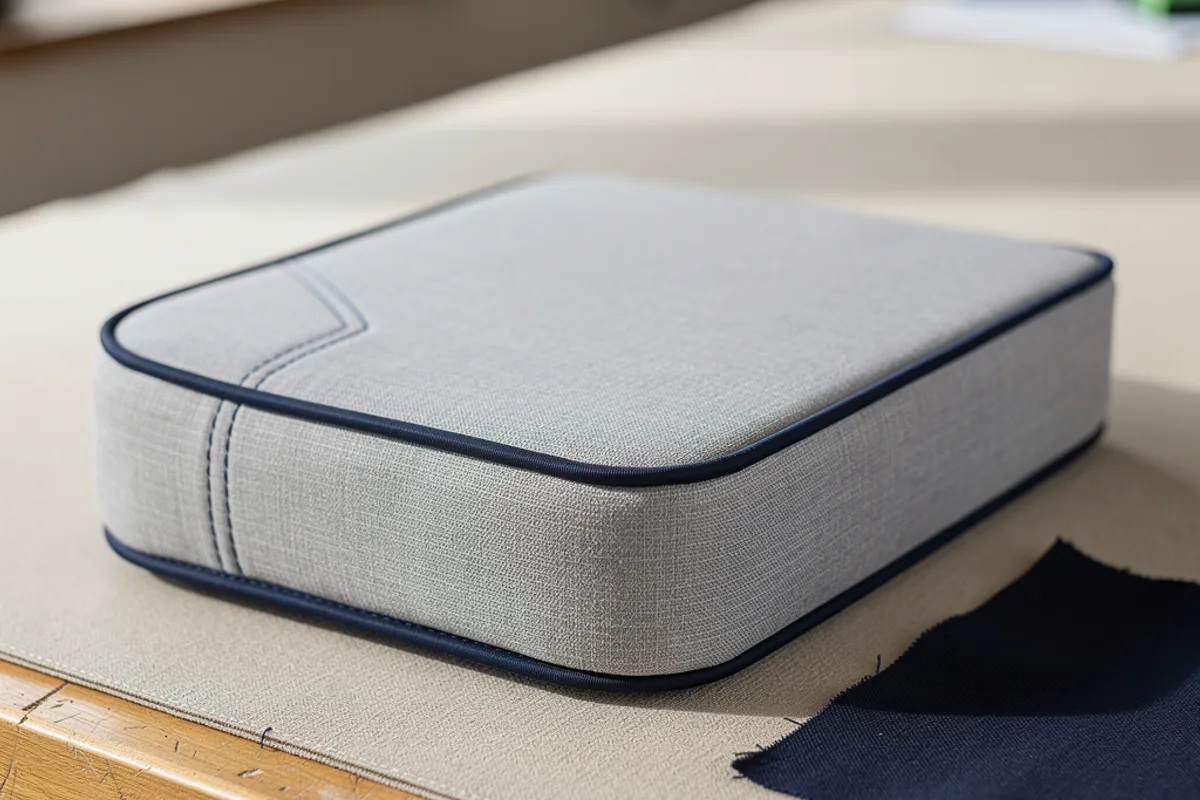
Agree on observations before the trial: appearance after forming, seam distortion, visible needle damage, puckering and any coating separation. Record observations against sample codes and photographs. These development checks do not substitute for a specified laboratory method, but they help identify which candidate can be made into the intended design.
Make the Purchase Decision from What Is Proven
For an exposed seat, a candidate supported only by indoor-use data has an unresolved evidence gap. A documented marine candidate is a more defensible next step if its reports and prototype satisfy the project brief. This is a decision about those candidates, not proof that vinyl always outperforms PU.
If both candidates satisfy the brief, compare the approved appearance, hand-feel, fabrication process, maintenance requirements and cost per acceptable cover. Normalize quotation units and usable width. Include any additional backing, reinforcement or sewing work introduced during development. Do not compare a roll price with a finished-cover price as though they covered the same supply scope.
If neither candidate is sufficiently documented, request a suitable alternative or agree a testing programme. Retain the approved sample, product code, colour, construction description and report references. Require review of changes that could affect the approval rather than assuming a visually similar replacement is equivalent.
For a broader application discussion, our marine upholstery leather page covers the seating context. Keep the final approval tied to the chosen construction and seat location.
Frequently Asked Questions
Is marine vinyl a type of faux leather?
A leather-look marine vinyl can be described as faux leather. Faux leather is a broad appearance-based label, while marine vinyl identifies a vinyl-coated candidate offered for marine use. Confirm the actual construction rather than treating the names as opposite material categories.
Can PU faux leather be used for boat seats?
A specifically qualified PU construction can be considered. CFFA publishes marine PU upholstery guidance, including hydrolytic-stability requirements. That does not approve every PU material. Match the candidate’s evidence and prototype to the intended boat-seat exposure.
Does a marine-grade label prove the material is suitable?
The label alone is insufficient purchasing evidence. Ask for the named specification, edition, tested product code, results and intended application. Check the full requirements relevant to the project rather than relying on one favourable test.
Does water resistance of the face keep the cushion dry?
It does not establish that the assembled cushion stays dry. Seams, closures and supporting components require their own review. Evaluate the actual seat construction and its drying routine instead of extending a face-material claim to the complete seat.
Can UV test hours predict years of service on a boat?
There is no general hours-to-years conversion. A useful correlation needs evidence for the material and exposure conditions involved. Review the test cycle and measured changes, and do not present an accelerated-test duration as a guaranteed service life.
Should the highest abrasion count win the comparison?
No. Compare compatible test methods and conditions, then consider weathering, moisture-related evidence, care and fabrication. An abrasion count alone does not demonstrate longer overall seat-cover life or resolve missing marine-use evidence.
Send a Brief That Allows a Meaningful Comparison
Specify the seat location, exposure, desired colour and grain, proposed cushion construction, care routine and required evidence. Attach the current candidate specifications and identify unanswered questions. To discuss a suitable material candidate, send Wandaoleather your boat-seat material brief. The next step should be a comparable sample and evidence review, not a decision based only on the words marine vinyl or faux leather.