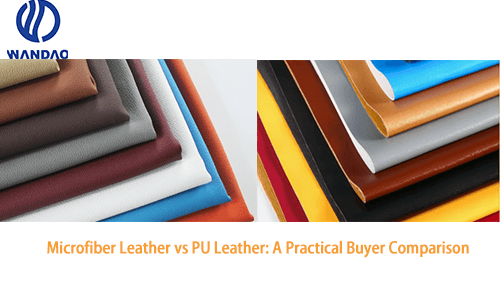
Microfiber Leather vs PU Leather: The Short Answer
Choose the material by application and verified specification, not by assuming that microfiber is always premium or that ordinary PU is always economical.
| Decision factor | Microfiber synthetic leather | Conventional PU-coated fabric | What the buyer should verify |
|---|---|---|---|
| Core construction | Ultrafine-fiber nonwoven network combined with a PU matrix, often with finished surface layers | PU coating or film supported by a conventional knitted, woven, brushed or nonwoven textile | Cross-section, substrate description and total construction |
| Structure and body | Can provide a denser, more leather-like structural platform | Can range from very light and drapable to substantial upholstery grades | Mass, thickness, stiffness, elongation and dimensional behavior |
| Mechanical demands | Often considered for higher tear, flex or shape-retention requirements | Can meet many footwear, bag, clothing and upholstery requirements when properly engineered | Test method, direction, conditioning and pass criteria |
| Hand feel | May feel substantial, compact or suede-like depending on finishing | Broad range from soft garment hand to firm upholstery hand | Approved physical sample, not a category description |
| Cost position | Often higher because of the engineered substrate and processing | Often offers more entry and mid-range construction choices | Qualified cost, usable yield, processing losses and rejection risk |
| Best use case | Projects where the base structure and repeated mechanical loading matter | Projects where the target can be met with a simpler coated-fabric construction | Finished-component requirements and validation plan |
This is not a rule that microfiber wins every demanding project. PU chemistry, fiber type, impregnation, coating thickness, topcoat, finishing and processing all affect the result. A well-designed conventional PU leather can outperform a poorly matched microfiber product on a particular test or application.
The Main Difference Is the Substrate Architecture
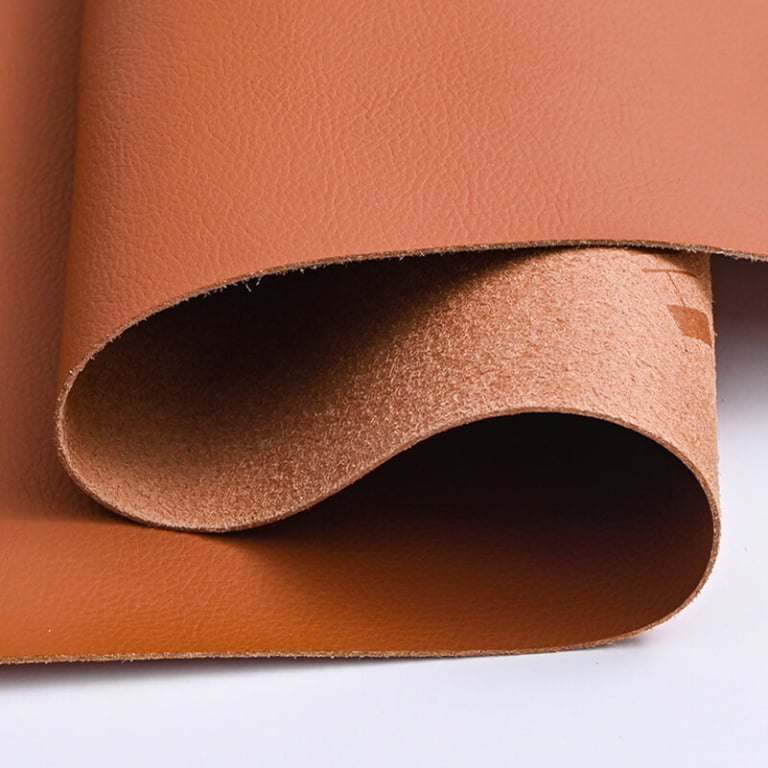
The most important distinction is below the visible grain.
Peer-reviewed research describes microfiber PU synthetic leather as a composite built around a three-dimensional network of ultrafine fibers and a polyurethane matrix. That network is intended to create a more leather-like internal architecture than a simple textile carrying a surface coating. The exact fibers and formation process vary, so buyers should ask whether the substrate is polyamide, polyester, a bicomponent system or another defined construction. See the 2026 review of PU-based microfiber synthetic leather and a study describing the reticulated microfiber nonwoven and porous PU matrix.
Conventional PU leather also has multiple layers, but its load-bearing base is commonly a recognizable textile. Knitted backing can support stretch and a soft hand. Woven backing can provide directional stability. Brushed or other nonwoven bases can change body, bonding and cutting behavior. These are tendencies, not guarantees.
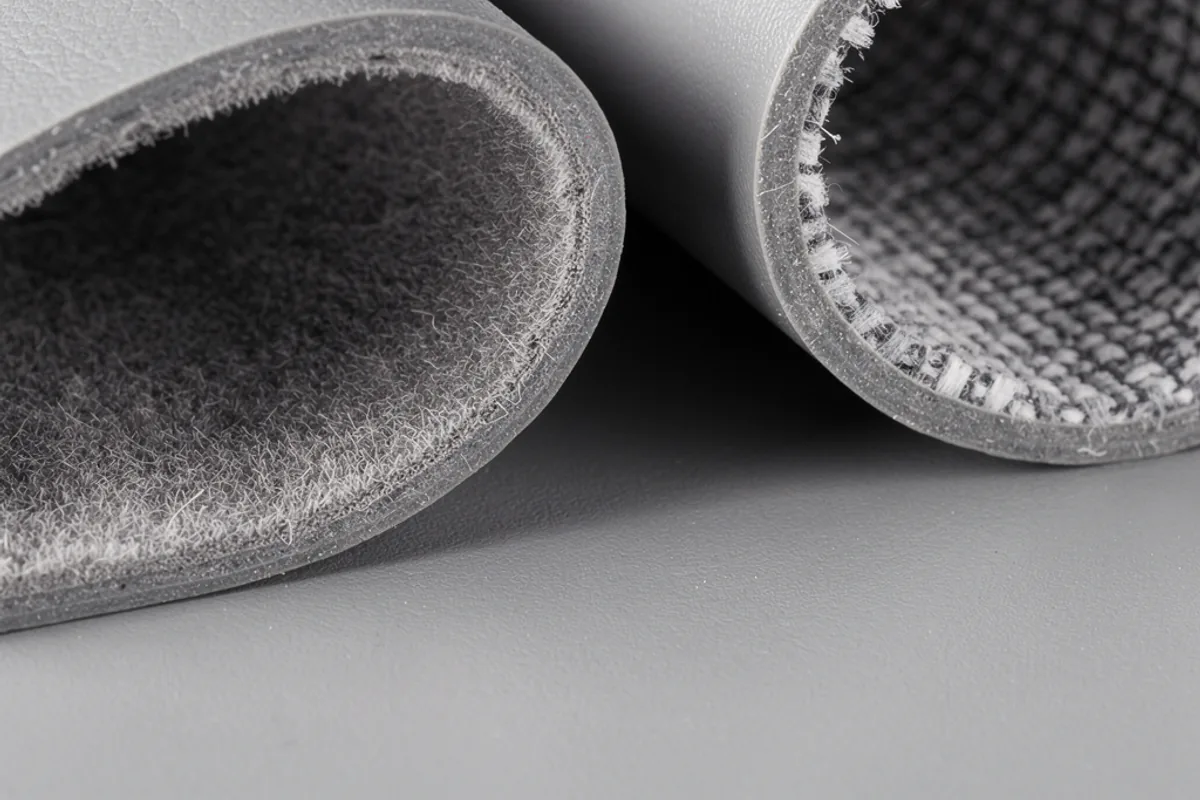
The practical lesson is simple: do not compare two quotations that both say “PU leather” until each supplier defines the substrate and coating structure. Microfiber leather is usually a PU-based synthetic leather, not an alternative that contains no PU.
How Construction Changes Performance
Tensile and tear behavior
A dense microfiber network can distribute load differently from a knitted or woven backing. This can support high mechanical performance, but a category-wide ranking is unsafe. Fiber composition, basis weight, fiber bonding, PU impregnation and test direction all matter. Conventional woven and knitted backings also behave differently in machine and cross directions.
Ask for tensile, elongation and tear results in both relevant directions. ISO 1421:2016 defines coated-fabric tensile methods, but the RFQ must still state which method and specimen condition apply. Do not compare an isolated strength number when the specimen width, direction or method differs.
Flexing, abrasion and layer adhesion
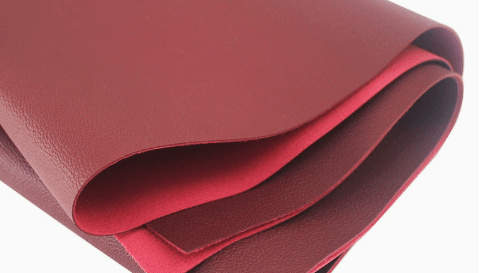
Repeated folding stresses the surface, intermediate layer and substrate together. Abrasion mainly evaluates the exposed coated surface under a defined rubbing system. Adhesion evaluates the bond between layers. One favorable result cannot replace the others.
ISO 32100:2018 covers folded flex resistance for products compatible with its apparatus. ISO 5470-2:2021 provides separate wet and dry Martindale abrasion methods for coated surfaces. ISO 2411:2024 addresses coating adhesion. These standards illustrate why “durable” is not a complete specification: buyers need a test, condition, endpoint and acceptance value.
Thickness and compression
Microfiber construction can feel fuller at a similar nominal thickness, while a foamed or brushed conventional PU construction can also create body. Thickness alone does not reveal layer quality or mass. Coated fabrics compress under the presser foot, so ISO 2286-3:2016 measures thickness at a specified pressure.
For comparable quotations, state total thickness, tolerance, measurement method and whether any face-film or coating thickness is separately controlled. Also specify usable width and mass per unit area when they affect cutting yield or handling.
Moisture transport, cleanability and water exposure
Neither name proves breathability or waterproof performance. Research on engineered microfiber substrates shows that pore structure and surface design can change moisture transport, but a laboratory construction cannot represent every commercial material. One example is research on asymmetrically wettable PET/PA6 microfiber nonwovens.
A continuous topcoat may improve surface cleanability or resistance to liquid penetration, yet seams, perforations, backing, edges and exposure pressure remain part of the finished-component result. The US FTC Leather Guides also caution against misrepresenting composition and characteristics such as waterproof performance.
Which Material Fits Common Applications?
Footwear
Microfiber leather is often shortlisted for uppers, linings or reinforcement areas that need repeated flexing, controlled stretch and a substantial leather-like base. Conventional PU can be appropriate for fashion footwear, soft uppers, decorative panels and cost-sensitive programs. The decision should include lasting behavior, folding direction, stitch and eyelet performance, surface rubbing, color transfer and bonding compatibility.
Bags and small leather goods
Microfiber can suit structured bags, reinforced handles, premium-feel panels and components that need edge finishing or shape retention. Conventional PU offers a wide range of drape, grain, gloss and lightweight constructions for fashion bags and linings. Sample the complete combination of face material, reinforcement, adhesive, thread and edge paint.
Furniture and office seating
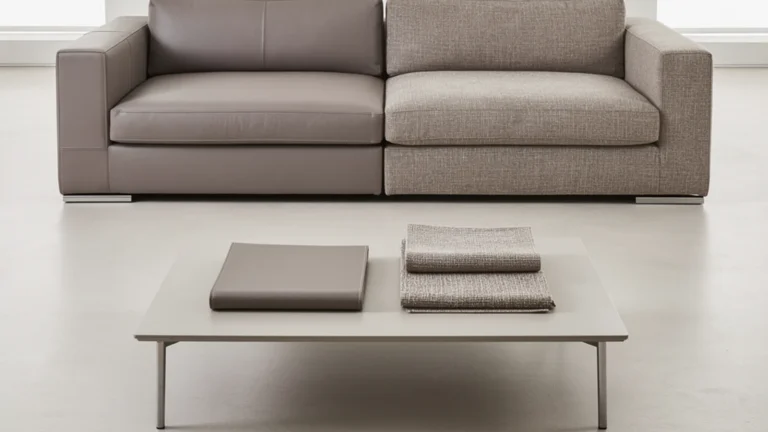
For upholstery, the correct material depends on seat geometry, foam, seam design, cleaning agents, body oils, temperature, repeated loading and market-specific fire requirements for the finished assembly. Microfiber may be useful where the base must tolerate tight upholstery and repeated flexing. Conventional PU may provide the required hand, appearance and cost when the specification and maintenance environment are controlled.
Relevant sourcing routes include microfiber leather for furniture and PU leather for furniture. These commercial pages should receive the project inquiry; this article explains the selection logic.
Automotive interiors
Seats, steering wheels, door panels and trim do not share one requirement. Steering-wheel material faces grip, sweat, cleaning and concentrated hand contact. Seat covers face broader flex, abrasion, heat and assembly stresses. Door panels have different forming and appearance demands. Microfiber may be preferred for selected high-contact or premium components, but conventional automotive PU can be engineered for many interior positions.
Use the component specification and target market as the starting point. Review microfiber leather for automotive applications when the project needs an engineered microfiber base, and compare it with the relevant PU construction through samples and test evidence.
Compare Cost at the Qualified-Product Level
Microfiber synthetic leather commonly has a higher quotation price than a simpler conventional PU construction. That does not automatically make either option more economical.
Calculate the cost of the material that passes the actual program:
- Material price in the same unit, width and incoterm.
- Usable cutting width and defects excluded from yield.
- Cutting, skiving, sewing, bonding, wrapping or forming behavior.
- Sample-development and color-matching rounds.
- Inspection, testing and documentation costs.
- Rejection, rework and replacement risk.
- Supply consistency for repeat orders.
A lower-priced PU leather that reliably meets the requirement can be the correct choice. A more expensive microfiber construction can be justified when it reduces processing risk or meets a requirement that the simpler construction cannot. No fixed percentage premium applies across different thicknesses, surfaces, backings, quantities and markets.
What to Put in the RFQ and Sample Approval Sheet
Send enough information for suppliers to quote the same task rather than different interpretations of “microfiber” or “PU.”
Application and component
- Finished product and exact component
- Indoor, outdoor or vehicle-interior environment
- Contact with skin, sweat, cleaners, oils, moisture, heat or sunlight
- Expected fabrication: cutting, stitching, skiving, bonding, perforating, wrapping or forming
Construction
- Microfiber substrate or conventional backing type
- Fiber composition when relevant
- PU system or processing restriction only when the project requires it
- Total thickness and tolerance with measurement method
- Mass per unit area and usable width where important
- Grain, color, gloss, hand feel and surface protection
Performance and evidence
- Required tensile, tear and elongation methods and directions
- Flex method, temperature, cycle count and failure definition
- Dry and wet abrasion method, load, cycles and endpoint
- Coating adhesion or peel method, specimen width and minimum result
- Colorfastness, aging, hydrolysis, cleaning and chemical-resistance conditions
- Applicable restricted-substance, flammability or OEM requirements
- Test report sample identification, date and issuing laboratory
Chemical compliance is not established by saying “microfiber,” “waterborne PU” or “solvent-free.” Under REACH, restrictions can apply to substances in articles, and obligations depend on the material, use and market. Check the current European Commission REACH restrictions information and the ECHA restricted-substances list for the target program.
Sample-to-bulk control
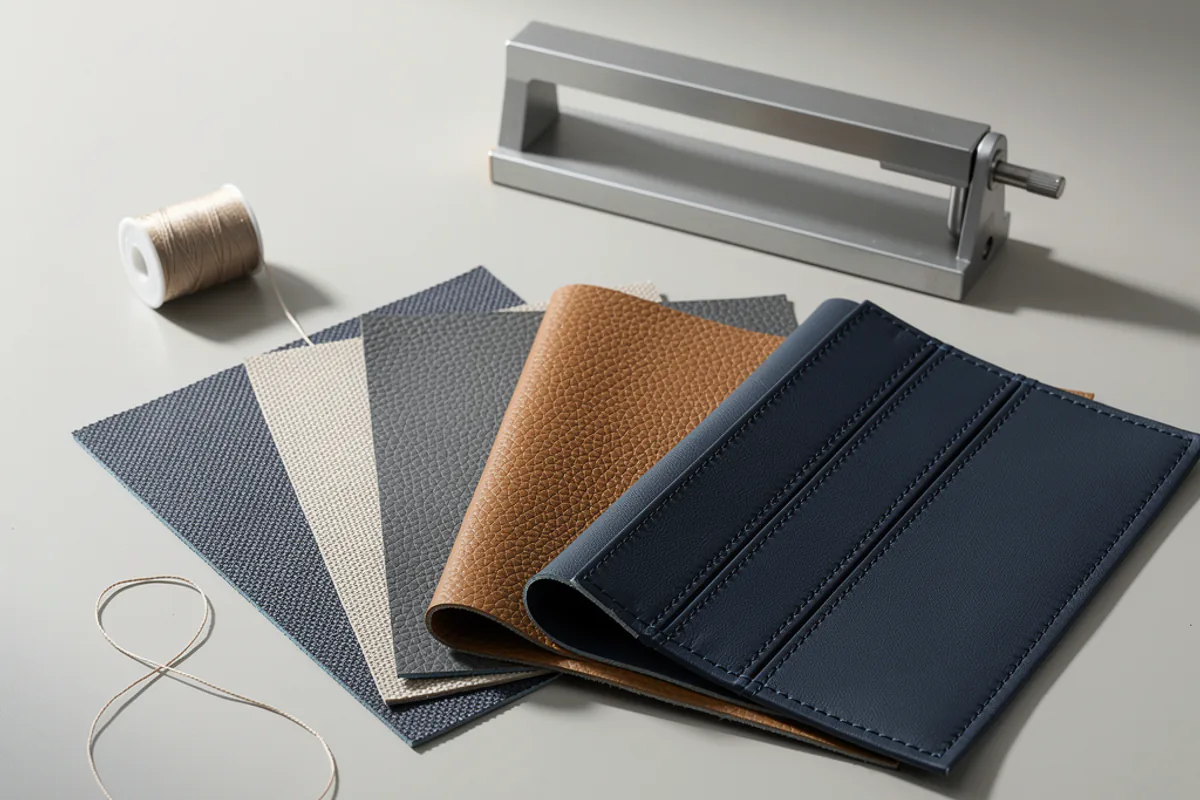
Approve a physical standard with a unique reference. Record color tolerance, grain, gloss, hand, backing, thickness, width and required test evidence. State how first bulk, repeat lots and any formulation or substrate change will be reviewed. A data sheet without traceability to the sampled construction is not enough.
A Practical Selection Sequence
- Define the finished component and its main failure risks.
- Request one or more clearly described constructions rather than a material name alone.
- Screen appearance, hand, thickness, backing and fabrication behavior.
- Test the risks that matter for that component using agreed methods.
- Compare qualified cost, not only quoted price per metre or yard.
- Freeze the approved sample and documentation.
- Require notification and reapproval before material, backing, coating or process changes.
If you are deciding between these material systems for a real program, share the component, thickness, backing, surface, test requirements, quantity and destination market through the Wandao Leather contact page. The useful outcome is a comparable sample plan, not a generic promise that one category is better.
Frequently Asked Questions
Is microfiber leather a type of PU leather?
Most microfiber synthetic leather uses polyurethane in its matrix or surface system, so it belongs within the broader PU synthetic-leather family. Its distinguishing feature is the engineered ultrafine-fiber substrate and composite architecture. Ask the supplier to define the complete construction.
Is microfiber leather always more durable than PU leather?
No. Microfiber construction can provide a strong structural platform, but durability depends on the fibers, PU chemistry, topcoat, layer bonding, thickness, processing and exposure conditions. Compare results from the same relevant test methods and conditions.
Which is better for shoes: microfiber or PU leather?
Microfiber is often considered when repeated flexing, controlled stretch or a substantial leather-like base matters. Conventional PU can suit soft, decorative or cost-sensitive footwear constructions. The correct choice depends on the shoe component, manufacturing process and approved tests.
Which is better for sofas and automotive seats?
Neither name is sufficient. Seat geometry, backing, seam design, cleaners, body oils, heat, flexing, abrasion, fire requirements and target-market compliance determine the appropriate construction. Test the complete material and, where required, the finished assembly.
Is microfiber leather waterproof or breathable?
Not automatically. Surface coating, pore structure, backing, perforations, seams, edges and the chosen test method affect liquid resistance and moisture transport. Use defined test conditions instead of a category-wide claim.
What information is needed to compare supplier samples?
Record the substrate, fiber composition when relevant, coating system, thickness method, mass, width, surface standard, fabrication process, test methods and criteria, compliance evidence and a traceable approved sample. Compare quotations only after these fields describe equivalent requirements.