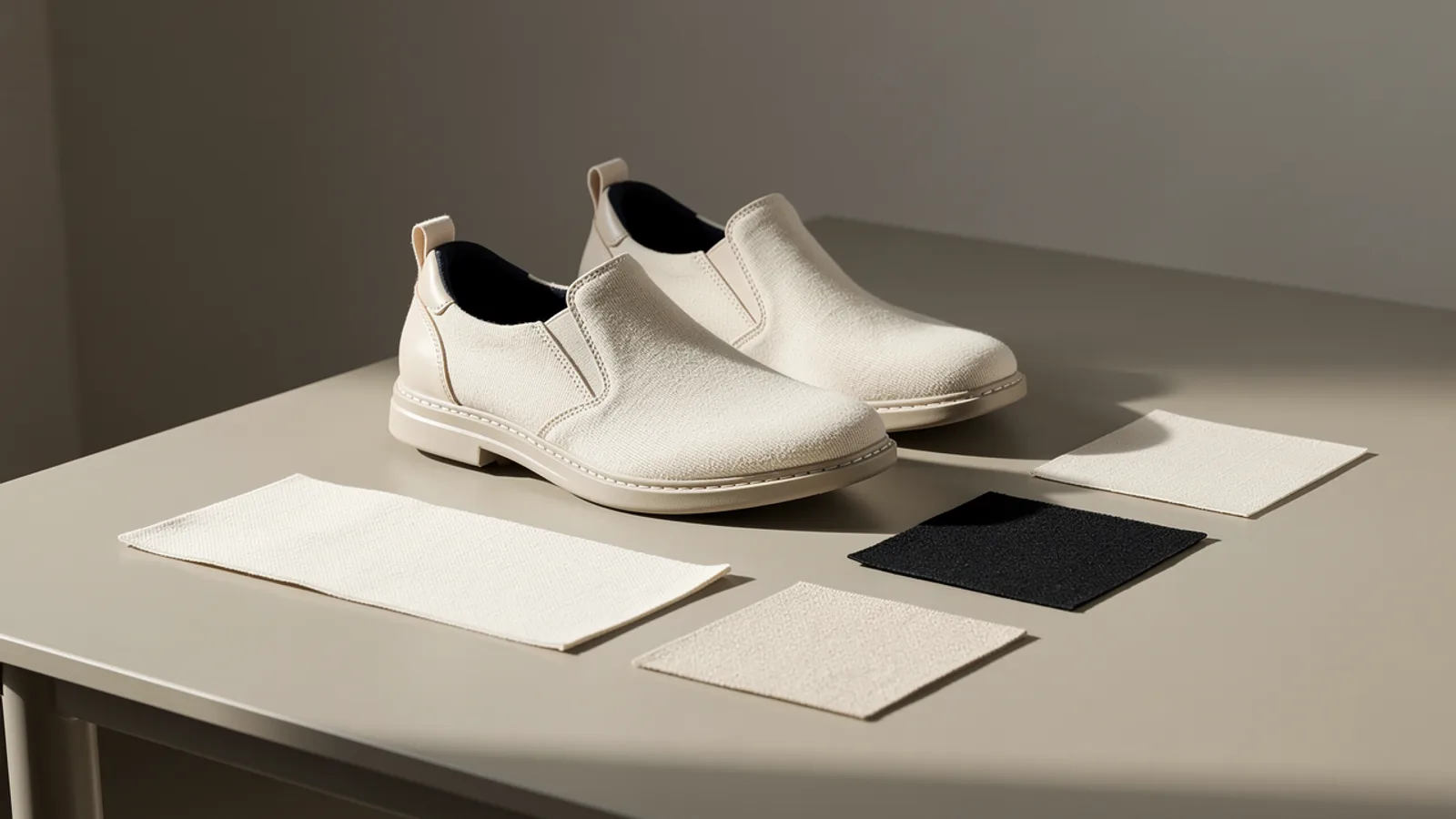
PU leather color fastness is not a single pass-or-fail property. For a shoe lining, you need to know whether contact marks a sock, whether rubbing changes the visible finish, and whether an adjoining light-colored component becomes discolored. Those questions require different evidence. Before approving a colorway, define the component, the neighboring materials and the exposure being assessed. This guide explains how to turn a vague “non-bleeding” promise into a usable sample-approval decision.
If you are sourcing PU materials for footwear uppers and linings, use the material discussion to identify suitable candidates, then qualify the actual construction. A report for a different color or an isolated swatch should not quietly become approval for the complete shoe.
Start with the part that is being marked
“The lining loses color” is an incomplete problem statement. Ask where the unwanted color appears: on a sock, on the lining itself, along a pale collar edge, or on an upper panel after assembly. Also record when it becomes visible. A mark noticed during handling is not the same observation as discoloration first discovered in a packed finished shoe.
For purchasing purposes, separate the receiving surface from the suspected source. Label both in photographs and keep the original pair together. Do not immediately clean away the mark or substitute a new lining: either action can remove information needed to compare the failed assembly with the approved sample. This is a proposed investigation workflow, not a diagnosis from appearance alone.
| Observation | Question to investigate | Evidence to request |
|---|---|---|
| Color on a sock or contact cloth | Does the exposed lining transfer color under the specified rubbing condition? | Relevant dry and wet rubbing results, with specimen identity |
| A rubbed patch changes appearance | Has the specimen surface changed, independently of staining elsewhere? | Separate surface assessment and photographs |
| Pale trim discolors beside a darker part | Is the actual material combination compatible in contact? | Migration assessment and an assembly review |
| A problem appears only after bonding | What changed between the loose components and the finished assembly? | Component, adhesive and process records |
PU leather color fastness: choose the right test question
ISO 17700:2019 covers footwear uppers, linings and insocks. Its methods A, B and C assess surface-color transfer during dry or wet rubbing; method D addresses bleeding. The designation alone is therefore not enough: ask which method was used. A dry result does not provide an unreported wet result, and “tested to ISO 17700” is not a complete purchasing specification.
For close-contact discoloration, discuss ISO 17701:2016, the footwear color-migration method, with the laboratory. Keep that question distinct from rubbing. Have the laboratory confirm the appropriate method, specimen combination and reporting conditions for your component rather than relabeling any white-cloth check as a migration test.
Another relevant example is SATRA TM8. Its scope includes both surface marring and color transfer during mild dry or wet abrasion. That distinction matters when reviewing a result: little staining of a contact material does not, by itself, tell you how the tested surface looked afterward.
These are method-selection references, not claims that a Wandaoleather material has passed them. Obtain the full applicable procedure through the laboratory and agree the buyer’s acceptance requirement before commissioning work. Do not copy a grade from an unrelated brand specification and assume it suits your shoe.
Why a good rubbing result may not clear an assembly
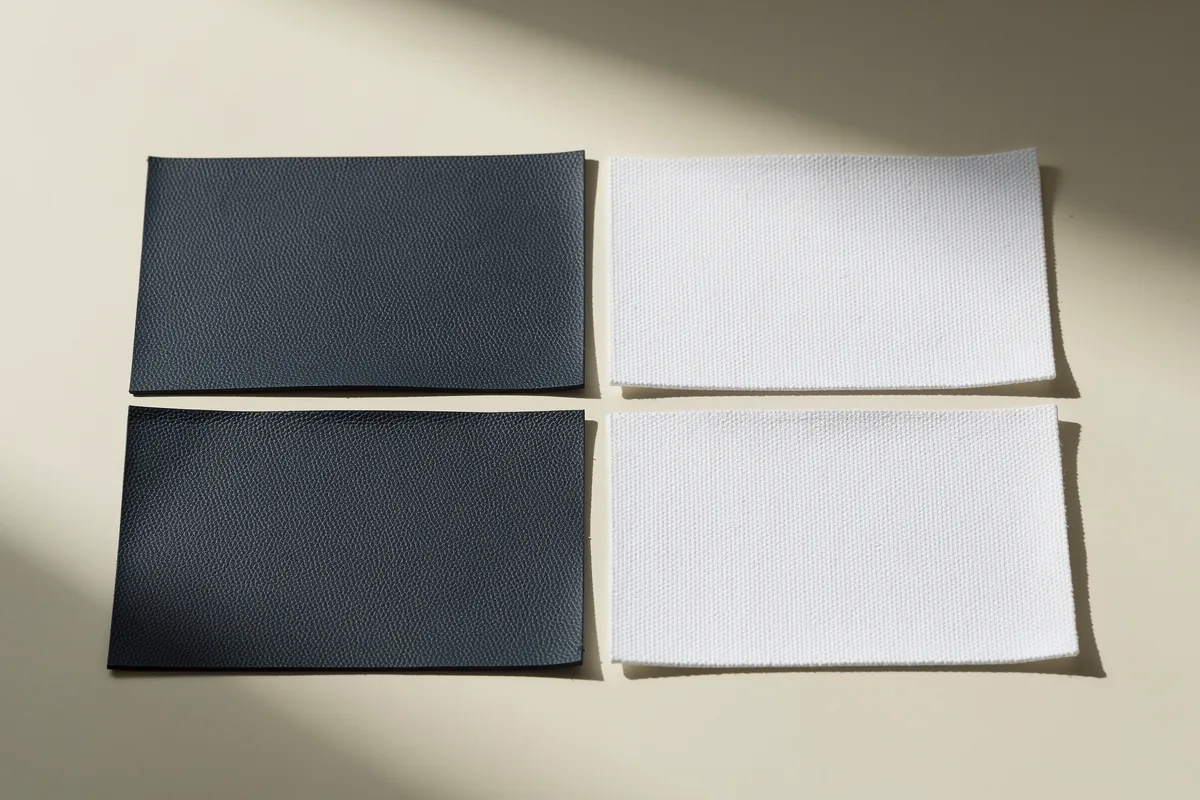
A published JALCA investigation into footwear color migration illustrates the difference. In that case, a black polyester lining passed rubbing assessment but released color in solvents associated with the natural-rubber adhesive. Migration onto a white, polyurethane-finished leather upper occurred in the adhesive’s presence. The study concerned that particular leather, textile and adhesive system—not every PU-coated fabric or every footwear glue.
The useful purchasing lesson is narrower than “adhesives cause bleeding.” A component report cannot answer every compatibility question about an assembly. If your project uses a pale upper next to a dark lining, ask the development team to identify the actual contact pair and bonding process for review. Whether the same mechanism exists in your shoe remains a question for testing.
Consider a hypothetical approval meeting: the material buyer brings a rubbing report for the lining, while the factory presents a finished collar with a visible mark. Both records may be accurate. The first concerns a specified test specimen; the second concerns a construction. The next step is to reconcile their identities and conditions, not to dismiss one record or announce a universal failure of PU leather.
Build a sample brief around the exact colorway
Use a component map before requesting samples. Assign a name to the lining face, backing, adjacent upper, binding and any other part relevant to the mark. For a multi-color shoe, identify each contact pair separately. This keeps “same material” from becoming shorthand for several different finishes or shades.
The following is an administrative approval checklist, not a laboratory test procedure. Adapt it with the footwear developer and supplier:
- Material identity: product code, color reference, finish, backing, nominal thickness and sample or production lot.
- Intended position: collar lining, tongue, quarter lining, insock or another named component.
- Contact partner: the material and color that may receive transfer, not just a general description such as “white fabric.”
- Assembly information: relevant adhesive identity and the factory’s approved application and curing process.
- Evidence requested: named test method, condition, specimen orientation where relevant, and reporting endpoints.
- Decision owner: the person authorized to accept the result and release the colorway.
Keep one untouched reference and identify submitted specimens against it. If there is not enough material for all requested checks, resolve that before cutting. A complete, traceable sample set is more useful than several impressive-looking reports that cannot be connected to the quotation.
For broader construction choices, the PU leather material overview provides the starting product context. Color-transfer approval should remain attached to the selected candidate, not to the material family name.
Read the report as a purchasing record
First match the tested material to the sample you hold. Then match the reported method and condition to the request. Only after those checks should you interpret the result against your agreed acceptance rule. A report with a favorable rating but an unclear specimen description leaves an identification gap.
Keep observations separate. The receiving cloth may show staining, the original surface may change, and a bonded pair may show contact discoloration. Record each endpoint in its own field. Avoid compressing all three into a checkbox labeled “colorfast,” because a later reviewer will not know what was actually accepted.
Where photographs accompany the report, ask for clear specimen labels and an untested reference. Photographs are useful context, but do not replace the laboratory’s stated evaluation. If the report omits a requested condition, list it as outstanding; do not fill the blank with an assumption based on another result.
Also distinguish missing evidence from failed evidence. “Wet result not supplied” means the decision is incomplete. “Wet result outside the agreed requirement” means a specific requirement was not met. Those situations lead to different supplier conversations and should not share the same status in your sourcing sheet.
Use an approval gate, not a permanent blanket pass
A practical release record can end in one of three decisions: approved for the specified construction, held for missing information, or rejected against a named requirement. State the scope in ordinary language so purchasing, development and factory quality teams read the same instruction.
For example, an approval might identify one lining code and shade, one adjacent upper and one controlled assembly revision. It should not read “all dark linings approved.” If a substitute is proposed later, compare the changed fields against the original evidence and decide what must be reviewed again.
Set review triggers in the order record. Suggested triggers include a changed finish, new color reference, different backing, new adhesive or revised component arrangement. A trigger is a request for technical review, not an automatic instruction to repeat every test. The reviewer should record why existing evidence remains applicable or which new evidence is needed.
For an incoming shipment, check identification against the approved reference and document any discrepancy before production consumes the material. This does not turn a warehouse inspection into a laboratory assessment. It protects the connection between the material ordered and the material qualified.
Write an inquiry the supplier can act on
A useful inquiry names the shoe component, target shade, adjacent materials, construction preferences and required evidence. Include the buyer’s specification if one exists. If requirements are still open, say that the project is at sample-screening stage rather than asking the supplier to promise “no color transfer under any condition.”
When considering alternatives across material families, use the footwear synthetic leather selection page to frame the application. Keep comparisons on equivalent component requirements; a material selected for an upper should not become a lining substitute solely because the color looks similar.
Send Wandaoleather your component brief and color reference to discuss candidate samples and the documentation needed for evaluation. Confirm the availability and scope of any requested testing before approval. The goal is a traceable decision for your shoe, not a generic promise attached to the word “PU.”
Frequently Asked Questions
Does a dry rubbing pass prove that PU shoe lining will not transfer color when wet?
No. It documents the reported dry condition, not an unreported wet condition. Request the relevant wet assessment separately and compare both results with the buyer’s agreed requirements.
Are rubbing fastness and color migration the same test?
No. ISO 17700 addresses rubbing and bleeding through specified methods, while ISO 17701 addresses color migration. Ask the laboratory which method fits the actual component and contact combination.
Is rubbing the sample with a white cloth enough for approval?
Treat an informal cloth check as a screening observation, not a substitute for a specified test report. Record what was done, and do not assume the cloth represents every sock or adjoining material.
Can the adhesive matter even when the lining has a good rubbing result?
Yes, in some assemblies. The cited JALCA case found adhesive-associated migration despite a rubbing-fast lining. That result is not universal; review the materials and bonding process used in your own construction.
Can one approved color cover every shade in the same PU range?
Do not extend approval automatically. Ask the supplier to identify the evidence supporting the additional shade, and have the buyer’s technical reviewer decide whether further evaluation is needed.
What should a PU footwear color-fastness request include?
Include the component, material code, color, finish, backing, sample identity, neighboring materials and relevant assembly information. Name the required test conditions and acceptance criteria, or state clearly that these still need agreement.