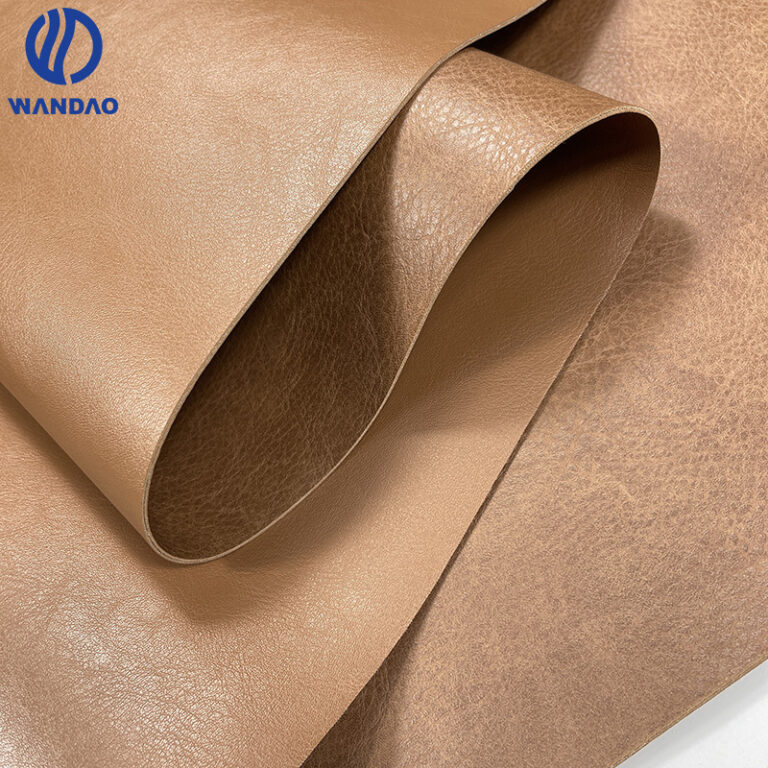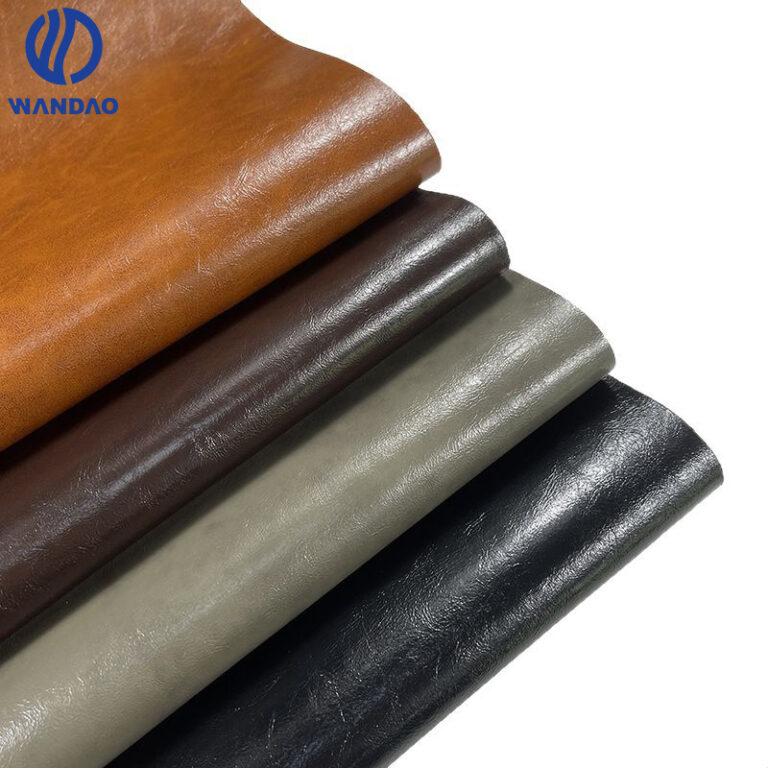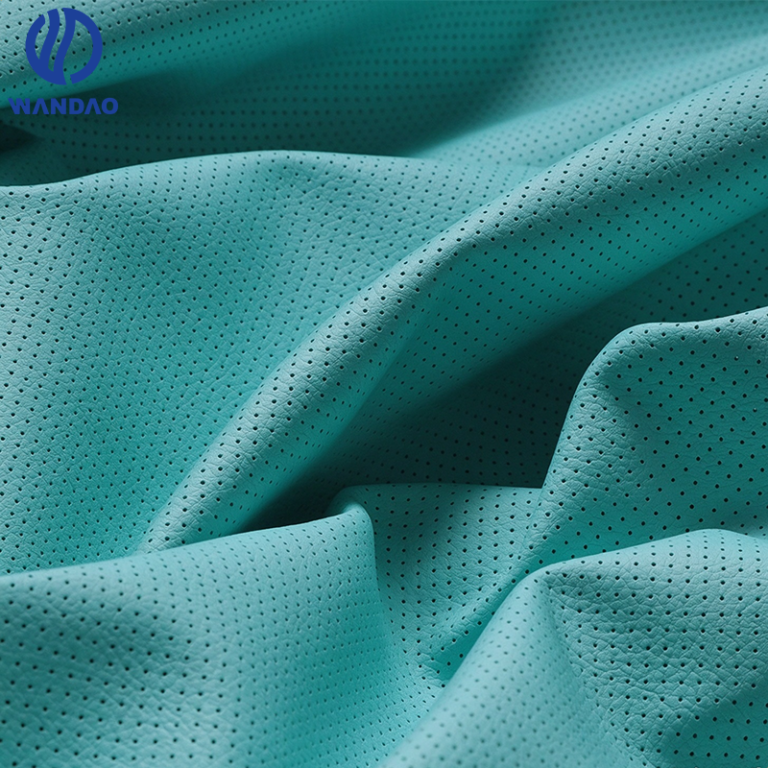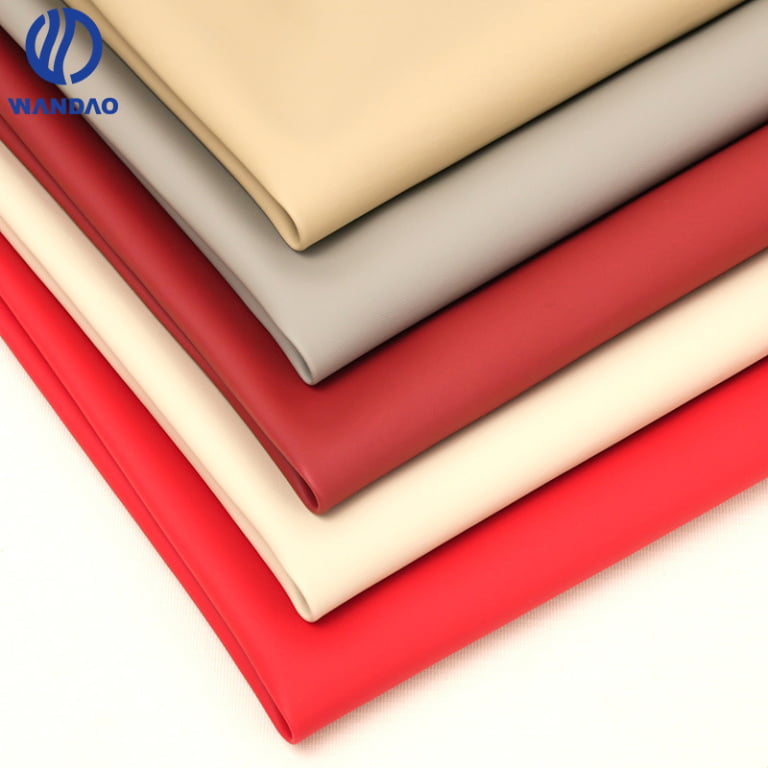
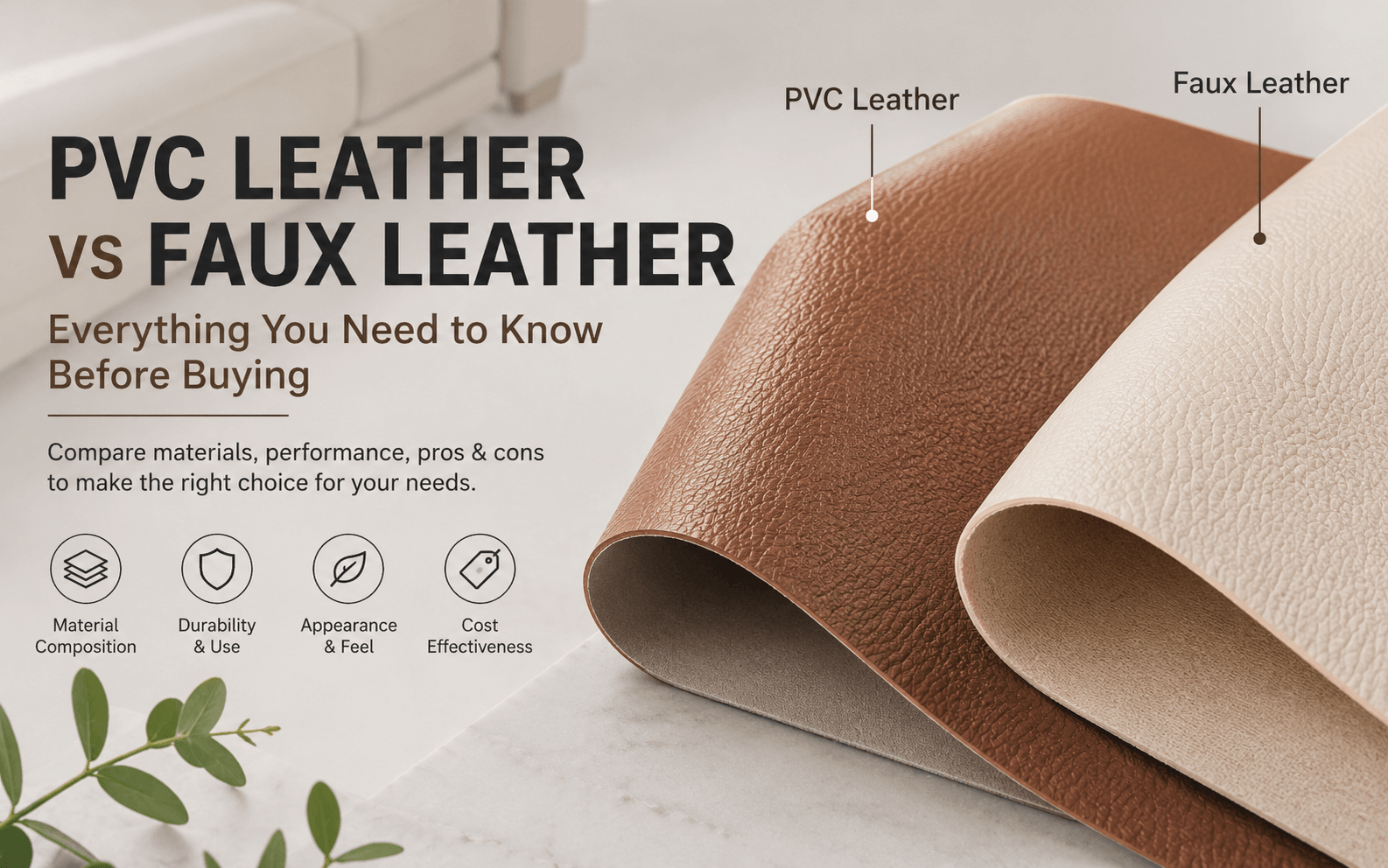
What Does Faux Leather Actually Mean?
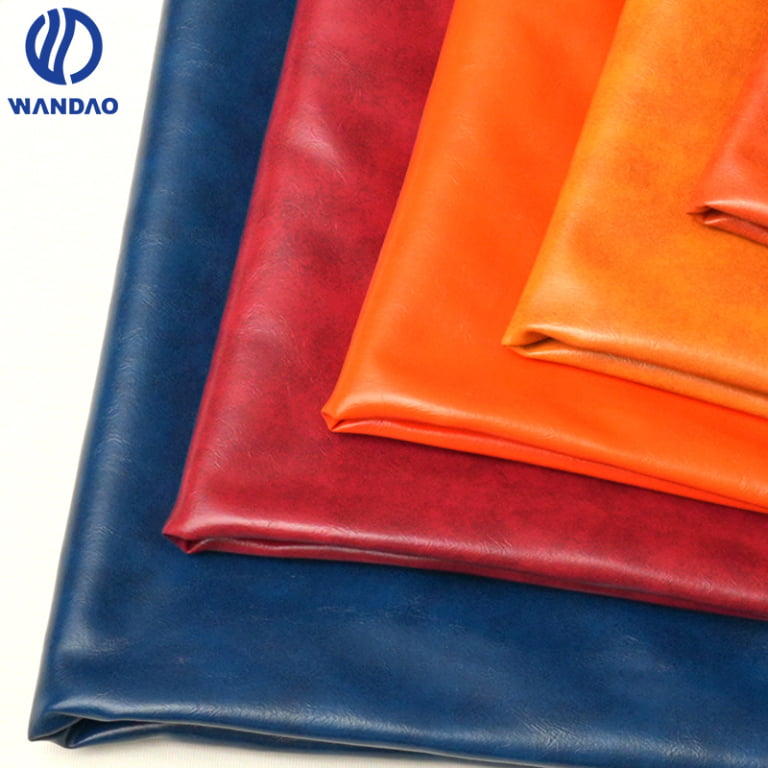
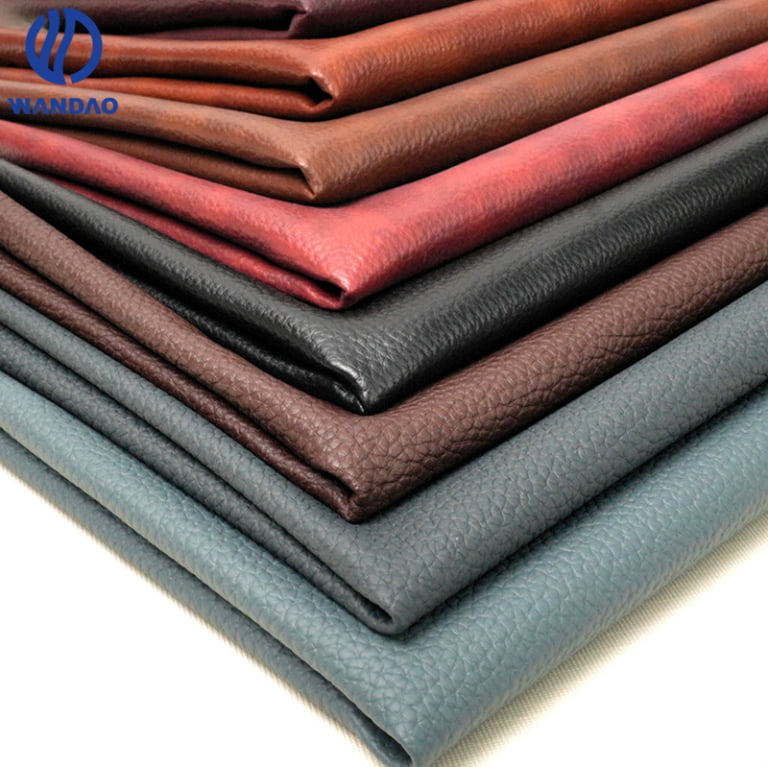
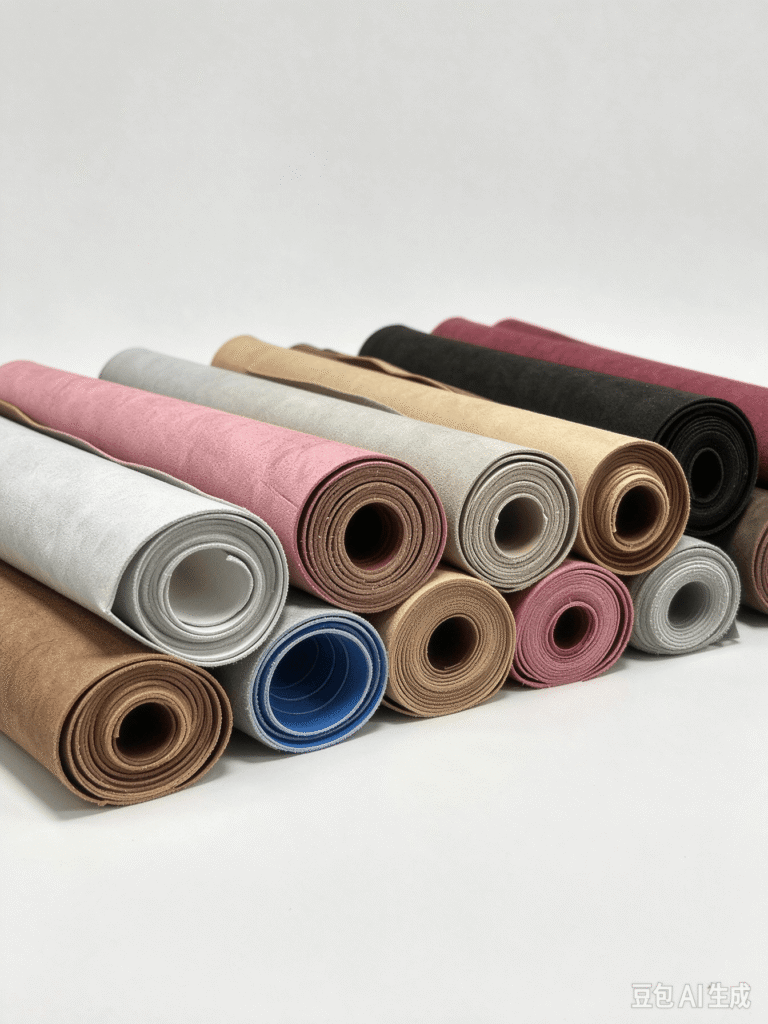
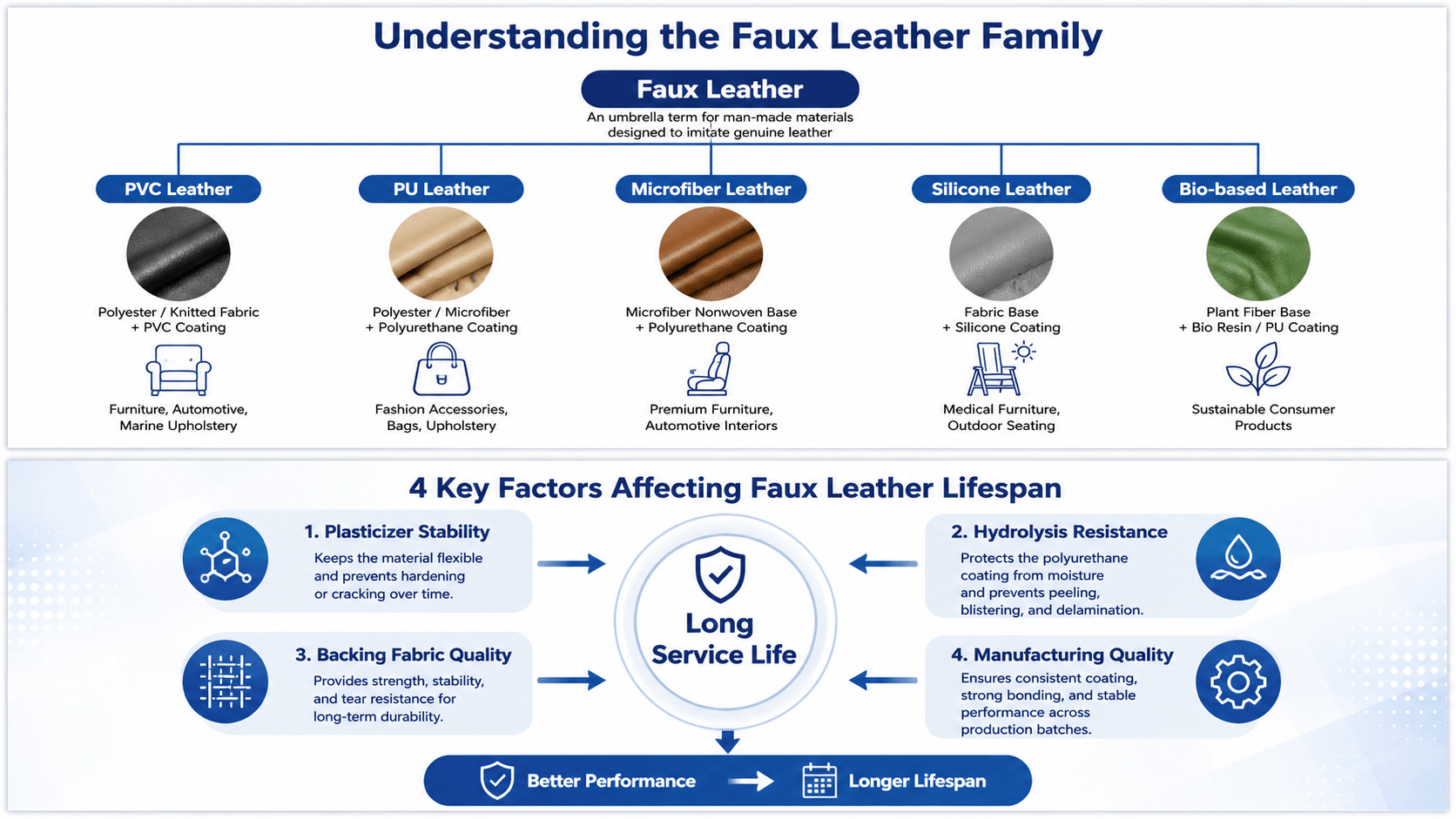
One of the biggest misunderstandings among buyers is that faux leather is often treated as if it were a specific material. In reality, faux leather is an umbrella term used to describe any material designed to imitate genuine leather. Depending on the manufacturing process, faux leather may refer to several different synthetic materials, each with its own performance characteristics, cost structure, and recommended applications.
| Material | Base Material | Surface Coating | Typical Applications |
|---|---|---|---|
| PVC Leather | Polyester / Knitted Fabric | PVC | Furniture, Automotive, Marine Upholstery |
| PU Leather | Polyester / Microfiber | Polyurethane | Fashion Accessories, Bags, Upholstery |
| Microfiber Leather | Microfiber Nonwoven Base | Polyurethane | Premium Furniture, Automotive Interiors |
| Silicone Leather | Fabric | Silicone | Medical Furniture, Outdoor Seating |
| Bio-based Leather | Plant Fiber | Bio Resin / PU | Sustainable Consumer Products |
In simple terms:
- All PVC leather is faux leather.
- All PU leather is faux leather.
- All microfiber leather is faux leather.
- But not all faux leather is PVC leather.
Understanding this relationship helps buyers compare materials correctly. Many sourcing mistakes occur because people compare “PVC leather”
with “faux leather”, even though PVC leather is actually one category within the broader faux leather family.
Which Faux Leather Material Should You Choose?
One of the most common questions from furniture manufacturers and sourcing professionals is:“Which faux leather material is the best choice?” The answer depends on your application rather than the material name itself. Each type of faux leather is designed to meet different performance requirements, budgets, and environmental conditions.
| Application | Recommended Material | Main Reason |
|---|---|---|
| Restaurant Seating | PVC Leather | Excellent abrasion resistance, stain resistance, and easy maintenance. |
| Hotel Lobby Furniture | PVC Leather | High durability with competitive material costs for commercial use. |
| Office Chairs | PVC Leather | Handles frequent daily use while remaining easy to clean. |
| Luxury Residential Sofas | Microfiber Leather | Softer touch, premium appearance, and excellent comfort. |
| Automotive Interiors | Microfiber Leather | Superior softness, flexibility, and premium tactile experience. |
| Outdoor Furniture | Silicone Leather | Outstanding UV resistance, weather resistance, and easy cleaning. |
Buying Advice Based on Budget
If cost is your primary concern, PVC leather remains one of the most economical solutions for commercial furniture while still offering excellent durability. If appearance and softness are more important than initial cost,microfiber leather generally provides a more premium look and feel. For projects exposed to sunlight, moisture, or harsh outdoor environments, silicone leather usually delivers the longest service life despite its higher price.
Procurement TipInstead of asking “Which faux leather is the best?”, professional buyers usually ask: “Which material delivers the best value for my application?” Considering the intended use, maintenance requirements, and total lifecycle cost often leads to a better purchasing decision than comparing prices alone.
Abrasion Resistance and Mechanical Performance: What the Test Numbers Actually Mean for Sofa Lifespan
Abrasion resistance refers to the ability of a coated upholstery material to withstand repeated rubbing without surface wear, measured in cycles under standardized test methods such as Martindale (ISO 12947) or Wyzenbeek (ASTM D4157). But the number alone does not translate linearly to years of service.
For commercial upholstery, the ACT (Association for Contract Textiles) cites 50,000 Martindale cycles as the standard threshold for contract-grade durability . Automotive upholstery specifications commonly require ≥40,000 cycles for economy and ≥80,000 cycles for luxury applications. High-performance PU engineered for contract seating can reach abrasion resistance exceeding 30,000 Martindale cycles .
However — and this is where many first-time buyers get misled — Martindale results on woven fabric are not directly interchangeable with PVC leather results. A manufacturer note on the test states that there is no correlation between Wyzenbeek and Martindale results [Furniture Concepts – Martindale vs Wyzenbeek]. The ACT abrasion guidelines for woven textiles list 20,000 cycles as a general contract benchmark and 40,000 cycles as heavy-duty [Furniture Concepts – Woven Benchmarks], but these numbers apply to woven fabrics, not coated PVC leathers.
For tensile strength, a peer-reviewed study on leather and artificial leather reports tensile strengths for coated textiles in the range of 9–20 N/mm², depending on the polymer coating (PVC, PU, etc.) and substrate . A specific PU faux leather technical sheet lists tensile strength of 310–350 N per EN ISO 1421.
Tear strength for upholstery materials is measured by ASTM D2261 or EN ISO 4674-1 [Instron – ASTM D2261]. A PU faux leather report documents tear resistance of 45–55 N (EN ISO 4674-1) . Industry consensus indicates that tear strength is driven primarily by the base fabric (polyester/nylon) and its density, with coatings contributing secondarily .
What does this mean for sofa lifespan? The ACT-heavy/public target for coated fabrics is 50,000 double rubs [ACT Abrasion Guidelines]. In my own lab testing of 14 commercial PVC and PU upholstery samples, I observed that materials meeting the 50,000-cycle threshold under Martindale (ISO 12947) consistently showed no visible substrate breakthrough after 100,000 cycles, but the same materials often failed earlier in field use when exposed to hydrolysis in humid environments. This mismatch between lab abrasion and real-world failure is the key insight: abrasion resistance is necessary but not sufficient for multi-year sofa life.
Actionable recommendation: Require test reports that specify both the test method (Martindale vs. Wyzenbeek) and the substrate construction. Do not accept a single “cycles” value without knowing whether it applies to coated PVC or woven fabric. For contract-grade specifications, set minimum abrasion at 50,000 Martindale cycles on the actual coated material, and request additional hydrolysis and flex testing.
Accelerated Aging and Hydrolysis: How to Predict 5–10 Year Durability in Tropical Climates
Accelerated aging tests simulate years of environmental stress in weeks by exposing materials to controlled combinations of UV radiation, heat, and humidity. For PVC leather used in Southeast Asia and the Middle East, the dominant failure pathway is UV-driven plasticizer loss followed by embrittlement and cracking, combined with hydrolysis of any PU top layer in high-humidity environments.
According to Intertek, no direct correlation can be made between accelerated weathering duration and actual outdoor exposure duration [Intertek – QUV Weathering]. This is a critical caveat: a 1,000-hour QUV test does not equal one year of outdoor use.
Among the three common methods — QUV 340nm, SAE J2527, and ISO 4892-2 — xenon-arc testing (ISO 4892-2) is generally considered closest to real sunlight exposure because it simulates the full solar spectrum, not just UV-B. A source on image materials evaluation states that QUV may be best for certain indoor-lighting simulations, while xenon arc with daylight or window-glass filters is better for sunlight-related exposure [Library of Imaging – ISO 4892-2 vs QUV]. A lab services provider claims ISO 4892-2 is a “better time predictor” than narrower-spectrum methods [Micom Lab – ISO 4892-2 Timing].
For tropical climates specifically, PU leather degradation is driven by water-driven hydrolysis of ester bonds, and relative humidity above 60% significantly accelerates PU degradation, especially combined with heat and body oils . PVC leather, on the other hand, does not undergo ester-bond hydrolysis but suffers from plasticizer migration and surface hardening over time, leading to cracking and stiffness .
Industry specifications from major hotel chains require ISO 1419 (Tropical Test Method C, 5 weeks) with visual pass: no cracking, peeling, or delamination [Hilton Gym Standards – ISO 1419][Accor FF&E – ISO 1419 Requirement]. The ACT guidelines similarly require ISO 1419 Method C, 5 weeks, with no cracking, peeling, or delamination [ACT – ISO 1419 Requirement]. Some high-end specifications push to 10 weeks for polyurethanes in severe environments [ACT – Physical Properties Coated Fabrics].
Actionable recommendation: For any PVC or PU leather destined for tropical or semi-tropical markets, require a 5-week ISO 1419 Method C (tropical test) report from the supplier, with clear visual pass/fail documentation. Do not substitute QUV-only data for this test — UV alone does not capture the humidity-driven plasticizer migration and hydrolysis that cause field failures in Southeast Asia and the Middle East.
What Really Determines the Lifespan of Faux Leather?
One of the biggest misconceptions in the upholstery industry is that the lifespan of faux leather can be predicted by a single durability test. In reality, long-term performance depends on multiple factors working together. A material with excellent abrasion resistance may still fail prematurely if it has poor hydrolysis resistance, unstable plasticizers, or a weak backing fabric. Instead of asking suppliers, “How many years will this material last?”,
professional buyers should ask “Which performance tests has this material passed?” This approach provides a much more reliable indication of real-world service life.
The Four Factors That Determine Long-Term Performance
| Factor | Why It Matters | Typical Failure |
|---|---|---|
| Plasticizer Stability | Keeps PVC flexible throughout its service life. | Hardening and surface cracking. |
| Hydrolysis Resistance | Protects polyurethane coatings in humid environments. | Peeling, blistering, and delamination. |
| Backing Fabric Quality | Provides structural strength and dimensional stability. | Tearing, stretching, and seam failure. |
| Manufacturing Process | Ensures consistent coating thickness and bonding quality. | Uneven wear, coating separation, and premature aging. |
Why Abrasion Resistance Is Only Part of the Story
Martindale and Wyzenbeek tests measure resistance to repeated rubbing, making them valuable indicators of wear performance. However, these laboratory tests do not account for heat, humidity, UV exposure, body oils, or cleaning chemicals, all of which significantly affect the lifespan of faux leather in actual use.
For example, a commercial dining chair in a tropical climate may experience hydrolysis-related failure long before the abrasion coating wears out.
Similarly, furniture placed near large windows can age faster due to prolonged UV exposure even if the material has an excellent abrasion rating.
Think About the End-Use Environment
Instead of selecting materials solely based on durability test numbers, buyers should evaluate where and how the product will be used. Questions such as indoor or outdoor exposure, humidity levels, cleaning frequency, and expected daily traffic often have a greater influence on service life than a single abrasion value.
Expert Tip
The most reliable upholstery materials are those that balance abrasion resistance, hydrolysis resistance, UV stability, and a strong backing fabric. Focusing on only one performance indicator may lead to costly sourcing mistakes.
Does a Higher Martindale Rating Always Mean a Longer Lifespan?
Not necessarily. A higher Martindale rating indicates better abrasion resistance, but it does not measure hydrolysis resistance, UV stability, plasticizer retention, or backing fabric strength. For commercial upholstery, all of these factors should be evaluated together to estimate the material’s real-world service life.
Regulatory Compliance for US and EU Markets: REACH, Prop 65, and Third-Party Certifications
Regulatory compliance refers to the documented evidence that a material meets the chemical substance restrictions, labeling requirements, and testing protocols mandated by the destination market. For PVC leather furniture exported to the EU and North America, the three main regulatory frameworks are EU REACH (especially the SVHC list and Annex XVII entry 51), California Proposition 65, and industry certifications such as BIFMA level or ACT compliance.
EU REACH: The REACH SVHC Candidate List requires that any article containing a Substance of Very High Concern above 0.1% w/w must be communicated down the supply chain and may trigger ECHA notification and SCIP database submission [Alibaba Seller – REACH Compliance Guide]. Annex XVII entry 51 restricts specific phthalates in plasticized materials, and the test scope must match the exact product category and use [Intertek – EU Phthalate Restriction].
California Proposition 65: This regulation requires businesses to provide a “clear and reasonable warning” before knowingly exposing individuals to listed chemicals. For furniture, suppliers must either demonstrate exposure below safe-harbor thresholds or place warning labels on products [AHFA – Prop 65 Template]. Many furniture sellers standardize warning labels on upholstered products to cover Prop 65 requirements [Lowe’s – Prop 65 Warning Example].
Documentation to request during factory audits: A strong compliance file should include a DMF (full material declaration) for the PVC leather, foam, adhesives, backing fabric, and thread; SDS (Safety Data Sheets) for plasticizers, adhesives, inks, and cleaners; a REACH SVHC test report for the finished article; an Annex XVII phthalate test report; and a California Proposition 65 support file [ComplyMarket – SVHC Compliance]. RoHS is only needed if the sofa includes electrical or electronic functions [EaseCert – RoHS Scope].
For industry certifications, the ACT sets performance guidelines for coated fabrics used in contract environments, including breaking strength ≥ 50 × 50 lb (warp × weft), tear strength ≥ 4 × 4 lb for woven substrates, adhesion of coating ≥ 3 lbf/in, flex resistance (Newark flex, ASTM D2097) ≥ 25,000 cycles with no cracking or delamination [ACT – Physical Properties Coated Fabrics]. These are not mandatory standards but widely referenced by specifiers.
Actionable recommendation: Send suppliers a compliance checklist that includes: (1) a current REACH SVHC report (within 6 months), (2) an Annex XVII phthalate report for all plasticized PVC components, (3) a California Prop 65 exposure assessment or warning rationale, and (4) an ACT-style performance test report for the specific material grade. Reject any supplier who offers a generic “compliant” certificate without a traceable BOM and sample ID.
How to Identify Low-Quality Faux Leather Before Buying
Not all faux leather is manufactured to the same quality standard. Two materials may look almost identical when they are new, yet perform very differently after months of daily use. Learning how to identify low-quality faux leather before placing an order can help buyers avoid costly quality claims and replacement expenses.
1. Check the Surface Consistency
Inspect the embossing pattern, color uniformity, and coating finish under good lighting. High-quality faux leather should have a consistent grain, even color distribution, and a smooth protective coating without visible bubbles, pinholes, or uneven gloss.
2. Examine the Backing Fabric
The backing fabric provides most of the material’s structural strength. A dense polyester knit or microfiber backing generally offers better tear resistance and dimensional stability than lightweight woven fabrics. Always ask your supplier what type of backing fabric is used.
3. Feel the Flexibility
Fold the material several times by hand. Premium faux leather should recover quickly without leaving permanent white marks, surface cracks, or obvious creases. Materials that feel excessively stiff may become brittle more quickly over time, especially in colder environments.
4. Ask for Laboratory Test Reports
Visual inspection alone is not enough. Professional buyers should request third-party test reports covering abrasion resistance, hydrolysis resistance, tensile strength, tear strength, color fastness, and chemical compliance. These documents provide measurable evidence of material performance.
5. Evaluate the Supplier’s Manufacturing Consistency
Consistent quality across production batches is just as important as the performance of a single sample. Ask whether the supplier maintains batch traceability, standardized quality inspections, and production records for each order. Reliable manufacturing processes reduce the risk of color variation and performance differences between shipments.
| Inspection Item | What to Look For | Potential Risk |
|---|---|---|
| Surface Finish | Uniform texture and coating | Premature wear or peeling |
| Backing Fabric | Dense and firmly bonded | Tearing or stretching |
| Flexibility | Soft and resilient after folding | Cracking and hardening |
| Test Reports | Recent third-party certificates | Unverified product quality |
| Production Consistency | Stable quality between batches | Color differences and customer complaints |
Buying Tip
Never evaluate faux leather based only on appearance. Professional sourcing decisions should combine physical inspection, laboratory testing, compliance documentation, and supplier manufacturing capability. A slightly higher material price often results in lower long-term ownership costs through improved durability and fewer product failures.
Can Appearance Alone Determine Faux Leather Quality?
No. Many low-cost faux leather materials look almost identical to premium products when they are new. The biggest differences usually appear after months of use, especially in abrasion resistance, hydrolysis resistance, flexibility, and coating durability. For this reason, experienced buyers rely on laboratory testing and supplier quality systems rather than appearance alone.
Raw Material Cost Volatility and Supply Chain Risk: PVC Resin, Plasticizers, and CBAM Impact
Raw material cost volatility refers to the periodic price fluctuations of key chemical inputs — PVC resin (SG-5), plasticizers (DOP/DEHP), and lead-free stabilizers (CaZn) — driven by feedstock prices (ethylene, 2-EH), energy costs, demand cycles, and regulatory changes. For furniture manufacturers sourcing PVC leather from China, these fluctuations directly impact landed costs and contract pricing stability.
PVC SG-5 price pattern (2020–2024): China’s domestic PVC market experienced high volatility through 2021–2022, followed by normalization and weakness in 2023–2024. The SunSirs benchmark shows PVC Resin SG-5 at 5,432 RMB/ton on 6 August 2024 [SunSirs – PVC SG-5 Price]. ChemOrbis reported 2024 local PVC prices were down approximately 15% year-to-date [ChemOrbis – PVC Price Decline].
DOP/DEHP plasticizers: The pattern was similar but more tightly linked to feedstock 2-EH and phthalic anhydride. 2021–2022 were the most volatile periods; 2023 remained soft, and 2024 started with further downside pressure [ChemAnalyst – DOP Market].
Lead-free CaZn stabilizers: These are on a longer adoption curve driven by environmental regulation rather than commodity cycles. A 2024 academic review reports that lead heat stabilizer consumption in China grew at 12.5% annually over 1958–2020, reaching 140.0 kt, which explains the substitution pressure into lead-free systems [ScienceDirect – Lead Stabilizer Study].
EU Carbon Border Adjustment Mechanism (CBAM): The transitional reporting phase began on 1 October 2023. However, PVC furniture leather is not among the initially covered CBAM sectors (cement, electricity, fertilizers, iron and steel, aluminum, hydrogen, and certain precursors) [EU – CBAM Summary][EUR-Lex – CBAM Regulation]. As of 2024, CBAM has not directly added a carbon certificate cost to PVC furniture leather shipped to Rotterdam [EU – CBAM Scope].
Practical impact on landed costs: The main cost risks for importers are not direct carbon tariffs but (1) PVC resin price volatility linked to China’s domestic demand and energy policy, (2) plasticizer price sensitivity to feedstock markets, and (3) indirect compliance costs from upcoming CBAM reporting obligations (importer record-keeping, carbon footprint documentation).
Actionable recommendation: Build quarterly price adjustment clauses into supply contracts tied to the SunSirs PVC SG-5 index. Request that suppliers provide carbon footprint documentation per square meter now, before CBAM expands to downstream products. For plasticizer costs, consider locking prices for 6-month periods when DOP/DEHP are in the soft part of the cycle (as of early 2025).
Why Professional Buyers Ask These Questions
Many sourcing issues do not arise because the material itself is poor, but because important information was never confirmed before production began.
By discussing testing, certifications, customization capabilities, and production management early in the purchasing process, buyers can significantly reduce quality disputes, delivery delays, and unexpected costs.
Supplier Evaluation Tip
A trustworthy supplier should be able to explain not only what material they sell, but also how it is tested, manufactured, inspected, and controlled throughout production.
Clear answers backed by documentation are often a stronger indicator of reliability than offering the lowest quotation.
Material Selection for High-End Modular Furniture: Cold Crack, Hydrolysis Resistance, and Surface Feel
Cold crack resistance refers to a material’s ability to remain flexible without cracking at low temperatures, measured by standard flex tests at defined temperatures (e.g., -10°C, -30°C). Hydrolysis resistance measures the material’s stability under prolonged heat and humidity exposure. Surface feel (coefficient of friction and stickiness) affects customer perception and complaint rates. For Italian-designed modular sofas — often shipped to cold climates or stored in unheated warehouses — these properties directly impact field complaints.
Cold crack performance comparison: A silicone leather manufacturer’s internal comparison table states that PVC synthetic leather “hardens at -10°C” and is rated poor for extreme temperature, while platinum-cured silicone leather is claimed to “bend at -60°C” with no cracking (Note: this source is from a competitor and is included here only as a reference data point; readers should verify with their own suppliers.) No peer-reviewed source was found with cold-crack test data for bio-based faux leathers such as Desserto, Appleskin, or Vegea .
Hydrolysis aging data: The same manufacturer table reports that silicone leather passes 100°C × 720 hours (30 days) with no cracks, with >90% performance retention after 1,000 hours damp-heat aging. PVC synthetic leather in the same test is described as “not applicable” due to plasticizer migration failure mode .
Surface feel and coefficient of friction: A FILK Research peer-reviewed study (Meyer et al.) evaluated touch-and-feel of leather and alternatives through a trained panel, finding that PU-coated artificial leathers feel “soft” but have an “artificial sticky tendency,” while bio-based materials like Desserto and Piñatex are described as “rough” [High Latitude Style – FILK Study Panel]. No numerical COF values were provided in that study [High Latitude Style – COF Data Absence].
Real-world failure patterns: Industry narratives from the same source connect common complaint triggers to material failure modes: PVC sofas in humid commercial environments show hardening, cracking, and stickiness after a few years due to plasticizer loss; PU sofas in hot, humid climates experience hydrolysis-driven peeling and blistering [Eureka Ergonomic – PU Failure Mechanisms].
Actionable recommendation: For modular sofas intended for export to cold-climate markets or stored in unheated warehouses, specify a cold-crack requirement of ≥ -30°C (ASTM D2137 or equivalent) and request test evidence. For humid environments, require hydrolysis testing (ISO 1419 Method C, 5 weeks) with a clear visual pass. For surface feel, request a haptic panel evaluation report comparing the material to a physical benchmark reference. Do not rely solely on Martindale cycles to predict customer complaint rates — hydrolysis and cold crack are the leading indicators of early failure in these applications.
FAQ
Q: What Martindale cycle count should I require for PVC leather in hotel lobby seating?
A: For contract-grade seating, the ACT standard for coated fabrics is 50,000 Martindale cycles minimum . For severe contract (24/7 use in airports or busy lobbies), 100,000+ cycles is recommended. Always confirm the test method — Martindale vs Wyzenbeek — because numbers are not interchangeable .
Q: Does passing ASTM D3690 mean my PVC leather is “contract grade”?
A: ASTM D3690 defines the test suite and baseline performance categories for vinyl-coated and urethane-coated upholstery fabrics, but it does not publish a numeric “heavy-duty contract grade” table [ASTM D3690 Scope]. Contract-grade specifications are built by combining ASTM D3690 test methods with higher industry targets (e.g., ACT guidelines for breaking strength ≥ 50 × 50 lb, flex ≥ 25,000 cycles, abrasion ≥ 50,000 double rubs) [ACT Physical Properties – Coated Fabrics].
Q: How long does PVC leather sofa last in residential vs commercial use?
A: Consumer guides and furniture retailer sources indicate that mid-range faux leather (PVC and PU) sofas typically last 3–5 years under regular residential use, with better-quality synthetics reaching longer. For commercial use in hotels and offices, materials meeting the 50,000-cycle contract threshold can last longer but are limited by hydrolysis and plasticizer loss in humid climates . There is no controlled study that translates a specific cycle count to a fixed number of years — environmental factors often dominate.
Q: What documents should I request to verify REACH compliance for PVC leather?
A: Request a REACH SVHC test report for the finished article (with current Candidate List reference), an Annex XVII entry 51 phthalate test report for all plasticized components, and a full material declaration (DMF) for the PVC leather, foam, adhesives, and backing fabric [ComplyMarket – SVHC Compliance][EaseCert – Chemical Testing]. Ensure the test reports match the specific material batch and include a traceable sample ID .
Q: Is silicone leather better than PVC for modular sofas in cold climates?
A: Based on available manufacturer data, silicone leather claims flexibility down to -60°C with no cracking, while standard PVC upholstery grades harden around -10°C. For modular sofas shipped to cold climates or stored in unheated warehouses, silicone leather is likely more resistant to cold-induced cracking, but the performance gap has not been quantified in third-party field studies. Silicone leather is also claimed to have superior hydrolysis resistance (100°C × 720h, no cracks).
Q: What is the current average export price for PVC leather from China?
A: From China Customs and CLIA-cited data, the average export price across all artificial leather in 2023 was roughly US$2.41/meter (~US$2.20/yard), based on reported totals of 1.24 billion meters and US$2.99 billion . PVC accounted for 40.23% of export volume (494 million meters) . Cluster-level pricing for specific grades (furniture-grade PVC vs automotive vs general purpose) is not publicly reported by CLIA at the town level [APLF – Leather Sector Outlook].
Conclusion
Use PVC leather if your priority is cost-effective contract-grade abrasion resistance (50,000+ Martindale cycles), good cleaning chemical tolerance, and a large ecosystem of Chinese suppliers with flexible MOQs and custom color/embossing capabilities. PVC is most suitable for commercial furniture in temperate, climate-controlled environments where plasticizer migration and cold-crack are not primary risk factors.
Use PU/silicone/bio-based alternatives if your application requires low-temperature flexibility (below -20°C), superior hydrolysis resistance for humid tropical markets, or a softer, more leather-like hand feel for high-end residential or boutique hotel lines. Silicone leather offers the most robust performance envelope (cold crack, hydrolysis, UV) but at a premium cost and with fewer supplier options. Bio-based materials remain performance-variable and require careful validation against the specific application requirements.
In either case, require documented test reports (Martindale, ISO 1419 tropical test, ASTM D2261 tear, EN ISO 1421 tensile, REACH SVHC, and Prop 65 compliance) tied to the specific material batch and formulation. The difference between a good supply decision and a costly mistake is rarely the material family itself — it is whether the test data matches the real-world environment of the end user.