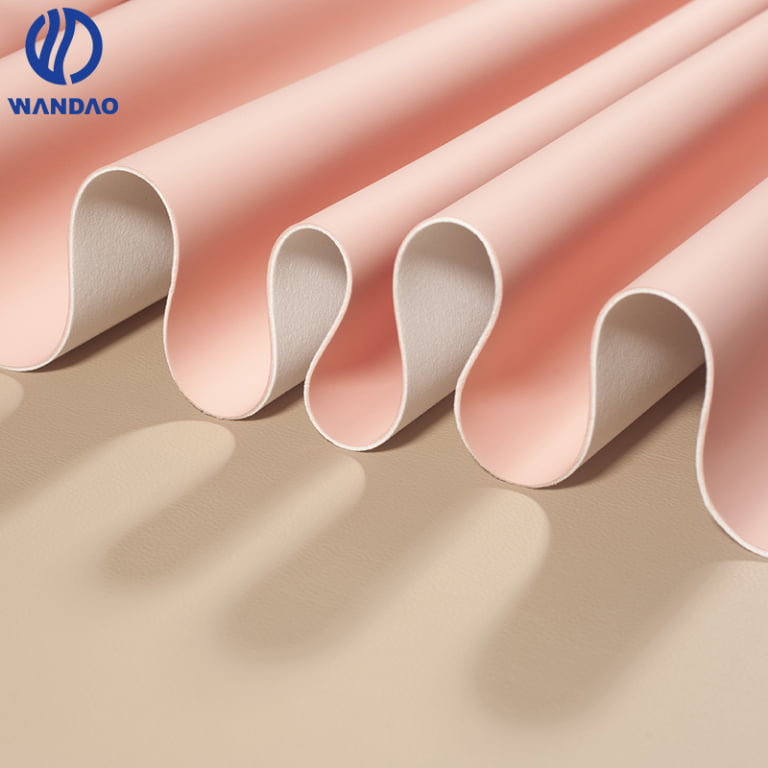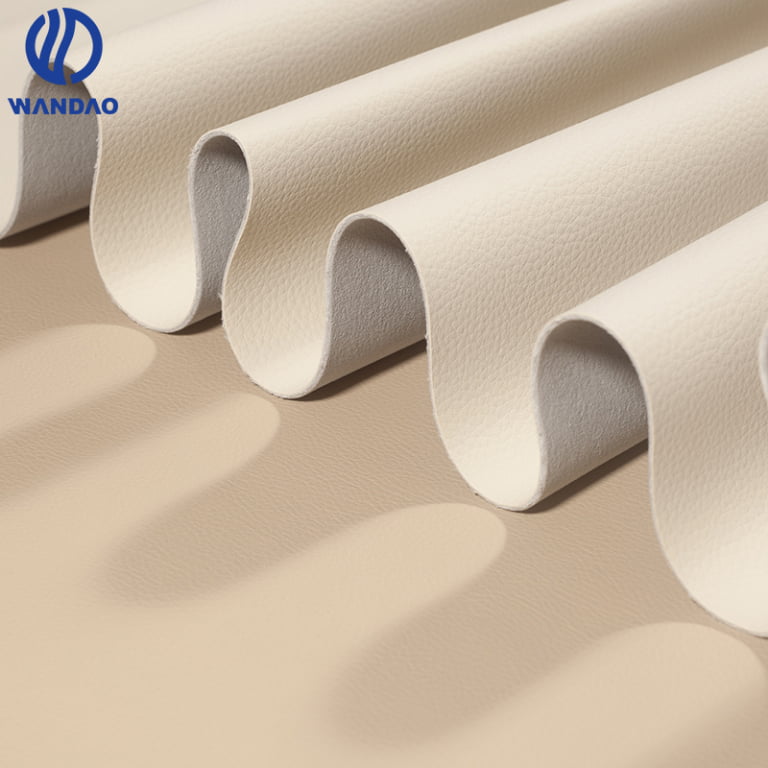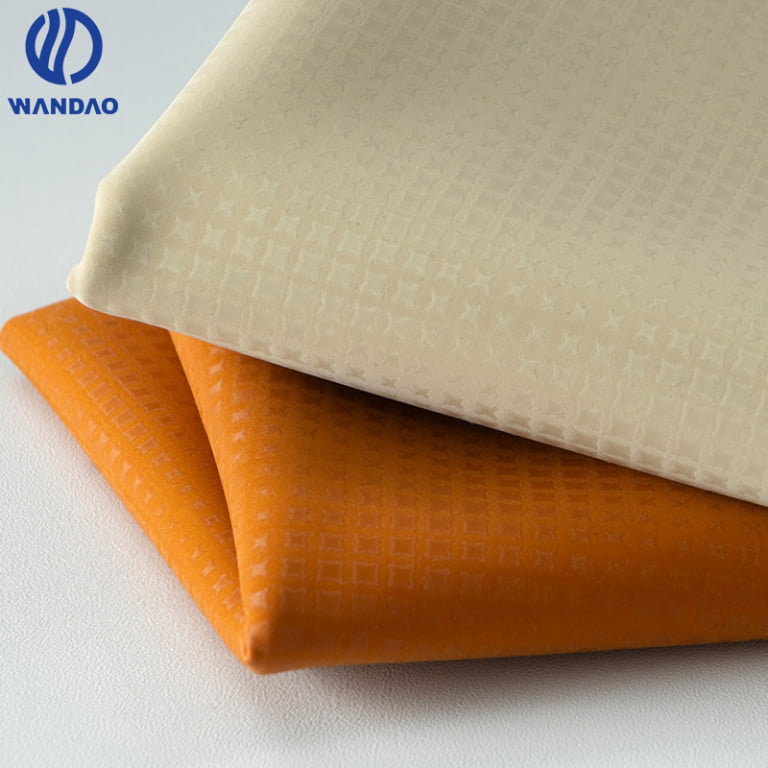
Silicone leather stain resistance should be approved against a restaurant’s real cleaning task, not a quick wipe on a showroom swatch. The useful question is whether specified food and drink marks can be removed by an approved routine while the upholstery still meets the agreed appearance requirement. For a booth project, separate residual staining from changes to the finish, then document both. This guide provides a purchasing framework for making that decision without treating “easy clean” as an unlimited promise.
When evaluating silicone leather for furniture and booth seating, start with the proposed material, color and construction. A cleanability discussion belongs alongside sample approval; it should not be postponed until the restaurant team receives finished furniture and asks which cleaner to use.
Define silicone leather stain resistance in two results
Use separate fields for “soil remaining” and “surface condition.” A sample is not fully evaluated just because the original food mark is no longer obvious. Conversely, a visible mark should not automatically be described as coating damage. Keep the observation precise until the supplier or laboratory has investigated it.
The distinction has an industry basis. ACT’s 2020 coated-fabric testing guide treats resistance to cleaning chemicals separately from stain-removal effectiveness. Its stain-release discussion considers the contaminant, exposure period and cleaning product, with assessment after drying. Although written for healthcare seating, that separation is useful when designing a restaurant evaluation; it does not make a restaurant fabric healthcare-approved.
For this purchasing framework, add a third decision field: can the operator actually follow the accepted routine? An attractive sample result is of limited procurement value if approval depends on a process the restaurant does not intend to adopt. Resolve that mismatch before treating the sample as an operational fit.
| Decision field | Record | Do not substitute |
|---|---|---|
| Soil removal | What remains after the agreed cleaning procedure | A photograph taken before the sample has dried |
| Surface condition | Appearance and other agreed observations against the reference | A statement that the stain disappeared |
| Operational fit | Whether the documented routine is accepted by the restaurant | An unapproved cleaner selected after testing |
Translate the menu and service routine into a brief
Build the exposure list with the person responsible for restaurant operations. Ask which spills are realistic in that location, where they usually occur and when staff can respond. Coffee at a breakfast booth and a condiment mark in an evening dining area are different entries in a project brief, even if both are casually called a food stain.
Choose a manageable list that represents the intended use. Identify the actual substance rather than writing only “sauce” or “oil.” Record whether the scenario represents prompt attention or a missed mark discovered later. Let the supplier and laboratory help establish appropriate exposure conditions; this article does not prescribe a universal dwell time.
ACT’s Cleaning Resources & Considerations cautions that no material is immune to soiling and that delayed attention can make removal harder. It also emphasizes product-specific care and the importance of addressing cleaning residues as instructed. Those points argue against “maintenance-free” language, not in favor of a homemade cleaning recipe.
Before ordering the sample set, ask the operator to approve the brief in writing. Otherwise, development may test an easy scenario while the service team expects a much broader promise. Make any excluded exposures visible in the same record as the accepted ones.
Separate the sample identities before comparing outcomes
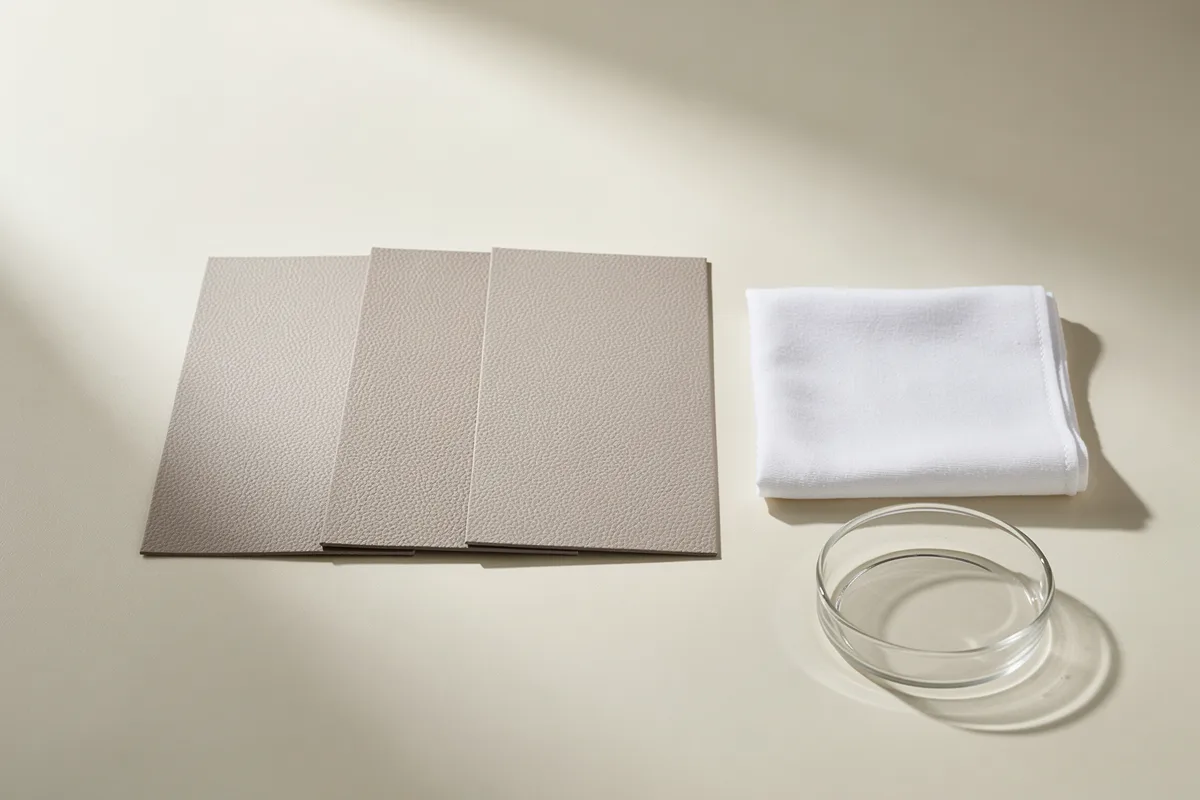
The following layout is a proposed project-control system, not a published standard method. Give every piece an identifier linked to the quoted material and color. Set aside an untouched reference, a specimen reserved for the approved cleaner without added soil, and specimens assigned to the agreed soil-and-cleaning scenarios.
The cleaner-only specimen helps structure an investigation. If its appearance differs from the untouched reference, do not attribute every change on the soiled specimen to the food or drink. Equally, matching appearances do not prove that every mechanism has been ruled out. Record the difference and ask for a technical review when the result is unclear.
Keep a simple sample register: identifier, material code, shade, finish, backing, source lot, assigned scenario and custodian. Mark the register rather than writing on the face to be evaluated. Retain sufficient reference material for a later comparison and agree who keeps it after the approval meeting.
For multi-site rollouts, use the same identifiers in the supplier report, the furniture maker’s record and the operator’s sign-off. This avoids a common administrative gap: one team approves a color chip while another assumes that approval includes cleaning performance of the full material.
Match the cleaner to the proposed upholstery
Ask for the cleaner’s commercial identity and the material supplier’s written care instructions. Reconcile the approved product, ready-to-use or dilution status, application tool, residue-removal steps and drying instructions with the restaurant’s planned routine. Do not quietly replace an unavailable product with something carrying a similar marketing description.
ACT’s coated-fabric selection guide recommends aligning supplier instructions with the facility’s actual protocols and checking chemical compatibility. It specifically includes silicone among coated upholstery materials that may be affected by hard-surface products. Its healthcare context should not be read as a blanket restaurant cleaning prescription.
If the two instructions conflict, pause that portion of qualification. Ask the relevant suppliers to resolve the difference rather than selecting the stronger concentration or longer contact time yourself. A gap recorded before purchase is more useful than a false assurance created by improvisation.
This guide evaluates material appearance and procurement fit. It does not establish sanitizing or disinfecting effectiveness. If the restaurant has separate hygiene requirements, those need their own applicable product instructions and professional review; a stain-removal demonstration cannot answer them.
Review a representative booth detail
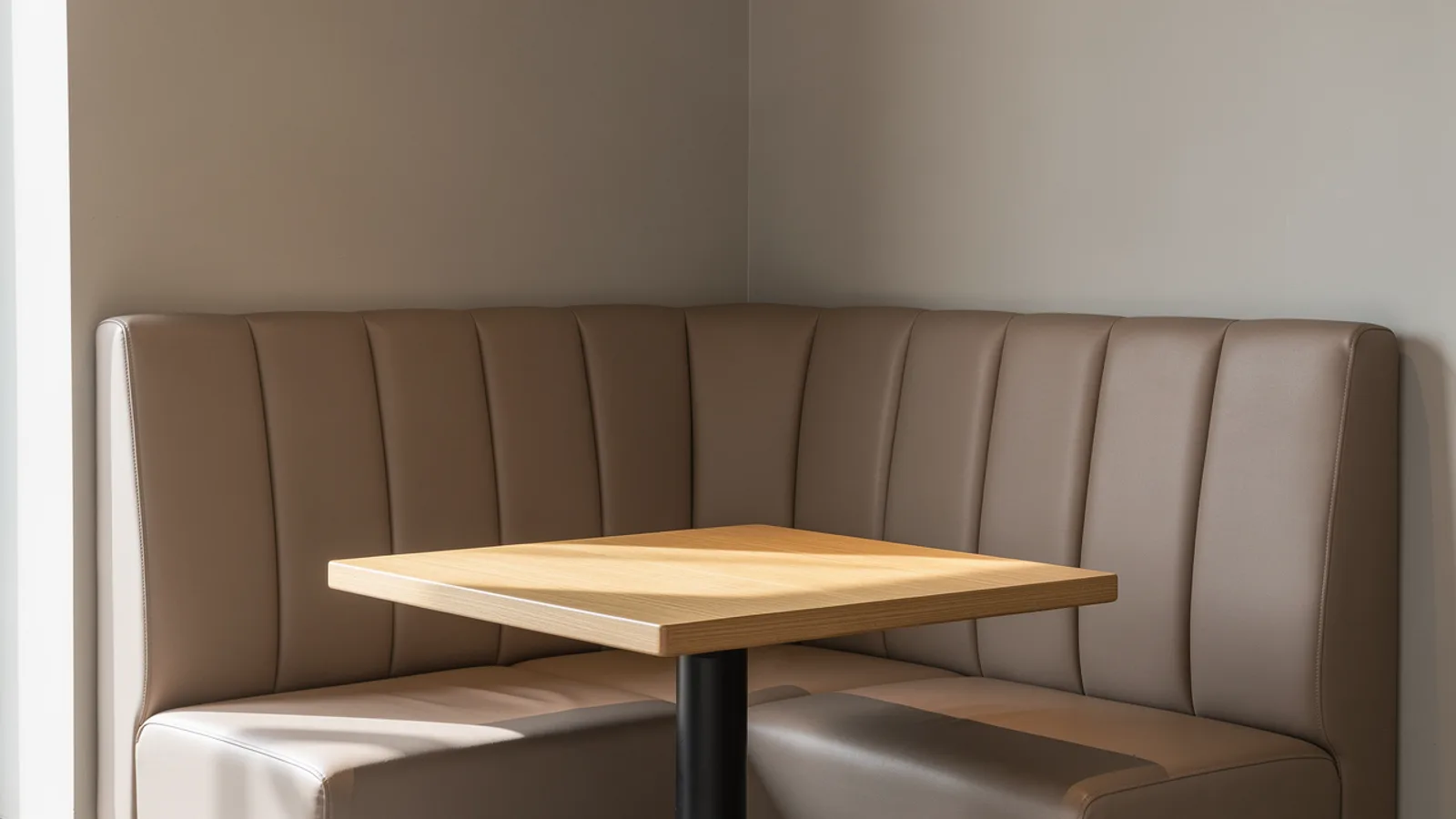
A flat swatch is convenient for comparing candidate surfaces, but the approval file should also identify what furniture detail it represents. Ask the furniture maker which part deserves a sample: a seat-to-back junction, piping, a corner or another feature present in the actual drawing.
ACT’s selection guidance calls for reviewing construction details with the furniture manufacturer and considering mock-ups. For this restaurant workflow, use that discussion to choose a representative detail rather than inventing a generic “booth test.” Agree whether the sample is for appearance review, cleaning access or a separately specified performance assessment.
Have the operator explain how staff would reach and wipe that detail. Record questions raised by the sample, such as access around a seam or whether the proposed tool fits the corner. These are design-review observations, not proof of a particular material defect. Assign each unresolved item to the furniture maker, material supplier or operations team.
Read the results before deciding “approved”
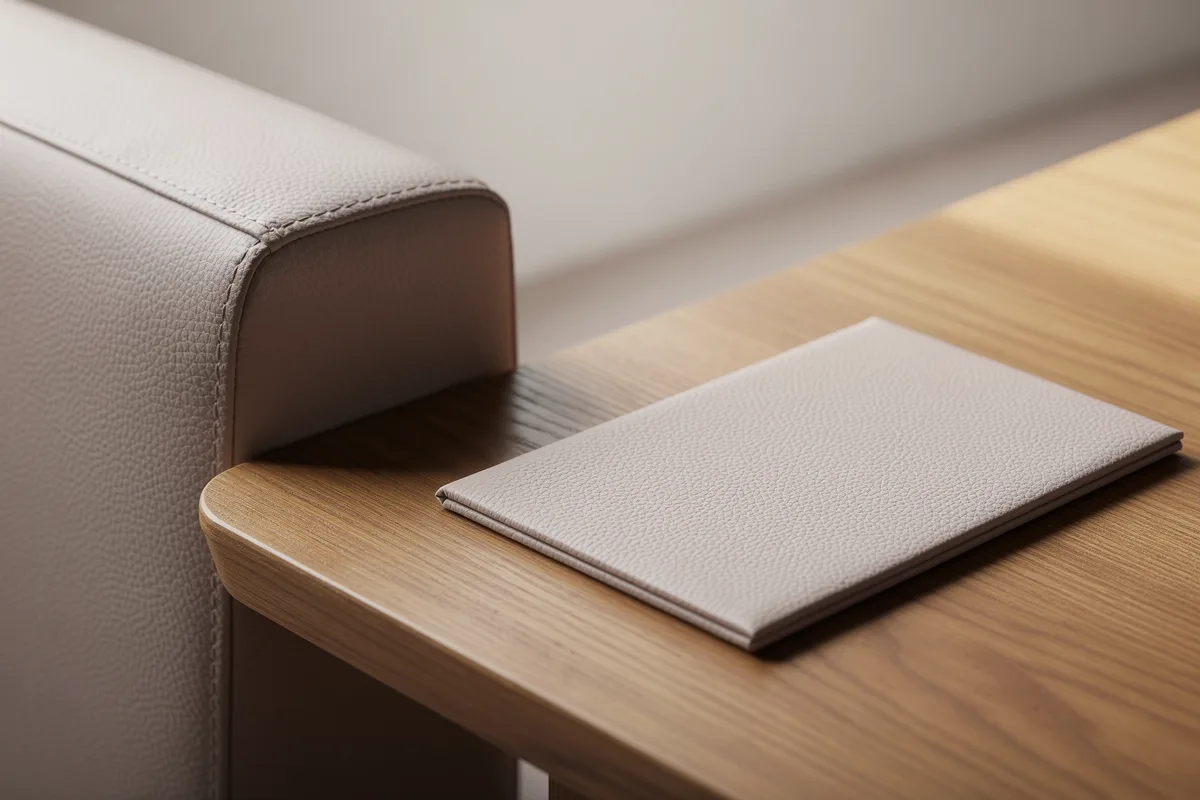
Set the acceptance language before seeing the preferred color’s result. Otherwise, the team may unconsciously relax the requirement for the sample it already likes. Use the buyer’s agreed visual references or laboratory criteria, and identify who has authority to judge an ambiguous outcome.
Request observations after the specified drying interval, with sample identities visible in the record. Keep residual staining distinct from color or gloss change and any other specified surface observations. ACT’s testing guide describes cleaning-exposure assessment as an accelerated evaluation, not a reproduction of uncontrolled field use. Do not convert a cycle count into a guaranteed number of restaurant years.
Use decision language that preserves uncertainty:
- Accepted within scope: the listed specimen and routine meet the agreed requirements for the stated scenarios.
- More evidence needed: a requested condition, identity or result is missing.
- Technical investigation: an observation cannot yet be assigned to residual soil, cleaning effects or another cause.
- Not accepted: a named requirement was not met.
A conditional approval needs an owner and a release condition. “Looks acceptable for now” is not a useful instruction to a factory placing material orders. Write what may proceed, what is held and what evidence will close the outstanding item.
Use a hypothetical review to spot weak approvals
Imagine that two candidate samples show no obvious coffee mark after the agreed routine. One has a complete identification record and matching reference; the other has no confirmed finish code. It would be premature to rank them as equally qualified. The second file has an evidence gap even if its photograph looks excellent.
Now suppose the restaurant intends to use a different cleaning product from the one in either evaluation. That is a changed requirement, not a reason to reinterpret the existing results. Ask for a compatibility review and decide what additional evaluation is needed before issuing the purchase approval.
Finally, imagine the furniture maker changes the selected corner detail during value engineering. The material approval may still be useful, but the construction review must acknowledge the revision. This example is a proposed decision exercise, not a Wandaoleather customer case or a claim about measured performance.
Hand over the approval with the order
The purchasing package should connect the chosen material to the accepted sample record, current care instructions and furniture drawing revision. Include exclusions and unresolved items in the main handover, not in an email attachment that the installation team may never see.
For the material discussion, the silicone leather overview explains the product route. If the project is still comparing upholstery families, use the furniture leather selection page to organize candidates. Neither material name replaces approval for a particular booth.
Share your booth drawing, color reference and planned cleaning routine with Wandaoleather to discuss candidate materials and sample requirements. Confirm what documentation and evaluation can be supplied for the selected construction. A useful inquiry asks for evidence against a defined task, not an unsupported promise that the upholstery will never stain.
Frequently Asked Questions
Does silicone leather stain resistance mean the upholstery is stain-proof?
No. Approval should name the material, soils, exposure conditions and cleaning routine evaluated. Do not extend a successful result to contaminants or conditions that were not assessed.
Why record surface condition after the stain has disappeared?
Soil removal and preservation of the surface are different acceptance questions. Compare the cleaned specimen with the reference and record the agreed appearance observations separately from any remaining stain.
Can a restaurant use any cleaner labeled suitable for silicone?
Do not approve a product from that wording alone. Confirm the exact upholstery and cleaner combination against the material supplier’s written instructions and the restaurant’s intended routine before use.
What is the purpose of a cleaner-only specimen?
It provides a comparison without deliberately added soil. In the proposed approval workflow, it helps reviewers investigate differences without automatically blaming every change on the food or drink stain.
Does one successful wipe prove long-term booth performance?
No. It is an observation from that demonstration. Ask for the evidence needed for your stated use, and do not translate an isolated result or cleaning-cycle count into a guaranteed service life.
What should be sent with a restaurant booth sample request?
Send the booth detail, target color, material preferences, likely soils and planned cleaning routine. Identify the approval owner and the required evidence, with any acceptance criteria still awaiting agreement clearly marked.