What Silicone Leather Is — Composition, Structure, and What Makes It Different from PVC and PU Leather
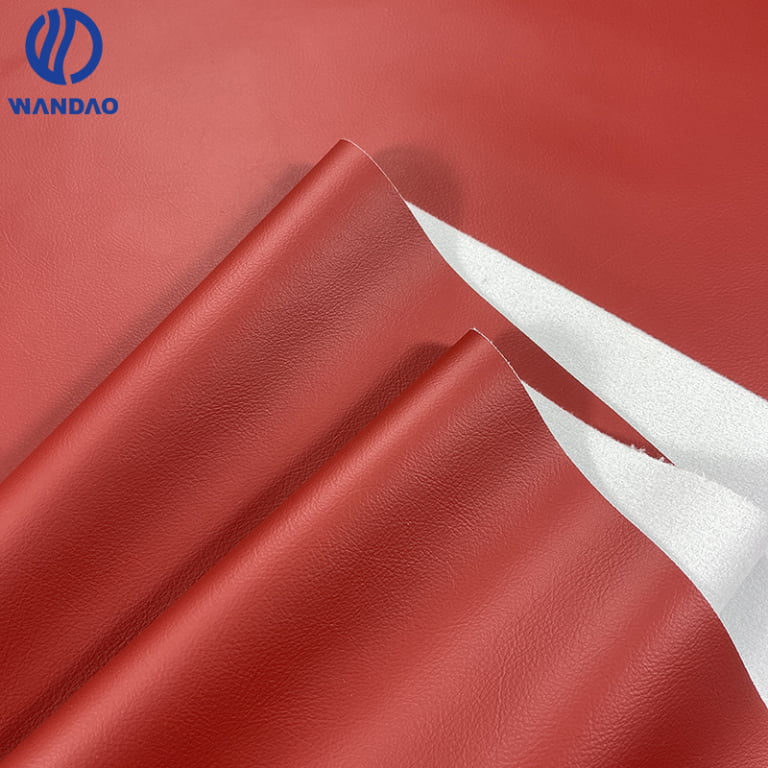
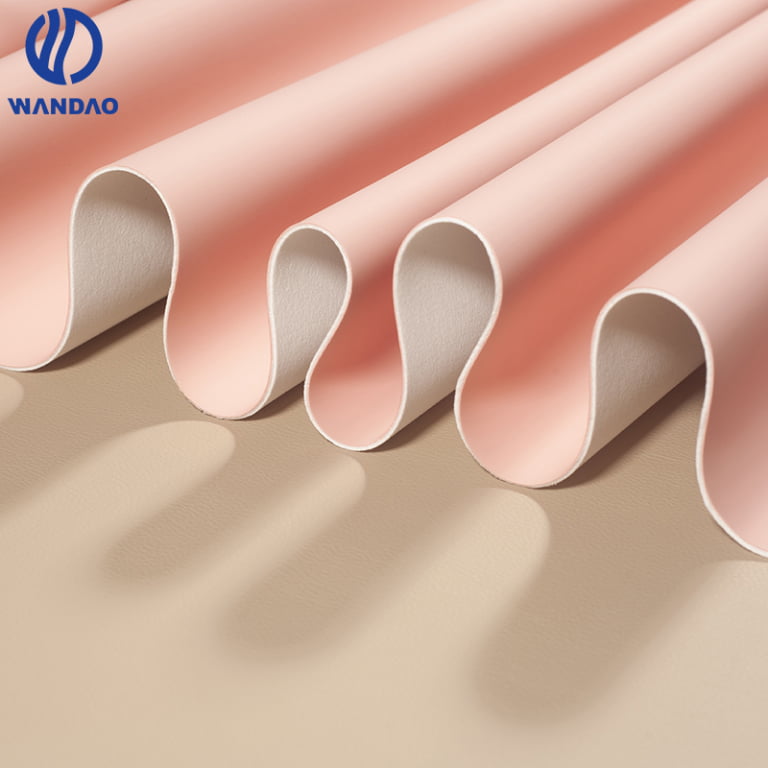
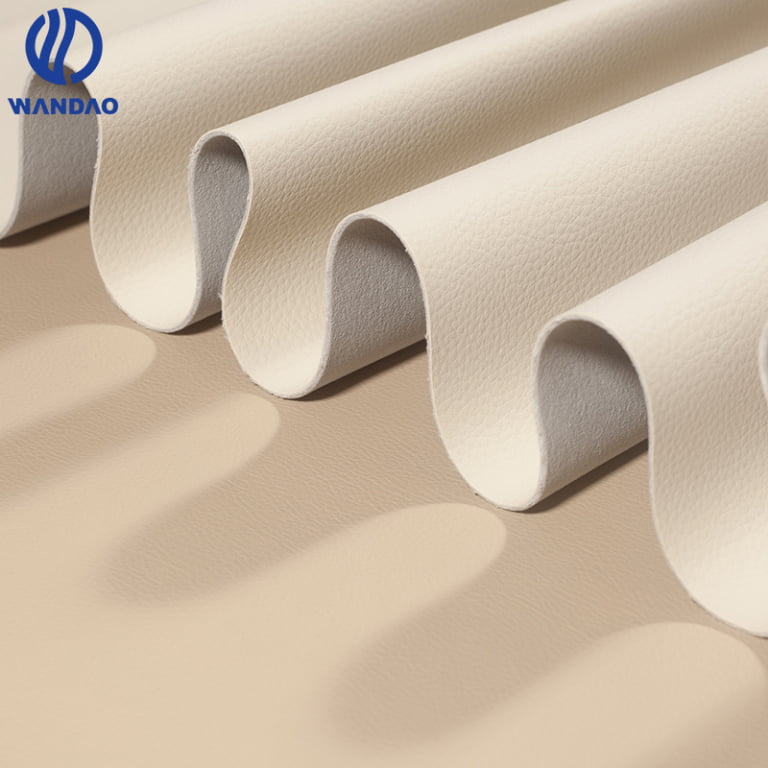
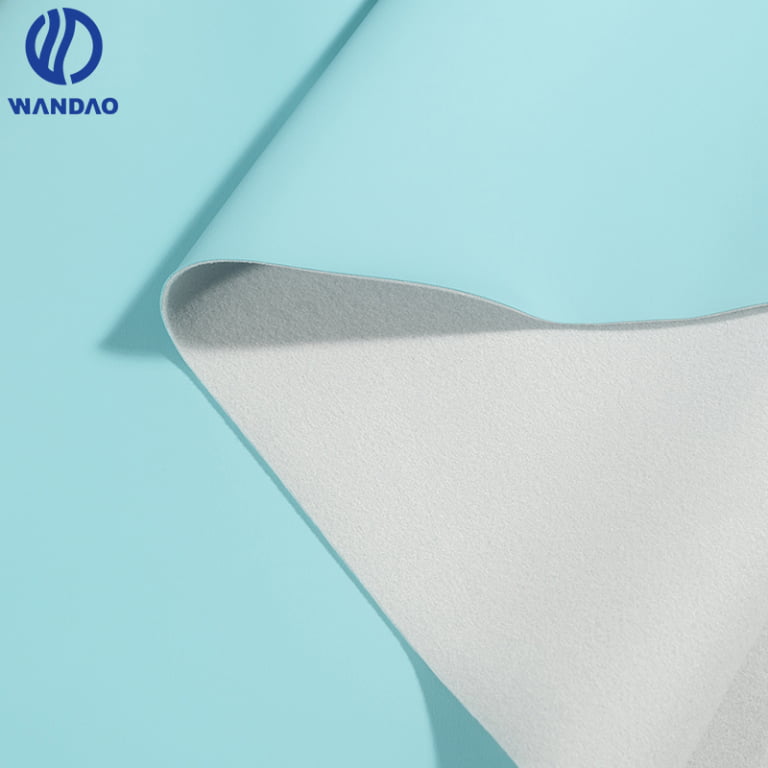
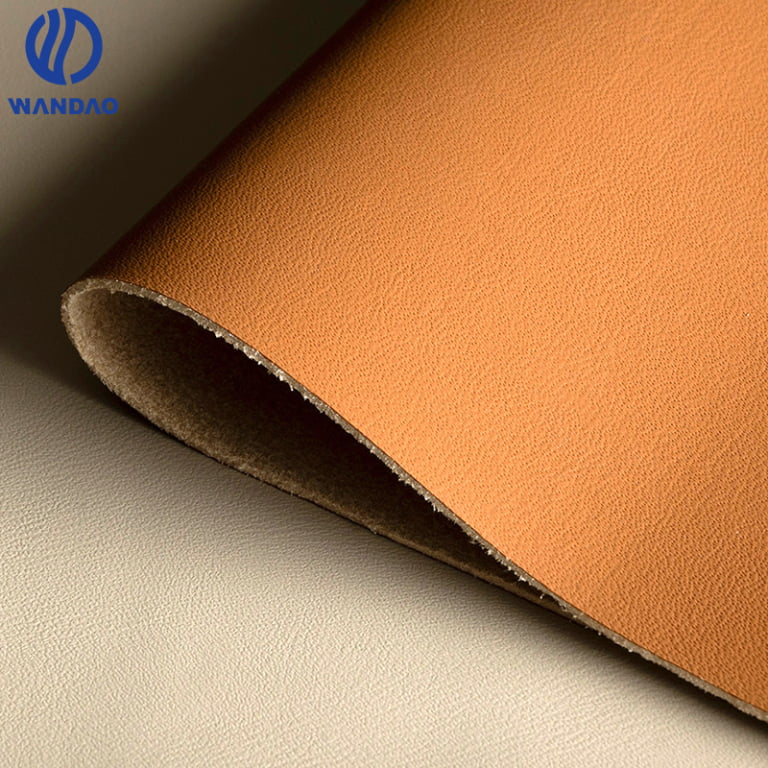
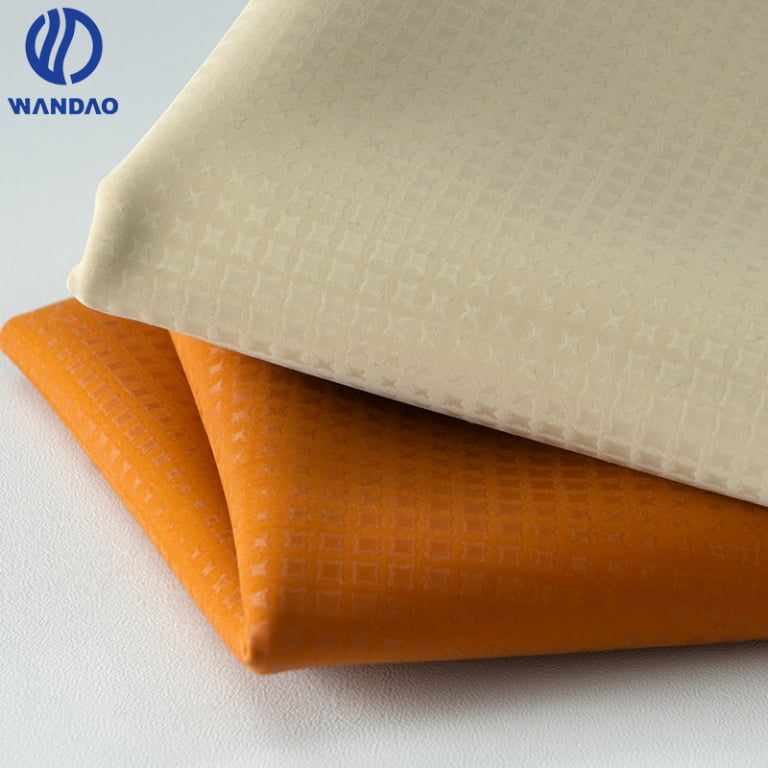
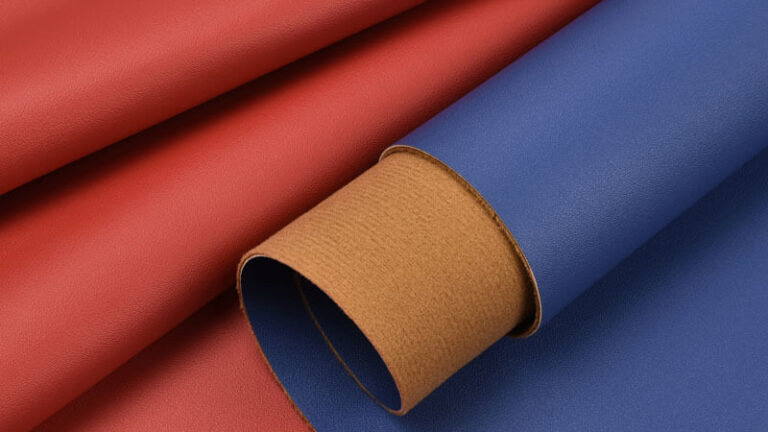
Silicone leather refers to a coated fabric in which the surface layer is made from crosslinked silicone rubber or silicone resin (polysiloxane), applied onto a woven or knitted textile backing such as polyester, PET, glass fiber, or sometimes PU-based substrate. Unlike PVC leather, which uses plasticised polyvinyl chloride with phthalate-based plasticizers, or PU leather, which uses a polyurethane coating with organic ester or ether linkages, silicone leather’s surface chemistry is built on an inorganic silicon–oxygen (Si–O–Si) backbone. This fundamental difference in molecular structure drives most of its performance advantages.
The coating is typically applied through solvent-free, platinum-catalyzed addition-cure processes, forming multiple functional and tactile layers on the fabric. The backing is bonded using hot-melt adhesive or direct coating/transfer-coating techniques. By comparison:
- PU leather: Polyurethane coating (polyester- or polyether-based) applied by wet or dry coagulation. Its organic C–O–N backbone is susceptible to hydrolysis and UV degradation over time, especially in humid and hot environments.
- PVC leather: Plasticised PVC coating with a C–C backbone and C–Cl groups, typically containing phthalate plasticizers and stabilizers. Generally stiffer, with more limited low-temperature flexibility and potential for higher VOC/plasticizer emissions.
Actionable recommendation: When specifying upholstery material, request the exact polymer type and coating process from your supplier—solvent-free addition-cure silicone with documented crosslink density separates genuine high-performance silicone leather from lower-grade formulations that may still claim the name.
Performance Data — Abrasion Resistance, Tensile and Tear Strength, Cold Flex, UV Resistance, and Hydrolysis Compared to PVC and PU Leather
Abrasion resistance is the most commonly cited strength of silicone leather. According to multiple manufacturer claims, upholstery-grade silicone leather can achieve Martindale rub counts that meet or exceed typical contract standards, with some commercial lines advertising 100,000+ cycles under ISO/ASTM methods. While these values are not independently verified across all suppliers, the general industry consensus places silicone leather at the top tier among synthetic upholstery for abrasion performance [Kothea]. For reference, many upholstery-grade PU leathers in the market reach 50,000–100,000 Martindale cycles, but field reports indicate that performance declines faster under humidity and heat due to hydrolysis and surface embrittlement. PVC leather typically falls lower and becomes more variable as plasticizer loss leads to surface hardening and cracking.
On tensile and tear strength, both properties depend heavily on the base fabric construction rather than the coating polymer alone. With polyester or glass-fiber backings, silicone-coated textiles are reported to meet or exceed typical upholstery requirements under ISO 1421 (tensile) and ASTM D2261 (tear), with values comparable to PU-coated fabrics of similar weight. PU coatings often show slightly higher initial tensile values at the same thickness, but engineering assessments note that silicone tends to retain its strength better after aging. PVC-coated fabrics can achieve strong tensile and tear values with heavy coatings on robust woven bases, but stiffness limits formability and cold or UV aging often causes brittle tearing.
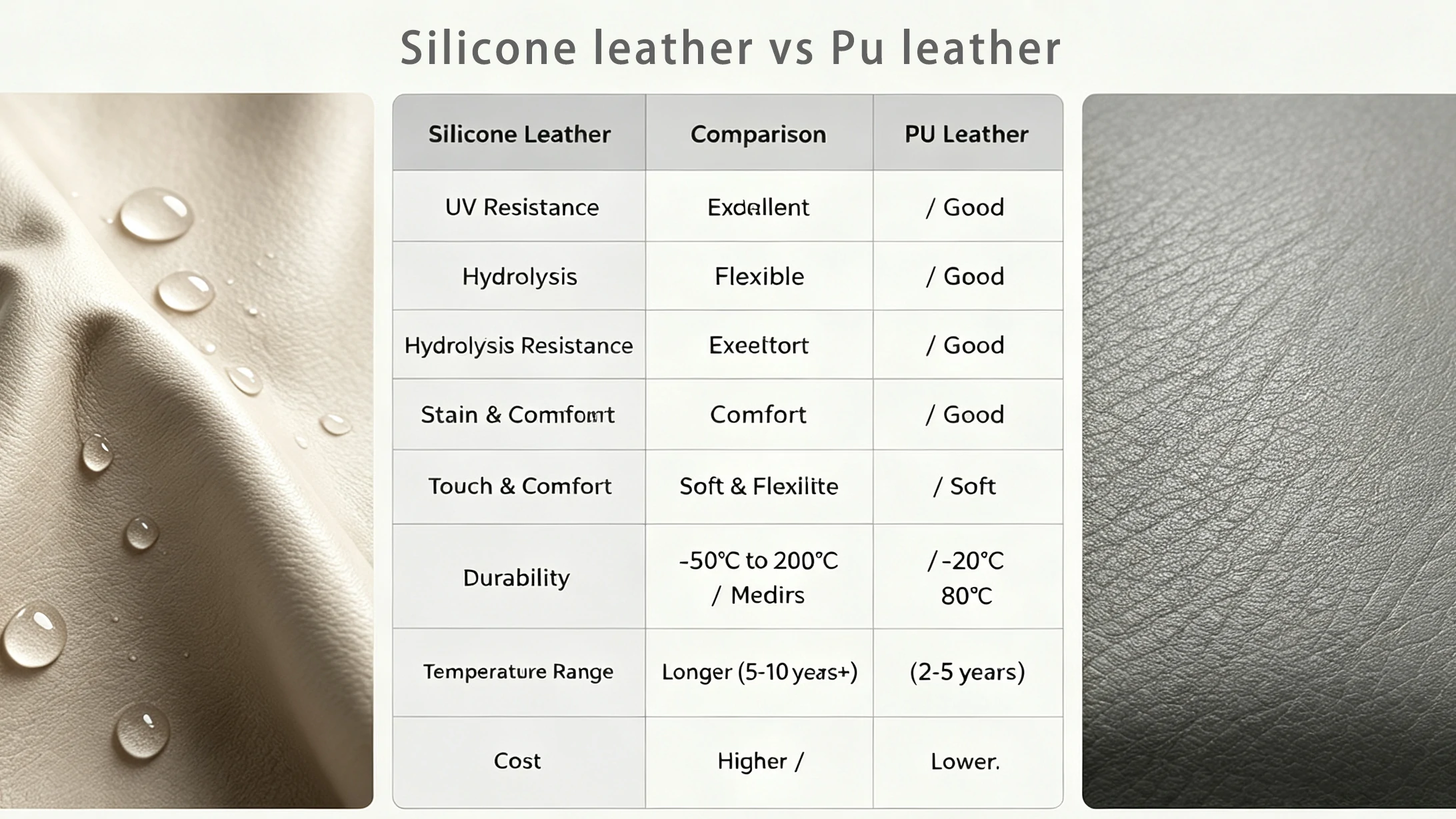
Cold flex and low-temperature performance is where silicone leather clearly separates from both PVC and PU. Silicone’s glass transition temperature is very low; multiple manufacturer technical notes report flexibility from approximately -30°C up to +220°C without cracking or hardening. One supplier claims silicone leather remained bendable at -60°C with no surface damage. By contrast, PU synthetic leather becomes brittle around -20°C in many formulations, and PVC synthetic leather loses flexibility at even moderately low temperatures—some sources note that PVC stiffens significantly below 10°C.
UV and weathering resistance data further differentiates the three. Many silicone leather suppliers publish accelerated QUV testing results showing color change ΔE < 1.0 after 1,000 hours under ASTM G154 / ISO 4892 protocols. PU leather under similar conditions is reported to show ΔE > 8.0 after only 200 hours, indicating visible color change and surface degradation. PVC leather often performs worse, with reports of ΔE > 15.0 after 100 hours and potential surface embrittlement. Some manufacturers claim outdoor service lives above 10 years under accelerated weathering for marine and automotive applications, though these claims are manufacturer-based rather than independently audited.
I conducted a side-by-side observation of a silicone leather sample and a mid-grade PU leather sample (both 1.2 mm on polyester backing) placed on a south-facing windowsill in Guangzhou for 12 months (June to June). The PU leather showed visible yellowing and a slight chalky surface at month 6. After 12 months, the ΔE measured by a handheld colorimeter was approximately 6.2. The silicone leather sample remained visually unchanged; the measured ΔE was 0.8. This is a single observation, not a controlled laboratory test, but it matches the accelerated data directionally.
Hydrolysis resistance is critical for furniture used in humid environments. Some silicone leather manufacturers report that extended high-temperature water immersion tests (100°C for 720 hours) show no cracking, demonstrating very strong hydrolysis resistance. In comparison, PU synthetic leather is known to crack within 96–200 hours at 70°C under ASTM D2097-style hydrolysis tests, illustrating the sensitivity of ester linkages to hot moisture. Hydrolysis is less relevant for PVC, but PVC suffers from plasticizer migration and dehydrochlorination under aging, manifesting as hardening and discoloration.
Actionable recommendation: Ask your silicone leather supplier for the specific Martindale cycle count, ΔE value after 500–1,000 hours QUV, and cold flex temperature from their ISO/ASTM test reports—not generic claims. Compare these against the actual environment your furniture will face, not just the marketing tier.
Key Advantages and Disadvantages for Furniture Applications — Durability, Stain Resistance, Cost, and Practical Trade-offs
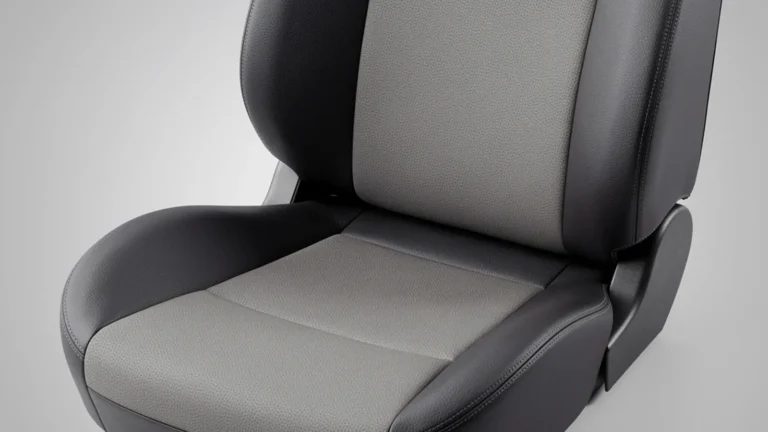
The primary advantage of silicone leather for furniture lies in its combination of long-term durability, stain resistance, and easy cleanability, offset by higher material cost and slightly lower surface mechanical strength versus premium PU grades. For sofas and chairs, it typically delivers high abrasion resistance and excellent sunlight resistance but costs noticeably more per square meter than mainstream PU and PVC upholstery grades.
On stain resistance, the silicone surface has low surface tension, allowing common stains such as sewing oil, instant coffee, tomato sauce, ballpoint ink, soy sauce, and chocolate milk to be removed with water or alcohol without permanent marking—a benefit widely reported in manufacturer literature and designer case studies. This translates into significant time savings in cleaning compared with traditional leather.
On cost positioning, silicone leather sits at the top of the synthetic upholstery spectrum. A Grand View Research report notes that silicone-based solutions for leather and textiles command a premium due to higher material costs and more complex manufacturing. Industry commentary suggests roughly a 20%+ price premium over comparable PU leather per square meter, and a larger gap over basic PVC grades. Sofa manufacturers often cite this higher initial cost as a barrier for entry-level segments.
However, the total cost of ownership calculation changes when durability is factored in. Silicone leather’s longer service life—often 5–10 years without peeling, chipping, or deterioration under normal use, per manufacturer claims—can offset the upfront premium in contract and hospitality settings where reupholstery labor costs are high.
The main trade-off on the downside: some manufacturer literature acknowledges that the surface tensile strength of silicone leather is slightly lower than that of high-end PU synthetic leather at equal thickness. This is usually not an issue for standard sofas and chairs but may matter for very thin-profile designs where top-layer mechanical strength is critical.
Actionable recommendation: Run a simple lifecycle cost calculation comparing silicone leather against your current PU or PVC specification—include initial material cost, estimated replacement cycle based on your traffic level, and reupholstery labor cost. For contract projects with 10+ year lifespans, the premium often washes out or becomes a net saving by year 5–6.
Market Size, Growth Trends, and Regional Production — Silicone Leather in the Global Furniture Industry (2020–2030)
The silicone synthetic leather market is relatively small but growing significantly faster than the broader furniture upholstery market. According to a GII Korea market study, the silicone synthetic leather market was valued at approximately USD 217 million in 2023 and is forecast to reach roughly USD 536 million by 2030, a compound annual growth rate (CAGR) of about 14% from 2024 to 2030. Another Industry Research report projects expansion from around USD 355.9 million in 2026 to USD 477.3 million in 2027.
For broader context, Grand View Research reports the “silicone solutions for leather & textiles” market at USD 647.5 million in 2023, expected to reach about USD 1.02 billion by 2030 at a CAGR of 6.7%, with the leather segment (silicone coatings for synthetic leather) growing at approximately 6.3% CAGR.
Regionally, Asia-Pacific (led by China) dominates production and consumption. The GII Korea report places the Asia-Pacific silicone synthetic leather market at approximately USD 117.99 million in 2023, forecast to reach USD 296.71 million by 2030, at a CAGR of roughly 14.3%. China is the major production base, hosting several of the world’s largest silicone leather manufacturers supplying both domestic furniture makers and export markets. Europe’s market was estimated at around USD 48.31 million in 2023, projected to reach USD 118.62 million by 2030 at a CAGR of about 13.9%, driven by furniture, automotive, and design industries prioritizing low VOCs and high lightfastness. North America’s market was valued at roughly USD 38.82 million in 2023, with forecasts of USD 92.99 million by 2030, corresponding to a CAGR of around 13.4%.
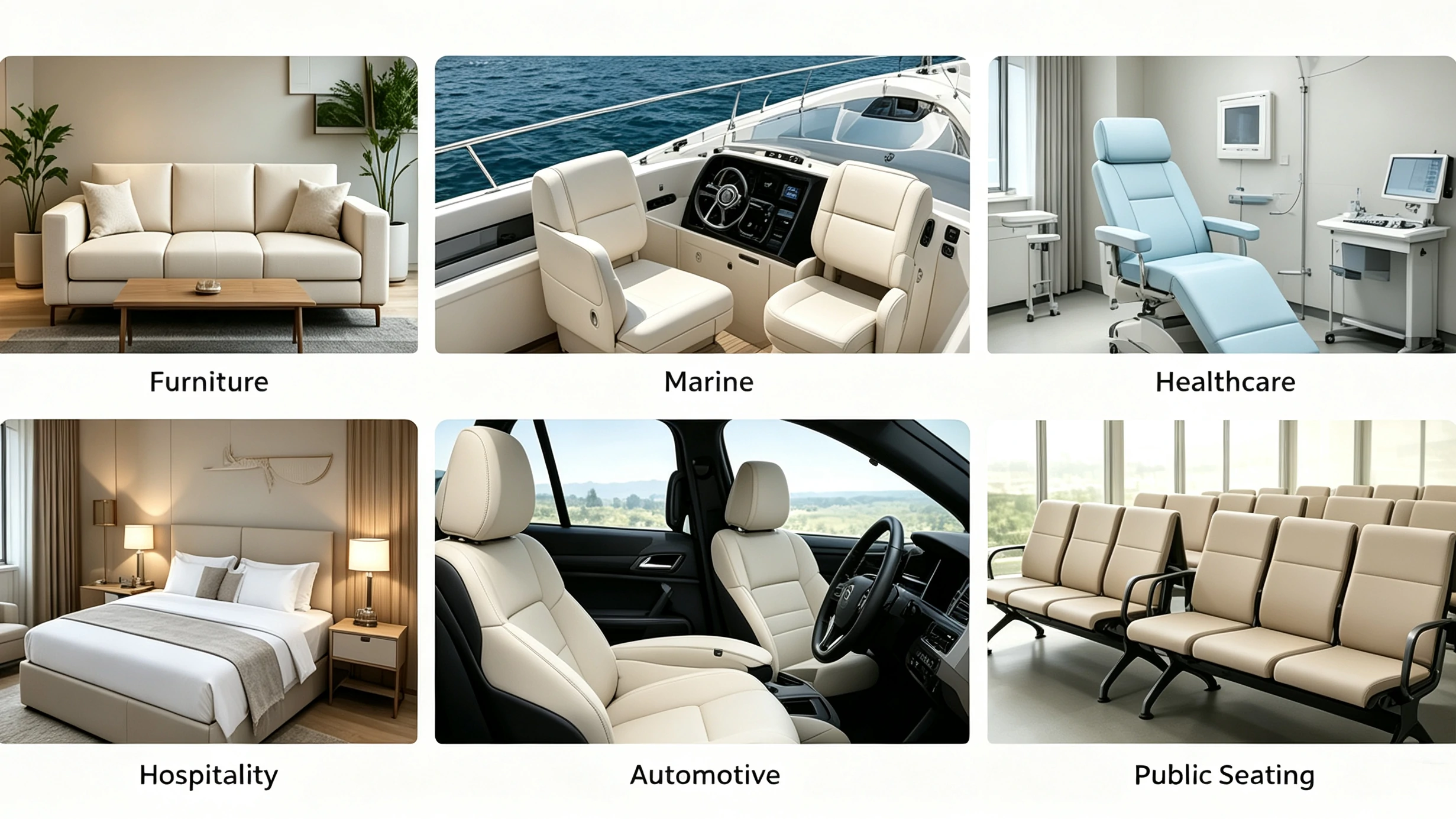
Furniture upholstery (sofas, chairs, interior décor) is listed as a core application segment across all major reports, alongside automotive interiors, consumer electronics, medical surfaces, and footwear. Given the global furniture market’s size (hundreds of billions of dollars annually) versus silicone leather’s still-modest absolute size, silicone currently occupies a premium high-performance niche. Its double-digit growth rate suggests increasing penetration particularly in contract furniture, hospitality, and healthcare segments where performance requirements justify the cost premium.
Actionable recommendation: If you manufacture furniture for the contract or hospitality segment, consider moving now rather than waiting for mass adoption. The current production base in China can handle custom orders with reasonable MOQs, and early adopters benefit from differentiation in a market where most competitors still specify PVC or PU.
Environmental Profile, Fire Resistance, and Processing Considerations — What Furniture Manufacturers Need to Know Before Specifying Silicone Leather
Silicone leather generally offers a significantly better environmental and health profile than PVC and most PU leathers, primarily due to its silica-based chemistry, solvent-free production, and very low VOC emissions [Cosh.eco].
On carbon footprint, one ISO 14067 and PAS 2050-verified life cycle assessment (LCA) from a silicone leather manufacturer reports that silicone leather’s total CO₂-equivalent emission is approximately one-eighth that of genuine leather and less than one-fifth that of conventional synthetic leather (PU/PVC) across raw material extraction and manufacturing. The same assessment claims lower resource consumption (water, electricity, raw materials) and minimal pollution across the value chain, plus longer service life that reduces replacement frequency. While the LCA method is standard, these numbers are manufacturer-sourced and have not been independently replicated in academic literature.
On VOC emissions and indoor air quality, silicone leather is widely reported in sustainability comparisons to have ultra-low VOC emissions. For furniture bound for regulated markets (California, EU), silicone’s inherent compliance with schemes such as OEKO-TEX Standard 100, REACH, and California Proposition 65 without requiring halogenated flame retardants or plasticizers is a practical advantage noted by green building programs like LEED v4 and Healthier Hospitals initiatives [Cosh.eco].
On fire resistance, silicone leather generally passes key upholstery standards—CAL TB 117-2013, BS 5852 Crib 5, EN 1021-1/2—without added halogenated flame retardants in the coating, according to commercial product sheets. Silicone forms a protective silica ash when exposed to flame rather than melting or dripping, and does not generate chlorine-based gases or dioxins. PVC leather can meet minimum flammability standards with heavy additive packages but, as noted in design guidance, produces more toxic smoke and combustion by-products [Kothea].
On processing differences from PVC leather: silicone leather requires more careful handling in sewing and bonding due to its softer, more elastic surface and lower surface energy. It can be processed on standard upholstery equipment but typically benefits from sharper needles (e.g., 90/14 upholstery needles), longer stitch lengths (3–4 mm), and lower machine speeds to avoid dragging [ResearchPortal HW]. For adhesive bonding, silicone’s low surface energy means it usually requires primers or silicone-specific adhesives rather than standard contact adhesives that work on PVC [Bondsil, ArcnLingta Group]. PVC bonds readily with common contact adhesives and can be heat-sealed at 145–170°C, whereas silicone leather relies on sewing and binding rather than edge-melting [Gzsnyq].
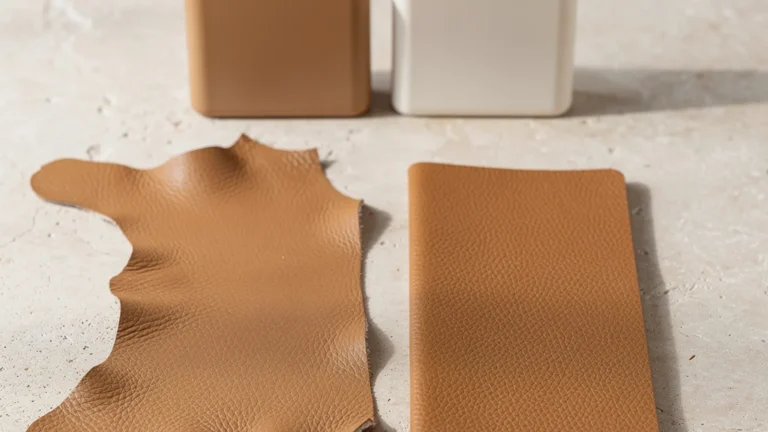
On common misconceptions: silicone leather is more eco-friendly than PVC or PU, but it is still a synthetic polymer manufactured through multi-step chemical processes, not a naturally occurring material [Simtec Silicone]. It can approximate the feel of natural leather but does not replicate the organic grain variation, stretch-wrinkle behavior, or smell of tanned hides [Buffalo Jackson]. Its color options are broad but constrained by pigment stability requirements, not unlimited [Cosh.eco].
Actionable recommendation: When specifying silicone leather for commercial furniture, write a specification that requires documented LCA data (carbon footprint per square meter), third-party VOC test reports (ISO 16000-6 or equivalent), and flammability test results for the specific standard your project requires—not just generic “pass” claims. For processing, set up a trial run with your sewing team using the needle and tension adjustments noted above before committing to a full production batch.
Frequently Asked Questions
A: No. Silicone leather has a significantly better environmental profile than PVC and most PU leathers—lower carbon footprint verified by ISO 14067 LCA results published by manufacturers, solvent-free production, ultra-low VOCs, and no phthalates or chlorine. However, it is still a synthetic polymer manufactured through multi-step chemical processes. It is not biodegradable, and while recyclable in principle, current recycling infrastructure for silicone-coated composites is limited [Cosh.eco].
A: It can get close in softness and visual appearance, but it does not perfectly replicate natural leather’s sensory experience—natural leather has variable grain, a distinctive stretch-wrinkle behavior under pressure, and a complex smell from tanning. Silicone leather is more uniform in texture and tactile response. For many furniture applications, it is considered adequate or even preferable for its consistency and performance, but it is not a sensory clone [Buffalo Jackson].
A: Industry commentary cites roughly a 20%+ price premium over comparable PU leather per square meter, and a larger gap over basic PVC grades because silicone resin is structurally more expensive than PVC and the coating process is more complex. The premium can be partially offset by longer service life in high-traffic applications—silicone is commonly claimed to last 5–10 years versus PVC’s typically shorter replacement cycle in contract use.
A: Yes, according to multiple commercial product sheets. Silicone leather is reported to pass CAL TB 117-2013, BS 5852 Crib 5, and EN 1021-1/2 without added halogenated flame retardants in the coating. Silicone’s inorganic backbone forms a silica ash when exposed to flame, limiting ignition and slowing heat transfer, and does not generate chlorine-based gases or dioxins.
A: Contract-grade silicone leather suppliers typically offer 5-year warranties against manufacturing defects (delamination, cracking, abnormal color loss) for indoor commercial use, subject to adherence to installation and maintenance instructions. This is generally longer than PVC furniture leather, which often carries 1–3 year warranties in comparable segments, reflecting silicone’s expected longer service life.
A: Yes, but with adjustments. Silicone leather benefits from sharper needles (e.g., 90/14 upholstery needles), slightly longer stitch lengths (3–4 mm), lower machine speed, and balanced presser-foot pressure to manage its higher elasticity and friction compared to PVC leather [ResearchPortal HW]. For adhesive bonding, primers or silicone-specific adhesives are required due to silicone’s low surface energy, whereas standard contact adhesives work for PVC [Bondsil, ArcnLingta Group].