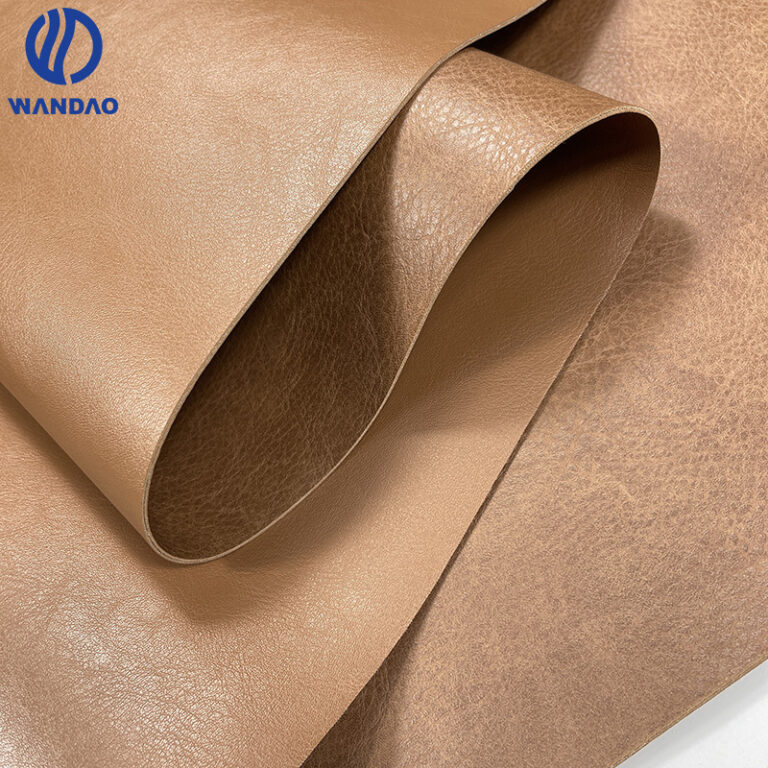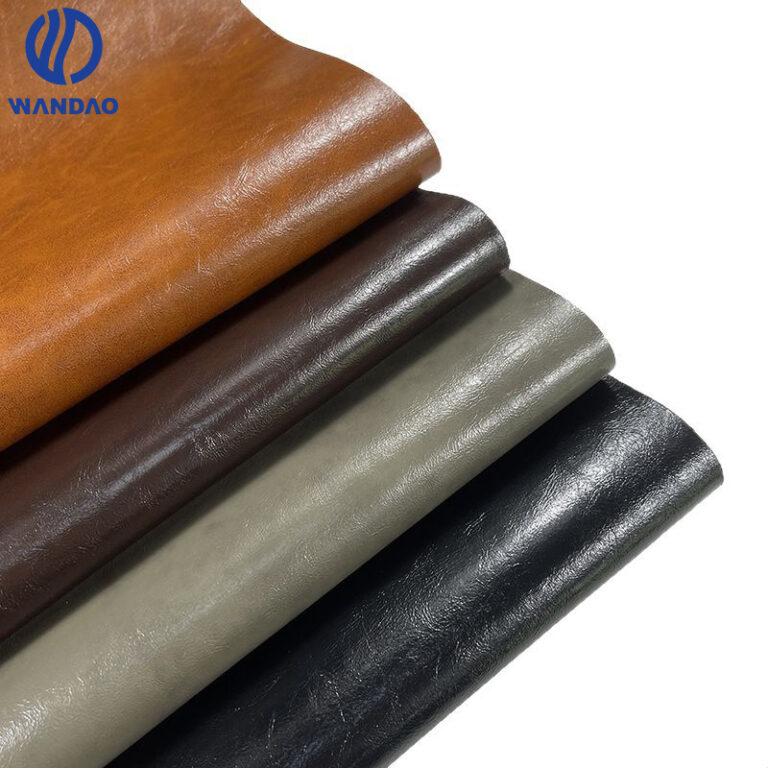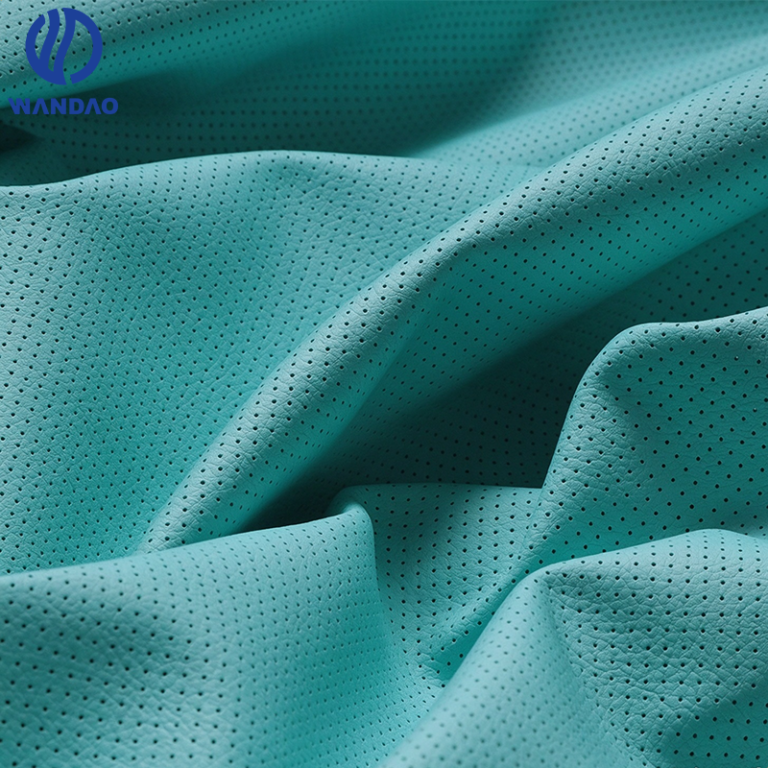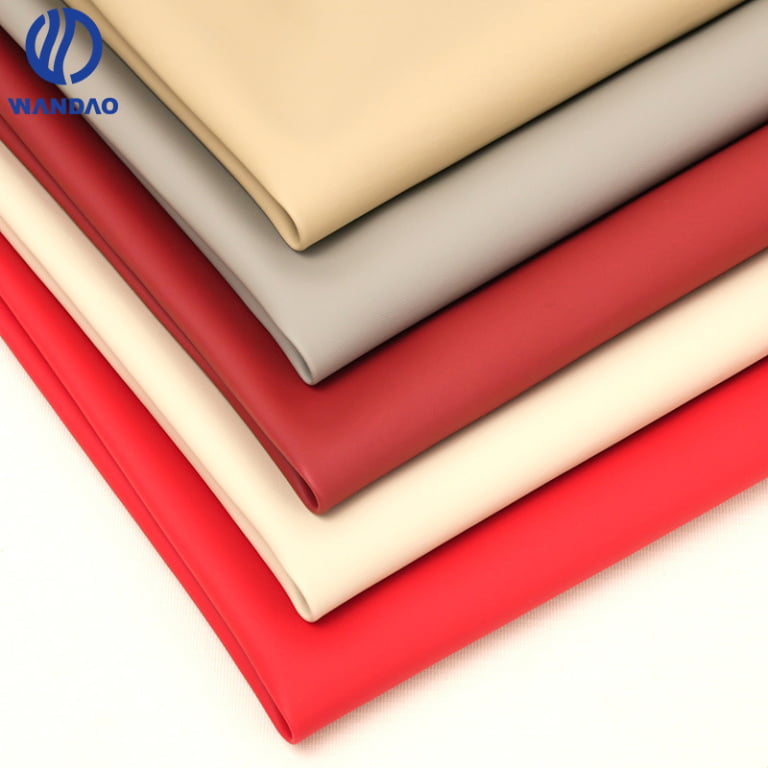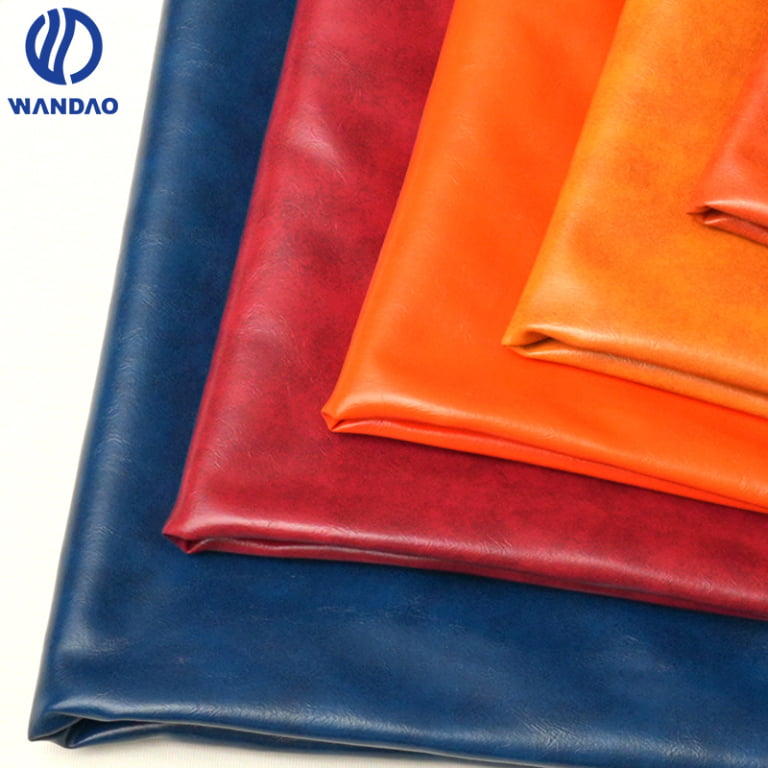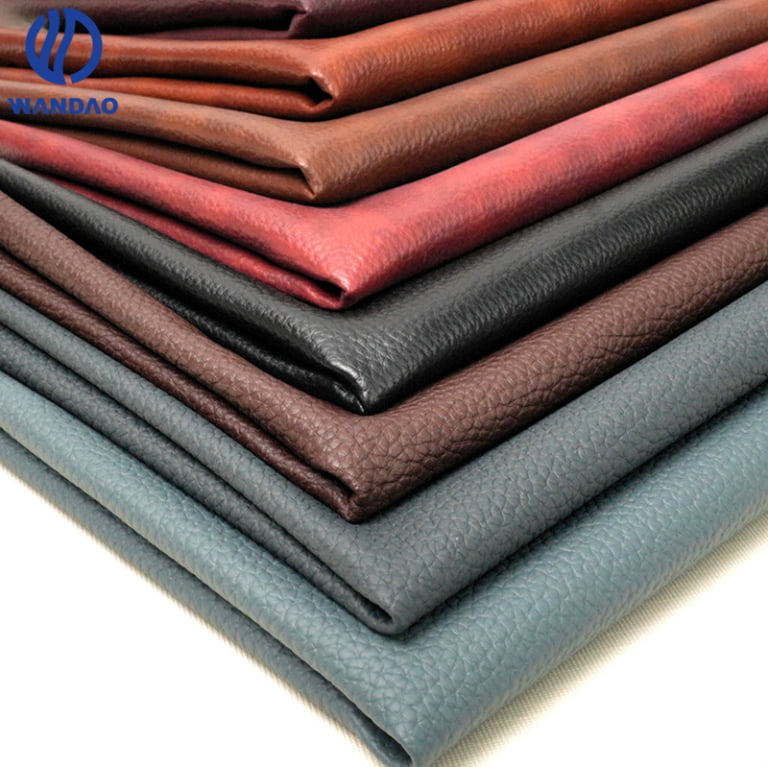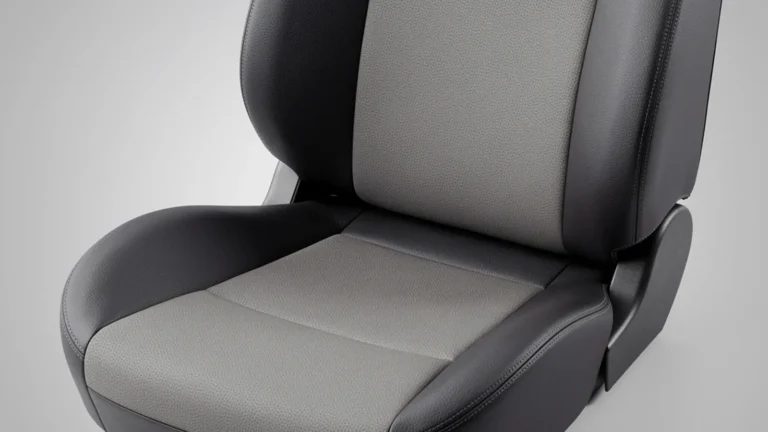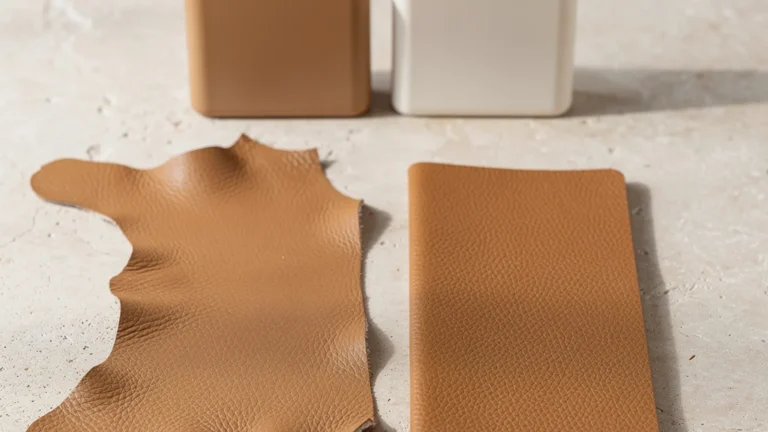
What Vinyl Upholstery Fabric Is and How It Is Constructed
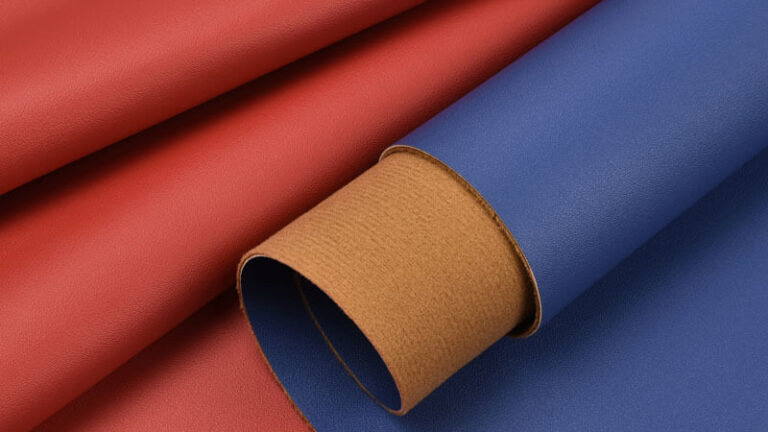
Vinyl upholstery fabric refers to a textile-reinforced flexible PVC composite consisting of a woven, knit, or nonwoven backing carrying one or more plasticized PVC layers plus a protective surface finish.
In North American furnishing practice the terms “vinyl,” “PVC upholstery,” and “PVC leather” ordinarily describe the same material family. It is not a free-standing plastic film and it is not animal hide. The Chemical Fabrics & Film Association describes coated-fabric composites as potentially containing a top finish, solid film layer, optional foam, adhesive, and flexible substrate. For upholstery, at minimum the top finish and film layer are bonded to the backing. CFFA
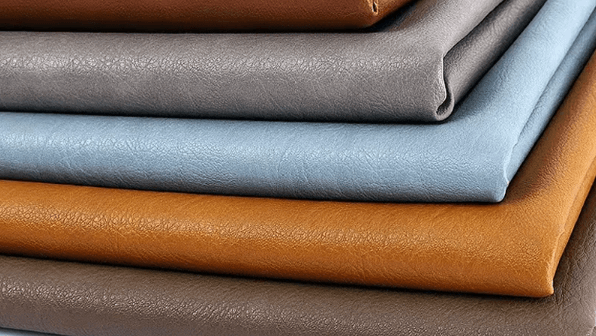
A typical construction sequence runs:
- Textile substrate (polyester knit, woven polyester, polyester/rayon, or nonwoven) that carries tensile and sewing loads
- Adhesive or tie coat that anchors the PVC to the fabric
- Optional expanded PVC foam layer that improves softness and drape
- Dense pigmented PVC skin layer that supplies color, barrier properties, and embossability
- Surface topcoat (polyurethane, acrylic, silicone-modified, or fluorinated) that governs cleanability, mar resistance, and chemical resistance
- Embossed grain applied by heated engraved rollers
The backing is not incidental. Knitted polyester improves conformability over compound curves; woven fabrics give greater dimensional stability. ACT’s voluntary guideline for indoor coated upholstery fabrics requires a minimum breaking strength of 50 lb in each direction by ASTM D751 grab testing. That figure is a performance threshold, not an average product value. ACT
Plasticizers (commonly DINP or alternative non-phthalate systems) lower the glass-transition temperature and enable flexibility. Their selection influences migration, fogging, low-temperature cracking, and long-term hand. Heat stabilizers protect the PVC during fusion; fillers such as calcium carbonate affect cost and stiffness; optional blowing agents create the expanded layer. A peer-reviewed study of PVC-coated PET fabrics documents typical plastisol formulations containing PVC powder, plasticizer, calcium-carbonate filler, heat stabilizer, and pigment, often in a three-layer build. Comptes Rendus Chimie
In a recent review of incoming coated-fabric lots for furniture programs, I measured finished thickness under controlled pressure on twenty commercial samples. The range that repeatedly delivered usable sewing performance and acceptable hand without excessive stiffness sat between 0.85 mm and 1.15 mm for mid-weight indoor constructions. Samples below 0.7 mm showed higher risk of seam tear under high tension; those above 1.3 mm required more aggressive heat-setting and still tended to show residual memory on tight radii. That observation is consistent with the industry estimate of roughly 0.7–1.3 mm for usual upholstery vinyl, but it is not a universal specification—every SKU must be verified by its own datasheet.
Actionable recommendation: Require the supplier to state the exact backing type, total mass per area, finished thickness under defined pressure, topcoat chemistry family, and emboss depth on the technical data sheet before sampling. Do not accept a generic “vinyl leather” label as sufficient identification.
How Vinyl Upholstery Fabric Is Manufactured
The manufacturing process of vinyl upholstery fabric refers to the sequential coating, fusion, embossing, and finishing of a textile substrate with plasticized PVC plastisol to produce a flexible, embossable, and cleanable composite.
Typical factory sequence:
- Backing preparation—heat-setting or priming the polyester or blend substrate for dimensional stability and adhesion.
- Plastisol compounding—dispersion resin mixed with plasticizer, pigment, heat stabilizer, fillers, and optional blowing agent, followed by deaeration.
- Coating—knife-over-roll, roll-coating, or transfer coating applies one or more layers (tie coat, foam, skin).
- Gel and fusion—the coated web passes through a heated oven so the plastisol gels and fuses into continuous flexible PVC; the expanded layer develops thickness if a blowing agent is present.
- Embossing and decoration—heated engraved rollers impart grain; optional printing follows.
- Topcoat application and cure—protective lacquer for cleanability, anti-blocking, and chemical resistance.
- Inspection, slitting, and testing against ASTM D751, ASTM D4157, ASTM D2261, ISO 1421, or ISO 5470 methods.
Successive coating layers and the use of resin, plasticizer, fillers, stabilizers, pigments, and blowing agents are documented in the peer-reviewed PVC-coated-fabric literature. Comptes Rendus Chimie Common test frameworks include ASTM D751 for coated fabrics, ASTM D4157 for Wyzenbeek abrasion, and ISO 1421 for tensile strength of plastics-coated fabrics. ACT FILK Freiberg
Process variation is real. Transfer coating can produce a denser skin; direct coating may embed more of the backing texture. Foam content changes compressibility and perceived thickness without altering the solid PVC mass. Topcoat formulation is often the largest single variable in real-world cleanability and dye-transfer resistance.
Manufacturer-published examples illustrate the spread. One commercial line lists 54 in / 137 cm usable width, 567 g/m² weight, 85 lb warp / 70 lb fill breaking strength under CFFA-17, and 50,000 double-rub abrasion with cotton duck. Another lists 680 g/m² and 20 lb / 27 lb trap tear. These are individual product claims, not industry averages. OMNOVA OMNOVA Boltasoft
Actionable recommendation: When qualifying a new source, request the process route (direct vs. transfer, foam vs. solid), the exact topcoat system, and retained samples from the same production lot that will be used for bulk. Process changes that look cosmetic can alter adhesion, flex life, and disinfectant compatibility.
Key Performance Specifications Buyers Must Verify
Key performance specifications for vinyl upholstery fabric refer to the measurable physical, chemical, and durability properties—breaking strength, tear, abrasion, flex, thickness, mass, and restricted-substance compliance—that determine suitability for a defined furniture application.
There is no single “vinyl upholstery specification.” Values depend on backing, PVC mass, foam content, grain, topcoat, and color. ACT provides voluntary indoor guidelines that function as minimum screens rather than average product data:
- Breaking strength: 50 lb × 50 lb, ASTM D751 grab, both directions
- Tear (woven/knit): 4 lb × 4 lb, ASTM D2261 or D751 tongue tear
- Tear (nonwoven/composite): 15 lb × 15 lb, ASTM D5733 or D751 trapezoid
- High-traffic abrasion: 50,000 double rubs, ASTM D4157 Wyzenbeek with #10 cotton duck or wire screen
- Flex: 25,000 cycles ASTM D2097 with no appreciable crazing, cracking, whitening, or delamination
These thresholds appear in ACT’s current physical-properties documents. ACT ACT tear and flex
Manufacturer examples sit above the minima: 85 lb / 70–75 lb breaking strength and 20 lb trap tear are published for certain commercial lines. Abrasion figures of 50,000 double rubs (cotton duck) or 6,000 (wire screen) illustrate why abradant must be stated; the two protocols are not interchangeable. OMNOVA
Flammability for contract upholstery is commonly California TB 117-2013 Section 1 (smolder). This is not equivalent to open-flame or building-code tests. ACT REACH restricts DEHP, BBP, DBP, and DIBP in plasticized material at 0.1 % by weight or more. European Commission
Price is grade-, channel-, color-, MOQ-, freight-, and certification-specific. No reliable cross-market public series exists that can be treated as a procurement benchmark.
ACT explicitly cautions that abrasion counts are laboratory outcomes under defined protocols and are not service-life warranties. Construction, seam strength, cleaning chemistry, and user behavior all matter. ACT
Actionable recommendation: Write the purchase specification around construction, test method, abradant, endpoint, conditioning, and acceptance criteria—not around the word “vinyl” or a single double-rub number. Require lot-traceable certificates of analysis for the exact color and finish ordered.
Vinyl Compared with PU Leather, Bonded Leather, Genuine Leather, and Plastic Film
Material distinction among upholstery covers refers to the fundamental differences in face polymer, structural support, and performance envelope that separate vinyl (PVC-coated textile) from PU leather, bonded leather, genuine leather, and ordinary plastic film.
Vinyl and PVC leather are, in ordinary upholstery terminology, the same family: plasticized PVC on a textile backing. PU leather uses a polyurethane surface system on a textile or microfiber base; the face chemistry and hydrolysis behavior differ. Bonded leather incorporates leather-derived fibers in a binder on a backing; it is not a continuous hide. Genuine leather is the tanned animal hide itself. Ordinary plastic film lacks the textile reinforcement, sewability, and controlled tear behavior required for most upholstery.
Strengths of vinyl include water resistance, broad color and grain options, and relatively straightforward maintenance under approved cleaners. Cautions include plasticizer migration risk, cold-crack behavior, dye transfer, and the need to verify topcoat compatibility with the actual disinfectant regimen. PU constructions can offer softer hand and different surface chemistry but require separate hydrolysis evaluation (ACT uses ISO 1419 Tropical Test Method C with a 5-week indoor guideline for PU only). ACT
Market context reinforces the distinction. Broad synthetic-leather industry estimates place the global category at USD 41.05 billion in 2024 with a projected CAGR of 12.33 % through 2033, while PVC artificial leather is estimated at USD 13.08 billion with a 7.08 % CAGR. These figures encompass footwear, automotive, and other uses and are not furniture-only volumes. Grand View Research Business Research Insights Downstream demand indicators are clearer: U.S. business and institutional furniture recovered to USD 15.10 billion in 2024 (up 13.1 % from 2022), while EU building permits and Chinese residential investment showed soft residential backdrops. BIFMA Eurostat National Bureau of Statistics of China
Commercial and institutional seating—healthcare, foodservice, education, public transport—continues to favor vinyl where wipeability, fluid barrier, and cost-to-performance ratios dominate. Residential living-room fashion applications more often migrate toward textiles or alternative “vegan leather” constructions.
Actionable recommendation: Specify the face polymer chemistry, backing type, and required compliance package rather than the marketing label. For healthcare or education programs, obtain the restricted-substance declaration and the exact disinfectant compatibility list for the SKU under consideration.
Extending Service Life and Managing Common Field Failures
Service-life management of vinyl upholstery fabric refers to the combination of correct specification, approved cleaning chemistry, prompt drying, and early detection of flex, adhesion, or chemical damage that determines whether the cover reaches its intended service interval.
Most premature failures originate in residual cleaner or disinfectant chemistry, repeated flexing over inadequate foam or sharp frame edges, UV or heat exposure, trapped moisture, or progressive bond failure between face film and backing. Laboratory flex data (ACT’s 25,000-cycle ASTM D2097 screen) and abrasion counts are specification tools, not field-life converters. ACT states there is no direct correlation between hydrolysis-test weeks and years of service. ACT
Typical planning range under ordinary indoor commercial use and appropriate maintenance is 5–10 years; high-abuse healthcare or transit environments can fall below that range if the construction is not matched to the disinfectant regimen. Protected low-use installations can exceed it. These are industry planning estimates, not warranties.
Routine program:
- Weekly dry soil removal with soft brush vacuum
- Mild soap-and-water wipe (one manufacturer guide specifies 1 part liquid hand soap to 9 parts water), followed by clean-water rinse and drying
- Immediate spill blotting; monthly soft-bristle deep clean of embossed areas when needed
- Inspection of high-flex zones, seams, and high-touch panels
Manufacturer care literature emphasizes rinsing and drying after every wet process. Spradling Morbern EPA-registered disinfectants must be used at label contact time and only when the vinyl supplier has listed them as compatible; residues must be removed as directed. EPA CDC
Common failure modes and responses:
-
- Staining / dye transfer — clean promptly with approved mild systems; persistent migration or topcoat loss usually requires panel replacement.
- Cracking / crazing at flex points — correct foam support and frame radii first; widespread cracking indicates plasticizer loss or chemical attack and is not repairable.
- Delamination — saturation, heat/humidity aging, or chemical attack; structural delamination in load-bearing zones requires recover.
- Mold — address moisture source; porous internals (foam, backing) that retain contamination often make the assembly unsalvageable. HUD
- Seam failure — check thread, tension, and foam; torn vinyl margins require panel replacement.
Prohibited without explicit supplier approval: ketones, chlorinated solvents, strong alkali or acid cleaners, abrasives, and unapproved “vinyl conditioners.”
Actionable recommendation: Before installation, lock the exact SKU, approved cleaner/disinfectant matrix, and foam/frame geometry. After installation, treat any change in cleaning chemistry as a requalification event. Document lot numbers, failure distribution, and exact products used; that record is more useful for root-cause analysis than a generic “vinyl failed” claim.
FAQ
A: In ordinary upholstery terminology, yes. Both describe textile-backed plasticized PVC composites. The label does not guarantee any particular thickness, topcoat, or compliance profile; always verify the current technical data sheet.
A: No. ACT treats abrasion as one laboratory screening result under a defined protocol. Service life depends on construction, seam strength, cleaning chemistry, foam support, and user behavior. There is no direct conversion from double rubs to calendar years.
A: Only if the vinyl supplier has listed that specific product (or chemistry class) as compatible for the exact SKU. An EPA registration confirms efficacy against the claimed organism when used per label; it does not guarantee material compatibility with every coated fabric.
A: There is no universal number. Industry practice commonly falls in the 0.7–1.3 mm range for indoor upholstery, but the correct value is the one stated on the product data sheet under a defined measurement pressure. Measure incoming lots against that figure.
A: Plasticizer type and loading, topcoat integrity, UV/heat exposure, repeated flex over sharp edges or collapsed foam, and residual cleaning chemicals all influence plasticizer retention and film toughness. Matching the construction to the actual exposure environment is more important than the marketing grade name.
A: PVC is recyclable in principle, but flexible coated composites with textile scrim, foam, adhesive, and mixed additives present sorting and end-market challenges. Clean post-industrial trim is far more recoverable than post-consumer upholstered furniture. Request a realistic end-of-life statement for the actual construction rather than a generic recyclability claim.