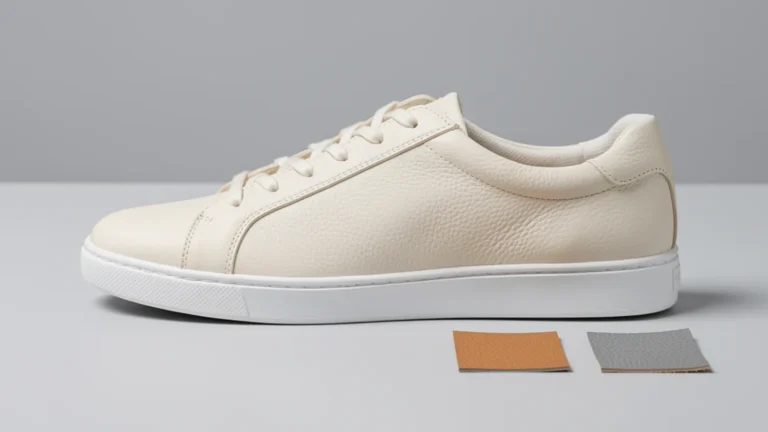
Is Microfiber Leather Waterproof as a Shoe Upper?
Treat waterproofness as a requirement to verify, not a property automatically supplied by the word microfiber. When comparing microfiber leather for shoes, identify the proposed grade, finish, thickness and construction. Ask for evidence tied to that specification rather than accepting a report for an unspecified material family.
The first purchasing decision is what the footwear is expected to do. Brief exposure to rain during a commute and repeated walking through wet ground are different design briefs. A material can be a candidate for either project, but a demonstration selected for one brief should not silently become evidence for the other.
This guide focuses on approving footwear uppers and completed shoes. For the broader distinction between a coated surface and a waterproof article, see our general faux-leather water-resistance guide. Here, the useful question is where water is allowed to reach—and how the finished design will be evaluated.
Separate Surface Wetting, Material Penetration and Shoe Leakage
Each test request should name both the specimen and the outcome. Otherwise, two suppliers can answer “waterproof” while discussing entirely different assessments.
| Assessment level | Question it addresses | What it does not approve |
|---|---|---|
| Surface wetting | How does the exposed surface respond to a defined wetting assessment? | Water entry through a flexing upper or a completed shoe |
| Upper material | Does water penetrate this specified sheet under the chosen conditions? | Stitched joints, tongue design or sole attachment |
| Completed footwear | Does the assembled shoe meet the agreed water-entry criteria? | Every other design, construction or future use condition |
For example, SATRA TM217 addresses resistance to surface wetting. Its purpose should not be expanded into a whole-shoe claim. A photograph of droplets is an even narrower observation unless the conditions and assessment are defined.
SATRA TM34 addresses dynamic water penetration through materials using the Maeser approach. Ask the laboratory whether it is appropriate for the proposed upper and specification. The public method description is a scope reference, not permission to invent a pass threshold or improvise a laboratory procedure.
SATRA TM230 evaluates whole-footwear water penetration during flexing. Its stated applicability depends on compatibility with the test foot form, and excludes footwear too stiff to flex in normal wear. Method selection therefore belongs in the test brief, not in a generic promise that one test fits every boot.
Microfiber leather is often selected for furniture upholstery because it can provide
a balance of durability, appearance, and cleanability.
Learn more about microfiber leather for furniture
when comparing materials for upholstery projects.
Why a Suitable Upper Can Still Produce a Leaking Shoe
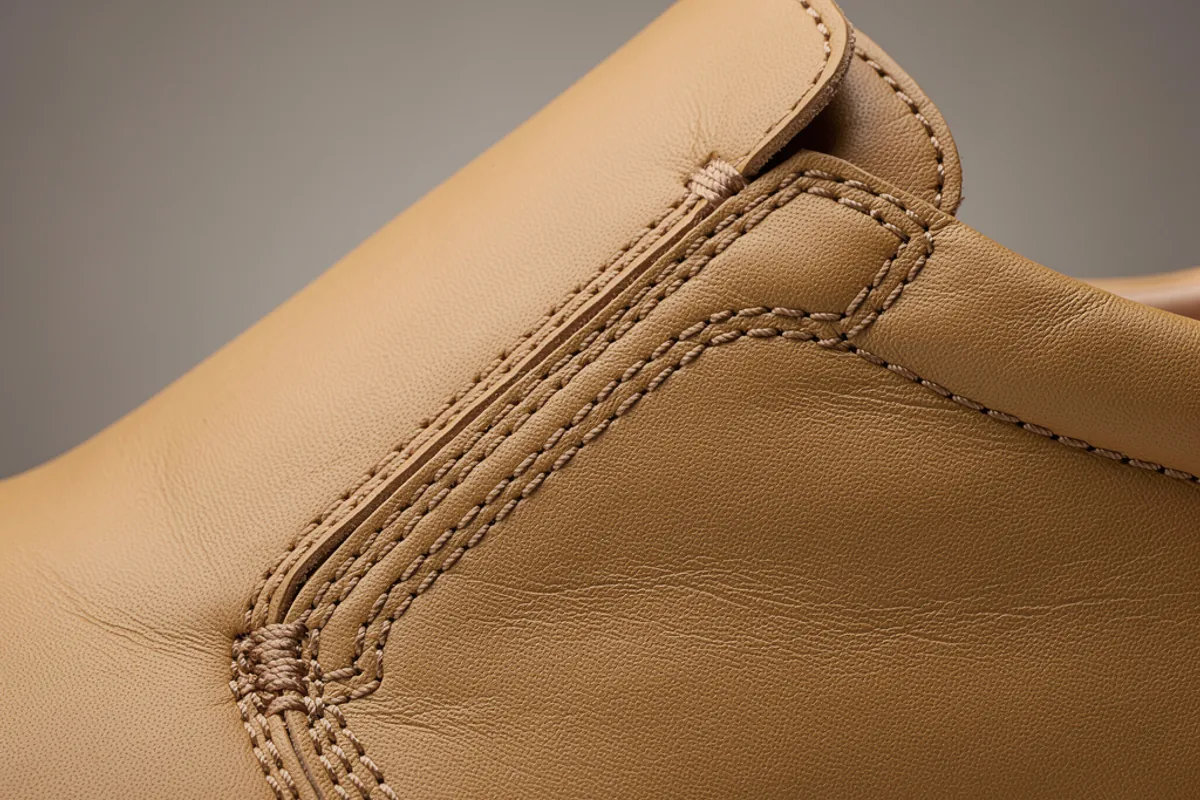
Moving from a roll to a shoe adds construction details that a flat specimen does not represent. SATRA’s guidance on water-resistant footwear production identifies joints, upper-to-sole bonding, tongue design and membrane integration as important controls. It also warns about stitching that creates a route into the footspace.
Use that distinction to assign responsibilities. The material supplier should identify the supplied upper and its evidence. The footwear developer should document the assembly. The testing plan should evaluate the combination rather than leaving a gap between the two.
A leak near a stitched feature does not automatically condemn the whole material roll. Equally, an intact swatch does not clear the sewing or assembly process. Investigate the location and reproduce the relevant condition before deciding which component to replace.
Write the Wet-Use Brief Before Choosing a Pass Level
Avoid an RFQ that asks only for “waterproof microfiber.” Give the footwear team and laboratory enough context to agree on a meaningful assessment. The following fields are a practical project brief, not a standard’s mandatory checklist.
- Intended footwear type and user activity.
- Expected water exposure and the parts of the shoe likely to be exposed.
- Whether the requirement concerns the upper, the footspace, or both.
- Proposed lining, membrane, tongue and sole construction.
- Any conditioning, flexing, wear or care exposure to assess before the water test.
- The method, acceptance criteria, sample selection and reporting responsibilities to be agreed.
Specify what a failure looks like. Is the decision based on liquid reaching the footspace, an agreed material-penetration endpoint, or another defined measure? If water retained in the construction matters to the project, include an assessment for that issue instead of treating a dry interior as the only observation.
Do not borrow a cycle count or water level from an unrelated product listing. Agree the current method and criteria with the laboratory and responsible product team. Keep any requirement imposed by a customer or applicable product standard visible in the brief.
Related microfiber Leather Products
microfiber Leather for Furniture
Automotive microfiber Leather
Use a Staged Approval Plan
Testing everything only after the final shoe is assembled can make failures difficult to interpret. A staged plan provides clearer decision points. These stages are recommended development controls, not a claim that a specific sequence is legally required.
Stage one: identify and screen the upper
Submit the intended grade and finish, with a traceable sample code. Ask the laboratory to state the sample orientation, relevant conditioning and test method in its report. Compare competing grades under the same agreed assessment rather than ranking unrelated supplier numbers.
Retain an untested reference from the same sample set. Record which surface was exposed and whether the evaluated specimen included the proposed backing or laminate. If the report does not identify that construction, resolve the uncertainty before using it to select a material.
Stage two: examine the critical assembly
Build representative stitched or laminated details using the intended components. Choose the areas that deserve attention from the design review, rather than creating a decorative demonstration panel unrelated to the shoe.
Ask whether the planned seam, lining connection or other detail needs its own assessment. Record the materials and assembly settings sufficiently for the footwear factory to reproduce them. If a development change is made, keep the earlier and revised versions identifiable.
Stage three: assess the completed shoe
Use footwear made to the intended construction, not an upper wrapped around an unrelated sole. Confirm sample sizes, selection and conditioning with the laboratory. Request a report that identifies the shoe and the observed outcome, including failure location where available.
The release decision should say which design and specification were approved. A result for one sample construction should not become an unrestricted claim for every style using the same microfiber upper.
Do Not Confuse a Damp Interior With a Proven Leak
Liquid ingress, water retained in a construction and moisture generated inside the shoe are different questions. When investigating dampness, keep them separate instead of assuming that every wet feeling proves penetration through the outer material.
SATRA’s discussion of preferred footwear methods describes TM47 for water-vapour permeability and absorption. It also explains why differing test conditions can change comparisons. A vapour result therefore needs its method and sample configuration; it is not interchangeable with a liquid-water penetration result.
For development work, request moisture-performance evidence for the relevant layer combination, not merely whichever single layer has the most attractive number. Ask the technical team how the result relates to the intended climate and wearing conditions. Do not assume that improving one endpoint automatically improves the other.
SATRA also notes that water can remain between an upper and a membrane without reaching the footspace. That is why a dry interior should not end every investigation. If the project requires it, record absorption and drying observations separately from the leakage decision, under an agreed procedure.
Investigate the First Failed Sample Before Changing the Material
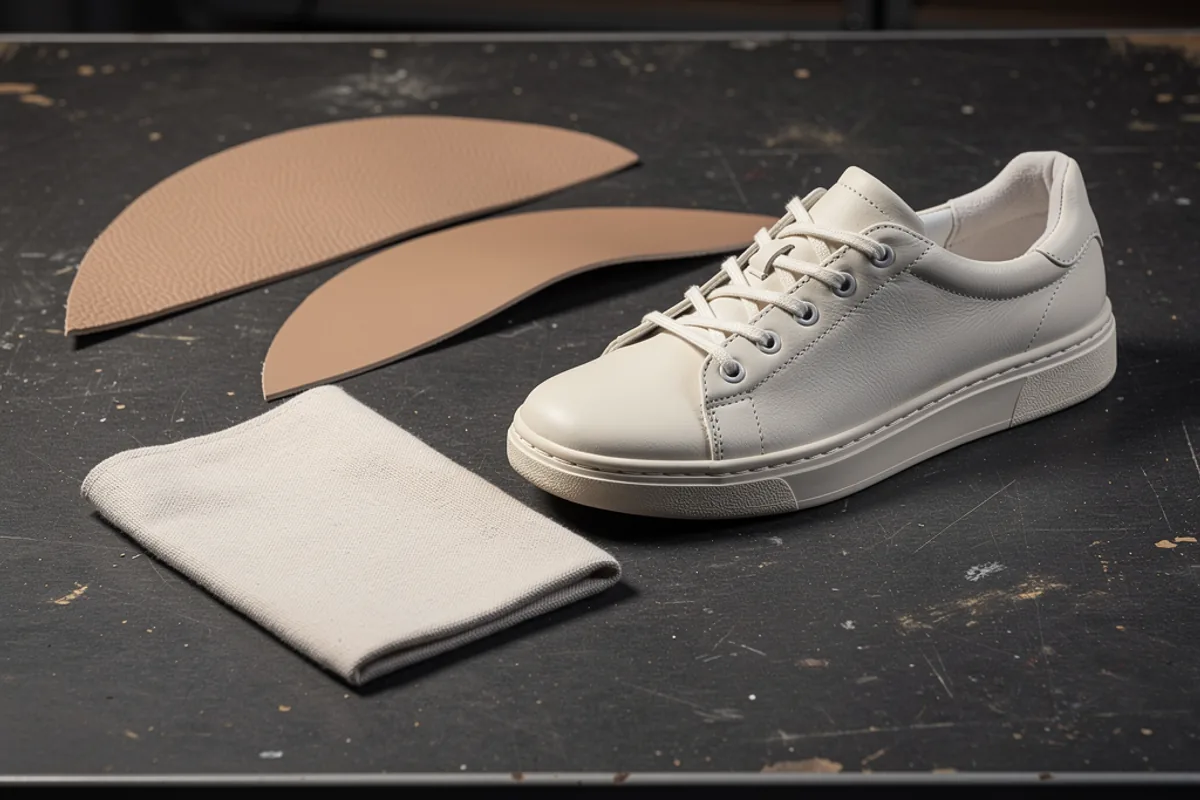
Consider a hypothetical development shoe whose upper specimen meets the agreed material requirement, while the completed shoe shows water inside near the tongue. That result establishes a problem with the tested shoe; it does not identify the cause by itself.
First preserve the tested sample and report. Mark the observed location and record the exposure conditions. Then compare the construction with the approved design. Ask the technical team to distinguish likely routes and determine what additional checks can isolate them.
| Observation to investigate | Next development question |
|---|---|
| Entry appears near a stitched joint | Does the representative joint reproduce the issue, and was it made as specified? |
| Entry appears near the sole interface | Does the assembly match the intended bonding and construction details? |
| The footspace is dry but the shoe retains water | Which construction area retains it, and is the agreed acceptance scope adequate? |
| Material reports look good but are not comparable | Were the same specimens, methods and conditions evaluated? |
These are investigation prompts, not remote diagnoses. Change one relevant variable at a time where practical, and preserve traceability between the failed and revised samples. Otherwise, a successful retest may leave the team unable to explain which change mattered.
Do not use a hydrolysis or dry-flex report as a substitute for water-entry evidence. Those reports may answer other durability questions, but they do not establish the required liquid-water outcome unless an appropriate water assessment is included.
Carry the Approved Construction Into Production
A development approval is useful only if purchasing and manufacturing can identify what it covers. Record the upper grade, finish, color, thickness specification and approved supporting components. Keep the relevant construction revision with the test package.
Agree how substitutions and process changes will be reviewed. A revised lining, seam design or upper finish should trigger a scope check rather than an automatic assumption that the earlier report still applies. The responsible team can then decide what verification is proportionate.
For projects still comparing material routes, the synthetic leather footwear overview provides a broader starting point. Once a route is selected, bring the discussion back to the actual shoe and its evidence.
To prepare a material enquiry, contact Wandaoleather with the shoe type, upper specification, intended water exposure and required test scope. Confirm available grade-specific evidence and the footwear maker’s assembly responsibilities before approving any waterproof wording.
Frequently Asked Questions
Is all microfiber leather waterproof?
No universal waterproof result can be inferred from the microfiber leather label. Identify the actual grade and request relevant evidence under stated conditions. A material result also does not establish the water resistance of a completed shoe.
Does water beading prove that a shoe is waterproof?
No. Beading is a surface observation. It does not show whether water penetrates the upper during the required exposure or enters through the completed construction. Use the appropriate material and footwear assessments for the intended claim.
Why can shoes leak when the upper has a passing report?
The report may cover only the upper specimen. A completed shoe adds seams, a tongue, sole interfaces and possibly a membrane assembly. Investigate the tested shoe and the location of water entry instead of assuming that the material report covers those details.
Is breathability the same as water resistance?
No. Water-vapour permeability and liquid-water penetration are different assessment questions. Review the method, conditions and tested layer combination for each. A result for one does not automatically establish the other.
Which tests should a footwear buyer request?
Discuss separate assessments for surface wetting, dynamic upper-material water penetration and completed-footwear water entry. SATRA TM217, TM34 and TM230 illustrate those different scopes. A qualified laboratory should confirm the appropriate current methods and acceptance criteria for the actual design.
Does a hydrolysis test prove that microfiber shoes are waterproof?
No. A hydrolysis result does not replace an assessment of liquid-water entry through the upper and completed shoe. Keep durability evidence and water-resistance evidence separate, and define any combined conditioning and testing sequence with the laboratory.