
This guide focuses on approving a vegan claim. It does not rank materials by environmental impact or replace chemical-safety and performance assessment.
Is PU Leather Vegan? Start with the Claim’s Scope
Ask the supplier to finish this sentence: “Our vegan statement covers…” The answer should identify a material or product, rather than repeat a catalog category.
Three different purchases need different boundaries. A PU resin is an input. A coated textile roll combines that input with other components. A finished bag adds lining, reinforcement, trims and assembly materials. Evidence for the first is not automatically evidence for the other two.
If a quotation describes PU-coated animal hide, the animal substrate remains present. A synthetic coating does not turn that construction into an animal-free material. By contrast, a textile-backed PU construction can be considered for a vegan program, subject to verification of the complete specification and the chosen requirements.
For the wider material structure, see our guide to what PU leather is. When discussing a specific PU leather grade, keep its construction code attached to the claim review. A swatch’s color or grain is not an adequate identifier.
What a Vegan Standard Actually Checks
Certification criteria provide a useful reference, but they are not interchangeable with a universal legal definition. Choose the scheme required by your brand or customer before asking suppliers to demonstrate conformity.
The Vegan Society’s Trademark Standards address animal-derived inputs in the product and its development or manufacture, specified animal-testing involvement, and measures to minimize cross-contamination. A statement limited to “no leather backing” therefore leaves other parts of that standard unanswered.
Vegan Action’s certification criteria likewise address ingredients and processing, and exclude animal materials such as leather, wool and silk. These are examples of published scheme requirements, not a declaration that a particular Wandaoleather material already holds certification.
Separate the evidence question from the certification question. A supplier may have composition information without a licensed mark. Conversely, a certificate bearing a familiar organization’s name still needs to be checked for the exact item covered. Missing certification means certification has not been established; it does not, by itself, prove animal content.
Check More Than the Visible PU Surface
Use the following table as a proposed supplier-review checklist. It identifies questions to investigate, not ingredients presumed to be present in every PU material.
| Part to review | Ask the supplier | Approval gap to resolve |
|---|---|---|
| Surface and finish | Which coating and finishing systems belong to this grade? | A resin statement that excludes later finishing |
| Backing | What is the substrate and its declared composition? | “Leather backing” or another ambiguous description |
| Bonding layers | Which adhesive or binder connects the components? | A declaration covering only the face and fabric |
| Production inputs | What relevant processing inputs are covered by the chosen standard? | Inputs omitted because they are not the main material |
| Supplied variants | Which colors, finishes and constructions share the evidence? | One sample being used to represent an unreviewed range |
The concern is not purely theoretical. Intertek’s Vegan Mark Program notes that fashion products can have non-animal primary materials while additives such as glues or dyes introduce animal-origin concerns. Its program combines declarations with testing. That supports looking beyond the main substrate; it does not establish that any particular PU grade contains those additives.
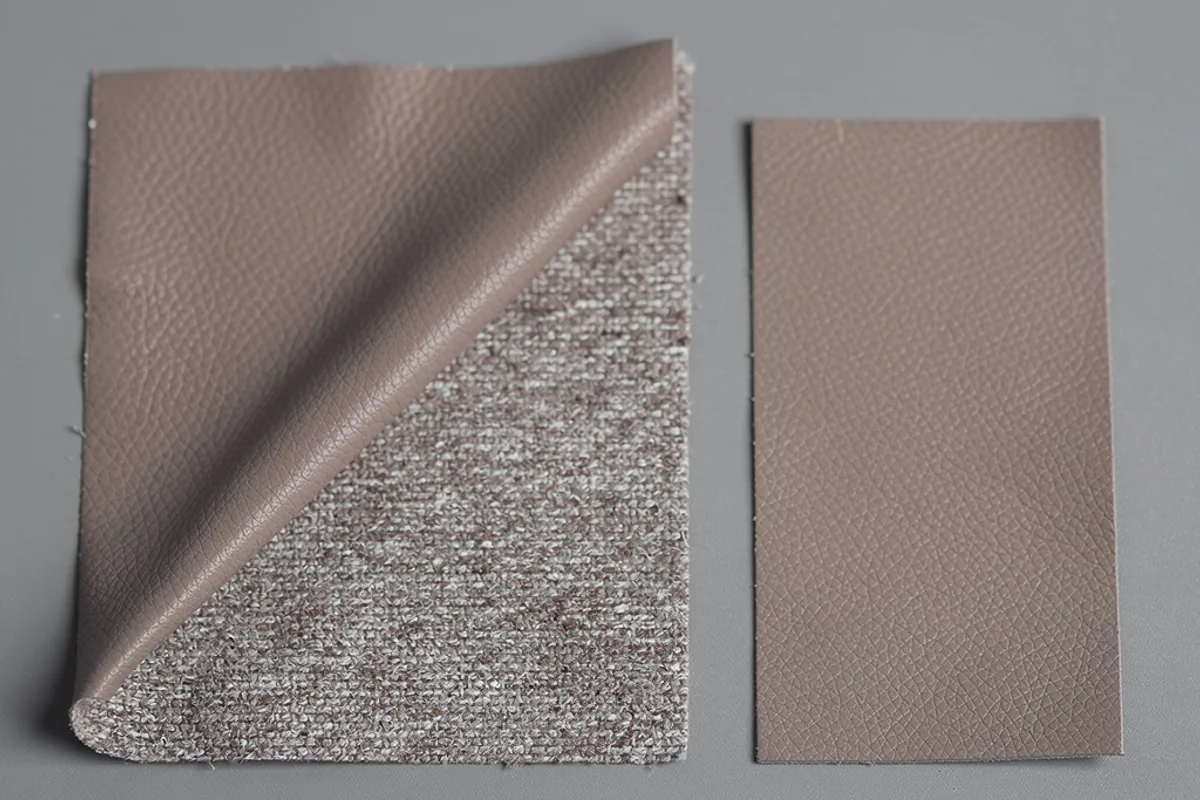
Looking at a cut edge or reverse side can help you ask better construction questions. It cannot identify every input or establish a supplier’s animal-testing history. Treat photographs and hand-feel inspection as aids to product identification, not vegan certification.
Build an Evidence Pack Before Approving the Claim
The following workflow is a purchasing recommendation. Adapt its depth to your customer’s requirements, the material and the selected certification scheme.
Identify the exact purchase
Put the supplier’s legal name, material code, specification revision, color and finish on the review record. Attach the quotation and retain a labeled physical sample in your own approval system. When a supplier uses different sales and production codes, ask for the relationship between them.
Record whether the review concerns roll material, a cut component or a complete product. Also record the intended sales market and exact proposed wording. This prevents a narrow material statement from quietly becoming a broader retail claim later.
Request a scoped declaration
Ask for a signed statement identifying what was reviewed, the basis for the statement and any exclusions. A response that refers only to “our PU products” is difficult to connect to a purchase order. Return it for clarification rather than treating it as a negative test result.
For proprietary formulations, agree how supporting details can be reviewed confidentially by the relevant assessor. The buyer does not necessarily need a public recipe. The review does need a clear way to resolve omitted layers, upstream inputs and the chosen standard’s manufacturing requirements.
Check supporting records and inconsistencies
Compare names and codes across the declaration, specification, certificate and sample record. If the face is described as PU but another document identifies a hide substrate, pause the claim decision and request a corrected construction statement. Do not select whichever document supports the desired marketing language.
As a practical control, maintain a short list of unanswered questions with an owner and a due date. “Backing identified; finish declaration pending” gives the team an actionable status. “Probably vegan” does not explain what remains unknown.
Verify certification separately
Contact the scheme owner or use its official verification channel to confirm the certificate’s scope and current status. Check the named item and permitted mark use, rather than assuming a document for one material covers a supplier’s entire catalog.
Vegan Action’s published policies explicitly distinguish certification of individual products from certification of whole companies. This illustrates why product-level scope matters. Eligibility and procedures differ among schemes, so confirm them with the relevant organization rather than copying another supplier’s application approach.
Record a clear release decision
Separate material sampling approval from permission to make the claim. Your team might accept a sample’s appearance while holding the vegan statement for further evidence. This lets development proceed without implying that the unresolved claim has passed.
For purchasing records, use three plain outcomes: supported for the stated scope, awaiting evidence, or inconsistent with the requirement. Identify who can authorize the wording. Keep the approved wording with the evidence so that a later catalog revision does not expand it accidentally.
A Vegan Material Does Not Approve the Finished Bag
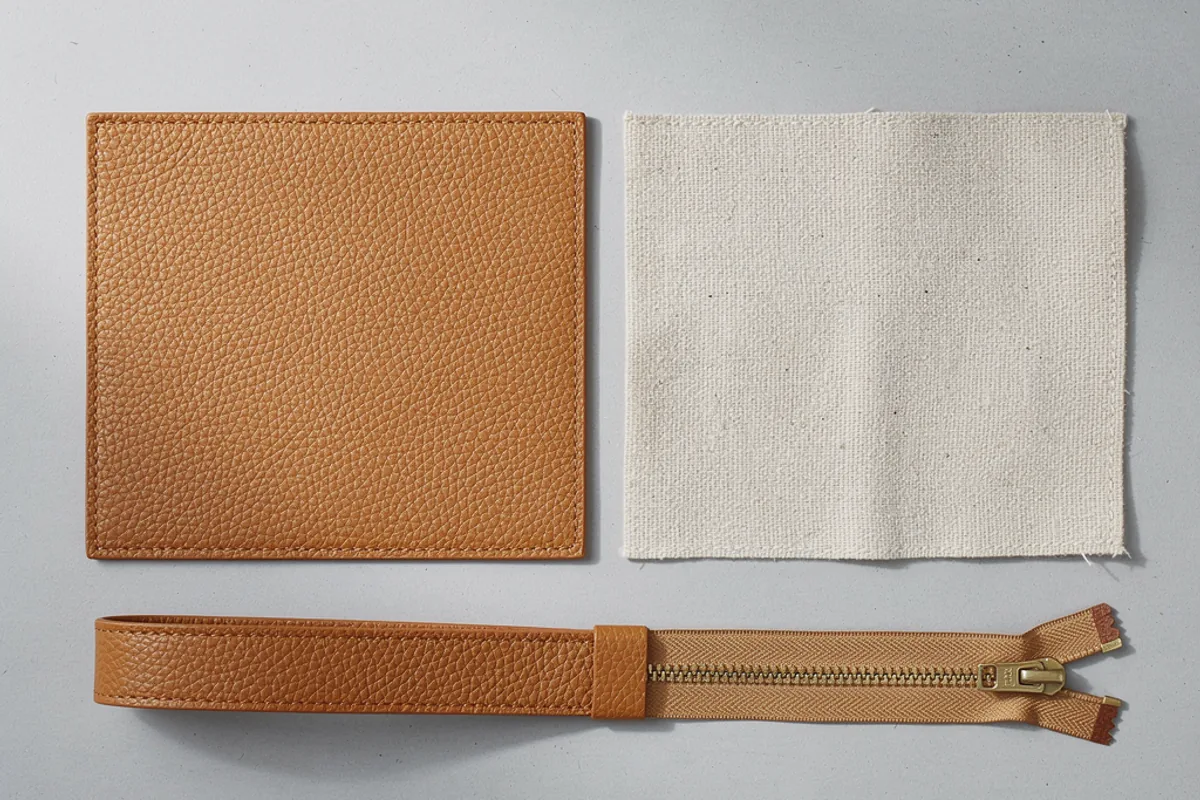
A bag project is a useful example because its exterior is only one part of the assembly. Even after reviewing the PU roll, list the lining, handles, reinforcements, sewing inputs, edge finish, labels and decorative components. Ask the assembler which purchased inputs and subcontracted operations are included in the product review.
This list is a recommended way to define the review boundary, not a claim that those components contain animal substances. If the intended statement concerns the entire bag, the evidence should address the entire bag rather than its visible exterior alone.
For a hypothetical development project, the exterior material could have acceptable documentation while the assembler has not yet reviewed the edge finish. The appropriate outcome is to keep the finished-product claim pending, identify that missing information and resolve it before release. It would be misleading to describe the whole item as certified solely because its main panel was reviewed.
When selecting PU leather for bags, keep these claim records alongside the separate material and assembly specifications. Vegan suitability does not answer whether the selected construction performs adequately in the finished design.
Keep Environmental and Safety Claims Separate
Vegan status concerns a different question from plastic content, disposal behavior or chemical safety. PU is polyurethane, so a vegan description is not a reason to describe a PU-containing material as plastic-free. A plant-derived backing does not change the identity of the coating.
For U.S. marketing, the FTC’s Green Guides summary cautions against broad, unqualified environmental-benefit claims and calls for evidence appropriate to claims such as non-toxic or degradable. A vegan statement supplies none of that separate performance evidence on its own.
Material naming also deserves its own review. The FTC Leather Guides address composition representations for certain leather and imitation-leather products, including disclosure where material resembles leather but is not leather. They are not a vegan certification scheme. Confirm the labeling rules relevant to your product and sales market before finalizing consumer-facing language.
Keep a separate entry for each proposed claim in the launch review. “Vegan,” “recycled content” and “biodegradable” should each have their own supporting evidence and scope, rather than inheriting approval from a shared marketing paragraph.
Keep the Approval Connected to Repeat Orders
For ongoing purchasing, request notification when the supplier changes a relevant material, formulation, finish, backing or production arrangement. Decide who will review those changes before the original claim is reused. This is a proposed change-control practice, not a universal requirement for a new certificate on every shipment.
Maintain a connection between the purchased grade and the approved records. If a substitute is offered because the original backing is unavailable, do not assume matching color and thickness preserve the claim basis. Review the substituted construction and retain the outcome with the order.
Your next inquiry can be concise: provide the application, proposed claim, destination market, material specification and any required certification scheme, then ask what evidence is available for that exact construction. Contact Wandaoleather to discuss the material requirements. Confirm grade-specific evidence before making a vegan or certification claim.
Frequently Asked Questions
Is all PU leather vegan?
No blanket conclusion follows from the name. Identify the complete construction and review evidence for the supplied grade. A PU coating on animal hide is not animal-free, while a textile-backed construction still needs its other inputs and relevant manufacturing requirements checked.
Does a polyester backing prove PU leather is vegan?
No. It identifies one component, not the surface finish, bonding system or all relevant production inputs. Use backing information as part of the review, not as a substitute for evidence covering the complete material.
Does vegan PU leather mean plastic-free or biodegradable?
No. A vegan claim does not establish plastic content or disposal performance. PU identifies a polyurethane component, and any biodegradability claim needs separate evidence for the material or product and the stated disposal conditions.
Can a certificate for PU material cover a finished handbag?
Do not assume it does. Confirm the certificate’s named scope with its issuer, then review the handbag’s other components and assembly inputs. Material-level evidence does not automatically certify the finished product or authorize use of a certification mark on it.
Does missing vegan certification prove animal content?
No. It means certification has not been established, not that animal content has been demonstrated. Request product-specific evidence, and if your purchasing program requires certification, keep that requirement unresolved until the appropriate certification is confirmed.
What should buyers do when the material specification changes?
Check whether the existing evidence still covers the changed construction. Request updated information for affected inputs and consult the certifier when certification is involved. Keep the original approval tied to its reviewed specification rather than automatically extending it to a substitute.