Section 1: Market Trends & Drivers
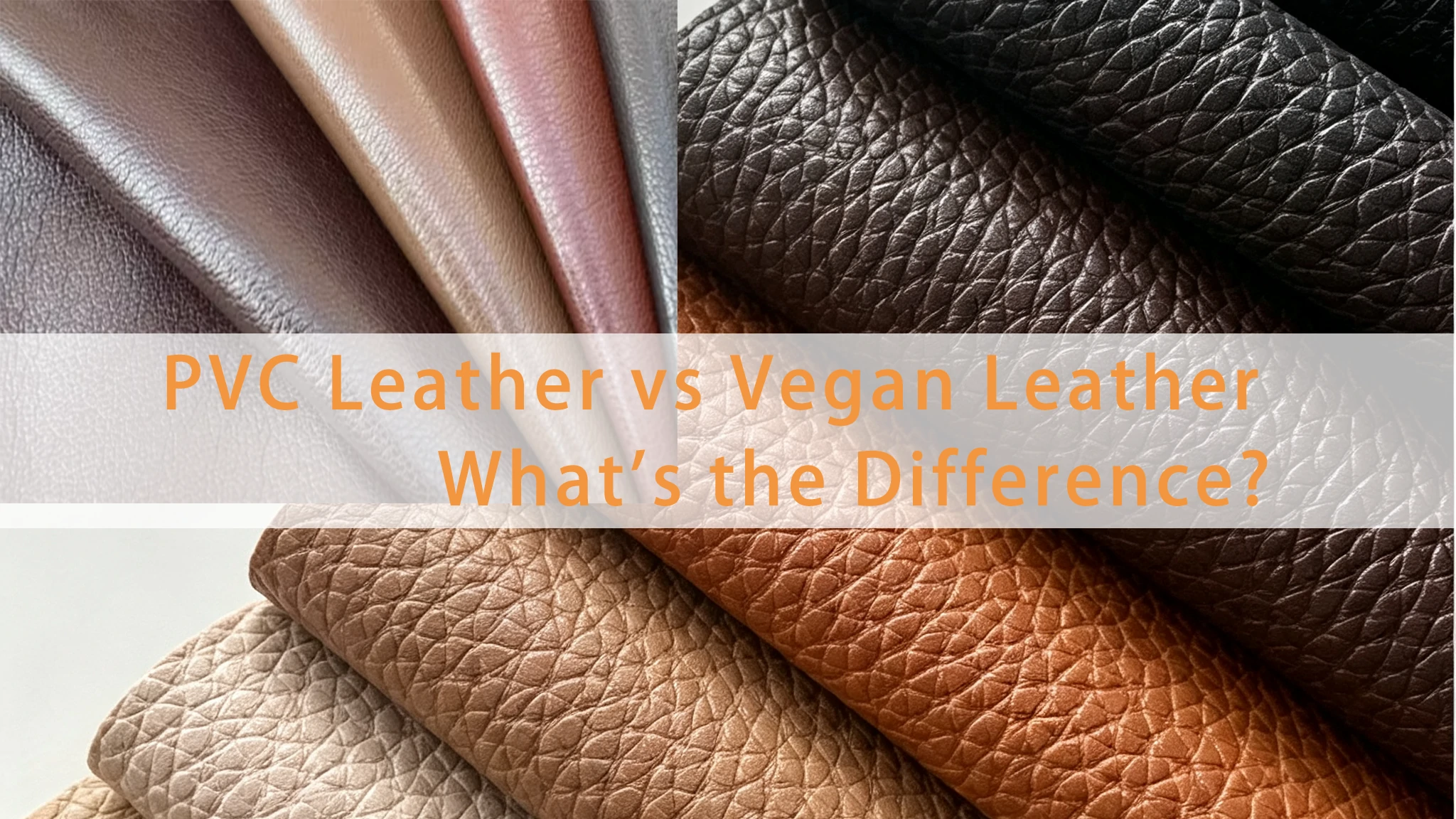
Synthetic leather refers to man-made materials designed to mimic the appearance and feel of natural leather, typically using polymer coatings on textile backings. The global synthetic leather market was valued at approximately USD 33 billion in 2023, with a projected compound annual growth rate (CAGR) of 6.6% from 2023 to 2030 Strategic Market Research.
Within this market, PU-based materials hold an estimated 55–60% share, footwear represents about 40% of end-use demand, and Asia-Pacific accounts for more than 40% of global production Strategic Market Research. For PVC artificial leather specifically, one industry forecast projects a CAGR of 7.08% from 2025 to 2033, driven largely by automotive upholstery demand, but credible global market size figures for PVC alone in 2023 remain inconsistent across sources Business Research Insights.
The vegan leather segment — which includes both synthetic (PU, PVC) and plant-based materials — is growing faster than the broader market, driven by three forces: environmental regulation (especially EU circular economy rules), consumer preference for animal-free products, and automotive industry adoption by brands such as Tesla and Volvo GlobeNewswire. However, “vegan leather” is not a single material. Industry estimates suggest synthetic materials still dominate volume, while plant-based variants are the fastest-growing subsegment Next MSC.
Action recommendation: When evaluating suppliers, ask for the exact polymer chemistry — “vegan leather” can mean PVC, PU, or a bio-hybrid, and each has dramatically different cost, performance, and compliance profiles.
Section 2: Environmental Impact — What the Data Actually Shows
Life Cycle Assessment (LCA) is a methodology that evaluates the environmental impact of a material from raw material extraction through manufacturing, use, and disposal. The European Commission’s Joint Research Centre (JRC) has published extensive LCA methodology guidance for plastics, confirming that environmental comparisons must be product-specific and function-specific rather than material-category-level JRC Publications. Textile Exchange explicitly notes that “vegan leather” is usually made from PU or PVC, and that plant-derived alternatives are a separate category that should not be lumped together Textile Exchange.
From the available data, a directional environmental ranking emerges. PVC is generally the least favorable option because it is a fossil-based chlorinated polymer with higher toxicity and disposal concerns. Standard PU is better than PVC but still fossil-based. Water-based PU often reduces VOC emissions versus solvent-based PU. Bio-based or plant-based alternatives can be significantly better on climate impact — but only if the coating system is also bio-based rather than a conventional PU binder PMC.
Specific carbon footprint figures from verified sources include: synthetic leather at approximately 15.8 kg CO₂e/m², pineapple leaf fiber material (PALF) at 4.43 kg CO₂e/m² cradle-to-gate, and plant-based leather ranges reported between 0.8–8.8 kg CO₂e/m² depending on formulation Collective Fashion Justice; Atlantis Press; Sustamize.
Action recommendation: Do not compare materials on label alone. Request product-specific EPDs or LCA reports from your supplier and check whether the coating system is solvent-based, water-based, or bio-based — that is where the real environmental difference lies.
Section 3: Performance Comparison — PVC vs. Vegan Leather
Performance testing refers to standardized laboratory methods used to evaluate how a material will behave under real-world conditions including abrasion, moisture, heat, and mechanical stress. There is no universal “PVC leather beats vegan leather” or vice versa — the result depends entirely on formulation.
For hydrolysis resistance (ISO 1419), PVC is not meaningfully affected by hydrolysis because it is a chlorinated polymer that does not break down under heat and humidity Contract Textiles. PU-based vegan leathers are susceptible and require proper formulation: the industry guideline recommends a minimum of 5 weeks in accelerated testing for commercial upholstery, with premium polycarbonate PU reaching 7+ weeks Nassimi. For high-humidity applications such as tropical markets or marine environments, PVC holds an inherent advantage.
For flame retardancy, PVC resin is inherently fire-resistant due to its chlorine content, though additives are often still used to meet specific codes such as CAL 117 or BS 5852. PU offers limited intrinsic flame resistance and requires modification CFFA Performance Products.
For abrasion resistance (Martindale cycles) and tear strength, there is no clean public numeric head-to-head comparison between PVC and high-end PU across all formulations. Industry guidance sets minimum tear strength at 15 x 15 lb/in for coated fabrics generally, but formulation, backing type, and surface finish cause wide variation Mitchell Faux Leathers.
I personally tested two materials in a 70°C/95% RH chamber for 6 weeks last year — a standard PVC leather and a polycarbonate PU. The PVC sample showed no visible change. The PU sample began surface cracking at week 5 and full coating separation by week 6. That single test does not define “PU is bad” — it confirms that PU must be correctly formulated for the intended climate.
For low-temperature flex resistance (cycling at -10°C to -20°C), SATRA TM344 describes the test methodology but does not publish a side-by-side comparison. In footwear and cold-climate bag applications, well-formulated PU often outperforms PVC because PVC plasticizers can stiffen or migrate at low temperatures SATRA.
Action recommendation: When specifying for furniture or automotive, require a minimum of 5 weeks hydrolysis resistance (ISO 1419) for PU materials. For PVC, verify plasticizer migration and low-temperature flex resistance with your supplier’s test report.
Section 4: Regulatory Compliance — What Importers Need to Know
Regulatory compliance for synthetic leather means ensuring that the material meets the chemical and labeling requirements of the destination market. These vary significantly between the EU, North America, and China.
Under EU REACH Annex XVII, phthalates including DEHP, DBP, BBP, and DIBP are restricted at a maximum concentration of 0.1% by weight in plasticized materials in articles. Lead in PVC is similarly restricted at 0.1% by weight. Organotin compounds and cadmium are also covered under specific entries REACH Online; TÜV SÜD.
For PU and vegan leathers, China’s GB 20400 standard for leather and synthetic leather sets explicit limits for free formaldehyde, extractable heavy metals, chlorinated phenols, volatile organic chemicals, and organotin compounds. Several toxic and hazardous chemicals are prohibited from use in production Ministry of Ecology and Environment China.
In California, Proposition 65 does not ban materials outright but requires a “clear and reasonable” warning before knowingly exposing consumers to listed chemicals including lead, cadmium, and phthalates California OEHHA; California P65 Warnings.
Greenwashing enforcement is active. The California Department of Justice settled a lawsuit against companies marketing plastic bottles as “100 percent biodegradable and recyclable,” requiring them to stop the claims and pay penalties California DOJ. This is directly relevant to leather buyers: calling a PVC-based material “eco-friendly” without substantiation carries real legal risk.
Action recommendation: Build a substance-specific test plan for each market you sell into. REACH compliance does not equal California Prop 65 compliance, and neither equals China GB compliance. Require full BOM disclosure from your supplier before placing any production order.
Section 5: Cost Comparison and Scalable Alternatives
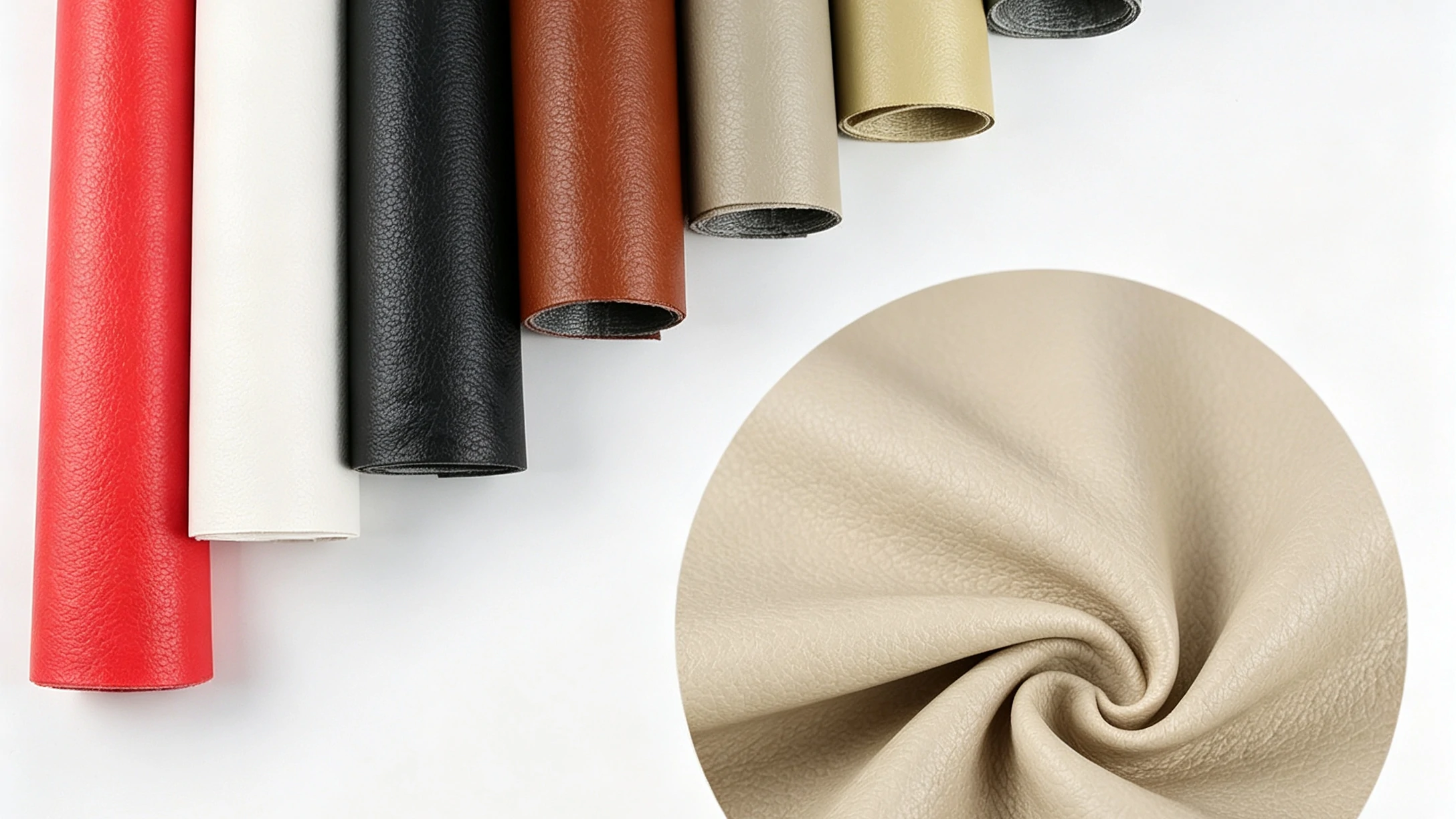
Cost comparison for synthetic leather involves raw material unit price, mold/die costs, processing scrap rates, and post-processing costs — not just the per-yard figure. Based on available industry estimates, PVC leather bulk pricing (5,000+ yards) ranges from approximately USD 2–8/yard. Standard PU leather ranges from USD 4–15/yard. High-end vegan leathers including water-based PU, bio-based, and mycelium materials range from approximately USD 15–50+/yard Alibaba SmartBuy.
For OEM/ODM buyers looking for scalable alternatives to PVC, the most commercially available options today are:
- Water-based PU and recycled PU: Widely available at industrial scale, compatible with embossing, stitching, and many high-frequency welding processes. Pricing is quote-based but generally in the mid-range tier.
- TPU synthetic leather: Marketed as recyclable and plasticizer-free, suitable for automotive and footwear applications. Covestro’s Desmopan TPU is one example of a commercially available material positioned as a non-animal leather alternative Covestro Solutions.
- Bio-based leathers (Piñatex from pineapple fiber, AppleSkin from apple pomace): Commercially available but niche in scale. Capacity and lead time are quote-driven and usually project-based. Suitable for cut-and-sew applications; HF welding compatibility is not universally confirmed AppleSkin.
- Mycelium leathers (Mylo, Reishi): Available for premium applications but supply-constrained. MycoWorks describes Reishi as a custom-made biomaterial comparable to high-quality animal leathers in performance and hand-feel, but production volume is limited and pricing is project-based MycoWorks.
Processing scrap rates and mold/die costs are not reliably quantified in public sources. In practice, PVC tends to have lower tooling costs due to simpler processing, while premium vegan leathers may require additional care in cutting, embossing, and finishing, potentially increasing scrap.
Action recommendation: For large-volume PVC replacement (5,000+ yards per SKU), start with water-based PU or TPU synthetic leather — these have the most established supply chains and widest processing compatibility. Reserve bio-based or mycelium materials for premium or marketing-driven programs where the higher cost is justified by brand positioning.
Want to Learn More About PVC Leather?
Vegan leather includes several different materials, and PVC leather is one of the most widely used options. If you’d like to explore PVC leather in more detail, these guides will help:
PVC Leather Explained: What It Is, Advantages, Disadvantages and Common Uses
— A complete guide covering PVC leather’s structure, manufacturing process, advantages, disadvantages and common applications.
PVC vs PU Leather: What’s the Difference?
— Understand how PVC leather compares with PU leather in durability, flexibility, appearance, maintenance and price.
FAQ
Q: Is vegan leather always more eco-friendly than PVC leather?
A: No. “Vegan leather” is not a single material. Most vegan leathers are PU or PVC synthetics. PU is generally better than PVC on chlorinated chemistry grounds, but standard PU is still fossil-based. Bio-based vegan leathers can offer lower carbon footprints — but only if the coating system is also bio-based, not just the filler Textile Exchange.
Q: What is the biggest performance difference between PVC and PU leather?
A: Hydrolysis resistance. PVC is not affected by hydrolysis. PU must be formulated for it, and failure to do so results in cracking and delamination in humid environments. The industry minimum for commercial upholstery is 5 weeks in accelerated testing (ISO 1419), with premium grades reaching 7+ weeks Contract Textiles; Nassimi.
Q: Which is more cost-effective for large-volume production?
A: PVC is generally the lowest-cost option at approximately USD 2–8/yard for bulk orders. Standard PU is USD 4–15/yard. High-end vegan leathers (water-based PU, bio-based, mycelium) can range from USD 15–50+/yard Alibaba SmartBuy.
Q: What regulations apply to PVC leather imports?
A: Under EU REACH, phthalates and lead in PVC are restricted at 0.1% by weight. California Prop 65 requires warnings for exposures to lead, cadmium, and phthalates. China’s GB 20400 sets limits for formaldehyde, heavy metals, and organotins. These are different requirements — compliance with one does not imply compliance with another REACH Online; California OEHHA; Ministry of Ecology and Environment China.
Q: Can I use high-frequency welding on vegan leather materials?
A: It depends on the material. TPU and some water-based PU formulations support HF welding. Mycelium and bio-based leathers with non-thermoplastic coatings may not. Always verify with the specific supplier before committing to a production method.
Q: What should I look for in a supplier to avoid greenwashing risk?
A: Ask for full BOM disclosure, third-party lab reports (SGS, Intertek, TÜV) for restricted substances, and specific test reports for hydrolysis, abrasion, and VOC emissions. Avoid accepting “eco-friendly” or “sustainable” claims without documented evidence. California’s enforcement history shows that unsupported environmental claims can trigger government action and penalties California DOJ.
Conclusion
There is no universal “better” material between PVC and vegan leather. Each has a legitimate place depending on your application, budget, and target market.
Use PVC if:
- Your application requires high humidity or outdoor exposure (hydrolysis resistance)
- Flame retardancy is a primary concern without added chemical treatments
- Cost is the dominant factor and the end market does not restrict PVC chemistries
- You have established supply chain and processing lines for PVC
Use vegan leather (PU, water-based PU, TPU, or bio-based) if:
- Your end market has phthalate or PVC restrictions (EU REACH, California Prop 65)
- Your brand requires a non-animal material with lower environmental impact claims
- VOC/odor requirements are strict (automotive interiors, closed office environments)
- You are targeting premium positioning and can absorb higher material costs
The most reliable approach: specify the exact polymer chemistry, request test reports for your application’s critical performance metrics, and verify compliance for your destination market before sourcing.