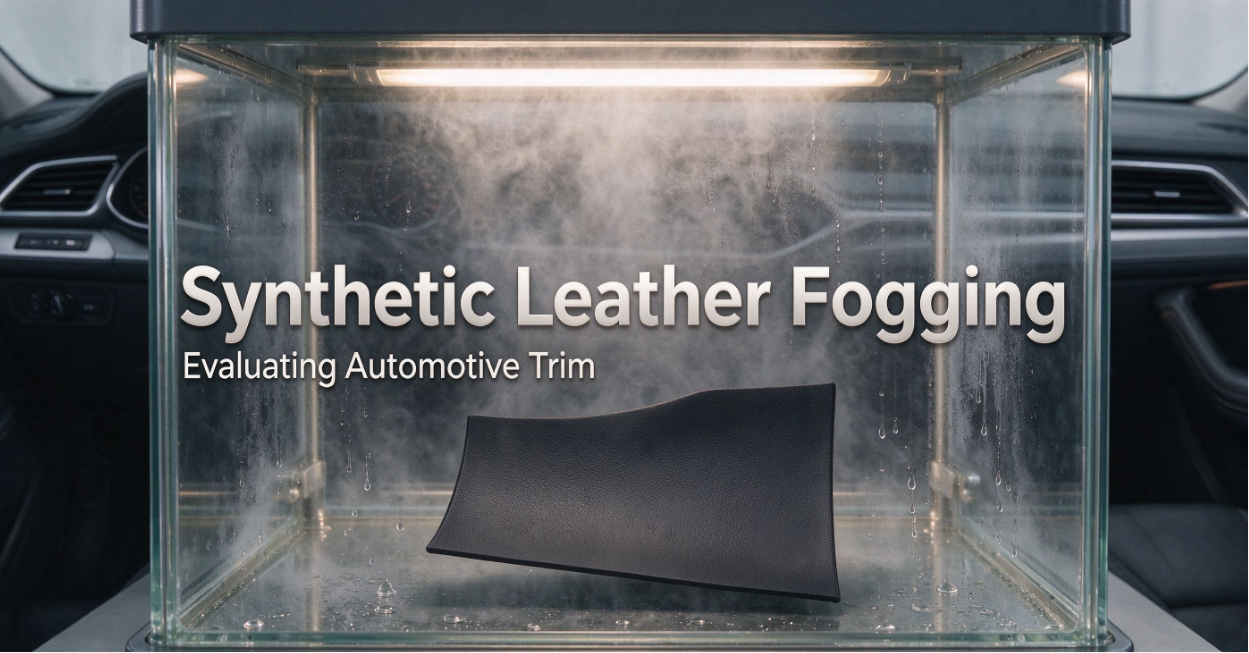
Synthetic leather fogging should be evaluated as a defined condensate test, not inferred from smell or a low-VOC label. For automotive trim, identify the exact material, test method and measurement mode, then determine whether the specimen represents the supplied sheet or the finished laminate. A result for microfiber leather alone does not automatically cover added foam and adhesive. Approval requires the customer’s specified evidence for the construction being purchased, with fogging, emissions and odour kept separate.
What synthetic leather fogging evidence actually answers
A supplier may send an attractive swatch with a statement such as “low odour, automotive grade.” That description does not tell the purchasing team whether condensable deposits have been assessed. Start by asking for the named test and the specimen identity, rather than treating several reassuring phrases as one technical result.
ISO 6452:2021 addresses fogging characteristics of coated fabrics used in automotive interiors and allows application to other materials and finished products. Its measurement concerns condensate under the test conditions. This is a narrower question than identifying all emissions from a vehicle or predicting what an occupant will smell.
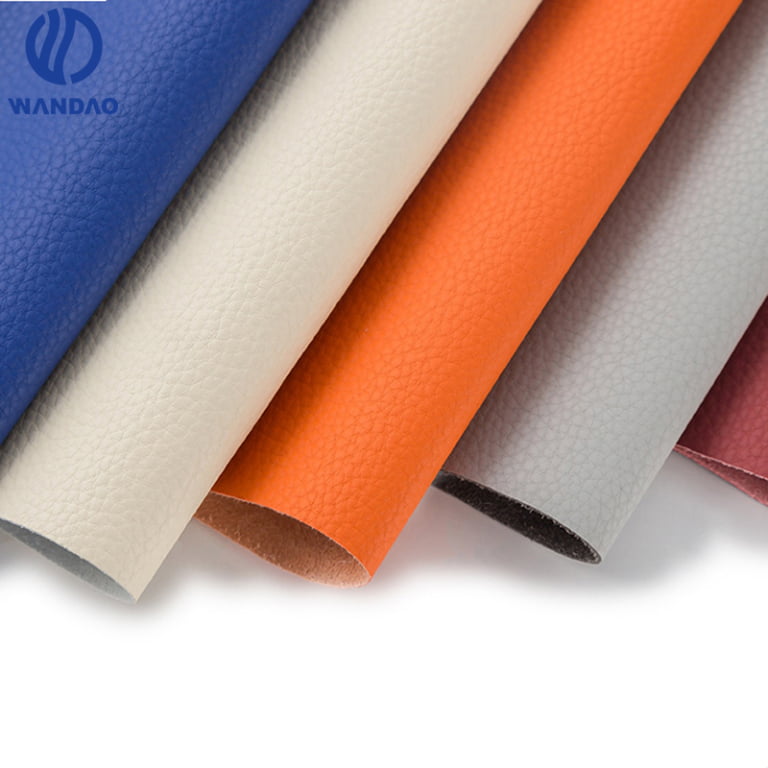
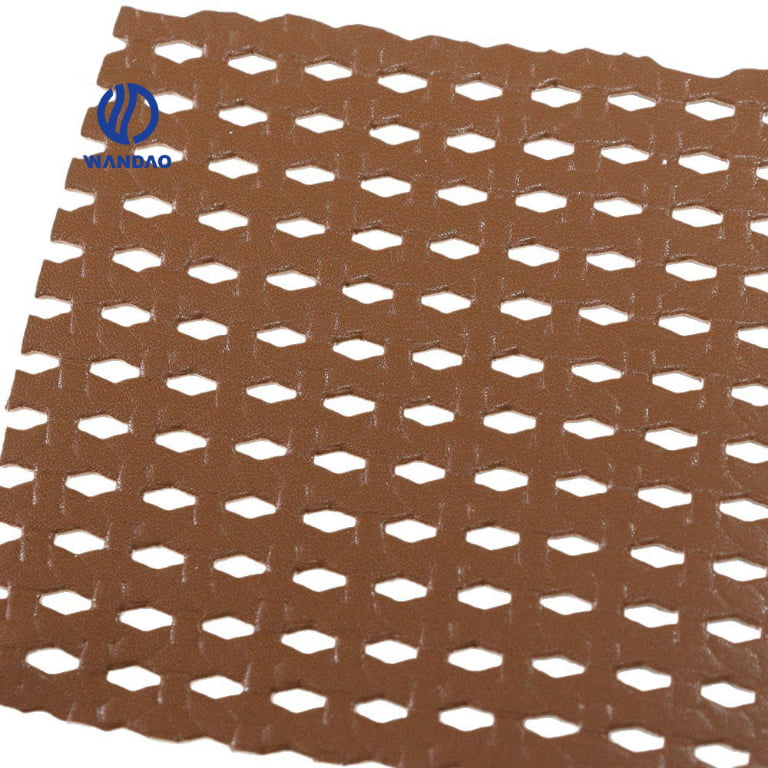
For a microfiber-based trim project, use the microfiber leather for automotive selection page to define the component and construction. A door insert, armrest cover and seat panel may use different laminates. Give each proposed build an identity before attaching an emissions-related report to it.
Keep fogging, VOC analysis and odour in separate fields
The easiest specification error is to write “emissions: pass” without naming what was measured. A fogging assessment, an analytical emissions method and an odour assessment answer different questions. One may be relevant while another is also required; none should silently replace the others.
| Evidence requested | Question it addresses | Do not substitute it for |
|---|---|---|
| Fogging report | Condensate behaviour under the selected procedure | All emitted compounds or sensory acceptability |
| Analytical emissions report | The substances or emission measures covered by that method | A different condensate test |
| Odour assessment | The material’s sensory result under a defined protocol | Chemical identification or fogging performance |
| Finished-component approval | The named trim assembly against its project requirements | Approval of other builds or material substitutions |
The official VDA 270 listing concerns odour characteristics of motor-vehicle trim. VDA 278 concerns thermal-desorption analysis of organic emissions from non-metallic automotive materials. These are useful examples of distinct evidence categories, not instructions to order every method for every component.
Ask the customer which method, edition and requirement apply. If a report uses the word “FOG” within an analytical method, do not assume it is interchangeable with an optical or gravimetric fogging result from another procedure. Compare the reported property, units and method before comparing the numbers.
Check the measurement mode before ranking samples
DIN 75201:2024-06 is another named automotive fogging method. A purchase specification should retain the chosen method and edition rather than accepting a generic “DIN/ISO tested” statement. If a supplier proposes a different method, have the responsible customer or laboratory review the substitution.
ISO 6452 also identifies limitations of optical measurement where condensate forms certain transparent or heavy films and indicates a gravimetric approach in those cases. That is a reason to involve the laboratory when interpreting an unusual result, not to select whichever mode produces the more favourable-looking number.
Request the complete report, including the result type, specimen preparation, conditioning and deviations. Do not convert a percentage-style result into deposited mass or treat them as a common scale. A meaningful comparison uses compatible evidence and a written acceptance rule.
Testing to a named method and meeting a customer requirement are separate statements. The method describes how the assessment is conducted; the purchasing decision also needs the relevant limit and the construction to which it applies. Avoid claiming broad automotive compliance from the presence of a standard number alone.
Define where the supplied material ends and the trim build begins
Draw a simple layer map for the proposed component. Identify what the material supplier delivers and what the converter adds. Depending on the build, that may include a surface finish, backing, adhesive, foam, carrier or secondary trim. Do not assume the word “microfiber” identifies every layer or the substances used during conversion.
The material report remains useful if it covers only the supplied sheet. Label it as sheet-level evidence. Then ask whether the customer requires a representative laminate, a prepared component specimen or another configuration. The laboratory should define preparation appropriate to the selected method; a complete part should not be forced into a material-test description that does not fit.
A broader automotive leather specification helps keep the trim programme in view. Fogging is one approval topic alongside the other requirements that actually apply. A favourable result does not settle wear, appearance, flame behaviour or every other interior-material decision.
When the converter changes adhesive or foam after the sheet has been approved, review whether the existing evidence still represents the build. Similar colour and hand feel cannot answer that question. Record who owns approval of each added component and who approves the assembled construction.
Prepare samples so the comparison remains interpretable
Before sending material, obtain the laboratory’s instructions for sample quantity, packaging, handling and conditioning. Record the production date, lot, construction revision and subsequent processing. Keep those details with the sample code instead of relying on an informal label such as “new black material.”
Do not deliberately air, heat, wash or otherwise alter a sample to obtain a better result unless that preparation is part of the agreed protocol and is reported. The question is whether the production material meets the project requirement, not whether a specially treated laboratory sample can do so.
Where investigation is needed, retain traceable constituent samples as well as the representative laminate. Ask the laboratory how controls and comparison samples should be handled. Different storage histories can complicate interpretation, so record them rather than assuming samples taken weeks apart are directly comparable.
Keep an untouched reference where practical. It can support a later investigation if the tested sample is consumed or changed by the procedure. The retained reference is not a replacement for testing; it is a way to preserve the connection between the report and the material originally submitted.
Include the test stage in the sample name. For example, distinguish the incoming roll sample from the same material after the planned lamination process, without implying either has already passed. If more than one organisation handles the sample, keep a simple transfer record. This helps resolve whether a later discrepancy concerns material identity, preparation or the actual measured behaviour, and prevents a report from being attached to the wrong revision during a busy programme launch.
Investigate a laminate result without assigning blame too early
Suppose the supplied sheet meets its agreed requirement but the converted laminate does not. First confirm that the correct materials and process revision were used. Then ask the laboratory to help design comparisons that distinguish the sheet, added layers and conversion process. Do not conclude that the visible surface is the source simply because it is called leather.
Potential contributors might include added materials, process residues, a changed cure history or contamination during handling. These are engineering hypotheses, not diagnoses from a fogging value. A condensate result alone does not identify the responsible substance or prove which supplier introduced it.
A controlled investigation changes one meaningful factor at a time where practical. Keep the sheet constant while assessing a documented laminate change, or compare two sheet candidates within the same controlled build. Have the laboratory determine what analytical work is necessary if identifying the deposit is part of the decision.
Release a defined construction and control later changes
The final approval record should link the material and component codes, report, method, result, customer requirement and disposition. State whether the release covers the sheet, laminate or finished trim. This prevents a successful material screening test from becoming an unsupported vehicle-wide claim.
Agree which changes require technical review: supplier, coating or backing revision, added adhesive, processing route or another relevant construction change. A change does not automatically mean failure, but it may mean the evidence no longer describes the product being shipped. The responsible approver should make that determination explicitly.
For a focused sample request, send Wandao Leather the trim position, layer build and customer test requirement. Identify whether you need microfiber sheet screening or support for a converted assembly, and include the exact method when available. This is more actionable than requesting a material that is simply “low emission.”
Frequently Asked Questions
Does low odour mean synthetic leather has low fogging?
No. Odour assessment and condensate testing address different properties. Request the relevant fogging report rather than using smell or a sensory result as a substitute.
Does a fogging result identify every emitted chemical?
No. It describes the measured condensate behaviour under that procedure. Chemical identification or other emissions claims require the separately specified analytical evidence.
Can a microfiber sheet report approve a foam-backed trim laminate?
Not automatically. Added foam, adhesive and processing are outside a sheet-only specimen. Confirm which representative construction the customer requires and keep material and assembly evidence distinct.
Are optical and gravimetric fogging results interchangeable?
No direct interchangeability should be assumed. They report different measurements, and the selected method and acceptance requirement must remain attached to the result.
Does testing to ISO 6452 mean the trim is approved for every vehicle?
No. Approval also depends on the specified construction and the applicable customer requirement. A method reference alone does not establish programme-wide or universal compliance.
What should trigger a review after material approval?
Review changes that may affect the tested construction, including coating, backing, added adhesive, foam or conversion process. The responsible customer or developer should decide what fresh evidence is necessary.