1. The Core Materials: PVC, PU, and the Layered Structure
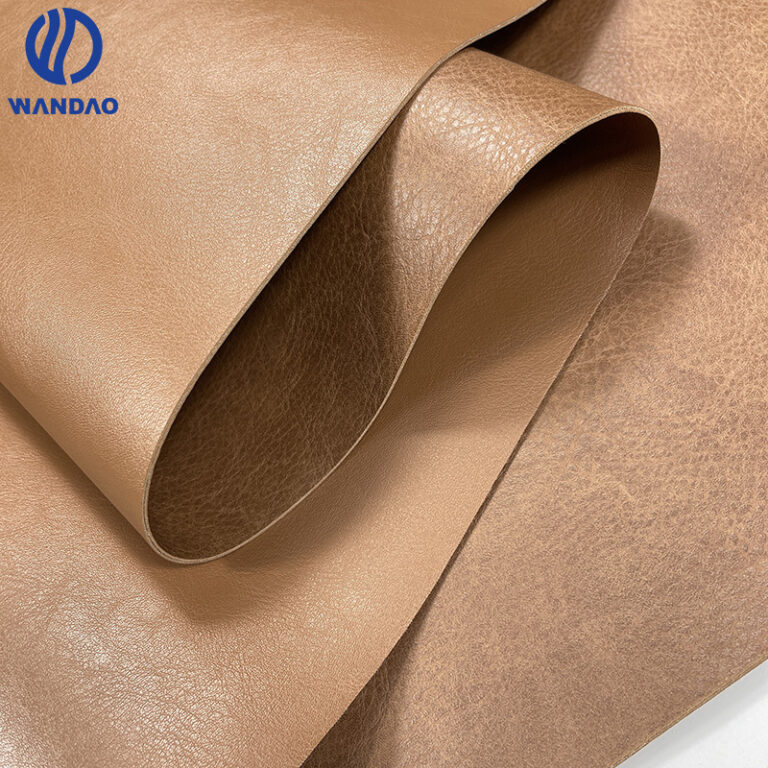
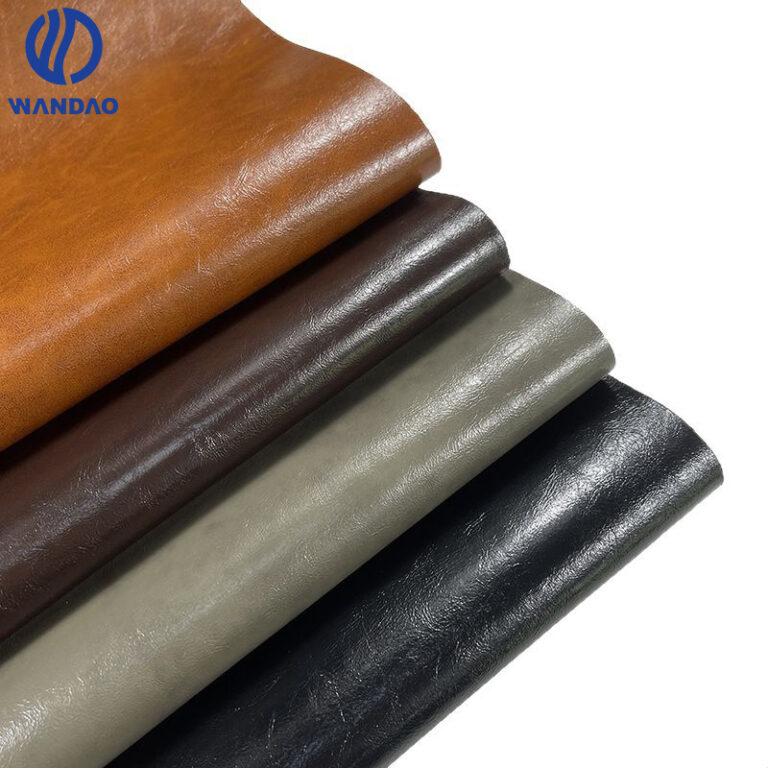
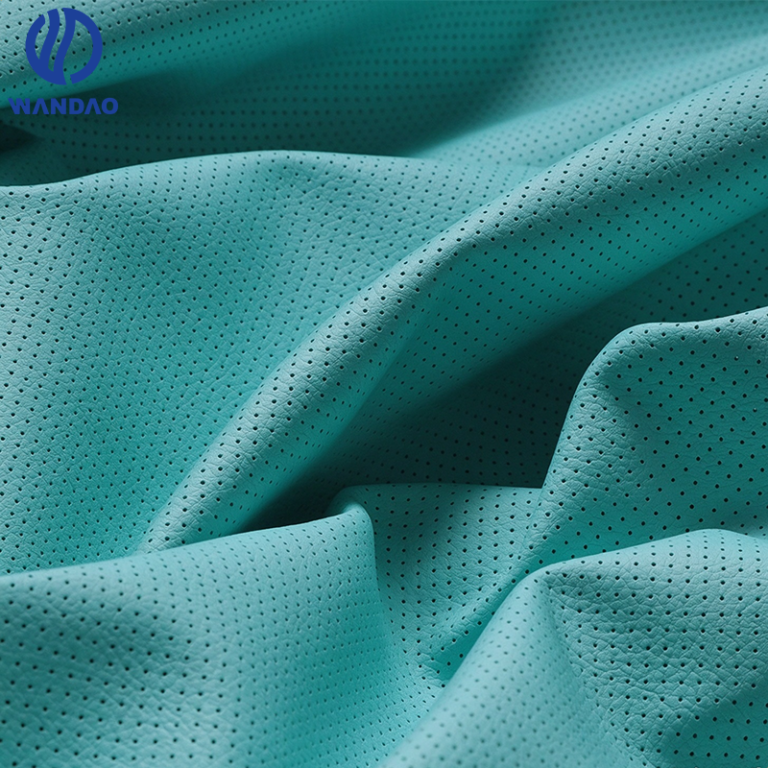
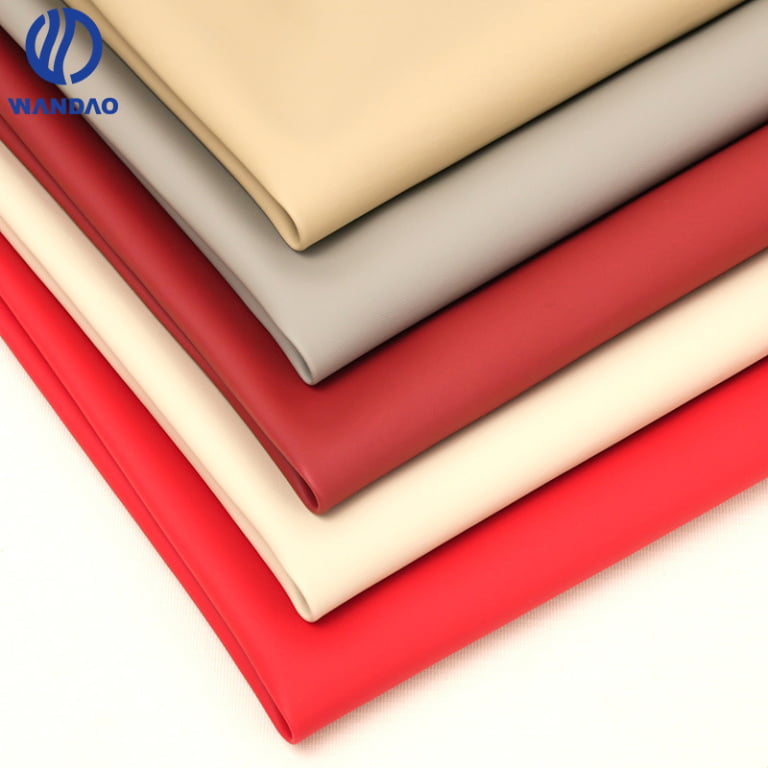
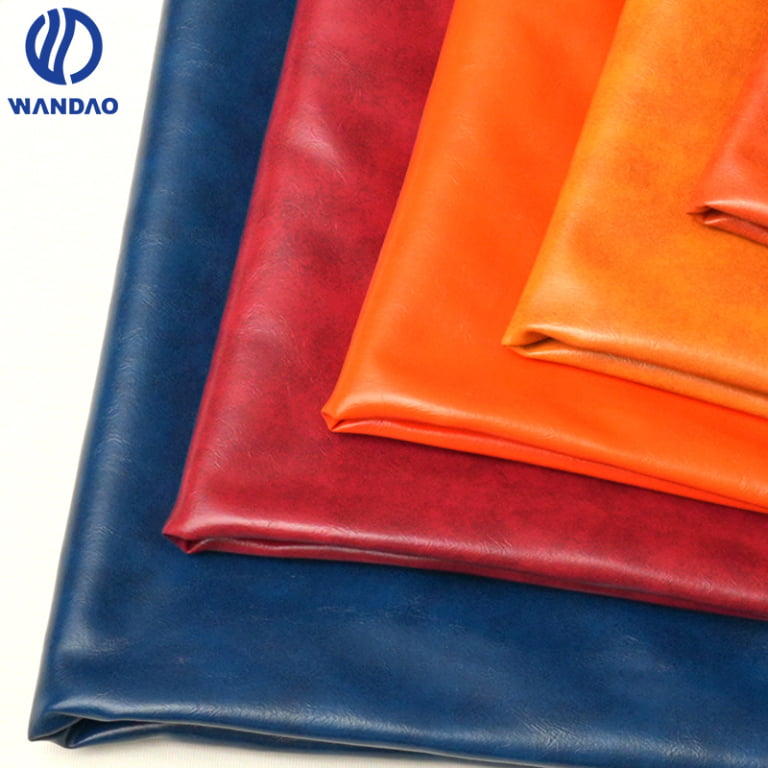
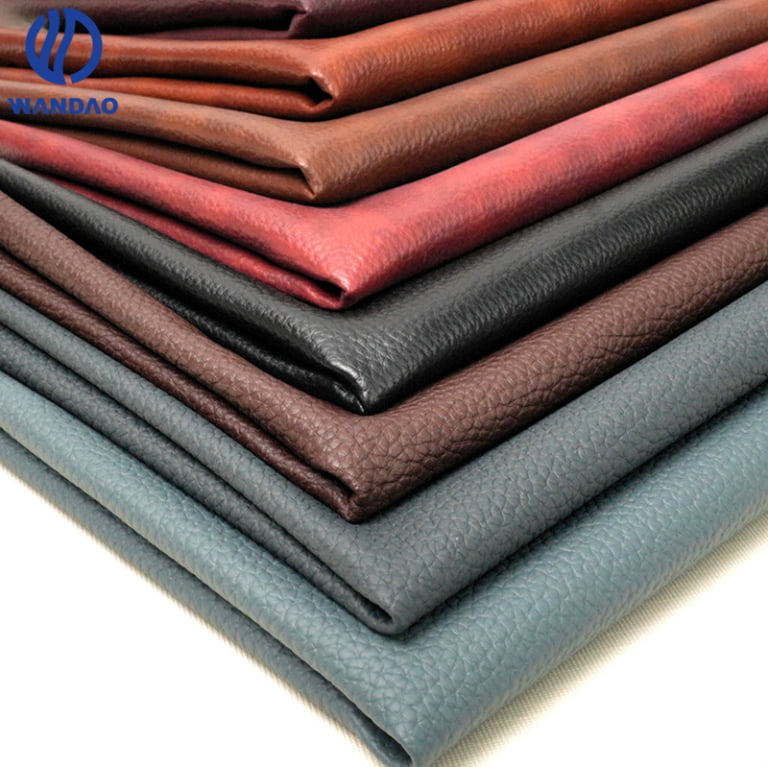
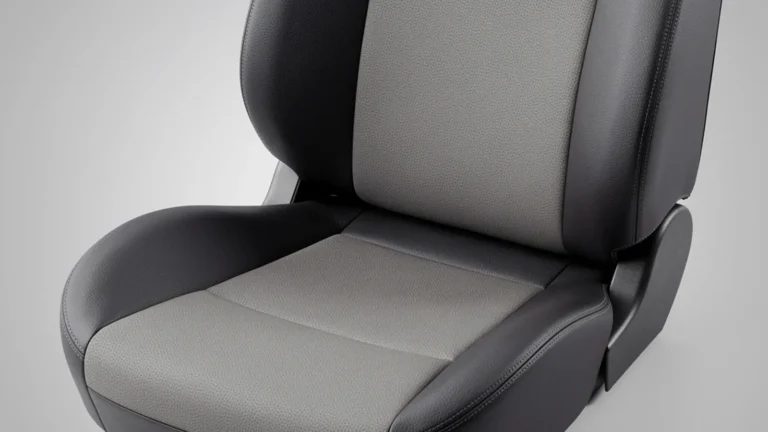
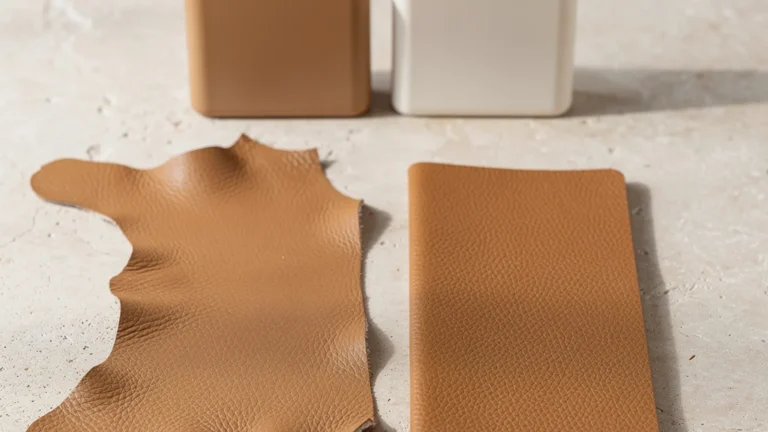
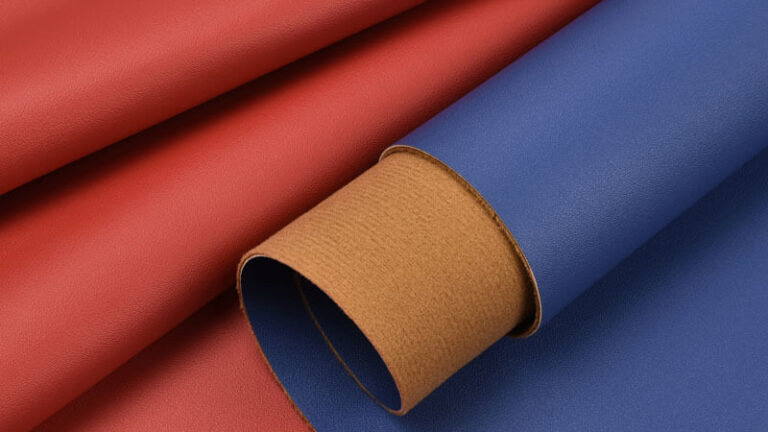
Artificial leather for furniture refers to a multilayer composite built from a polymer face layer bonded to a textile backing, not a single homogeneous sheet of plastic. The two dominant polymer families are PVC (polyvinyl chloride) and PU (polyurethane), and the choice between them shapes almost everything downstream — cost, hand-feel, durability, and compliance burden.
On the market side, PVC still carries real commercial weight. Fortune Business Insights puts the global synthetic leather market at USD 46.75 billion in 2025, projecting growth to USD 135.03 billion by 2034, and states that PVC-based synthetic leather accounts for nearly 35% of that global market, with furniture and upholstery named as core end uses [Fortune Business Insights]. Grand View Research sizes the broader synthetic leather category at USD 41.05 billion in 2024 and USD 45.53 billion in 2025, forecasting a 12.33% CAGR through 2033, with the PVC segment specifically growing at 19.86% CAGR [Grand View Research]. A PVC-specific report puts the segment at USD 13.08–14.52 billion in 2024, with upholstery representing the single largest application at 43.8% of that market [Future Market Report].
Structurally, a typical PVC furniture leather is built in layers: a face layer (PVC resin, plasticizers, stabilizers, fillers) for surface strength and flex; often a foamed PVC layer beneath it for cushioning and softness; an adhesive layer, frequently polyurethane-based; and a textile backing — polyester, cotton, non-woven, or knitted fabric — that carries tear strength and seam performance [ScienceDirect — Polymer Composites]. PU leather follows a similar backing-plus-coating logic but replaces the PVC face with a polyurethane skin, which is thinner and generally softer but more sensitive to hydrolysis over time [ACS Applied Polymer Materials].
The backing matters more than most buyers assume. A weak or low-grade backing fabric — cheap recycled fiber, loose knits — can cause seam slippage and tearing even when the coating itself is well formulated, and mismatched backing-to-process combinations (direct coating vs. transfer coating vs. calendering) can weaken adhesion and trigger delamination later [Textile World — Coated Fabrics Guide]. In other words, judging a sample by the surface alone tells you almost nothing about what’s holding it together.
Action: When you request a datasheet, ask specifically for backing fabric type and weight (g/m²), not just face-layer thickness — it’s the more predictive number for long-term seam and tear performance.
2. The Chemistry Inside: Plasticizers, Stabilizers, and Additives
The additive package refers to the set of non-polymer chemicals — plasticizers, heat stabilizers, UV absorbers, fillers — blended into the PVC resin to make it flexible, colorfast, and resistant to breakdown; it is arguably the single biggest variable separating a leather that lasts 2 years from one that lasts 10.
Flexible PVC needs plasticizers because raw PVC resin is rigid. These are typically phthalates (DEHP, DINP, DOTP) or increasingly non-phthalate alternatives, held in the polymer matrix by weak secondary bonding rather than chemical bonds — which means they are thermodynamically free to migrate to the surface, volatilize, or diffuse into adjacent materials over time [Nature — Polymer Science]. That migration is the root cause of most PVC leather failure: as plasticizer content drops, the glass transition temperature rises, and the material hardens, loses elongation, and starts micro-cracking — visible on furniture as stiffening, surface crazing, and eventually flaking [ScienceDirect — Polymer Degradation and Stability]. Higher-durability formulations now favor lower-volatility plasticizers like DINP and DOTP over older DOP grades specifically because they migrate more slowly [European Chemicals Agency — Plasticizers Guidelines].
Stabilizers do a different job. Calcium-zinc (Ca-Zn) composite stabilizers scavenge the hydrochloric acid released as PVC degrades under heat, delaying dehydrochlorination and the yellowing that comes with it [Journal of Vinyl and Additive Technology]. UV absorbers (commonly benzophenone or benzotriazole compounds) and HALS (hindered amine light stabilizers) absorb or quench the radicals generated by UV exposure, which is why two PVC leathers with identical resin can age at completely different rates depending on whether — and how much — UV package was added [BASF — Polymer Additives Technical Guide]. One industrial formulation example cited in supplier technical literature combines high-polymerization PVC resin, DINP/DOTP plasticizers, Ca-Zn stabilizers, nano-CaCO₃ filler, and a UV-curable surface coating, and reports QUV 500-hour exposure with color shift (ΔE) under 3 and tensile strength above 12 MPa [ASTM D4329 — Standard Practice for Fluorescent UV Exposure of Plastics] — numbers worth asking your own supplier to match or beat.
I’ve sat down with cross-sections of PVC leather samples from three different suppliers, cut with a utility knife under a loupe, just to see what “0.9mm PVC leather” actually contains layer by layer. The differences were obvious even without lab equipment: one sample had a visibly thicker, denser foam layer with a tight, even cell structure, while a cheaper sample from a different factory had a thin, uneven foam layer and a backing fabric so loose you could see daylight through it when held up to a window. Neither datasheet mentioned foam density or backing weave count — both just said “0.9mm total thickness.” That’s the trap: total thickness is a marketing number, not a performance number, and it tells you almost nothing about what’s inside.
Action: Don’t accept “UV stabilized” or “anti-aging” as unqualified claims — ask for the specific additive class (Ca-Zn vs. organotin stabilizer, HALS vs. UV absorber) and QUV or accelerated weathering test results with hours and ΔE reported.
Request a Leather Quote or Sample
Send us your application, texture, backing, thickness and quantity. Our team will help match the right leather option.
3. From Resin to Roll: How the Material Is Actually Manufactured
Manufacturing process refers to the sequence that turns PVC resin, plasticizer, and backing fabric into a finished roll of leather-like sheet — and the process chosen (calendering, direct coating, or transfer coating) directly determines surface consistency, adhesion strength, and which defects are likely to show up later.
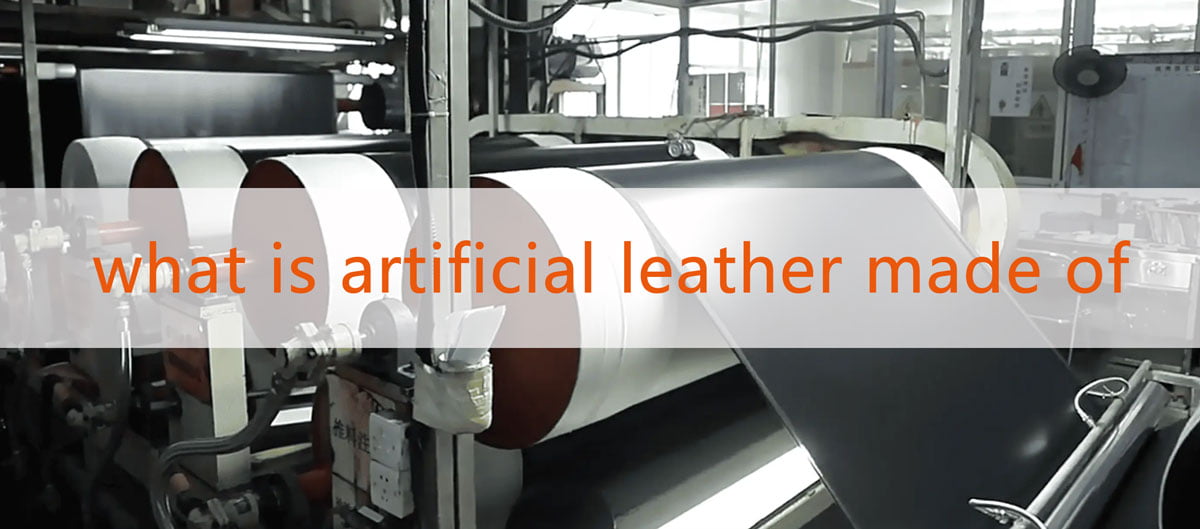
In calendering, PVC resin, plasticizers, stabilizers, and fillers are mixed, then extruded and passed through heated rollers to form a continuous sheet, which is subsequently embossed for grain pattern and laminated to backing fabric [Textile World — Calendering and Coating Processes]. Precise control of roll temperature, pressure, and speed is what determines structural integrity and long-term wear resistance — sloppy calendering shows up later as uneven thickness or weak spots that crack first. Direct and transfer coating processes instead apply the PVC paste directly onto the backing (direct) or onto a release paper that’s later transferred onto the backing (transfer), which allows finer control over face-layer and topcoat thickness to balance UV shielding against flexibility [IRJET — International Research Journal of Engineering and Technology]. A growing number of suppliers now add a thin UV-curable surface coating — typically 0.01–0.03mm — after embossing specifically to improve color retention and gloss stability under accelerated weathering [ASTM D4329 — Standard Practice for Fluorescent UV Exposure of Plastics].
The process-substrate match matters as much as the process itself. Certain coating methods are only compatible with certain backing types, and forcing a low-cost process onto an unsuitable substrate produces pinholes, uneven foaming, or poor bond strength between coating and fabric [ScienceDirect — Coated Textiles: Principles and Applications]. This is why two suppliers quoting “the same” 0.8mm PVC leather at different prices are often not making a comparable product — one may be running calendered PVC on a knit backing at higher line speed, while the other runs transfer coating on woven polyester with tighter process control.
China’s position as the dominant global production base for furniture-grade PVC leather is largely a function of this process infrastructure. The country has one of the world’s largest PVC resin industries, and manufacturing clusters in Guangdong, Zhejiang, and Jiangsu combine PVC resin production, coating and lamination lines, embossing, backing fabric supply, and finishing within the same regional ecosystem [International Trade Administration — China’s Chemical Industry Report]. That vertical integration — rather than labor cost alone — is now the primary driver of China’s cost advantage, since it reduces logistics overhead and lets factories amortize machinery and tooling investment across huge volumes [United Nations Industrial Development Organization — Industrial Development Report]. Standard furniture-grade thickness ranges from roughly 0.4mm to 2.0mm with widths around 54–55 inches, and most clusters support fast custom development of new embossing textures and colorways for private-label buyers [ISO 20870 — Leather — Physical and Mechanical Tests].
Action: Before approving a supplier, ask which coating process they run (direct, transfer, or calendered) and request a cross-section photo or physical cut sample — a five-minute check that surfaces backing-quality problems no datasheet will disclose on its own.
4. How Composition Translates Into Real-World Lifespan
Service life, in this context, refers to how long the material resists cracking, peeling, or delamination under normal seating use before it needs replacement — and composition is the strongest single predictor of where a given product lands on that range.
The spread is wide. Thin, low-grade PVC (around 0.6mm, roughly 15,000 Martindale cycles) frequently shows visible peeling within 1–2 years, especially in hot or high-UV settings [ScienceDirect — Polymer Testing Journal]. Mid- to high-grade PVC engineered specifically for furniture — the kind with a proper additive package and controlled process — typically holds up 6–10 years, with well-maintained indoor cases reaching 10–20 years [ASTM D4726 — Standard Specification for PVC Sheet Floor Covering]. PU leather shows a similar composition-driven spread: standard PU sofas commonly last 3–5 years, higher-grade PU reaches 5–7 years, and microfiber PU with a UV topcoat can hit 7–10 years indoors [Textile Research Journal]. Genuine leather, for comparison, typically lasts 8–15 years in contract environments and 10–20+ years residentially when well maintained [Leather International Magazine — Industry Standards] — the benchmark most buyers are implicitly measuring artificial leather against.
Abrasion resistance testing gives you a composition-linked number you can actually specify against. Martindale cycle ratings are grouped by use intensity: under 10,000 cycles for decorative pieces, 15,000–25,000 for general domestic use, 25,000–40,000 for heavy domestic or light contract, and 40,000+ for contract-grade hospitality furniture, with severe-contract applications like healthcare and transport seating specified at 50,000+ cycles [ISO 12947 — Textiles — Determination of Abrasion Resistance by Martindale Method]. High-performance contract-grade PVC and faux leathers are now routinely marketed above 100,000 cycles, some exceeding 200,000 [SATRA Technology — Abrasion Test Standards for Upholstery]. In North America, the equivalent Wyzenbeek standard (ASTM D4157) uses double rubs rather than Martindale cycles, and the two are not directly convertible — so a spec sheet quoting only one number for a global buying program is incomplete [ASTM D4157 — Standard Test Method for Abrasion Resistance of Textile Fabrics].
The failure mechanism itself is composition-specific, not random. It’s typically plasticizer migration causing embrittlement, PVC dehydrochlorination causing yellowing, and hydrolysis of PU foam or adhesive layers causing delamination — and these three processes accelerate each other: acid released by PVC breakdown can catalyze PU hydrolysis in the same composite, coupling the two failure modes together [ScienceDirect — Polymer Degradation and Stability]. Heat and UV are the biggest accelerants — elevated temperature dramatically increases plasticizer diffusion rates, and continuous sun exposure (like automotive interiors, or a sofa near a bright window) drives localized yellowing and cracking faster than lab-average estimates would suggest [Journal of Applied Polymer Science].
Action: Match Martindale/Wyzenbeek rating to actual use intensity rather than defaulting to the cheapest compliant number — a 25,000-cycle PVC leather sold for a hospitality lobby chair is a false economy against a genuine 40,000+ cycle contract-grade product.
5. The Standards That Actually Govern What Goes Into the Material
Compliance standards, in the PVC leather context, refer to the regulatory and product-quality frameworks that dictate which raw materials and additive levels are legally or commercially permitted — and they differ meaningfully by market, so a product compliant for the EU is not automatically compliant for China or California.
REACH (EU) is a chemical-restriction framework rather than a single test, driving screening for SVHCs including phthalate plasticizers (DEHP, DBP, BBP, DINP, DIDP, DNOP), heavy metals (lead, cadmium, mercury, hexavalent chromium), organotin compounds, azo dyes, and PAHs [European Chemicals Agency — REACH Regulation]. Oeko-Tex Standard 100 and the Leather Standard focus on harmful-substance limits relevant to skin contact — formaldehyde, heavy metals, organotin compounds, VOCs, azo dyes, chlorinated phenols, and phthalates — and Product Class II/III certification is commonly cited in furniture-leather marketing [Oeko-Tex — Standard 100 Official Documentation]. Flammability adds another layer: California TB117-2013 tests smolder resistance of cover materials via a cigarette-type ignition source, measuring char length and after-flame/after-glow time [California Bureau of Household Goods and Furnishings — Technical Bulletin 117-2013], while the UK’s BS 5852 uses a graded sequence of cigarette, gas-flame, and wooden-crib ignition sources, with products often marketed as passing “Source 0 & 1” [BSI Group — BS 5852:2006 Standard].
China runs its own dedicated standards stack. GB/T 8948, recently revised (GB/T 8948-2025 replacing the 2008 version), is the core product standard for PVC artificial leather, covering tensile and tear strength, PVC-to-backing adhesion/peel strength, Martindale abrasion, VOC-related volatile mass loss, odor, hydrolysis and yellowing resistance, seam strength and fatigue, and color fastness [Standardization Administration of China — GB/T 8948-2025]. GB 21550-2008 restricts hazardous substances specifically: vinyl chloride monomer capped at ≤5 mg/kg, soluble lead at ≤90 mg/kg, soluble cadmium at ≤75 mg/kg, and defined limits on other volatile matter [Standardization Administration of China — GB 21550-2008]. GB/T 16799-2018 covers furniture leather more broadly, including thickness/appearance grading, tensile and flex properties, and color fastness to rubbing and light [Standardization Administration of China — GB/T 16799-2018].
For a furniture buyer running a global supply chain, the practical implication is that “certified” needs a qualifier — certified to which standard, tested by which lab, on which specific SKU. A product built to pass GB 21550 heavy-metal limits does not automatically clear REACH’s broader SVHC list, and a Martindale rating on a datasheet doesn’t tell you whether the product has been tested against Wyzenbeek for a North American program.
Action: Request the actual test report (not just a certificate summary) tied to the specific SKU and production batch you’re buying — standard names on a sales sheet are not proof of compliance for your specific destination market.
FAQ
Q: Is artificial leather the same thing as PVC leather?
A: No. “Artificial leather” (or “synthetic leather,” “faux leather”) is the umbrella category. PVC leather is one type within it; PU leather, microfiber PU, and bio-based leathers are others. They share the general concept — a polymer face layer bonded to a textile backing — but differ significantly in composition, feel, and durability.
Q: What’s the actual difference between PVC and PU leather in terms of materials?
A: PVC leather uses polyvinyl chloride resin plasticized with compounds like DINP or DOTP, typically layered over a foamed PVC cushioning layer and a textile backing. PU leather uses a thinner polyurethane skin coated or laminated onto backing fabric, generally without the thick PVC foam layer, giving it a softer, lighter hand-feel but different aging behavior (hydrolysis-driven rather than plasticizer-migration-driven).
Q: Does thicker PVC leather always mean better quality?
A: No. Total thickness is a poor proxy for performance. Foam density, backing fabric weight and weave, additive package, and process control matter more than raw millimeters. Two products both labeled “0.9mm” can have very different foam structures and backing quality underneath the number.
Q: How can I tell if a PVC leather sample will resist cracking before I place a large order?
A: Ask for Martindale (ISO 12947) or Wyzenbeek (ASTM D4157) abrasion data, plus accelerated weathering results (QUV hours and color shift/ΔE) if the application involves UV exposure. A cut cross-section under a loupe also reveals foam and backing quality that thickness specs alone won’t show.
Q: Are phthalate plasticizers in PVC leather actually restricted?
A: Some are, depending on destination market. REACH restricts specific phthalates (DEHP, DBP, BBP, DINP, DIDP, DNOP above certain thresholds) for EU sales, and China’s GB 21550 caps vinyl chloride monomer and heavy metals. Compliance is market-specific — a product cleared for one region isn’t automatically cleared for another.
Q: Why is so much furniture-grade PVC leather sourced from China specifically?
A: Primarily vertical integration: large domestic PVC resin capacity combined with regional clusters (Guangdong, Zhejiang, Jiangsu) that house resin supply, coating/lamination, embossing, and backing fabric production in one ecosystem, reducing logistics overhead and supporting flexible, custom small-to-mid batch orders.
This article is for materials-education purposes and does not endorse any specific manufacturer or supplier.