
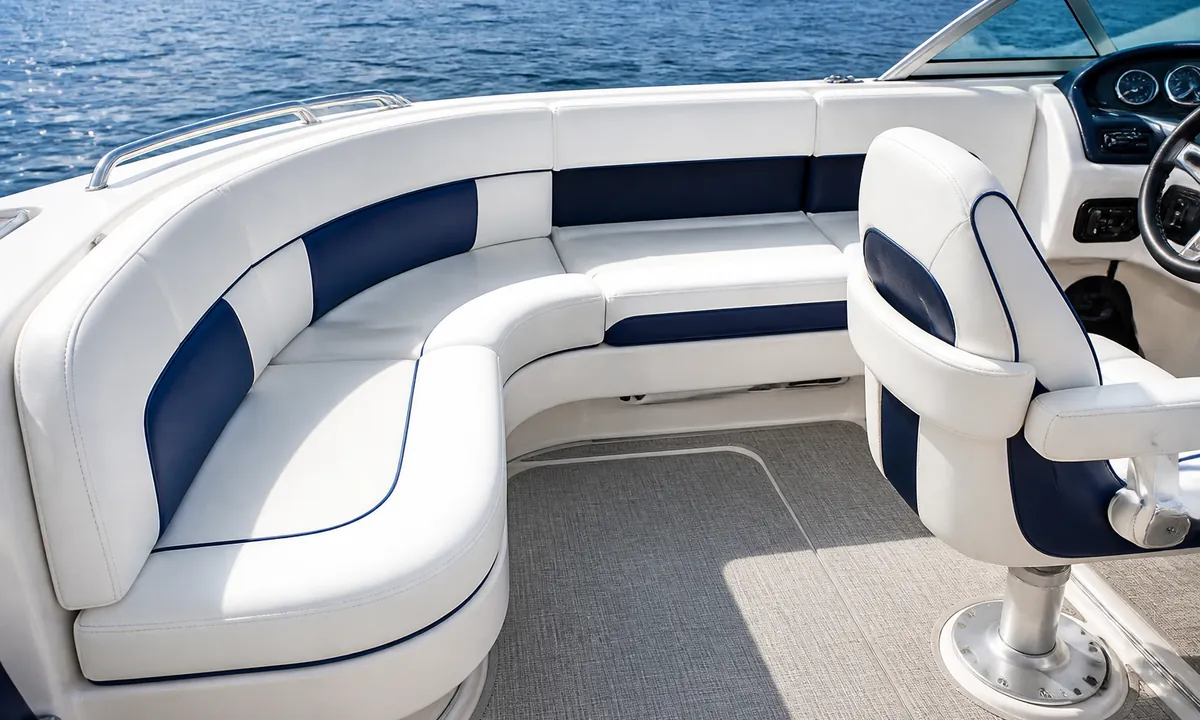
Construction selection for boat upholstery
PVC Leather for Marine Upholstery
A fixed cockpit seat, removable cushion and enclosed cabin panel need different upholstery decisions. Wandao Leather helps B2B buyers evaluate PVC marine vinyl around the actual boat component: its exposure, foam assembly, seam design, backing, finish and approval requirement. We review the brief, match a feasible construction and coordinate samples with a suitable production partner. The term marine vinyl alone does not establish that a material meets your project specification.
Define the component first
Separate exposure zones before comparing constructions
Describe direct sun, intermittent splash, cleaning and covered storage separately. A label such as outdoor use does not explain the full contact or assembly condition.
Where one vessel uses several surfaces, identify each zone on a drawing or photograph. State whether panels must share one visual master even when their backing or thickness differs. This prevents a single attractive swatch from becoming an unintended specification for the entire boat.
Fixed cockpit seating
Review body contact, curved foam, seam placement and whether moisture can remain at joints. Include how the seat is covered or stored between uses.
Removable cushions
State how covers are fitted, removed, cleaned and dried. Zippers, underside construction and repeated handling matter alongside the visible PVC face.
Bolsters and leaning pads
Identify concentrated rubbing, tight radii and stressed attachment areas. Approve the material on representative padding rather than judging an unstressed flat swatch.
Enclosed cabin panels
Specify wrapping, lamination or decorative use, ventilation and cleaning expectations. An interior panel brief should not automatically inherit an exposed-seat construction.
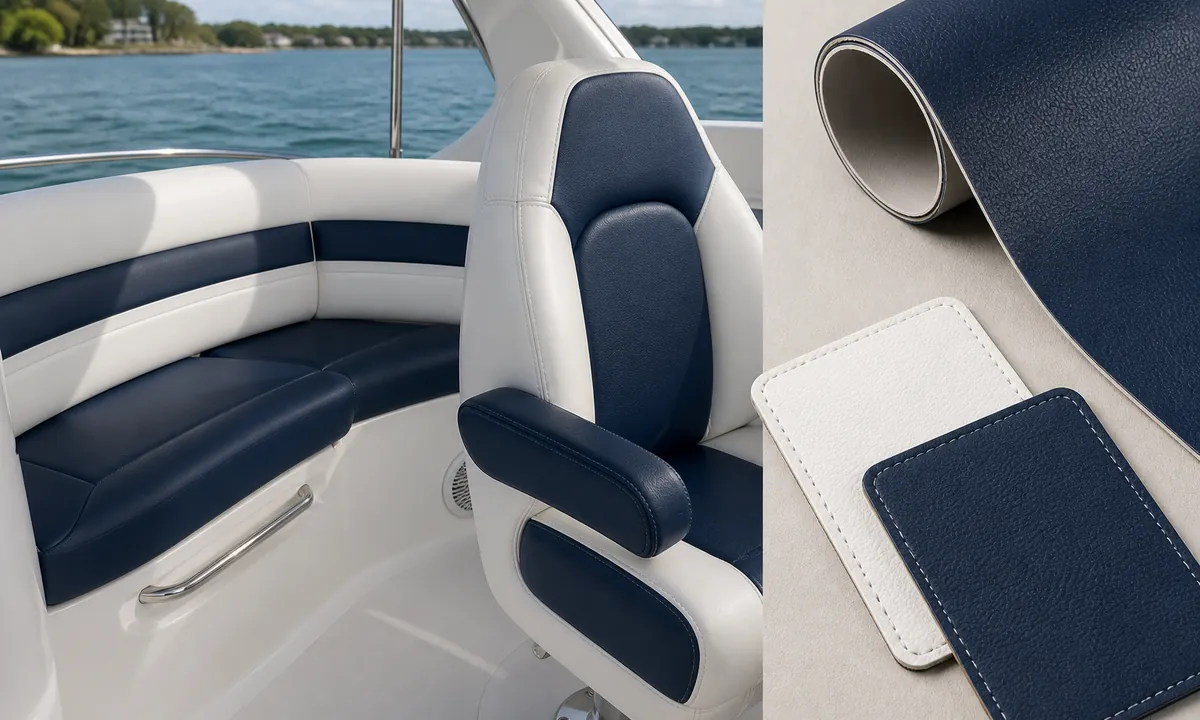
Boat seating context for reviewing upholstery construction. Confirm the surface, backing and assembled cushion against the project requirements.
The complete PVC construction
Review what supports the surface
PVC upholstery combines a surface system with a supporting construction. Similar grain and colour can conceal differences in firmness, stretch and sewing behaviour.
Topcoat and finish
Approve gloss, feel and the response to the proposed cleaners, skin products and contact conditions. A finish description is not a substitute for evaluation.
Compound, foam and backing
Confirm compact or foamed structure, total thickness, textile backing and stretch direction. The combination must support the component's sewing, shaping and attachment method.
The upholstery assembly
Review foam, thread, seams, zippers and adhesives with the material. Surface water resistance does not establish that a finished cushion or stitched cover is sealed.
A useful marine PVC RFQ
Send a component specification, not only a colour request
The details below help distinguish an available sample direction from a custom development request. Mark any unanswered item so it can be resolved before quotation.
For replacement work, label the old cover's orientation, seam position and foam contact face. A worn cover can explain assembly constraints, but its aged colour and stiffness should not automatically become the new approval standard.
| Specification item | What to provide | What it controls |
|---|---|---|
| Vessel zone and component | Cabin panel, covered cockpit seat, removable cushion or exposed bolster. | Exposure and contact priorities. |
| Use, cleaning and storage | Sun, splash, moisture retention, cleaners and cover or storage routine. | A relevant finish and evaluation plan. |
| Pattern and assembly | Panel dimensions, foam shape, seams, fastening and lamination method. | Material fit on the actual cover or panel. |
| PVC structure and feel | Thickness, compact or foamed profile, firmness and physical reference. | Appearance, handling and component fit. |
| Backing and stretch | Backing type, stretch direction and sewing or wrapping trial needs. | Seam support and behaviour around curves. |
| Colour, grain and finish | Approved master, adjacent materials, grain scale and gloss reference. | Consistent visual approval across panels. |
| Order and cutting context | Usable width, trial quantity, estimated volume and destination market. | Yield review and a realistic sourcing route. |
| Named methods and acceptance | Required tests, conditioning, target values and approval documents. | Results that can be assessed against the buyer's requirement. |
Sample qualification
Approve a sewn panel and an agreed test plan
A useful trial checks how the proposed construction behaves after processing. Agree the sequence and acceptance points with the team responsible for the finished upholstery.
1. Cut and sew a representative panel
Use the intended grain direction, thread, seam allowance and upholstery method. Inspect needle marks, seam opening and local stress after fitting over the chosen foam shape.
2. Review the maintenance contact
Name cleaners and relevant skin-product contact. Compare the conditioned sample with a retained reference for finish change, colour transfer and appearance.
3. Match reports to the request
Where UV, mildew, cold, flame or abrasion evaluation is required, check the exact method, sample construction, conditioning and target. Different methods do not produce interchangeable approval evidence.
4. Retain the approved reference
Identify the approved swatch and panel, construction details and agreed inspection points. Confirm changes before transferring the reference into bulk communication.
When reviewing a report, check which construction and sample reference it identifies, what was conditioned or exposed, and which acceptance point was assessed. If a finish, backing or thickness changes after testing, ask whether the evidence still represents the proposed order. Keep material approval and finished-cushion approval clearly recorded.
Custom sampling and coordination
Develop around a confirmed upholstery brief
Custom discussion can cover colour, embossing, gloss, top finish, backing, thickness and hand feel. Send a physical master where possible, together with the component drawing or a representative cover. Reproducing appearance from another source still requires new sample approval.
Wandao operates as a material supply and factory-matching partner. We review feasibility, coordinate an appropriate production route and communicate the approved reference. Minimum quantities, sample timing and quotation depend on that route; they are confirmed after the specification is reviewed.
For repeat projects, retain the physical master with its reference identifier and agreed inspection notes. State how proposed substitutions or finish changes should be reviewed, so a later order is not approved solely from an old colour name.
Related sourcing paths
Keep the material route and the application brief connected
Use the PVC leather material guide for construction and customization context. The marine vinyl fabric selection guide supports earlier-stage comparison, while the marine upholstery material hub helps define exposure zones and alternative routes.
The PVC product collection shows candidate constructions for evaluation. A product photograph or material-category assignment is not marine qualification; confirm the proposed construction against your boat upholstery brief.
Before requesting samples
Read the guidance relevant to your approval decision
- Marine leather replacement for boat seats
Prepare the replacement-cover and component questions before selecting a surface.
- Marine vinyl versus faux leather
Separate material names from the construction and exposure requirement.
- PVC leather for outdoor furniture
Review outdoor sampling questions without assuming that furniture and boat-seat approvals are equivalent.
Buyer questions
PVC marine upholstery FAQ
Is PVC leather the same as marine vinyl?
Marine vinyl commonly describes a PVC-based upholstery route, but the name does not specify one formulation. Confirm the actual surface, backing, thickness, finish and project-specific approval evidence rather than treating the label as a grade.
Can furniture PVC be transferred directly to a boat seat?
Do not assume an existing furniture approval transfers to marine use. Review sunlight, moisture, maintenance, storage and component stress, then evaluate the proposed construction and sewn assembly against the boat project's requirements.
Does a water-resistant surface make the cushion waterproof?
A surface assessment does not establish a sealed cushion. Stitch holes, seams, zippers, underside fabric, foam and drainage influence the finished assembly. Evaluate the completed cover and cushion design for the intended exposure.
Which test information should accompany the inquiry?
Provide the buyer's named methods, target values and conditioning requirements for any specified UV, mildew, cold, flame, abrasion or cleaning evaluation. Identify the component and market so a generic report is not mistaken for project approval.
What sample is most useful before a bulk order?
Begin with swatches for colour and construction review, then trial a representative sewn or wrapped panel over the intended substrate. Retain the approved physical reference and document the construction and acceptance points used for bulk communication.
Can colour, grain and backing be customized together?
They can be discussed as one development brief. Feasibility depends on the production route, component requirement and quantity. Wandao reviews the request before coordinating samples; a matching appearance does not remove the need for construction and application approval.
Are products in the PVC collection already approved for marine use?
The collection is a starting point for material discussion, not a list of marine-approved grades. Ask which candidate construction can be evaluated for your brief and confirm the relevant sample, test evidence and written approval before ordering.
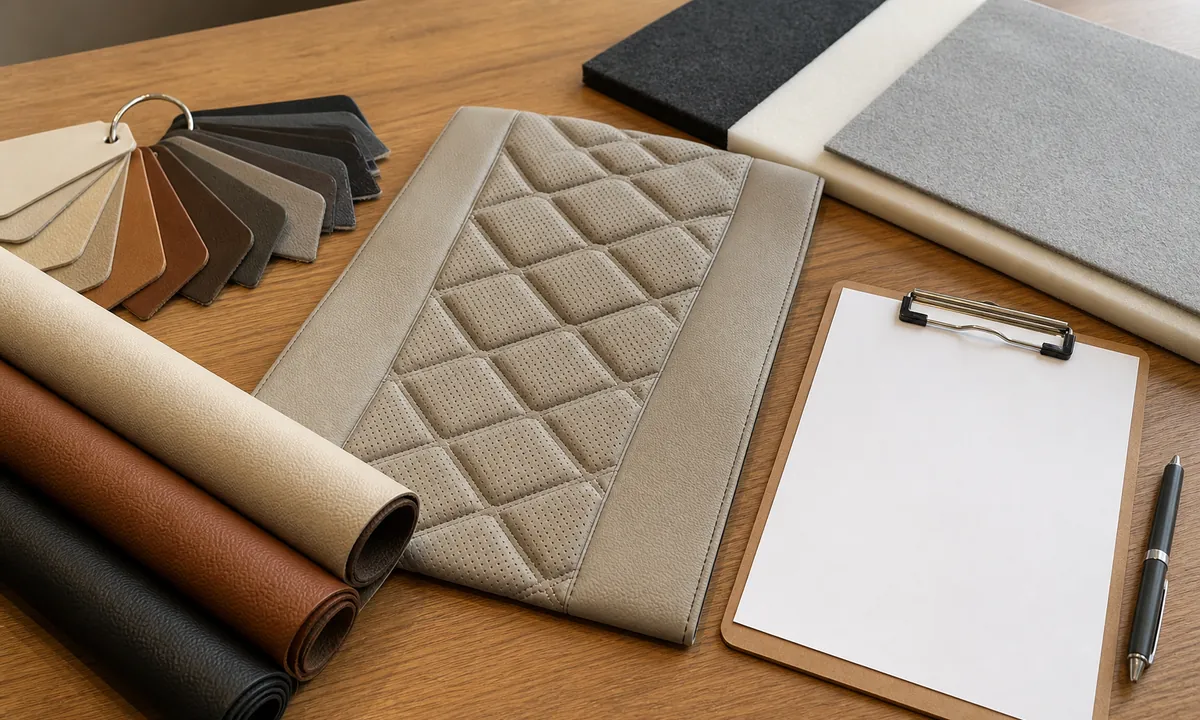
Component review, samples and quotation
Send the boat component and marine upholstery brief
Share the vessel zone, component photos or drawing, exposure and maintenance conditions, physical reference, construction preferences, usable width, quantity and named test requirements. We can then discuss a suitable sampling direction and the information needed for quotation.

