Is PU Leather Toxic? Start With the Supplied Grade
Begin with an identifiable sample, not a debate about every material sold as PU. When reviewing PU leather options, request a grade code and a description of the supplied construction. Ask which finish, backing, color and additional treatments belong to that code. If another manufacturer adds adhesive, foam or lining, record that separately.
This is an evidence boundary: a report about an input chemical, a coated roll and a completed sofa answers different questions. Treating them as interchangeable can produce either unjustified alarm or unjustified reassurance.
Write the intended use before requesting tests. A decorative bag panel, a garment surface and an indoor seating cover do not have identical contact or exposure scenarios. State the destination market, user group, expected contact and any retailer requirements. Then ask a qualified laboratory or compliance specialist to identify the relevant assessment. This guide is a procurement framework, not a medical diagnosis or an all-market compliance opinion.
What a Smell Can—and Cannot—Tell You
Odor is worth recording, but it is not a calibrated toxicity measurement. ATSDR explains that people can detect some substances before concentrations become harmful, while sensitivity and the effects of exposure vary. That does not make every noticeable odor harmless, or an odorless material safe. See ATSDR’s environmental odor guidance.
For incoming samples, document when the package was opened, how it was stored and which component has the noticeable odor. Keep the packaging and batch identification. Avoid turning an informal comparison between two swatches into a safety ranking.
If an odor is unexpected or a complaint arises, pause the relevant approval and request an investigation. Do not assume that leaving a sample out until its smell fades resolves the underlying question. Equally, do not claim that the smell identifies a particular chemical without analysis. Actual health complaints need appropriate professional assessment, not a supplier’s visual or smell-based opinion.
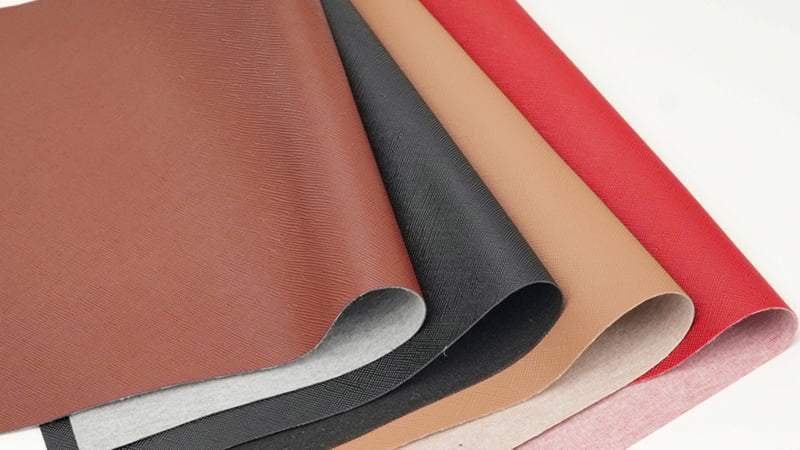
Separate Factory Chemical Information From Finished-Product Evidence
A safety data sheet is useful when it describes the substance or mixture being handled. EU-OSHA’s Safety Data Sheet overview explains its role in communicating hazards and handling information; it also distinguishes chemical supplies from articles under the European framework.
A resin SDS therefore should not be read as an emissions test for an upholstered chair. Conversely, a finished-material report does not establish safe working conditions for every manufacturing operation. Ask what the document describes before interpreting its warnings or conclusions.
Do not automatically reject a finished article simply because its supplier has not provided a conventional chemical SDS. Ask which product information and obligations apply to that supply. The answer depends on the product and jurisdiction; the document’s title alone is not a compliance decision.
Useful questions include: Is this sheet for the coating input, an adhesive, or the delivered material? Does its identification match the purchase specification? Which separate report evaluates the finished sample? This keeps production chemical controls and finished-product acceptance connected without confusing their roles.
Related PU Leather Products
PU Leather for Furniture
PU Leather For bag
Ask Which Chemical Question the Report Actually Answers
EPA describes VOCs as gases released from certain solids or liquids and explains that effects depend on the substance and exposure conditions. Its indoor-air guidance includes furnishings and adhesives among potential indoor sources. It does not classify every PU leather grade as either hazardous or harmless.
Use the following distinctions when commissioning evidence. The laboratory should confirm the appropriate method and interpretation; this table is not a prescribed test package.
| Buyer question | Evidence to discuss with the laboratory | What not to infer |
|---|---|---|
| Is a named substance present above an applicable limit? | Analysis of the identified finished sample for the specified substance | That every unmeasured substance was assessed |
| What does the sample release into air under defined conditions? | An appropriate emissions assessment with stated conditions and reporting scope | That a substance-content result predicts every indoor exposure |
| What is relevant to the intended contact scenario? | A use-specific assessment, including extraction or migration testing if applicable | That an indoor-air result answers every skin-contact question |
| Does the assembled product meet the buyer’s specification? | Evidence covering the relevant final construction | That a cover-material report includes later-added components |
Ask for the underlying result, units, method, reporting limit and acceptance criterion—not just a pass stamp. Where a result is reported as not detected, check the detection or reporting limit. Do not translate it into a claim that absolutely none of the substance exists.
For PU furniture upholstery, agree who owns the final assembly assessment before ordering the cover material. The material supplier’s evidence and the furniture maker’s evidence should have clearly defined boundaries.
Read “Low VOC,” “Water-Based” and “Non-Toxic” Carefully
EPA cautions that some low-VOC terminology relates to outdoor air-pollution definitions rather than a complete indoor-health assessment. It also notes that a total VOC figure can conceal differences between individual compounds. A label or total alone is therefore insufficient for a broad safety conclusion. See EPA’s explanation of VOC regulation and household products.
Ask what “low” refers to, which method was used and what criteria support the claim. A named certification should be checked for its actual product scope, validity and conditions rather than treated as a universal approval.
Water-based describes a process or formulation characteristic; it does not, by itself, answer every finished-product chemical question. Likewise, a free-of claim needs an exact substance identity and a defined basis. If a supplier says “DMF-free,” ask which chemical that abbreviation means in its documentation, how the claim is defined and what analysis supports it. Do not assume this single claim covers all other substances or emissions.
The FTC’s Green Guides summary says non-toxic claims need reliable scientific substantiation addressing people and the environment. For a buyer, narrowly stated test evidence is more useful than copying an unqualified “non-toxic” phrase into a product listing.
Review the Report Before Approving the Sample
An impressive laboratory name does not resolve a mismatch between the report and the order. Work through the identification first, then the technical results.
Match the sample to the purchase
Check the supplier, grade, color, finish, backing and sample description. Look at the photographs where available. Ask whether the report covers the delivered construction or a different development sample. If several colors are grouped together, request the rationale for that grouping rather than assuming that every color is included.
Check the tested scope
Read the substance list and method, not only the conclusion page. Confirm which market, buyer specification or assessment criteria the result is intended to address. Ask whether the document is complete and whether the laboratory can verify its authenticity. A report date is relevant to traceability, but age alone does not answer whether the current formulation matches the tested one.
Record what remains outside the report
List any unassessed layer or later processing step. For a bag, that might mean asking about the assembled lining and adhesive rather than assuming the outer panel is the entire product. For a garment, describe the intended skin-contact arrangement. These are questions for the assessment plan, not assertions that those components are unsafe.
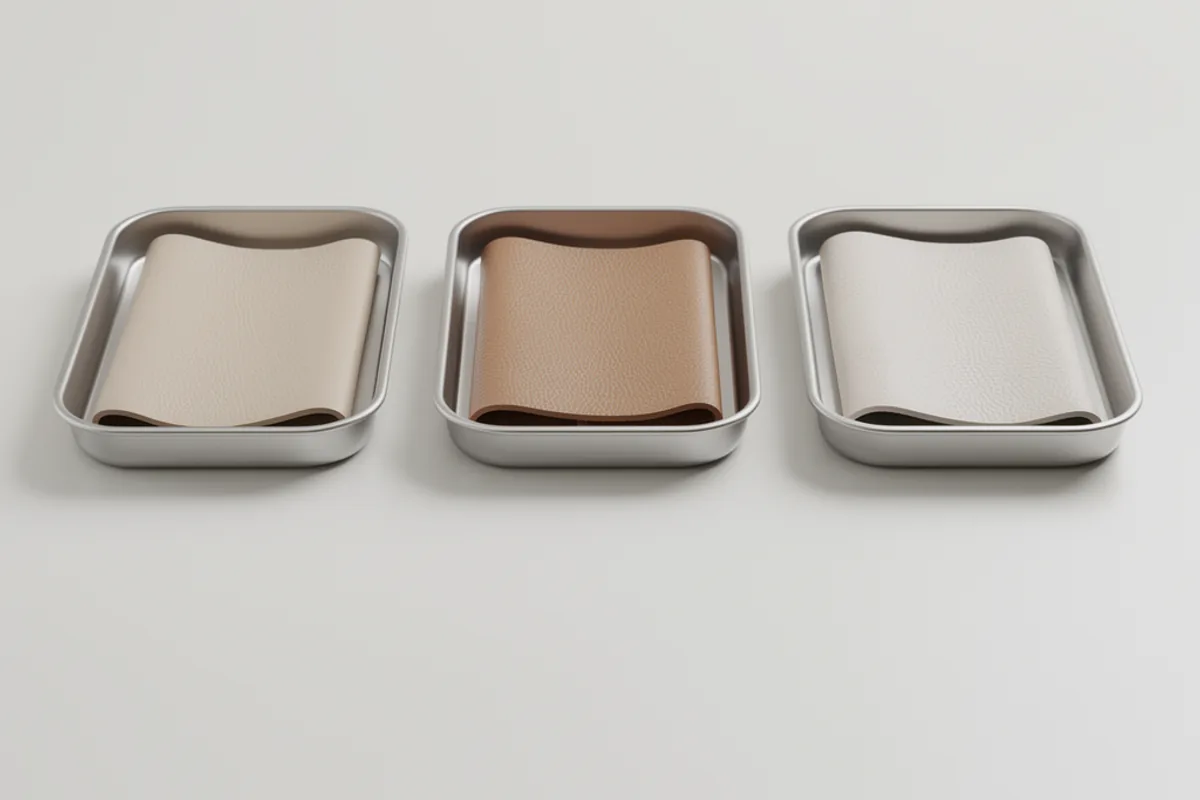
Turn the Evidence Into a Clear Purchasing Decision
Consider a hypothetical upholstery project. A supplier provides a passing substance-content report for a black coated fabric, but the buyer selects an ivory finish and the furniture factory adds a new backing adhesive. The report is not worthless. It is simply not enough, by itself, to close the revised approval.
The next step is to document the differences and ask the responsible laboratory or specialist which additional evidence is needed. Do not automatically demand every available test, and do not automatically extend the earlier result. Resolve the gap that matters to the specified use.
Related PU Leather Articles
Microfiber leather vs PU leather
What is PU leather
Use distinct purchasing outcomes:
- Approved for the defined scope: the responsible reviewer accepts the evidence for the identified material, use and specification.
- Development use only: samples may continue through design work, but chemical approval remains open.
- Hold pending clarification: sample identity, applicable criteria or results cannot yet be resolved.
Record the reviewer and reasoning. Avoid a vague “safe” checkbox that hides what was actually assessed. A narrowly written approval is easier to maintain when the project changes.
Build Chemical Evidence Into the RFQ and Change Control
Send suppliers an evidence request alongside color and hand-feel requirements. Include the intended application, destination market, grade identification and any buyer-specific chemical standard. Ask them to identify available finished-material reports, the covered colors and constructions, and the scope of any emissions claim.
Before bulk supply, agree how formulation, finish, backing, colorant or processing changes will be communicated. Define who decides whether a change needs document review, additional testing or renewed approval. This is a recommended control process, not a claim that every change necessarily creates a hazard.
Keep an approved reference and the corresponding report package together. If a production sample differs, investigate against that record. Repeatedly asking whether “PU is toxic” is less useful than being able to identify exactly what was approved and what changed.
To discuss a material brief, contact Wandaoleather with the application, destination market and required evidence. Confirm the available documentation for the proposed grade before making any safety or compliance claim about the finished product.
Frequently Asked Questions
Is PU leather safe for indoor furniture?
The name PU leather is not enough to establish suitability. Review the identified grade, its intended indoor use and relevant chemical or emissions evidence. Where the furniture includes additional foam, adhesive or other components, define what finished-product assessment is needed rather than relying only on the cover-material report.
Does a strong PU leather smell mean it is toxic?
Smell alone does not establish toxicity or identify a chemical. Record unusual odor and investigate it, but do not use odor strength as a safety ranking. The absence of a smell also does not prove safety; actual exposure concerns need appropriate assessment.
Is water-based PU leather automatically chemical-free?
No. Water-based is not a complete description of the finished material or a substitute for relevant test evidence. Ask which specific claims apply to the supplied grade and what documentation supports them.
Does an SDS prove that finished PU leather is safe?
No. An SDS describes the hazards and handling of the substance or mixture it identifies. It does not automatically provide finished-material substance results, emissions results or approval for a completed product. First check exactly what the document covers.
Does a low-VOC label cover every chemical concern?
No. Check the definition, test method, measured compounds and acceptance criteria behind the label. A low-VOC statement or total VOC result should not be treated as evidence that every relevant substance and exposure scenario has been assessed.
Can one test report cover every color and finish?
Only when the scope and supporting rationale justify that coverage. Match the report to the supplied construction and ask how color or finish variants are addressed. Do not extend an individual sample result to an entire collection without review.