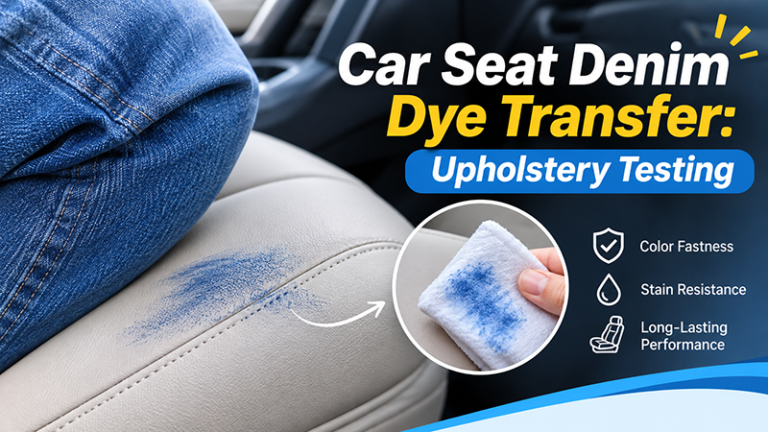
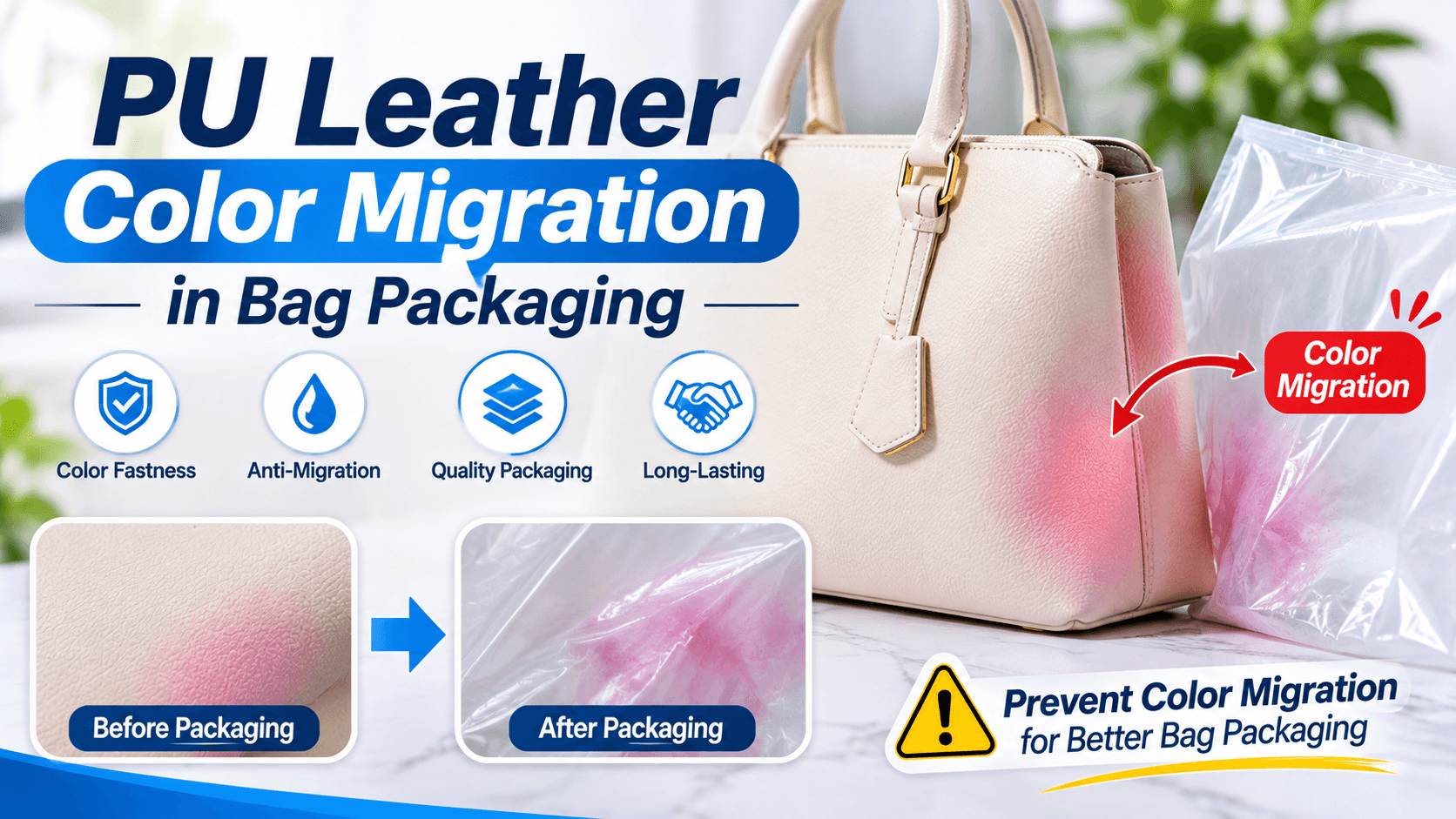
PU leather color migration in bag packaging should be investigated with the actual materials that touch during storage. A rubbing-fastness result does not establish resistance to stationary contact, and a stain does not automatically mean the surfaces blocked together. Map the contact stack, separate the possible source from the receiving surface, and compare controlled pairs before changing the material. The approval should cover the defined bag-and-packaging arrangement, not an unrestricted promise that a dark trim can never mark a light panel.
Identify the PU leather color migration pattern
Start by documenting the unopened or freshly unpacked bag where possible. Record the location and shape of the mark, the direction in which the bag was folded and which components touched. A stain matching a strap outline provides a useful contact clue, but not complete proof of the transfer mechanism.
Use the PU leather for bags selection page to identify the surface and backing requirements for the product. This investigation is narrower: compatibility between the actual finished materials and packaging during storage. It is not a substitute for general bag-material selection.
Keep affected and unaffected samples traceable to their material and packaging lots. Do not clean every returned specimen before inspection. The original arrangement, tissue and dust bag may contain evidence that is lost when only a wiped panel reaches the quality team.
Separate stationary staining, rubbing and blocking
Use “static contact staining” as an observational description when a mark appears after materials remain together without deliberate rubbing. Reserve a more specific migration mechanism for evidence that supports it. Different transfer or surface-damage processes can produce similar-looking marks.
ISO 105-X12:2016 addresses textile colour transfer through rubbing, using dry or wet rubbing cloths. Its scope explains why a rubbing report is not a stationary packaging-contact test. Confirm method applicability to the candidate construction with the laboratory rather than borrowing a textile method without review.
| Problem | Key observation | Separate approval question |
|---|---|---|
| Static contact staining | A receiving surface changes after sustained contact | Does the defined material pair remain acceptable in the storage trial? |
| Rubbing transfer | Colour transfers through relative motion | Does the material meet the relevant rubbing requirement? |
| Blocking | Surfaces adhere or show damage on separation | Does the contact stack separate acceptably? |
| Packaging imprint | A physical pattern remains after compression | Is appearance acceptable after the agreed recovery period? |
These outcomes can occur together. A stack might stain without sticking, or stick and damage the finish when separated. Record each endpoint independently. Combining them under “poor colourfastness” can send the investigation toward the wrong corrective action.
Draw the real contact stack
List every face that meets another face: dark trim against a light panel, printed tissue against a lining, a dust bag against a coated surface, or a folded strap against an exterior. Include the orientation of printed packaging and whether seams or hardware concentrate contact locally.
A protective layer is not automatically a proven barrier. Its identity, printing, finish and position belong in the trial. If tissue was added after a previous problem, verify that exact tissue and arrangement rather than accepting “wrapped individually” as a complete corrective action.
Photograph the proposed pack-out before closing the carton. Note folding instructions, inserts and the position of straps. The pack-out is part of the product configuration being approved; a later packing change can alter which surfaces touch even if the bag materials remain unchanged.
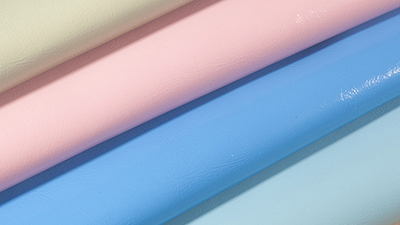
Use paired specimens to locate the source
The following is a proposed investigation matrix, not a universal standard procedure. Ask the laboratory to define suitable conditioning, exposure and assessment conditions for the project. The comparison should isolate materials before progressing to the complete packed bag.
- Retain untouched references of the dark trim, light panel and each packaging material.
- Compare the suspected dark source against the light receiving panel.
- Compare the packaging material against the light panel without the dark trim.
- Evaluate the proposed separator within the relevant source-and-receiver stack.
- Confirm promising changes in the complete pack-out.
Keep test and reference pieces from identified lots. Where a suspect packaging print is involved, compare the relevant printed face with a justified control. Do not assume that a pale tissue or dust bag is chemically inert merely because it looks clean.
Record both sides after separation. A receiving stain, a change in the suspected source and coating damage at the interface provide different information. If needed, preserve contact surfaces for further laboratory analysis instead of treating a visual comparison as proof of a particular migrating substance.
Where the problem occurs only in some shipments, compare the available records before increasing trial severity. A changed packaging lot or folded geometry may be more informative than repeating the same broad material test at a higher temperature.
Agree storage conditions without inventing a transit simulation
Define temperature, humidity where relevant, duration, loading and specimen arrangement. Use evidence from the intended storage or transport situation where available. If conditions are chosen as an accelerated screen, say so and describe the limitation.
A short heated contact trial should not be translated directly into months in a warehouse unless that relationship has been validated. Similarly, placing a weight on a coupon is not automatically equivalent to the pressure distribution inside a packed carton. The trial can still be useful, but its claim must match its design.
Distinguish stationary contact from handling or transport motion. If both are concerns, assess them as separate stages or procedures with clear records. Otherwise a stain observed after a combined trial may not reveal whether sustained contact, rubbing or separation damage was responsible.
Agree when to inspect after unpacking and how appearance will be judged. Use the same lighting and receiving-surface reference. If instrumental colour assessment is required, specify the agreed measurement approach and acceptance limit with the laboratory rather than importing an arbitrary colour-difference number.
Choose a corrective action that addresses the observed interface
Possible development changes include a different material finish, a revised contact pairing, a validated separator or a pack-out that keeps the critical surfaces apart. Treat these as candidate solutions. None is an automatic cure for all PU packaging stains.
Change one meaningful element at a time where practical. If the trim, tissue, dust bag and packing geometry all change, a successful trial confirms the new combination but does not identify the original cause. Decide whether the project needs a root-cause conclusion or simply a verified replacement configuration.
Do not let a packaging fix bypass normal material approval. A separator may reduce one contact risk while introducing a print, sticking or appearance issue of its own. Evaluate its actual position and removal sequence in the assembled bag package.
The broader synthetic leather guidance for bag projects helps keep the replacement material aligned with the bag’s other requirements. A new surface selected to address storage staining still needs the relevant construction and handling checks.
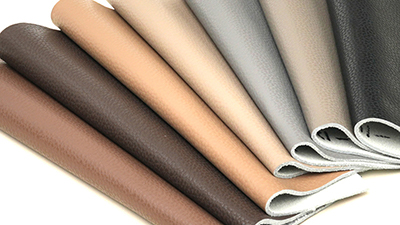
Confirm the unpacking sequence
Observe how the separator and straps are removed during the complete pack-out trial. Sliding a tightly trapped piece across the panel can introduce rubbing during unpacking even if the preceding exposure was stationary. Record that step separately so a new handling mark is not mistaken for a stain already present before the package was opened.
Make packaging compatibility part of the release record
Attach the material codes, colour combination, packaging specifications and packing diagram to the approval. Record the procedure revision, conditions, observations and acceptance decision. The released item is the defined combination, not just one roll of PU leather.
Specify what must be reviewed after a change. A dark trim shade, edge finish, tissue supplier, printed dust bag or revised folding instruction can change a contact interface. The change-control process should identify the affected comparison rather than requiring an unrelated full test programme by default.
For incoming production, retain traceable references of the relevant packaging as well as the bag material. Where a complaint arises later, those references help distinguish a material change from a pack-out change. A purchase order that lists only the bag colour leaves too much of the contact system undocumented.
If evidence remains incomplete, keep the release decision conditional. A passing rubbing report can stay in the quality file, but it should not be used to close an unresolved stationary-contact problem. Name the missing trial and its owner so the next sample round has a clear purpose.
For a targeted review, send Wandao Leather the affected bag materials and packaging contact map. Include photographs before cleaning, lot references and the intended storage requirement. This supports a comparison of the actual interfaces rather than a generic request for “non-migrating PU.”
Frequently Asked Questions
Does passing a rubbing test prevent storage stains?
No. Rubbing and stationary packaging contact are different exposures. Evaluate the actual material pair and pack-out under an appropriate, documented contact procedure.
Is colour migration the same as blocking?
No. Staining concerns appearance transfer or change, while blocking concerns unwanted adhesion between contacting surfaces. They can occur together, so inspect and report both.
Can tissue paper be assumed to prevent transfer?
No. Validate the exact tissue, orientation and contact stack. The separator is another material in the system and may require its own compatibility assessment.
Should returned bags be cleaned before investigation?
Preserve representative untouched evidence where possible. Record the original contact arrangement and retain packaging so cleaning does not remove information needed to investigate the mark.
Does a heated coupon trial predict months of storage?
Not without a validated relationship. Describe an accelerated screen by its actual conditions and do not convert it directly into a guaranteed storage period.
What changes should reopen packaging approval?
Review changes to contacting materials, colours, finishes, separators, printed packaging and packing geometry. Repeat the comparisons relevant to the altered interface.