Sofa upholstery material consumption should be calculated from the covers required for a sellable configuration, not from the sofa’s outside dimensions alone. For a sectional, the purchasing question is whether the proposed rolls can supply complete, shade-compatible sets of left-hand, right-hand, corner and armless modules. Start with approved full-size patterns, confirmed usable width and a module-level bill of materials. Then validate the cutting layout against a trial. A generic metres-per-sofa allowance is not a reliable quotation basis.
Define the sectional you are actually costing
A photograph is an incomplete consumption specification. The same seating layout can have an exposed upholstered back, a concealed backing material, reversible cushions or different outer-arm constructions. Each changes the list of pieces that must be purchased and cut. Before comparing roll prices, freeze the combination being quoted and identify which surfaces use the nominated face material.
Give every module a code and a handedness convention. State whether left and right are described from the seated user’s position or while facing the furniture. A corner unit is not simply another armless seat, and a chaise should not inherit a standard-seat allowance without its own pattern. Distinguish showroom configurations from the actual order mix.
Use a component schedule that links each cover piece to a drawing revision. Include cushion tops, boxing, backs, outside arms, inside arms, fronts and visible returns where applicable. Keep dust covers and alternative concealed fabrics in separate material lines. Otherwise an apparently economical leather quotation can simply omit surfaces included in another supplier’s estimate.
Build a sofa upholstery material consumption worksheet
| Input | What to record | Why it matters |
|---|---|---|
| Order configuration | Quantity of each module and handed version | Defines complete-set demand |
| Pattern revision | Cut dimensions, quantity and permitted direction | Prevents costing an obsolete cover |
| Usable roll width | Agreed cutting width, not just nominal width | Controls whether large pieces fit |
| Appearance grouping | Panels that must be cut and inspected together | Restricts mixing of otherwise usable remnants |
| Production allowance | Trial-derived losses, separately identified | Makes the estimate auditable |
| Service stock | Approved spare panels, kits or reserve rolls | Keeps replacement demand out of hidden waste |
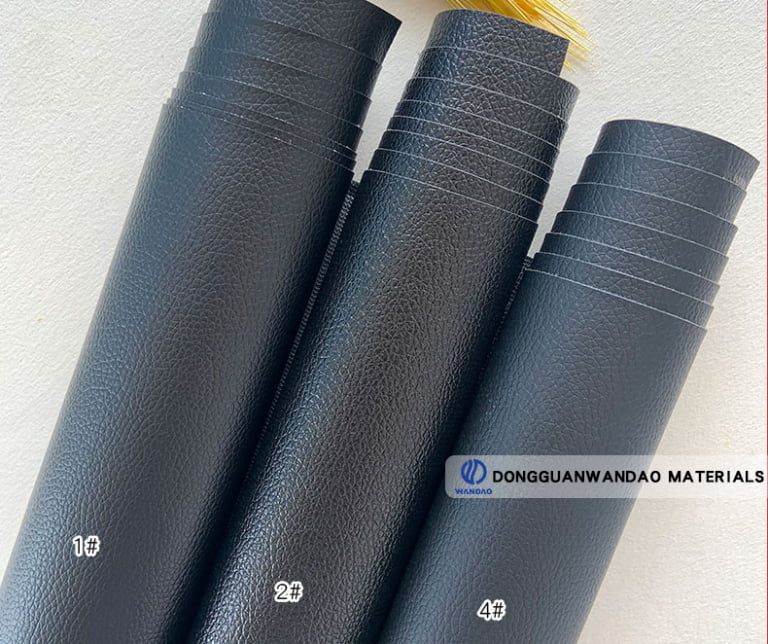
For material candidates, use the furniture upholstery material range to establish the application and construction under review. Do not assign identical consumption to different constructions merely because they share a colour. The approved pattern direction, handling and appearance constraints belong to the particular material and cover combination.
A purchasing spreadsheet should preserve the inputs as well as the total. If the factory later proposes a different backing or width, the buyer needs to see which assumption changed. A single figure labelled “standard loss” makes that discussion difficult and can conceal a layout that was never tested at production size.

Separate surface area from a feasible cutting layout
The sum of pattern areas is useful as a geometric check, but it is not the order quantity. Pieces must fit within the cutting width in permitted orientations. A long outside-back panel may leave a strip that accepts small boxing pieces but not another large panel. Two materials with equal area per roll can therefore support different feasible arrangements for the same cover set.
ISO 2286-1 addresses measurement of roll length, width and net mass of coated fabrics. It supplies a measurement reference, not a furniture consumption formula. In the purchase specification, separately agree the usable width available to the cutting plan and the treatment of edges or marked defects.
Ask for a marker: a dimensioned arrangement of the actual cut pieces within the usable width. Identify whether rotation, reversal or crosswise cutting is permitted. A visually directional grain or finish may make a theoretically efficient arrangement unacceptable when adjacent modules are assembled. The appearance approval must therefore precede treating a rotated layout as a saving.
Review the longest and widest patterns first. If a critical panel cannot fit, adding a percentage to the purchase quantity does not solve the problem. The choices are to approve another width, revise the panel construction or select another material. Any new seam belongs in a revised drawing and a physical appearance review, not just in the cutting-room instructions.
Use arithmetic that distinguishes sets, modules and losses
Consider a hypothetical order of 40 identical sectionals. Each set contains one left-arm module, one right-arm module and two armless modules. The cover demand is therefore 40 left-arm kits, 40 right-arm kits and 80 armless kits. This example illustrates counting only; it is not a claim about typical furniture dimensions or material use.
Suppose an approved combined marker supplies one left-arm kit, one right-arm kit and two armless kits. If its measured run length is L metres, the base marker requirement is 40 × L metres. If instead each module has a separate marker, calculate the required runs of each marker and account for how many kits that run actually delivers. Do not multiply a per-marker figure as though it were automatically a per-module figure.
Keep the geometric utilisation calculation separate: total cut-piece area divided by (usable marker width × marker length), with consistent units. This describes that particular layout. It does not include every later rejection, cutting error or appearance mismatch. Nor does an attractive utilisation percentage prove that the order contains all the required handed pieces.
Next show separately the material allocated to trial pieces, agreed defect handling, production replacement pieces and approved spare stock. Derive allowances from the actual process evidence or identify them explicitly as provisional planning assumptions. Avoid adding the same loss once inside the marker estimate and again as a blanket surcharge on the purchase order.
Trial the layout with production-representative material
The trial should use the proposed width and construction, approved patterns and normal handling sequence. Record roll identity and the actual marker revision. Count acceptable complete kits, not only pieces leaving the cutter. If several large backs are rejected while small pieces remain, total cut area can look satisfactory even though complete-set output is short.
Keep a simple reconciliation: material issued, acceptable kits produced, reusable remnants, quarantined material and identified scrap. Categorise why losses occurred. Width incompatibility, appearance rejection and cutting mistakes call for different responses. Combining them into one percentage prevents the next quotation from benefiting from what the trial revealed.
For a proposed PU furniture upholstery construction, approve both the finished cover and its cutting assumptions. A successful small swatch evaluation does not authorise a different stretch direction or a new panel layout. If a trial requires an unplanned seam or extra pulling during assembly, return the pattern for review before freezing consumption.

Protect complete sets when allocating rolls
Decide which visible panels require joint appearance review: a continuous row of backs, paired outside arms or adjacent seat tops, for example. Label those groups in the cutting plan. Do not assume every remnant of the correct item code is interchangeable. Review candidate pieces together before they enter a kit that the sewing line treats as complete.
Keep roll and panel identification through sewing and upholstery. If a mismatch appears at final assembly, traceability lets the team investigate a specific group instead of recutting every component. Reserve stock should be described in the same practical units. A service kit with identified panels serves a different purpose from unallocated metres in a warehouse.
Also ask what happens when the order mix changes. Selling more chaises and fewer armless modules can invalidate a combined marker that depended on both piece families. Set a rule that revised module quantities trigger a consumption check, rather than treating the first quotation as permanently valid for every arrangement in the collection.
Make the supplier quotation comparable
Require the quote to name the cover drawing revision, module mix, material code, nominal and usable width, approved orientations, marker basis and exclusions. Ask whether trial consumption is included, how partial rolls are handled and which spare quantities are priced. Compare cost per acceptable ordered set alongside price per metre; neither number is useful without its assumptions.
Before release, have purchasing, pattern development and quality sign the same record. A buyer should be able to trace the final quantity back to a feasible cover layout, and a production planner should be able to identify what would require recalculation. That shared record is more useful than a universal waste allowance.
To review a sectional material brief, send Wandaoleather your module schedule, largest panel dimensions and proposed cover construction. Include the current material width requirement and which faces must match so that sampling starts with the actual cutting constraints.
Frequently Asked Questions
Can I calculate material consumption from the sofa’s overall size?
Overall dimensions are a starting reference, not a complete purchasing calculation. Use the actual cover patterns, module quantities, exposed surfaces and permitted cutting directions to establish a feasible layout.
Should every sectional module use the same material allowance?
No. Left-arm, right-arm, corner, chaise and armless modules can require different cover pieces. Calculate their demand separately or use a validated combined marker that supplies the exact ordered configuration.
Is pattern area divided by roll width enough?
It is a geometric check, not proof that the pieces fit. A marker must account for shape, usable width, permitted orientation and appearance grouping before its run length becomes a purchasing input.
What waste percentage should a buyer use?
There is no project-independent percentage established here. Separate layout losses, trial material, production replacements and spare stock, then support each allowance with the trial or a clearly identified planning assumption.
Can leftover material be counted as replacement stock?
Only after checking that its dimensions, identification and appearance suit the required replacement panels. Unallocated remnants should not be counted automatically as complete service kits.
When should the consumption estimate be recalculated?
Recheck it when module quantities, pattern revision, usable width, approved cutting direction, visible panel construction or matching requirements change. These changes can invalidate the previous marker even if the material price stays the same.