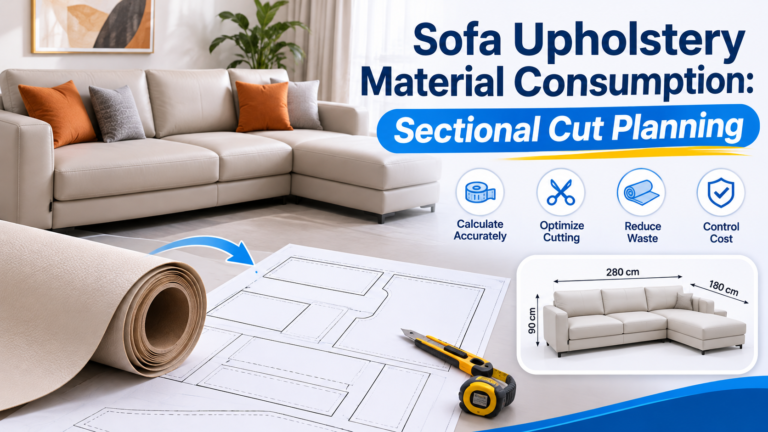
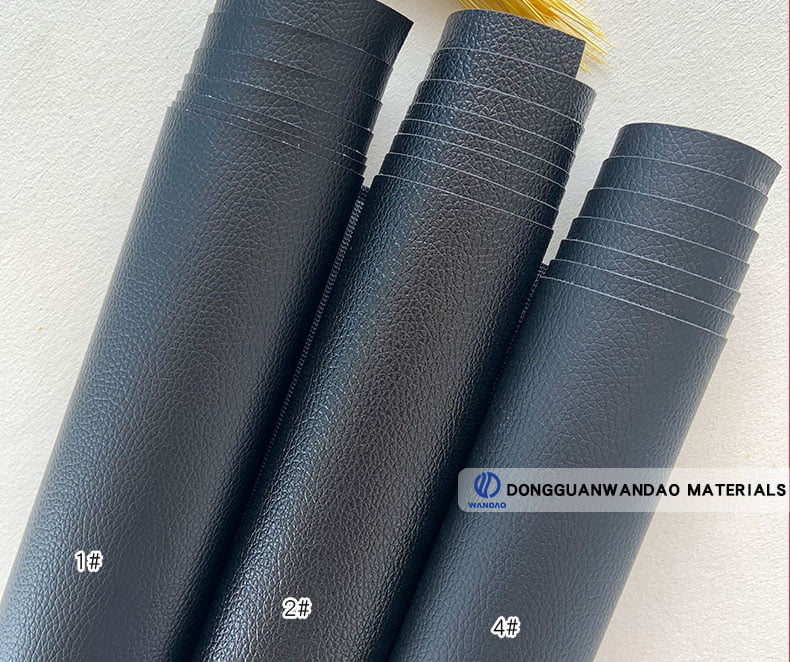
Sofa upholstery shade variation is best controlled before cutting by allocating inspected material to the panels that will be seen together. For sectionals and multi-piece suites, checking each roll against a small colour master is only one part of the decision. Review actual candidate panels as an appearance group, retain their orientation and identity, and cut complete matched kits. This workflow addresses production allocation of an approved colour, not development of a new colour formulation.
Define the visible group rather than inspecting isolated pieces
Start with the finished furniture arrangement. Identify adjacent seat tops, a continuous line of backs, paired outside arms or other surfaces that the buyer expects to read together. A sectional module can pass an isolated inspection yet still look inconsistent beside its neighbour. The relevant approval unit is therefore sometimes larger than one cover.
Mark these appearance groups on the module drawing and link them to the order configuration. A chaise version may require a different grouping from a standard sofa. Keep concealed parts and separately approved contrast panels distinct. The plan should reflect the actual design rather than demanding an undefined match between every piece in the warehouse.
Use the furniture upholstery material range to identify the construction being purchased, then attach its approved colour reference and panel map. Do not rely on a commercial colour name as the full acceptance specification. The parties need an identifiable master and an agreed way to compare production material.
Control how sofa upholstery shade variation is judged
ASTM D1729 concerns visual appraisal of colours and colour differences in diffusely illuminated opaque materials. It provides a relevant reference for controlled visual comparison; it is not a universal acceptance limit for every textured upholstery surface.
Agree the lighting, viewing arrangement, sample orientation and reference condition for the project. If the surface has directional or special-effect appearance, ask the material supplier and colour specialist how it should be evaluated. Do not assume a method’s general title covers every finish or that a single instrumental value resolves every appearance concern.
Use instrument results, where specified, with the named measurement conditions and agreed tolerance. Keep those results distinct from gloss, grain or directional appearance observations. A request such as “same colour” is too broad if the parties are actually disagreeing about surface sheen or the way two panels were oriented.
Create a roll map that survives cutting
Record the material code, roll identity and production-lot information supplied with each roll. Add the inspection status and the sample locations used for evaluation. The objective is traceability: if a mismatch appears later, the team should know where the pieces came from and what was checked before they were released.
Agree a sampling plan that can identify relevant variation across and along the material. For example, the buyer may request samples from identified positions across the width and along the roll under a defined plan. Do not label a single end swatch as proof that every location in the roll is identical.
| Record field | Practical content | Decision supported |
|---|---|---|
| Roll identity | Supplier roll and lot references | Keep material traceable |
| Inspection locations | Documented positions and orientations | Know what the sample represents |
| Reference comparison | Approved master and conditions | Determine individual acceptance |
| Appearance group | Panels or modules to be viewed together | Approve allocation to a set |
| Cut-kit identity | Piece list and source material | Prevent later mixing |
| Disposition | Released, held or separately approved use | Prevent accidental production release |
Lot identity is useful information, not a substitute for the agreed inspection. Likewise, a different lot number does not tell the buyer whether two particular panels are acceptable together. Keep the actual comparison and its decision in the record instead of treating either label as an automatic visual verdict.
Compare the intended neighbours before cutting kits
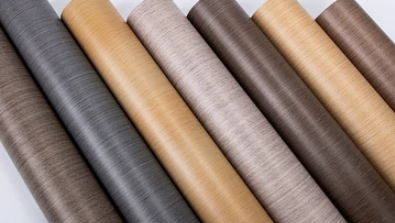
Lay out representative candidate pieces or approved inspection samples in the relationship they will have on the furniture. Maintain the intended face direction. Compare them with the reference and with one another under the agreed conditions. Record the grouping that was accepted rather than releasing an unspecified pool of similar-looking material.
If a difference appears, first check orientation, reference identity and observation setup. These checks help avoid sending a roll back for a problem created by the comparison itself. If the difference remains, hold the affected allocation and involve the supplier or quality team. Do not move a questionable panel into another customer’s order without that order’s own approval.
For a microfiber furniture upholstery candidate, keep the same allocation discipline as for other constructions. The material label does not remove the need to review the actual visible group. Approve the combination of surface appearance, panel direction and neighbouring pieces that production will use.
Make complete kits the handover unit
Once material is allocated, label cut pieces so their group identity survives sewing and upholstery. Include panel code, module code and relevant orientation marks through the factory’s approved marking method. Keep the piece list with the kit. A final assembler should not need to rebuild an appearance group by selecting loose covers from a common pile.
Define what happens when one piece is damaged or missing. A replacement should be compared against the remaining kit before it is inserted. Pulling a same-code piece from another roll without review can undo the original allocation. Record the replacement source and approval so the completed set remains traceable.
Plan the order sequence with the cutting team. A layout that maximises area utilisation but scatters critical visible panels across unreviewed sources may conflict with the appearance plan. Resolve that trade-off before release. The buyer should understand whether the quoted consumption reflects the actual matching restrictions.
Use a disciplined hold-and-review route
When a mismatch is found, identify the affected roll locations, kits and finished modules. Preserve representative samples and the observation conditions. Compare the evidence against the agreed reference before widening the hold. The purpose is neither automatic acceptance nor automatic rejection of an entire delivery; it is a decision proportional to what the inspection shows.
Separate possible outcomes. Material may be acceptable for its intended group, require a different explicitly approved grouping, or remain unsuitable for the order. Any alternative use must still meet that use’s requirements. A quality hold should not be removed merely because a piece can be hidden on a different module.
If the issue is found after assembly, inspect the complete configuration. Replacing one cover may resolve one junction while creating another mismatch elsewhere. Agree the replacement scope from the full visible group and preserve the original photographs. The corrective action should restore the approved appearance, not simply make one local comparison better.
Plan future service without promising an exact aged match
Reserve material or finished covers should retain their identity and intended panel use. Follow the supplier’s storage instructions and the furniture maker’s revision controls. A spare without a pattern revision or source identity can be difficult to use even if its colour appears close to the original sample.
Before fitting a future spare, compare it with the actual furniture. The stored reference and the installed surface have different histories, and the buyer should not promise an invisible match under unknown conditions. Define who approves the service appearance and when replacing a larger visible group would require customer authorisation.
Keep the production and service decisions linked but distinct. The original allocation proved a particular group acceptable at release. It did not establish that every later replacement from the same commercial colour will be interchangeable. This distinction makes the spare-stock plan more realistic and reduces ambiguous expectations.
Put allocation requirements into the purchase order
The purchase brief should name the approved master, comparison conditions, inspection plan, appearance groups and traceability requirements. State how questionable material is held and how replacement pieces are approved. Include the pattern-direction restrictions that the cutting layout must respect.
To review a material brief, send Wandaoleather the sofa configuration and the panels that must be reviewed together. Include the approved colour reference, proposed construction and allocation requirements. That gives the sampling discussion a production task beyond matching a small swatch.
Frequently Asked Questions
Does one lot number guarantee that every sofa panel will match?
No. Use lot identity for traceability, but base acceptance on the agreed inspection and the actual appearance group. Do not replace panel comparison with a label-only decision.
Is comparing every roll with a small master enough?
It is only part of the process. Review the material intended for adjacent visible panels together and retain that allocation through cutting, sewing and assembly.
Can colour measurement replace visual approval?
Use measurements under agreed conditions where specified, but keep them distinct from texture, gloss and directional appearance. The acceptance method should suit the actual surface and the buyer’s defined concern.
What if one piece in an approved kit is damaged?
Compare the replacement with the remaining kit before release and record its source. A same-code piece from another roll should not be inserted automatically without the required review.
Should material direction be recorded?
Yes. Preserve the approved orientation in inspection and cutting records so production does not introduce an unreviewed arrangement between neighbouring panels.
Will reserve material always match furniture after years of use?
No such guarantee is established here. Compare a future spare with the actual installed furniture and obtain approval for the intended replacement scope before fitting it.