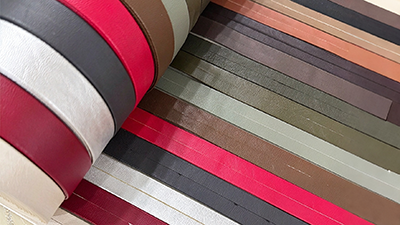

Synthetic leather cold handling should follow a material-specific receiving and conditioning procedure before automotive upholstery rolls enter conversion. Do not use a cold-bend test temperature as automatic permission to unroll, stretch or sharply fold a shipment at that temperature. Identify the roll, preserve its arrival condition and obtain the manufacturer’s approved handling requirements. Release material only through the converter’s documented process, with cold exposure, moisture concerns and visible damage kept distinct from an assumed material defect.
Separate transport acceptance from processing readiness
A roll can arrive with apparently intact packaging while its readiness for conversion remains unconfirmed. Receiving inspection and permission to process are different decisions. Record what the shipment condition demonstrates, then apply the agreed conditioning and release procedure before unwinding or cutting.
Identify the proposed operation. Unloading a packaged roll, opening the wrapper, inspecting the sheet and feeding material into a forming or sewing process do not necessarily share one acceptance condition. The written instructions should tell operators which actions are permitted at each stage.
For an automotive upholstery supply agreement, request these instructions before winter deliveries or other expected cold exposure. Do not leave the receiving team to invent a temperature or waiting period after the truck arrives.
Specify synthetic leather cold handling by construction
Record the exact face construction, backing and any supplied laminate. Include nominal thickness, roll configuration and packaging where relevant to the handling instruction. A trade name such as microfiber or PU does not define one universal receiving procedure.
For a microfiber automotive upholstery shipment, ask whether the instruction applies to the actual converted material being ordered. A guide for a different backing, finish or roll format should not be adopted without the supplier’s confirmation.
The agreed procedure should identify the conditioning location, packaging-opening sequence, release criterion and responsible person. If the supplier provides only a general storage statement, clarify how it applies to a cold incoming roll and the next manufacturing operation.
| Stage | Action to define | Evidence to retain |
|---|---|---|
| Arrival | Non-invasive identity and package inspection | Roll labels, photographs and shipment history |
| Hold | Segregation from ready-to-process stock | Status and designated location |
| Conditioning | Supplier-approved environment and sequence | Actual conditions and relevant times |
| Release | Authorised confirmation of readiness | Criterion, decision and roll identity |
| Initial conversion | Controlled inspection under approved conditions | Observations and any nonconformance |
Understand the boundary of a low-temperature bend report
ISO 4675:2017 assesses coated fabrics subjected to bending after defined low-temperature exposure. Its scope explicitly states that no general relationship with service performance can be implied. A result belongs to that specimen test, not to every handling operation on a production roll.
Use the report where the customer requires it, with its material identity and method conditions intact. Do not turn the stated test temperature into a universal shipping limit, warehouse set point or safe unwinding temperature. Those operational requirements need their own material-specific basis.
Also keep a marine upholstery cold-crack specification separate from the automotive converter’s receiving procedure. Different applications and constructions can require different evidence. Borrowing a familiar number does not establish that the incoming roll is ready for the intended process.
Inspect the shipment without creating new damage
At receipt, photograph packaging, labels and any visible impact or moisture concerns. Record the carrier and known transport information where available. If a temperature record was supplied, retain it without assuming it measures every part of the roll at all times.
Follow the approved handling instructions for lifting and storage. Do not force the material open merely to complete a normal flat-sheet inspection immediately. If the procedure does not address the observed cold condition, place the roll on hold and obtain a documented decision from the responsible team.
Keep suspected transport damage separate from changes introduced during inspection. A clear record of when the package was opened and how the material was handled helps later investigation. Without that sequence, a crack discovered during conversion may be difficult to attribute.
Image placeholder: Incoming automotive upholstery rolls in a labelled hold area, with intact package inspection photographs and a receiving record. No universal temperature or countdown timer.
Condition through an approved release procedure
Where the manufacturer’s procedure calls for packaged conditioning, keep the package intact until its specified opening criterion is met. Do not assume that every material must use the same sequence. The instruction should address the actual wrapper, roll construction and receiving environment.
Record the conditions relevant to the release decision. Room air temperature alone should not be treated as proof that every part of a large roll has reached the required state. Ask the supplier and quality team how readiness will be established without damaging the material.
Avoid a fixed waiting time copied from an unrelated product. A documented time may be part of a validated procedure, but it should remain tied to that procedure’s conditions. If those conditions are not met, escalate the decision rather than ticking the elapsed-time box automatically.
Keep moisture observations separate from cold-bend concerns
If moisture is seen on packaging or material, record its location and condition. Do not assume it is harmless condensation or evidence of a coating defect from a photograph alone. Keep the roll segregated while the responsible team determines the appropriate inspection and disposition.
Do not improvise drying with a heat gun, direct heater or unapproved elevated-temperature exposure. A treatment can change both the material and the evidence. Any recovery procedure should come from the qualified supplier or manufacturer and remain documented separately from the original receiving condition.
Consider whether the material is suitable for the next operation under its approved requirements. Receiving a roll into stock does not automatically clear it for bonding or another process with separate preparation requirements. Keep the handoff between warehouse and conversion explicit.
Release a traceable roll, not an anonymous batch area
Use roll-level identifiers and clear status labels so conditioned material is not mixed with material still on hold. Record the release decision and its basis. If part of a shipment differs in arrival condition, preserve that distinction rather than extending one decision to every roll.
Carry the identity through the first controlled inspection and conversion steps. Record visible cracking, creasing, coating separation or other specified concerns by location. Do not continue processing questionable material simply because a delivery deadline has arrived.
Where the approved plan requires a first-piece check, keep the cut or converted sample connected to its source roll. The quality team can then compare the actual processed condition with the accepted reference and decide whether the remaining material should proceed.
Investigate damage with a complete sequence
Collect the supplier material code, roll number, shipment record, receiving photographs, conditioning record and initial processing observations. Retain affected and apparently unaffected samples where practical. Note any attempt to warm, flatten or repair material before inspection.
Compare a reference roll under the approved procedure when the investigation requires it. Keep the operation and material identity controlled. A demonstration that aggressively folds a small cold offcut is not automatically representative of the original receiving event.
If a change to packaging or conditioning is proposed, validate it through the responsible process before routine use. A successful one-off recovery does not establish a new general handling rule. Update purchasing, warehouse and conversion instructions together when a revised route is approved.

Close the gap before the next delivery
Plan production availability from released stock rather than counting every received roll as immediately usable. The scheduling record should distinguish arrival, conditioning hold and authorised release. This is a workflow recommendation, not a prescribed conditioning duration. It lets the warehouse preserve the material-specific procedure when delivery pressure increases, and it gives purchasing a clear reason to clarify missing supplier instructions before the next shipment.
The supply agreement should identify the required shipping information, material handling instructions and escalation route. State who can release an exception and which evidence is needed. This prevents different shifts from making incompatible decisions about the same material.
Keep the latest approved instructions available where material is received and processed. Review relevant changes in construction, packaging or conversion route with the supplier. Do not assume a previous material’s instructions apply to a new source without confirmation.
For a material-specific discussion, send Wandaoleather the roll construction and receiving-process brief, expected transport conditions and next conversion step. Request the applicable handling guidance rather than a universal cold-temperature promise.
Frequently Asked Questions
Does a cold-bend pass temperature authorise roll unwinding?
No. It describes a defined specimen test. Use the manufacturer’s approved handling procedure and converter release requirements for the actual production roll and operation.
Is one overnight waiting period enough for every roll?
No universal period is established here. Follow a validated material-specific procedure and its release conditions rather than assuming elapsed time alone proves readiness.
Should every cold package be opened immediately?
Follow the approved packaging-opening and conditioning sequence. If instructions do not cover the observed condition, hold the roll and obtain a documented decision before processing.
Can room temperature alone prove that the roll is ready?
Do not assume that it does. The supplier and quality team should define how readiness is confirmed for the actual roll configuration and receiving conditions.
Can direct heat be used to speed up release?
Do not use an unapproved heating or drying method. Any recovery procedure needs the responsible manufacturer’s approval and should remain separate from the original receiving record.
What records help investigate cracking found during conversion?
Retain roll identity, shipment information, arrival photographs, conditioning and release records, processing observations and relevant samples. Record any intervention before the damage was assessed.