Bonded Leather vs Faux Leather: The Essential Difference
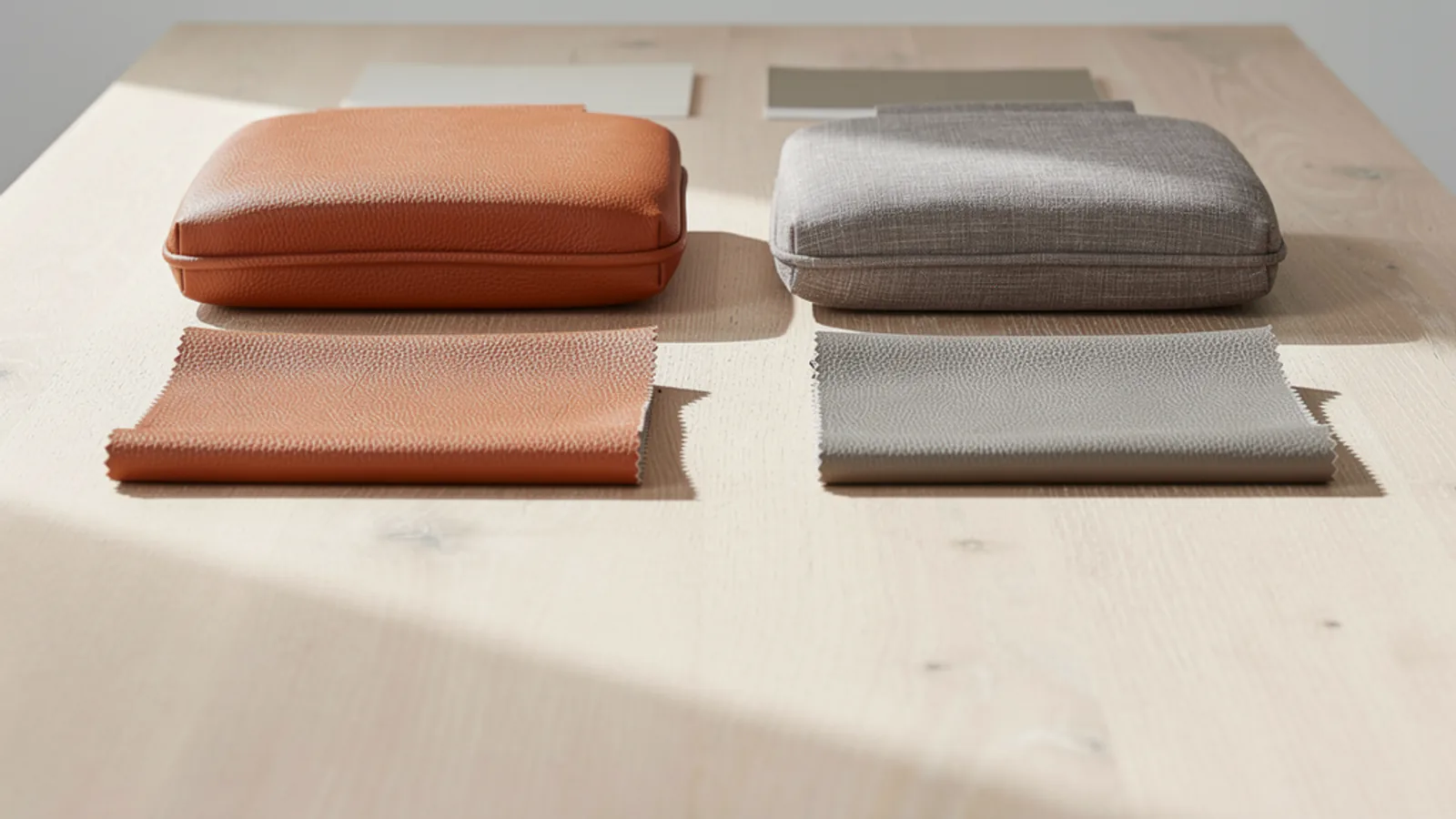
The important distinction is what lies beneath the surface finish. A leather-like grain can be applied to different substrates, so matching colour and texture does not mean the materials are interchangeable.
UK government guidance describes composition leather, also called bonded leather, as based on natural leather or leather fibres and explains several routes for forming it from leather remnants. This supports the construction distinction; the customs guidance does not provide a performance ranking for upholstery.
For this comparison, faux leather means synthetic constructions such as PU-coated textile, PVC-coated textile or microfiber-based synthetic leather. Specify which one is offered. A PU surface does not identify the substrate underneath, and a commercial name may leave that detail unresolved.
For seating projects, define the required furniture upholstery material before requesting equivalent samples. State whether leather-derived content is acceptable, whether the design requires a particular appearance, and which performance evidence will control approval.
| Decision point | Bonded leather | Faux leather in this guide |
|---|---|---|
| Material identity | Leather-derived composite; request composition details | Polymer-coated textile or synthetic-fibre construction; identify the actual system |
| Leather content | Present, with proportion to be declared for the offered material | Do not assume content from a trade name; verify the specification |
| Visible surface | May be finished or embossed | May be finished or embossed |
| Durability evidence | Test the offered composite and application | Test the offered coating, support and application |
| Procurement priority | Confirm composition and suitability for the part | Confirm polymer, backing and suitability for the part |
Do Not Identify a Material by Grain or Smell
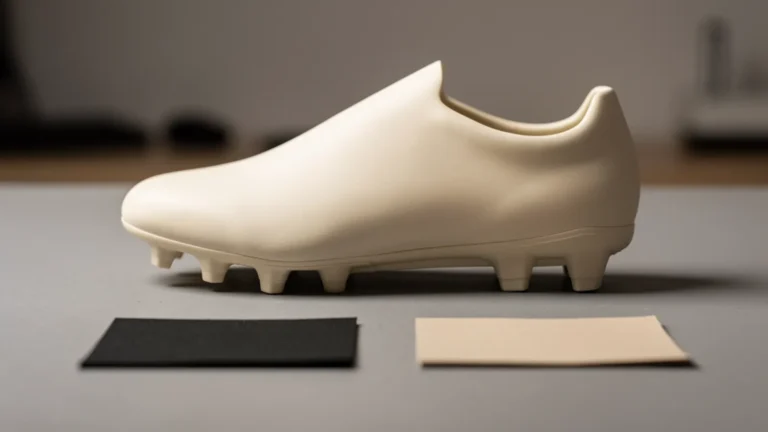
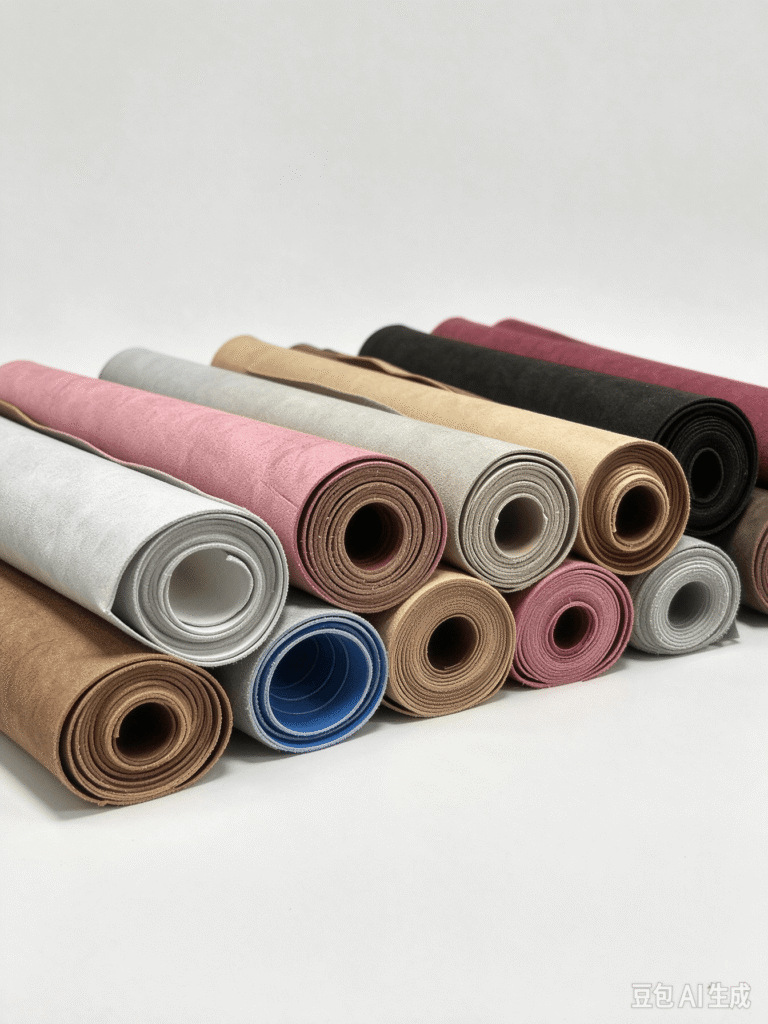
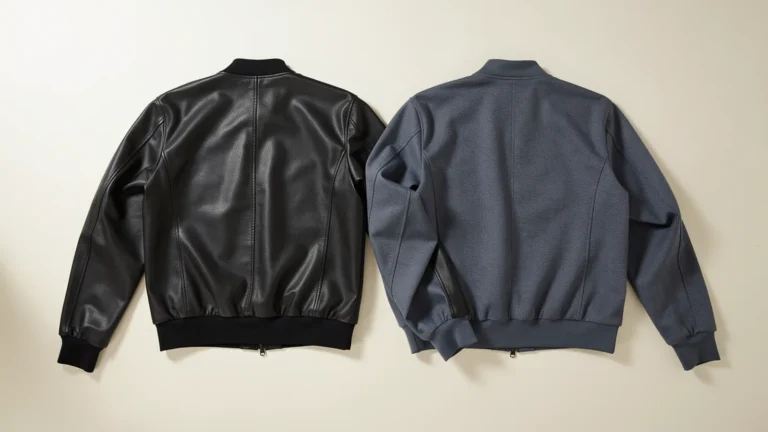
A photograph is a poor basis for a composition decision. Even a physical swatch may show only the finish and a backing layer, while concealing intermediate layers. Use appearance to approve appearance; request documentation to establish the supplied construction.
Ask for a material declaration that separates the face, supporting layer and any additional backing. Where percentages are supplied, establish what the denominator includes. A value referring only to a core layer is not automatically the composition of the complete supplied sheet.
If a declaration is inconsistent with the sample, ask for clarification or suitable independent identification. Do not convert a home burn test, smell test or scratch test into a purchasing specification. They do not give your team a controlled, repeatable basis for accepting later deliveries.
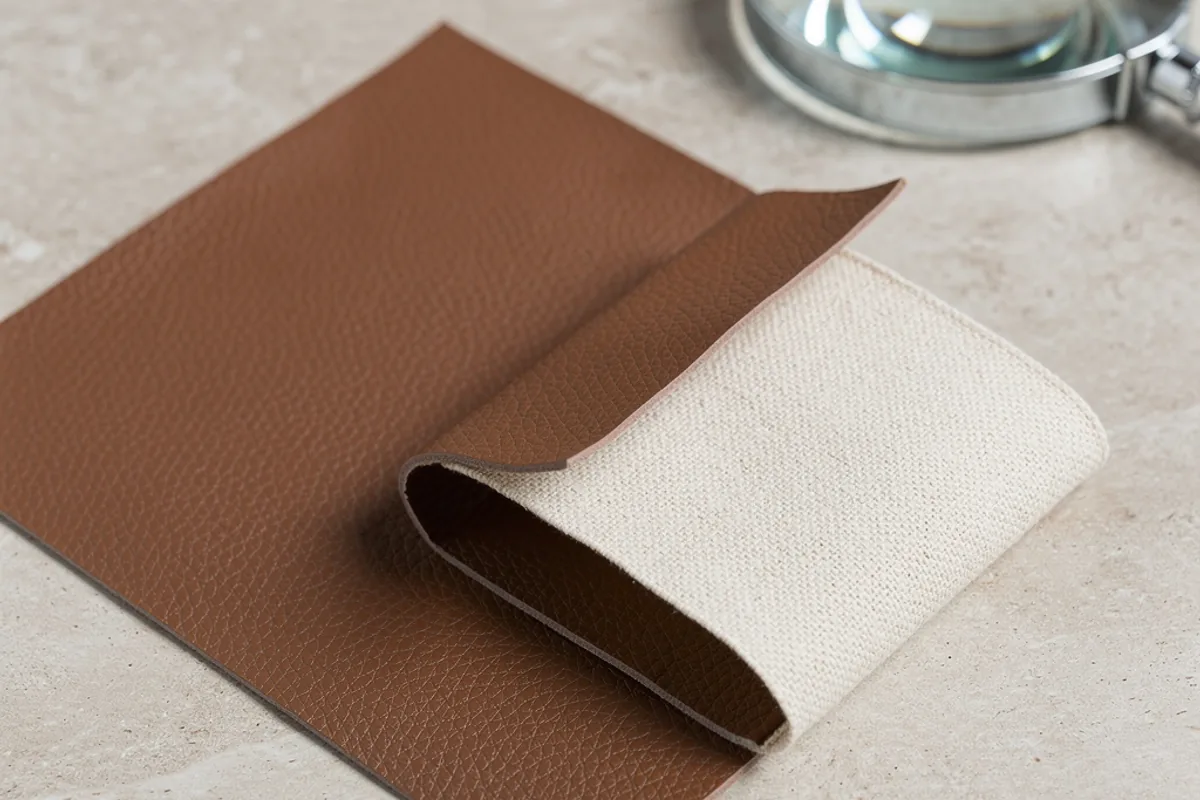
Keep the declaration, sample code and quotation together. If the supplier changes the substrate while retaining the same colour or commercial range name, review the proposal as a material change. An approved visual match is not permission to substitute the construction.
Does Bonded Leather or Faux Leather Last Longer?
There is no defensible universal answer based on these two names. A useful comparison starts with the failure your product must avoid: surface wear, cracking at a fold, separation between layers, tearing near a join, colour transfer or loss of appearance after cleaning.
Those are different questions. A sample with an attractive abrasion result may still need additional evidence for bending, adhesion or cleaning compatibility. The Association for Contract Textiles cautions against treating flat abrasion results as a predictor of overall durability.
As an engineering review, examine where the construction will experience repeated movement or concentrated stress. A broad flat panel, a tight padded corner and a stitched attachment do not impose the same demands. The comparison should therefore include the actual part geometry, not just identical flat swatches.
Request reports for the proposed grade and finish, together with the method, conditions and failure criteria. If one supplier reports abrasion cycles and another reports flexing cycles, those numbers are not competing scores. Align the evidence before ranking the candidates.
Do not turn a short laboratory result into a promised number of years without a validated basis. A warranty is also a commercial commitment with its own terms; it is not a substitute for identifying the material and testing the intended application.
Build a Test Plan Around the Construction
For coated-fabric candidates within scope, several standards provide distinct starting points for the laboratory. ISO 2411:2024 addresses coating adhesion, ISO 7854:1995 addresses damage from repeated flexing, and ISO 1419:2019 addresses accelerated ageing.
Do not automatically apply a coated-fabric method to every bonded-leather construction. Have the laboratory confirm suitability, specimen preparation and interpretation for each candidate. Where methods differ, describe the limitation rather than presenting the results as directly equivalent.
| Product concern | Evidence to request | Approval question |
|---|---|---|
| Repeated bending | Applicable flex assessment and a component trial | Does the agreed appearance and integrity remain at the critical fold? |
| Separation of layers | Applicable adhesion assessment | What failed, and does it meet the agreed criterion? |
| Wear in service | Relevant abrasion assessment plus part inspection | Does the test address the wear location that matters? |
| Routine maintenance | Trial with the proposed cleaning procedure | Are colour, gloss, feel and integrity acceptable afterward? |
| Humid or warm conditions | Appropriate conditioning and follow-up evaluation | What changes occur in the qualified construction? |
Set acceptance criteria before comparing submissions. Otherwise, the team may favour the report with the largest number even when it answers a different question. Retain photographs of agreed acceptable and unacceptable appearance where a written description alone is ambiguous.
Compare Manufacturing Performance on the Real Part
The material must work through your production process as well as in a laboratory specimen. Prepare prototypes using the intended pattern, joins, adhesive system and assembly route. Record any process adjustment required for each candidate.
For seating, include the corner radius, cover tension, padding and seam placement that the design actually uses. For a small accessory, include folds, edge finishing and attachment details. These trials are recommended engineering checks, not universal proof that one material family is stronger.
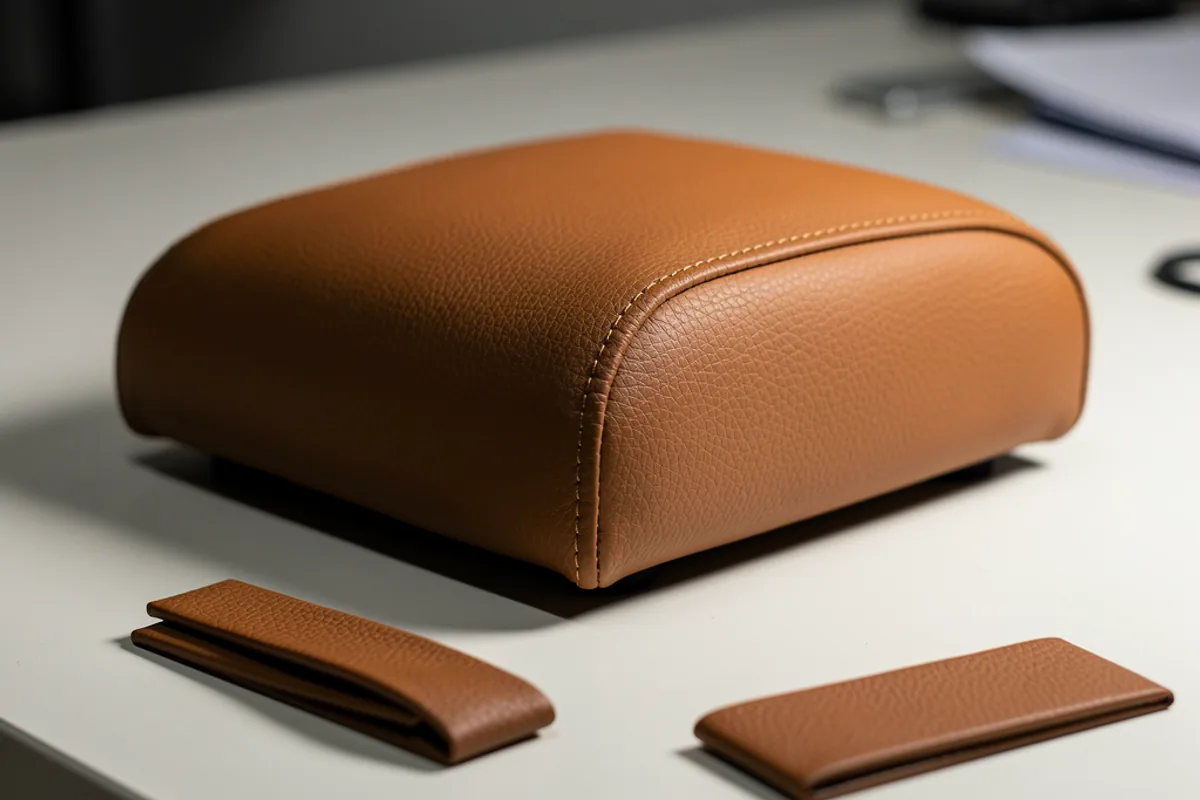
Do not require two materially different candidates to use an unsuitable process merely to make the comparison appear equal. First determine a practical production route for each. Then compare the resulting quality, production effort and cost under documented conditions.
If synthetic upholstery is the preferred direction, compare the relevant PU furniture leather construction with its specified alternatives. The guide to microfiber leather vs PU leather addresses that narrower construction comparison.
Treat Cleaning Instructions as Part of the Specification
Ask for the cleaning procedure approved for the offered finish. Identify the cleaner, concentration where relevant, application method and drying procedure. “Easy to clean” is too broad to resolve a dispute about a particular chemical or maintenance routine.
Build a cleaning trial around the product’s likely use. Compare the appearance and condition of treated samples with retained controls, using an agreed inspection method. If stain removal is important, define the substances and exposure rather than requesting an undefined stain-proof surface.
For a project maintained by another organization, obtain that organization’s proposed care routine early. A material that requires a different cleaner may still be usable, but the operating procedure and cost should be part of the selection decision.
Avoid assuming that leather conditioner, alcohol cleaner or a household treatment suits a composite simply because it looks like leather. Ask the supplier to confirm compatibility for the specified finish and verify it where it matters to approval.
Separate Composition, Vegan and Environmental Claims
Bonded leather contains animal-derived material. It should therefore not be selected for a requirement that excludes leather content. For a faux-leather product carrying an animal-free claim, obtain a declaration covering the relevant construction rather than inferring the answer from the name of the face polymer.
For U.S. goods within the scope of the FTC Leather Guides, section 24.2 addresses composition disclosures, including leather-fibre and non-leather percentages when bonded-leather terminology is used. Check product scope and market requirements; do not treat that provision as a universal furniture-labeling rule.
Environmental comparisons need separate evidence. The FTC’s Green Guides summary cautions against broad, unqualified environmental benefit claims. A verified recycled-content attribute does not, by itself, establish that one complete product has the lower overall impact.
If environmental performance influences the buying decision, specify the attribute being compared and request the supporting documentation. Keep composition, recycled content, animal-derived content and functional performance as distinct fields so that one claim does not stand in for the others.
Compare Cost per Accepted Component
A unit price is useful only after the quoted materials are defined. Request the same commercial basis: dimensions, usable area, tolerances, quantity, packaging and delivery assumptions. Where one offer is per linear unit and another per area, normalize the usable quantity before comparing.
Then consider what the material costs to convert into an accepted part. Record cutting yield, process adjustments, inspection effort, rejected components and any additional maintenance requirements using your own trial data. Do not insert assumed savings or failure rates merely because the material belongs to a category.
A practical comparison sheet should therefore show material purchase cost alongside conversion cost and the outcome of qualification. A lower-priced sample that does not meet a required criterion is not an equivalent offer. Conversely, a higher price or leather-content claim does not establish a benefit your product needs.
Keep unknown costs visible until the trial or supplier response resolves them. This makes the decision traceable and prevents an attractive sample from bypassing an incomplete specification.
What to Request Before Bulk Approval
Send a consolidated request that the supplier and manufacturing team can both use:
- Exact material code, construction and composition declaration.
- Intended product, component and destination market.
- Appearance reference, thickness, backing, usable dimensions and tolerances.
- Applicable performance methods, conditions and acceptance criteria.
- Production-intent prototype requirements and cleaning procedure.
- Report-to-sample traceability and retained reference samples.
- Quotation basis, proposed delivery terms and packaging requirements.
- Change-notification rules for the face, support, backing, finish or production route.
Approve a documented combination rather than a category name. If a later quotation changes the material code, ask what changed and which parts of qualification must be repeated. Apply the same discipline when a supplier offers a visually similar replacement during a shortage.
Frequently Asked Questions
Is bonded leather the same as faux leather?
No. Bonded leather contains leather-derived material in a composite. The faux leather compared here uses a polymer coating with textile or synthetic-fibre support. Confirm the actual construction because trade names can be imprecise.
Is PU-coated bonded leather the same as PU faux leather?
No. A PU surface identifies the coating, not the underlying substrate. Request a layer description to distinguish a leather-containing composite from a textile-backed synthetic construction.
Which lasts longer, bonded leather or faux leather?
The labels alone do not establish a lifespan. Compare the offered grades using applicable tests, production trials and maintenance conditions for the intended product.
Is bonded leather vegan?
No. Bonded leather contains leather-derived material, so it does not meet an animal-free material requirement. Verify the full composition of any proposed alternative separately.
Can you identify bonded leather from a photograph?
Not reliably. A photograph shows appearance, not a verified composition. Request a material declaration linked to the sample and obtain suitable independent identification if the description is uncertain.
What is the most useful document to request from a supplier?
Start with a construction and composition declaration tied to the exact material code. Add relevant test reports, a care procedure and an approved prototype record before bulk purchasing.
Choose the Documented Material That Meets the Requirement
Compare identity first, functional evidence second and qualified cost third. That order keeps a familiar surface, an attractive price or a leather-content claim from deciding the project before the actual material is understood.
Review synthetic leather options for furniture against the intended component. To discuss a candidate, send Wandaoleather your application, construction requirements and sample plan so the quotation can address a defined specification.