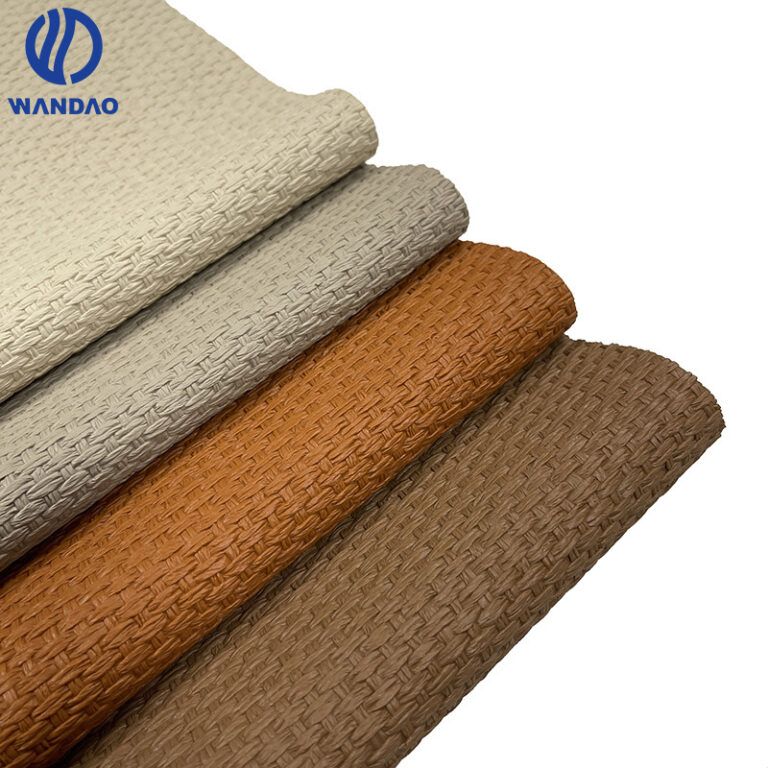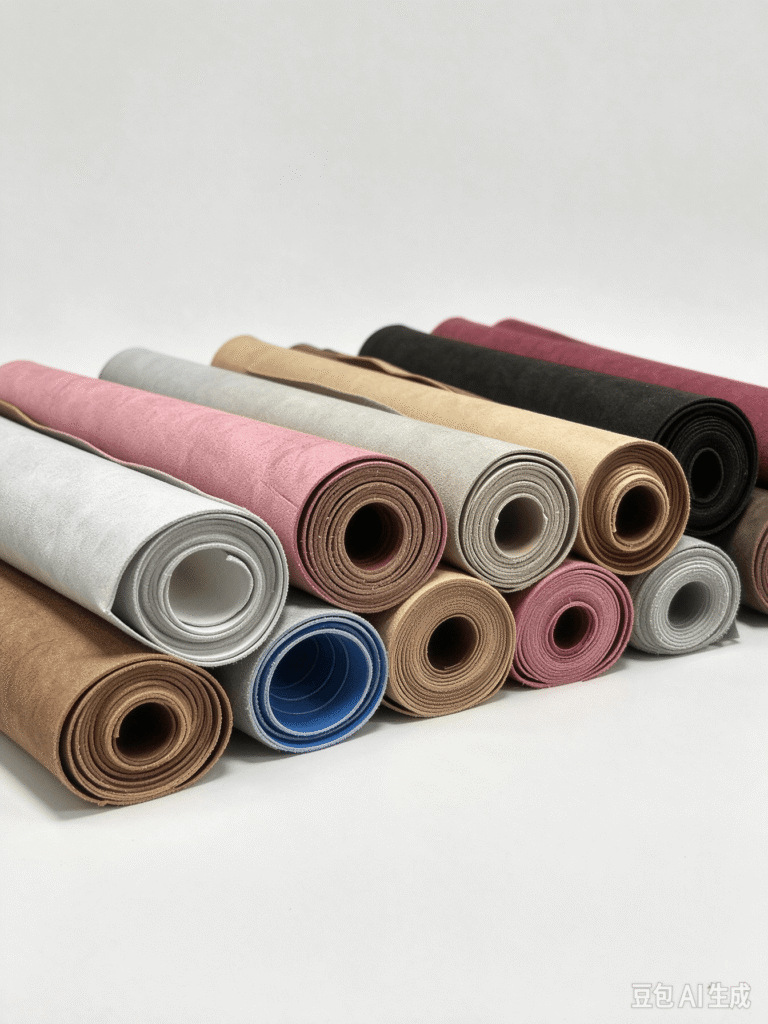

PU Leather vs Faux Leather: The Category Difference
In this guide, “faux leather” means a leather-look alternative rather than a named polymer. “PU synthetic leather” refers to a polyurethane-based synthetic construction. SATRA’s technical explanation of leather and lookalike materials illustrates both PU-coated and PVC-coated textile examples, showing why the broad appearance category does not identify the coating chemistry.
That distinction changes the first purchasing question. Instead of asking whether PU is better than faux leather, ask whether the faux-leather quotation is also PU. If it is, compare the two specified grades. If it is not, identify the alternative before choosing a comparison method.
Start with PU leather options when polyurethane-based material is the intended route. Use the broader category only while the material choice remains open. For a fuller introduction to the material itself, see what PU leather is; this guide focuses on interpreting names and quotations.
| Wording on an offer | What it tells you | What remains unresolved |
|---|---|---|
| Faux leather | A leather-look category is being offered | Polymer, substrate and grade |
| PU synthetic leather | Polyurethane is part of the stated material description | Complete construction and acceptance evidence |
| PVC-coated fabric | A PVC coating and fabric support are specified | Finish, grade and application suitability |
| PU-coated split leather | A polymer coating is applied to a leather substrate | Full composition and appropriate product description |
The final row is a reason to read the entire description carefully: a synthetic surface does not erase an animal-derived substrate. Do not collapse a coated-hide offer into an animal-free synthetic-material shortlist simply because its title begins with “PU.”
Separate Material Identity from Product Claims
A useful procurement record has three sections: what the material is, how the quoted grade performs, and what claims you intend to make about the finished product. Keeping those sections separate prevents a short product name from doing work it cannot support.
For identity, request the material code and a layer description. For performance, request reports tied to that code. For a consumer-facing claim, specify the component or whole product to which the claim applies and have the relevant team review the evidence.
For example, “PU-coated textile for a bag panel” is a material description, while “waterproof bag” is a finished-product claim. Do not approve the latter merely because the supplier provided the former. Likewise, a sample that looks like a premium material does not establish a composition declaration.
This separation also makes internal communication easier. Purchasing can compare offers without rewriting the marketing brief; development can assess samples against an agreed requirement; quality can check whether the final report matches the approved revision. Each team is working from the same identified material rather than a different interpretation of “faux.”
Ask What Is Behind the Surface
SATRA describes microscopy as a way to distinguish leather from lookalike constructions and notes that some imitation materials incorporate leather fibres. A visible grain or a soft hand is therefore not a complete composition check. If composition is disputed, request suitable laboratory identification rather than relying on a touch test.
For routine sourcing, ask the supplier to describe the construction from the support toward the face. The following is a recommended information checklist, not a claim that every product contains every layer:
- Substrate type and fibre composition, or explicit identification of a leather-derived support.
- Intermediate layers, impregnation or bonding layers, where present.
- Main coating polymer and any different surface finish.
- Total thickness, mass per area and the agreed measurement basis.
- Product code, finish code, color reference and revision date.
Allow the supplier to mark a layer as absent. The goal is a clear description, not forcing every offer into an invented universal stack. If exact formulation details are confidential, ask for a controlled specification and notification of relevant changes instead.

Can PU and Faux Leather Be Compared on Durability?
Not meaningfully from those names alone. One quotation may identify a particular PU grade while the other offers the same broad family without sufficient detail. Ranking them at this stage would reward the wording, not the material.
Once both constructions are identified, select checks for the product. A chair covering, a folded wallet and a shoe upper should not inherit one approval plan merely because all are described as synthetic leather. The following questions are an engineering starting point for the buyer and laboratory:
| Product decision | Question to resolve before approval |
|---|---|
| Upholstered panel | Does the proposed grade suit the cleaning routine and shaped component? |
| Folded bag or wallet part | Does the actual fold, seam and edge treatment remain acceptable? |
| Footwear upper | Does the proposed material suit repeated flexing in the intended construction? |
| Decorative covering | Are the required appearance, bonding and handling checks defined? |
For a coating-bond question, ISO 2411:2024 addresses coating adhesion in coated fabrics. For repeated bending, ISO 7854:1995 addresses flex damage. These are different measurements, not interchangeable quality labels.
Do not ask a report to answer more than it tested. Identify the method, conditions, result and acceptance criterion, then confirm that the tested specimen represents the quoted construction. When the proposed alternative is PVC leather, compare its relevant grade against the selected PU grade—not against every material covered by the phrase faux leather.
A Lower Quote May Not Be a Like-for-Like Offer
Consider a hypothetical purchasing exercise. Offer A says “PU leather” and gives a material code. Offer B says “premium faux leather” and lists an attractive roll price. Neither heading establishes that the offers are equivalent, and “premium” should not be treated as a measurable grade.
First, ask both suppliers for the same missing information. Offer A still needs a backing and finish description. Offer B needs the polymer and construction identified. Both need a stated usable width and sale unit before the commercial comparison becomes meaningful.
Then separate three possible outcomes:
- The offers describe comparable constructions and supply conditions, so samples and evidence can be compared directly.
- The offers describe different constructions that might both meet the brief, so each needs qualification against the same end-use requirements.
- One offer remains insufficiently identified, so it should remain unqualified rather than being labelled a bargain or a poor material.
Compare the cost of the required usable material, not just the headline price per roll. Request usable width, quoted length, allowed defects, color minimums, packing and delivery terms. Where cutting yield matters, evaluate it with the actual pattern and usable area. Do not invent a yield advantage from the material name.
Keep evaluation costs visible as well. An offer that needs another sample round may still be suitable, but the buyer should know that approval is incomplete. Record that separately from the eventual unit price; otherwise a seemingly simple price comparison hides two different stages of qualification.

Names Do Not Establish Vegan or Environmental Claims
If an animal-free requirement is part of the brief, state what it covers and request a declaration for that scope. Ask about the supplied material’s layers and, separately, the finished product’s other components. A declaration limited to the face coating should not be accepted as a declaration about everything in the product.
Keep environmental claims in a different evidence file. “PU,” “faux” and an animal-free declaration do not, by themselves, establish recyclability, biodegradability or an overall environmental advantage. The FTC’s Green Guides summary cautions against broad, unqualified environmental-benefit claims and calls for clear, specific qualifications.
As a procurement practice, ask what a recycled-content or bio-based statement measures, which component it covers and what documentation supports it. Do not compare a claim about one backing layer with a percentage stated for an entire finished material unless the bases have been reconciled.
For US products within their scope, the FTC Leather Guides, 16 CFR Part 24, address misleading composition descriptions and disclosure of non-leather materials that resemble leather. Their scope includes footwear, handbags, luggage, belts and similar articles; this is not a universal furniture-labeling rule. Product descriptions should be reviewed for the destination market rather than copied unchanged from a supplier’s quotation.
Turn an Ambiguous Offer into an Approval-Ready RFQ
Use one comparison sheet for all shortlisted offers. Ask suppliers to answer the following fields explicitly and attach the supporting specification rather than responding only with another trade name:
- Intended product and the exact component being covered.
- Material code, revision, complete construction description and declared composition scope.
- Color, grain, gloss and physical reference sample.
- Thickness and mass tolerances, usable width and supply format.
- Required tests, methods, acceptance criteria and report identification.
- Applicable market or brand requirements and the evidence requested for them.
- Sale unit, order quantity, color minimum, packaging and quoted delivery terms.
- Sample-to-production relationship and the change-notification agreement.
Before issuing approval, return a short written summary of what you understood. For instance: “Please confirm that the quoted code and supplied sample refer to the same specified construction and finish, and identify any differences from the material covered by the attached reports.” This is a suggested question, not a statement about a particular supplier’s records.
Keep unresolved answers separate from accepted requirements. A blank field is not automatically a rejection, but it is not evidence either. Assign it to the person who can close it before the purchase decision, especially if the answer affects labeling or the test plan.
For a new project, send Wandaoleather your application and material brief with the sample description, desired finish and required evidence. A clearly defined construction makes the next discussion more useful than asking for the “best faux leather” without saying what the product must do.
Frequently Asked Questions
Is PU leather the same as faux leather?
PU synthetic leather is one type of faux leather, but the broader name does not specify polyurethane. Ask for the construction behind the quoted material before deciding whether two offers describe the same thing.
Is PU leather better than faux leather?
That comparison is incomplete because the categories overlap. Identify the alternative material and compare the specified grades against the same application, test requirements and commercial terms.
Can a PU-coated material contain real leather?
Yes. A polyurethane coating on a leather substrate does not remove that substrate’s animal origin. Read the whole construction description and distinguish coated leather from a textile-based synthetic material.
Does faux leather mean vegan?
Do not treat the marketing name alone as a complete animal-free declaration. Define the scope of the requirement and obtain supporting information for the supplied material and any other finished-product components covered by the claim.
Can I identify PU from the grain or feel?
Appearance and hand are not sufficient composition evidence. Request the supplier’s specification and, where identity remains disputed, appropriate laboratory analysis of the material.
What should a quotation say instead of only faux leather?
Ask for an identified material code, coating and backing description, finish, thickness, usable width, intended application and relevant test evidence. The quote should also state its sale unit and commercial terms so the offers can be compared fairly.